Introduction: What Is Baby Oil and Is Baby Oil Good for Your Hair?
Understanding the Mineral Oil and Fragrance Formula
When you pick up a classic bottle of baby oil, you are typically looking at a formulation centered around light mineral oil blended with a touch of soothing fragrance, which leads many to wonder is baby oil good for your hair for managing frizz and locking in moisture. Unlike botanical carrier oils that penetrate deep into the hair cortex, mineral oil is an occlusive agent. This means it creates a microscopic, breathable seal over the hair cuticle. Consequently, it locks in existing moisture and prevents environmental humidity from causing disruptive frizz.
Furthermore, because the formula is engineered for delicate infant skin, it is rigorously tested for hypoallergenic safety. However, adults approach hair care with different goals such as managing scalp health, combating damage, or boosting sheen. Therefore, understanding how this occlusive barrier interacts with adult hair strands is the first step in determining how to incorporate it into your specific routine.
Why Is Baby Oil Good for Your Hair? Breaking Down the Core Benefits
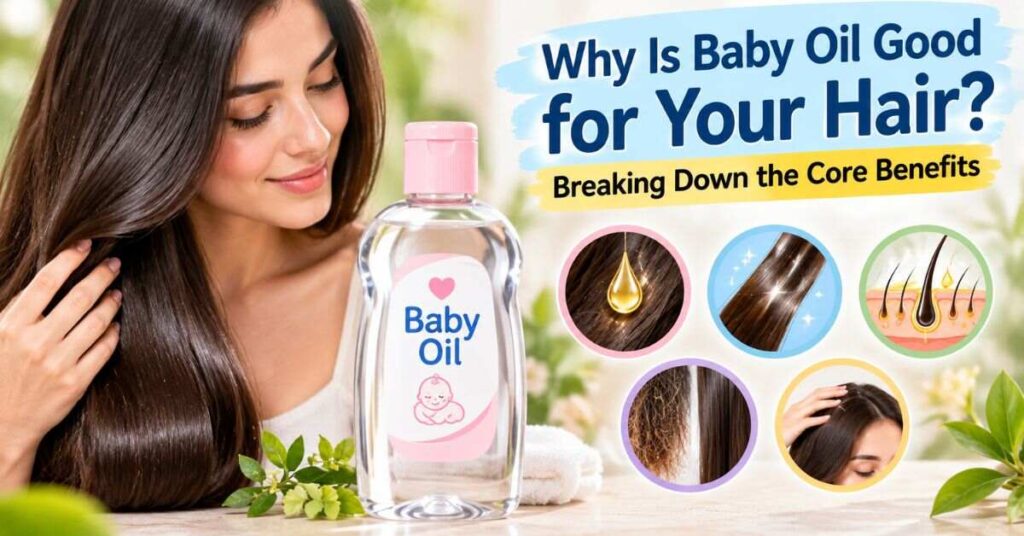
How Moisturizing Dry Strands Proves Is Baby Oil Good for Your Hair
Dry, brittle strands often lack the protective outer layer needed to retain hydration, especially after heat styling or chemical treatments. This is precisely where mineral-based formulations provide a practical solution. Because mineral oil acts as a powerful sealant, applying a tiny amount to damp hair traps lingering water molecules inside the cortex.
- Locking in Hydration: It stops moisture from evaporating into dry indoor air.
- Taming Porosity: High-porosity hair absorbs moisture quickly but loses it just as fast; a light sealant stops this cycle.
- Enhancing Manageability: Coated strands slide past one another smoothly, drastically reducing tangles.
However, because it sits on top of the hair rather than penetrating inward, it works best as a finishing step rather than a deep hydration source. When users ask is baby oil good for your hair, the answer largely depends on whether they need a barrier against moisture loss.
Soothing a Dry Scalp and Relieving Flakiness
A balanced scalp environment is essential for healthy strands. When winter weather or harsh shampoos strip natural oils away, the skin barrier becomes compromised. Massaging a few drops of baby oil onto the scalp helps soothe localized dryness and minimizes flaking by softening tight, irritated skin.
Furthermore, unlike heavy cooking oils that can feed certain scalp microbes, medical-grade mineral oil provides a stable, inert protective layer. Nevertheless, individuals prone to heavy dandruff should use it sparingly to avoid trapping dead skin cells.
Strengthening Hair Shafts and Preventing Split Ends
Split ends occur when the protective cuticle wears away, leaving the inner cortex vulnerable to fraying. While no topical oil can permanently fuse a broken hair back together, baby oil acts as a temporary bandage. By coating the fragile ends, it lubricates the fibers against friction from clothing and shoulders.
Consequently, this mechanical protection prevents existing splits from traveling further up the hair shaft, preserving your overall hair length and sleek appearance.
Smoothing Frizz and Acting as an Instant Hair Serum
Frizz is often the result of raised cuticles welcoming ambient humidity. Instead of spending a fortune on luxury anti-frizz serums, a single drop of baby oil rubbed between your palms and lightly glazed over flyaways instantly flattens stray hairs.
- Instant Gloss: It imparts a high-shine reflection that rivals professional salon glossing sprays.
- Humidity Defense: The occlusive barrier blocks moisture in the air from swelling the hair shaft.
- Weight Control: A microscopic amount provides sleekness without requiring heavy silicones.
Protecting Hair From Environmental Damage and Friction
Daily life exposes your hair to endless environmental stressors, including wind, UV rays, and abrasive clothing textures. Applying a protective layer before heading outdoors shields the outer cuticle from physical wear and tear. This barrier minimizes friction-induced breakage, particularly for individuals with long hair that rubs constantly against high-collared jackets or scarves.
Assisting with Styling and Managing Flyaways
When creating sleek ponytails, updos, or slicked-back buns, stray baby hairs can ruin a polished look. Instead of using stiff hairsprays that dry out the strands, a dab of baby oil works wonders for laying down stubborn edges and flyaways. It keeps styles looking glossy, flexible, and touchable all day long.
Helping to Get Rid of Head Lice Effectively
One of the oldest traditional uses for mineral oil involves suffocating head lice. Because baby oil is thick, it covers live lice and blocks their breathing holes. You simply apply it generously and wear a shower cap. While fine-toothed combing remains essential for removing nits, the dense oil loosens their grip. Consequently, the removal process becomes much smoother and less painful. Thus, many people wonder if is baby oil good for your hair during pest treatments.
Advanced Analysis: Is Baby Oil Good for Your Hair Growth and Thickness?
The Connection Between Scalp Health and Hair Growth
When evaluating whether is baby oil good for your hair growth and thickness, it is vital to understand how hair growth actually happens. Hair does not grow from the hair shaft itself; rather, growth originates deep inside the microscopic follicles anchored in your scalp. Maintaining a clean, calm, and nourished scalp environment encourages optimal cellular activity.
While baby oil does not contain active botanical growth stimulants like biotin or caffeine, keeping the scalp moisturized prevents tightness and flaking that can impede healthy follicle function. By performing a gentle scalp massage, you stimulate micro-circulation, which delivers essential nutrients directly to the hair roots.
Why Baby Hair Growth Takes Time and Patience
Many social media myths claim that certain oils can trigger overnight inches of growth. In reality, human hair naturally grows at an average rate of about half an inch per month. No topical product can alter your genetic growth rate.
- The Growth Cycle: Hair goes through active growth, transition, and resting phases.
- Length Retention vs. Growth: Baby oil does not speed up the biological production of cells; instead, it prevents breakage, helping you retain the length you already grow.
- Consistency is Key: Any scalp or conditioning routine requires weeks of steady application before visible improvements in texture become apparent.
Growth Comes From the Scalp, Not Just the Bottle
A common misconception is that applying oil directly to the ends of your hair will magically make it grow faster. In truth, topical oils protect existing strands from snapping off, which creates the illusion of faster growth.
| Factor | What It Controls | Role of Baby Oil |
| Follicle Activity | Speed of cell division and root health | Stimulates via massage, improves micro-circulation |
| Length Retention | Preventing split ends and breakage | Seals the cuticle, reducing friction-based snapping |
| Moisture Balance | Preventing dry, brittle texture | Locks in underlying hydration |
Ultimately, true thickness and growth stem from internal health, a balanced diet, and proper scalp care, while baby oil acts as an effective protective tool to safeguard your progress.
Read More: moringa oil for hair || coconut oil for baby skin || coconut oil on leather || cannabis coconut oil
Unique Applications: How Else Can You Use Baby Oil for Your Body and Hair?
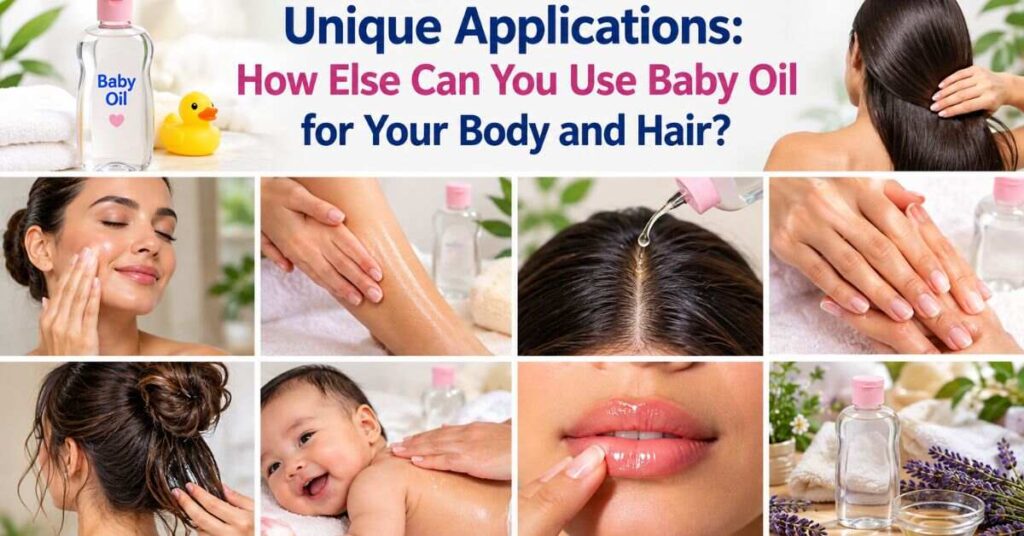
Using Baby Oil as a Deep Nourishing Hair and Scalp Massage
Beyond everyday styling and finishing touches, baby oil makes an exceptional medium for a pre-shampoo deep conditioning ritual. Because it spreads effortlessly across the skin, a few warm drops massaged into your roots can loosen stubborn buildup and stimulate blood flow to the hair follicles.
- Pre-Shampoo Treatment: Apply the oil generously from scalp to ends about thirty minutes before your shower to shield fragile strands from harsh cleansing detergents.
- Hot Oil Alternative: Warming a tiny amount between your palms creates a soothing, salon-style treatment that softens coarse textures.
- Targeted Dryness Relief: Focus extra attention on dry crown areas or friction-prone zones before washing it out thoroughly.
Alternative Beauty Uses: Makeup Removal, Cracked Heels, and Chapped Lips
Because baby oil is formulated to be exceptionally gentle on infant skin, its utility extends far beyond hair care. It serves as an affordable, multi-purpose powerhouse in any comprehensive beauty routine.
- Effortless Makeup Removal: Its oil-soluble base breaks down stubborn waterproof mascara and long-wear foundation without tugging at delicate eye skin.
- Smoothing Cracked Heels: Massaging the oil onto damp feet right before bed locks in intense moisture, transforming rough skin overnight.
- Chapped Lip Rescue: A tiny dab acts as an occlusive lip balm sealant, preventing cold winter air from cracking dry lips.
Hair Type Considerations: Who Benefits Most When Asking Is Baby Oil Good for Your Hair?
Best Results for Thick, Coarse, or Extremely Dry Hair
Not all hair textures respond to products in the exact same way. Individuals with thick, coarse, curly, or extremely dry hair textures often struggle with natural sebum traveling down the hair shaft. Because these hair types are naturally more porous and prone to moisture loss, they respond exceptionally well to the heavy occlusive nature of mineral-based formulations.
- Locking in Deep Hydration: Coarse strands readily accept the protective coating without looking flat or greasy.
- Taming Dense Curls: Curly hair benefits immensely from the definition and humidity resistance that mineral oil provides.
- Rescuing Chemically Treated Hair: Bleached, relaxed, or heat-damaged hair that lacks its natural lipid barrier finds temporary structural reinforcement.
Precautions for Fine, Thin, or Easily Greased Hair Types
Conversely, individuals with fine, straight, or thin hair must approach baby oil with extreme caution. Because fine strands have a small surface area, even a single extra drop can quickly weigh the hair down and create an unwashed, greasy appearance.
- Micro-Application is Essential: Always start with a pinhead-sized amount rubbed between your palms before touching your hair.
- Avoid the Roots: Focus product application strictly on the mid-lengths and ends, keeping it far away from the scalp.
- Alternative Options: If you have fine hair, you might want to look into ultra-lightweight botanical mists instead of heavy mineral-based oils.
Starting Age Matters Before Building an Oil Routine
While the name implies that the product is meant strictly for babies, adults of all ages incorporate it into their beauty regimens. However, starting any new hair or scalp routine requires understanding your specific hair porosity and scalp sensitivity. Younger teens or adults should patch-test the product first, especially if they are mixing it with other active ingredients or essential oils.
What Experts Say: Dermatologists’ Take on Whether Baby Oil Is Good for Your Hair
When consulting dermatologists and trichologists regarding hair and scalp health, professionals generally agree that baby oil serves a specific, limited purpose. Because the primary ingredient is purified mineral oil, skin experts classify it as an inert occlusive agent. Unlike active botanical extracts that deliver vitamins and fatty acids into the cellular matrix, mineral oil stays strictly on the surface of the hair shaft and skin.
Dermatologists frequently point out both the advantages and limitations of this drugstore staple:
- Safe and Non-Irritating: Because it is designed for sensitive infant skin, it rarely causes allergic contact dermatitis when formulated with high-grade, purified mineral oil.
- Surface-Level Protection Only: Experts emphasize that while it creates an impressive moisture barrier, it does not repair internal protein damage or nourish the hair follicle biologically.
- Potential for Build-Up: Trichologists warn that frequent, heavy applications without proper clarifying shampoos can lead to mineral oil accumulation, making hair feel limp and attracting dust or environmental impurities.
Therefore, skin and hair professionals recommend using baby oil strategically as a sealant or pre-shampoo treatment rather than a daily medical cure for severe hair loss or chronic scalp conditions.
Step-by-Step Guide: How to Apply Baby Oil for Hair Correctly
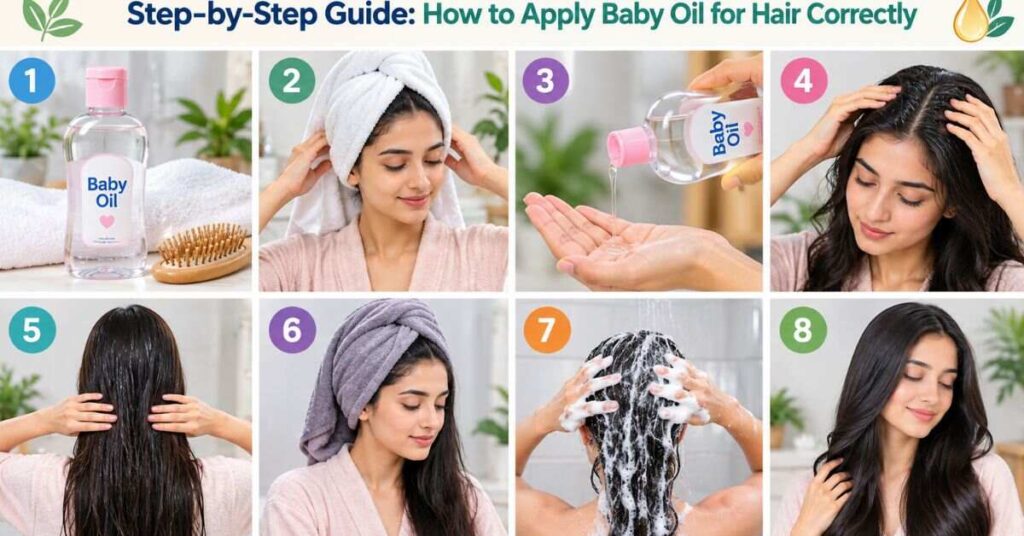
Step-by-Step Instructions for Daily Application and Serum Use
Applying baby oil as a daily styling serum requires restraint and precision. Because the formula is exceptionally concentrated, using too much will instantly weigh down your style. Follow these simple steps for a glossy, manageable finish:
- Dispense a Tiny Amount: Pump or pour just a single drop (about the size of a pinhead) into the palm of your hand.
- Warm Between Palms: Rub your hands together vigorously to distribute the product evenly across your skin.
- Target Mid-Lengths to Ends: Gently glide your palms over the outer layers of your hair, focusing strictly on the ends where dryness and friction occur.
- Avoid the Roots: Keep the product away from your scalp during daily styling to prevent a greasy appearance.
How to Do a Deep Conditioning Overnight Hair Treatment
If your hair is severely dry, coarse, or damaged from heat styling, an intensive overnight treatment can restore softness.
- Section Your Hair: Divide your hair into manageable sections to ensure even coverage.
- Massage the Scalp: Apply a small amount to your fingertips and massage your scalp gently to stimulate micro-circulation.
- Coat the Strands: Work small amounts down to the tips, ensuring every dry patch is lightly coated.
- Protect Your Bedding: Wrap your hair in a soft microfiber towel or wear a clean satin sleep cap to prevent oil transfer onto your pillows.
How to Wash Out Baby Oil Properly Without Damaging Strands
Because mineral oil is hydrophobic, rinsing it out with water alone will not work. Proper removal is essential to avoid heavy buildup:
- Apply Shampoo to Dry Hair: For an intensive pre-shampoo treatment, apply your regular clarifying or sulfate-free shampoo directly to dry, oiled hair and massage it in before adding water. This emulsifies the oil effectively.
- Rinse with Warm Water: Rinse thoroughly until the water runs clear.
- Condition as Usual: Follow up with your favorite hydrating conditioner to restore optimal moisture balance.
Potential Risks, Disadvantages, and Allergies to Keep in Mind
Dealing with Mineral Oil Build-Up and Weight
While baby oil offers fantastic smoothing and sealing properties, overuse comes with distinct drawbacks. Because mineral oil does not evaporate or absorb completely into the hair cortex, it accumulates layer by layer with every application.
- Limp and Flat Strands: Excessive buildup weighs hair down, robbing fine or medium textures of natural volume and bounce.
- Attracting Dirt: A heavy coating of oil acts like a magnet for environmental dust, pollution, and particulate matter, making hair look dull over time.
- The Need for Clarifying Shampoos: Regular daily washes with mild shampoos may not be enough to break down the barrier, requiring a periodic clarifying wash to reset the hair and scalp.
Checking for Skin Allergies and Fragrance Sensitivities
Although commercial baby oils are formulated to be hypoallergenic, they are not entirely free of potential irritants. Most formulas include added synthetic fragrances to give them that iconic, comforting scent.
- Fragrance Sensitivity: Individuals with eczema, contact dermatitis, or highly reactive skin may experience redness, itching, or irritation from added perfumes.
- Patch Testing: Always perform a quick patch test on your inner forearm or behind your ear 24 hours before applying any fragranced oil directly to your scalp.
What Oils Are Not Safe and Which Alternatives to Consider
Not all household or cosmetic oils belong in a hair care routine. Industrial machine oils, cooking oils with heavy additives, or expired cosmetic products can harbor bacteria or cause severe scalp congestion. If you find that mineral oil is too heavy for your hair type, consider switching to lightweight botanical alternatives such as argan oil, jojoba oil, or sweet almond oil, which mimic natural sebum and offer genuine vitamin nourishment.
Custom Blending: Can You Mix Baby Oil With Other Essential Oils for Better Results?
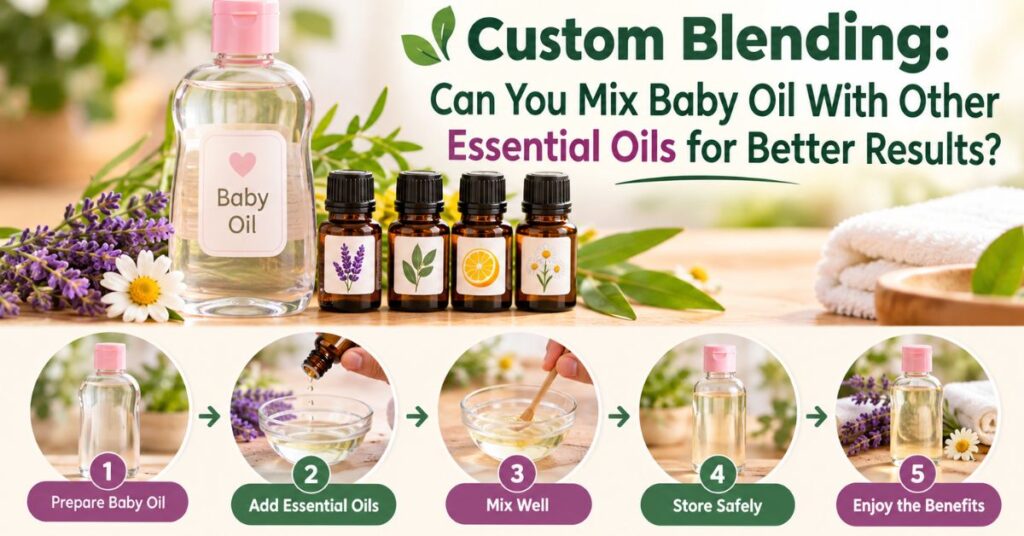
Many beauty enthusiasts enjoy experimenting with DIY hair treatments to enhance the performance of standard drugstore products. Because baby oil is primarily composed of light mineral oil, it acts as an inert, stable base carrier. This neutrality means it will not react chemically with active botanical extracts, making it a viable canvas for custom aromatherapy or scalp infusions.
If you want to elevate your hair care routine with targeted essential oils, consider these expert blending tips:
- Rosemary Oil for Scalp Vigor: Adding just two or three drops of pure rosemary essential oil to a tablespoon of baby oil creates a stimulating scalp treatment designed to support overall hair vitality.
- Lavender Oil for Calming and Fragrance: If you love aromatherapy, a drop of lavender can enhance the relaxing sensory experience of an evening scalp massage.
- Peppermint Oil for a Tingly Sensation: A micro-drop of peppermint oil provides an invigorating cooling sensation that wakes up the senses and promotes blood flow.
Important Safety Note: Because essential oils are extremely potent, always dilute them properly within your base oil rather than applying them directly to the skin. Furthermore, perform a patch test before a full scalp application to ensure you do not experience sensitivity to the botanical extracts.
Comparing Alternatives: Is Baby Oil Good for Your Hair Compared to Luxe Oils?
Comparing Mineral-Based Baby Oil vs. Natural Carrier and Essential Oils
When exploring hair care options, understanding how is baby oil good for your hair compares to luxury botanical oils is helpful. Furthermore, premium options like argan, marula, or jojoba contain complex fatty acids, antioxidants, and vitamins. Consequently, these luxury oils actively nourish the hair cortex. In contrast, baby oil focuses entirely on surface-level protection. Therefore, budget-friendly choices serve as simple sealants rather than deep vitamin treatments.
| Feature / Benefit | Baby Oil (Mineral Oil Base) | Luxe Botanical Oils (e.g., Argan, Jojoba) |
| Primary Action | Occlusive sealant (blocks moisture escape) | Deep nourishment and structural conditioning |
| Cost & Availability | Highly affordable, available at any drugstore | Premium pricing, often found at specialty shops |
| Vitamin Content | Minimal to none (inert petroleum base) | Rich in Vitamin E, fatty acids, and antioxidants |
| Risk of Build-Up | High if used excessively without clarifying | Low to moderate, absorbs more readily |
Ultimately, if your primary goal is sealing split ends or taming flyaways on a budget, baby oil performs exceptionally well. However, if you are seeking deep structural repair and vitamin enrichment, botanical oils take the lead.
The Indium Baby Oil and Brand Comparisons
When exploring the market, you will encounter various formulations ranging from classic drugstore giants like Johnson & Johnson to specialty brands. While the fundamental ingredient across most standard baby oils remains highly refined liquid paraffin or mineral oil, differences often lie in the added fragrances, soothing botanical extracts (such as added aloe vera or chamomile), and hypoallergenic certifications. Checking labels ensures you choose a formula that matches your skin and scalp sensitivities without unnecessary additives.
Conclusion: The Final Verdict on Whether Is Baby Oil Good for Your Hair
Exploring budget beauty hacks often leads back to classic household staples. Consequently, many individuals wonder whether is baby oil good for your hair. Moreover, the answer depends entirely on your daily routine. Ultimately, proper usage ensures you meet your personal hair care needs safely.
Because baby oil relies on a purified mineral oil base, it acts as a phenomenal, budget-friendly occlusive barrier. Baby oil relies on a purified mineral oil base. Consequently, it acts as an affordable, budget-friendly occlusive barrier. Furthermore, it excels at locking in moisture. Additionally, it smooths stubborn frizz. Thus, it protects delicate ends from friction-induced split ends. However, it remains strictly on the surface. Therefore, is baby oil good for your hair as a medical hair loss treatment? In short, it does not function as a vitamin-infused botanical conditioner.
Use With Caution: Those with fine, thin, or easily weighed-down hair types. Accordingly, they must stick to microscopic, pinhead-sized amounts applied strictly to the ends.
Best Suited For: Individuals with thick, coarse, curly, or extremely dry hair. Specifically, they need a lightweight sealant or a pre-shampoo conditioning shield.
Key Takeaway: Balance is everything. Pair your routine with proper clarifying washes, respect your scalp’s unique sensitivities, and enjoy an affordable, high-shine finish without breaking the bank!
About the Author
Noor Fatima | SEO Expert & Natural Oils Specialist
Credentials:
As an SEO expert and the driving force behind Pure Oils Hub (pureoilshub.com), I combine over 8 years of digital strategy and search optimization with a deep, lifelong passion for organic aromatherapy and plant-based living.
First-Hand Experience:
“Navigating the digital landscape for more than 8 years while researching pure botanical and carrier oils has shown me that creating a truly helpful website takes more than just technical SEO. It requires a genuine commitment to cutting through the noise of commercial, synthetic products to deliver honest, thoroughly researched, and practical guides. My goal is to make natural wellness accessible to everyone, helping you discover the simple, powerful ways pure oils can transform your daily self-care routine.”
FAQs:
Can adults use baby oil for hair daily without damage?
Using baby oil daily is generally not recommended unless you are applying a microscopic amount strictly to the ends to tame frizz. Because mineral oil builds up over time, daily heavy application will weigh your strands down, attract dust, and create a limp appearance. Instead, limit treatments to a couple of times per week and use a clarifying shampoo periodically.
How long should you leave baby oil in your hair during treatments?
For an intensive pre-shampoo conditioning treatment or scalp massage, leaving the oil in for 30 minutes to an hour is usually sufficient. If you choose to do an overnight treatment, wrap your hair in a soft microfiber towel or a satin cap to protect your bedding, and wash it out thoroughly the next morning.
What are the main disadvantages of using baby oil on hair?
The primary drawbacks include heavy product buildup, a greasy texture if over-applied, lack of internal vitamin nourishment, and the potential for synthetic fragrances to irritate sensitive scalps. Furthermore, fine hair types can lose all natural volume when exposed to heavy mineral formulations.
Is Johnson’s baby oil good for your hair care routine?
Yes, classic formulas like Johnson’s baby oil work exceptionally well as a budget-friendly sealant to lock in moisture, smooth split ends, and control frizz. However, because it relies on a mineral oil base, it acts as an occlusive shield rather than a deep vitamin treatment.
Can baby oil damage hair if left in too long?
Leaving baby oil in your hair for extended periods does not inherently cause chemical damage, as mineral oil is chemically inert. However, leaving heavy oil coatings in the hair for too long without washing can trap dirt, clog follicles, and make the hair feel excessively greasy and unmanageable.