Introduction: Why Your Lips Deserve Better Than Synthetic Waxes
Have you ever applied a store-bought lip balm, only to find yourself reaching for the tube again and again just an hour later? If you are trapped in that frustrating cycle of perpetual dryness, you are definitely not alone. Most commercial lip treatments rely on petroleum-based waxes and synthetic fragrances that create a superficial, temporary seal while suffocating your skin’s natural ability to breathe. Fortunately, switching to a clean coconut oil lip balm offers a revolutionary way to restore lasting comfort and natural softness to your pout.
As someone deeply passionate about natural wellness and effective holistic skincare, I have found that botanical lipids outperform synthetic formulas every single time. Packed with nourishing fatty acids like lauric and capric acid, pure coconut oil lip balm benefits your lips by melting effortlessly into microscopic skin cracks, delivering deep hydration from within. Whether you are curious about a DIY coconut oil lip balm recipe, comparing the best coconut oil lip balm options on the market, checking a coconut oil lip balm price guide, or evaluating popular retail picks like Palmer’s Coconut Oil Lip Balm and Aquaphor Coconut Oil lip balm, this comprehensive guide will walk you through everything you need to know. Let’s dive into the ultimate secrets for healing chapped lips and achieving a naturally radiant smile!
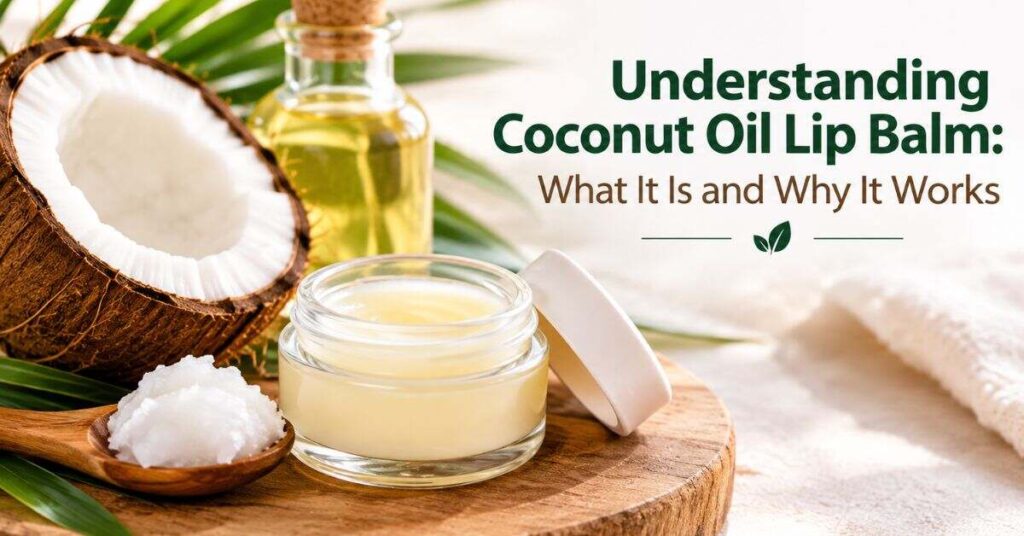
Understanding Coconut Oil Lip Balm: What It Is and Why It Works
What is Pure Coconut Oil and Its Natural Properties?
When we talk about achieving naturally soft, supple skin, pure coconut oil stands out as a timeless powerhouse in the world of holistic beauty. Derived from the kernel or meat of mature coconuts harvested from the coconut palm, this remarkable emollient is packed with a unique profile of fatty acids most notably lauric acid, capric acid, and caprylic acid. Furthermore, these medium-chain triglycerides allow the oil to melt effortlessly upon skin contact, penetrating deeply rather than just sitting superficially on the surface.
As a passionate advocate for natural wellness, I always look for ingredients that offer multi-faceted benefits. Coconut oil naturally brings antimicrobial, antifungal, and soothing properties to your daily routine. Because of this rich biochemical makeup, incorporating a coconut oil lip balm into your self-care regimen delivers an instant wave of nourishment, transforming dull, weathered lips into a healthy, glowing canvas.
Skin vs. Lip Barrier: Why Delicate Lips Need Specialized Care
Have you ever wondered why your lips dry out and peel long before the skin on the rest of your face does? The scientific reality is fascinating yet fragile: human lips lack sebaceous glands, meaning they cannot produce their own natural oils and lipid barrier. While the skin on your cheeks and forehead has built-in defense mechanisms to lock in moisture, your lips are entirely dependent on external hydration.
Moreover, the stratum corneum, the outermost layer of skin, is exceptionally thin on the lips. Consequently, environmental aggressors like harsh winds, dry indoor heating, UV rays, and biting cold strip away moisture at an accelerated rate. This exact vulnerability is why generic face creams often fall short, whereas a specialized coconut oil lip balm for dry lips provides the targeted lipid reinforcement required to shield this sensitive area from cracking and bleeding.
Potential Benefits of Coconut Oil for Your Lips and Skin
Embracing plant-based care shifts how your body responds to everyday environmental stressors. When applied consistently, a quality coconut oil lip balm benefits your lips by creating a breathable, protective shield that locks in essential hydration while keeping irritants out.
To give you a clearer picture of how these properties translate into real-world results, here is a quick breakdown:
| Property | Active Component | Primary Benefit for Lips |
| Emollient Action | Lauric & Caprylic Acids | Fills microscopic cracks in chapped skin for instant smoothness. |
| Antimicrobial Guard | Monolaurin | Defends minor lip fissures against opportunistic bacteria. |
| Moisture Retention | Lipid Matrix | Prevents transepidermal water loss during dry or windy weather. |
Ultimately, whether you are dealing with seasonal weather shifts or indoor air conditioning, utilizing a coconut oil lip balm review consensus highlights just how profoundly this natural remedy restores comfort and elasticity to weary lips.
Why Commercial Lip Balms Fail Compared to Pure Coconut Oil
The Hidden Chemicals and Waxes in Store-Bought Balms
Have you ever noticed that the more you apply certain commercial lip balms, the more dependent your lips become on them? Interestingly enough, many mass-market formulas rely on synthetic petroleum bases, artificial fragrances, and drying alcohols that provide temporary relief while trapping underlying dryness. Furthermore, cheap paraffin waxes create an artificial sealing layer that suffocates the skin, preventing natural cellular respiration. Consequently, once that synthetic layer wears off, your lips feel drier than before, trapping you in an endless cycle of reapplication.
As an experienced content creator who analyzes product labels closely, I always advise looking past flashy marketing claims. Many commercial tubes contain hidden irritants that can trigger contact dermatitis or exacerbate sensitive chapping. In contrast, switching to a clean coconut oil lip balm allows your delicate skin to breathe and heal organically without synthetic petroleum interference.
Why Natural Plant Oils Offer Better Barrier Repair
When evaluating true skin health, nature consistently outperforms synthetic laboratories. Plant-based lipids closely mimic the natural sebum produced by healthy skin, allowing active nutrients to integrate seamlessly rather than just sitting on the surface. Moreover, rich emollients penetrate the cellular matrix of the epidermis, delivering deep, long-lasting nourishment.
To help you understand how clean formulations outshine synthetic alternatives, consider this comparison:
| Feature | Commercial Synthetic Balms | Pure Plant-Based Formulations |
| Moisture Source | Petroleum jelly and mineral oil derivatives | Bioactive plant fatty acids (lauric and capric acid) |
| Barrier Impact | Creates a suffocating, artificial plastic seal | Forms a breathable, protective lipid shield |
| Long-Term Effect | Can cause dependency and chronic dryness | Deeply nourishes and naturally repairs cellular damage |
Ultimately, choosing a coconut oil lip balm recipe or an organic formulation ensures your lips receive pure, unadulterated healing properties without chemical additives.
Top Benefits of Using a Natural Coconut Oil Lip Balm
Deep Hydration and Long-Lasting Moisture Retention
When it comes to maintaining a supple pout, hydration is only half the battle; keeping that moisture locked in is where the real magic happens. Fortunately, a high-quality coconut oil lip balm acts as a brilliant humectant-adjacent protector, forming a rich, nourishing barrier over your lips. Furthermore, the unique combination of fatty acids melts smoothly at body temperature, seeping deep into microscopic skin crevices to hydrate from within.
As someone who values practical beauty solutions, I find that applying a reliable coconut oil lip balm for dry lips completely eliminates that uncomfortable, tight feeling during dry winter months or scorching summer heatwaves. Instead of constantly reapplying chemical-laden products, pure plant lipids keep your lips naturally plump, soft, and touchably smooth all day long.
Soothing Severely Chapped, Dry, and Flaking Skin
Let’s face it: there is nothing quite as frustrating as painful, flaking, or splitting lips that sting every time you smile or eat. When your skin barrier is compromised, it needs immediate, calming relief rather than temporary masking agents. Consequently, incorporating a soothing formula into your daily routine helps calm active inflammation and speed up skin recovery.
To give you a quick glance at how this natural remedy stacks up against common winter lip troubles, here is a helpful breakdown:
| Lip Concern | Standard Commercial Fix | Natural Coconut Oil Treatment |
| Painful Cracking | Numbs the surface temporarily with menthol | Deeply conditions and softens rigid, split skin |
| Flaking Skin | Wears off quickly, leaving skin exposed | Loosens dead skin cells while healing the underlying layer |
| Chronic Dryness | Creates synthetic dependency | Restores natural lipid balance for long-term comfort |
Whether you are looking for the best coconut oil lip balm on the market or planning to mix your own, the soothing relief provided to damaged tissue is truly unmatched.
Natural Antimicrobial Protection Against Environmental Damage
Did you know that your lips are constantly exposed to environmental pollutants, dust, and bacteria throughout the day? Because chapped lips often feature micro-fissures and tiny cracks, they become vulnerable entry points for unwanted microorganisms. Fortunately, pure coconut oil contains natural lauric acid, which converts into monolaurin—a potent compound known for its natural antimicrobial and protective properties.
Furthermore, this protective shield defends your delicate skin against harsh winds and urban smog. Utilizing a specialized coconut oil lip balm review guide often emphasizes this exact defensive benefit, proving that natural organic care goes far beyond simple surface-level shine.
Softening Fine Lines Around the Mouth
As we age or experience routine sun exposure, fine lines and tiny expression wrinkles naturally begin to form around the mouth area. Because the skin surrounding your lips is exceptionally thin, it requires rich emollients to maintain elasticity and firmness. Moreover, the deep moisturizing action of a daily coconut oil lip balm helps plump up the surrounding skin, smoothing out surface texture and reducing the appearance of premature expression lines.
Ultimately, keeping your lips and the immediate skin perimeter well-nourished creates a youthful, healthy glow that no synthetic makeup primer can replicate.
Read More: hair oiling routine || linseed oil for hair || is baby oil good for your hair || moringa oil for hair
How to Use Coconut Oil Lip Balm for Maximum Effectiveness
How to Apply Coconut Oil Lip Balm During the Day
Timing and technique matter significantly when maximizing the benefits of your daily lip care routine. During daylight hours, your lips face constant exposure to outdoor elements, indoor air conditioning, conversation, and beverages. Therefore, applying your Coconut Oil Lip Balm requires a light touch to ensure comfortable, non-greasy protection that lasts through your morning tasks.
Instead of applying a heavy layer that interferes with daily activities, dab a small amount onto your ring finger. Gently press it across your lips. Furthermore, when using commercial options like Palmer’s or Aquaphor, a thin daytime layer acts as a breathable shield. Consequently, it protects against environmental wind without feeling heavy underneath your favorite lipstick.
How to Use Coconut Oil Lip Balm as an Intensive Overnight Treatment
While daytime application focuses heavily on external defense, nighttime is when your skin’s natural cellular regeneration peaks. Consequently, transforming your daily routine into an intensive overnight mask yields incredible healing results by morning. Before going to bed, gently exfoliate your mouth area if necessary, then apply a generous, rich layer of your Coconut Oil Lip Balm to let the deep emollients work undisturbed while you sleep.
To help you compare daytime maintenance versus nighttime therapy, consider this quick reference guide:
| Application Time | Layer Thickness | Primary Objective |
| Daytime Routine | Thin and lightweight | Shield against wind, sun, and dehydration while remaining comfortable. |
| Nighttime Treatment | Thick and nourishing | Deeply repair micro-fissures and lock in heavy overnight moisture. |
Ultimately, waking up to baby-soft, completely restored lips becomes effortless when you leverage this overnight repair window.
How Often Should You Apply Coconut Oil Lip Balm Daily
A common dilemma among beauty enthusiasts is figuring out the ideal frequency for reapplying lip treatments. Interestingly enough, unlike synthetic petroleum balms that trick your lips into craving constant reapplication, a quality botanical formula actually heals the lipid barrier over time. Therefore, you typically only need to apply your Coconut Oil Lip Balm 3 to 4 times a day:
- Once in the morning right after brushing your teeth to seal in foundational hydration.
- Once midday following lunch to actively counter afternoon dryness.
- Once in the late afternoon if you are exposed to harsh office air conditioning or outdoor wind.
- Once right before bed to serve as an intensive overnight recovery treatment.
By following this balanced schedule, you avoid over-saturating the delicate skin while ensuring consistent, round-the-clock nourishment.
Step-by-Step Guide to Healing Chapped Lips Fast with Coconut Oil Lip Balm
When your lips transition from simply dry to painfully cracked and peeling, you need an actionable, step-by-step recovery plan. Acting quickly stops minor irritation from turning into a stubborn, painful fissure.
To fast-track your healing process, follow this simple clinical protocol:
- Gentle Exfoliation: Remove loose, dead skin flakes by softly buffing your mouth using a damp washcloth or a mild sugar scrub.
- Immediate Hydration: Pat a tiny drop of pure water onto your clean lips to provide initial moisture.
- Lock and Seal: Immediately apply a rich layer of your Coconut Oil Lip Balm to trap that moisture securely within the skin barrier.
- Repeat Consistently: Reapply every few hours and commit to a thick overnight layer until complete healing is achieved.
Expert Note: Consistency is the single most important factor when restoring severely damaged skin barriers. Always prioritize clean, organic formulations to accelerate natural cellular recovery without synthetic irritants.
Choosing the Right Ingredients for Your DIY Coconut Oil Lip Balm
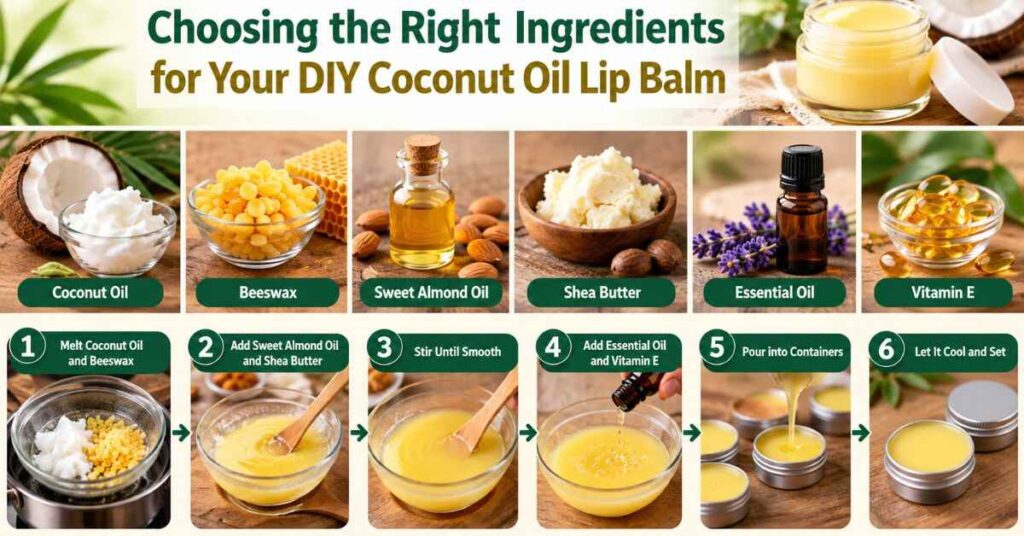
Virgin vs. Refined Coconut Oil: Which One is Better?
When you embark on creating or choosing a quality lip treatment, standing in the aisle or browsing online can bring up a classic dilemma: should you go with virgin or refined coconut oil? The truth is that the extraction method plays a massive role in how the final product performs on your skin. Virgin coconut oil is extracted from fresh coconut meat without heat or chemical solvents. Consequently, it preserves its natural antioxidant content and potent fatty acid profile.
Conversely, refined oil is processed from dried copra, bleached, and deodorized. Therefore, it strips away much of its natural character. When searching for the best coconut oil lip balm, opting for unrefined virgin oil ensures your skin reaps raw benefits.
Why Organic and Cold-Pressed Oils Matter for Sensitive Skin
Let’s face it: the skin on your lips is remarkably thin and porous, meaning whatever you apply gets absorbed directly into your system. This exact vulnerability is why prioritizing certified organic and cold-pressed extraction methods is non-negotiable for sensitive skin care. Conventionally grown coconuts may carry residual pesticide or fertilizer traces from farming, which can easily trigger irritation, contact dermatitis, or stinging around the mouth.
Furthermore, cold-pressing guarantees that no damaging high temperatures degrade the delicate molecular structure of the oil. By selecting clean, organic ingredients for your coconut oil lip balm recipe, you eliminate hidden chemical triggers, ensuring a pure, soothing experience that heals even the most delicate, reactive lips.
DIY Enhancements: What to Add to Your Coconut Oil Lip Balm for Extra Moisture
Blending with Raw Honey for Enhanced Humectant Power
While pure coconut oil excels as a protective shield, combining it with a true natural humectant takes your homemade treatment to another level. Raw honey draws moisture directly from the air into your skin cells, providing deep hydration. Furthermore, honey boasts natural soothing properties that work synergistically with the antimicrobial nature of a DIY coconut oil lip balm recipe.
When whipping up a fresh batch at home, stirring in a small drop of raw honey creates a creamy texture. Therefore, it instantly relieves tight chapping while leaving behind a sweet finish.
Adding Vitamin E Oil for Deep Cellular Repair
If you want to supercharge your lip care routine against environmental aging and UV stress, adding a few drops of pure Vitamin E oil is an absolute game-changer. Vitamin E is a potent fat-soluble antioxidant that neutralizes free radicals and accelerates skin cell regeneration. Furthermore, it acts as a natural preservative, extending the shelf life of your custom batch.
To help you visualize how to craft a customized formula, here is a quick overview of popular booster ingredients and their specific functions:
| Booster Ingredient | Primary Skin Function | Best Suited For |
| Raw Honey | Draws environmental moisture into the skin | Severely dehydrated and flaking lips |
| Vitamin E Oil | Accelerates cellular repair and protects barrier | Aging, weather-damaged, or splitting lips |
| Beeswax Pellets | Provides solid structure and long-wearing seal | On-the-go pocket tubes and sticks |
Mixing with Beeswax to Create a Solid Tube Balm
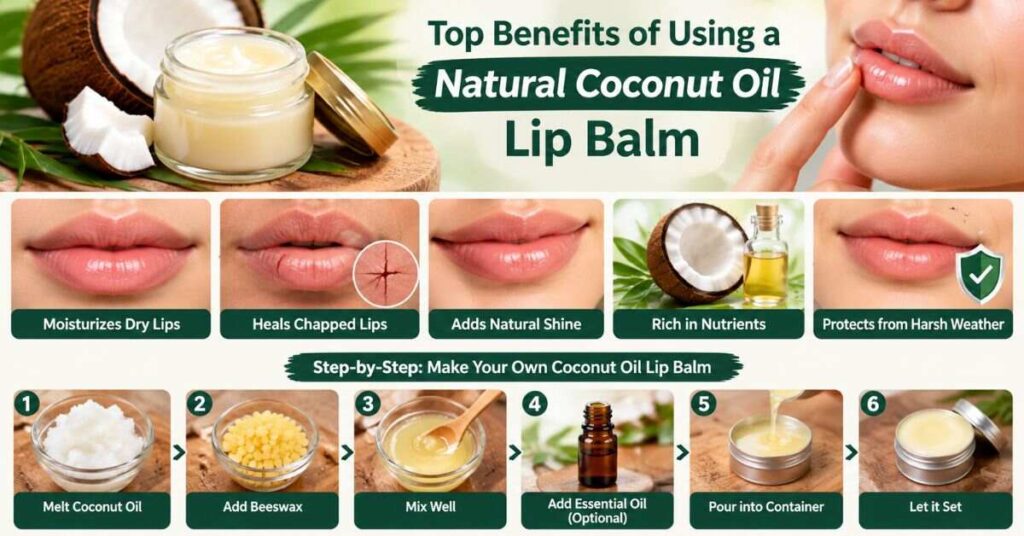
One common challenge with pure coconut oil is its low melting point it turns into a liquid at around 76°F (24°C), making it messy to carry in your pocket during warmer months. Fortunately, mixing in cosmetic-grade beeswax pellets solves this problem instantly. Beeswax acts as a natural structural hardening agent while adding an extra layer of wind-resistant protection.
Melt equal parts beeswax and unrefined coconut oil over low heat. Consequently, you create a sturdy, professional-quality solid stick. Furthermore, it glides on smoothly without melting all over your bag.
Exfoliating First: Combining with Brown Sugar for a Lip Scrub
Even the finest, most nutrient-dense treatment will struggle to penetrate if a thick layer of dead, dry skin flakes blocks the way. Therefore, pairing your routine with a gentle exfoliating step is essential for achieving true smoothness.
To prep your lips properly before applying your daily coconut oil lip balm for dry lips, follow this quick DIY scrub method:
- Mix one teaspoon of fine brown sugar with a half teaspoon of melted coconut oil.
- Massage the mixture onto your lips in gentle, circular motions for 30 seconds.
- Wipe clean with a warm, damp cloth to reveal fresh, ultra-soft skin ready to absorb deep hydration.
Potential Side Effects and Precautions of Using Coconut Oil on Lips
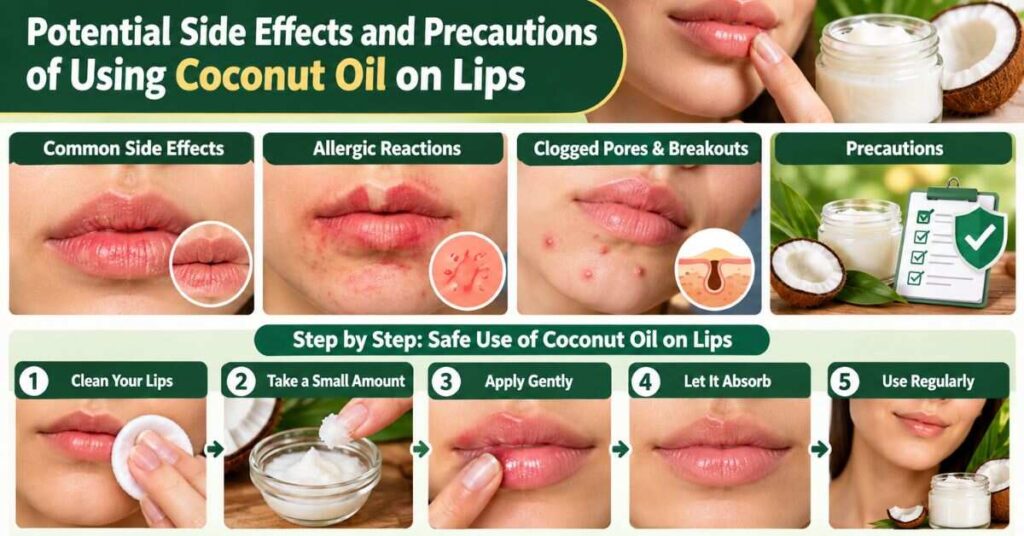
Can Coconut Oil Cause Allergic Reactions or Breakouts Around the Mouth?
While switching to botanical skincare is generally a fantastic step toward natural health, it is always wise to listen closely to how your skin responds. True coconut allergies are relatively rare, but individuals with ultra-sensitive skin or specific botanical sensitivities can occasionally experience mild irritation. Furthermore, if you are prone to perioral breakouts, applying heavy occlusive oils too densely around the immediate lip border can sometimes clog microscopic pores.
As a smart skincare enthusiast, I always recommend doing a quick patch test on your inner wrist or the edge of your jawline before slathering a new coconut oil lip balm all over your mouth. If your skin remains calm and happy after 24 hours, you are completely good to go!
Understanding Comedogenic Ratings for Lip Care
When evaluating skincare ingredients, you often encounter a comedogenic rating. This scale ranges from 0 to 5, measuring how likely an oil is to clog pores. Consequently, pure coconut oil sits at a moderate 4. Therefore, it features a heavy molecular structure designed to lock in moisture tightly.
To help you understand how this affects your routine, consider this quick breakdown:
| Skin Factor | What It Means for Lip Care | How to Manage It Wisely |
| Comedogenic Score (4/5) | Rich and highly occlusive; can trap debris if skin isn’t clean. | Always apply your coconut oil lip balm to clean, freshly washed lips. |
| Pore Congestion Risk | May trigger small bumps if applied heavily on the skin around the mouth. | Keep application precise to the lip line rather than spreading wide onto the face. |
Understanding these ratings ensures you harness incredible protective benefits. Therefore, you can leverage a coconut oil lip balm review consensus without risking unwanted breakouts around your smile.
Final Thoughts and The Takeaway on Coconut Oil Lip Balm
Navigating the overwhelming world of commercial cosmetics often leads us back to the pure, unadulterated power of nature. Perhaps you are exploring a quick coconut oil lip balm review to find your next purchase. Alternatively, you might compare popular retail options like Palmer’s Coconut Oil Lip Balm and Aquaphor Coconut Oil lip balm. Therefore, checking a detailed coconut oil lip balm price guide beforehand proves invaluable.
By skipping synthetic waxes and embracing clean botanical care, you give your lips deep moisture. Furthermore, it delivers antimicrobial protection and lasting comfort. Stay consistent with your daily routine, enjoy the glowing results, and let your soft smile shine!
About the Author
Noor Fatima | SEO Expert & Natural Oils Specialist
Credentials:
As an SEO expert and the driving force behind Pure Oils Hub (pureoilshub.com), I combine over 8 years of digital strategy and search optimization with a deep, lifelong passion for organic aromatherapy and plant-based living.
First-Hand Experience:
“Navigating the digital landscape for more than 8 years while researching pure botanical and carrier oils has shown me that creating a truly helpful website takes more than just technical SEO. It requires a genuine commitment to cutting through the noise of commercial, synthetic products to deliver honest, thoroughly researched, and practical guides. My goal is to make natural wellness accessible to everyone, helping you discover the simple, powerful ways pure oils can transform your daily self-care routine.”
FAQs
Can coconut oil lip balm dry out your lips if used too frequently?
One of the most common myths circulating online is that natural plant oils can somehow dehydrate your lips over time. Pure unrefined coconut oil lip balm contains no drying chemicals or alcohols. Consequently, it never causes physical dependency. However, if your lips suffer from severe damage, relying solely on surface occlusion without addressing internal hydration leaves them feeling dry.Pairing your daily coconut oil lip balm routine with adequate water intake and a balanced diet completely eliminates this issue.
Is cooking coconut oil safe to use directly on lips, or should I use organic?
While kitchen-grade cooking oils are technically edible, they are often processed, refined at high heats, or stored in containers that compromise their purity. When caring for sensitive lip tissue, you should always choose unrefined, cold-pressed, or certified organic products. Choosing a high-grade option ensures your coconut oil lip balm benefits remain potent. Furthermore, it keeps the product free from chemical residues while staying packed with natural healing phytonutrients.
How long does it take for severely chapped lips to heal with coconut oil?
Healing time depends on your skin barrier condition. Most people notice a dramatic reduction in pain within twenty-four hours of consistent application. Furthermore, by applying a rich layer of coconut oil lip balm for dry lips throughout the day and sealing it overnight, severe chapping typically resolves completely within five days.
Can I mix essential oils into my coconut oil lip balm?
Yes, you can! Incorporating a tiny drop of skin-safe essential oils like peppermint or lavender adds a delightful aroma and extra soothing properties. However, you must always dilute them properly in your carrier oil base to avoid skin irritation or sensitivity around the mouth.