Introduction
Pure neroli essential oil stands out as one of the most luxurious, aromatic, and versatile botanical extracts available today. Derived from the delicate white blossoms of the bitter orange tree (Citrus aurantium), this exquisite oil has captured the attention of holistic health practitioners, luxury perfumers, and skincare experts worldwide. Furthermore, its unique ability to uplift mood while simultaneously rejuvenating mature skin makes it a cornerstone in high-end aromatherapy.
Whether you are looking to revitalize your daily skincare routine, reduce chronic daily stress, or explore the holistic health neroli essential oil benefits, understanding its origin, extraction process, and chemical profile is essential. This comprehensive guide breaks down everything you need to know about this precious botanical extract.
What is Neroli Essential Oil?
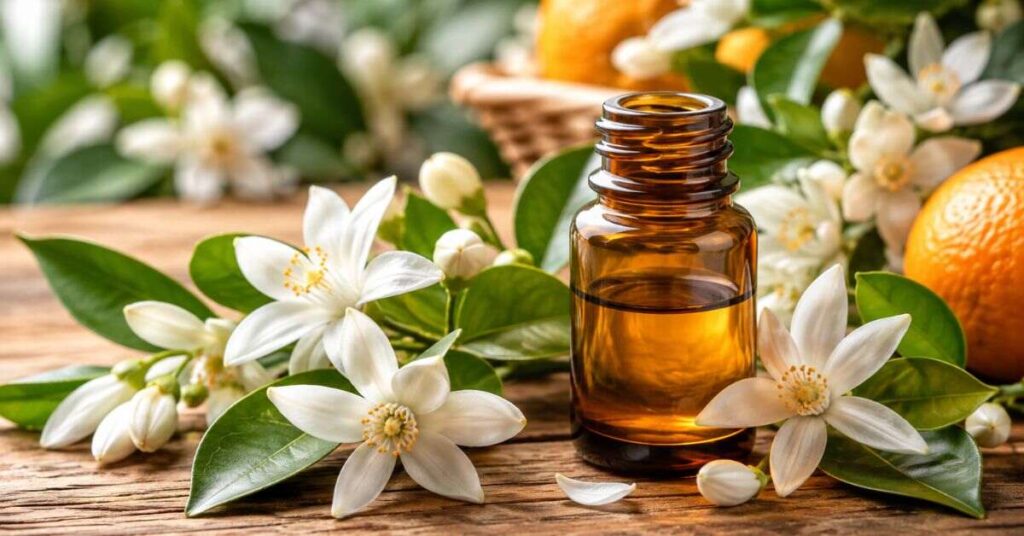
To truly appreciate neroli essential oil, one must look beyond its captivating floral scent. It is a highly potent, steam-distilled essential oil obtained exclusively from the freshly picked blossoms of the bitter orange tree. Unlike citrus oils extracted from fruit peels through cold-pressing, true neroli oil requires intricate steam distillation of delicate flower petals.
Historically named after Anne Marie Orsini, the 17th-century Princess of Nerola who popularized its use as a personal perfume and glove fragrance, this oil has retained its reputation as a regal botanical treatment. Consequently, its dual nature combining rich floral elegance with bright citrus undertones makes it an indispensable ingredient in world-class aromatics and natural therapeutics.
Origin and Extraction Process of Neroli Essential Oil
The journey of neroli essential oil from blossom to bottle is both labor-intensive and time-sensitive. The bitter orange tree (Citrus aurantium var. amara) thrives primarily in sunny, Mediterranean climates, with top-tier production centered in regions like Tunisia, Morocco, Egypt, and France.
[Harvesting: Fresh Blossoms] ➔ [Gentle Steam Distillation] ➔ [Separation: Essential Oil & Hydrosol]
To preserve the fragile aromatic compounds, local farmers hand-pick the blossoms early in the morning just as the flowers begin to open. Once harvested, the extraction process must occur immediately:
- Hand Harvesting: Farmers select undamaged, freshly bloomed white flowers during peak morning humidity to maximize oil yield.
- Steam Distillation: The blossoms are placed into steam distillation units where low-pressure steam gently releases the volatile aromatic compounds without burning the delicate petals.
- Oil & Hydrosol Separation: As the vapor condenses, precious neroli essential oil floats to the surface and is carefully skimmed off, while the aromatic water collected underneath becomes orange blossom water (hydrosol).
For instance, pure neroli essential oil organic extracts remain among the most exclusive natural products available today. Specifically, it takes approximately 1,000 pounds (over 450 kg) of hand-picked bitter orange blossoms (Citrus aurantium) to yield just one single pound of pure oil. Furthermore, this labor-intensive harvesting process significantly raises production costs and market value for certified neroli essential oil organic products.
In addition, steam distilling these delicate blossoms requires immediate processing to preserve volatile terpenes like linalool and limonene. Therefore, understanding the immense raw material requirements explains why high-grade organic neroli essential oil commands a premium price. Consequently, verifying authentic neroli essential oil purity through third-party GC/MS testing ensures you invest in genuine botanical extracts rather than synthetic adulterants.
Neroli Essential Oil vs Orange Blossom vs Bergamot
Because multiple popular oils originate from citrus trees, consumers frequently confuse neroli essential oil with Orange Blossom absolute and Bergamot essential oil. Although they share subtle floral or citrus notes, their plant parts, extraction methods, and functional profiles differ significantly.
| Attribute | Neroli Essential Oil | Orange Blossom (Absolute) | Bergamot Essential Oil |
| Plant Source | Citrus aurantium (Blossoms) | Citrus aurantium (Blossoms) | Citrus bergamia (Fruit Peel) |
| Extraction Method | Steam Distillation | Solvent Extraction | Cold-Pressed |
| Aroma Profile | Light floral, green citrus, bittersweet | Deep, sweet, heavy floral | Fresh, crisp, tart citrus |
| Primary Skincare Use | Rejuvenating, scar fading, balancing oil | Luxury perfumery, intense hydration | Clarifying oily skin, acne control |
| Phototoxicity | Non-phototoxic (distilled) | Non-phototoxic | Phototoxic (unless FCF grade) |
While both Neroli and Orange Blossom come from the same bitter orange flower, steam distillation yields the light, crisp neroli essential oil, whereas solvent extraction produces the denser, intensely sweet Orange Blossom absolute. Bergamot, in contrast, comes strictly from the cold-pressed peel of a distinct citrus fruit.
Chemical Composition and Active Compounds
The exceptional therapeutic performance of neroli is directly linked to its rich, synergistic biochemical signature. Advanced gas chromatography tests reveal that pure neroli oil contains over 30 distinct volatile compounds, dominated by key monoterpenes and alcohols:
- Linalool (28% – 44%): A primary terpene alcohol responsible for the oil’s pronounced calming, anti-anxiety, and soothing effects on both the mind and nervous system.
- Linalyl Acetate (3% – 15%): Works together with linalool to deliver gentle anti-inflammatory, sedative, and mood-stabilizing benefits.
- Limonene (9% – 18%): A powerful antioxidant monoterpene that protects cellular integrity and brightens the skin profile.
- E-Nerol (2% – 5%) & Geraniol: Essential natural compounds that support cellular regeneration, anti-aging elasticity, and microbial balance.
- Nerolidol & Trans-Beta-Ocimene: Rare trace compounds that contribute unique woody undertones and skin-penetrating capabilities.
Because of this specific molecular balance, the oil acts as a potent natural balancing agent for both skin tissues and neurochemical responses.
Olfactory Profile: What Does Neroli Essential Oil Smell Like?
Describing the fragrance profile of neroli essential oil requires exploring multiple layered notes. When first diffused or applied in a diluted state, the aroma opens with an immediate burst of fresh, green citrus top notes that feel instantly invigorating.
As the initial brightness settles, the complex heart of the oil emerges: a rich, elegant, honeyed-floral scent balanced by a subtle, bittersweet undertone. Unlike synthetic floral scents that can feel heavy or cloying, high-grade neroli delivers a clean, uplifting, and earthy aroma that grounds the mind while refreshing the ambient environment. Consequently, it remains a irreplaceable top-to-middle note in iconic luxury fine fragrances worldwide.
Top Health and Skincare Benefits of Neroli Essential Oil
The therapeutic reputation of neroli essential oil extends far beyond its pleasant scent. Modern clinical research and traditional aromatherapy practices both confirm that this botanical powerhouse delivers remarkable benefits for the skin, central nervous system, and endocrine health. Consequently, incorporating oils uses into your wellness routine offers holistic support for both physical and emotional vitality.
Benefits of Neroli Essential Oil for Skin, Wrinkles & Anti-Aging
When it comes to dermatological health, neroli essential oil for skin care is widely regarded as an elite natural botanical. Its unique cellular-regeneration properties make it especially effective for aging, dry, or irritated skin conditions.
- Promotes Cellular Regeneration: The natural presence of citral and nerolidol stimulates healthy cell turnover, helping to smooth fine lines and restore youthful skin elasticity.
- Balances Sebum Production: Unlike heavy oils that clog pores, neroli actively regulates sebum levels, making it equally effective for dry skin and acne-prone oiliness.
- Fades Scars and Stretch Marks: Powerful cicatrisant properties accelerate skin healing, significantly reducing the appearance of acne scars, blemishes, and post-pregnancy stretch marks.
- Antimicrobial Protection: Rich in protective terpenes, it fights surface bacteria, helping to prevent breakouts while maintaining a healthy skin barrier.
[Blemish / Fine Line] ➔ [Diluted Neroli Application] ➔ [Cellular Renewal & Sebum Balance] ➔ [Smooth, Radiant Skin]
Furthermore, combining neroli essential oil organic with lightweight carrier oils creates an exceptional anti-aging facial serum that restores natural glow without causing greasy buildup.
Neroli Essential Oil for Stress, Anxiety, and Mood Support
Among the most researched essential oil benefits is its profound ability to soothe an overactive nervous system. Inhaling the aromatic vapors triggers immediate chemical activity in the brain’s limbic system, which controls emotions and stress responses.
Clinical trials show that inhaling diffused neroli oil significantly lowers cortisol levels (the body’s primary stress hormone). Because it contains high levels of linalool and linalyl acetate, it acts as a gentle, non-sedative anxiolytic. Consequently, diffusing it during hectic work hours or right before sleep helps quiet racing thoughts, relieve nervous tension, and encourage deep, restorative sleep.
Pain Relief and Anti-Inflammatory Properties of Neroli Essential Oil
Beyond cosmetic applications, how thy possesses scientifically backed analgesic and anti-inflammatory properties. Biologically, its active components inhibit key inflammatory pathways, offering targeted relief for muscle aches, joint stiffness, and localized tissue discomfort.
| Condition | How Neroli Helps | Recommended Application |
| Muscle Soreness | Reduces localized tissue swelling and eases spasms | Diluted massage oil rub |
| Joint Stiffness | Inhibits inflammatory enzyme triggers | Warm compress with 3-4 drops |
| Tension Headaches | Relieves vascular constriction and muscle stress | Gentle temple massage with carrier oil |
Therefore, incorporating a few drops into a therapeutic massage oil provides double benefits by soothing physical muscle soreness while simultaneously relaxing the mind.
Neroli Essential Oil Benefits for Women: PMS, Labor & Menopause
Women, in particular, experience exceptional physiological support from neroli essential oil. Its endocrine-balancing influence helps ease emotional and physical symptoms across various reproductive stages:
- PMS Relief: Inhaling the oil or applying a diluted abdomen massage reduces painful menstrual cramps, bloating, and pre-menstrual mood swings.
- Labor & Delivery Support: Clinical studies in hospital settings demonstrate that aromatherapy with neroli significantly decreases anxiety and perception of pain during early stages of labor.
- Menopausal Balance: For postmenopausal women, inhaling neroli oil helps reduce biological stress, lowers blood pressure, and improves endocrine symptom management, including hot flashes.
Cardiovascular & Neurological Benefits: Blood Pressure and Seizures
Emerging biological research highlights the powerful systemic impact of neroli essential oil on heart health and neurological balance:
- Blood Pressure Regulation: Inhalation of a neroli aromatherapy blend has been shown to immediately reduce systolic blood pressure and salivary cortisol levels in individuals with hypertension.
- Anticonvulsant Potential: Preclinical neurological studies indicate that active compounds like linalool demonstrate anticonvulsant activity, helping to stabilize central nervous system signaling.
By calming the sympathetic nervous system (the “fight or flight” response), neroli helps keep cardiovascular rhythm stable during acute stress events.
How to Use Neroli Essential Oil Safely
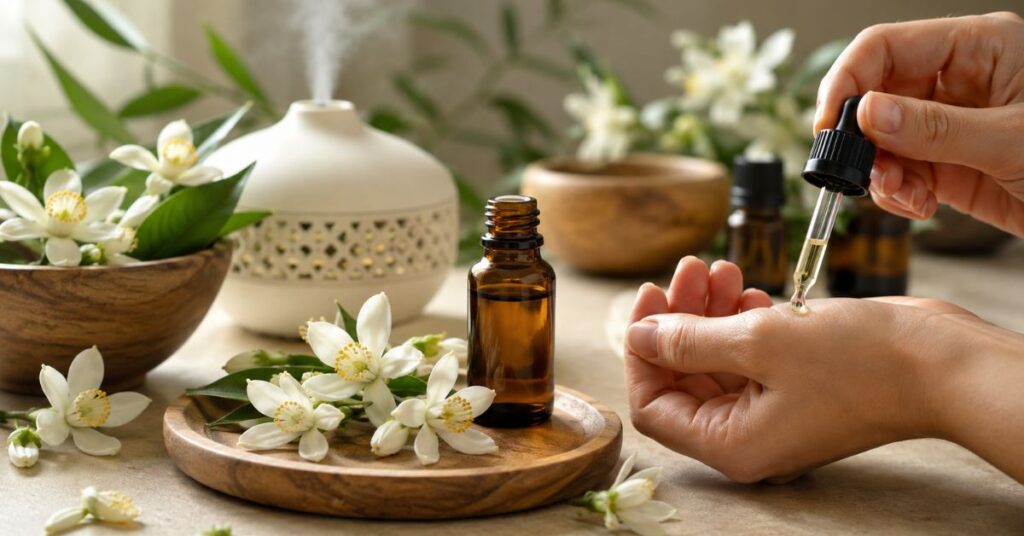
Because pure neroli essential oil is exceptionally potent, applying it directly to raw skin without dilution can cause unnecessary irritation. Fortunately, learning proper dilution rates and application methods ensures you enjoy maximum therapeutic benefits safely. Exploring versatile neroli essential oil uses enables you to create customized facial serums, therapeutic bath oils, and relaxing aromatherapy diffusions at home.
Topical Application and Facial Dilution Guidelines
When applying neroli essential oil for skin care, maintaining a strict dilution ratio is essential. For facial care, a 0.5% to 1% dilution rate is ideal, while body applications can comfortably tolerate up to a 2% dilution rate.
| Application Target | Dilution Rate | Drops per 30ml (1 oz) Carrier Oil | Best Used For |
| Sensitive Facial Skin | 0.5% | 3 drops | Daily eye creams, delicate skin serums |
| Standard Facial Care | 1.0% | 6 drops | Anti-aging facial oils, night moisturizers |
| Body Massage & Rubs | 2.0% | 12 drops | Stretch mark treatments, body massage |
[Pure Neroli Oil] + [Gentle Carrier Oil] ➔ [1% Safe Dilution] ➔ [Radiant Facial Treatment]
To prepare a simple facial serum, mix 6 drops of neroli essential oil organic extract into 30ml of your chosen carrier oil. Store the mixture in a dark glass dropper bottle to protect active botanical compounds from light degradation.
Aromatherapy, Diffusion, and Blending Guide for Neroli Essential Oil
Aromatherapy remains one of the most effective methods to experience the mood-enhancing properties of neroli essential oil. Because its fragrance is highly concentrated, a small amount goes a very long way in ultrasonic diffusers or room sprays.
- Ultrasonic Diffuser: Add 3 to 5 drops to 100ml of water. Diffuse in 30-minute intervals to maintain a fresh, calming atmosphere without overwhelming the senses.
- Direct Palm Inhalation: Place 1 drop of diluted neroli oil onto your palms, cup them over your nose, and take 5 deep breaths during stressful moments.
- Synergistic Blending Partners: Neroli blends exceptionally well with citrus oils (Bergamot, Lemon), floral notes (Rose, Ylang Ylang, Lavender), and grounding woody bases (Sandalwood, Frankincense).
Additionally, integrating a few drops into scalp treatments unlocks neroli essential oil benefits for hair. Massaging diluted neroli into the scalp helps balance excess sebum production, soothe itching, and impart a subtle floral scent to natural tresses.
Best Carrier Oils to Pair with Neroli Essential Oil
Selecting the ideal carrier oil enhances the absorption and specific benefits of neroli essential oil:
- Jojoba Oil: Best for oily or combination skin. Its biological structure closely mimics natural human sebum, allowing fast absorption without clogging pores.
- Rosehip Seed Oil: Best for mature skin and scar reduction. High in essential fatty acids and Vitamin A, it works synergistically with neroli to smooth wrinkles.
- Argan Oil: Best for dry skin and hair vitality. Rich in Vitamin E, it locks in moisture when paired with neroli for hair and scalp treatments.
- Sweet Almond Oil: Best for body massages and sensitive skin, offering smooth glides and gentle hydration.
Read More: chamomile essential oil || Thieves essential oil || Myrrh Essential Oil || coffee essential oil
Side Effects, Precautions, and Safety Rules
While neroli essential oil is generally considered non-toxic, non-sensitizing, and non-irritating for most individuals, maintaining smart botanical safety protocols is mandatory. Because essential oils represent highly concentrated active compounds, handling them with care prevents accidental reactions and preserves their therapeutic potency over time.
Potential Side Effects and Skin Sensitivity
For the majority of people, properly diluted neroli essential oil poses no safety risks. However, individual biological responses vary, and mild side effects can occur if safety rules are ignored:
- Contact Dermatitis: Applying undiluted oil directly onto raw or broken skin can trigger localized redness, itching, or minor burning sensations.
- Allergic Sensitization: Individuals with known allergies to citrus blossoms or plants in the Rutaceae family may experience allergic contact reactions.
- Headaches from Overexposure: Inhaling heavily concentrated vapors for prolonged periods without ventilation can occasionally cause mild headaches or slight nausea.
[Patch Test: 1 Drop Diluted Oil on Inner Forearm] ➔ [Wait 24 Hours] ➔ [Check for Redness/Irritation] ➔ [Safe to Use]
The Patch Test Protocol
Before adding neroli essential oil for skin care into your regular daily regimen, always complete a patch test. Apply 1 drop of diluted neroli oil (mixed with 1 teaspoon of carrier oil) to your inner forearm. Cover the area with a bandage and wait 24 hours. If no redness, itching, or inflammation occurs, the oil is safe for your skin.
Phototoxicity Clarification: Unlike many cold-pressed citrus peel oils (such as lime, lemon, or grapefruit), pure steam-distilled neroli essential oil is non-phototoxic. You can safely wear properly diluted neroli oil outdoors without worrying about sun-induced skin blistering or hyperpigmentation.
Proper Storage and Shelf Life of Pure Neroli Essential Oil
Due to its high concentration of monoterpenes and delicate floral esters, neroli essential oil organic extracts are vulnerable to degradation caused by light, heat, and oxygen exposure. Oxidized essential oils lose their therapeutic benefits and are far more likely to cause skin irritation.
| Environmental Threat | Biological Effect | Storage Prevention Method |
| Direct Sunlight | Breaks down active linalool esters | Store strictly in dark amber or cobalt blue glass bottles |
| Heat Exposure | Accelerates evaporation of volatile top notes | Keep in a cool, dark cabinet or dedicated beauty fridge ($15^\circ\text{C} – 20^\circ\text{C}$) |
| Oxygen (Air) | Causes oxidation of terpenes | Seal the dropper cap tightly immediately after every single use |
Under optimal storage conditions, pure neroli essential oil maintains its full aromatic and therapeutic stability for approximately 2 to 3 years. If your oil develops a sharp, vinegar-like odor or becomes unusually cloudy, it has likely oxidized and should be discarded.
Neroli Essential Oil Buying Guide
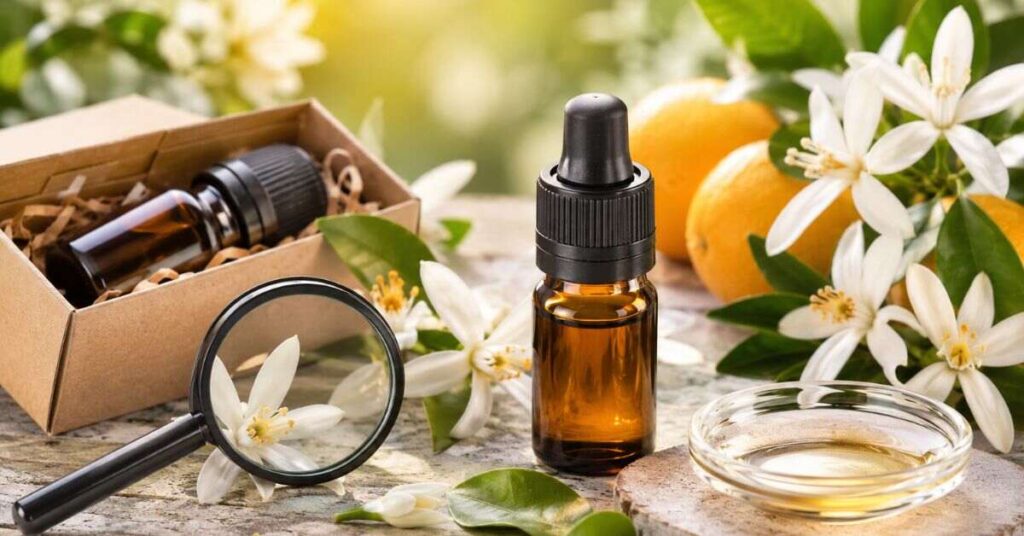
Because neroli essential oil ranks among the most expensive botanical extracts globally, the market is unfortunately flooded with synthetic counterfeits, diluted fragrance oils, and mislabeled citrus blends. Therefore, knowing how to verify product purity protects both your wallet and your health.
How to Identify 100% Pure Organic Neroli Essential Oil
To ensure you are purchasing authentic, therapeutic-grade neroli essential oil organic extracts, evaluate the bottle against these strict quality indicators:
- Botanical Name Verification: Check the ingredient label for the exact Latin botanical name: Citrus aurantium var. amara (or Citrus aurantium flos). Labels that simply say “Orange Oil” or “Citrus Fragrance” are not true neroli.
- Dark Glass Packaging: Authentic essential oils are sold strictly in dark amber or cobalt blue glass bottles (usually 5ml or 10ml). Avoid products in clear glass or plastic containers, as plastic reacts with volatile terpenes.
- Purity Declarations: Look for explicit terms such as “100% Pure Steam-Distilled Essential Oil.” Avoid products labeled as “Fragrance Oil,” “Perfume Oil,” or “Nature-Identical Synthetic,” which indicate artificial chemicals.
- Third-Party GC/MS Testing: Reputable botanical brands provide access to Gas Chromatography-Mass Spectrometry (GC/MS) batch test results verifying the chemical breakdown of active compounds like linalool and limonene.
[Inspect Label: Citrus aurantium] ➔ [Check Packaging: Dark Glass] ➔ [Verify 100% Pure Steam Distilled] ➔ [Pure Oil Confirmed]
Understanding Local Market Pricing
Finding authentic neroli essential oil in pakistan requires careful attention to price points. While synthetic fragrance oils sell for as low as PKR 300 to 500, true therapeutic-grade neroli essential oil price in pakistan typically ranges between PKR 650 to PKR 1,500+ per 10ml bottle for standard brands, while imported 100% organic oils can cost significantly more. Extremely cheap options are almost certainly synthetic substitutions or heavily diluted mixtures.
Why is Neroli Essential Oil So Expensive?
Consumers often wonder why a small bottle of pure neroli oil commands such a premium price compared to standard citrus or lavender oils. The high cost reflects complex agricultural and processing factors:
| Factor | Production Impact |
| Massive Blossom Yield Requirement | It takes roughly 1,000 pounds (450+ kg) of delicate, hand-picked bitter orange blossoms to produce just 1 single pound of pure neroli oil. |
| Labor-Intensive Harvest | Workers must hand-pick fragile blossoms individually early in the morning when the flowers open to prevent volatile oil loss. |
| Fragile Steam Distillation | Unlike cold-pressed fruit peel oils, orange blossoms require slow, low-pressure steam distillation to avoid burning delicate flower compounds. |
| Limited Annual Harvest Window | Bitter orange trees bloom only once a year during a brief spring window, restricting global annual supply. |
Consequently, the combination of high agricultural labor, low oil yield, and limited seasonal harvest justifies its status as a precious botanical luxury.
Final Takeaway
Pure neroli essential oil remains one of nature’s most extraordinary gifts for holistic wellness. From smoothing fine lines and balancing oily skin to calming an overactive mind and easing daily physical stress, its multifaceted therapeutic benefits make it worth every drop.
By following proper dilution guidelines, choosing 100% pure organic extracts, and pairing it with nourishing carrier oils, you can safely elevate your daily beauty and wellness routine. Whether you diffuse its majestic floral scent after a long day or formulate your own radiant face serum, incorporating true neroli oil into your lifestyle delivers a touch of regal botanical luxury that restores both mind and skin.
FAQs:
Can I apply Neroli Essential Oil directly to my face?
No, you should never apply neat, undiluted neroli essential oil directly to your facial skin. Pure essential oils are highly concentrated chemical compounds that can cause localized redness, chemical burns, or severe allergic sensitization when applied undiluted.
To safely enjoy neroli essential oil for skin rejuvenation, always dilute it into a high-quality carrier oil (such as Jojoba, Rosehip, or Argan oil) at a 0.5% to 1% concentration—which equals roughly 3 to 6 drops of neroli per 30ml (1 oz) of carrier oil. Always conduct a 24-hour patch test on your inner forearm before applying any new botanical mixture to your face.
Is Neroli Essential Oil safe during pregnancy?
Yes, neroli essential oil is widely regarded by clinical aromatherapists as one of the safest essential oils to use during pregnancy, particularly during the second and third trimesters. In fact, clinical trials demonstrate that inhaling neroli aromatherapy helps reduce labor anxiety and ease pain perception during early stages of delivery.
However, during the first trimester, it is best to avoid topical applications of all potent essential oils as a precaution. During later months, keep topical dilutions very mild (around 0.5% to 1%) and consult your doctor or midwife before incorporating new aromatherapy remedies into your routine.
How often can you use Neroli Essential Oil?
You can safely use properly diluted neroli essential oil every day as part of your skincare and wellness habits:
- Topical Skincare: A diluted facial serum can be applied once or twice daily (morning and night) to clean skin.
- Aromatherapy Diffusion: You can diffuse neroli oil 1 to 3 times daily in 30-to-45-minute sessions. Continuous 24-hour diffusion is not recommended, as your olfactory system can become desensitized.
[Skincare: 1-2x Daily (Diluted)] | [Diffusion: 1-3x Daily (30-min sessions)] | [Direct Inhalation: As Needed]
What is the Best Neroli Essential Oil Substitute?
If pure neroli is outside your budget, finding an effective neroli essential oil substitute depends on your primary goal:
- For Fragrance & Aroma: Petitgrain essential oil (distilled from the leaves and twigs of the exact same bitter orange tree) offers a fresh, woody-citrus scent at a fraction of the cost.
- For Skincare & Anti-Aging: Rosehip seed oil mixed with a drop of Lavender or Frankincense mimics neroli’s cellular renewal and skin-soothing properties.
- For Stress & Anxiety: Sweet Orange combined with Ylang Ylang or Bergamot creates an uplifting, floral-citrus aromatherapy blend.