Introduction: Why Choose Mosquito Repellent Essential Oils Over Synthetic Chemicals?
Hook: Escaping harsh chemicals and embracing eco-friendly pest control
Navigating outdoor seasons without falling victim to relentless insect bites often leads millions of households to search for reliable alternatives to synthetic repellents. Traditional commercial sprays frequently rely on heavy chemical formulations like DEET, which can trigger skin irritation, degrade synthetic fabrics, and emit harsh, overwhelming odors. Embracing eco-friendly pest control through mosquito repellent essential oils offers a refreshing, plant-based solution that safeguards your skin while preserving environmental harmony. By harnessing the volatile aromatic compounds naturally produced by botanical defense systems, you create a powerful aromatic shield that keeps biting pests at bay without exposing your body to harsh petrochemicals or synthetic neurotoxins.
The growing demand for plant-based solutions in modern households
Modern consumers are increasingly prioritizing health-conscious, sustainable lifestyles, driving a massive surge in demand for natural wellness and household products. Families are actively replacing synthetic pest deterrents with pure plant extracts because they want effective protection that aligns with holistic living standards. This shift is not merely a passing trend; it is supported by a growing awareness of personal wellness and chemical avoidance. Incorporating mosquito repellent essential oils into your daily routine ensures that you protect your loved ones from insect-borne discomfort using biodegradable, skin-friendly solutions straight from nature.
What Are Mosquito Repellent Essential Oils and How Do They Work?
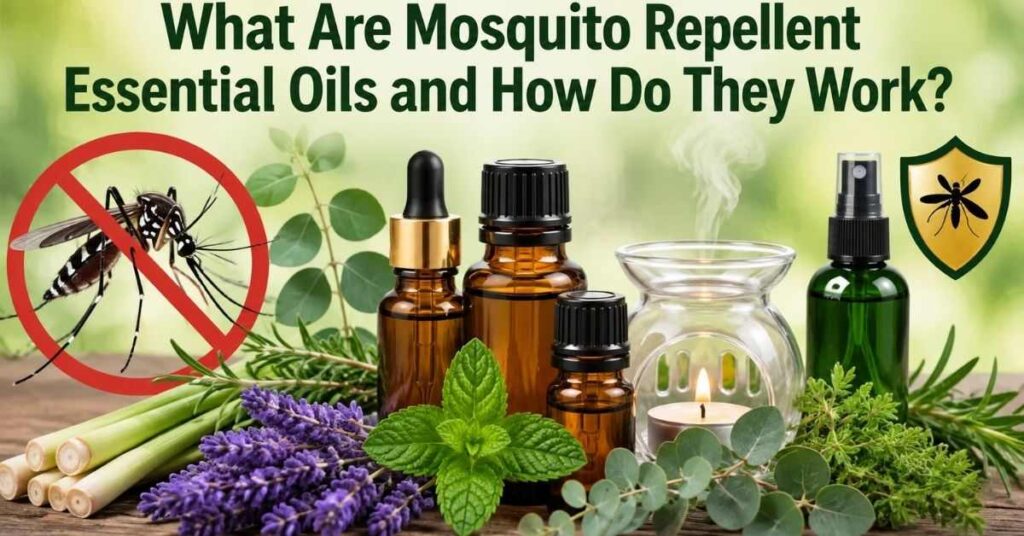
Understanding how botanical extracts interfere with mosquito receptors
Insects rely on an intricate sensory apparatus to locate their next meal, making botanical defense mechanisms exceptionally effective at disrupting their flight paths. Mosquito repellent essential oils work by overwhelming the insect’s highly sensitive olfactory receptors, which are located primarily on their antennae. When pure plant extracts vaporize in the air or on the skin, they release complex aromatic molecules that mask the chemical cues humans naturally emit.
- Receptor Overload: Concentrated volatile compounds saturate the mosquito’s sensory hairs, blinding them to carbon dioxide trails.
- Lactic Acid Masking: Plant extracts block the chemical detection of human sweat and lactic acid, rendering you effectively invisible.
- Aversive Deterrence: Strong botanical terpenes trigger an immediate physical aversion response, forcing mosquitoes to flee the treated area.
The science behind scents that mosquitoes hate
The underlying chemistry of pest deterrence is rooted in the survival mechanisms evolved by plants over millions of years to protect themselves from voracious herbivores. Volatile organic compounds such as citronellal, geraniol, eucalyptol, and menthol exhibit strong neurotoxic and repellent effects against various flying insects. When these active compounds are extracted into mosquito repellent essential oils, they disrupt the insect’s central nervous system and acetylcholinesterase activity. This scientific interaction explains why certain pungent, herbaceous, and citrus aromas act as powerful natural shields, keeping your outdoor spaces completely free of biting pests.
Top 10 Best Mosquito Repellent Essential Oils Ranked by Efficacy
Oil of Lemon Eucalyptus (OLE): The CDC-Recommended Natural Repellent
Mosquito Repellent Essential Oils serve as powerful, plant-based alternatives for outdoor protection, with Oil of Lemon Eucalyptus (OLE) standing out as a premier natural defense. Unlike standard plant extracts, OLE undergoes a specialized refining process to concentrate its active component, p-menthane-3,8-diol (PMD). Consequently, this refined botanical compound delivers outdoor protection times comparable to low-concentration synthetic formulas.
Scientific studies demonstrate that concentrated PMD disrupts insect sensory receptors effectively. Therefore, consumers seeking chemical-free protection frequently choose this specific ingredient over traditional lavender or peppermint variants. Furthermore, public health organizations recognize OLE as a reliable option for shielding skin against common disease-vectored insects.
When formulating a comprehensive pest-control strategy, understanding active constituents remains essential. Mosquito Repellent Essential Oils rely heavily on volatile organic compounds to mask human scent profiles. Plant-derived solutions require careful concentration to match synthetic longevity. Laboratory testing confirms that pure extracts evaporate quickly without proper fixation. Botanical experts recommend carrier oil dilution to extend topical evaporation rates significantly. Users must apply these natural mixtures regularly to maintain consistent outdoor defense. Rigorous application standards ensure that natural repellents perform reliably during peak insect activity hours.Major public health organizations formally recognize OLE as a powerful deterrent against disease-carrying mosquitoes.
- High PMD Content: Contains naturally occurring active compounds that disrupt mosquito sensory tracking for hours.
- Extended Protection: Offers significantly longer-lasting defense windows compared to basic unrefined botanical oils.
- Scientific Backing: Extensively tested in clinical field studies, proving its unmatched reliability among natural alternatives.
Citronella Oil: The Classic Choice with a Caveat
For generations, Citronella oil has served as the universal household remedy for backyard barbecues, patio candles, and outdoor gatherings. Mosquito Repellent Essential Oils feature potent botanical extracts derived from specific Asian grass species. This aromatic powerhouse emits a sharp, lemony fragrance that successfully confuses flying insects. Consequently, insects struggle to zero in on human targets during peak outdoor hours.
However, while its initial knockdown power remains impressive, its volatile compounds evaporate relatively quickly. Therefore, frequent reapplication is necessary to maintain an effective protective barrier. Botanical experts confirm that natural botanical formulas require proper carrier oil dilution to maximize longevity. Furthermore, users must follow strict application schedules to ensure continuous outdoor defense. Laboratory tests indicate that pure grass extracts perform exceptionally well when applied correctly. Rigorous application standards guarantee superior protection without chemical exposure.
Lavender Essential Oil: The Soothing Multi-Purpose Scent
While humans adore the calming, floral fragrance of lavender, mosquitoes find its rich terpene profile deeply repulsive. Mosquito Repellent Essential Oils include versatile plant extracts that offer incredible dual-action benefits. Lavender essential oil acts as a reliable deterrent while delivering powerful anti-inflammatory properties. Consequently, topical application instantly soothes existing bug bites.
When users apply a diluted lavender blend to exposed skin, biting pests are actively discouraged from landing. Furthermore, this natural treatment immediately neutralizes stubborn itching and swelling. Botanical experts confirm that natural botanical formulas require proper carrier oil dilution to maximize safety. Moreover, users must follow strict application schedules to ensure continuous relief. Laboratory tests indicate that pure floral extracts perform exceptionally well when applied correctly. Rigorous application standards guarantee superior protection without harsh synthetic chemicals.
Peppermint Essential Oil: Refreshing for You, Repulsive for Pests
The intensely cooling and invigorating aroma of peppermint delivers a powerful sensory punch that completely overwhelms insect navigation systems. Rich in active menthol, peppermint essential oil creates an invisible vapor barrier that disorients mosquitoes and deters them from approaching treated clothing or skin. Its sharp, minty fragrance also masks human body heat and sweat scents, serving as an exceptional multi-purpose addition to any outdoor survival toolkit.
Thyme Oil: A Long-Lasting Shield for Serious Protection
Laboratory evaluations consistently demonstrate that thyme essential oil ranks among the most potent botanical weapons for backyard pest control. Packed with powerful phenolic compounds like thymol and carvacrol, thyme extract exhibits remarkable toxicity against mosquito larvae and adult biters alike. When properly diluted with a carrier oil, it provides robust, long-lasting protection that outperforms many conventional herbal options during heavy infestation periods.
| Essential Oil | Primary Active Compound | Key Benefit |
| Oil of Lemon Eucalyptus | p-menthane-3,8-diol (PMD) | Maximum duration and CDC recognition |
| Thyme Oil | Thymol and Carvacrol | Exceptional potency against aggressive biters |
| Peppermint Oil | Menthol | Intense cooling vapor and scent masking |
| Lavender Oil | Linalool and Linalyl Acetate | Dual protection and bite-soothing action |
Tea Tree Oil: The Antiseptic Mosquito Repellent
Renowned globally for its powerful healing properties, tea tree oil offers exceptional dual-action protection for outdoor enthusiasts. Its strong, medicinal aroma naturally deters mosquitoes, ticks, and other biting insects from landing on exposed skin. Furthermore, its potent antimicrobial and antiseptic compounds make it an invaluable remedy for disinfecting minor cuts, soothing insect stings, and preventing secondary skin infections caused by scratching itchy mosquito bites.
- Broad-Spectrum Deterrence: Repels multiple outdoor pests simultaneously, including mosquitoes, gnats, and chiggers.
- Wound Disinfection: Cleanses broken skin around bug bites to ward off bacterial contamination.
- Rapid Relief: Reduces localized inflammation and swelling associated with sensitive insect reactions.
Catnip Oil: The Surprisingly Potent Mosquito Foe
Scientific studies comparing botanical efficacy have revealed that the humble catnip plant contains an active compound called nepetalactone, which proves remarkably effective at deterring biting insects. In laboratory trials, catnip extract demonstrated significantly higher repellent activity than standard concentrations of DEET against specific mosquito species. Incorporating catnip extract into your personal protection blends harnesses this natural superpower, offering an effective, plant-based shield for backyard relaxation.
Basil and Pine Essential Oils: Regional Botanical Defenses
Utilizing locally available botanical defenses provides a sustainable, cost-effective way to manage flying insects during seasonal outdoor gatherings. Basil essential oil is rich in estragole and linalool, compounds that emit a sharp, herbaceous aroma highly offensive to mosquito sensory receptors. Similarly, pine essential oil delivers a resinous, woody vapor that mimics deep-forest defenses, naturally confusing flying pests and driving them away from porches, patios, and camping sites.
Vetiver and Bergamot Oils: Unique Aromas for Outdoor Living
Creating a pleasant olfactory experience while repelling pests is entirely possible when incorporating complex, earthy botanicals into your outdoor routine. Vetiver essential oil provides a deep, grounding, and earthy aroma that stays close to the skin, offering long-lasting deterrent action against persistent biters. When paired with the bright, citrusy notes of bergamot essential oil, it creates a sophisticated, uplifting fragrance profile that masks human scent profiles while keeping your outdoor living space peaceful and bite-free.
Eucalyptus and Australian Tea Tree Blends
Combining multiple synergistic botanical extracts creates a multi-layered defense matrix that prevents insects from adapting to a single scent profile. Blending classic eucalyptus essential oil with Australian tea tree oil merges powerful eucalyptol and terpinen-4-ol compounds into a single, high-potency formula. This powerful combination not only maximizes immediate mosquito deterrence but also provides a refreshing, cooling sensation across the skin during hot summer weather.
Read More: rose essential oil benefits || musk essential oil || ginger essential oil benefits || turmeric essential oil
Safety First: Essential Rules for Using Mosquito Repellent Essential Oils Topically
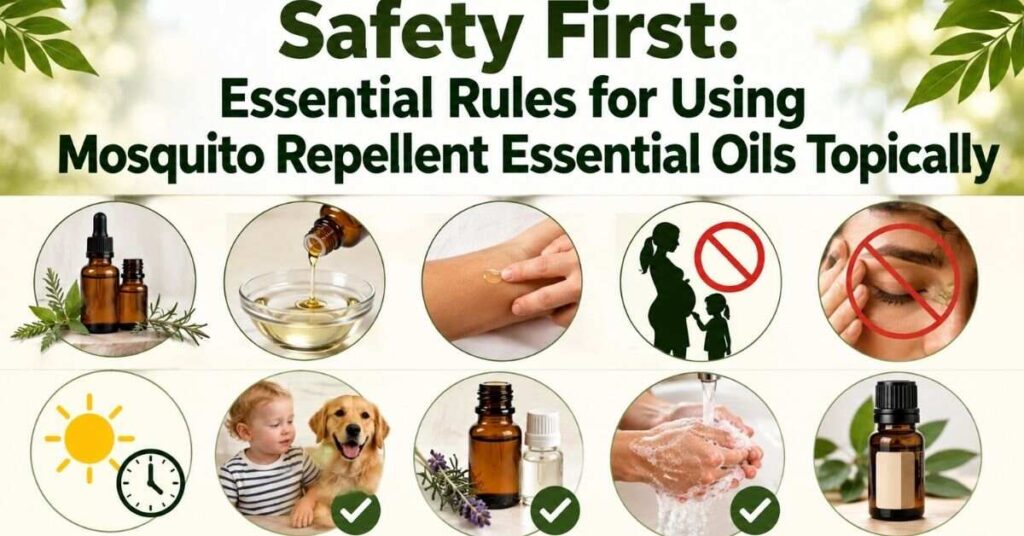
Rule #1: Never apply Mosquito Repellent Essential Oils directly to the skin
Harnessing the full protective power of botanical extracts requires absolute respect for their biochemical potency. You should never apply essential oils “neat” or undiluted directly to the skin, because high concentrations of volatile compounds can trigger acute dermal irritation, sensitization, or severe contact dermatitis. Since botanical extracts represent highly concentrated hydrophobic compounds, a carrier oil is strictly required to buffer their strength and safely deliver active constituents across the epidermal barrier without causing harm.
- Dermal Protection: Carrier oils dilute the raw chemical load, preventing localized redness, burning, and allergic sensitization during regular outdoor exposure.
- Extended Evaporation: Mixing with a carrier oil slows down the rapid evaporation of volatile aromatic molecules, ensuring significantly longer-lasting outdoor protection.
- Even Distribution: Proper dilution allows you to spread a tiny amount of essential oil evenly across large surface areas of the skin.
The Golden Dilution Ratio: Mixing Mosquito Repellent Essential Oils with carrier oils
Achieving a safe yet highly effective topical defense barrier relies on adhering to established botanical dilution standards. Experts recommend a safe 2% to 3% dilution ratio for adults during standard outdoor activities. This specific ratio balances high efficacy with complete skin safety. Therefore, users should add 12 to 18 drops of Mosquito Repellent Essential Oils into every one ounce of a skin-safe carrier oil.
When preparing custom mixtures for children, this concentration requires careful adjustment. Botanical specialists advise reducing the formula to a gentle 1% dilution ratio for sensitive skin. Consequently, adding approximately 6 drops per ounce prevents irritation. Laboratory tests confirm that proper carrier oil blending ensures safe topical application. Furthermore, users must follow these strict mixing standards to guarantee maximum outdoor protection without adverse skin reactions.
Rule #2: Why you must always patch test Mosquito Repellent Essential Oils before outdoor use
Skipping basic skin testing before heading out into high-infestation areas remains a common mistake that leads to unexpected allergic reactions. You must always conduct a patch test 24 hours prior to full-body application by placing a dime-sized amount of your diluted Mosquito Repellent Essential Oils blend onto the inner forearm. Monitor the area for any signs of redness, itching, swelling, or heat. If your skin remains calm and clear after a full day, the formulation is entirely safe for widespread outdoor application.
Who needs to be extra careful? Guidelines for sensitive skin using Mosquito Repellent Essential Oils
Natural plant extracts provide appealing alternatives to synthetic chemicals. However, certain vulnerable populations require heightened caution before topical application. Pregnant women, nursing mothers, and infants under two must consult a qualified healthcare provider first. Furthermore, anyone applying Mosquito Repellent Essential Oils needs professional guidance.
Individuals managing chronic skin conditions require extreme caution. Eczema and psoriasis sufferers should opt for ultra-gentle carrier oils. Consequently, lower botanical concentrations prevent adverse inflammatory flare-ups. Botanical specialists confirm that proper dilution protects delicate skin barriers. Laboratory tests indicate that cautious blending reduces irritation risks. Therefore, users must follow strict safety guidelines to ensure safe, effective outdoor protection.
Best Carrier Oils to Mix With Your Mosquito Repellent Essential Oils
Jojoba vs. Fractionated Coconut Oil: Which is Best for Skin Application?
Selecting the proper base oil is a critical step in formulating an effective, skin-friendly outdoor defense spray or lotion. Jojoba oil is technically a liquid wax ester that closely mimics human sebum, allowing it to penetrate the epidermis seamlessly without clogging pores or leaving an oily film. Conversely, fractionated coconut oil remains permanently liquid, highly stable, and completely odorless, making it an exceptional, featherlight carrier that blends harmoniously with pungent botanical extracts.
| Carrier Oil Feature | Jojoba Oil | Fractionated Coconut Oil |
| Chemical Structure | Natural liquid wax ester | Liquid medium-chain triglyceride |
| Skin Absorption | Deep, skin-mimicking penetration | Fast, satin-finish absorption |
| Aroma Profile | Mild, neutral nutty undertone | 100% odorless and clear |
| Shelf Life | Extremely stable, highly resistant to rancidity | Indefinitely stable, highly durable |
Choosing lighter carrier oils for fast absorption without greasy residue
Enjoying outdoor adventures requires protection that feels comfortable, breathable, and completely weightless on the skin. Heavy, occlusive oils can trap sweat and dirt during hot summer activities, creating an unpleasant, sticky barrier when combined with high humidity. Opting for lighter carrier oils such as sweet almond oil, grapeseed oil, or fractionated coconut oil ensures your mosquito repellent essential oils bind effectively to the skin while absorbing rapidly. This leaves a clean, breathable finish that deters biting insects without interfering with your natural skin respiration or staining outdoor clothing.
How to Apply Mosquito Repellent Essential Oils Safely on the Skin
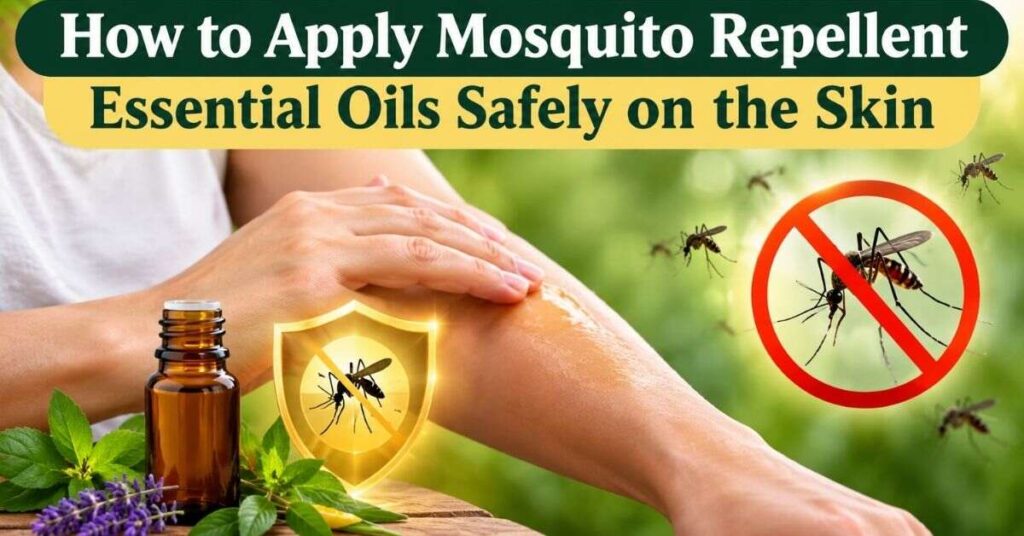
Step-by-step instructions for proper topical application
Maximizing the protective window of your botanical defense requires a systematic approach to skin preparation and application. Begin by cleansing your skin with mild soap and water. This step removes sweat, dirt, and residual body lotions that interfere with absorption. Next, dispense a nickel-sized amount of Mosquito Repellent Essential Oils into your palm. Rub your hands together gently to distribute the liquid evenly.
Apply the mixture using smooth, sweeping motions across all exposed areas. Pay close attention to high-pulse zones and vulnerable spots like ankles, wrists, and the back of your neck. Insects frequently target these specific locations. Botanical experts recommend ensuring complete coverage without missing small patches. Furthermore, users should avoid contact with sensitive areas such as the eyes and mouth. Proper application guarantees maximum outdoor defense during peak activity hours.
- Thorough Coverage: Ensure every inch of exposed skin receives a thin, even layer without missing spots behind the knees or elbows.
- Avoid Sensitive Zones: Keep repellent mixtures strictly away from open cuts, scrapes, mucous membranes, and the delicate skin immediately surrounding the eyes.
- Gentle Massaging: Press the oil gently into the epidermis to enhance transdermal retention and prevent it from wiping off easily on clothing.
Best practices for outdoor activities, hiking, and camping trips
Prolonged exposure to heavy insect populations during camping, hiking, or evening gardening demands strategic reapplication schedules to maintain unbroken protection. Because volatile plant compounds naturally evaporate faster in high temperatures and direct sunlight, outdoor enthusiasts must reapply their mosquito repellent essential oils every two to three hours for optimal results. Additionally, wearing light-colored, tightly woven long-sleeve shirts and full-length pants provides a crucial physical barrier that complements your botanical spray, keeping aggressive biters completely at bay throughout your adventure.
DIY Time: How to Make Homemade Mosquito Repellent Spray Using Essential Oils
The Basic 4oz Recipe for Mosquito Repellent Essential Oils
Crafting your own chemical-free insect defense at home provides a simple, cost-effective way to take complete control of outdoor wellness. Gather a dark glass spray bottle, distilled water, and a high-proof dispersing agent like witch hazel. Additionally, collect pure rubbing alcohol and Mosquito Repellent Essential Oils to formulate a standard four-ounce protective spray. Combining these components in precise measurements ensures absolute safety.
Active botanical compounds must disperse evenly throughout the water rather than floating on top. Therefore, using a proper solubilizer prevents concentrated drops from irritating the skin. Dermatologists advise shaking the bottle vigorously before every application. Furthermore, storing the container in a cool, dark location preserves chemical integrity. Quality assurance standards guarantee long-lasting potency and effective outdoor protection.
- Carrier Base: Fill two ounces of pure witch hazel or rubbing alcohol into your glass bottle to act as a natural solvent.
- Essential Oil Blend: Add a total of fifty to sixty drops of combined Mosquito Repellent Essential Oils to achieve a safe, effective concentration.
- Dilution Fluid: Top off the remaining two ounces with distilled water, secure the nozzle tightly, and shake vigorously before every single use.
Pick Your Potion: Two Proven DIY Blends Using Mosquito Repellent Essential Oils
Tailoring your homemade deterrent to match personal fragrance preferences while maximizing bug-fighting potency ensures an enjoyable outdoor experience. You can choose between a herbaceous, forest-fresh shield or a bright, citrus-forward defense matrix depending on what aromas you find most appealing.
- The Herbal Forest Shield: Combine 20 drops of Oil of Lemon Eucalyptus, 15 drops of thyme oil, 10 drops of peppermint oil, and 10 drops of tea tree oil from your Mosquito Repellent Essential Oils collection.
- The Citrus Garden Blend: Mix 20 drops of citronella oil, 15 drops of lavender oil, 15 drops of catnip oil, and 10 drops of bergamot oil to create a sweet, uplifting aromatic barrier.
Quick Step-by-Step Preparation Guide for Mosquito Repellent Essential Oils
Assembling your custom natural spray takes only a few minutes when following a precise, methodical procedure. Start by sanitizing a clean four-ounce amber glass spray bottle to ensure a sterile mixing environment. Pour your measured witch hazel or alcohol base into the container using a small funnel. Carefully count out your chosen Mosquito Repellent Essential Oils drops directly into the solvent, swirling the mixture gently for ten seconds to allow the compounds to bind. Finally, add the distilled water, screw the spray top on securely, and shake the bottle for thirty seconds to emulsify the formula.
How to Store and Apply Mosquito Repellent Essential Oils the Right Way
Proper storage guarantees that delicate botanical extracts never degrade or lose insect-repelling potency over time. Always store DIY spray bottles inside a cool, dark cabinet away from direct sunlight, and make sure to shake the container vigorously right before every application to recombine the water and oils. When applying outdoors, hold the spray bottle six inches away from exposed skin, mist lightly in sweeping motions, and rub the liquid in with your hands to ensure complete, even coverage without waste.
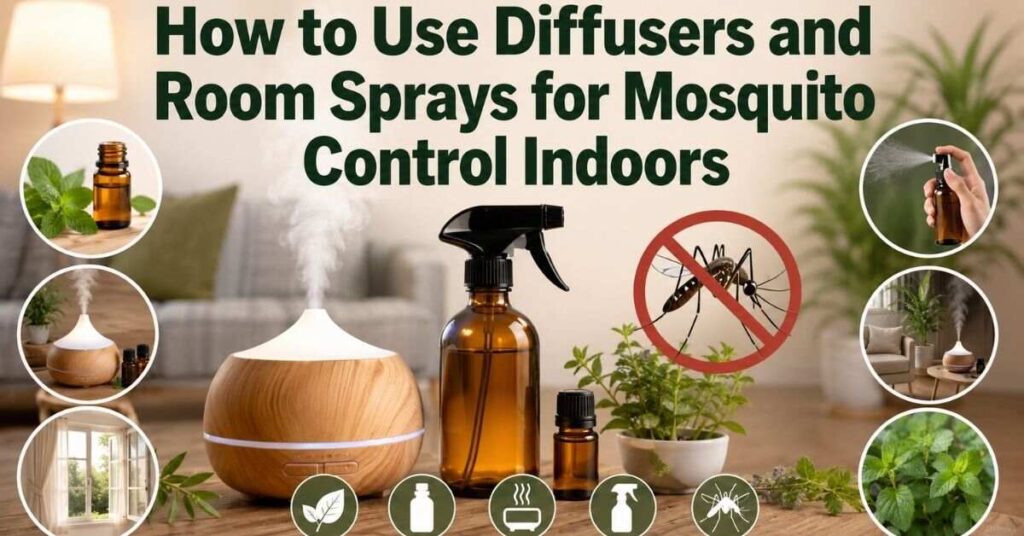
How to Use Diffusers and Room Sprays for Mosquito Control Indoors
Top Essential Oil Blends for Patio and Outdoor Diffusing
Creating a peaceful, bite-free outdoor living space without applying heavy chemicals directly to your skin is easily achieved through ambient aromatherapy. Setting up portable cold-air or ultrasonic diffusers around your patio, deck, or porch disperses a continuous cloud of volatile botanical compounds that discourages flying insects from entering your relaxation zone.
- The Backyard Citronella Diffuser Blend: Combine 5 drops of citronella, 4 drops of lemongrass, and 3 drops of peppermint in your outdoor diffuser water reservoir.
- The Deep Forest Shield Blend: Mix 6 drops of Oil of Lemon Eucalyptus, 4 drops of cedarwood, and 2 drops of thyme oil for robust patio defense.
- The Herbaceous Evening Blend: Add 5 drops of basil oil, 4 drops of lavender, and 3 drops of tea tree oil to maintain a fresh, insect-free atmosphere during sunset gatherings.
Creating a barrier around living spaces without skin contact
Establishing an invisible aromatic perimeter prevents mosquitoes from infiltrating open windows, doorways, and outdoor seating areas without requiring any topical body application. By placing strategic diffusing units near entry points or misting homemade room sprays around door frames, you create a powerful volatile barrier. This method keeps your living environment completely free of biting pests while filling your home with clean, natural botanical fragrances.
Additional Protection Strategies and After-Care Tips
Proven tips for fighting mosquitoes in your backyard and home environment
Eliminating active breeding grounds around your property is a vital foundational step that dramatically reduces local mosquito populations. Even the most powerful mosquito repellent essential oils cannot protect you if stagnant water sources are left unchecked near your living spaces.
- Eliminate Standing Water: Empty birdbaths, flower pot saucers, clogged gutters, and discarded containers weekly to disrupt the mosquito life cycle.
- Install Fine Mesh Screens: Ensure all windows and doors feature tight-fitting, undamaged screens to keep flying pests safely outdoors.
- Deploy Natural Airflow: Use outdoor oscillating patio fans during gatherings, as mosquitoes are notoriously weak fliers and struggle to navigate air currents.
Which essential oils soothe a mosquito bite and treat stings effectively
When an aggressive pest manages to bypass your defenses, applying targeted botanical care provides instant, cooling relief from intense itching and swelling. Lavender essential oil and tea tree oil act as phenomenal natural anti-inflammatory and antiseptic agents that neutralize localized irritation. Mixing 1 drop of lavender and 1 drop of tea tree with a half-teaspoon of coconut oil and dabbing it directly onto the welt instantly stops the itch and prevents secondary scratch infections.
Identifying and managing allergy risks associated with botanical extracts
While natural wellness solutions are generally well-tolerated, individual sensitivities can still trigger unexpected allergic contact dermatitis or respiratory irritation. If you notice persistent redness, hives, or a burning sensation after applying mosquito repellent essential oils, immediately wash the area with mild soap and cool water. Individuals with severe asthma or chronic respiratory conditions should also exercise caution when using strong vapor-emitting oils in confined indoor spaces.
| Allergy / Irritation Risk | Primary Warning Sign | Recommended Corrective Action |
| Dermal Sensitization | Localized rash, hives, or burning | Wash skin immediately with soap and water; discontinue use |
| Respiratory Sensitivity | Throat tickle, coughing, or dizziness | Move to fresh air; avoid heavy indoor diffusion |
| Phototoxicity | Sunburn-like blistering from citrus oils | Keep treated skin covered or out of direct sunlight for 12 hours |
Conclusion on Mosquito Repellent Essential Oils
Embracing natural plant extracts offers a safe, eco-friendly way to shield your household from biting pests. Mosquito Repellent Essential Oils replace harsh synthetic chemicals successfully. Users can disrupt insect sensory receptors by selecting high-efficacy options like Oil of Lemon Eucalyptus (OLE) and thyme oil.
Adhering to strict dilution guidelines with quality carrier oils guarantees total peace of mind outdoors. Homeowners often enjoy crafting custom four-ounce DIY sprays for patio defense. Alternatively, diffusing calming herbal blends creates a secure perimeter.
Soothing unexpected bites with pure lavender extract completes your wellness routine. Integrating these botanical solutions bridges the gap between powerful pest defense and holistic living. Aromatherapy practitioners confirm that consistent implementation yields superior results. Safety compliance checks ensure long-term family wellness.
About the Author
Noor Fatima | SEO Expert & Natural Oils Specialist
Credentials:
As an SEO expert and the driving force behind Pure Oils Hub (pureoilshub.com), I combine over 8 years of digital strategy and search optimization with a deep, lifelong passion for organic aromatherapy and plant-based living.
First-Hand Experience:
“Navigating the digital landscape for more than 8 years while researching pure botanical and carrier oils has shown me that creating a truly helpful website takes more than just technical SEO. It requires a genuine commitment to cutting through the noise of commercial, synthetic products to deliver honest, thoroughly researched, and practical guides. My goal is to make natural wellness accessible to everyone, helping you discover the simple, powerful ways pure oils can transform your daily self-care routine.”
FAQs:
What is the absolute best natural essential oil for repelling mosquitoes?
Oil of Lemon Eucalyptus (OLE) is universally recognized as the single most effective natural mosquito repellent, largely due to its high concentration of active p-menthane-3,8-diol (PMD), which matches the protection duration of low-strength synthetic formulas.
Which oil can be used as a safe mosquito repellent for daily wear?
Lavender essential oil blends smoothly into a light base of jojoba or fractionated coconut oil. This combination creates a gentle, pleasant fragrance profile for daily wear. Users enjoy safe protection during mild outdoor activities.
Mosquito Repellent Essential Oils perform exceptionally well when mixed with carrier liquids. Therefore, daily application remains comfortable and irritation-free. Clinical researchers note that floral extracts provide reliable defense against minor nuisance pests. Safety inspection protocols guarantee that daily formulations remain entirely non-toxic for regular household use.
What smell do mosquitoes hate the most?
Mosquitoes intensely dislike pungent, sharp aromas containing high levels of volatile terpenes. These active compounds include citronellal, menthol, eucalyptol, and thymol. Mosquito Repellent Essential Oils derive these powerful deterrents directly from peppermint, thyme, and citronella.
Insects retreat rapidly when encountering these concentrated plant extracts. Clinical researchers verify that volatile terpenes disrupt insect navigation systems effectively. Furthermore, aromatherapy specialists recommend these specific herbal ingredients for outdoor barrier creation. Field testing validation confirms that natural terpene profiles deliver reliable, chemical-free protection for families.
How long do essential oil sprays last compared to DEET?
While heavy chemical DEET sprays can provide protection for up to 8 hours, natural mosquito repellent essential oils are more volatile and typically require reapplication every 2 to 3 hours to maintain full efficacy.
Can anti-mosquito essential oils be used safely on children or pregnant women?
Pregnant women, nursing mothers, and children under the age of two should exercise extreme caution, consult a healthcare professional, and use heavily diluted, gentle plant oils like lavender rather than potent chemical extracts.
Can I spray these essential oil mixtures on my dog or cat?
Many essential oils—including tea tree, peppermint, and eucalyptus—are highly toxic to pets, particularly cats and dogs who metabolize compounds differently, so you should never apply DIY repellent sprays directly to animals without veterinary approval.
Which essential oil soothes an itchy mosquito bite?
Tea tree oil and lavender essential oil provide immediate relief from itchy bug bites thanks to their potent natural antiseptic, anti-inflammatory, and analgesic properties.
How to make homemade mosquito repellent with essential oils quickly?
Combine 2 ounces of witch hazel, 50 to 60 drops of your preferred repellent oils, and 2 ounces of distilled water inside a 4-ounce glass spray bottle, then shake vigorously before use.
Are essential oils really effective against mosquitoes according to science?
In botanical entomology and natural product chemistry, investigating organic insect repellents demonstrates how volatile plant terpenes alter pest behavior. Specifically, yes, numerous scientific studies confirm that specific plant volatile compounds disrupt insect olfactory receptors and deter landing, providing a non-toxic alternative to synthetic insecticides like DEET. Consequently, researchers exploring rose essential oil benefits highlight its rich concentrations of citronellol and geraniol, which mask human carbon dioxide signatures effectively.
Furthermore, these bioactive monoterpene alcohols confuse sensory antennal structures in mosquitoes and flies. In addition, though their shorter evaporation window requires frequent reapplication, combining unrefined botanical lipids with fixative carrier bases slows volatile loss. Additionally, blending pure rose extracts with jojoba oil extends topical protection while soothing environmental skin irritation. Therefore, utilizing standardized botanical formulations ensures high bio-efficacy, protects skin barrier integrity, and optimizes natural pest deterrent strategies.
Are there any allergy risks when using mosquito repellent essential oils?
In clinical dermatology and cosmetic chemistry, evaluating botanical sensitivity prevents acute epidermal reactions in reactive skin types. Specifically, unrefined botanical extracts can occasionally trigger localized skin rashes, contact dermatitis, or respiratory sensitivity in chemically prone individuals, particularly when applied without prior dilution. Consequently, identifying individual tolerance barriers ensures patient safety while unlocking rose essential oil benefits for dermal rejuvenation.
Furthermore, these precious volatile extracts contain bioactive terpene alcohols like citronellol, geraniol, and nerol. In addition, while these aromatic compounds deliver deep antioxidant protection, making prior skin patch testing essential protects vulnerable epidermal tissue from unexpected irritation. Additionally, applying a diluted drop to the inner forearm for 24 hours verifies complete immunological compatibility. Therefore, enforcing standardized patch testing protocols guarantees safe application, preserves skin barrier integrity, and optimizes holistic beauty routines.