Introduction
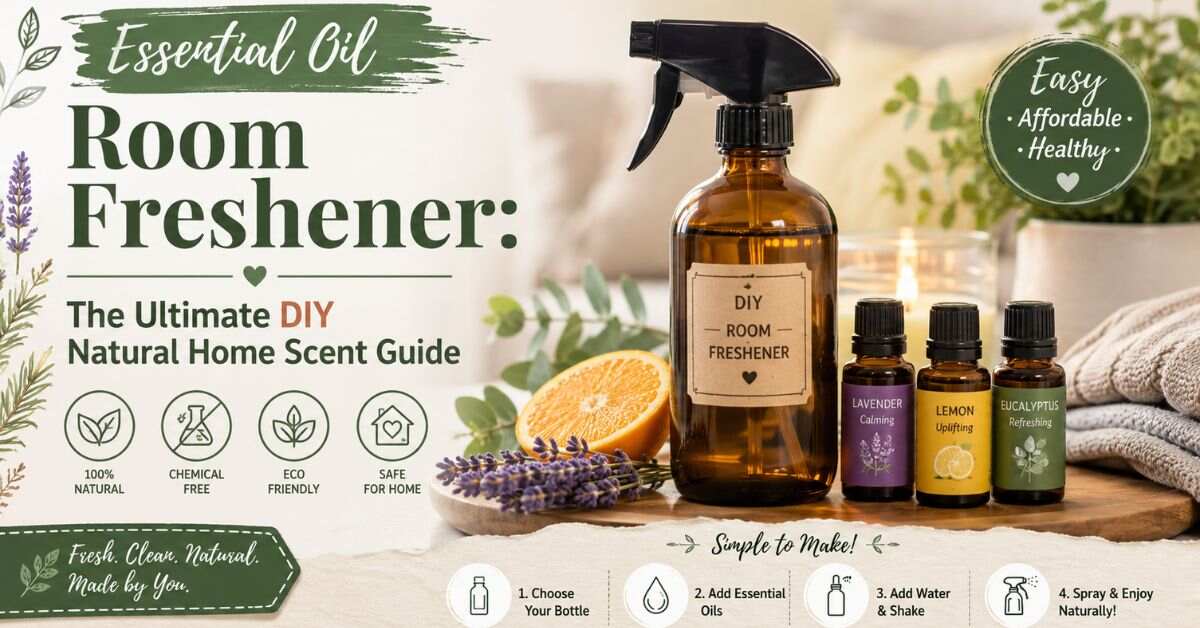
Transforming your home into a fresh, inviting sanctuary with a homemade essential oil room freshener does not require exposing your family to harsh synthetic chemicals or heavy artificial fragrances. Traditional aerosol sprays and plug-in air fresheners rely heavily on petroleum-based compounds, phthalates, and synthetic musk’s. Consequently, these chemicals linger in your indoor air and significantly lower your home’s air quality over time.
Fortunately, switching to a homemade essential oil room freshener offers a clean, plant-based alternative that actively neutralizes unpleasant odors while filling your living space with pure botanical aromas. Because natural room sprays allow you to control every single ingredient, you can easily ensure a completely safe environment for your entire household.
| Why Switch to Natural Sprays? | Key Benefits |
| Clean Indoor Air | Zero phthalates, synthetic musks, or harsh aerosol propellants |
| Aromatherapy Benefits | Pure plant oils help reduce stress, boost focus, and energize |
| Custom Fragrance Control | Tailor custom scents for every room, season, and personal mood |
Furthermore, crafting your own DIY homemade essential oil room freshener is remarkably simple, highly cost-effective, and completely customizable. Therefore, whether you are searching for the best essential oil room freshener formula to eliminate stubborn kitchen smells or a relaxing lavender mist for your bedroom, this comprehensive guide covers every recipe, emulsifier technique, and safety rule you need to know.
Key Takeaways at a Glance
- 100% Non-Toxic: Pure plant extracts effectively replace synthetic aerosol propellants and chemical maskers.
- Simple 3-Ingredient Base: Requires only distilled water, pure essential oils, and a natural emulsifier like high-proof alcohol or witch hazel.
- Maximum Longevity: Blending top, middle, and base note essential oils creates a well-rounded aroma that lasts for hours.
- Dark Glass Preservation: Storing your homemade essential oil room freshener in amber or cobalt glass bottles prevents UV degradation and keeps your natural formulas fresh.
What Is an Essential Oil Room Freshener?
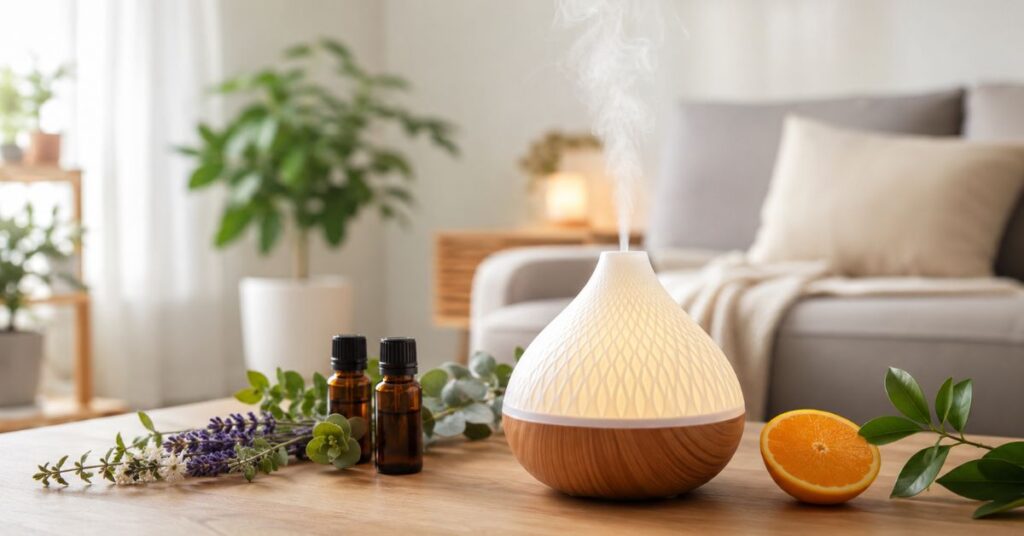
An essential oil room freshener is a natural, plant-based alternative to synthetic air sprays. Instead of relying on artificial chemicals, these room fresheners use pure plant extracts, water, and simple natural dispersants to spread fresh scents across your living spaces.
Synthetic air fresheners often hide bad odors using heavy chemical fragrances. A natural essential oil room freshener works differently. It neutralizes unpleasant smells at the source while filling your home with clean, uplifting aromas.
How Natural Essential Oil Room Sprays Work
Natural room sprays work through basic physics and chemistry. Essential oils are volatile organic compounds. This means they evaporate quickly at room temperature, releasing aromatic molecules directly into the air.
When you spray an essential oil mixture into a room, fine droplets suspend in the air momentarily. As the liquid base evaporates, pure aromatic molecules spread throughout the space.
Because oil and water do not mix naturally, every effective essential oil spray recipe requires a proper binder. Solvents like witch hazel, high-proof alcohol, or solubilizers break down oil molecules into smaller droplets. This allows them to disperse evenly in water instead of floating on top.
[Essential Oils] + [Emulsifier (Alcohol/Witch Hazel)] + [Distilled Water]
│
▼
[Fine Aerosol Mist Spray]
│
▼
[Evaporation & Molecule Dispersal in Air]
Key Differences Between Synthetic Aerosols and Essential Oil Room Fresheners
Choosing between commercial aerosols and natural sprays comes down to air quality, safety, and health impact. Traditional room sprays rely on propellants and synthetic chemicals that linger in your indoor air.
| Feature | Synthetic Aerosol Sprays | Natural Essential Oil Room Fresheners |
| Primary Base | Phthalates, synthetic scents, propellants | Pure essential oils, distilled water, plant dispersants |
| Air Quality Impact | Emits Volatile Organic Compounds (VOCs) | Improves indoor scent quality without toxic fumes |
| Scent Source | Petroleum-based artificial fragrances | 100% pure botanical extracts |
| Mechanism | Masks smells with heavy chemical layers | Neutralizes odors naturally |
| Environmental Footprint | Non-recyclable pressurized cans | Reusable, eco-friendly glass bottles |
The Benefits of Using Plant-Based Air Fresheners at Home
Switching to a plant-based home scenting routine offers clear advantages for your family and indoor environment:
- Cleaner Indoor Air: Eliminates exposure to artificial musks, phthalates, and harsh aerosol propellants.
- Customizable Fragrance Profiles: You control the scent intensity and can craft unique custom blends.
- Aromatherapeutic Effects: Pure essential oils like lavender reduce stress, while citrus oils naturally boost energy.
- Cost-Effective Scenting: A single bottle of essential oil makes dozen of fresh spray batches for a fraction of store prices.
- Multi-Surface Usability: Safe for air, carpets, curtains, and linens when properly diluted.
Essential Ingredients Required for a DIY Essential Oil Room Freshener
Creating a long-lasting, high-performing natural spray requires selecting high-grade raw ingredients. A basic mixture of plain water and essential oil will separate instantly, leading to clogged spray nozzles and uneven scent dispersion. Therefore, combining the correct proportion of botanical oils, pure water, dispersants, and protective packaging is critical for safety and performance.
┌─────────────────────────────────────────────────────────────┐
│ CORE INGREDIENT RATIO BREAKDOWN │
├──────────────────────────┬──────────────────────────────────┤
│ Distilled Water │ 70% – 80% of total volume │
├──────────────────────────┼──────────────────────────────────┤
│ Emulsifier/Dispersant │ 15% – 25% (Alcohol or Witch Hazel│
├──────────────────────────┼──────────────────────────────────┤
│ Pure Essential Oils │ 2% – 5% (~20-30 drops per 4 oz) │
└──────────────────────────┴──────────────────────────────────┘
The Best Essential Oils for Long-Lasting Home Fragrance
Essential oils evaporate at different rates based on their volatility. Perfumers classify these evaporation rates into top notes, middle notes, and base notes. Blending oils from all three tiers creates a balanced fragrance that lingers in the air for hours.
- Top Notes (Fast Evaporation – 1 to 2 Hours): Lemon, sweet orange, bergamot, and grapefruit. These provide the initial burst of fresh aroma upon spraying.
- Middle Notes (Medium Evaporation – 2 to 4 Hours): Lavender, tea tree, peppermint, and eucalyptus. These form the heart of your spray, offering main therapeutic benefits and body.
- Base Notes (Slow Evaporation – 4 to 12+ Hours): Cedarwood, patchouli, sandalwood, and cinnamon bark. These heavy molecules anchor the lighter top notes and extend the overall scent duration.
To achieve the best essential oil room spray recipe, balance your formula with approximately 30% top notes, 50% middle notes, and 20% base notes.
Water Options: Why Distilled Water Is Essential
Tap water contains minerals like calcium, magnesium, and chlorine. Using tap water in home sprays introduces micro-organisms that can grow bacteria or mold inside the bottle within days. Furthermore, hard mineral deposits will clog the fine mist nozzle over time.
| Water Type | Microbial Risk | Shelf Life Impact | Nozzle Safety | Recommendation |
| Tap Water | High (contains micro-bacteria) | 3 to 5 days max | Poor (mineral build-up) | Not Recommended |
| Filtered Water | Moderate | 1 to 2 weeks | Moderate | Use only as backup |
| Distilled Water | Zero (steam-sterilized) | 3 to 6+ months | Excellent | Primary Standard |
Emulsifiers Explained: Witch Hazel vs. Rubbing Alcohol vs. Solubilizers
Because water and oil repel each other, an emulsifier binds the oil molecules so they float evenly throughout the liquid.
1. High-Proof Rubbing Alcohol or Grain Alcohol (Best Choice)
Using high-proof alcohol (such as 150+ proof grain alcohol or 91% Isopropyl) breaks down the essential oils into tiny micro-particles. A DIY essential oil room spray with alcohol offers three main advantages:
- It acts as a natural preservative, preventing microbial growth.
- It helps the mist evaporate quickly in the air rather than dropping wet onto floors or furniture.
- It fully dissolves the oils so they stay emulsified longer.
2. Witch Hazel (Mild Alternative)
Witch hazel is a popular, accessible choice. However, because commercial witch hazel usually contains only 14% alcohol, it acts as a dispersant rather than a true emulsifier. You must shake the spray bottle vigorously before every use.
3. Natural Solubilizers (Polysorbate 20 / Solubol)
Plant-derived solubilizers blend oil and water completely, keeping the mixture crystal clear without altering the scent. They are ideal if you prefer alcohol-free room sprays.
Choosing the Ideal Glass Spray Bottle for Preservation
Pure essential oils are highly reactive compounds that degrade when exposed to ultraviolet (UV) light, oxygen, and heat. Additionally, concentrated essential oils can leach synthetic chemicals out of low-grade plastics over time.
- Amber Glass Bottles: Amber glass blocks harmful UV wavelengths completely, preserving the botanical integrity of the oils.
- Cobalt Blue Glass Bottles: Provides strong UV protection while maintaining an attractive visual appearance.
- Clear Glass: Only suitable if stored inside dark cabinets or closets away from direct sunlight.
- PET/HDPE Plastics: Acceptable for low concentrations (under 2%), but glass remains the gold standard for long-term storage.
Read More: clary sage essential oil || citrus essential oil || amber essential oil || what goes with thyme essential oil
Step-by-Step Guide to Making a DIY Essential Oil Room Freshener
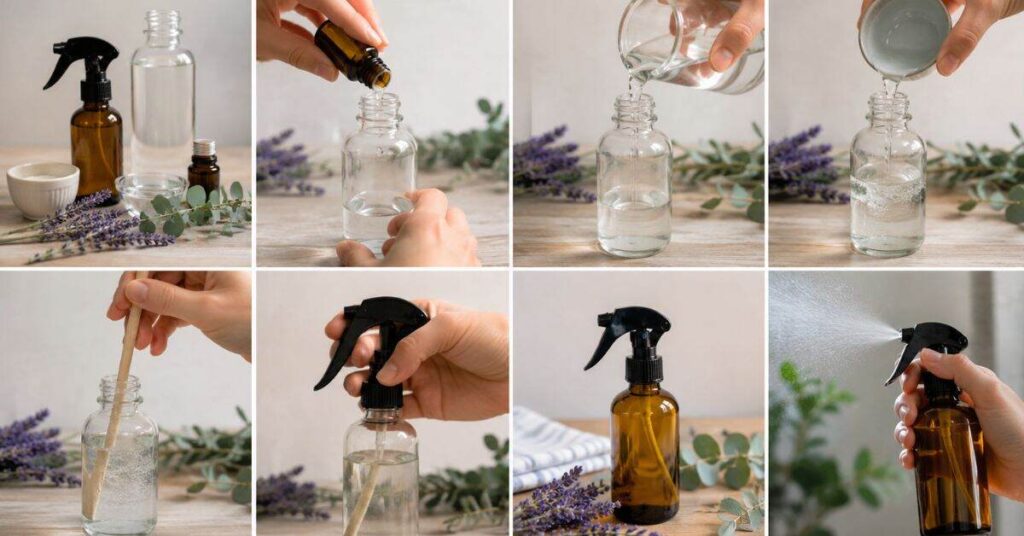
1. Sanitize Your Bottle for a Lasting DIY Essential Oil Room Spray
Proper hygiene is essential because it prevents mold, bacteria, and rancidity from ruining your natural spray formula. Consequently, thoroughly cleaning your equipment guarantees a significantly longer shelf life.
- Clean thoroughly: First, wash your amber or cobalt glass spray bottle and fine-mist nozzle with hot, soapy water.
- Rinse with high-proof alcohol: Next, swirl a small amount of 70%+ isopropyl alcohol or boiling water inside the bottle to sterilize the interior effectively.
- Dry completely: Finally, allow the container to air-dry fully on a clean towel. Residual tap water can harbor bacteria; therefore, complete dryness is vital for longevity.
2. Prepare the Carrier Base for Your Essential Oil Room Freshener
Always mix your chosen emulsifier with essential oils before introducing water. As a result, the oils will bind thoroughly to the alcohol base instead of floating on top.
- Place a small funnel into the mouth of your 4 oz (120 ml) glass spray bottle.
- Measure 1 oz (30 ml) of high-proof grain alcohol, witch hazel, or Polysorbate 20.
- Pour the solubilizing liquid directly into the glass bottle through the funnel.
3. Add Essential Oil Drops for Maximum Room Freshener Scent Throw
Controlling your drop ratio guarantees a balanced aroma that scents a full room effectively. Furthermore, precise measurement prevents head pain or respiratory discomfort.
Add 25 to 35 total drops of pure essential oils directly into the emulsifier base:
- Top Notes (10 drops): Sweet orange, bergamot, lemon, or grapefruit for immediate freshness.
- Middle Notes (15 drops): Lavender, peppermint, tea tree, or eucalyptus for core character.
- Base Notes (5–10 drops): Cedarwood, vanilla, patchouli, or frankincense for long-lasting stability.
After adding the drops, swirl the bottle gently for 30 seconds so the alcohol fully dissolves the essential oil.
4. Blend, Shake, and Test Your DIY Essential Oil Room Spray Recipe
To complete your natural spray blend, top off the bottle and verify the mist pattern.
- Pour 3 oz (90 ml) of distilled water into the bottle using your funnel, leaving half an inch of headspace.
- Attach the fine-mist spray top tightly.
- Vigorously shake the bottle for 15 seconds to integrate all layers smoothly.
- Perform 2–3 test sprays into the center of an open room to inspect mist consistency and scent throw.
Quick Troubleshooting Guide for DIY Essential Oil Room Fresheners
| Problem | Root Cause | Direct Fix |
| Scent fades within minutes | Lack of heavy base note oils | Add 5 drops of cedarwood, frankincense, or sandalwood to anchor the scent. |
| Nozzle gets clogged or stuck | Un-emulsified oil build-up | Soak the spray head in warm rubbing alcohol for 10 minutes to dissolve residue. |
| Oil floats at the surface | Insufficient emulsifier ratio | Increase the alcohol portion or switch from witch hazel to 150+ proof grain alcohol. |
| Liquid turns cloudy | Standard reaction between water and oil | This is a normal visual occurrence; however, shake well before each application. |
Best Essential Oil Room Freshener Blend Recipes by Mood
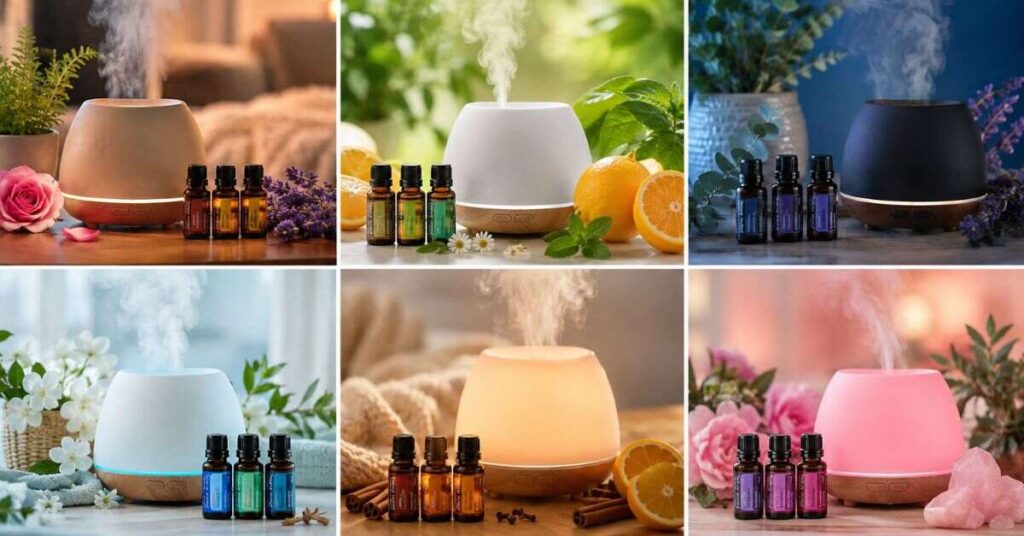
Crafting customized room sprays allows you to transform the mood of any space using targeted aromatherapy principles. Different botanical profiles interact with your nervous system in distinct ways, helping you unwind, focus, or recharge depending on your environment.
Below are five optimized, tried-and-tested formulas for a standard 4 oz (120 ml) glass spray bottle. For best results, mix the listed oil drops into 1 oz of alcohol or witch hazel before topping off with 3 oz of distilled water.
Energizing Citrus Burst Blend for Kitchens and Living Rooms
This bright, invigorating blend neutralizes stubborn cooking smells while boosting mental alertness and mood across high-traffic gathering areas.
- 12 drops Sweet Orange (Citrus sinensis)
- 10 drops Grapefruit (Citrus paradisi)
- 5 drops Lime (Citrus aurantiifolia)
- 3 drops Spearmint (Mentha spicata)
Relaxing Lavender and Chamomile Blend for Bedrooms
Designed to promote deep rest and reduce nighttime anxiety, this gentle floral scent calms the mind and creates a tranquil bedtime environment.
- 15 drops French Lavender (Lavandula angustifolia)
- 8 drops Roman Chamomile (Chamaemelum nobile)
- 5 drops Cedarwood (Cedrus atlantica)
- 2 drops Ylang Ylang (Cananga odorata)
Deep Focus Peppermint and Rosemary Blend for Home Offices
Rosemary has been linked to improved cognitive function and memory retention, making this crisp, herbaceous spray ideal for work hours and study sessions.
- 12 drops Rosemary (Salvia rosmarinus)
- 10 drops Peppermint (Mentha x piperita)
- 5 drops Lemon (Citrus limon)
- 3 drops Frankincense (Boswellia carterii)
Fresh Clean Eucalyptus and Tea Tree Odor Neutralizing Blend
In seasonal wellness protocols, using a botanical room spray offers true air purification. Specifically, rather than masking foul aromas, active plant molecules neutralize airborne odor compounds directly. Furthermore, this potent antimicrobial combination destroys suspended microbial pollutants and bacteria. In addition, aerosolizing antibacterial terpenes effectively purifies stale indoor air in closed rooms. Additionally, diffusing eucalyptus and tea tree clears stuffy passageways during cold weather. Therefore, applying natural antimicrobial sprays supports respiratory health during seasonal shifts. Consequently, practicing regular indoor air purification protocols maintains a pristine, healthy home environment.
- 12 drops Eucalyptus (Eucalyptus globulus)
- 10 drops Tea Tree (Melaleuca alternifolia)
- 5 drops Lemon (Citrus limon)
- 3 drops Pine (Pinus sylvestris)
Cozy Vanilla and Cinnamon Warm Welcome Blend
Perfect for entryway spaces, this rich and inviting scent offers a classic, comforting atmosphere that greets family and guests with warmth.
- 12 drops Botanical Vanilla Extract / Oleoresin (Vanilla planifolia)
- 8 drops Cinnamon Bark (Cinnamomum verum)
- 6 drops Sweet Orange (Citrus sinensis)
- 4 drops Clove Bud (Syzygium aromaticum)
Quick Blend Summary Table
| Blend Name | Primary Purpose | Key Active Oil | Best Placement |
| Citrus Burst | Energy & Odor Removal | Sweet Orange | Kitchen, Dining Room |
| Relaxation | Stress Relief & Sleep | Lavender | Bedroom, Nursery |
| Deep Focus | Productivity & Memory | Rosemary | Home Office, Studio |
| Odor Neutralizer | Air Cleansing & Purification | Tea Tree | Bathroom, Pet Areas |
| Warm Welcome | Comfort & Atmosphere | Vanilla / Cinnamon | Entryway, Hallwa |
Seasonal Essential Oil Room Freshener Recipes
Adapting your home’s scent profile to match the changing seasons keeps your living space feeling vibrant, current, and aligned with nature. Natural seasonal formulations mirror the ambient environment shifting from light, dew-fresh florals during early bloom to deep, resinous woods during the winter frost.
Below are four specialized recipes optimized for a standard 4 oz (120 ml) amber glass bottle. Combine the botanical oils into 1 oz of high-proof alcohol or witch hazel before topping off with 3 oz of distilled water.
Fresh Floral Spring Essential Oil Room Freshener
As temperatures rise, light herbal and floral aromas refresh indoor spaces, purging the heavy, stale air built up over winter months.
- 12 drops French Lavender (Lavandula angustifolia)
- 8 drops Geranium (Pelargonium graveolens)
- 6 drops Lemon (Citrus limon)
- 4 drops Clary Sage (Salvia sclarea)
Tropical Citrus Summer Breeze Room Spray
In summer aromatherapy formulation, blending vibrant botanical extracts creates an invigorating, crisp indoor atmosphere. Specifically, bright, high-energy citrus notes like sweet orange and bergamot deliver an instant energetic boost. Furthermore, combining these vibrant top notes with cool herbal elements like spearmint and peppermint balances airborne intensity. In addition, this precise blend works synergistically to create an uplifting, ocean-breeze atmosphere throughout your living space. Additionally, diffusing crisp monoterpene aromas provides a refreshing cooling effect during hot summer days. Therefore, utilizing a summer essential oil room spray eliminates stale, humid indoor odors naturally and effectively. Consequently, adopting these expert summer home fragrance blending protocols guarantees continuous airborne freshness, vibrant room energy, and optimal thermal comfort.
- 10 drops Sweet Orange (Citrus sinensis)
- 8 drops Grapefruit (Citrus paradisi)
- 6 drops Lime (Citrus aurantiifolia)
- 4 drops Spearmint (Mentha spicata)
- 2 drops Ylang Ylang (Cananga odorata)
Warm Spice Autumn Room Freshener Formula
In seasonal aromatherapy formulation, blending warm autumn botanical extracts creates a deeply welcoming indoor environment. Specifically, when autumn leaves fall, incorporating rich warm spices and grounded woods instantly transforms your home atmosphere. Furthermore, diffusing aromatic cinnamon, clove, and cedarwood establishes a cozy, protective atmosphere across high-traffic living areas and entryways. In addition, combining spicy eugenol compounds with rich grounding sesquiterpenes provides natural comforting indoor benefits. Additionally, these comforting autumn scents effectively neutralize damp seasonal odors near front doors and foyer rugs.
Therefore, utilizing an autumn essential oil room spray elevates seasonal home scenting while boosting emotional well-being. Consequently, adopting these verified fall home fragrance blending techniques guarantees continuous warmth, inviting room ambiance, and complete indoor comfort for your guests.
- 10 drops Cinnamon Bark (Cinnamomum verum)
- 8 drops Clove Bud (Syzygium aromaticum)
- 6 drops Sweet Orange (Citrus sinensis)
- 4 drops Patchouli (Pogostemon cablin)
- 2 drops Ginger (Zingiber officinale)
Crisp Pine and Cedarwood Winter Holiday Blend
Capture the essence of snowy conifer forests with evergreen needle extracts and rich evergreen base notes that naturally deodorize winter air.
- 12 drops Siberian Fir (Abies sibirica)
- 8 drops Cedarwood (Cedrus atlantica)
- 6 drops Pine (Pinus sylvestris)
- 4 drops Frankincense (Boswellia carterii)
Seasonal Matrix Comparison
| Season | Fragrance Category | Key Volatility Focus | Longevity Rating | Ideal Room Setting |
| Spring | Floral / Light Herbal | High Top-to-Middle | 2 to 3 hours | Bedrooms, Bathrooms |
| Summer | Bright Citrus / Mint | Very High Top Notes | 1 to 2 hours | Kitchens, Sunrooms |
| Autumn | Warm Spice / Resinous | Balanced Middle & Base | 4 to 6 hours | Entryways, Dining Areas |
| Winter | Conifer / Heavy Wood | Deep Base Dominant | 5 to 8+ hours |
Alternative Ways to Use an Essential Oil Room Freshener Solution
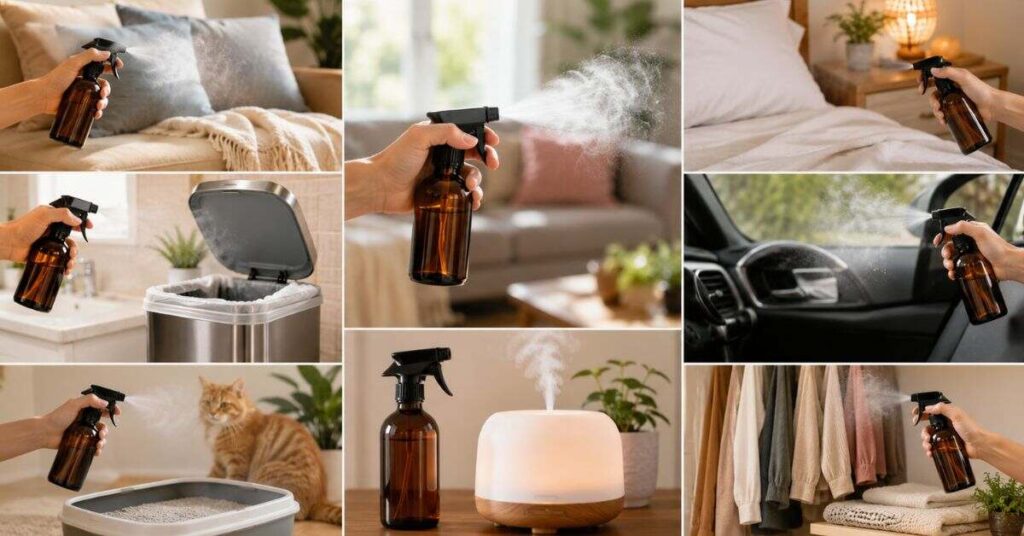
In multi-purpose botanical formulations, your custom-blended essential oil spray recipe mixture is far more versatile than a simple mist for the air. Specifically, utilizing pure botanical oils and natural dispersants allows active ingredients to interact effectively with porous materials. Furthermore, these active liquid mixtures bond perfectly with passive diffusion mediums throughout your living space. In addition, applying this formula across different household surfaces lets you easily repurpose the same core liquid formula. Additionally, spraying porous items like wool dryer balls, unglazed ceramics, or fabric linens creates long-lasting aroma. Therefore, expanding your spray applications maximizes overall home fragrance versatility without needing extra products. Consequently, utilizing a single multi-use essential oil spray guarantees cost-effective home scenting, optimal indoor air quality, and consistent botanical freshness.
┌─────────────────────────────────────┐
│ ESSENTIAL OIL SOLUTION VERSATILITY │
└──────────────────┬──────────────────┘
│
┌────────────────┬───────────────┴───────────────┬────────────────┐
│ │ │ │
▼ ▼ ▼ ▼
[Reed Diffuser] [Carpet Deodorizer] [Porous Substrates] [Simmer Pots]
Liquid Base Baking Soda Base Wood & Terracotta Stovetop Heat
How to Make a DIY Essential Oil Reed Diffuser
Converting your natural room spray mixture into a passive, continuous reed diffuser provides round-the-clock scent without daily spraying.
- Select a Narrow-Neck Container: Choose a glass bottle or vase with a narrow opening to minimize rapid evaporation.
- In reed diffuser formulation, preparing a stable liquid base requires blending precise ingredient ratios for optimal capillary action. Specifically, you should first prepare the liquid base by measuring 2 oz (60 ml) of carrier oil into a clean glass mixing container. Furthermore, selecting lightweight plant oils like sweet almond oil or fractionated coconut oil ensures rapid reed absorption and low viscosity. In addition, thoroughly whisk in 1 oz (30 ml) of high-proof alcohol to lower surface tension and accelerate evaporation. Additionally, incorporate 30–40 drops of your preferred essential oil blend to establish a long-lasting aromatic profile. Therefore, combining these precise proportions creates a perfectly balanced DIY reed diffuser liquid. Consequently, following this exact essential oil reed diffuser recipe guarantees continuous scent throw, smooth wick capillary draw, and long-lasting home fragrance performance.
- Insert Rattan Reeds: Place 6 to 8 natural rattan reed sticks directly into the bottle. Rattan contains tiny channels that draw the oil upward through capillary action.
- In reed diffuser maintenance protocols, maximizing scent throw requires proper saturation of your porous diffuser sticks. Specifically, you should regularly flip the reeds to initiate rapid aromatic evaporation throughout your room. Furthermore, allow the diffuser sticks to soak for 1 hour during initial setup to draw up the liquid base. Immediately, after this soaking period, flip them upside down to jumpstart instant fragrance release. In addition, this simple step ensures you fully saturate both ends of the rattan channels with essential oils. Additionally, continuing to flip diffuser reeds weekly maintains consistent capillary action and prevents channel clogging.
Baking Soda and Essential Oil Carpet Odor Deodorizer
Fabrics and carpets trap stubborn odors from pets, shoes, and moisture. In natural carpet care formulation, combining your room spray’s core essential oils with baking soda creates a powerful cleaning blend. Specifically, mixing these active ingredients produces a high-performance deep-cleansing dry powder for household carpets. Furthermore, applying porous sodium bicarbonate directly onto carpet fibers actively absorbs trapped smells and persistent moisture. In addition, aerosolizing these botanical terpenes neutralizes embedded organic odors before vacuuming the carpet. Additionally, allowing the dry powder to sit for fifteen minutes ensures maximum odor adsorption and fiber freshness.
- In natural household cleaning formulation, mixing simple kitchen ingredients creates an effective carpet freshener. Specifically, combining 1 cup of food-grade baking soda with pure extracts forms a powerful deodorizing powder. Furthermore, utilizing pure sodium bicarbonate actively neutralizes trapped acidic odors within carpet fibers. In addition, incorporating 20–25 drops of essential oil provides natural antibacterial freshness to your living space. Additionally, selecting potent botanical oils like tea tree oil, eucalyptus oil, or lemon oil enhances antimicrobial cleaning power. Therefore, combining these raw ingredients yields a non-toxic DIY carpet freshening powder. Consequently, following this simple natural baking soda recipe guarantees deep odor removal, clean indoor air, and complete household safety.
- Mixing Process: Add the baking soda to a glass jar, drop in the essential oils, seal the lid tightly, and shake vigorously to break up any clumps.
- Application: Sprinkle the dry powder evenly across rugs or carpets.
- Dwell Time: Let the powder sit for 20 to 30 minutes to draw out deep odor molecules.
- Cleanup: Vacuum thoroughly using a high-efficiency particulate air (HEPA) filter vacuum.
Essential Oil Wooden Block and Terracotta Room Fresheners
Porous, unglazed materials like natural wood and terracotta clay act as exceptional passive scent diffusers. They absorb concentrated oil solutions and release aroma slowly over several days.
| Material Type | Scent Retention | Best Placement | Maintenance |
| Unglazed Terracotta | 3 to 5 Days | Bathrooms, Closets, Drawers | Re-apply 3–5 drops when scent fades |
| Raw Cedar Wood | 5 to 7 Days | Shoe Racks, Wardrobes, Garages | Lightly sand surface every 3 months |
| Balsa / Pine Blocks | 2 to 4 Days | Car Interiors, Office Desks | Spray directly with room spray solution |
Simmer Pot Methods for Whole-House Natural Scenting
In natural home fragrance methods, utilizing stovetop simmer pots creates an immediate, long-lasting botanical aroma. Specifically, brewing fresh stovetop potpourri recipes offers an effective, whole-house scenting solution for any living space. Furthermore, gentle steam emission naturally increases indoor humidity during cold, dry winter months. In addition, aerosolized water vapor carries volatile botanical essential oil molecules across multiple connected rooms. Additionally, combining fresh citrus slices with whole spices delivers chemical-free natural aromatherapy benefits. Therefore, replacing synthetic air fresheners with simmering pots actively protects non-toxic indoor air quality. Consequently, adopting these safe stovetop simmering techniques guarantees maximum scent coverage, optimal indoor humidity levels, and complete home comfort.
- Fill a Pot: Fill a small saucepan or slow cooker with 4 cups of water.
- Add Aromatics: Add fresh lemon slices, cinnamon sticks, rosemary sprigs, and 8 to 10 drops of complementary essential oils.
- In botanical stove-top simmering protocols, executing a controlled thermal extraction releases aromatic volatile compounds effectively. Specifically, following the simmer gently method prevents delicate essential oils from scorching or burning away rapidly. Furthermore, you should bring the liquid to a gentle boil over medium heat to initiate steam circulation. Immediately, once boiling occurs, lower the heat to the lowest setting to stabilize steam emission. In addition, allowing the mixture to simmer gently maintains continuous, gentle aerosolization throughout your home. Additionally, low heat preserves volatile botanical terpene structures for longer scent throw and optimal aromatic performance. Therefore, maintaining a low stove-top simmering temperature protects natural extracts while filling rooms with pure fragrance. Consequently, utilizing proper stove-top potpourri simmering techniques guarantees maximum scent longevity, clean indoor air quality, and complete household safety.
- Monitor Water Levels: Check the pot every 30 minutes and top off with warm water as needed to prevent burning.
How to Correctly Apply and Store Your Essential Oil Room Freshener
Knowing how to properly spray and store your natural room freshener ensures that every batch remains potent, fresh, and completely safe for your home surfaces. In furniture protection protocols, applying room sprays incorrectly leads to avoidable surface damage and material degradation. Specifically, improper spray application causes permanent liquid spots on furniture, wood finishes, and delicate fabric upholstery. Furthermore, exposure to bad storage conditions rapidly breaks down active aromatic molecules within just a few weeks. In addition, storing essential oil sprays in direct sunlight triggers rapid chemical photo-oxidation and thermal breakdown. Additionally, oxidation destroys volatile essential oil constituents, turning pleasant aromas into sour, harsh chemical smells. Therefore, storing your sprays in dark amber glass bottles away from heat preserves long-term scent stability. Consequently, combining proper spray distance techniques with ideal storage conditions guarantees pristine furniture protection and optimal fragrance longevity.
Safe Spraying Techniques for Fabrics, Linens, and Upholstery
While natural essential oil sprays are versatile, direct application onto delicate textiles requires caution. Essential oils are concentrated botanical extracts that can leave oil marks on certain fabrics if sprayed too close.
- Maintain Proper Distance: Always hold the spray bottle 12 to 18 inches away from linens, curtains, and sofa upholstery. In fine aerosol dispersion, selecting a high-quality fine mist spray nozzle is essential for optimal spray performance. Specifically, proper nozzle pressure allows the liquid room spray to disperse into a fine mist spray before settling. Furthermore, generating microscopic droplet size distribution prevents heavy water droplets from soaking delicate furniture or floors. In addition, atomizing your essential oil spray liquid ensures even scent distribution throughout large indoor living spaces. Additionally, airborne suspended botanical droplets remain afloat longer to maximize immediate aromatherapy benefits and freshness.
- In fabric care protocols, performing a fabric spot test is essential before using any new spray formulation. Specifically, you should always spot test first on hidden upholstery areas before applying formulas broadly. Furthermore, applying a single test spray to an underside seam checks for potential material discoloration or staining. In addition, lipophilic pure essential oils can leave oil spots on delicate silk, satin, or synthetic textiles. Additionally, allowing the test spray to dry completely verifies colorfastness and reveals hidden chemical interactions. Therefore, conducting this precautionary linen spray fabric test prevents irreversible damage to expensive household textiles. Consequently, strictly following this textile safety protocol guarantees clean, safe, and stain-free room spray application throughout your home.
- Avoid Delicate Materials: Never spray essential oil mixtures directly onto silk, leather, suede, or dry-clean-only fabrics.
- Target High-Absorbency Linens: Cotton pillowcases, wool throw blankets, and heavy linen curtains absorb aromatic mist exceptionally well, releasing subtle scent throughout the day.
Optimal Storage Conditions to Prevent Essential Oil Degradation
Essential oils degrade through oxidation a natural chemical reaction triggered by exposure to ultraviolet light, heat, and air. Protecting your room spray from these elements preserves its therapeutic properties and scent profile.
FACTORS THAT DEGRADE ESSENTIAL OIL SPRAYS
┌──────────────────┬──────────────────┬──────────────────┐
│ Direct Sunlight │ High Heat/Steam │ Oxygen Exposure │
│ (UV Oxidation) │ (Volatilization)│ (Shelf Decay) │
└────────┬─────────┴────────┬─────────┴────────┬─────────┘
│ │ │
▼ ▼ ▼
┌────────────────────────────────────────────────────────┐
│ RESULT: Faded Fragrance, Cloudiness & Rancid Off-Notes │
└────────────────────────────────────────────────────────┘
- Store in a Cool, Dark Place: Keep your spray bottles inside a pantry, bathroom cabinet, or hallway closet away from windows and direct sunlight.
- Maintain Stable Temperatures: Avoid storing sprays near radiators, kitchen stoves, or inside hot cars where temperature spikes cause rapid oil breakdown.
- Keep Lids and Nozzles Sealed Tightly: Ensure the spray cap is screwed on completely to prevent the alcohol and volatile top-note oils from evaporating into the air.
How Long Does a DIY Essential Oil Room Freshener Last?
In cosmetic stability testing, determining the total shelf life of your DIY room spray is essential for product quality. Specifically, overall essential oil spray shelf life depends entirely on your chosen emulsifier base and water type during preparation. Furthermore, utilizing purified distilled water instead of tap water prevents rapid bacterial contamination and mineral breakdown. In addition, selecting a high-proof essential oil solubilizer like 190-proof alcohol prevents phase separation and inhibits microbial growth. Additionally, unpreserved formulations made with plain water or mild dispersants degrade rapidly within two weeks. Therefore, combining proper solubilizing agents with purified liquid bases significantly extends your natural room spray stability. Consequently, strictly following verified cosmetic preservation protocols guarantees a shelf-stable, crystal-clear, and safe room spray formulation.
| Preservative / Emulsifier Base | Water Type Used | Expected Shelf Life | Storage Condition |
| High-Proof Grain/Rubbing Alcohol | Pure Distilled Water | 6 to 12 Months | Dark, cool cabinet |
| Witch Hazel (14% Alcohol) | Pure Distilled Water | 1 to 2 Months | Cool room temperature |
| No Alcohol (Water + Oil Only) | Tap / Filtered Water | 3 to 7 Days Max | Refrigerator recommended |
In cosmetic microbiology, monitoring your botanical room spray for signs of spoilage prevents microbial risks. Specifically, if your spray develops a sour or rancid odor, volatile ingredient degradation has occurred. Furthermore, observing a distinct cloudiness that does not disappear when shaken indicates active bacterial contamination. In addition, discovering visible floating particles confirms fungal growth within unpreserved water-based solutions. Therefore, if any of these spoilage signs appear, you must immediately discard the spoiled batch. Additionally, thoroughly clean and sanitize the glass bottle with high-proof isopropyl alcohol before remixing. Consequently, maintaining strict essential oil spray sanitation protocols guarantees complete product safety, optimal shelf stability, and fresh indoor air.
Safety Guidelines and Best Practices for Essential Oil Home Sprays
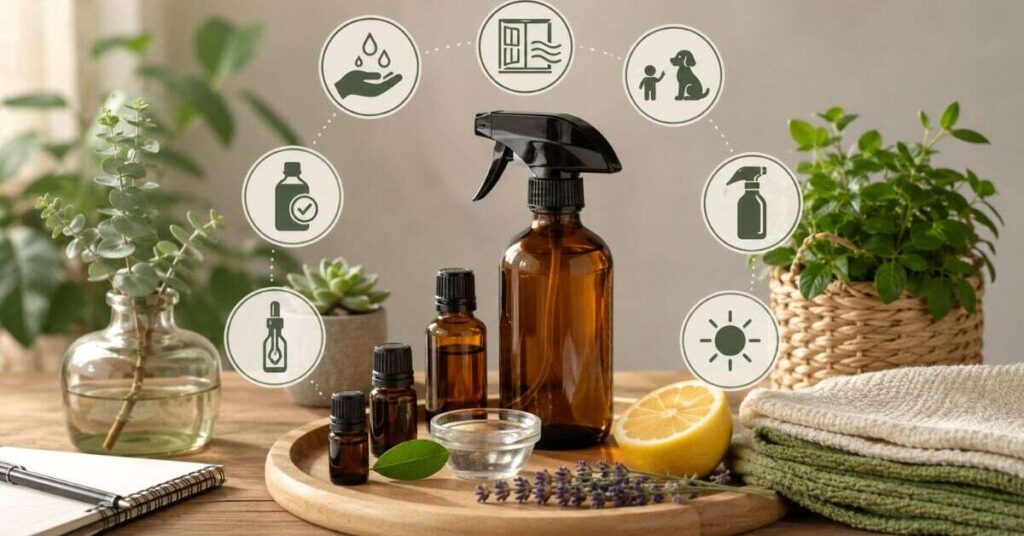
In green chemistry formulation, utilizing natural essential oil sprays offers a much cleaner alternative to synthetic fragrance aerosols. Specifically, replacing commercial aerosol sprays removes harmful synthetic chemical propellants and toxic phthalates from your indoor air. However, consumers must remember that pure essential oils are highly concentrated active chemical compounds. Furthermore, these volatile botanical extracts contain hundreds of potent lipophilic bioactive constituents per single drop.
In addition, applying undiluted botanical extracts can trigger sudden localized dermal irritation or acute respiratory sensitivity. Therefore, practicing precise essential oil dilution protocols guarantees maximum therapeutic room spray benefits. Consequently, adopting evidence-based natural room spray safety standards protects non-toxic indoor air quality while ensuring complete family safety.Practicing proper safety protocol protects your household pets, young children, and delicate air passages from potential toxicity or irritation.
Pet Safety: Which Essential Oils to Avoid Around Cats and Dogs
In veterinary pharmacology, domestic dogs and cats process airborne volatile organic compounds differently than human beings. Specifically, feline physiology presents unique metabolic vulnerabilities due to essential liver enzyme deficiencies. Furthermore, cats in particular lack glucuronyl transferase, a critical liver enzyme necessary to metabolize essential oils. In addition, this hepatic enzyme deficiency prevents feline livers from breaking down concentrated hydrocarbon terpenes. Additionally, exposed cats quickly become vulnerable to acute feline organ toxicity through direct dermal skin contact or passive air inhalation. Therefore, diffusing unapproved botanical extracts around pets creates severe risk of feline hepatic toxicity. Consequently, strictly following verified veterinary essential oil safety standards prevents life-threatening liver damage in companion animals.
High-Risk Oils Toxic to Household Pets:
- Cats: Tea tree (melaleuca), citrus oils (limonene), peppermint, cinnamon, eucalyptus, pine, wintergreen, and ylang ylang.
- Dogs: Tea tree, pennyroyal, wintergreen, pine, and cinnamon.
PET SAFETY ESSENTIAL OIL RULES
1. DO NOT spray directly near pet bedding or food bowls.
2. In veterinary safety protocols, maintaining open ventilation routes during household aromatherapy is essential for domestic animals. Specifically, you should ALWAYS keep room doors open when diffusing volatile plant extracts indoors. Furthermore, providing an unobstructed exit route allows sensitive pets to leave the room if bothered by a strong scent. In addition, dogs and cats possess an acute sense of smell that makes airborne volatile organic compounds feel overwhelming. Additionally, trapped domestic animals exposed to concentrated essential oil diffusion can suffer severe olfactory distress and respiratory irritation. Therefore, practicing proper pet-safe room ventilation prevents toxic exposure and safeguards animal health. Consequently, adopting these precautionary essential oil pet safety rules guarantees a comfortable, harm-free environment for your pets.
3. NEVER apply undiluted room spray solutions directly to pet fur.
In veterinary clinical toxicology, observing acute essential oil pet toxicity symptoms requires immediate emergency action. Specifically, if your dog or cat exhibits excessive drooling, uncoordinated lethargy, sudden uncoordinated walking, or persistent coughing, act without delay. Furthermore, these distressing clinical signs confirm acute essential oil poisoning or severe respiratory distress from airborne volatile organic compounds. In addition, immediately moving your affected domestic pet into clean fresh air removes continuous toxin inhalation. Additionally, cats and dogs possess sensitive hepatic metabolic pathways that struggle to process volatile aromatic hydrocarbons. Therefore, contacting an emergency veterinarian or a pet poison control helpline immediately prevents life-threatening organ failure. Consequently, following these critical veterinary first-aid emergency protocols safeguards your pet’s life and minimizes severe systemic damage.
Child-Safe Essential Oil Dilution Rates
Children have sensitive skin, developing respiratory systems, and smaller body masses. In pediatric aromatherapy safety, standard adult room spray concentrations (2% to 3%) must be significantly adjusted when formulating home scents for nurseries or playrooms. Specifically, infants and young children possess developing respiratory systems and far more sensitive olfactory receptors. Furthermore, high concentrations of volatile essential oil compounds can trigger sudden airway irritation or broncho-spasm in infants. In addition, lowering the dilution ratio to a safe 0.5% essential oil concentration ensures gentle ambient aromatic exposure without overwhelming small children.
Additionally, selecting mild, child-safe extracts like Sweet Orange oil or Roman Chamomile oil preserves pediatric safety in playrooms. Therefore, reducing total essential oil drop counts in nursery spray recipes actively protects delicate infant lungs. Consequently, strictly following these pediatric essential oil dilution guidelines guarantees safe indoor air quality, optimal sensory comfort, and complete respiratory protection for your children.
| Age Group | Target Dilution Rate | Drops Per 4 oz (120 ml) Base | Safety Directives |
| Infants (Under 6 Months) | Do Not Use | 0 drops | Avoid spatial spraying around infants. |
| Babies (6 to 24 Months) | 0.25% to 0.5% | 3 to 5 drops max | Use gentle oils like Lavender or Chamomile only. |
| Children (2 to 6 Years) | 1.0% | 10 to 12 drops | Avoid Peppermint and Eucalyptus (can trigger airway spasms). |
| Children (6+ Years) | 1.5% to 2.0% | 15 to 20 drops | Safe for most mild floral and citrus blends. |
Managing Separation in Natural Water-Based Sprays
In green cosmetic formulation, formulating clean natural essential oil sprays means deliberately avoiding synthetic chemical emulsifiers like PEG-40 hydrogenated castor oil or synthetic polysorbates. Specifically, excluding these chemical solubilizers intentionally maintains a 100% clean, non-toxic, and botanical product profile. Furthermore, experiencing minor essential oil phase separation over time is an entirely normal physical behavior in natural formulations. In addition, hydrophobic volatile essential oil molecules naturally float to the top of aqueous liquid bases without synthetic bonding agents. Additionally, this natural separation serves as clear visual proof of clean, chemical-free botanical spray ingredients. Therefore, a quick 5-second shake before application instantly re-emulsifies your natural room spray blend. Consequently, embracing clean ingredient formulating practices guarantees maximum environmental safety, optimal indoor air quality, and complete respiratory protection.
- The Solubilizer Factor: Using 150+ proof grain alcohol creates a true, clear solution where oils remain suspended indefinitely.
- In natural spray formulation, understanding The Shake-it-Up Rule is essential when using milder natural dispersants. Specifically, if you use witch hazel extract or lower-proof alcohol, volatile essential oils naturally rise to the surface over time. Furthermore, this phase separation occurs because hydrophobic essential oil lipids cannot dissolve completely in high-water solutions. In addition, floating oil layers can cause uneven spray application and concentrated skin irritation. Therefore, you must vigorously shake the glass bottle for 5 seconds before every single application. Additionally, shaking the bottle recombines the liquid layers evenly to create a uniform temporary emulsion. Consequently, following this simple essential oil mixing technique guarantees consistent scent dispersion, optimal room spray performance, and complete topical safety.
- Nozzle Care: Un-emulsified oil floating on top can collect in the dip tube and clog the fine mist nozzle. Rinsing the spray top in hot water or rubbing alcohol once a month restores a full, fine spray pattern.
Final Thoughts: Elevate Your Home Scents Naturally
Switching from chemical aerosols to a homemade essential oil room freshener is one of the most rewarding adjustments you can make for your indoor air quality.In non-toxic home fragrance formulation, combining pure plant extracts with high-proof alcohol and distilled water creates superior room sprays. Specifically, formulating with unadulterated essential oil extracts eliminates harmful toxic phthalates found in synthetic commercial fresheners. Furthermore, utilizing 190-proof ethyl alcohol permanently solubilizes volatile botanical molecules into aqueous solutions. In addition, using purified distilled water prevents bacterial contamination and unwanted mineral cloudiness in your sprays. Additionally, designing custom botanical essential oil blends elevates your living environment with functional, natural aromatherapy. Therefore, replacing synthetic fragrance aerosols with clean DIY essential oil room sprays protects non-toxic indoor air quality. Consequently, adopting evidence-based natural room spray formulation practices guarantees maximum scent longevity, clean aerosolized dispersion, and complete respiratory safety.
In home aromatherapy formulation, mastering a simple essential oil spray recipe empowers you to craft versatile botanical sprays. Specifically, creating custom DIY essential oil sprays allows you to design functional room scents tailored to every season. Furthermore, formulated energizing citrus mist sprays quickly refresh kitchen areas and eliminate lingering cooking odors. In contrast, blending a soothing lavender spray before bedtime promotes deep relaxation and improves sleep quality. In addition, utilizing pure botanical essential oils delivers authentic therapeutic aromatherapy benefits without synthetic fragrance chemicals. Therefore, replacing artificial aerosol sprays with non-toxic botanical room sprays supports clean indoor air quality. Consequently, following proper essential oil spray guidelines guarantees safe household application, sustainable wellness benefits, and long-lasting scent performance.
Quick Implementation Checklist
| Action Step | Key Metric / Requirement | Primary Benefit |
| Bottle Selection | Dark amber or cobalt blue glass | Blocks UV rays and prevents oil degradation |
| Base Liquid | 1 oz 150+ proof alcohol + 3 oz distilled water | Ensures zero separation and prevents mold growth |
| Oil Ratio | 25 to 30 drops per 4 oz container | Delivers optimal scent throw without toxic fumes |
| Storage Practice | Cool, dry cabinet away from direct sunlight | Extends natural product shelf life up to 12 months |
Ultimately, choosing the best essential oil room freshener methods allows you to control your home environment safely. Start with basic single-note oils, experiment with custom blends, and enjoy a cleaner, healthier living space every single day.
FAQs:
Which essential oil lasts the longest in a room spray?
In natural fragrance chemistry, essential oil base notes maintain the longest scent longevity in natural room sprays. Specifically, these dense botanical extracts contain heavy molecular structures that evaporate slowly into indoor ambient air. Furthermore, dominant sesquiterpene compounds provide natural anchoring properties to lock in lighter top note essential oils. In addition, incorporating rich base note essential oils like Patchouli, Cedarwood, or Vetiver creates lasting aromatic persistence. Additionally, these heavy volatile molecules act as natural fragrance fixatives within custom essential oil spray blends. Therefore, balancing light citrus top notes with robust base notes ensures optimal room spray scent longevity. Consequently, understanding molecular volatility allows you to formulate long-lasting botanical room sprays with superior olfactory performance.
Cedarwood, patchouli, sandalwood, frankincense, and vanilla can linger in the air and on home fabrics for 6 to 12 hours.
For maximum longevity, always pair volatile top notes (like lemon or orange) with a strong base note anchor and an alcohol emulsifier.
Why does my essential oil room freshener separate?
Essential oil molecules are hydrophobic, meaning they naturally repel water. In liquid room spray formulation, observing your spray separate into distinct visible layers indicates clear chemical phase separation. Specifically, this liquid separation confirms your essential oil formula lacks a strong enough essential oil solubilizer to hold the ingredients together. Furthermore, utilizing high-proof alcohol (150+ proof / 75% ABV) permanently dissolves essential oils into water by breaking down hydrophobic lipids.
In contrast, milder natural dispersants like witch hazel extract or low-proof alcohol only suspend essential oils on a temporary basis. In addition, using these milder dispersants allows volatile essential oil molecules to float back to the surface over time. Therefore, whenever you formulate with witch hazel for essential oil sprays, you must shake the glass bottle for 3 to 5 seconds before every spray. Consequently, adopting proper essential oil emulsion techniques guarantees uniform liquid dispersion, prevents localized skin irritation, and ensures optimal essential oil spray performance.
Can I use vodka instead of witch hazel in room sprays?
Yes, but the proof of the vodka matters significantly:
- In natural formulation science, using standard 80-proof vodka (40% alcohol by volume) acts similarly to witch hazel in spray recipes. Specifically, its high water content temporarily disperses pure essential oil droplets throughout liquid solutions. Furthermore, this lower alcohol concentration is not strong enough to permanently solubilize essential oils into a stable mixture. In addition, it lacks sufficient ethanol purity to act as an effective long-term natural preservative against microbial growth. Additionally, floating un-solubilized essential oil lipids can cause uneven spray distribution and potential skin irritation. Therefore, you must thoroughly shake the bottle before every single use to temporarily re-emulsify the mixture. Consequently, selecting a high-proof essential oil solubilizer like 95% High-Proof Ethanol or Polysorbate 20 guarantees a completely clear, shelf-stable, and safe essential oil room spray.
- High-Proof Grain Alcohol (150 to 190 Proof / 75% to 95% Alcohol): This is the ideal choice. It completely breaks down essential oils, creates a crystal-clear emulsion that does not separate, and extends your spray’s shelf life up to a full year.
How many drops of essential oil should I put in a spray bottle?
The total number of essential oil drops depends directly on the volume of your spray container and your target dilution strength:
| Spray Bottle Size | Standard 2% Dilution (Everyday Home) | Strong 3% Dilution (Odor Neutralizing) | Child / Sensitive 1% Dilution |
| 2 oz (60 ml) | 12 to 15 drops | 18 to 20 drops | 6 drops |
| 4 oz (120 ml) | 25 to 30 drops | 35 to 40 drops | 12 drops |
| 8 oz (240 ml) | 50 to 60 drops | 70 to 80 drops | 25 drops |