Introduction: Understanding Thyme Essential Oil & Its Aroma Profile
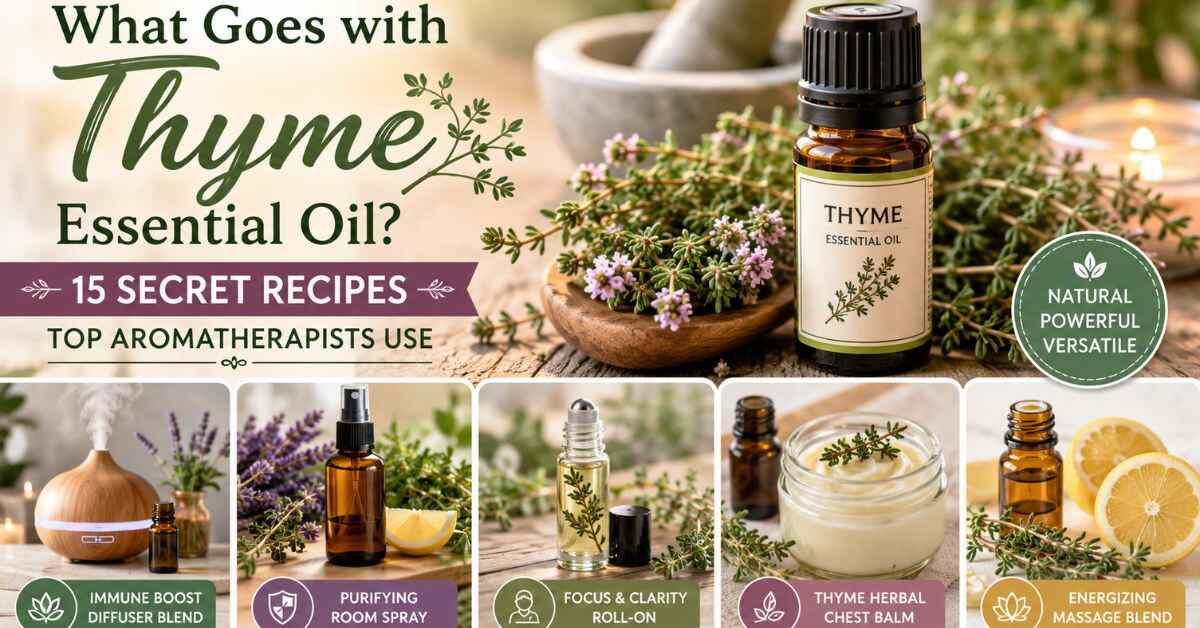
Thyme oil stands as one of the most powerful, dynamic, and revered botanical extracts in natural aromatherapy. Derived from the leaves and flowering tops of Thymus vulgaris, this ancient herbal remedy brings a crisp, sharp, and medicinal punch that can revitalize your mind and restore clean air in your living space. Knowing exactly what goes with thyme essential oil allows you to unlock its full therapeutic potential while crafting balanced scents that elevate your everyday atmosphere.
Whether you are formulating custom skincare serums, building immune-supporting room sprays, or crafting botanical perfumes, finding the right botanical partners turns a sharp herbal scent into a rich, complex aroma profile.
What Does Thyme Essential Oil Smell Like?
Thyme essential oil features a robust herbal, warm, spicy, and slightly medicinal aroma profile.
- Top Notes: Sharp, herbaceous, fresh, and penetrating green accents.
- Middle Notes: Warm, woody, savory, and subtle earthy undertones.
- Base Undertones: Slight balsamic, leather-like, and spicy undertones that linger quietly in complex blends.
Because thyme oil possesses an intensely concentrated aroma profile, it acts as a strong middle note in fragrance structures. When used raw or unblended, its high concentration of active phenolic compounds can easily overpower lighter scents. However, when paired correctly with complementary essential oils, its sharp edges smooth out into a crisp, grounding backbone that enhances floral, citrus, and woody compositions.
Why Is Thyme Essential Oil Popular in Aromatherapy?
Aromatherapists and natural wellness practitioners value thyme oil for its extraordinary chemical complexity and versatile physiological benefits. The oil contains high concentrations of natural compounds such as thymol, carvacrol, and linalool, which give it powerful purifying, energizing, and cleansing properties.
Key Aromatherapy Benefits:
- Mental Focus: Clears brain fog and stimulates cognitive clarity during demanding work hours.
- Respiratory Support: Opens up stuffy airways and refreshes air quality during seasonal changes.
- Emotional Uplift: Helps dissipate nervous fatigue and promotes physical stamina.
- Purifying Power: Destroys unwanted household odors when diffused or used in natural cleaning products.
Because of its broad versatility, thyme essential oil is an indispensable staple in holistic wellness cabinets, natural beauty formulations, and DIY home remedies.
Key Benefits of Blending Thyme Essential Oil with Other Oils
Blending thyme essential oil with partner botanicals is both an art and a science. Crafting multi-oil recipes does far more than create an enjoyable room fragrance; it unlocks profound synergistic effects that boost the oil’s natural power.
| Benefit Category | Strategic Pairing Partner | Synergistic Result |
| Aromatic Balance | Sweet Orange, Bergamot, Lemon | Softens the sharp medicinal edges of thyme with bright citrus brightness. |
| Skin Conditioning | Lavender, Geranium, Jojoba Oil | Formulates a gentle what goes with thyme essential oil for skin blend to soothe blemishes without irritation. |
| Respiratory Boost | Eucalyptus, Peppermint, Tea Tree | Maximizes airway-opening properties for seasonal wellness. |
| Deep Grounding | Frankincense, Cedarwood, Sandalwood | Adds warm, woody depth that anchors the fast-evaporating herbal notes. |
1. Synergistic Healing Boost
When you combine thyme with partner oils high in complementary terpene compounds (like 1,8-cineole in eucalyptus or linalool in lavender), you multiply their individual therapeutic benefits.
2. Enhanced Skin Safety
Pure thyme oil is a powerful hot oil that requires careful dilution. Blending thyme with soothing, gentler botanicals like lavender or geranium reduces the risk of skin sensitivity while maintaining its purifying benefits.
3. Prolonged Aromatic Persistence
Thyme oil evaporates at a medium rate. Pairing it with heavy base notes like frankincense or cedarwood fixes the aroma in the air, ensuring your custom diffuser recipe lasts significantly longer throughout the day.
What Goes with Thyme Essential Oil? The Essential Fragrance Families
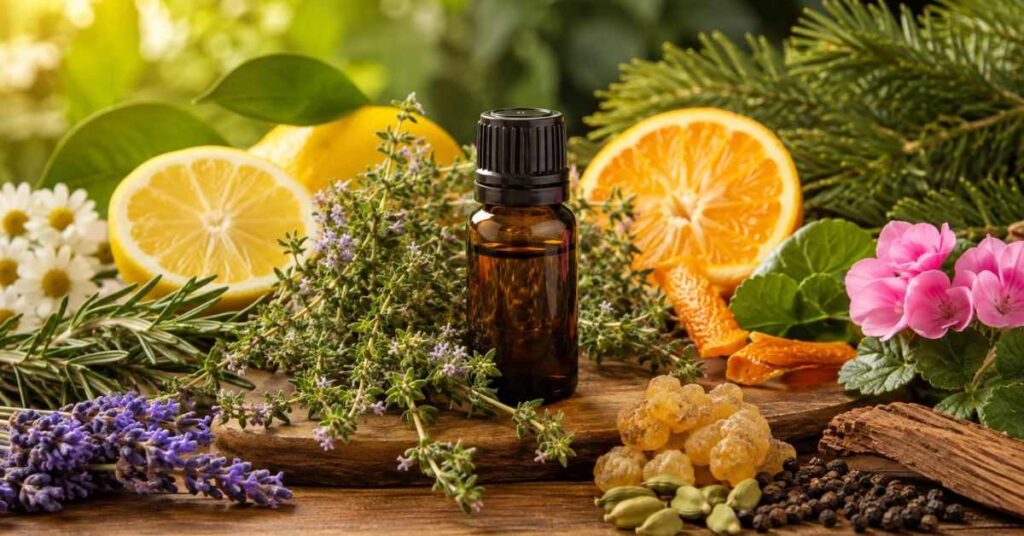
Mastering the art of essential oil blending begins with understanding how different aroma categories interact with one another. Because thyme oil exhibits an intense, herbaceous, and warm profile, it acts as a versatile bridge between disparate botanical families.
When you discover what goes with thyme essential oil across fragrance families, you can effortlessly craft custom mixtures that smell divine while serving targeted functional purposes. Below is the complete breakdown of how thyme harmonizes with the five primary fragrance families.
Citrus Essential Oils (Fresh, Energetic, & Bright)
Citrus essential oils act as top-note powerhouses that bring instant brightness, cheer, and effervescence to any room. When paired with thyme oil, the crisp tartness of citrus cuts directly through thyme’s heavy, medicinal undertones. This synergy creates an invigorating, clean aroma profile that uplifts low energy and purifies stale air.
Thyme and Lemon Essential Oil
Thyme and Lemon Essential Oil blends offer a crisp, invigorating botanical profile that elevates home and personal care environments. Distinctive aromatic layers feature a sharp, sparkling, clean, and herbal-fresh olfactory note. Functional applications include effective kitchen air purification, vibrant focus-boosting morning diffuser recipes, and versatile natural surface spray formulations. High levels of limonene inside lemon essential oil soften the herbal density of thyme oil, producing a Mediterranean garden scent that clears mental clutter.
Thyme and Sweet Orange Oil
Thyme and Sweet Orange Oil pairings present a well-rounded, comforting fragrance ideal for daily relaxation. Olfactory characteristics present a warm, juicy, sweet, and comforting profile with a subtle herbal finish. Integrating this duo supports stress-relief diffuser blends, late-afternoon mood boosters, and cozy seasonal recipes. The sunny sweetness of sweet orange oil balances the sharp thymol content, making it an accessible option for those refining essential oils list combinations.
Thyme and Bergamot Oil
Thyme and Bergamot Oil formulations deliver a sophisticated, spa-like experience suitable for high-end aromatherapeutic uses. Dynamic fragrance facets display a complex, elegant, citrusy, and slightly floral character over green undertones. Recommended applications span natural perfumes, evening relaxation, and anxiety-soothing room sprays. Naturally occurring spicy-floral notes in bergamot oil integrate smoothly into thyme’s middle notes, providing a refined botanical experience.
Thyme and Grapefruit Oil
Thyme and Grapefruit Oil mixtures generate an energetic, highly stimulating atmosphere to revitalize indoor spaces. Primary scent notes register as tart, tangy, bitter-sweet, and revitalizing. Practical uses range from post-workout room refreshers and morning wake-up blends to diluted lymphatic massage oils. Sharp citrus top notes in grapefruit oil complement the warm herbal base of thyme oil, effectively neutralizing stubborn room odors like cooking smells or pet dander.
2. Herbal & Green Essential Oils (Natural & Earthy)
Combining thyme with other green and botanical oils creates a powerful thematic synergy. Since these oils share similar terpene profiles, they enhance each other’s natural purifying and respiratory properties.
Thyme and Rosemary Essential Oil blends form a classic, high-potency herbal synergy rooted deeply in botanical tradition. Distinctive herbal notes deliver a pine-like, camphoraceous, woody, and intensely green aroma profile. Holistic hair care formulations utilize diluted mixtures in hair growth scalp treatments to stimulate follicles. Diffusing this combination creates ideal study-session diffuser recipes, while portable rollerballs make energizing morning focus rollers.
Botanical research highlights how rosemary oil and thyme oil work together to enhance mental performance. Active terpene constituents in rosemary amplify thyme’s cognitive benefits, making this duo an exceptional choice for mental clarity and sharp concentration.
Thyme and Peppermint Oil
- Aroma Profile: Cooling, mentholated, crisp, and tingling.
- Best Uses: Seasonal respiratory support, tension-soothing head rubs, and hot-weather cooling sprays.
- Why It Works: The intense cooling sensation of peppermint’s menthol contrasts brilliantly against thyme’s warm, spicy nature. When looking for what goes with thyme essential oil for diffuser recipes designed to clear stuffy noses, this pairing is top-tier.
Thyme and Eucalyptus Oil combinations form an invigorating, high-potency aromatic blend designed for respiratory support. Distinctive olfactory notes deliver a clean, airy, medicinal, and expansive fragrance experience. Standard wellness practices utilize this pair in steam inhalation bowls to clear passages. Quick bathroom treatments transform daily routines through energizing shower steams, whereas cold-weather setups rely on winter wellness diffuser blends.
High concentrations of 1,8-cineole inside eucalyptus oil act rapidly to support open airways. Integrating active thyme oil enables purifying botanical vapors to penetrate effectively, creating a formidable defense against seasonal environmental threats.
Thyme and Oregano Oil
- Aroma Profile: Pungent, savory, heavy, and intensely spicy.
- Best Uses: Deep home sanitization sprays and seasonal immune-support remedies.
- Why It Works: When oregano essential oil blends well with thyme, you get an unmatched antimicrobial powerhouse. Because both are potent herbal oils, use this pair sparingly and always ensure heavy dilution when applying topically.
3. Floral Essential Oils (Calming, Balanced, & Sweet)
Floral essential oils introduce softness, elegance, and emotional grounding to thyme’s assertive nature. They smooth out harsh medicinal notes, turning an aggressive herbal oil into a well-rounded, comforting masterpiece.
Thyme and Lavender Essential Oil combinations yield an exceptionally balanced botanical pairing for personal wellness. Rich olfactory layers offer a sweet, herbaceous, soothing, and floral-green aromatic experience. Daily wellness routines often incorporate this dual extract in nighttime diffuser blends for sleep support. Topically diluted preparations function exceptionally well as calming skin salves and soothing bug bite balms.
Natural constituent analysis reveals that lavender oil contains elevated levels of linalool and linalyl acetate, compounds renowned for encouraging nervous system relaxation. Incorporating thyme oil alongside floral lavender softens sharp herbal notes, creating a highly versatile blend ideal for stress reduction and topical skin care.
Thyme and Geranium Oil
- Aroma Profile: Rosy, green, sweet, and slightly minty.
- Best Uses: Facial serums for oily skin, balancing body oils, and mood-stabilizing diffuser mixes.
- Why It Works: Geranium essential oil acts as an incredible aromatherapeutic equalizer. Its rich floral-green profile picks up the subtle sweet undertones of thyme, creating a harmonious scent that supports healthy-looking skin and balanced emotions.
Thyme and Clary Sage Oil
- Aroma Profile: Earthy, bittersweet, floral, and herbaceous.
- Best Uses: Hormonal support roller bottles, deep relaxation baths, and stress-relief diffusion.
- Why It Works: Clary sage adds a nutty, herbaceous softness that tempers thyme’s sharp punch. This combination encourages deep mental rest while easing physical and emotional tension.
4. Woody & Earthy Essential Oils (Grounding & Deep)
Woody and resinous oils act as essential base notes in perfumery and blending. They slow down the evaporation rate of thyme oil, anchoring the volatile green notes into a long-lasting, grounding sensory experience.
Thyme and Cedarwood Oil
- Aroma Profile: Warm, balsamic, rich, and woodsy.
- Best Uses: Scalp care hair serums, evening relaxation, and masculine natural cologne bases.
- Why It Works: Cedarwood provides a solid, dry wood foundation that absorbs thyme’s sharp top notes, leaving behind a subtle, comforting forest aroma.
Thyme and Frankincense Oil blends create a sophisticated, highly revered botanical synergy valued in traditional wellness routines. Aromatic layers produce a resin-rich, incense-like, smooth, and spiritually grounding olfactory profile. Topically diluted preparations fit naturally into anti-aging skin creams to support skin vitality. Diffusing this combination crafts serene meditation room diffusers, while simple inhalation aids deep breathing exercises.
Therapeutic-grade frankincense oil inherently elevates herbal top notes while softening sharp edges. Combining ancient resin constituents with active thyme oil creates a velvet-like herbal aroma that promotes deep focus and tranquil relaxation.
Thyme and Tea Tree Essential Oil blends form a powerful, broad-spectrum botanical team known for deep cleansing properties. Crisp notes deliver a fresh, medicinal, sharp, and clean aromatic profile. Skin care routines incorporate diluted applications as acne spot treatments, while restorative bath formulations make excellent foot soak salts. Natural home cleaning preparations also leverage this active duo to craft high-potency bathroom surface sanitizers.
Therapeutic-grade tea tree oil inherently mirrors the strong purifying characteristics of thyme oil. Combining these terpene-rich botanical extracts delivers double-action cleansing power, supporting skin clarity as well as effective household hygiene.
Thyme and Pine or Spruce Oil
- Aroma Profile: Crisp, evergreen, brisk, and resinous.
- Best Uses: Winter holiday diffuser blends, room freshening sprays, and invigorating bath salts.
- Why It Works: Conifer oils bring the smell of a fresh mountain forest indoors. Paired with thyme, they deliver an outdoor-fresh scent profile that energizes tired minds.
5. Spicy & Exotic Essential Oils (Warm & Rich)
Spicy essential oils share thyme’s warm, stimulating backbone. When crafted carefully, these combinations deliver cozy, exotic fragrances perfect for cold weather and warming body oils.
When combining spicy and exotic essential oils with thyme essential oil, you create a deeply warm, rich, and invigorating aroma synergy that transforms any atmosphere.
For instance, pairing warm botanicals like clove, cinnamon, and black pepper with an herbaceous, thymol-rich thyme oil produces a robust fragrance profile. As a result, this combination stands out as an ideal choice for fall and winter diffuser recipes, effectively stimulating mental energy while filling your living space with cozy, comforting warmth.
Furthermore, integrating these spicy elements helps balance the medicinal undertones of thyme. Consequently, you achieve a harmonious scent that boosts mood, sharpens cognitive focus, and enriches your natural aromatherapy routine.
Thyme and Clove Essential Oil blends create a robust botanical synergy that elevates modern aromatherapy. Distinctive aromatic layers unfold through deeply spicy, sweet, woody, and pungent notes. Natural aromatherapists frequently rely on this dynamic pairing for seasonal autumn and winter room fresheners. Diluted formulations serve as comforting, warming muscle rubs, whereas diluted hydrosols work remarkably well as protective air sprays.
Eugenol concentrations within clove oil directly complement the herbal thymol notes found in thyme oil. Combining these active botanical extracts produces a rich, cozy scent profile that delivers immediate physical and sensory comfort.
Thyme and Cinnamon Bark Oil
- Aroma Profile: Fiery, sweet, gourmand, and intensely warm.
- Best Uses: Festive holiday room blends and cozy evening atmosphere creation.
- Why It Works: Cinnamon’s intense sweetness cuts through thyme’s green herbal notes, yielding an intoxicating, spicy-herbal fragrance. Note: Both are hot oils, so keep topical usage diluted strictly.
Thyme and Black Pepper Oil
- Aroma Profile: Dry, crisp, peppery, and stimulating.
- Best Uses: Pre-workout energizing rubs and circulation-boosting body oils.
- Why It Works: Black pepper brings a dry, sharp heat that complements thyme’s herbal depth without making the blend overly sweet.
What Goes with Thyme Essential Oil Chemotypes? (Linalool vs. Thymol)
Not all thyme oils are created equal. Depending on the plant’s growing elevation, soil composition, and climate, Thymus vulgaris produces distinct chemical variants known as chemotypes (ct.). Understanding these chemotypes is critical for both safety and crafting exceptional blends.
Understanding the distinct botanical chemotypes of the Thymus vulgaris plant is essential when deciding what goes with thyme essential oil for your personal wellness needs.
First, Thyme ct. Linalool represents the gentler variation of thyme oil. Because this chemotype is naturally high in linalool, it delivers a mild, floral, and soft aroma. As a result, it remains safe and highly beneficial for sensitive skin, making it an excellent choice for soothing skincare formulations and relaxing aromatherapy blends.
On the other hand, Thyme ct. Thymol serves as the robust, highly concentrated version of the plant. High in potent phenolic compounds, this chemotype offers a strong, sharp, and medicinal fragrance profile. Consequently, it acts as a powerful purifying agent that excels in home air cleansing, immune-support diffusions, and deep surface hygiene.
By identifying these two distinct pathways, you can easily match your targeted companion oils with the specific thyme essential oil benefits you wish to unlock.
Best Blends for Thyme Chemotype Linalool (Gentle & Sweet)
Thyme ct. linalool is widely regarded as the gentlest variation of thyme oil. Because it contains higher concentrations of linalool rather than harsh phenols, it exhibits a sweet, soft, floral-herbal aroma that is exceptionally mild on the skin.
- Ideal Applications: Gentle skin serums, relaxing evening diffuser recipes, and formulations for sensitive individuals.
- Top Pairing Partners:
- Lavender & Geranium: Enhances its soft, soothing qualities for skin care.
- Sweet Orange & Bergamot: Creates a bright, uplifting blend that relaxes without overpowering.
- Helichrysum Essential Oil: Formulates an elite, skin-restorative serum that supports a smooth, glowing complexion.
Best Blends for Thyme Chemotype Thymol (Strong & Medicinal)
Thyme ct. thymol is the classic, high-octane red or white thyme oil. High in phenol content (thymol and carvacrol), it carries an intensely sharp, medicinal, and fiery aroma with powerful air-cleansing properties.
- Ideal Applications: Household sanitization sprays, seasonal respiratory blends, and deep-cleansing foot baths.
- Top Pairing Partners:
- Eucalyptus & Peppermint: Maximizes chest-opening, airborne vapor power.
- Tea Tree & Lemon: Perfect for deep home hygiene and cutting through stubborn kitchen odors.
- Cedarwood & Frankincense: Helps anchor the aggressive, sharp medicinal top notes into a grounded, pleasant woodsy scent.
How Sourcing and Distillation Affect Aroma Matching
The geographic origin and distillation process directly shape how thyme oil behaves in your essential oil blends.
- Elevation & Sun Exposure: Thyme grown at high elevations in Southern Europe tends to yield higher ester and linalool content, offering a sweeter profile. Low-altitude thyme exposed to intense heat yields higher thymol concentrations.
- Distillation Time: First-pass distillation (“extra”) yields lighter, sweeter top-note fractions, whereas extended distillation pulls out heavier, darker phenolic compounds.
- Storage & Oxidation: Aged or improperly stored thyme oil oxidizes quickly, increasing its sharpness and skin-sensitizing potential. Always store your oils in dark glass bottles away from direct sunlight.
What Goes with Thyme Essential Oil for Specific Uses?
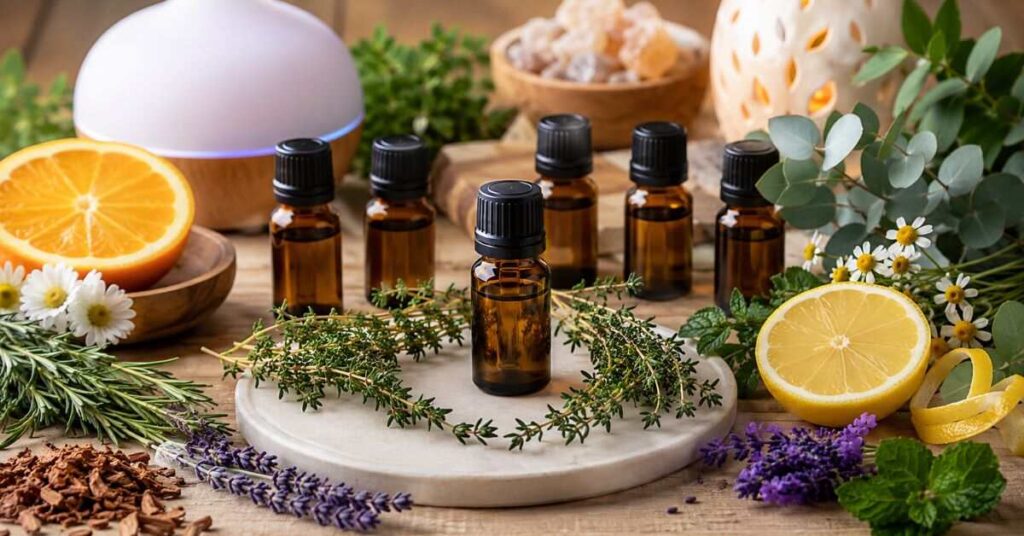
Tailoring your essential oil blends to address targeted wellness goals is where aromatherapy transforms into a practical daily habit. Depending on whether you want to clear your chest, focus during long study hours, foster deep sleep, or stimulate hair follicles, choosing the right companion oils ensures optimal therapeutic output.
What Oils Pair with Thyme for Respiratory & Immune Support?
When seasonal sniffles strike or indoor air feels heavy, combining thyme oil with respiratory-focused botanicals provides fast, comforting relief. Thyme’s active phenolic compounds work in tandem with oxides and monoterpenes found in companion oils to encourage clear, deep breathing.
- Eucalyptus Essential Oil: Rich in 1,8-cineole, eucalyptus expands lung airways while thyme provides airborne purifying action.
- Peppermint Oil: Delivers an instant cooling menthol sensation that soothes nasal passages during seasonal changes.
- Tea Tree Essential Oil: Adds a powerful secondary layer of defense, keeping indoor air crisp and purified.
- Lemon Essential Oil: Cuts through heavy medicinal vapors with a bright, clean note while providing a refreshing atmospheric lift.
Pro Tip for Steam Inhalation: Add 1 drop of thyme ct. linalool and 2 drops of eucalyptus to a bowl of steaming hot water. Lean over with a towel draped over your head for 3–5 minutes to clear stuffy air pathways naturally.
What Oils Pair with Thyme for Stress, Focus, & Mental Clarity?
When brain fog sets in during intense work sessions or study marathons, a targeted diffuser blend can reignite concentration and calm an overactive mind. Thyme essential oil acts as a sharp neural stimulant that cuts through cognitive fatigue.
- Rosemary Essential Oil: The ultimate memory and alertness companion; its camphoraceous aroma amplifies thyme’s grounding sharpness.
- Lemon & Grapefruit Oils: Citrus botanicals stimulate dopamine release and elevate mood, preventing mental sluggishness.
- Peppermint Oil: Provides an immediate sensory wake-up call that pairs brilliantly with thyme’s earthy backbone.
What Oils Pair with Thyme for Sleep & Deep Relaxation?
While thyme is traditionally known as an invigorating herb, using Thyme ct. linalool in micro-doses creates a deeply soothing environment that prepares your mind for restful sleep.
- Lavender Essential Oil: Cushions thyme’s green notes with rich linalyl acetate, helping slow down racing thoughts before bedtime.
- Frankincense Oil: Slows and deepens the breath, adding a peaceful, resinous grounding effect to nighttime blends.
- Bergamot Oil: Eases nervous tension and emotional agitation, creating a tranquil bedroom atmosphere.
What Oils Pair with Thyme for Hair Growth & Scalp Care?
Using thyme essential oil for hair care is rooted in decades of natural trichology traditions. Thyme helps stimulate blood circulation to hair follicles while maintaining a clean, balanced scalp environment free from excess sebum build-up.
- Rosemary Essential Oil: The premier botanical for scalp vitality; when combined with thyme, it forms a legendary hair-thinning defense duo.
- Cedarwood Oil: Balances oil-producing glands in the scalp and provides a warm, comforting woodsy scent.
- Lavender Essential Oil: Soothes scalp redness and irritation while nourishing dry roots.
- Jojoba or Argan Carrier Oil: Essential base oils that dilute thyme safely, ensuring gentle nourishment without clogging hair follicles.
What Oils Pair with Thyme for Natural Home Cleaning & Air Purification?
Ditching synthetic household chemicals is easy when you leverage the natural cleansing power of thyme. High in natural thymol, thyme oil is a non-toxic powerhouse for scrubbing counter surfaces and eliminating lingering odors.
- Pine or Spruce Oil: Delivers an outdoor-fresh mountain scent that masks tough household smells.
- Lemon & Sweet Orange Oils: Naturally dissolve grease spots while leaving behind a bright, sparkling fragrance.
- Tea Tree Oil: Boosts the cleansing capacity of DIY counter sprays, bathroom scrub pastes, and trash can deodorizers.
Read More: spearmint essential oil || copaiba essential oil benefits || neroli essential oil || chamomile essential oil
Top DIY Diffuser Blend Recipes Featuring Thyme Essential Oil
Diffusing essential oils is one of the easiest ways to experience the sensory and atmospheric benefits of thyme oil. Because thyme carries a strong fragrance profile, moderation is key. A few drops go a long way toward transforming your home atmosphere.
Below are 5 expert-formulated what goes with thyme essential oil for diffuser recipes. Each recipe is scaled for a standard 100 mL to 150 mL ultrasonic water diffuser. (Adjust drop counts proportionally for larger spaces).
Recipe 1: “Study & Focus Time” (Thyme + Peppermint + Lemon)
This crisp, sharp blend cuts directly through midday brain fog and mental slump. It is ideal for home offices, study spaces, and long work sessions where sustained concentration is required.
- 2 drops Thyme Essential Oil
- 2 drops Peppermint Oil
- 3 drops Lemon Essential Oil
Aroma Experience: Bright, minty, and invigorating with an underlying green herbal ground. It clears static air and sharpens cognitive focus within minutes.
Recipe 2: “Clear Breathing & Immunity” (Thyme + Eucalyptus + Tea Tree)
When seasonal weather shifts bring heavy air, this powerful vapor recipe helps refresh your indoor breathing space and support clear air passages.
- 2 drops Thyme Essential Oil
- 3 drops Eucalyptus Oil
- 2 drops Tea Tree Essential Oil
Aroma Experience: Clean, airy, camphoraceous, and distinctly purifying. Diffuse this blend in short 30-minute intervals during seasonal changes.
Recipe 3: “Sweet Dreams & Relax” (Thyme + Lavender + Frankincense)
By utilizing gentle Thyme ct. linalool, this recipe crafts a peaceful bedroom atmosphere that prepares your body for deep, restorative sleep.
- 1 drop Thyme Essential Oil (ct. Linalool)
- 4 drops Lavender Essential Oil
- 2 drops Frankincense Oil
Aroma Experience: Softly floral, herbaceous, and warm with an incense-like resinous depth. The single drop of thyme subtly anchors the lavender, preventing it from feeling overly sweet.
Recipe 4: “Garden Fresh Purifier” (Thyme + Rosemary + Bergamot)
Recreate the scent of a sunlit Mediterranean herb garden after a fresh morning rain. This recipe is an incredible natural deodorizer for kitchens and living rooms.
- 2 drops Thyme Essential Oil
- 2 drops Rosemary Essential Oil
- 3 drops Bergamot Oil
Aroma Experience: Herbal, elegant, green, and citrus-spiced. It effectively neutralizes cooking odors, pet smells, and stale room humidity.
Recipe 5: “Stress Relief & Anger Be Gone” (Thyme + Orange + Clary Sage)
When tension runs high or emotional exhaustion sets in, this warming, joyful recipe helps ease nervous frustration and create a comforting sanctuary.
- 1 drop Thyme Essential Oil
- 4 drops Sweet Orange Oil
- 2 drops Clary Sage Oil
Aroma Experience: Juicy, sweet, nutty, and subtly earthy. The rich sweetness of orange instantly softens thyme’s medicinal edge, delivering a soothing, cheerful vibe.
Top DIY Topical & Roller Bottle Recipes with Thyme Oil
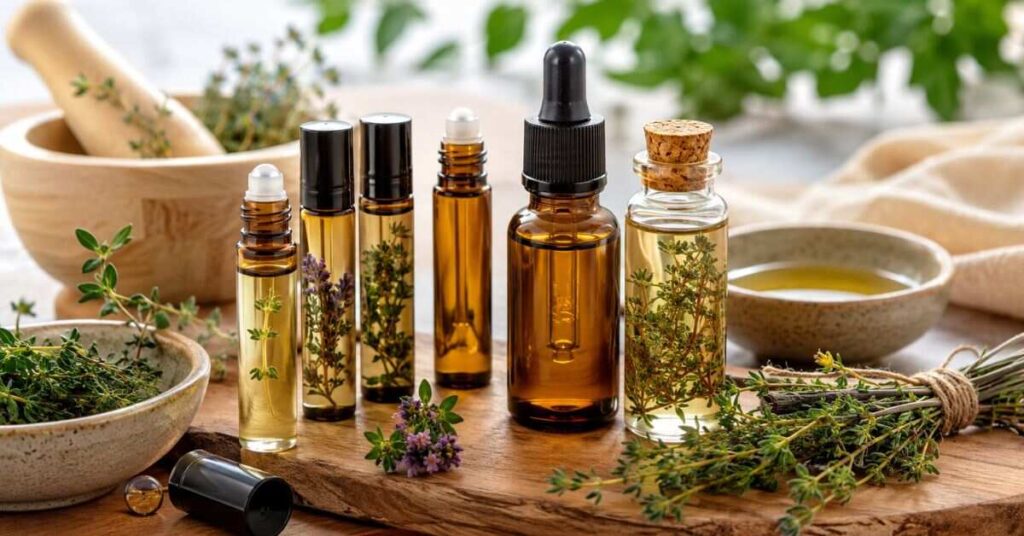
Applying essential oils topically allows target areas to absorb their purifying and restorative properties directly. However, because thyme oil is classified as a hot oil due to its high concentration of phenols, it must always be diluted in a high-quality carrier oil before touching the skin.
Below are 3 carefully measured topical recipes designed for roller bottles and skin application. Each recipe adheres strictly to safe dilution standards to ensure maximum efficacy without causing dermal irritation.
Recipe 6: Lavender-Thyme Soothing Skin & Roller Blend
This gentle, restorative recipe combines soothing floral notes with purifying herbs to calm minor skin blemishes, soothe bug bites, and ease localized skin redness. It serves as an exceptional what goes with thyme essential oil for skin roller remedy.
To prepare a soothing 10 mL amber glass roller bottle blend, follow these precise measurements and guidelines to ensure maximum skin safety and therapeutic value:
- 2 drops Thyme Essential Oil (ct. Linalool preferred): Provides purifying, botanical support while remaining gentle on the skin barrier.
- 4 drops Lavender Essential Oil: Delivers soothing, floral balance to calm redness and reduce skin stress.
- 2 drops Helichrysum Essential Oil (or Geranium Essential Oil): Adds potent restorative properties that promote a smooth, clear complexion.
- Top off with Jojoba Oil or Rosehip Seed Oil (~10 mL): Acts as a nourishing carrier oil base that mimics natural skin lipids and enhances absorption.
Furthermore, utilizing a dark amber glass bottle protects the volatile essential oil molecules from light degradation. Consequently, this careful combination ensures that you get the most out of what goes with thyme essential oil for skin while maintaining ideal dilution standards.
Preparation & Application Instructions:
- Add the essential oil drops directly into a clean 10 mL glass roller bottle.
- Fill the remaining space with cold-pressed jojoba oil (which closely mimics the skin’s natural sebum).
- Snap the roller ball insert firmly in place and roll the bottle between your palms for 30 seconds to blend.
- How to Use: Apply directly to minor blemishes, dry spots, or pulse points as needed. Avoid the delicate eye area.
Recipe 7: Thyme & Rosemary Hair Growth Scalp Serum
This stimulating, nutrient-rich scalp oil supports healthy hair follicles, maintains a clean scalp, and encourages thicker-looking hair over time.
| Ingredient | Measurement | Functional Purpose |
| Thyme Essential Oil | 3 drops | Stimulates scalp blood circulation and purifies roots. |
| Rosemary Essential Oil | 5 drops | Key botanical for supporting follicle strength and hair density. |
| Cedarwood Essential Oil | 3 drops | Balances scalp oil production and adds a warm woodsy aroma. |
| Jojoba Oil | 1 oz (30 mL) | Light carrier oil that deeply moisturizes without clogging pores. |
| Pumpkin Seed Oil | 1 oz (30 mL) | Rich in fatty acids that nourish thinning strands. |
Preparation & Application Instructions:
- Combine all ingredients into a 2 oz dark amber dropper bottle and shake gently before each use.
- Section your dry or towel-dried hair and apply 5–10 drops of serum directly onto your scalp.
- Massage firmly with your fingertips using circular motions for 5 minutes to stimulate blood flow.
- Leave the treatment on for at least 30 minutes (or overnight), then wash thoroughly with a mild shampoo. Use 2–3 times weekly.
Recipe 8: Chest Rub DIY Blend for Seasonal Congestion
When seasonal discomfort leaves you feeling stuffed up, this soothing salve provides comforting warmth and vapors that support clear breathing throughout the night.
- 3 drops Thyme Essential Oil
- 4 drops Eucalyptus Oil
- 4 drops Peppermint Oil
- 2 drops Frankincense Oil
- 2 oz (60 g) Raw Shea Butter or Unrefined Coconut Oil
Preparation & Application Instructions:
- Gently melt the shea butter or coconut oil in a double boiler over low heat until liquid.
- Remove from heat and allow the mixture to cool for 3–5 minutes (so heat does not degrade the essential oils).
- Stir in your essential oils thoroughly using a glass rod or clean wooden stick.
- Pour into a clean glass tin or jar and let it solidify completely at room temperature.
- How to Use: Massage a small, dime-sized amount onto your upper chest, back, or throat before bedtime.
Professional Perfumery Tips: What Oils Go with Thyme in Fragrance Crafting?
In natural perfumery, thyme essential oil is valued for its ability to add a fresh, green, and rustic character to fragrance compositions. It gives natural perfumes an authentic outdoorsy warmth, reminiscent of Mediterranean hillsides and aromatic herb gardens.
However, because human olfaction is exceptionally sensitive to thymol, formulating a perfume with thyme requires precise note layering, strict blending ratios, and corrective techniques.
Thyme as a Middle/Top Note in Natural Perfumes
In classical fragrance architecture, scents are categorized into three distinct volatility tiers: Top Notes (fast-evaporating initial impression), Middle/Heart Notes (the core thematic body), and Base Notes (slow-evaporating grounding anchors).
In natural fragrance architecture, understanding how perfume notes layer over time is essential for crafting balanced, long-lasting botanical blends.
- Top Notes (Citrus & Light Herbs): These fast-evaporating initial accents, such as lemon, peppermint, and bergamot, provide a bright, energetic opening that instantly lifts the sharp herbal edges of thyme oil.
- Middle Notes (Herbal & Floral Heart): Representing the main therapeutic body of the fragrance, this level pairs thyme essential oil with harmonizing botanicals like lavender, clary sage, and Geranium Essential oil to create a well-rounded scent.
- Base Notes (Deep Woody & Resinous Anchors): Heavy, slow-evaporating notes like cedarwood, Frankincense oil, and Helichrysum essential oil act as fixatives, grounding the lighter volatile molecules and ensuring your aroma blend lasts for hours.
Furthermore, integrating these three distinct layers prevents any single botanical from dominating the blend. Consequently, knowing what goes with thyme essential oil across top, middle, and base note categories allows you to craft sophisticated, professional-grade natural perfumes effortlessly.
Thyme oil primarily functions as a bridge between top and middle notes:
- Initial Lift (0–15 Minutes): The light monoterpenes in thyme provide a sharp, clean green opening that harmonizes effortlessly with bright top notes like bergamot, grapefruit, and sweet orange.
- Heart Development (15–60 Minutes): As top notes evaporate, thyme’s warm, herbal body emerges alongside floral and green middle notes like lavender, clary sage, and geranium essential oil.
- Base Fixation (1–4 Hours): Thyme relies on rich base notes like cedarwood, vetiver, or frankincense to anchor its herbal facets onto the skin.
Blending Ratios: How Many Drops of Thyme Essential Oil to Use
The key to professional fragrance crafting is following balanced note proportions. A classic, well-rounded natural perfume follows the 30-50-20 rule:
| Fragrance Tier | Standard Blend Allocation | Ideal Essential Oils |
| Top Notes | 30% of total drops | Bergamot, Lemon, Sweet Orange, Peppermint |
| Middle Notes | 50% of total drops | Thyme (5-10% max of this tier), Lavender, Geranium, Clary Sage |
| Base Notes | 20% of total drops | Cedarwood, Frankincense, Sandalwood, Vetiver |
Perfumer’s Rule of Thumb: Thyme oil should rarely exceed 5% to 10% of your total drop count. For example, in a 20-drop natural cologne recipe, use no more than 1 to 2 drops of thyme oil. Anything more risks turning an elegant fragrance into a medicinal liniment.
How to Fix a Blend If Thyme Overpowers Other Oils
It is easy to accidentally pour too much thyme into a glass beaker or bottle. Because its phenolic aroma dominates lighter botanicals, an accidental extra drop can mask delicate floral and citrus accents.
If your blend smells overly harsh or medicinal, use these professional correction strategies rather than throwing out the batch:
- Add Sweet Citrus (The Masking Technique): High-limonene oils like Sweet Orange or Tangerine are brilliant at softening sharp herbal edges. Add 2–3 drops of sweet orange to immediately tame thymol aggressiveness.
- Double the Base Notes (The Grounding Technique): Introduce warm, resinous base notes like Frankincense or Amyris. Rich resins absorb volatile herbal top notes, converting a sharp scent into a smooth, woodsy-herbal aroma.
- Incorporate Creamy Florals: Introduce 1 drop of Ylang Ylang or Jasmine absolute. The heavy, sweet indole notes in rich florals wrap around thyme’s green edges, creating a luxurious, spa-like accord.
- Dilute and Expand: Double the volume of carrier oil or perfumer’s alcohol while scaling up all non-thyme companion oils. This effectively lowers the overall percentage of thyme in your final formula.
How to Safely Use Thyme Essential Oil in Blends
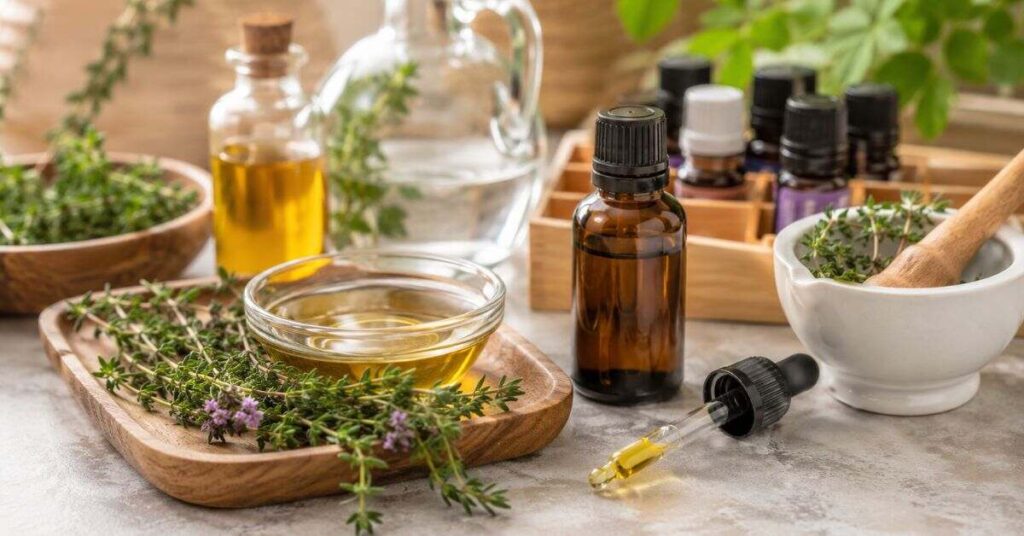
While thyme oil offers incredible botanical benefits, it is one of the most potent essential oils available. Because of its rich phenolic makeup, practicing safety, proper dilution, and choosing the right carrier oil are essential to prevent skin irritation while enjoying its full power.
Choosing the Right Carrier Oils (Jojoba, Argan, Coconut)
Essential oils must never be applied directly to the skin undiluted. Because essential oils are highly concentrated volatile plant extracts, carrier oils lipid-rich vegetable oils are necessary to suspend these active molecules safely. Consequently, using a proper carrier base allows efficient skin absorption while simultaneously preventing rapid evaporation.
Specifically, selecting the right carrier oil base is essential when exploring what goes with thyme essential oil for safe, high-performance topical applications. Because thyme oil is exceptionally concentrated and potent, diluting it with a nourishing botanical plant oil protects the delicate skin barrier while significantly enhancing therapeutic absorption.
Jojoba Oil: Ideal for Scalp Care and All Skin Types
In lipid chemistry, pure jojoba oil (Simmondsia chinensis) is technically a liquid wax ester rather than a traditional triglyceride oil. Specifically, its unique chemical structure closely mimics natural human sebum composition. Furthermore, this biomimetic profile allows rapid penetration into the dermal skin layer without clogging pores. In addition, applying non-comedogenic jojoba carrier oil leaves no heavy grease or sticky residue behind.
Additionally, jojoba oil for essential oils serves as the premier base for balance-restoring facial serums and targeted acne spot remedies. Moreover, formulating restorative scalp treatments featuring thyme essential oil with jojoba soothes scalp inflammation effectively. Therefore, utilizing jojoba oil dilution bases ensures complete safety for oily, sensitive, and combination skin types. Consequently, incorporating this stable liquid wax carrier oil delivers deep nutrient absorption while protecting your natural dermal skin barrier.
Argan Oil: Best for Dry Skin and Hair Vitality
Packed with natural vitamin E, antioxidants, and essential fatty acids, argan oil deeply conditions dry skin patches and revitalizes brittle hair strands. Moreover, it absorbs beautifully into damaged tissue without leaving a greasy film.
Furthermore, combining argan oil with Geranium Essential oil and thyme creates a luxurious, deeply restoring serum designed specifically for aging or compromised skin. Consequently, this combination promotes elasticity while delivering long-lasting cellular hydration.
Fractionated Coconut Oil: Perfect for Body Rubs and Deep Hydration
Fractionated Coconut Oil (FCO) is completely odorless, feather-light, and specially processed to remain permanently liquid at room temperature. Additionally, FCO boasts an exceptionally long shelf life, meaning it stays fresh for years without going rancid.
In cosmetic formulation, fractionated coconut oil (FCO) glides effortlessly onto delicate skin pulse points without friction. Specifically, its lightweight lipid structure performs exceptionally well in targeted essential oil roller bottle formulations. Furthermore, using fractionated coconut carrier oil in soothing chest rubs enhances volatile terpene delivery. In addition, incorporating this stable liquid lipid into deep muscle massage mixtures promotes fast transdermal lipid absorption.
Therefore, utilizing high-purity fractionated coconut oil for body massage provides an unbeatable glide for full-body topical application. Consequently, selecting non-comedogenic fractionated coconut oil dilution bases ensures deep nutrient delivery without clogging pores or dragging sensitive skin.
Pairing Base Oils with Complementary Herbal Blends
In addition, pairing these nourishing base options with complementary herbs ensures your custom blend delivers maximum hydration, optimal aromatic depth, and complete skin safety.
For instance, incorporating powerful botanicals like Helichrysum essential oil or selecting complementary ingredients from a classic herbal essential oils list elevates both the aroma and therapeutic performance of your final blend. Ultimately, choosing the correct lipid base guarantees a safe, effective, and deeply restoring natural application.
Recommended Dilution Rates for Sensitive Skin
Because thyme is classified as a “hot oil,” keeping dilution percentages low guarantees skin safety. Use the guide below to dilute your blends accurately:
| Target Use / Application Area | Max Safe Dilution Rate | Drops of Thyme per 1 oz (30 mL) Carrier Oil |
| Facial Application & Sensitive Skin | 0.5% | 3 drops total (1 drop Thyme + 2 drops gentle companion oil) |
| Daily Body Care & Massage Oils | 1.0% | 6 drops total (2 drops Thyme + 4 drops companion oils) |
| Targeted Spot Treatments & Chest Rubs | 2.0% | 12 drops total (3 drops Thyme + 9 drops companion oils) |
Safety Guideline: Never exceed a 1% dermal limit for Thyme ct. thymol on skin to prevent irritation or redness.
Safety Precautions, Patch Testing, & Contraindications
In preventative dermatological care, executing rigorous safety protocols before using any DIY thyme essential oil blend is essential. Specifically, performing a localized skin patch test on your inner forearm identifies personal dermal sensitivities. Furthermore, diluting active pure thyme essential oil (Thymus vulgaris) in a nourishing carrier oil prevents acute chemical burns. In addition, restricting high-phenol thyme oil concentrations protects your delicate dermal skin barrier against reactive contact dermatitis. Therefore, incorporating evidence-based thyme essential oil safety steps prevents unexpected allergic reactions and systemic irritation. Consequently, following these expert topical essential oil dilution guidelines ensures a safe, highly therapeutic DIY aromatherapy routine.
1. Perform a 24-Hour Patch Test
Mix 1 drop of thyme oil with 1 teaspoon of carrier oil. Apply a dime-sized amount to your inner forearm and cover with a bandage. If you notice redness, itching, or irritation within 24 hours, wash the area thoroughly with soap and warm water and discontinue topical use.
2. Key Medical Contraindications
- In clinical reproductive safety, expecting mothers must strictly avoid high-concentration thyme essential oil blends during pregnancy and nursing. Specifically, certain volatile thyme chemotypes containing high thymol or carvacrol levels act as mild emmenagogues. Furthermore, inhaling or topically applying undiluted thyme oil during pregnancy can potentially stimulate uterine contractions. In addition, active phenol compounds easily cross the placental barrier and pass into maternal breast milk. Therefore, consulting a licensed obstetrician before using any essential oils during pregnancy remains an essential clinical safety practice. Consequently, adhering to medical maternal essential oil safety protocols safeguards both fetal health and nursing infant wellness.
- High Blood Pressure: Individuals with severe hypertension should use thyme ct. thymol cautiously, as it can act as a mild circulatory stimulant.
- Bleeding Disorders: Thyme contains active compounds that may slow blood clotting. Discontinue topical and inhalation use at least 2 weeks before scheduled surgeries.
3. Diffusion and Household Safety
Always diffuse essential oils in well-ventilated spaces. If you have household pets, ensure they can leave the room freely if the scent feels overwhelming.
Conclusion: Finding Your Perfect Thyme Essential Oil Blend
Mastering what goes with thyme essential oil opens up a world of possibilities for custom aromatherapy, natural skincare, and holistic wellness. While thyme carries an assertive, sharp, and medicinal initial impression, pairing it with complementary fragrance families transforms its potent character into rich, multi-layered botanical compositions.
In expert formulation, softening intense botanical edges with bright citrus top notes like lemon oil or sweet orange essential oil creates immediate aromatic uplift. Specifically, balancing green herbal profiles with calming floral essential oils like lavender oil and geranium essential oil rounds out sharp volatile notes. Furthermore, anchoring light, fast-evaporating terpenes with deep resinous base notes like frankincense oil or cedarwood essential oil significantly improves fragrance longevity. In addition, crafting a harmonious essential oil blend requires precise chemical synergy and strict adherence to safe essential oil dilution guidelines. Therefore, diluting concentrated botanical extracts into a lipid-rich carrier oil for essential oils protects your natural dermal skin barrier. Consequently, applying these evidence-based aromatherapy formulation protocols ensures a perfectly balanced, safe, and highly therapeutic essential oil experience.
Quick Recall Checklist for Successful Blending:
- In professional formulation, respecting the chemical potency of pure thyme essential oil (Thymus vulgaris) is critical for safety. Specifically, you must always dilute topical thyme essential oil in a nourishing carrier oil like jojoba oil or argan oil. Furthermore, keeping high-phenol thyme oil concentration to 5%–10% of your total essential oil drop count prevents acute dermal irritation. In addition, restricting thymol content in topical mixtures protects your natural dermal skin barrier from chemical sensitization. Therefore, utilizing lipid-dense carrier oils for essential oils ensures safe transdermal absorption without triggering contact dermatitis. Consequently, strictly observing proper thyme essential oil dilution ratios guarantees maximum antimicrobial efficacy alongside complete topical dermal safety.
- Match the Chemotype: Choose sweet Thyme ct. linalool for calming skincare and bed-time diffuser recipes, and reserve strong Thyme ct. thymol for deep home cleaning and respiratory support.
- Experiment with Synergies: Don’t hesitate to layer 3 or 4 partner oils to craft custom recipes that target focus, stress relief, hair growth, or home purification.
With this complete blending guide as your blueprint, you are fully equipped to craft balanced, high-performing essential oil recipes that bring the fresh, therapeutic vitality of Mediterranean herbs straight into your everyday routine.
FAQs
Can you mix Lavender and Thyme essential oil together?
Yes, lavender and thyme essential oils mix together exceptionally well. In clinical aromatherapy, combining complementary plant extracts creates one of the most balanced pairings in holistic wellness. Specifically, this classic essential oil blend unites active volatile compounds to maximize therapeutic synergy. Furthermore, pairing harmonizing botanical extracts enhances both psychological relaxation and physical dermal wellness. In addition, using a well-structured aromatherapy essential oil pairing ensures balanced fragrance notes that never overpower sensitive senses. Therefore, utilizing an evidence-based essential oil blend protocol optimizes therapeutic outcomes across daily home and clinical practices. Consequently, selecting high-purity pure essential oils guarantees superior volatile stability, safety, and consistent holistic health benefits.
Lavender’s sweet, floral-herbal notes cushion the sharp, medicinal edges of thyme, creating a well-rounded aroma profile.
This combination is widely used in nighttime diffuser recipes to promote relaxation and in topical skincare serums (what goes with thyme essential oil for skin) to calm minor skin irritations and blemishes naturally.
Does Thyme blend well with Tea Tree oil?
Yes, thyme blends seamlessly with tea tree oil. In botanical therapeutics, combining complementary herbal extracts creates potent cleansing, purifying, and protective characteristics. Specifically, pairing these active botanical compounds forms an unbeatable synergy for maintaining home hygiene and enhancing skin clarity. Furthermore, the high concentration of natural antimicrobial terpenes effectively combats surface pathogens and environmental impurities. In addition, applying properly diluted botanical essential oils supports your natural dermal skin barrier against microbial overgrowth. Therefore, utilizing these multi-purpose pure essential oil blends elevates daily household sanitation and facial skincare routines. Consequently, incorporating evidence-based essential oil cleansing protocols delivers maximum botanical protection while ensuring optimal skin health and home wellness.
In olfactory blending, combining medicinal botanical extracts creates strong, fresh, and penetrating top notes. Specifically, pairing these sharp herbal extracts with a brightening citrus oil like lemon essential oil or sweet orange oil balances intense aromas. Furthermore, introducing a grounding wood note like cedarwood essential oil or frankincense oil smooths out sharp aromatic profiles. In addition, crafting well-balanced essential oil fragrance profiles elevates both household sprays and therapeutic foot soaks. Therefore, utilizing complementary essential oil blending techniques prevents sensory fatigue while maximizing therapeutic benefits. Consequently, following structured essential oil synergy rules ensures a harmonious, highly effective aromatherapy experience.
What carrier oil goes best with Thyme essential oil?
The best carrier oil depends on your intended application:
- For Scalp Care & Facial Serums: In cosmetic chemistry, pure jojoba oil serves as the top choice for topical essential oil applications. Specifically, its unique liquid wax ester structure closely mimics natural human skin sebum. Furthermore, this biomimetic profile allows rapid transdermal absorption without clogging delicate facial pores. In addition, applying a jojoba carrier oil helps balance natural cutaneous oil production across all skin types. Therefore, utilizing jojoba oil for essential oils protects your natural dermal skin barrier against irritation. Consequently, selecting non-comedogenic jojoba oil dilution bases ensures deep nutrient delivery, non-greasy absorption, and optimal skincare results.
- For Hair & Dry Skin: Argan oil provides rich fatty acids and vitamin E that nourish dry hair strands and sensitive skin patches.
- For Body Oils & Roller Bottles: In holistic formulation, fractionated coconut oil (FCO) serves as an ideal base for topical aromatherapy applications. Specifically, this versatile carrier oil remains completely liquid at room temperature while staying virtually odorless. Furthermore, undergoing a specialized caprylic acid esterification process grants FCO an exceptionally long, stable shelf life. In addition, applying this lightweight fractionated coconut carrier oil ensures effortless glide over delicate skin pulse points.
- Therefore, utilizing high-purity fractionated coconut oil for essential oils maximizes transdermal absorption without clogging pores. Consequently, selecting premium fractionated coconut oil dilution bases guarantees smooth application, superior lipid stability, and optimal therapeutic results.
Is Thyme essential oil safe to diffuse around pets?
In veterinary toxicology, you must exercise extreme caution when diffusing thyme essential oil around household pets. Specifically, pet species like cats and small dogs possess hyper-sensitive respiratory systems and acute olfactory senses. Furthermore, felines lack essential glucuronosyltransferase liver enzymes required to metabolize complex phenolic essential oil compounds efficiently. In addition, airborne micro-droplets containing thymol and carvacrol can trigger severe feline hepatic toxicity and respiratory distress. Therefore, maintaining well-ventilated spaces and providing an open exit route protects your pet respiratory health. Consequently, adhering to strict thyme oil pet safety protocols prevents accidental organ damage and ensures household pet safety.
If you choose to diffuse thyme oil in a pet-friendly home:
- Always keep the diffuser in a large, well-ventilated room.
- Keep doors open so your pets can freely leave the area if the aroma feels overpowering.
- Never apply undiluted or diluted thyme oil directly onto your pet’s fur or skin.