Introduction
Healthy, shiny, and manageable hair often starts with choosing the right ingredients for your hair care routine. While many commercial products promise quick results, natural oils continue to attract attention because they provide simple and effective nourishment. Among these options, sunflower oil for hair has become a popular choice for people looking for a lightweight oil that can improve moisture, softness, and overall hair appearance.
Sunflower oil is extracted from sunflower seeds and contains important nutrients such as vitamin E, essential fatty acids, and antioxidants. These components help support the hair’s natural moisture barrier while protecting strands from dryness and environmental stress. Furthermore, its lightweight texture makes it suitable for many hair types without creating a heavy or greasy feeling.
Many people search for sunflower oil for hair growth because they want stronger and healthier-looking hair. However, it is important to understand that sunflower oil is mainly a conditioning and protective ingredient rather than a medically proven hair regrowth treatment. Instead, it can help create a healthier environment for hair by reducing dryness, improving softness, and minimizing breakage.
Additionally, people use sunflower oil in different ways, including scalp massages, hair masks, leave-in treatments, and overnight applications. Therefore, understanding the correct usage method can help you get better results while avoiding common mistakes.
In this complete guide, we will explore the benefits of sunflower oil for hair, its possible role in hair growth, how to use it correctly, suitable hair types, possible side effects, comparisons with other popular oils, and expert tips to make it a useful part of your hair care routine.
What Is Sunflower Oil for Hair and Why Is It So Popular?
Sunflower oil is a natural plant-based oil obtained from sunflower seeds. It is widely used in cooking, skincare, and hair care because of its nourishing properties. When applied to hair, it works mainly as a conditioning agent that helps improve moisture retention, smoothness, and shine.
The growing popularity of sunflower oil for hair comes from its balanced combination of nutrients and lightweight feel. Unlike some heavier oils that may leave hair feeling coated, sunflower oil spreads easily and can absorb well into the hair surface.
Furthermore, modern hair care trends have increased interest in natural ingredients. Many people now prefer simple oils that contain fewer additives and can easily fit into their existing routines. Because of this, sunflower oil has gained attention as an affordable and accessible option for improving hair quality.
Another reason for its popularity is versatility. Whether someone has dry strands, frizzy hair, or simply wants extra shine, sunflower oil can be used in multiple ways. However, results may vary depending on hair condition, routine, and individual needs.
How Sunflower Oil Is Made
Sunflower oil is produced by extracting oil from sunflower seeds through different processing methods. The quality of the final oil depends on the extraction technique, filtration process, and whether additional refining steps are used.
The basic production process includes:
- Seed cleaning: Sunflower seeds are cleaned to remove impurities.
- Seed preparation: The seeds are processed to improve oil extraction.
- Oil extraction: Oil is removed from the seeds using pressing or extraction methods.
- Filtration and refining: The oil may be filtered and refined to improve stability and appearance.
For hair care purposes, many people prefer high-quality sunflower oil because it generally contains more naturally occurring nutrients. Moreover, choosing a suitable oil helps ensure that the hair receives beneficial compounds without unnecessary additives.
Cold-pressed sunflower oil is often considered a popular choice because it undergoes minimal processing. As a result, it may retain more natural components compared with heavily processed varieties.
Nutrients in Sunflower Oil That Support Hair Health
The effectiveness of sunflower oil for hair comes from its nutritional profile. It contains several components that can support healthier-looking hair when used as part of a consistent routine.
Key nutrients include:
| Nutrient | How It Supports Hair |
| Vitamin E | Helps protect hair from oxidative stress and supports smoother-looking strands |
| Essential fatty acids | Help maintain moisture and improve softness |
| Linoleic acid | Supports the hair’s natural protective barrier |
| Antioxidants | Help protect against environmental damage |
| Lightweight lipids | Help improve shine without excessive heaviness |
Furthermore, vitamin E plays an important role in maintaining hair appearance because it helps reduce the effects of environmental stress. Additionally, fatty acids can help prevent excessive dryness by supporting moisture balance.
Although these nutrients are beneficial, sunflower oil should be viewed as a supportive hair care ingredient rather than a guaranteed solution for every hair concern.
Why People Use Sunflower Oil for Hair Care
People choose sunflower oil for different hair care goals. Some use it to improve dryness, while others apply it to make their hair feel smoother and easier to manage.
Common reasons people use sunflower oil include:
- Improving hair softness
- Adding natural shine
- Reducing the appearance of frizz
- Supporting scalp moisture
- Protecting hair from dryness
- Making hair easier to style
Moreover, sunflower oil is affordable and widely available, which makes it an attractive option compared with some premium hair oils. Additionally, it can be combined with other products, such as conditioners and hair masks, to enhance a regular routine.
However, the best results usually come from consistent and proper use. Applying too much oil or using it incorrectly may make hair feel heavy. Therefore, understanding your hair type and choosing the right amount is essential.
Top Benefits of Sunflower Oil for Hair
Using the right natural ingredients can make a noticeable difference in how hair looks and feels. Among various plant-based oils, sunflower oil for hair has gained popularity because it provides hydration, softness, and protection without feeling too heavy. Furthermore, its nutrient-rich composition makes it a useful addition to many hair care routines.
Although sunflower oil cannot replace medical treatments for serious hair problems, it can support healthier-looking hair by improving moisture balance, reducing dryness, and protecting the hair surface. Additionally, regular use may help maintain smoother and more manageable strands.
Let’s explore the major benefits of using sunflower oil for hair.
Helps Lock In Moisture and Reduce Dryness
Dryness is one of the most common reasons hair appears dull, rough, and difficult to manage. When hair loses moisture, the outer layer of the strand can become weaker, which may lead to increased roughness and breakage.
Sunflower oil for hair works as an emollient, meaning it helps smooth the hair surface and reduce moisture loss. The fatty acids present in sunflower oil create a lightweight protective layer around the strands, helping hair maintain hydration.
Furthermore, sunflower oil contains linoleic acid, which supports the natural moisture barrier of the hair. As a result, it can help improve the feel and appearance of dry hair when used correctly.
Benefits for dry hair may include:
- Improved softness
- Better moisture retention
- Reduced rough texture
- Easier hair management
- Healthier-looking appearance
However, the amount of oil used matters. Applying too much can make hair appear greasy instead of hydrated. Therefore, using a small amount and adjusting according to your hair type is usually the better approach.
Makes Hair Softer and Shinier
Smooth and shiny hair is often associated with good moisture balance and proper care. Because sunflower oil contains vitamin E and essential fatty acids, it can help improve the overall appearance of hair strands.
When applied to the hair surface, sunflower oil for hair can help smooth uneven areas of the cuticle. Consequently, light reflects better from the hair surface, making strands appear more polished and shiny.
Moreover, sunflower oil can make hair feel softer by reducing friction between strands. This can be especially helpful for people who experience roughness after washing or styling.
Regular use may help:
- Improve hair smoothness
- Enhance natural-looking shine
- Reduce the feeling of dryness
- Make styling easier
Additionally, combining sunflower oil with a proper hair care routine can provide better results than using oil alone.
Helps Control Frizz and Flyaways
Frizz often occurs when hair lacks moisture or when the outer layer of the hair becomes uneven. Environmental factors such as humidity, heat styling, and frequent washing can also make frizz more noticeable.
Sunflower oil for hair may help control frizz by coating the hair surface and improving moisture retention. The lightweight texture allows it to smooth the strands without creating excessive buildup when used properly.
Furthermore, sunflower oil can help reduce flyaways by making hair strands easier to control. This makes it a useful option for people who want a smoother hairstyle without using heavy styling products.
Ways sunflower oil may help with frizz:
- Adds moisture to dry strands
- Improves hair flexibility
- Reduces rough texture
- Creates a smoother finish
However, frizz can have many causes, so results depend on hair condition, styling habits, and environmental factors.
May Reduce Hair Breakage
Hair breakage happens when strands become weak, dry, or damaged due to everyday stress. Brushing, heat styling, chemical treatments, and lack of moisture can all contribute to weaker hair.
While sunflower oil does not permanently repair damaged hair, it can help improve the condition of the hair surface. By adding moisture and reducing friction, it may help minimize the chances of unnecessary breakage.
The vitamin E and fatty acids in sunflower oil support smoother-feeling strands, which can make hair less vulnerable during daily handling.
Using sunflower oil may help by:
- Reducing dryness-related weakness
- Improving strand flexibility
- Minimizing friction during styling
- Supporting stronger-looking hair
Furthermore, protecting hair from breakage can help maintain length because fewer strands are lost due to damage.
Supports a Healthy Scalp
A healthy scalp creates a better foundation for healthy-looking hair. Dryness, discomfort, and poor scalp moisture balance can affect the overall condition of hair.
Sunflower oil for hair can provide lightweight moisture to the scalp area. Its vitamin E content and antioxidant properties may help protect the scalp from environmental stress.
Additionally, gentle scalp massage with sunflower oil can improve relaxation and help distribute the oil evenly. However, people with oily scalps should use it carefully because excessive oil application may not be suitable for everyone.
A balanced scalp care routine may include:
- Gentle cleansing
- Proper hydration
- Avoiding excessive product buildup
- Using suitable oils in moderation
Therefore, sunflower oil can be a helpful supportive ingredient when included as part of a complete scalp care routine.
Lightweight Formula That Won’t Weigh Hair Down
One major advantage of sunflower oil is its lightweight texture. Many people avoid oils because they worry about greasy or heavy-looking hair. However, sunflower oil is generally easier to spread and absorb compared with some thicker oils.
Because of its lightweight nature, sunflower oil for hair can work well for people who want moisture without a heavy coating.
It may be suitable for:
- Normal hair types
- Slightly dry hair
- People who dislike heavy oils
- Those looking for a simple finishing product
Furthermore, a few drops can often be enough to improve softness and shine. Using a small amount helps maintain a cleaner appearance while still receiving the conditioning benefits.
May Help Protect Hair From Environmental Damage
Daily exposure to sunlight, pollution, dust, and styling tools can affect hair quality over time. These factors may contribute to dryness, dullness, and rough texture.
Sunflower oil contains antioxidants, including vitamin E, which help protect against oxidative stress. As a result, it may provide additional support against some environmental factors that affect hair appearance.
Moreover, the protective layer created by oil can help reduce moisture loss caused by external conditions.
Sunflower oil may help support hair protection by:
- Improving moisture retention
- Reducing dryness caused by exposure
- Supporting smoother hair texture
- Maintaining healthier-looking strands
However, sunflower oil should not be considered a complete shield against all environmental damage. A balanced routine, including gentle handling and proper hair protection, remains important.
Does Sunflower Oil for Hair Growth Really Work?
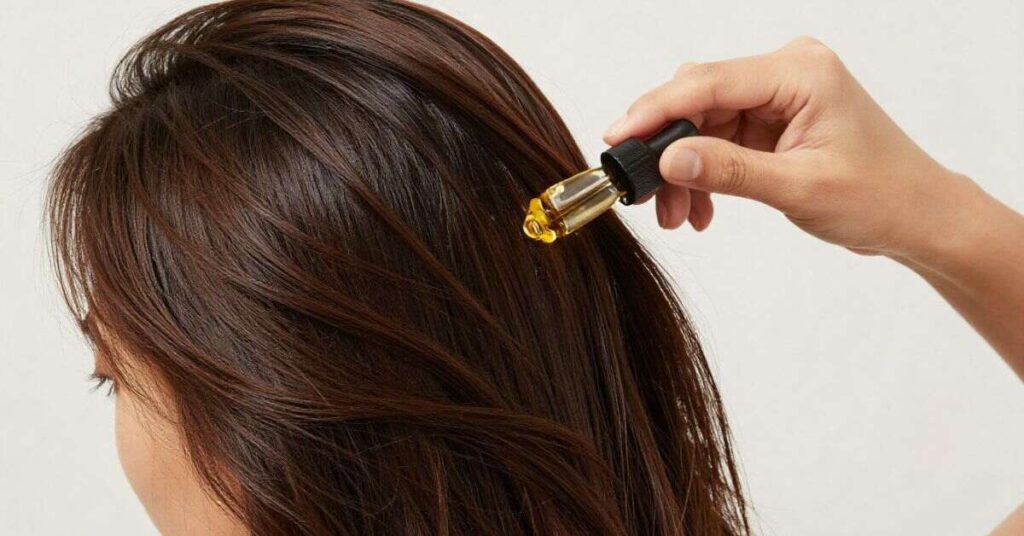
Many people search for natural solutions that can help them achieve thicker, healthier, and stronger-looking hair. Because of this, interest in sunflower oil for hair growth has increased significantly. However, it is important to understand the difference between improving hair condition and actually stimulating new hair growth.
Sunflower oil is rich in vitamin E, fatty acids, and antioxidants that can support healthier hair by improving moisture balance and reducing damage. Furthermore, healthier hair is less likely to experience dryness and breakage, which can help maintain length over time.
However, current scientific evidence does not prove that sunflower oil directly activates new hair growth or treats conditions that cause permanent hair loss. Instead, its main benefits come from improving the overall environment of the hair and scalp.
In simple words, sunflower oil can help your hair look healthier, but it should not be considered a guaranteed hair regrowth treatment.
The Link Between Scalp Health and Hair Growth
A healthy scalp plays an important role in maintaining healthy hair. Hair grows from follicles located within the scalp, and these follicles require proper care and nourishment to function effectively.
When the scalp becomes excessively dry or irritated, it may affect the overall condition of the hair. Therefore, maintaining scalp health is an important part of any hair care routine.
Sunflower oil for hair growth may support scalp health by:
- Helping maintain moisture balance
- Reducing dryness
- Providing antioxidant support
- Improving scalp comfort through gentle massage
Furthermore, a moisturized scalp can create a better environment for existing hair. However, scalp hydration alone does not guarantee faster growth because many other factors influence hair growth, including genetics, hormones, nutrition, and overall health.
Additionally, gentle scalp massage while applying oil may improve relaxation and help distribute the product evenly. However, it should always be done carefully without aggressive rubbing, which can cause unnecessary stress on hair strands.
What Research Says About Sunflower Oil for Hair
Research on sunflower oil specifically for hair growth is limited. Most available information focuses on the benefits of its components, such as vitamin E, essential fatty acids, and antioxidants.
These nutrients are known to support healthy skin and hair appearance. For example, vitamin E helps protect cells from oxidative stress, while fatty acids contribute to maintaining moisture levels.
Furthermore, sunflower oil has a high concentration of linoleic acid, which is an important fatty acid that may support the natural protective barrier of the skin and scalp.
The possible hair-supporting properties of sunflower oil include:
| Component | Possible Hair Benefit |
| Vitamin E | Helps protect against oxidative stress |
| Linoleic acid | Supports moisture balance |
| Essential fatty acids | Improve softness and flexibility |
| Antioxidants | Help protect against environmental factors |
However, it is important to avoid exaggerated claims. Scientific studies have not confirmed that sunflower oil directly increases hair follicle activity or guarantees faster hair growth.
Therefore, sunflower oil for hair growth should be viewed as a supportive care option rather than a replacement for proven medical treatments.
Can Sunflower Oil Help With Hair Loss?
Hair loss can happen for many different reasons, including genetics, hormonal changes, nutritional deficiencies, stress, and certain health conditions. Because the causes vary, one single oil cannot solve every type of hair loss.
Sunflower oil may help indirectly by improving hair quality. When hair is properly moisturized and protected, it may experience less breakage. As a result, hair may appear fuller because fewer strands are lost due to damage.
However, sunflower oil does not have strong scientific evidence showing that it can reverse pattern hair loss or regrow lost hair.
It may be helpful for:
- Dry and fragile hair
- Hair that breaks easily
- Improving the appearance of damaged strands
- Supporting general hair care
On the other hand, people experiencing noticeable or ongoing hair loss may need to explore scientifically supported options with a healthcare professional.
Furthermore, identifying the underlying cause of hair loss is usually more important than simply applying oils.
What Results Can You Realistically Expect?
Expectations play an important role when using natural hair care products. Many people expect oils to create dramatic changes quickly, but natural ingredients usually provide gradual improvements.
With regular use, sunflower oil for hair may help improve:
- Hair softness
- Shine and smoothness
- Moisture retention
- Manageability
- Reduction in dryness-related breakage
However, results can vary depending on:
- Hair type
- Current hair condition
- Frequency of use
- Overall hair care routine
- Lifestyle factors
For example, someone with extremely dry hair may notice improved softness sooner, while someone looking for new hair growth may not see the results they expect.
Moreover, consistency is important. Using sunflower oil occasionally may provide temporary softness, but maintaining a complete hair care routine can offer better long-term benefits.
A realistic approach is to consider sunflower oil as a nourishing addition that supports healthier-looking hair rather than a miracle solution.
Key Takeaway:
Sunflower oil can support hair health by improving moisture, softness, and protection. However, while sunflower oil for hair growth may help create a healthier scalp environment, there is currently no strong evidence that it directly causes new hair growth.
How to Use Sunflower Oil for Hair the Right Way
Using natural oils correctly is just as important as choosing the right oil. While sunflower oil for hair can provide moisture, softness, and shine, the results largely depend on how it is applied. Using the right amount, applying it properly, and understanding your hair type can help you get better benefits.
Furthermore, sunflower oil is versatile and can be used in different ways. Some people prefer scalp application, while others use it as a conditioning treatment or finishing product. Therefore, choosing a method that matches your hair needs is essential.
Before applying sunflower oil, keep these general tips in mind:
- Always start with a small amount.
- Apply oil evenly instead of saturating the hair.
- Choose a quality sunflower oil without unnecessary additives.
- Adjust the frequency according to your hair type.
- Wash properly to prevent product buildup.
Now, let’s explore the most effective ways to use sunflower oil for hair care.
Apply Sunflower Oil Directly to Hair and Scalp
One of the simplest methods is applying sunflower oil directly to the hair and scalp. This technique allows the oil to provide moisture while helping improve the overall feel of dry or rough strands.
To apply sunflower oil correctly:
- Take a small amount of sunflower oil in your palm.
- Rub your hands together to spread the oil evenly.
- Gently apply it to the scalp and hair lengths.
- Massage the scalp lightly for a few minutes.
- Leave it for a suitable time before washing.
Furthermore, applying oil to slightly damp hair may help lock in moisture because the hair already contains some hydration.
However, people with oily scalps should avoid applying large amounts directly to the scalp. Instead, focusing on the middle and ends of the hair may provide better results.
Regular application may help:
- Improve hair softness
- Reduce the appearance of dryness
- Make hair easier to manage
- Add natural-looking shine
Use Sunflower Oil as a Hair Mask
A hair mask is another effective way to use sunflower oil for hair. This method allows the oil to stay on the hair longer, giving it more time to condition and soften the strands.
A simple sunflower oil hair mask can be created by using sunflower oil alone or combining it with other hair-friendly ingredients.
Basic method:
- Apply sunflower oil from the middle of the hair to the ends.
- Leave it on for a period that suits your hair needs.
- Wash thoroughly with a gentle shampoo.
For additional nourishment, some people combine sunflower oil with ingredients like aloe vera gel or other conditioning oils. However, it is important to choose combinations that suit your specific hair type.
A hair mask may be useful for:
- Dry hair
- Rough texture
- Lack of shine
- Hair exposed to frequent styling
Moreover, using a hair mask occasionally instead of daily application can help maintain balance and avoid excessive oiliness.
Mix Sunflower Oil With Your Conditioner
Adding a small amount of sunflower oil to your conditioner can create an extra moisturizing treatment. This method is suitable for people who want the benefits of oil without a separate oiling routine.
To use sunflower oil with conditioner:
- Take your normal amount of conditioner.
- Add a few drops of sunflower oil.
- Mix well before applying.
- Apply mainly to the hair lengths.
- Rinse thoroughly after the recommended time.
This method can help improve smoothness and reduce the feeling of dryness after washing.
Furthermore, combining conditioner with sunflower oil may make the hair feel softer because both products work together to improve moisture and manageability.
However, avoid adding too much oil because it may reduce the lightweight feel of your conditioner and make hair appear greasy.
Use Sunflower Oil as a Leave-In Serum
People who want quick shine and smoother-looking hair can use a very small amount of sunflower oil as a natural leave-in serum.
Because sunflower oil has a lightweight texture, it can work as a finishing product when applied correctly.
Steps for using sunflower oil as a serum:
- Take one or two drops of oil.
- Warm it between your fingertips.
- Apply lightly to the ends of your hair.
- Avoid applying excessive oil near the roots.
This technique may help:
- Control minor frizz
- Improve smoothness
- Add shine
- Make hair easier to style
Additionally, using sunflower oil as a serum can be helpful before going outdoors because it may create a light protective layer around the strands.
However, less is more. Applying too much can make the hair look oily instead of naturally shiny.
Try an Overnight Sunflower Oil Treatment
Many people search for how to use sunflower oil for hair growth overnight because overnight treatments are believed to provide deeper conditioning. Leaving oil overnight can allow more time for the hair to absorb its moisturizing properties.
However, overnight oiling is not necessary for everyone. Some hair types may benefit from shorter application periods, while others may find overnight treatments too heavy.
To try an overnight treatment:
- Apply a small amount of sunflower oil to the hair lengths.
- Massage gently if applying to the scalp.
- Protect your pillow with a suitable covering.
- Wash your hair thoroughly the next morning.
An overnight treatment may help improve:
- Dryness
- Rough texture
- Hair softness
- Manageability
Furthermore, choosing the right amount of oil is important. Excessive application may make washing difficult and leave unwanted residue.
People with sensitive scalps or oily hair should test shorter application times first before trying overnight treatments.
Best Practices for Using Sunflower Oil for Hair
To get better results from your routine, follow these simple recommendations:
| Practice | Why It Helps |
| Use a small amount | Prevents greasy buildup |
| Apply consistently | Supports long-term conditioning |
| Wash properly | Removes excess oil |
| Choose quality oil | Provides better nourishment |
| Match usage with hair type | Improves results |
Moreover, sunflower oil works best when combined with healthy hair habits such as gentle washing, avoiding excessive heat styling, and maintaining proper nutrition.
Remember, natural oils are supportive care products. They can improve the appearance and feel of hair, but they are not instant solutions for every hair concern.
Read More:https://pureoilshub.com/pumpkin-seed-oil-for-hair-loss/
Is Sunflower Oil for Hair Suitable for Every Hair Type?

Every person’s hair has different needs, textures, and challenges. Therefore, a hair oil that works well for one person may not provide the same results for another. Fortunately, sunflower oil for hair is considered a versatile option because of its lightweight texture and nourishing properties.
Unlike heavier oils that may feel difficult to remove, sunflower oil is generally easier to spread and can provide moisture without creating an overly greasy appearance when used correctly. Furthermore, its vitamin E content, essential fatty acids, and antioxidants make it suitable for many hair care routines.
However, the amount used and the application method should always match your hair type. For example, dry hair may benefit from deeper conditioning, while fine hair may require only a few drops to avoid heaviness.
Let’s explore how different hair types can use sunflower oil effectively.
Sunflower Oil for Curly Hair
Curly hair often requires extra moisture because natural oils from the scalp may have difficulty traveling along the curves of each strand. As a result, curly hair can sometimes appear dry, rough, or more prone to frizz.
Sunflower oil for hair can be a useful addition to curly hair routines because it helps improve moisture retention and smoothness. The fatty acids in sunflower oil may help condition curls and make them feel softer.
Potential benefits for curly hair include:
- Better curl definition
- Reduced appearance of dryness
- Improved softness
- Easier detangling
- Reduced frizz
Furthermore, sunflower oil can be applied after washing as a lightweight finishing product. A small amount can help seal moisture and improve the overall appearance of curls.
However, curly hair varies widely. People with thicker curls may need slightly more oil, while those with finer curls may need only a few drops. Therefore, experimenting with the amount is important.
Sunflower Oil for Dry and Damaged Hair
Dry and damaged hair often lacks moisture and may feel rough due to environmental exposure, heat styling, or chemical treatments. In such cases, adding a nourishing oil can help improve the hair’s appearance and texture.
Sunflower oil for hair may benefit dry hair by creating a protective layer that helps reduce moisture loss. Additionally, vitamin E and fatty acids can support smoother-looking strands.
For dry and damaged hair, sunflower oil may help:
- Improve softness
- Reduce rough texture
- Enhance shine
- Make hair easier to manage
- Support moisture balance
Furthermore, using sunflower oil as a pre-wash treatment or hair mask may provide extra conditioning for dry strands.
However, damaged hair often needs more than oil alone. A complete routine that includes gentle products, proper conditioning, and reduced heat exposure can provide better results.
Sunflower Oil for Fine Hair
Fine hair requires careful oil selection because heavy products can make it appear flat or greasy. Therefore, lightweight oils are often preferred by people with thinner-feeling strands.
Sunflower oil can be suitable for fine hair because it has a lighter texture compared with some thicker oils. When used in small amounts, it may provide softness and shine without excessive weight.
For fine hair, the best approach is usually:
- Use only a few drops
- Apply mainly to the ends
- Avoid applying too much near the roots
- Wash properly after oil treatments
Moreover, using sunflower oil as a leave-in serum may be a better option for fine hair compared with heavy overnight treatments.
The goal is to add moisture and smoothness while maintaining natural movement and volume.
Sunflower Oil for Color-Treated Hair
Color-treated hair often requires extra care because chemical processing can affect the hair’s moisture balance. Dyed hair may become drier, more fragile, or more difficult to manage.
Sunflower oil for hair may support color-treated hair by helping improve softness and reducing the feeling of dryness. Its moisturizing properties can help maintain a smoother appearance between salon visits.
Benefits for color-treated hair may include:
- Improved moisture retention
- Softer hair texture
- Reduced dryness
- Enhanced shine
Furthermore, maintaining proper hydration is important because dry hair can make color appear less vibrant.
However, sunflower oil does not replace color-protection products specifically designed for treated hair. Using sulfate-free shampoos, conditioners, and protective products can also help maintain hair quality.
Which Hair Types Benefit Most From Sunflower Oil?
Although many people can use sunflower oil, some hair types may find it especially helpful.
| Hair Type | Possible Benefits |
| Curly hair | Helps improve moisture and reduce frizz |
| Dry hair | Supports softness and hydration |
| Damaged hair | Helps improve hair feel and appearance |
| Fine hair | Provides lightweight conditioning when used carefully |
| Color-treated hair | Supports moisture maintenance |
Furthermore, individual results depend on factors such as hair condition, routine, and application method.
The best approach is to start with a small amount and observe how your hair responds. This allows you to adjust your routine without causing unnecessary buildup.
Tips for Choosing the Right Sunflower Oil for Your Hair Type
Choosing the right product can improve your overall experience. Consider these tips:
- Select a high-quality sunflower oil.
- Avoid products with unnecessary additives.
- Use smaller amounts for fine hair.
- Apply more generously only when your hair needs extra moisture.
- Adjust frequency based on how your hair feels.
Additionally, consistency matters more than using large amounts. A simple routine with regular use is often more effective than occasional heavy applications.
Sunflower Oil for Hair vs Other Popular Hair Oils
Choosing the right hair oil can be confusing because every oil has different properties, textures, and benefits. While sunflower oil for hair has become popular because of its lightweight feel and moisturizing abilities, other oils such as coconut oil, argan oil, castor oil, and olive oil also have their own advantages.
Furthermore, the best oil depends on your specific hair needs. For example, someone looking for lightweight moisture may prefer sunflower oil, while someone focusing on deep conditioning may choose a heavier oil.
Understanding the differences between these oils can help you select the option that fits your hair care routine.
Sunflower Oil vs Coconut Oil
Coconut oil is one of the most widely used natural oils in hair care. It is known for its ability to penetrate the hair shaft and provide conditioning benefits. However, its heavier texture may not suit every hair type.
On the other hand, sunflower oil for hair is generally lighter and easier to apply, making it a suitable option for people who want moisture without a heavy feeling.
Sunflower Oil vs Coconut Oil Comparison
| Feature | Sunflower Oil | Coconut Oil |
| Texture | Lightweight | Heavier |
| Main nutrients | Vitamin E, fatty acids, antioxidants | Fatty acids, especially lauric acid |
| Best for | Softness, shine, moisture balance | Deep conditioning |
| Suitable hair types | Many hair types, including fine hair | Often preferred for thicker or very dry hair |
| Hair feel | Smooth and lightweight | Rich and coating |
Coconut oil may work well for people who need intensive conditioning. However, some individuals may find it makes their hair feel stiff or heavy.
Meanwhile, sunflower oil can be a better choice for those who prefer a lighter daily or occasional hair care option.
Sunflower Oil vs Argan Oil
Argan oil is often called “liquid gold” because of its popularity in premium hair products. It is rich in vitamin E and fatty acids, making it a common ingredient in smoothing and shine-enhancing treatments.
Similarly, sunflower oil for hair also contains vitamin E and nourishing fatty acids. However, sunflower oil is usually more affordable and widely available.
Sunflower Oil vs Argan Oil Comparison
| Feature | Sunflower Oil | Argan Oil |
| Texture | Lightweight | Lightweight but richer |
| Price | Generally affordable | Usually more expensive |
| Main use | Moisture and conditioning | Shine and smoothing |
| Availability | Widely available | Less common and often premium |
| Best for | General hair care | Frizz control and finishing |
Both oils can help improve hair appearance. However, argan oil is often chosen for luxury hair treatments, while sunflower oil offers a budget-friendly alternative.
Furthermore, people looking for an affordable option with similar conditioning properties may find sunflower oil useful.
Sunflower Oil vs Castor Oil
Castor oil is known for its thick consistency and is commonly used in traditional hair care routines. Many people use it because they believe it supports thicker-looking hair.
However, castor oil is much heavier than sunflower oil. This difference makes them suitable for different purposes.
Sunflower Oil vs Castor Oil Comparison
| Feature | Sunflower Oil | Castor Oil |
| Texture | Light | Very thick |
| Absorption | Easier to spread | Slower absorption |
| Main benefit | Moisture and softness | Rich conditioning |
| Best for | Everyday hair care | Occasional intensive treatments |
| Suitable for fine hair | Usually easier to use | May feel heavy |
Sunflower oil for hair may be more practical for regular use because it does not usually create the same heavy feeling as castor oil.
On the other hand, castor oil may be preferred by people who enjoy thicker oils for occasional treatments.
Sunflower Oil vs Olive Oil
Olive oil has been used for centuries in beauty and hair care routines. It contains antioxidants and fatty acids that can help improve hair softness and moisture.
However, olive oil tends to have a richer texture compared with sunflower oil.
Sunflower Oil vs Olive Oil Comparison
| Feature | Sunflower Oil | Olive Oil |
| Texture | Lightweight | Medium to heavy |
| Feel on hair | Less greasy | More nourishing but richer |
| Main nutrients | Vitamin E, linoleic acid | Oleic acid, antioxidants |
| Best for | Lightweight hydration | Deep conditioning |
| Daily use | Often easier | May be heavy for some hair types |
Olive oil may work well for very dry hair that needs intense moisture. However, people with fine or easily weighed-down hair may prefer sunflower oil.
Furthermore, sunflower oil provides a balance between nourishment and a lightweight finish.
Which Hair Oil Is Best for Your Hair?
There is no single “best” oil for everyone because hair texture, condition, and personal preferences vary.
Here is a simple guide:
| Hair Need | Suitable Oil Choice |
| Lightweight moisture | Sunflower oil |
| Deep conditioning | Coconut or olive oil |
| Frizz control and shine | Argan oil |
| Rich treatment | Castor oil |
| General hair softness | Sunflower oil |
Additionally, some people combine oils to create customized treatments. However, using too many oils at once may make it difficult to identify which ingredient works best for your hair.
Why Sunflower Oil Is Becoming a Popular Choice
The popularity of sunflower oil for hair continues to grow because it offers several practical advantages:
- Affordable compared with many premium oils
- Easy to find
- Lightweight texture
- Rich in vitamin E
- Suitable for multiple hair types
- Simple to include in routines
Moreover, people who want natural hair care without complicated steps often prefer sunflower oil because it provides basic conditioning benefits in an easy-to-use format.
Ultimately, the best choice depends on your hair goals. Sunflower oil is a strong option for those who want lightweight nourishment, softness, and improved hair appearance without a heavy finish.
Can Sunflower Oil Replace Silicone-Based Hair Products?
Silicone-based hair products have been widely used in shampoos, conditioners, serums, and styling products for many years. They are popular because they can instantly make hair feel smoother, softer, and easier to manage.
However, as more people move toward natural hair care routines, many are exploring alternatives such as sunflower oil for hair. Because sunflower oil provides moisture, shine, and conditioning benefits, some people wonder whether it can completely replace silicone-based products.
The answer depends on your hair goals and personal preferences. Silicone and sunflower oil work differently. Silicone mainly creates a smooth coating around the hair, while sunflower oil provides natural conditioning properties and helps support moisture balance.
Therefore, understanding how both options work can help you decide which one fits your routine better.
How Silicone Works on Hair
Silicones are synthetic ingredients commonly added to hair care products because of their smoothing and protective effects. They form a thin layer around the hair strand, which can temporarily improve the hair’s appearance.
When applied to hair, silicone can:
- Reduce the feeling of roughness
- Make hair appear shinier
- Improve detangling
- Reduce friction between strands
- Create a smoother surface
Furthermore, silicones can provide a protective barrier that helps reduce the effects of heat styling and environmental exposure.
However, silicone does not actually repair damaged hair. Instead, it mainly improves the appearance and feel of the hair by coating the surface.
Some types of silicone can also build up over time, especially when used frequently without proper cleansing. This buildup may make some people feel that their hair becomes heavy or less responsive to products.
Benefits of Choosing Sunflower Oil Instead
Natural oils have become increasingly popular because many people prefer ingredients that provide nourishment without synthetic coatings. Sunflower oil for hair offers a different approach compared with silicone-based products.
Instead of creating a synthetic layer, sunflower oil contains naturally occurring compounds such as vitamin E, fatty acids, and antioxidants.
Potential benefits include:
- Supports natural moisture balance
- Helps improve softness
- Provides lightweight conditioning
- Adds natural-looking shine
- Helps reduce the appearance of dryness
Furthermore, sunflower oil can be used in multiple ways, including as a pre-wash treatment, hair mask, or lightweight finishing oil.
Unlike silicone products that mainly improve the surface appearance, sunflower oil can help condition the hair while supporting a healthier feel.
However, sunflower oil may not provide the same instant smoothing effect as silicone-based serums, especially for extremely frizzy or heavily styled hair.
Silicone vs Sunflower Oil: Key Differences
| Feature | Silicone-Based Products | Sunflower Oil |
| Source | Synthetic ingredient | Plant-based oil |
| Main action | Coats hair surface | Conditions and supports moisture |
| Immediate smoothness | Usually very noticeable | More natural-looking improvement |
| Long-term conditioning | Depends on product | Supports moisture balance |
| Texture | Varies by formula | Lightweight oil |
| Best use | Styling and instant smoothness | Nourishment and conditioning |
Both options have advantages. The right choice depends on whether you are looking for quick cosmetic results or a more natural conditioning approach.
Which Option Is Better for Long-Term Hair Health?
When considering long-term hair care, maintaining moisture, reducing damage, and protecting hair from unnecessary stress are important factors.
Sunflower oil for hair can be a useful choice for people who prefer a simple routine focused on hydration and natural ingredients. Its nutrients may help improve the appearance and feel of hair over time.
On the other hand, silicone-based products can still be useful, especially for people who regularly style their hair or need extra smoothness before special occasions.
A balanced approach may work best:
- Use natural oils for conditioning and moisture support.
- Use silicone-based products when you need extra smoothness or styling benefits.
- Cleanse hair properly to avoid unwanted buildup.
- Choose products based on your hair’s current needs.
Furthermore, there is no universal rule that natural ingredients are always better or that synthetic ingredients are always harmful. The effectiveness depends on the formula, usage, and how your hair responds.
Can You Use Sunflower Oil and Silicone Products Together?
Yes, many people can use both types of products in the same hair care routine. They serve different purposes and can complement each other when used correctly.
For example:
- Use sunflower oil as a pre-wash treatment to add moisture.
- Wash and condition the hair.
- Apply a silicone-based serum only when extra smoothing is needed.
This approach allows you to enjoy the conditioning benefits of sunflower oil while still getting the styling advantages of silicone products.
Moreover, adjusting your routine based on your hair condition is usually more effective than completely avoiding one category of products.
Potential Side Effects of Using Sunflower Oil for Hair
Although sunflower oil for hair is considered a gentle and widely used natural ingredient, it may not work perfectly for everyone. Like any hair care product, individual reactions can vary depending on skin sensitivity, hair type, and how the oil is used.
Generally, sunflower oil is well tolerated by many people because it contains moisturizing compounds such as vitamin E and fatty acids. However, using too much oil, applying it incorrectly, or ignoring personal sensitivities may lead to unwanted results.
Furthermore, understanding possible side effects can help you use sunflower oil safely and get better results from your hair care routine.
Why a Patch Test Is Important
Before applying any new product to your scalp or skin, performing a patch test is a smart step. Even natural ingredients can cause reactions in some individuals.
A patch test helps you understand how your skin responds before using the oil more widely.
To perform a simple patch test:
- Apply a small amount of sunflower oil to a small area of skin.
- Wait and observe how your skin reacts.
- Avoid using the oil if you notice discomfort or irritation.
This step is especially important for people who have sensitive skin or a history of reactions to cosmetic products.
Moreover, testing the product first can help prevent unnecessary problems and allows you to make a safer decision about adding it to your routine.
Possible Allergic Reactions
Although uncommon, some people may experience sensitivity or an allergic reaction when using sunflower oil. Reactions can occur because everyone’s skin responds differently to ingredients.
Possible signs of sensitivity may include:
- Skin discomfort
- Redness
- Itching
- Irritation
- Unusual scalp reactions
If you notice any unwanted reaction after using sunflower oil, it is better to stop application and evaluate whether the product is suitable for you.
Additionally, choosing a high-quality sunflower oil without added fragrances or unnecessary ingredients may reduce the chance of irritation for some users.
However, if you have ongoing scalp concerns, seeking advice from a healthcare professional can help identify the cause.
Common Mistakes to Avoid
Many problems associated with hair oils happen because of incorrect usage rather than the oil itself. Using the right technique can improve your experience with sunflower oil for hair.
Here are some common mistakes to avoid:
Using Too Much Oil
Applying excessive oil does not always provide better results. Too much product can make hair look greasy and may become difficult to remove.
A small amount is usually enough, especially for fine or oily hair types.
Applying Oil Too Frequently
While regular use can provide conditioning benefits, applying oil too often may lead to buildup.
The ideal frequency depends on:
- Hair texture
- Scalp condition
- Washing routine
- Personal preference
Not Washing Hair Properly
Leaving excess oil on the hair without proper cleansing may make strands feel heavy or sticky.
Therefore, use an appropriate shampoo routine to remove extra oil while maintaining moisture.
Applying Oil to an Unhealthy Scalp
If your scalp has existing irritation or discomfort, applying new products without understanding the cause may not be helpful.
Furthermore, scalp care should always focus on maintaining balance rather than adding multiple products at once.
When to Stop Using Sunflower Oil
Although sunflower oil can be beneficial, there are situations where you should stop using it.
Consider discontinuing use if you experience:
- Persistent scalp discomfort
- Increased irritation
- Unusual skin reactions
- Hair feeling excessively heavy or greasy
- Worsening of existing scalp concerns
Additionally, if sunflower oil does not match your hair type, you may simply need to adjust the amount or frequency rather than completely avoiding oils.
For example:
- Fine hair may need only a few drops.
- Thick or dry hair may tolerate a richer application.
- Oily hair may require less frequent use.
Can Sunflower Oil Make Hair Greasy?
One common concern about using oils is whether they make hair appear oily or weighed down.
The answer depends mainly on the amount used and your hair type. Sunflower oil for hair has a relatively lightweight texture, but applying too much can still create a greasy appearance.
To avoid this:
- Start with a small amount.
- Focus on dry areas rather than the entire scalp.
- Avoid frequent heavy applications.
- Wash thoroughly after oil treatments.
Furthermore, using sunflower oil as a lightweight finishing product may work better for some people than applying large amounts as an overnight treatment.
Who Should Be More Careful When Using Sunflower Oil?
Most people can use sunflower oil without problems, but extra care may be needed for individuals with:
- Very oily scalps
- Sensitive skin
- Product buildup concerns
- A history of cosmetic reactions
In these situations, starting slowly and monitoring how your hair and scalp respond is the best approach.
Moreover, remember that natural does not always mean suitable for everyone. The right hair care choice depends on your individual needs and how your hair reacts.
Final Safety Tips for Using Sunflower Oil
For a safer and more effective experience:
- Choose a good-quality sunflower oil.
- Perform a patch test before regular use.
- Avoid excessive application.
- Wash hair properly after oil treatments.
- Stop use if irritation occurs.
- Adjust the routine according to your hair type.
When used correctly, sunflower oil for hair can be a helpful addition to a balanced hair care routine. However, understanding your hair’s needs is the key to achieving the best possible results.
Alternatives to Sunflower Oil for Hair Growth
While sunflower oil for hair can support healthier-looking hair by improving moisture, softness, and protection, some people search for stronger options when their main concern is hair thinning or noticeable hair loss.
It is important to understand that different hair concerns require different solutions. Natural oils mainly support hair condition, while certain medical treatments are designed specifically to address hair loss conditions.
Furthermore, the best choice depends on the reason behind hair concerns, personal preferences, and individual needs. Some people may benefit from simple hair care improvements, while others may require scientifically studied treatments.
Below are some common alternatives to consider.
Minoxidil for Hair Regrowth
Minoxidil is one of the most researched ingredients available for supporting hair regrowth. Unlike natural oils, minoxidil is specifically developed to help people experiencing certain types of hair thinning.
It works by supporting the hair growth cycle and helping maintain active hair follicles. Because of its clinical research and approval in many countries, it is commonly recommended for specific hair loss conditions.
Potential benefits of minoxidil include:
- Supports hair regrowth in certain cases
- Helps maintain existing hair
- Has more scientific research compared with most natural oils
- Available in different formulations
However, results can vary from person to person. Furthermore, consistent use is usually required to maintain results, and some individuals may experience unwanted effects.
Compared with sunflower oil for hair growth, minoxidil has stronger evidence for addressing certain types of hair loss. However, sunflower oil may still be useful for improving hair softness, moisture, and overall appearance.
Finasteride for Hair Loss
Finasteride is another medically studied option used for certain types of hair loss, particularly pattern-related hair thinning. It works by affecting specific hormonal pathways linked with hair loss.
Unlike natural oils, finasteride does not work by moisturizing or conditioning the hair. Instead, it targets biological factors involved in some forms of hair loss.
Potential advantages include:
- Clinically studied approach
- Designed for specific hair loss conditions
- May help slow progression in suitable cases
However, finasteride is not suitable for everyone. It requires professional medical guidance because individual health factors should be considered before use.
Therefore, people comparing finasteride with sunflower oil for hair growth should understand that these options serve completely different purposes.
- Sunflower oil → supports hair condition and moisture.
- Finasteride → targets specific biological causes of hair loss.
Hair Growth Shampoos and Conditioners
Hair growth shampoos and conditioners are another popular option for people looking to improve their hair care routine. These products often contain ingredients designed to support scalp cleanliness, hydration, and healthier-looking hair.
Common ingredients found in such products may include:
- Caffeine
- Biotin
- Keratin
- Plant extracts
- Moisturizing ingredients
However, it is important to have realistic expectations. Most shampoos and conditioners mainly improve hair quality and scalp care rather than directly creating dramatic hair regrowth.
A good hair care routine may include:
| Product Type | Main Purpose |
| Shampoo | Cleans scalp and removes buildup |
| Conditioner | Improves softness and manageability |
| Hair mask | Provides deeper conditioning |
| Leave-in products | Helps protect and smooth hair |
Furthermore, combining proper cleansing with nourishing ingredients like sunflower oil can help create a balanced routine.
Other Natural Oils for Hair Health
Besides sunflower oil for hair, several other natural oils are commonly used in hair care. Each oil has different characteristics, textures, and potential benefits.
Coconut Oil
Coconut oil is popular because it can provide deep conditioning and help improve the feel of dry hair. However, its heavier texture may not suit everyone.
Argan Oil
Argan oil is known for its lightweight feel and ability to improve shine and smoothness. It is often used in finishing products.
Castor Oil
Castor oil is a thick oil traditionally used in hair care routines. Many people use it for conditioning, although scientific evidence for direct hair growth benefits remains limited.
Olive Oil
Olive oil contains antioxidants and fatty acids that may help improve softness and moisture in dry hair.
Comparison table:
| Oil | Best Known For | Texture |
| Sunflower Oil | Lightweight moisture and softness | Light |
| Coconut Oil | Deep conditioning | Medium-heavy |
| Argan Oil | Shine and smoothing | Light |
| Castor Oil | Rich conditioning | Very thick |
| Olive Oil | Moisture support | Medium |
Sunflower Oil vs Hair Growth Treatments: Which One Should You Choose?
The right option depends on your main goal.
| Goal | Suitable Option |
| Improve softness and shine | Sunflower oil |
| Reduce dryness | Natural oils and conditioning products |
| Address certain hair loss conditions | Medical treatments |
| Improve general hair routine | Shampoo, conditioner, and oils |
| Protect hair from damage | Moisturizing products and gentle care |
Furthermore, some people prefer combining approaches. For example, they may use sunflower oil to maintain hair condition while exploring professional options for specific concerns.
However, it is important not to expect natural oils to perform the same role as medical treatments. Each option has a different purpose.
The Role of Sunflower Oil in a Complete Hair Routine
Although alternatives such as minoxidil and finasteride may be more targeted for hair loss, sunflower oil for hair still has an important place in general hair care.
It can help support:
- Moisture balance
- Hair softness
- Shine
- Reduced appearance of dryness
- Easier styling
Moreover, healthy-looking hair often comes from a combination of proper care habits rather than a single product.
A balanced routine may include:
- Gentle cleansing
- Regular conditioning
- Suitable hair treatments
- Protection from excessive styling damage
- Choosing products based on your hair needs
Final Verdict on Sunflower Oil for Hair
After exploring its benefits, uses, suitability, comparisons, and possible limitations, it is clear that sunflower oil for hair can be a valuable addition to many hair care routines. It offers several conditioning benefits, including improved softness, better moisture retention, enhanced shine, and a smoother hair texture.
However, it is important to maintain realistic expectations. Sunflower oil is not a miracle solution that can instantly transform hair or guarantee new hair growth. Instead, it works as a supportive ingredient that helps improve the overall condition and appearance of hair.
Furthermore, because of its lightweight texture and nourishing properties, sunflower oil can be suitable for different hair types when used correctly. The key is choosing the right application method, using an appropriate amount, and maintaining consistency.
Key Benefits to Remember
Sunflower oil for hair provides several advantages that make it popular among natural hair care users.
The main benefits include:
- Improves moisture retention: Helps reduce the feeling of dryness by supporting the hair’s natural moisture balance.
- Enhances softness and shine: Makes hair feel smoother and appear healthier.
- Helps control frizz: Supports a more manageable and polished hair appearance.
- Supports scalp moisture: Helps maintain a comfortable scalp environment when used properly.
- Lightweight conditioning: Provides nourishment without the heavy feeling of some thicker oils.
- May reduce breakage caused by dryness: Improves hair flexibility and reduces roughness.
Moreover, sunflower oil contains useful nutrients such as vitamin E, fatty acids, and antioxidants that contribute to healthier-looking hair.
However, results vary from person to person. Factors such as hair type, existing hair condition, lifestyle, and overall routine all influence the final outcome.
Who Should Try Sunflower Oil for Hair?
Sunflower oil can be a good option for people who want a simple and affordable way to improve their hair care routine.
It may be especially useful for:
People With Dry Hair
Those experiencing dryness may benefit from sunflower oil because it helps improve moisture and softness.
People Looking for Lightweight Hydration
Unlike some heavier oils, sunflower oil can provide conditioning without making hair feel overly coated when used correctly.
People Managing Frizz
Those who struggle with rough texture and flyaways may find sunflower oil helpful for creating a smoother appearance.
People Interested in Natural Hair Care
Individuals who prefer plant-based ingredients may appreciate sunflower oil because it is easily available and simple to use.
People Wanting Better Hair Maintenance
Even though sunflower oil does not directly treat every hair concern, it can support a routine focused on healthier-looking hair.
Furthermore, people with extremely oily scalps, sensitive skin, or specific scalp concerns should introduce it carefully and monitor how their hair responds.
Is Sunflower Oil Worth Adding to Your Hair Care Routine?
For many people, the answer is yes.
Sunflower oil for hair is worth considering because it provides practical benefits without requiring complicated application methods. It is affordable, accessible, and versatile enough to be used as a hair mask, pre-wash treatment, conditioner booster, or lightweight finishing oil.
Its biggest strengths include:
- Natural conditioning properties
- Lightweight feel
- Nutrient-rich composition
- Easy availability
- Multiple application options
Furthermore, sunflower oil works best when combined with healthy hair habits, including:
- Using suitable hair products
- Avoiding excessive heat styling
- Maintaining proper hydration
- Handling hair gently
- Following a consistent routine
However, if your main concern is significant hair loss or a medical scalp condition, sunflower oil alone may not provide the results you are looking for. In those situations, exploring scientifically supported options and professional guidance may be more appropriate.
Final Thoughts
Overall, sunflower oil for hair is a practical natural ingredient that can help improve the look and feel of your hair. Its ability to provide moisture, softness, and shine makes it a useful choice for many people who want a simple addition to their routine.
While it should not be viewed as a guaranteed hair growth solution, it can support healthier-looking hair by reducing dryness, improving manageability, and protecting strands from everyday stress.
When used correctly and consistently, sunflower oil can become a valuable part of a balanced hair care routine.
FAQs: About Sunflower Oil for Hair
Can I Use Sunflower Oil on My Hair Every Day?
Yes, some people can use sunflower oil daily, but it depends on their hair type, scalp condition, and the amount applied.
Because sunflower oil for hair has a lightweight texture, a very small amount may work well as a finishing oil for controlling dryness or adding shine. However, applying large amounts every day may create buildup and make hair appear greasy.
For daily use:
- Apply only a few drops.
- Focus mainly on the hair ends.
- Avoid excessive scalp application if your scalp becomes oily easily.
- Adjust frequency based on how your hair responds.
Furthermore, people with dry or thick hair may tolerate more frequent use, while those with fine or oily hair may prefer occasional application.
The key is balance. More oil does not always mean better results.
Is Sunflower Oil Good for Hair Growth?
Sunflower oil for hair growth may support healthier-looking hair by improving moisture balance and reducing dryness-related breakage. However, there is currently no strong scientific evidence proving that sunflower oil directly stimulates new hair growth.
Sunflower oil contains beneficial nutrients such as:
- Vitamin E
- Essential fatty acids
- Antioxidants
- Linoleic acid
These components can help improve the condition of hair strands and support a healthier scalp environment.
However, hair growth depends on many factors, including genetics, hormones, nutrition, and overall health. Therefore, sunflower oil should be viewed as a supportive hair care ingredient rather than a guaranteed hair growth treatment.
Does Sunflower Oil Help With Frizz?
Yes, sunflower oil may help reduce the appearance of frizz by improving moisture retention and smoothing the hair surface.
Frizz often occurs when hair lacks hydration or when the outer layer of the strand becomes rough. By adding lightweight moisture, sunflower oil can help hair feel softer and more manageable.
It may help with:
- Smoother texture
- Reduced flyaways
- Improved shine
- Easier styling
Furthermore, using a small amount of sunflower oil as a leave-in treatment can help create a smoother finish without making hair feel overly heavy.
However, frizz can have many causes, so results may vary depending on hair type and environmental conditions.
How Long Should Sunflower Oil Stay in Hair?
The ideal time depends on your hair needs and the method you are using.
Common application times include:
| Usage Method | Recommended Time |
| Leave-in serum | A few drops can remain in hair |
| Pre-wash treatment | Around 30 minutes to a few hours |
| Hair mask | Longer conditioning period based on preference |
| Overnight treatment | Suitable for some hair types |
For many people, leaving sunflower oil on the hair for a moderate amount of time provides enough conditioning benefits.
Furthermore, overnight application is not necessary for everyone. Some hair types may benefit from shorter treatments, especially if they become oily easily.
Is Sunflower Oil Better Than Coconut Oil for Hair?
Both sunflower oil and coconut oil have benefits, but the better option depends on your hair type and goals.
Sunflower oil for hair is generally lighter and may be preferred by people who want moisture without a heavy feeling. Coconut oil, on the other hand, is richer and may provide deeper conditioning.
Comparison:
| Feature | Sunflower Oil | Coconut Oil |
| Texture | Lightweight | Heavier |
| Best for | Softness and moisture | Deep conditioning |
| Suitable for fine hair | Often easier to use | May feel heavy for some |
| Shine benefits | Yes | Yes |
| Conditioning level | Moderate | Rich |
Therefore, neither oil is universally better. The right choice depends on whether your hair needs lightweight hydration or deeper nourishment.
Can Sunflower Oil Reduce Hair Breakage?
Sunflower oil may help reduce the appearance of breakage by improving hair softness and reducing dryness.
When hair becomes dry and brittle, it may be more likely to break during brushing or styling. By supporting moisture retention, sunflower oil can help improve hair flexibility.
However, it cannot repair severely damaged hair permanently. A complete routine that includes gentle handling, proper conditioning, and reduced damage from styling is still important.
Can I Mix Sunflower Oil With Other Hair Oils?
Yes, sunflower oil can be combined with other oils depending on your hair goals. Many people mix oils to create customized treatments.
For example:
- Sunflower oil + coconut oil for richer conditioning
- Sunflower oil + argan oil for added smoothness
- Sunflower oil + olive oil for extra moisture
However, using too many oils together can make it difficult to understand which ingredient benefits your hair the most.
Therefore, it is usually better to introduce one product at a time and observe how your hair responds.
Does Sunflower Oil Help With Dandruff?
Sunflower oil may help improve scalp dryness, which can sometimes contribute to visible flakes. Its moisturizing properties may support a more comfortable scalp environment.
However, dandruff can have different causes, and sunflower oil is not a guaranteed treatment for every dandruff condition.
If dandruff continues or becomes severe, it may require targeted scalp care products or professional advice.
Final FAQ Summary
Sunflower oil for hair is a useful natural ingredient that can improve softness, moisture, and shine. However, realistic expectations are important. It works best as part of a balanced hair care routine rather than as a single solution for every hair concern.