Introduction:
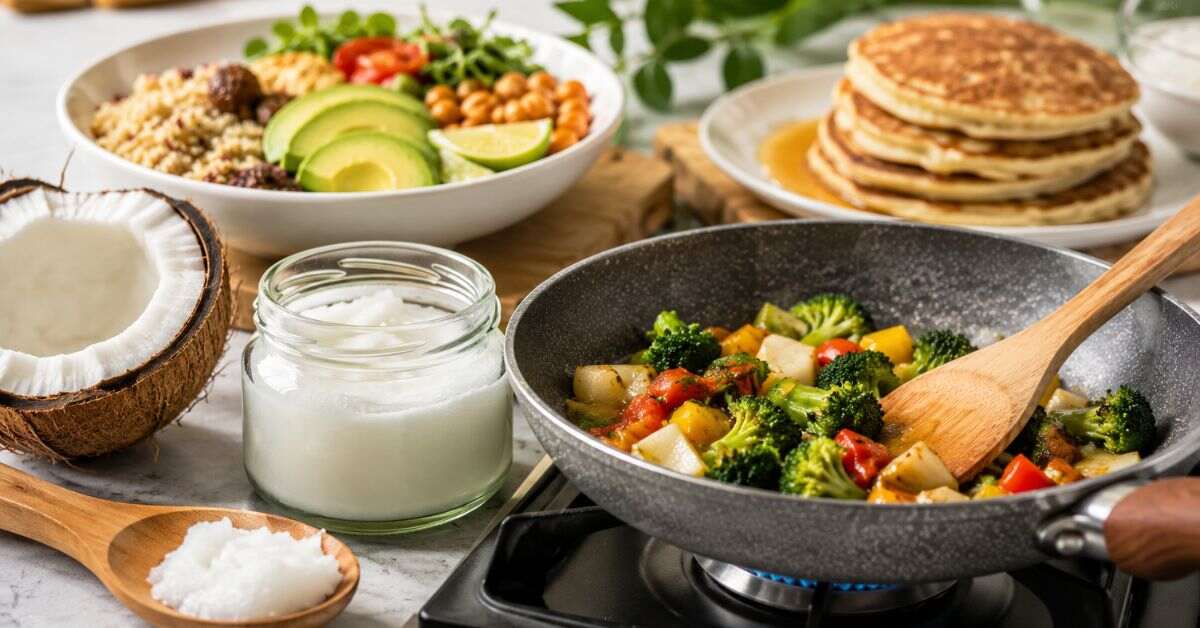
Cooking with coconut oil has become increasingly popular because it offers a unique flavor, impressive versatility, and excellent stability for many everyday recipes. Whether you want to sauté vegetables, bake healthier treats, roast meals, or replace butter, learning how to cook with coconut oil correctly can improve both the taste and texture of your dishes.
However, success depends on more than simply swapping one cooking fat for another. Choosing the right type of coconut oil, understanding its smoke point, and using the proper amount all affect the final result. Small adjustments can make recipes lighter, more flavorful, and easier to prepare.
This guide explains everything you need to know, from selecting the best coconut oil to avoiding common cooking mistakes. Along the way, you’ll also discover practical cooking tips, simple recipes, storage advice, and comparisons with other popular cooking oils so you can confidently use coconut oil in your kitchen.
What Is Coconut Oil and Why Should You Cook with It?
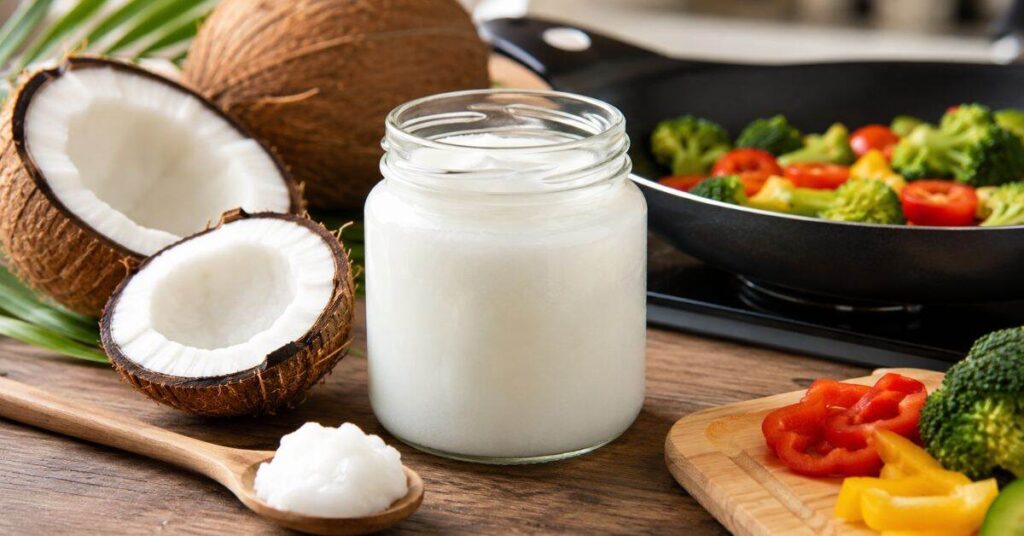
Coconut oil is a natural cooking fat extracted from mature coconut meat. Unlike many highly processed vegetable oils, quality coconut oil undergoes minimal processing, allowing it to retain its natural characteristics. As a result, it has become a favorite ingredient for home cooks who want a stable oil that works well for frying, sautéing, baking, roasting, and even preparing desserts.
One reason many people learn how to cook with coconut oil is its versatility. Depending on the variety you choose, it can provide either a light, neutral taste or a pleasant coconut aroma that enhances both sweet and savory recipes. In addition, coconut oil remains stable during moderate-heat cooking, making it suitable for many everyday meals.
Beyond flavor, coconut oil offers practical advantages. It spreads heat evenly across the pan, creates crisp textures when roasting, and adds moisture to baked goods without making them greasy. Because it is solid at cooler temperatures and melts quickly when heated, it also works well in recipes that require a smooth consistency.
How Coconut Oil Is Made
Coconut oil begins with fully matured coconuts harvested from coconut palms. Producers remove the white flesh, commonly called coconut meat, before drying or pressing it to extract the oil. The extraction method largely determines the oil’s flavor, aroma, color, and nutritional profile.
Virgin coconut oil, also known as unrefined coconut oil, comes from fresh coconut meat using methods such as cold pressing or wet milling. These techniques preserve more of the coconut’s natural aroma and flavor because they involve little processing and no chemical refining.
Refined coconut oil follows additional purification steps after extraction. Manufacturers filter, deodorize, and refine the oil to remove much of its natural coconut scent and taste. Consequently, refined coconut oil delivers a more neutral flavor, making it a practical choice for recipes where you do not want a noticeable coconut taste.
The extraction process also affects appearance. Freshly produced coconut oil is typically clear when melted and white when solid. High-quality coconut oil should remain free from cloudiness, unpleasant odors, or visible impurities.
Refined vs. Unrefined Coconut Oil
Choosing between refined and unrefined coconut oil depends entirely on what you plan to cook. Both perform well in the kitchen, yet each offers distinct advantages that suit different recipes.
| Feature | Unrefined (Virgin) Coconut Oil | Refined Coconut Oil |
| Flavor | Rich coconut flavor | Mild, neutral flavor |
| Aroma | Strong coconut scent | Almost odorless |
| Best Uses | Baking, smoothies, desserts, curries | Stir-frying, sautéing, roasting, everyday cooking |
| Processing | Minimal processing | Filtered and refined |
| Smoke Point | Lower | Higher |
If you enjoy tropical flavors, unrefined coconut oil complements oatmeal, muffins, pancakes, granola, and homemade treats. Its natural aroma also pairs well with many Asian and Coconut oil recipes Indian cooks often prepare, including vegetable curries and coconut-based rice dishes.
On the other hand, refined coconut oil is the better choice when preparing foods with delicate flavors. Since it contributes very little taste of its own, it allows herbs, spices, vegetables, and proteins to remain the focus of the meal.
Neither option is universally better. Instead, selecting the right variety for each recipe produces the best cooking results.
Benefits of Cooking with Coconut Oil
Learning how to cook with coconut oil provides more than just a new ingredient for your pantry. When used appropriately, it offers several practical advantages that improve both cooking performance and food quality.
Some of the most notable coconut oil cooking benefits include:
- Excellent heat stability for sautéing, baking, and roasting.
- Smooth texture that blends easily into sauces, batters, and dressings.
- Rich flavor options, allowing you to choose either a neutral or coconut taste.
- Naturally dairy-free, making it a convenient butter substitute in many recipes.
- Long shelf life when stored correctly in a cool, dry place.
- Versatility across breakfast dishes, savory meals, baked goods, and desserts.
Another advantage is consistency. Coconut oil melts at approximately 76°F (24°C), making it easy to measure in either liquid or solid form. This flexibility simplifies meal preparation throughout the year.
Many people also appreciate coconut oil because it works well in recipes that require moisture without adding excessive heaviness. Cakes remain tender, roasted vegetables develop crisp edges, and homemade granola becomes evenly coated with minimal effort.
Although coconut oil fits well into many eating patterns, moderation remains important. Using balanced amounts alongside a variety of healthy fats creates a more diverse and nutritious diet while allowing you to enjoy the unique qualities that coconut oil brings to everyday cooking.
How to Cook with Coconut Oil the Right Way
Knowing how to cook with coconut oil is more than adding it to a hot pan. The best results come from choosing the correct variety, cooking at an appropriate temperature, measuring the right amount, and making smart substitutions. These simple techniques help preserve flavor, improve texture, and prevent common cooking mistakes.
Whether you are preparing vegetables, baking desserts, or replacing butter in a favorite recipe, using coconut oil correctly will produce better and more consistent results.
Choose the Right Type of Coconut Oil
The first step is selecting the right coconut oil for your recipe. While both refined and unrefined coconut oil perform well in the kitchen, each serves a different purpose.
If your recipe benefits from a subtle tropical flavor, virgin coconut oil is an excellent choice. It naturally complements baked goods, oatmeal, pancakes, homemade granola, fruit-based desserts, and many Asian-inspired meals. Because it undergoes minimal processing, it retains its original aroma and coconut taste.
In contrast, refined coconut oil has a neutral flavor that blends into food without changing its taste. This makes it ideal for stir-frying, roasting vegetables, pan-searing chicken, cooking eggs, or preparing savory dishes where herbs and spices should remain the main flavors.
Another consideration is cooking temperature. Refined coconut oil generally tolerates slightly higher heat than virgin coconut oil, making it more suitable for recipes that require longer cooking times.
Whenever possible, choose high-quality coconut oil from a trusted brand. Fresh coconut oil should appear white when solid, clear when melted, and have no sour or rancid smell.
Understand Coconut Oil’s Smoke Point
Every cooking oil has a smoke point the temperature at which it begins to break down and produce smoke. Understanding this limit helps you cook safely while preserving flavor and quality.
Virgin coconut oil has a smoke point of approximately 350°F (177°C), whereas refined coconut oil reaches around 400–450°F (204–232°C) depending on the manufacturer.
These temperatures make coconut oil suitable for:
- Sautéing vegetables
- Pan-frying
- Light stir-frying
- Roasting
- Baking
- Medium-heat cooking
However, coconut oil is not the best option for prolonged, extremely high-heat cooking. If the oil starts smoking heavily, it develops an unpleasant flavor and loses some of its desirable cooking properties.
A simple way to prevent overheating is to preheat your pan over medium heat before adding the oil. Once the coconut oil melts completely and begins to shimmer slightly, it is ready for cooking.
Maintaining moderate heat throughout the cooking process also helps vegetables caramelize evenly and prevents baked goods from becoming overly dry.
How Much Coconut Oil Should You Use?
Using the correct amount of coconut oil improves both flavor and texture. Although coconut oil adds richness, using too much can make food feel heavy and unnecessarily increase calories.
Most recipes require surprisingly little.
| Recipe | Recommended Amount |
| Sautéing vegetables | 1 tablespoon |
| Stir-frying | 1–2 tablespoons |
| Roasting vegetables | 1–2 tablespoons per baking tray |
| Baking | Replace butter or oil in equal amounts |
| Greasing pans | Thin coating only |
Instead of pouring oil directly into the pan, measure it first. This simple habit prevents overuse and creates more consistent cooking results.
If you are preparing meals for weight management, controlling portion sizes becomes even more important. Learning how to cook with coconut oil for weight loss involves using moderate amounts alongside vegetables, lean proteins, whole grains, and other nutrient-rich ingredients rather than relying on coconut oil as a shortcut for healthier eating.
Remember that coconut oil is an ingredient not a magic solution. Balanced meals always provide the greatest nutritional value.
How to Replace Butter and Other Cooking Oils with Coconut Oil
One reason coconut oil has become popular is its ability to replace many traditional fats without making recipes complicated.
For most baked goods, you can substitute coconut oil using a 1:1 ratio. If a recipe calls for one cup of butter or vegetable oil, simply use one cup of melted coconut oil unless the recipe specifically states otherwise.
Here are some common substitutions:
| Replace | Use Coconut Oil |
| Butter | Equal amount |
| Vegetable oil | Equal amount |
| Canola oil | Equal amount |
| Shortening | Equal amount |
Before mixing coconut oil into cold ingredients such as milk, yogurt, or eggs, allow those ingredients to reach room temperature. Otherwise, the oil may harden into small lumps instead of blending smoothly.
When baking cookies, cakes, muffins, or brownies, melted coconut oil creates a moist crumb and tender texture. For pie crusts or pastries that require solid fat, use coconut oil while it is still firm.
If you are using how to melt coconut oil for baking as part of your preparation, warm the jar gently by placing it in a bowl of warm water. This method melts the oil evenly without exposing it to unnecessary heat, helping preserve its quality before it goes into your recipe.
By making thoughtful substitutions and matching the type of coconut oil to each recipe, you can enjoy its unique qualities while maintaining the texture and flavor that make homemade meals memorable.
Best Ways to Cook with Coconut Oil
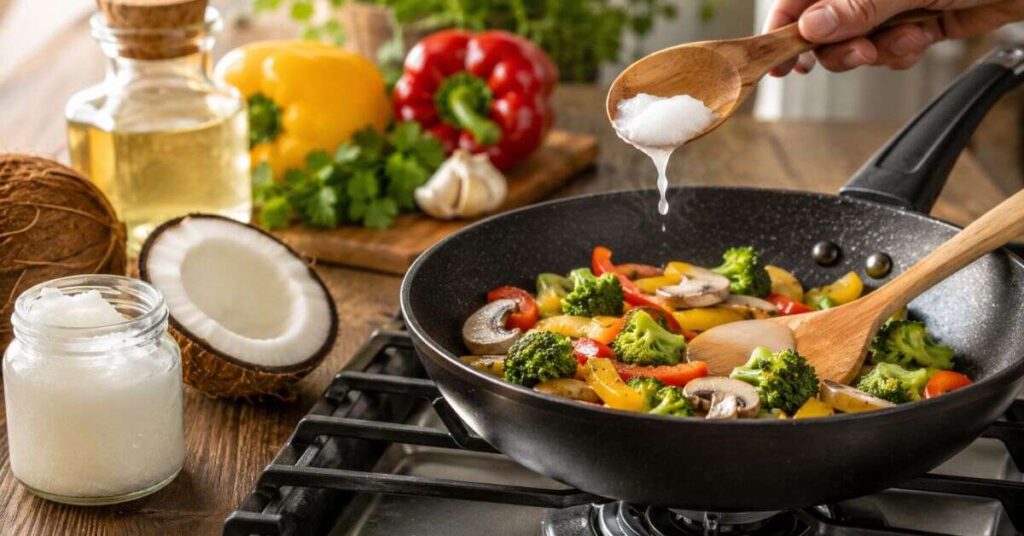
Once you understand the basics, the next step is learning where coconut oil performs best. Because it melts quickly, coats ingredients evenly, and remains stable over medium heat, it works well in everything from quick stir-fries to baked desserts. The key is matching the cooking method with the right temperature and using only the amount your recipe needs.
The following techniques show how to cook with coconut oil successfully while preserving flavor, texture, and nutritional quality.
How to Cook Vegetables with Coconut Oil
Vegetables are one of the easiest foods to prepare with coconut oil. A thin coating helps vegetables brown evenly, prevents sticking, and enhances their natural sweetness without overpowering their flavor.
Start by heating 1 tablespoon of coconut oil over medium heat until it melts completely. Add chopped vegetables in a single layer instead of overcrowding the pan. This allows excess moisture to evaporate, encouraging caramelization rather than steaming.
Vegetables that cook particularly well with coconut oil include:
- Broccoli
- Cauliflower
- Carrots
- Bell peppers
- Sweet potatoes
- Green beans
- Zucchini
- Brussels sprouts
Season the vegetables after they begin to soften. Salt, black pepper, garlic, paprika, cumin, turmeric, rosemary, and thyme all pair beautifully with coconut oil.
For extra freshness, finish the dish with chopped herbs or a squeeze of lemon juice just before serving. This simple step balances the richness of the oil and brightens the overall flavor.
How to Stir-Fry and Sauté with Coconut Oil
Coconut oil is an excellent choice for quick stir-fries and sautéed dishes because it heats evenly and creates a light, glossy coating on ingredients.
Begin by warming the pan over medium to medium-high heat before adding the coconut oil. Once the oil becomes fully liquid, add ingredients that require the longest cooking time first, such as onions, carrots, or broccoli. Softer vegetables like mushrooms, spinach, and zucchini should go in later to prevent overcooking.
For the best stir-fry:
- Cut ingredients into similar-sized pieces.
- Keep the food moving to cook evenly.
- Avoid filling the pan too much.
- Add sauces near the end of cooking.
Chicken, shrimp, tofu, mushrooms, snap peas, cabbage, and baby corn all work exceptionally well in coconut oil-based stir-fries.
If you’re using unrefined coconut oil, its subtle coconut aroma pairs especially well with ginger, garlic, soy sauce, lime juice, and curry-inspired seasonings.
How to Bake with Coconut Oil
Baking is one of the most popular ways to use coconut oil because it adds moisture without making baked goods overly heavy.
Before mixing, melt the coconut oil gently until it becomes completely liquid. Let it cool slightly so it blends smoothly with other ingredients without cooking eggs or forming lumps.
You can use coconut oil in many baked recipes, including:
- Cookies
- Brownies
- Cakes
- Banana bread
- Muffins
- Quick breads
- Pancakes
- Waffles
Most recipes allow a direct substitution for butter or vegetable oil, making coconut oil a convenient pantry staple.
If you’re preparing recipes straight from how to cook with coconut oil in a jar, simply warm the sealed jar in a bowl of warm water until the oil liquefies naturally. This method melts the oil evenly without exposing it to direct heat.
Because coconut oil solidifies below approximately 76°F (24°C), always combine it with room-temperature ingredients for the smoothest batter.
How to Roast Vegetables with Coconut Oil
Roasting transforms ordinary vegetables into flavorful side dishes, and coconut oil helps create beautifully crisp edges while keeping the inside tender.
Preheat the oven to the temperature recommended in your recipe before coating the vegetables. Toss them with just enough melted coconut oil to create a thin, even layer. Excess oil can make vegetables greasy instead of crispy.
Spread the vegetables across the baking tray with space between each piece. Good airflow allows moisture to escape, encouraging proper browning.
Excellent vegetables for roasting include:
| Vegetable | Typical Roasting Time |
| Sweet potatoes | 25–35 minutes |
| Carrots | 25–35 minutes |
| Broccoli | 18–25 minutes |
| Cauliflower | 25–30 minutes |
| Brussels sprouts | 25–30 minutes |
| Pumpkin | 30–40 minutes |
Turn the vegetables halfway through cooking so both sides develop an even golden color.
How to Make Granola with Coconut Oil
Homemade granola is one of the simplest easy recipes with coconut oil because the oil evenly coats the oats and helps clusters form during baking.
Combine rolled oats with chopped nuts, seeds, cinnamon, and a small amount of maple syrup or honey. Stir in melted coconut oil until every ingredient has a light coating.
Bake the mixture in a thin layer, stirring only once or twice during cooking. Allow the granola to cool completely before breaking it into clusters.
For extra flavor, mix in dried cranberries, raisins, coconut flakes, or dark chocolate chips after the granola has cooled.
Properly stored in an airtight container, homemade granola stays fresh for several weeks.
How to Make Chocolate Shell and Other Desserts
Coconut oil is widely used in desserts because it hardens naturally after cooling, creating smooth textures and crisp finishes without special ingredients.
One of the easiest recipes is a homemade chocolate shell. Simply combine melted coconut oil with dark chocolate until smooth, then drizzle the mixture over ice cream, frozen yogurt, or fruit. Within seconds, it hardens into a thin, crisp coating.
Beyond chocolate shell, coconut oil works wonderfully in:
- Energy bites
- Chocolate truffles
- Fudge
- No-bake bars
- Cheesecake crusts
- Homemade chocolate treats
Its ability to solidify at room temperature helps desserts hold their shape while providing a smooth, creamy texture.
Whether you are preparing breakfast, dinner, baked goods, or desserts, using coconut oil correctly adds versatility to your kitchen and makes it easier to create flavorful meals with simple ingredients.
What Foods Can You Cook with Coconut Oil?
One of the biggest advantages of learning how to cook with coconut oil is its versatility. It works well with a wide range of ingredients, making it suitable for breakfast, lunch, dinner, snacks, and desserts. Whether you prefer sweet or savory dishes, coconut oil can improve texture, help ingredients brown evenly, and add richness without overpowering the meal when used correctly.
At the same time, not every ingredient pairs well with coconut oil. Understanding which foods complement its flavor and which do not helps you achieve better cooking results while avoiding unnecessary disappointment.
Best Foods That Pair Well with Coconut Oil
Coconut oil naturally complements foods that benefit from gentle browning, added moisture, or a subtle richness. Refined coconut oil offers a neutral taste, while virgin coconut oil contributes a light coconut aroma that enhances many recipes.
The following foods pair exceptionally well with coconut oil:
Vegetables
Coconut oil helps vegetables develop a golden exterior while keeping the inside tender. It also allows herbs and spices to coat the vegetables more evenly.
Excellent choices include:
- Broccoli
- Cauliflower
- Carrots
- Sweet potatoes
- Brussels sprouts
- Bell peppers
- Green beans
- Zucchini
- Pumpkin
Roasting or sautéing these vegetables with coconut oil creates crisp edges and rich flavor without requiring large amounts of fat.
Rice and Grain Dishes
A small amount of coconut oil adds richness to cooked grains without making them greasy.
It works particularly well with:
- White rice
- Brown rice
- Quinoa
- Couscous
- Millet
Many Coconut oil recipes Indian also use coconut oil in rice dishes, vegetable pulao, coconut rice, and regional curries where its natural flavor blends perfectly with spices such as cumin, mustard seeds, turmeric, curry leaves, and coriander.
Eggs
Eggs cook beautifully in coconut oil because it creates a naturally non-stick surface.
You can use it for:
- Scrambled eggs
- Fried eggs
- Omelets
- Breakfast skillets
- Vegetable frittatas
Refined coconut oil is often the preferred choice if you want the eggs to retain their original flavor.
Lean Proteins
Coconut oil works well when cooking proteins over moderate heat.
Popular options include:
- Chicken breast
- Turkey
- Shrimp
- White fish
- Salmon
- Tofu
- Tempeh
The oil helps seasonings stick to the surface while encouraging even browning during cooking.
Baked Goods
Many bakers choose coconut oil because it creates soft, moist textures.
It performs well in:
- Muffins
- Cakes
- Cookies
- Banana bread
- Brownies
- Pancakes
- Waffles
When replacing butter, melted coconut oil usually works as a direct substitute in most recipes.
Breakfast Foods
Breakfast recipes benefit from coconut oil because it melts quickly and distributes evenly throughout the dish.
Popular examples include:
- Oatmeal
- Homemade granola
- Overnight oats
- Smoothie bowls
- French toast
- Breakfast bars
A small amount often provides enough richness without overwhelming lighter ingredients such as fruit or yogurt.
Desserts
Because coconut oil solidifies as it cools, it is especially useful for desserts that require structure.
It works well in:
- Chocolate shell
- Homemade fudge
- Energy bites
- Chocolate truffles
- No-bake desserts
- Cheesecake crusts
Its smooth consistency also helps chocolate melt evenly while producing a glossy finish.
Foods You Should Avoid Cooking with Coconut Oil
Although coconut oil is highly versatile, it is not the perfect choice for every cooking situation. Certain foods and cooking methods produce better results with oils that have a higher smoke point or a more neutral flavor.
Avoid using coconut oil in these situations whenever possible.
Extremely High-Heat Cooking
Cooking methods that require prolonged temperatures above the smoke point can cause coconut oil to break down.
Examples include:
- Deep frying at very high temperatures
- Restaurant-style wok cooking
- High-temperature grilling
- Commercial searing
For these methods, oils specifically designed for very high heat often perform better.
Delicate-Flavored Seafood
Virgin coconut oil may overpower mild seafood with its natural coconut aroma.
Examples include:
- Cod
- Sole
- Haddock
- Flounder
If you want to use coconut oil, refined coconut oil provides a much milder flavor that is less likely to affect the finished dish.
Recipes That Depend on Strong Butter Flavor
Although coconut oil replaces butter in many recipes, it cannot completely replicate butter’s distinctive taste.
Recipes such as:
- Traditional butter cookies
- Classic puff pastry
- Croissants
- Rich butter sauces
often rely on butter’s unique dairy flavor and texture.
Recipes Requiring Neutral Oils at High Temperatures
Some dishes depend on oils with almost no flavor while cooking at relatively high heat.
Examples include:
- Certain Asian stir-fries
- Homemade mayonnaise
- Light vinaigrettes
- Some commercial baking recipes
In these cases, refined coconut oil may still work, but another neutral oil might better match the intended flavor profile.
When Excess Oil Is Unnecessary
Coconut oil should complement food rather than dominate it. Adding more than necessary can make meals heavier and mask natural flavors.
Using only the amount required allows vegetables, grains, proteins, herbs, and spices to remain the focus of the dish while still enjoying the unique coconut oil cooking benefits.
Understanding which foods pair naturally with coconut oil and recognizing where it is less suitable helps you make smarter cooking decisions and consistently achieve better flavor, texture, and overall results.
Read More:https://pureoilshub.com/how-to-get-oil-out-of-hair/
Tips for Cooking with Coconut Oil
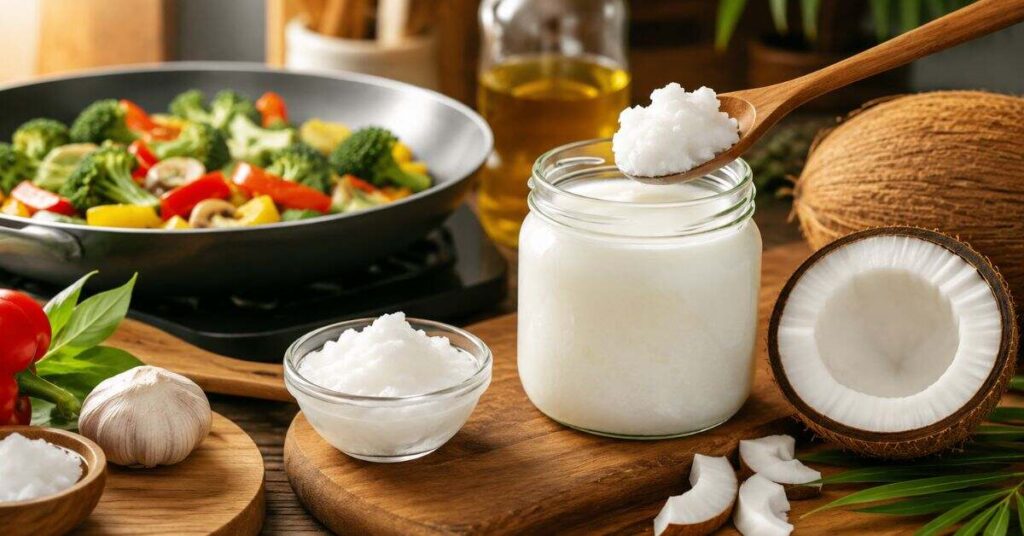
Using coconut oil successfully requires more than adding it to a recipe. Small details such as temperature control, storage habits, ingredient preparation, and portion sizes can significantly affect the final result. When you understand these factors, coconut oil becomes a reliable ingredient for everyday meals instead of an occasional kitchen experiment.
These practical tips will help you improve flavor, avoid texture problems, and get the best performance from coconut oil in different recipes.
Avoid Overheating Coconut Oil
Temperature control plays an important role when cooking with coconut oil. Although coconut oil handles moderate heat well, overheating it can damage its quality and create unpleasant flavors.
The best approach is to cook with medium heat for most recipes. Allow the pan to warm gradually, then add coconut oil once the surface reaches the desired temperature. This prevents the oil from sitting on an overheated pan for too long.
Signs that coconut oil has become too hot include:
- Excessive smoke
- A burnt smell
- Darkening oil color
- A sharp or unpleasant taste
If the oil begins smoking, remove the pan from heat and allow it to cool before continuing. Cooking at the correct temperature helps preserve the natural qualities of the oil while improving the taste of your food.
For recipes such as roasting vegetables or baking, following the recommended temperature prevents unnecessary breakdown and keeps the texture of the final dish balanced.
Prevent Coconut Oil from Clumping
Coconut oil naturally changes between solid and liquid forms depending on temperature. This unique feature can sometimes create lumps, especially when mixing it with cold ingredients.
To prevent clumping:
- Bring refrigerated ingredients to room temperature before mixing.
- Melt coconut oil gently before adding it to batters or sauces.
- Add melted oil slowly while stirring continuously.
- Avoid combining hot oil with very cold liquids.
This step becomes especially important when preparing baked goods. Cold milk, yogurt, or eggs can quickly solidify coconut oil, creating small hardened pieces throughout the mixture.
If clumps appear, gently warm the mixture and stir until the coconut oil blends evenly again. Proper preparation creates smoother textures and more consistent results.
Use Coconut Oil in Moderation
Although coconut oil offers many advantages in cooking, using the right amount remains important. Like all cooking fats, coconut oil contains calories, so portion control helps maintain a balanced diet.
A small amount is often enough to achieve excellent results.
For example:
- Vegetables usually need only a light coating.
- Stir-fries require just enough oil to prevent sticking.
- Baking recipes often work with a direct replacement for butter or other oils.
- Dressings and sauces benefit from measured portions.
Some people search for how to cook with coconut oil for weight loss, but coconut oil alone does not cause weight loss. A healthier approach involves using reasonable portions while focusing on nutrient-rich foods, regular activity, and overall balanced meals.
Using coconut oil wisely allows you to enjoy its flavor and cooking benefits without adding unnecessary amounts to your daily meals.
Get the Best Flavor in Every Recipe
The flavor of coconut oil can either enhance a recipe or distract from it, depending on the type you choose and the ingredients you combine it with.
To create the best flavor balance:
Choose the Right Coconut Oil
Use virgin coconut oil when you want a noticeable coconut taste. It works beautifully in desserts, tropical dishes, curries, and breakfast recipes.
Choose refined coconut oil when you want the ingredients themselves to stand out. It works better for everyday cooking, sautéing, and recipes with delicate flavors.
Pair It with Complementary Ingredients
Coconut oil blends especially well with ingredients such as:
- Garlic
- Ginger
- Cinnamon
- Vanilla
- Chocolate
- Curry spices
- Citrus flavors
- Nuts and seeds
These combinations create balanced dishes where the oil supports the recipe instead of dominating it.
Add Seasonings at the Right Time
For savory dishes, adding spices after the coconut oil melts allows the flavors to release more effectively. This technique works particularly well for Indian-style cooking, where spices are often warmed in oil before adding vegetables or grains.
Store It Properly for Fresh Flavor
Fresh coconut oil should have a clean aroma and mild taste. Proper storage prevents unwanted flavors from developing over time.
Keep the oil:
- In a tightly sealed container
- Away from direct sunlight
- At room temperature
- Away from moisture
By following these simple techniques, you can make every recipe more flavorful while getting consistent results from coconut oil.
Learning how to cook with coconut oil becomes much easier when you focus on quality, temperature, quantity, and ingredient pairing. These small improvements transform coconut oil from a basic cooking ingredient into a versatile tool for creating better meals.
Common Mistakes to Avoid When You Cook with Coconut Oil
Although coconut oil is simple to use, many people make small mistakes that affect the taste, texture, and overall quality of their meals. Using the wrong variety, applying too much heat, or adding ingredients incorrectly can prevent you from getting the best results.
Understanding these common problems makes it easier to use coconut oil confidently in everyday cooking. Avoiding these mistakes also helps you protect the natural qualities of the oil while creating better recipes.
Using the Wrong Type of Coconut Oil
One of the most common mistakes is choosing a coconut oil variety that does not match the recipe. Both refined and unrefined coconut oil work well, but they create different results.
Using virgin coconut oil in every recipe may not always be ideal because its natural coconut flavor can change the taste of certain dishes. For example, a delicate sauce or lightly seasoned meal may taste noticeably different when prepared with strongly flavored coconut oil.
Similarly, using refined coconut oil in recipes where you want a tropical coconut aroma may reduce the overall flavor experience.
Choose based on the purpose:
| Cooking Goal | Better Choice |
| Baking desserts | Virgin coconut oil |
| Tropical recipes | Virgin coconut oil |
| Stir-frying | Refined coconut oil |
| High-temperature cooking | Refined coconut oil |
| Neutral flavor dishes | Refined coconut oil |
Selecting the right type improves the final result and allows the main ingredients to shine.
Cooking at Excessively High Temperatures
Another mistake is treating coconut oil like an oil designed for extreme heat. While coconut oil performs well for many cooking methods, excessive temperatures can negatively affect its quality.
When coconut oil reaches its smoke point, it starts producing visible smoke and develops a burnt flavor. This can reduce the pleasant taste that makes coconut oil valuable in cooking.
To prevent overheating:
- Cook mainly over medium heat.
- Avoid leaving an empty pan heating for long periods.
- Add ingredients soon after the oil melts.
- Reduce heat if smoke appears.
For deep frying or prolonged high-temperature cooking, choose an oil specifically suited for those conditions.
Proper temperature management is one of the most important parts of learning how to cook with coconut oil effectively.
Adding Cold Ingredients Too Quickly
Coconut oil naturally becomes solid when exposed to cooler temperatures. Because of this, adding cold ingredients directly into melted coconut oil can create unwanted lumps.
This problem often occurs during baking when people combine melted coconut oil with:
- Cold milk
- Refrigerated eggs
- Chilled yogurt
- Cold fruit puree
Instead of creating a smooth mixture, the coconut oil may quickly harden into small pieces.
To avoid this issue:
- Remove refrigerated ingredients before cooking.
- Allow them to reach room temperature.
- Add coconut oil gradually while mixing.
- Stir continuously until the ingredients combine evenly.
This technique is especially useful when preparing cakes, muffins, pancakes, and other baked foods.
Using Too Much Coconut Oil
Because coconut oil adds richness and improves texture, some cooks assume that adding extra oil will create better results. However, too much coconut oil can make food heavy, greasy, or overpowering.
For example, roasted vegetables may become oily instead of crispy, while baked goods may develop a dense texture rather than a soft crumb.
A better approach is to measure coconut oil before cooking. The correct amount depends on the recipe and cooking method.
Helpful guidelines include:
- Use a thin coating for roasting vegetables.
- Add only enough oil to prevent sticking.
- Follow baking measurements carefully.
- Avoid adding extra oil for additional flavor.
Using coconut oil in moderation allows you to enjoy its benefits without affecting the balance of your meals.
Ignoring the Natural Texture Changes of Coconut Oil
Many beginners become confused when coconut oil changes from liquid to solid. However, this transformation is completely normal and does not mean the oil has spoiled.
Coconut oil may become solid during cooler temperatures and turn liquid when exposed to warmth. This happens because coconut oil has a melting point close to room temperature.
Understanding this natural behavior helps you use it more effectively. For recipes requiring liquid oil, gently warm it before measuring. For recipes requiring solid fat, use it directly from the container.
Storing Coconut Oil Near Heat Sources
Keeping coconut oil beside a stove or near direct sunlight can reduce its freshness over time. Repeated exposure to heat may affect its flavor and quality.
A better storage method is keeping coconut oil:
- In a cool kitchen cabinet
- Inside a sealed container
- Away from moisture
- Protected from direct sunlight
Proper storage keeps the oil fresh and ready for future recipes.
Avoiding these mistakes helps you get better results every time you cook with coconut oil. Once you understand the right temperature, correct amount, suitable variety, and proper handling methods, coconut oil becomes a dependable ingredient for meals, baking, and homemade recipes.
How to Store Coconut Oil After Cooking
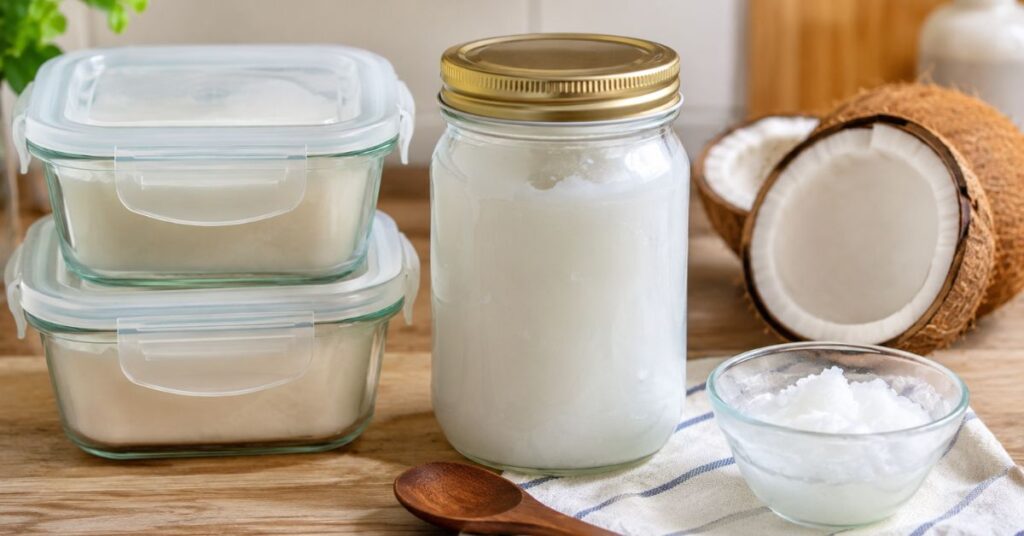
Proper storage plays an important role in maintaining the quality, flavor, and freshness of coconut oil. Although coconut oil has a naturally long shelf life compared with many other cooking oils, incorrect storage methods can still affect its taste, texture, and overall quality.
Many people leave their coconut oil container near the stove or in areas exposed to heat and sunlight after cooking. Over time, frequent exposure to moisture, heat, and air can speed up oxidation and reduce freshness.
Learning the right storage methods helps protect the natural properties of coconut oil and ensures that it continues to provide the same smooth texture and pleasant flavor in everyday recipes.
What Is the Best Way to Store Coconut Oil?
The best way to store coconut oil is in a cool, dark, and dry place away from heat and moisture. A kitchen cabinet or pantry is usually the ideal location because it protects the oil from temperature changes and direct sunlight.
Always keep the container tightly sealed after each use. Exposure to air can slowly affect the quality of the oil, while moisture and food particles may increase the risk of contamination.
For the best results:
- Store it away from the stove, oven, and windows.
- Use a clean and completely dry spoon when taking oil from the jar.
- Keep it in its original container or a clean airtight glass jar.
- Avoid placing it near strong-smelling foods because oils can absorb odors.
When stored correctly, coconut oil can remain fresh for a long time while maintaining its natural taste and texture.
Should You Keep It in the Refrigerator?
In most situations, refrigeration is not necessary. Coconut oil is naturally stable and can stay fresh at room temperature when stored under proper conditions.
Keeping it in the refrigerator can make the oil very hard, which may make measuring and cooking more difficult. However, refrigeration can be helpful in specific situations, including:
- Hot and humid climates
- Long-term storage
- Homemade oil storage
- Preventing accidental melting
If you choose to refrigerate it, allow the container to soften slightly before using it. Avoid repeatedly moving it between cold and warm environments because frequent temperature changes may affect its consistency.
A cool cabinet with low humidity is usually the easiest and most practical storage option.
Why Does the Texture Change Over Time?
One interesting characteristic of coconut oil is that its texture naturally changes with temperature. This change is completely normal and does not mean the oil has spoiled.
At temperatures below around 76°F (24°C), it usually becomes solid and appears white. When exposed to warmer conditions, it gradually softens and turns into a clear liquid.
| Temperature Condition | Appearance |
|---|---|
| Cool environment | Solid and white |
| Mild warmth | Soft or partially melted |
| High heat | Clear liquid |
This happens because coconut oil contains a high percentage of saturated fats that respond naturally to temperature changes.
The changing texture can actually make it useful in cooking. Solid coconut oil can work as a butter alternative in baking, while melted oil blends easily into sauces, dressings, and marinades.
If you need to melt it, use gentle heat instead of repeatedly heating the entire container. Placing the sealed jar in warm water is a simple method that helps preserve quality.
How to Know If It Is Still Fresh
Although coconut oil has a long shelf life, it can eventually lose quality. Checking a few simple signs can help you determine whether it is still suitable for cooking.
Fresh oil usually has:
- A clean appearance
- A mild coconut scent or neutral aroma
- A smooth texture
- A normal taste
However, you should avoid using it if you notice the following changes.
Unpleasant Odor
A fresh product should smell clean and mild. A sour, stale, or rancid smell is often a sign that oxidation has occurred.
Unusual Flavor
If the oil tastes bitter, sharp, or unpleasant, it may no longer be fresh.
Changes in Color or Appearance
Quality coconut oil is normally white when solid and clear when melted. Dark spots, strange discoloration, or unusual particles may indicate contamination.
Signs of Moisture or Mold
Water droplets, food particles, or mold growth can spoil the oil. Always keep the container clean and use dry utensils.
Tips to Maintain Freshness for Longer
Small storage habits can significantly improve the lifespan of your coconut oil.
Close the Container Properly
A tight lid prevents air exposure and helps slow down oxidation.
Use Clean Utensils
Always use a dry spoon to prevent moisture and bacteria from entering the container.
Protect It From Heat and Light
Direct sunlight and high temperatures can gradually affect flavor and freshness.
Store the Right Amount
Buying a quantity that matches your regular usage helps you enjoy fresher oil instead of keeping an opened container for too long.
Avoid Frequent Temperature Changes
Repeated melting and solidifying can affect texture over time. Store it in one stable location whenever possible.
Coconut Oil vs. Other Cooking Oils
Choosing the right cooking oil can significantly affect the flavor, texture, and nutritional profile of your meals. While coconut oil has become a popular kitchen ingredient, it is not always the best option for every recipe.
Understanding the differences between coconut oil and other common cooking fats helps you decide when to use each one. Factors such as flavor, smoke point, cooking method, and recipe requirements all influence which oil performs best.
When learning how to cook with coconut oil, it is helpful to compare it with alternatives like olive oil and butter to understand its strengths and limitations.
Coconut Oil vs. Olive Oil
Coconut oil and olive oil are both popular choices for healthy cooking, but each one has unique qualities that make it better suited for certain recipes.
With its mild coconut flavor, coconut oil contains a higher amount of saturated fat and usually stays solid at cooler temperatures. Olive oil, on the other hand, has a fruity taste and is known for its higher levels of monounsaturated fats, making it a common choice for dressings, sautéing, and Mediterranean-style dishes. Olive oil, especially extra virgin olive oil, has a fruity flavor and contains more monounsaturated fats.
The best choice depends on the type of meal you are preparing.
| Feature | Coconut Oil | Olive Oil |
| Flavor | Mild coconut taste or neutral (refined) | Fruity, peppery flavor |
| Texture | Solid at cooler temperatures | Usually liquid |
| Best Uses | Baking, roasting, sautéing, desserts | Salad dressings, sautéing, Mediterranean dishes |
| Smoke Point | Moderate to high depending on type | Varies by type |
| Flavor Impact | Adds richness or coconut notes | Adds herbal and fruity notes |
Coconut oil works especially well for recipes where a creamy texture or slight sweetness is desirable. It is commonly used in baked goods, curries, roasted vegetables, and homemade desserts.
Olive oil often works better when you want a fresh, savory flavor. It is a popular choice for salads, marinades, pasta dishes, and dishes inspired by Mediterranean cuisine.
Neither oil is universally superior. The better option depends on the ingredients, cooking temperature, and desired flavor of the final dish.
Coconut Oil vs. Butter
Coconut oil and butter are often compared because both can provide richness, moisture, and a smooth texture in cooking and baking.
Butter is a dairy product made from cream, while coconut oil comes from coconut meat. Their flavors and textures are different, which affects the final recipe.
| Feature | Coconut Oil | Butter |
| Source | Plant-based oil | Dairy fat |
| Flavor | Coconut or neutral | Rich buttery taste |
| Dairy-Free | Yes | No |
| Baking Use | Creates moisture and softness | Adds traditional buttery flavor |
| Texture | Melts quickly | Creates flaky and creamy textures |
Coconut oil is an excellent butter replacement for people who prefer dairy-free cooking. It works well in cookies, muffins, cakes, pancakes, and many other baked recipes.
However, butter provides a unique creamy flavor that coconut oil cannot completely copy. Recipes such as classic pastries, butter sauces, and traditional cookies often depend on butter’s distinctive taste.
When replacing butter with coconut oil, use a similar amount in most recipes. However, always consider whether the butter flavor is an important part of the dish.
Which Cooking Oil Is Best for Different Recipes?
No single cooking oil works perfectly for every meal. The best choice depends on cooking temperature, ingredients, and the flavor you want to create.
Here is a simple guide:
| Recipe Type | Best Oil Choice |
| Vegetable roasting | Coconut oil, olive oil |
| Baking desserts | Coconut oil, butter |
| Salad dressing | Extra virgin olive oil |
| Stir-frying vegetables | Refined coconut oil or other heat-stable oils |
| Frying eggs | Coconut oil, olive oil |
| Marinades | Olive oil |
| Chocolate desserts | Coconut oil |
| Indian-style curries | Coconut oil, depending on regional flavor |
For recipes where you want a subtle coconut aroma, virgin coconut oil adds a unique character. It works particularly well in tropical dishes, desserts, and some coconut oil recipes Indian cooking styles.
For neutral cooking, refined coconut oil provides flexibility because it allows spices, herbs, and natural ingredients to remain the main focus.
How Coconut Oil Compares with Other Popular Oils
Besides olive oil and butter, coconut oil is often compared with vegetable oil, canola oil, and avocado oil.
Each option has different advantages:
Vegetable oil:
Usually has a neutral taste and works well for general cooking, but it may not provide the same texture or flavor benefits as coconut oil.
Canola oil:
Offers a mild flavor and is commonly used for baking and frying.
Avocado oil:
Has a high smoke point and works well for higher-temperature cooking.
Coconut oil:
Provides versatility, a pleasant texture, and a unique flavor profile for both sweet and savory recipes.
The ideal kitchen usually includes more than one cooking oil because different recipes require different qualities.
Final Comparison: When Should You Choose Coconut Oil?
Coconut oil is a great choice when you want:
- A rich texture in baked goods
- A dairy-free butter alternative
- A stable oil for moderate cooking temperatures
- A subtle coconut flavor
- A versatile ingredient for meals and desserts
However, other oils may work better when you need:
- A very high smoke point
- A completely different flavor profile
- A lighter texture
- A specific culinary style
By understanding these differences, you can confidently choose the right oil for every recipe instead of relying on one option for all cooking needs. This balanced approach helps you get the best results while enjoying the unique benefits that coconut oil brings to your kitchen.
Easy Recipes That Show How to Cook with Coconut Oil

The best way to understand how to cook with coconut oil is to use it in practical recipes. Coconut oil works across different cooking styles, from quick vegetable dishes to baked treats and homemade desserts.
These recipes highlight the flexibility of coconut oil while showing how a small amount can improve texture, flavor, and cooking performance. Whether you are a beginner or an experienced home cook, these simple ideas make it easier to include coconut oil in your daily meals.
Coconut Oil Vegetable Stir-Fry
A vegetable stir-fry is one of the easiest ways to experience the benefits of cooking with coconut oil. The oil helps vegetables cook evenly while adding a light richness that pairs well with herbs and spices.
Ingredients:
- 2 tablespoons coconut oil
- 1 cup broccoli florets
- 1 sliced bell pepper
- 1 chopped carrot
- 1 cup mushrooms
- 1 small zucchini
- 2 minced garlic cloves
- 1 teaspoon grated ginger
- Salt and black pepper as needed
- 1 tablespoon soy sauce or coconut aminos
Method:
Heat coconut oil in a pan over medium heat. Add garlic and ginger, then cook briefly until fragrant. Add the harder vegetables first, such as carrots and broccoli, because they require more time to soften.
After a few minutes, add zucchini, mushrooms, and bell peppers. Stir frequently to ensure even cooking. Add seasoning near the end so the vegetables maintain their natural texture.
Finish with soy sauce or fresh herbs for extra flavor.
Why Coconut Oil Works Well:
Coconut oil creates a smooth coating around vegetables and helps spices distribute evenly. If you use virgin coconut oil, it adds a mild tropical note that works especially well with ginger, garlic, and Asian-inspired flavors.
Roasted Vegetables
Roasting vegetables with coconut oil creates crisp edges and a naturally sweet flavor. The oil helps vegetables brown properly while keeping the inside tender.
Ingredients:
- 3 cups mixed vegetables
- 2 tablespoons melted coconut oil
- 1 teaspoon paprika
- ½ teaspoon garlic powder
- Salt and pepper
- Fresh herbs for garnish
Method:
Preheat your oven to 400°F (200°C). Wash and cut vegetables into similar-sized pieces so they cook evenly.
Toss the vegetables with melted coconut oil and seasonings until every piece has a light coating. Spread them across a baking tray without overcrowding.
Roast for 25–35 minutes, turning halfway through cooking.
Best Vegetables for This Recipe:
- Sweet potatoes
- Cauliflower
- Brussels sprouts
- Carrots
- Pumpkin
- Broccoli
The natural sweetness of roasted vegetables combines beautifully with the mild richness of coconut oil.
Homemade Granola
Homemade granola is one of the easiest easy recipes with coconut oil because the oil helps create crunchy clusters while adding a pleasant flavor.
Ingredients:
- 3 cups rolled oats
- ½ cup chopped nuts
- ¼ cup seeds
- 3 tablespoons coconut oil
- 2 tablespoons honey or maple syrup
- 1 teaspoon cinnamon
- ½ teaspoon vanilla extract
Method:
Melt coconut oil gently and mix it with honey, cinnamon, and vanilla. Combine the oats, nuts, and seeds in a large bowl, then pour the coconut oil mixture over them.
Stir until everything is evenly coated.
Spread the mixture on a baking sheet and bake at 325°F (160°C) for about 25–30 minutes. Stir occasionally to prevent uneven browning.
Allow the granola to cool completely before storing it in an airtight container.
Serving Ideas:
- Add it to yogurt
- Sprinkle over smoothie bowls
- Mix with fresh fruit
- Enjoy as a quick snack
Coconut oil helps the granola develop a satisfying crunch while keeping the ingredients naturally connected.
Healthy Baked Treats
Coconut oil is a useful ingredient for baking because it adds moisture and creates a soft texture. It can replace butter or other oils in many dessert recipes.
Coconut Oil Banana Muffins
Ingredients:
- 2 ripe bananas
- ⅓ cup melted coconut oil
- 2 eggs
- 1½ cups flour
- 1 teaspoon baking powder
- 1 teaspoon cinnamon
- 2 tablespoons honey
Method:
Mash bananas in a bowl, then mix in melted coconut oil, eggs, and honey. Add dry ingredients and stir gently until combined.
Pour the batter into muffin cups and bake at 350°F (175°C) for 18–22 minutes.
The coconut oil keeps the muffins moist while adding a subtle richness.
Other baked treats you can prepare with coconut oil include:
- Chocolate cookies
- Brownies
- Pancakes
- Energy bars
- Banana bread
Homemade Chocolate Shell
A homemade chocolate shell is one of the simplest desserts you can prepare with coconut oil. Since coconut oil becomes firm when cooled, it creates a crisp chocolate coating over cold foods.
Ingredients:
- ½ cup melted coconut oil
- 1 cup melted dark chocolate
- 1 teaspoon vanilla extract (optional)
Method:
Melt the chocolate gently and combine it with melted coconut oil. Stir until the mixture becomes smooth and glossy.
Pour it over:
- Ice cream
- Frozen yogurt
- Strawberries
- Banana slices
- Frozen desserts
Within moments, the mixture will harden into a thin chocolate shell.
Why This Recipe Works:
Coconut oil gives chocolate a smoother texture and helps it solidify quickly after cooling. This simple recipe is a great example of how a basic ingredient can transform homemade desserts.
Simple Tips for Better Coconut Oil Recipes
To improve your results when preparing these recipes:
- Use refined coconut oil when you want a neutral flavor.
- Choose virgin coconut oil when you want a natural coconut taste.
- Melt the oil gently instead of overheating it.
- Measure the amount carefully for balanced flavor.
- Mix coconut oil with room-temperature ingredients when baking.
These recipes demonstrate why coconut oil remains a popular kitchen ingredient. From colorful vegetable dishes to sweet homemade treats, coconut oil offers flexibility, texture, and flavor while making everyday cooking more enjoyable.
Final Thoughts on Cooking with Coconut Oil
Learning how to cook with coconut oil becomes easier when you understand its strengths, limitations, and proper techniques. It works beautifully for baking, roasting, sautéing, desserts, and many everyday recipes when used correctly.
The key is choosing the right type of coconut oil, controlling cooking temperatures, measuring portions carefully, and matching it with ingredients that complement its flavor.
With the right approach, coconut oil can become a versatile addition to your kitchen and help you create flavorful meals, simple recipes, and creative homemade treats.
FAQs:
Can You Fry Food in Coconut Oil?
Yes, you can fry food in coconut oil, especially when using refined coconut oil for moderate frying temperatures. Its stable structure allows it to perform well for pan-frying foods such as eggs, vegetables, chicken, tofu, and other ingredients.
However, the type of frying matters. Coconut oil works best for shallow frying and light pan-frying rather than extremely high-temperature deep frying for long periods.
For better results:
- Use refined coconut oil for a more neutral flavor.
- Maintain a controlled cooking temperature.
- Avoid allowing the oil to smoke.
- Replace the oil if it develops a burnt smell.
Virgin coconut oil can also be used for frying, but its stronger coconut flavor may affect the taste of certain foods.
When learning how to cook with coconut oil, temperature control is more important than simply choosing the oil. Proper heat management helps maintain flavor and prevents the oil from breaking down too quickly.
Is Coconut Oil Healthy for Everyday Cooking?
Coconut oil can be included in everyday cooking when used in reasonable amounts as part of a balanced diet. It provides a stable cooking option and works well for many recipes, including sautéed vegetables, baked goods, and homemade desserts.
However, coconut oil should not be the only fat you use. A varied diet often includes different sources of fats, such as olive oil, nuts, seeds, and other plant-based options.
Some important points to remember:
- Coconut oil contains a high amount of saturated fat.
- Portion size matters.
- Overall diet quality is more important than one ingredient.
- Different cooking oils offer different benefits.
The best approach is to use coconut oil as one useful ingredient among many rather than depending on it for every meal.
Can Coconut Oil Replace Butter in Baking?
Yes, coconut oil can replace butter in many baking recipes. It works particularly well in cookies, muffins, cakes, brownies, pancakes, and quick breads.
In most recipes, you can replace butter with coconut oil using a similar amount. However, the final result may have slight differences in flavor and texture.
Coconut oil can create:
- A softer texture
- Extra moisture
- A lighter coconut aroma
- A dairy-free alternative
For recipes where butter provides a specific flavor, such as classic pastries or buttery cookies, the taste may change slightly.
When replacing butter:
- Melt coconut oil if the recipe requires liquid fat.
- Use room-temperature ingredients.
- Mix thoroughly to prevent clumping.
- Choose refined coconut oil for a neutral taste.
Many people prefer coconut oil in baking because it offers a simple way to create dairy-free versions of traditional recipes.
Does Coconut Oil Change the Taste of Food?
Yes, coconut oil can change the taste of food depending on the variety you choose.
Virgin coconut oil has a natural coconut aroma and flavor. This makes it a great choice for recipes where you want a tropical or slightly sweet note.
It pairs well with:
- Chocolate
- Vanilla
- Cinnamon
- Curry spices
- Tropical fruits
- Nuts
Refined coconut oil has a much milder flavor. It allows the original ingredients to remain the focus, making it better for recipes where you do not want coconut notes.
For example:
- Cookies may taste slightly coconut-flavored with virgin coconut oil.
- Stir-fried vegetables may taste more neutral with refined coconut oil.
- Curries may benefit from the richness of virgin coconut oil.
Choosing the right type allows you to control how much flavor coconut oil contributes to your recipe.
Can You Reuse Coconut Oil After Cooking?
Yes, coconut oil can sometimes be reused after cooking, but only when it has been handled properly. Reusing oil depends on what food was cooked in it, how long it was heated, and whether it still looks and smells fresh.
You can consider reusing coconut oil if:
- It was used for light cooking.
- It has no burnt smell.
- It remains clear after filtering.
- It was not overheated.
Avoid reusing coconut oil if:
- It has a dark color.
- It smells unpleasant.
- It contains leftover food particles.
- It produced heavy smoke during cooking.
To store used coconut oil:
- Allow it to cool completely.
- Filter out food particles.
- Place it in a clean, sealed container.
- Store it in a cool, dark location.
Repeated heating can reduce the quality of any cooking oil, so fresh coconut oil usually provides the best flavor and performance.