Introduction:
A sore throat is one of the most common health issues that affects people of all ages, especially during seasonal changes, allergies, and viral infections. Many individuals now prefer natural remedies to ease discomfort instead of relying only on medicines. Many people use essential oils for sore throat as a popular natural approach because they offer soothing, antibacterial, and calming properties
The growing interest in essential oils for sore throat comes from their ability to support breathing comfort, reduce irritation, and provide a sense of relief when the throat feels dry, scratchy, or painful.People often use oils like peppermint, eucalyptus, and tea tree through inhalation, diffusion, or diluted topical application to help manage symptoms naturally.
Many people also explore blends and branded options like doTERRA and Young Living when searching for essential oils for sore throat solutions that fit their wellness routine. These oils are not a cure for infections, but they can play a supportive role in easing discomfort and improving daily comfort.
In this guide, we will explore the best essential oils, how they work, safe usage methods, DIY blends, and natural remedies that complement essential oils for sore throat so you can make informed and safe choices for relief.
What Is a Sore Throat and Why It Happens

A sore throat is a common condition that causes pain, irritation, or scratchiness in the throat. It often becomes more noticeable when you swallow, talk, or breathe dry air. In many cases, a sore throat is not a serious illness, but it can be uncomfortable and affect daily life.
A sore throat usually happens when the tissues in the throat become inflamed or irritated.Several factors can cause this inflammation.
The most common cause is viral infections such as the cold or flu. These infections can make the throat feel dry, painful, and swollen. Bacterial infections like strep throat can also lead to more severe symptoms and may require medical treatment.
Environmental factors also play a major role. Dry air, pollution, smoking, and allergens can irritate the throat and worsen discomfort. Seasonal changes are another common trigger, especially when the weather becomes cold and dry.
In some cases, lifestyle habits can also contribute. Speaking loudly for long periods, dehydration, or breathing through the mouth while sleeping can strain the throat and cause irritation.
People often turn to natural remedies like essential oils for sore throat because they may help soothe irritation and support overall throat comfort.They do not treat the underlying infection, but people widely use them to ease dryness, scratchiness, and mild pain.
Understanding the cause of a sore throat is important because it helps you choose the right relief method. In the next sections, we will explore how essential oils for sore throat can support comfort and what makes them a popular natural option.
Do Essential Oils for Sore Throat Really Work? How They Help
Many people ask whether essential oils for sore throat actually work or if they are just a wellness trend. The truth is that essential oils do not cure infections, but they can provide noticeable symptom relief when used correctly. Their value lies in supporting comfort, reducing irritation, and helping the body feel more relaxed during recovery.
The effectiveness of essential oils for sore throat comes mainly from their natural chemical compounds. Many essential oils contain antimicrobial, anti-inflammatory, and soothing properties. For example, eucalyptus oil may help open airways and make breathing easier, while peppermint oil creates a cooling sensation that can temporarily reduce throat discomfort.
Another way essential oils for sore throat help is through inhalation. When diffused or used in steam therapy, the aromatic compounds reach the respiratory system quickly. This can help reduce the feeling of congestion and dryness in the throat. Some oils also help relax throat muscles, which may ease pain during swallowing or speaking.
It is also important to understand the psychological benefit. Aromatherapy can reduce stress and improve relaxation, which indirectly supports healing. When you relax your body, you often feel less intense discomfort.
However, results vary from person to person. Some people experience quick relief, while others notice only mild improvement. The key is proper and safe use, especially when using strong oils like peppermint, tea tree, or eucalyptus.
Well-known brands such as doTERRA and Young Living sell blends that are often marketed for respiratory comfort, and many users include them in their routine when they use essential oils for sore throat at home.
In summary, essential oils for sore throat can support symptom relief, but they should be seen as a complementary approach, not a medical treatment.
Best Essential Oils for Sore Throat Relief
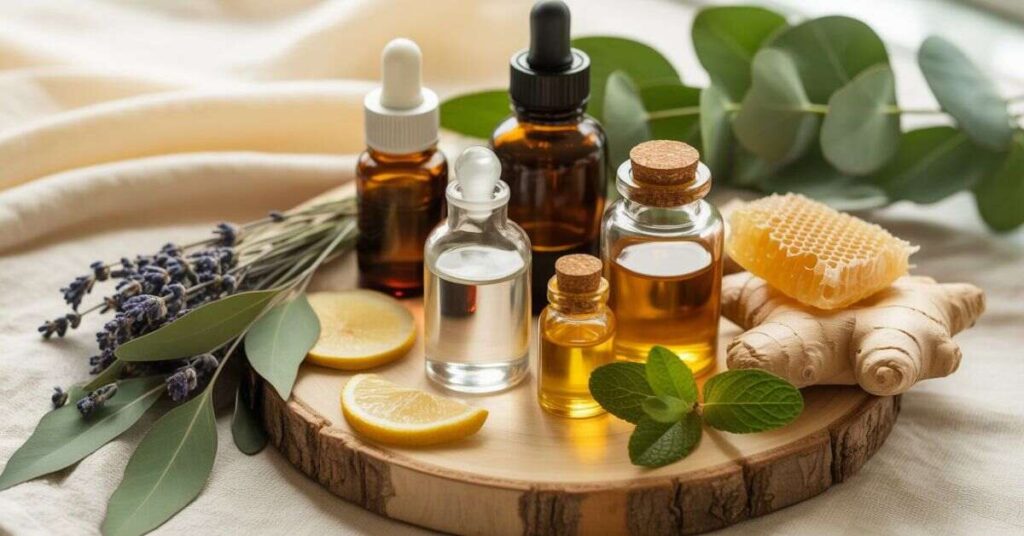
When it comes to natural throat comfort, choosing the right oils is very important. Different essential oils for sore throat work in different ways. Some help clear congestion, some reduce irritation, and others provide antibacterial support. Using the right combination can improve overall relief and comfort.
Below is a complete guide to the most effective options used for soothing throat discomfort naturally.
Top Herbal Essential Oils for Sore Throat Relief
People commonly use herbal oils for sore throat because they provide strong yet natural therapeutic effects. Many people also use these oils in steam inhalation and diffusers for quick relief.
Peppermint oil is widely recognized as one of the most popular options. It contains menthol, which creates a cooling effect and helps reduce throat irritation. Eucalyptus oil is another powerful option that supports easier breathing and helps clear mucus buildup.
Thyme oil offers strong natural antimicrobial properties and may help the body cope with infections. Many people also use tea tree oil for its cleansing and purifying effects, especially in steam therapy.
Ginger oil provides warmth and comfort to the throat area, while rosemary oil helps improve circulation and supports respiratory wellness. Garlic oil, although less commonly used, is considered one of the strongest natural options for immune support
Together, these herbal essential oils for sore throat form a powerful foundation for natural relief.
Soothing Essential Oils for Irritation and Pain Relief
People do not use some essential oils for sore throat for strong medicinal effects; instead, they use them to calm irritation and reduce discomfort.
These oils are ideal for sensitive throats or mild symptoms.
Lavender oil is widely known for its calming and relaxing properties. It helps reduce stress and promotes better sleep, which is important during recovery. Sandalwood oil provides a gentle soothing effect and is often used in aromatherapy for relaxation.
Mild floral oils can also help ease emotional stress caused by discomfort. These oils do not directly fight infection but help create a calming environment that supports healing.
Strong Antibacterial Essential Oils for Sore Throat
Many people value some essential oils for sore throat for their strong antibacterial and antimicrobial effects. They often use these oils in diluted form due to their potency.
Tea tree oil is one of the most powerful natural antiseptics, and many people use it in steam inhalation. Cinnamon oil is another strong option that may help fight bacteria, but you should always dilute it heavily.
oil is also highly effective against microbial activity.
Eucalyptus oil not only helps with breathing but also has antibacterial properties that support throat health.
You should always use these strong oils carefully and in small amounts to avoid irritation.
Read More:https://pureoilshub.com/essential-oils-for-colds/
How to Use Essential Oils for Sore Throat Safely and Effectively
Using essential oils for sore throat correctly is just as important as choosing the right oil. These oils are highly concentrated, so you must use and dilute them properly to avoid irritation and achieve safe, effective relief. You can choose different methods based on the severity of symptoms and your personal comfort.
Steam Inhalation for Fast Relief
Steam inhalation is one of the fastest ways to use essential oils for sore throat.In this method, you add a few drops of essential oil to hot water and inhale the steam carefully. This helps the aromatic compounds reach the throat and respiratory system quickly.
Oils like eucalyptus, peppermint, and tea tree are commonly used in steam therapy. This method may help reduce dryness, ease breathing, and provide temporary soothing relief from irritation.
It is important to keep a safe distance from hot steam to avoid burns.
Diffusion for Breathing Comfort
Diffusing essential oils for sore throat is another gentle and effective method. A diffuser spreads essential oil particles into the air, allowing you to inhale them gradually over time.
This method is ideal for long-lasting comfort, especially during sleep or rest. Oils like lavender, eucalyptus, and peppermint are often used to create a calming and breathable environment.
Diffusion is especially helpful for people who prefer a non-direct method of aromatherapy.
Topical Application with Proper Dilution
Topical application involves applying diluted essential oils for sore throat on the skin, usually around the neck or chest area. However, you must never apply essential oils directly without using a carrier oil such as coconut oil or almond oil.
Peppermint and eucalyptus oils are commonly used in this method to create a cooling sensation and support comfort. Proper dilution is crucial to avoid skin irritation.
A gentle massage on the throat area may also help improve relaxation.
Gargling Methods Using Essential Oils
Some people use essential oils for sore throat in diluted gargle solutions.However, you must use this method with extreme caution because essential oils do not mix easily with water.
You should use only very small amounts of safe oils, and you must properly emulsify them before gargling. People sometimes use tea tree oil in extremely diluted forms for this purpose.
If done incorrectly, this method can cause irritation, so careful preparation is essential.
Hydrosols and Gentle Alternatives
Hydrosols are a safer and milder alternative to strong essential oils for sore throat. They are water-based plant extracts that provide gentle aromatic benefits.
You can use hydrosols like peppermint water or rose water for throat soothing, misting, or light gargling.
They are ideal for people with sensitive systems or those who want a softer approach to aromatherapy.
Essential Oils for Sore Throat Blends and DIY Synergy Recipes
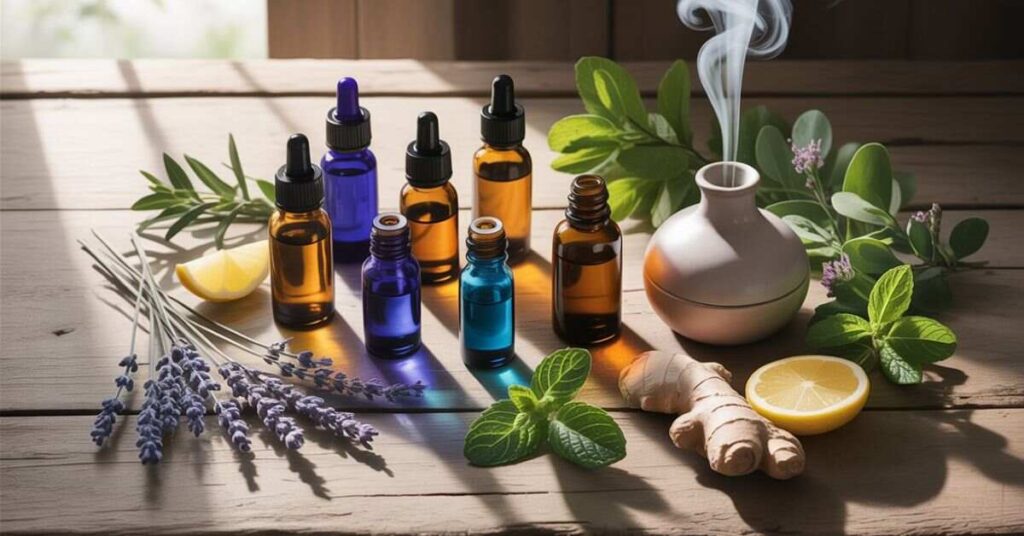
Creating blends of essential oils for sore throat can significantly improve their effectiveness. When you combine different oils, they work together in synergy, so their soothing, antibacterial, and anti-inflammatory properties become more balanced and powerful. People commonly use these blends in diffusers, steam inhalation, and topical applications for enhanced relief.
Why Blending Essential Oils Works Better
One of the main advantages of blending essential oils for sore throat is that it allows you to target multiple symptoms at once. For example, you can combine a cooling oil like peppermint with a respiratory-support oil like eucalyptus and a calming oil like lavender. This combination helps reduce irritation, ease breathing, and promote relaxation at the same time.
DIY Diffuser Blends for Sore Throat Relief
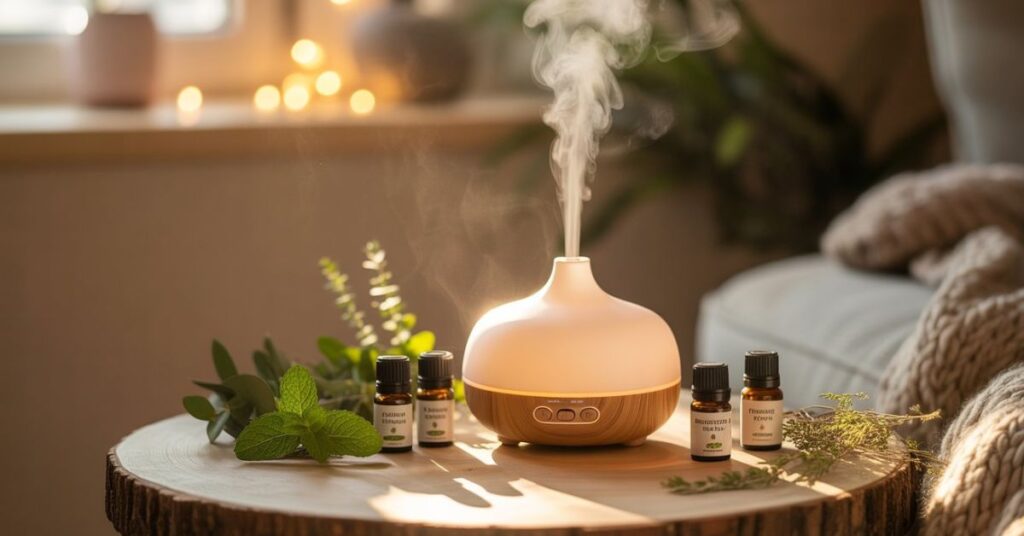
You can create a simple DIY blend by mixing peppermint oil, eucalyptus oil, and lavender oil in a diffuser. People often use this blend during sleep to support comfort throughout the night.
Another popular combination includes tea tree oil, thyme oil, and eucalyptus oil, which focuses more on cleansing and respiratory support.
Steam Inhalation Blends for Quick Relief
For steam inhalation, you can use a slightly different mix of essential oils for sore throat. Adding peppermint and tea tree oil to hot water creates a strong aromatic steam that may help open nasal passages and soothe throat discomfort quickly. This method is especially helpful during colds and flu.
Topical Essential Oil Blends
Topical blends can also be made by mixing a few drops of essential oils with a carrier oil such as coconut oil.
A gentle chest rub using eucalyptus, peppermint, and lavender can provide a warming and cooling effect that supports relaxation and eases discomfort
Safety and Proper Dilution
It is important to always maintain safe dilution ratios when creating blends.Even though essential oils for sore throat are natural, they are very concentrated, so you should use them carefully to avoid skin sensitivity or irritation.
Home Remedies That Work Alongside Essential Oils for Sore Throat
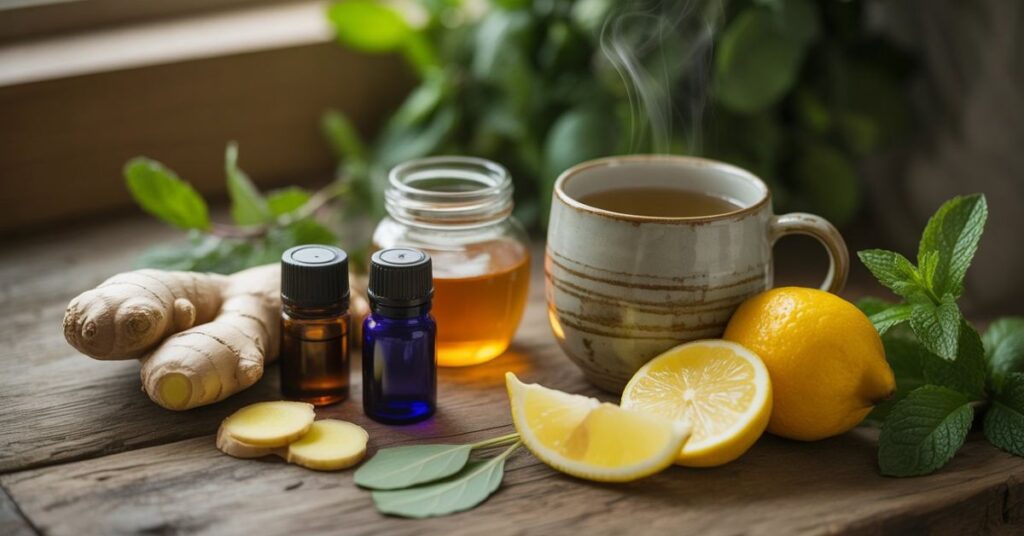
While essential oils for sore throat can provide soothing relief, combining them with simple home remedies can significantly improve recovery and comfort. Natural remedies help support hydration, reduce inflammation, and strengthen the body’s healing process. When used together, they create a more complete and effective approach to managing throat discomfort.
Many people find that pairing essential oils for sore throat with traditional home treatments helps reduce symptoms faster and more naturally. People can easily follow these remedies using common household ingredients.
Herbal Remedies Like Ginger, Garlic, and Liquorice Root
Herbal ingredients are powerful natural options that complement essential oils for sore throat. Ginger is widely used for its warming and anti-inflammatory properties. It helps soothe throat irritation and supports immune response.
People use garlic as another strong natural remedy because of its antibacterial properties. They often add it to soups or warm drinks to support recovery. People also commonly use liquorice root in herbal teas to coat the throat and reduce irritation.
These herbs work well alongside essential oils by supporting the body internally while oils work externally or through inhalation.
Honey, Lemon Water, and Soothing Drinks
Warm drinks are one of the simplest ways to ease throat discomfort. Honey is especially effective because it naturally coats the throat and reduces irritation. Lemon adds vitamin C and helps break down mucus.
When combined with essential oils for sore throat used in aromatherapy, these drinks create a balanced internal and external soothing effect. Herbal teas with chamomile or ginger can also enhance comfort and relaxation.
Steam, Hydration, and Rest for Recovery
Hydration is essential when dealing with throat irritation. Drinking plenty of water helps keep the throat moist and reduces dryness. Steam therapy is also very helpful, especially when combined with essential oils for sore throat like eucalyptus or peppermint.
Rest is equally important. The body heals faster when it is well-rested, and avoiding strain on the voice helps prevent further irritation. These simple habits can significantly improve recovery time.
Saltwater and Baking Soda Gargles
Saltwater gargling is one of the oldest and most effective remedies for sore throat relief. It helps reduce swelling and clears irritants from the throat. Adding a small amount of baking soda may also help balance pH levels and reduce discomfort.
Benefits of Essential Oils for Sore Throat Relief
Using essential oils for sore throat has become a popular natural approach because they offer multiple supportive benefits beyond basic symptom relief. While they do not replace medical treatment, they can play an important role in easing discomfort, improving breathing comfort, and supporting overall throat wellness.
One of the main benefits of essential oils for sore throat is their soothing effect. Many oils, such as peppermint and lavender, help calm irritation and reduce the scratchy feeling in the throat. This makes speaking and swallowing more comfortable, especially during colds or seasonal flu.
Another major advantage is their potential antibacterial and antimicrobial properties. Oils like tea tree, eucalyptus, and thyme are often used to support the body’s natural defense system. When inhaled through steam or diffusion, essential oils for sore throat may help create a cleaner and more breathable environment.
These oils also support respiratory comfort. Eucalyptus and peppermint, for example, help open airways and reduce the feeling of congestion. This makes breathing easier and can indirectly reduce throat pressure caused by blocked nasal passages.
Stress relief is another often-overlooked benefit. Aromatherapy using can help calm the mind, reduce anxiety, and promote better sleep. Since rest is essential for recovery, this emotional balance plays an important role in healing.
Additionally, essential oils are versatile and easy to use. People can use them in diffusers, steam inhalation, or diluted topical applications, so users can choose the method that best suits their comfort level.
Overall, they provide a natural, flexible, and supportive way to manage symptoms and improve daily comfort when used safely and correctly.
Risks and Safety Tips When Using Essential Oils for Sore Throat
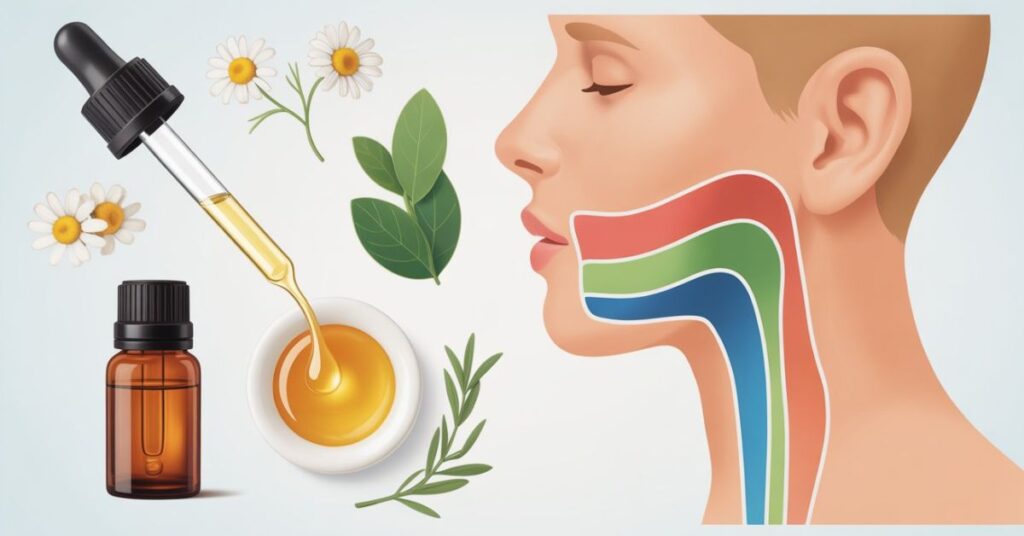
While can offer soothing relief, you must use them with care.These oils are highly concentrated plant extracts, and improper use may cause irritation, allergic reactions, or unwanted side effects. Understanding safety guidelines is essential for getting benefits without risks.
Proper Dilution and Safe Application
One of the most important safety rules is dilution. Never use essential oils directly on the skin or in the throat without proper dilution. You should always mix oils like peppermint, eucalyptus, and tea tree with a carrier oil such as coconut or almond oil before topical use.
Undiluted application of essential oils for sore throat may cause burning sensations or skin sensitivity.
Safe Inhalation Practices
Inhalation methods like steam or diffusion are generally safer, but even these should be used in moderation. Overexposure to strong oils may lead to headaches, dizziness, or respiratory irritation in sensitive individuals. It is always best to start with a small amount and observe how your body reacts.
Special Precautions for Sensitive Groups
Children, pregnant women, and individuals with asthma or respiratory conditions should be especially cautious when using essential oils for sore throat. Some oils may not be suitable for these groups and should only be used under professional guidance.
Internal Use Warning
Another important point is internal use. You should not ingest essential oils unless a qualified healthcare professional specifically directs you to do so. Even natural oils can be toxic if taken incorrectly.
Choosing High-Quality Essential Oils
It is also important to choose high-quality, pure oils from trusted brands. Low-quality or synthetic oils may not provide the same benefits and could increase the risk of irritation. Many users prefer reputable brands like doTERRA or Young Living when selecting essential oils for sore throat for safety and consistency.
When to Seek Medical Advice
Finally, if symptoms persist for more than a few days or worsen, medical advice should be sought. Essential oils are supportive remedies, not a replacement for medical treatment.
Research and Evidence on Essential Oils for Sore Throat Relief

Scientific research on is still developing. However, existing studies suggest that certain essential oils may provide supportive benefits for throat discomfort, respiratory symptoms, and microbial activity. Most available evidence focuses on symptom relief rather than directly treating infections.
Antimicrobial and Anti-Inflammatory Properties of Essential Oils
Several studies indicate that oils such as eucalyptus, peppermint, tea tree, and thyme contain natural compounds with antimicrobial and anti-inflammatory properties. These compounds may help reduce the growth of certain bacteria and viruses in laboratory conditions.
Because of these properties, many people use essential oils for through steam inhalation and aromatherapy practices as a natural supportive approach.
Eucalyptus Oil and Respiratory Support
Eucalyptus oil contains a compound called cineole, which has been studied for its potential to support respiratory function and reduce inflammation in airways.
Peppermint Oil and Cooling Relief
Peppermint oil contains menthol, which is widely studied for its cooling and soothing effects. These properties may help:
- Ease throat irritation
- Improve the sensation of airflow
- Provide temporary comfort during coughing or soreness
Because of these effects, peppermint is frequently used in blends of essential oils for relief.
Tea Tree Oil and Antimicrobial Activity
Tea tree oil is widely recognized for its antimicrobial properties. Most research focuses on external or inhalation use rather than internal application.
Limitations of Scientific Evidence
Despite promising findings, clinical evidence in humans remains limited. Researchers emphasize that essential oils should not be considered a replacement for medical treatment.
Most medical experts agree that while essential oils may provide temporary relief, they should not replace antibiotics or professional care, especially in cases of bacterial infections such as strep throat.
Aromatherapy and Psychological Benefits
Aromatherapy research also highlights psychological benefits. Using through diffusion or inhalation may help:
- Reduce stress
- Improve relaxation
- Support better sleep quality
These indirect effects can contribute to overall comfort and recovery.
How to Prevent Sore Throat Naturally
Preventing a sore throat is often easier than treating it. Simple daily habits can support throat health and strengthen immunity. While essential oils for sore throat may help with relief, prevention focuses on protecting the throat, keeping it hydrated, and reducing irritation.
Maintain Proper Hydration
One of the most important prevention strategies is staying well-hydrated. Drinking enough water throughout the day helps keep the throat moist and reduces dryness, which is a common cause of irritation.
Warm fluids such as herbal teas can further soothe the throat lining and provide added comfort, especially during colder weather.
Practice Good Hygiene
Good hygiene plays a major role in preventing infections that cause sore throats. Regular handwashing helps reduce the spread of viruses and bacteria.
It is also important to avoid close contact with people who are sick, as this lowers the risk of catching throat-related infections.
Strengthen Your Immune System
A strong immune system helps the body fight infections more effectively. A balanced diet rich in fruits, vegetables, and essential vitamins supports overall immunity.
Some people also include essential oils for sore throat, such as eucalyptus or peppermint, in diffusers as part of a wellness routine to support respiratory comfort, especially during seasonal changes.
Avoid Irritants
Environmental irritants can easily trigger throat discomfort. Smoke, air pollution, and strong chemical fumes are common causes of irritation.
Reducing exposure to these irritants can significantly lower the chances of developing a sore throat.
Rest and Protect Your Voice
Overusing your voice can strain the throat and vocal cords. Activities like shouting or speaking loudly for long periods should be avoided.
Adequate rest allows throat tissues to heal naturally and helps prevent irritation caused by vocal strain.
Improve Indoor Air Quality
Dry indoor air can worsen throat dryness, especially during winter or in air-conditioned environments. Using a humidifier helps maintain moisture in the air.
Some people also use gentle diffusion of essential oils for sore throat relief to improve comfort and support easier breathing.
Final Thoughts on Essential Oils for Sore Throat Relief
Using essential oils for sore throat has become a popular natural approach for people looking to ease discomfort in a gentle and holistic way. While these oils are not a medical cure, they can provide meaningful support in reducing irritation, improving breathing comfort, and promoting relaxation during recovery.
The key takeaway is that work best as a complementary remedy. When used correctly through steam inhalation, diffusion, or proper dilution, they may help soothe scratchiness, dryness, and mild pain in the throat. People especially value oils like peppermint, eucalyptus, tea tree, and lavender for their calming and respiratory-supporting effects.
It is also important to remember that safety and moderation are essential. Proper dilution, careful usage, and awareness of individual sensitivity ensure that remain beneficial rather than harmful. They should never replace professional medical treatment when symptoms are severe or persistent.
When combined with simple home remedies like hydration, honey, warm drinks, and rest, essential oils can become part of a well-rounded natural wellness routine. This balanced approach helps the body recover more comfortably and naturally.
In conclusion, they offer a supportive, flexible, and natural option for symptom relief when used wisely. They are most effective when paired with healthy habits and proper care, making them a valuable addition to your home wellness toolkit.
FAQs About Essential Oils for Sore Throat
1. What are the best essential oils for sore throat relief?
The most commonly used essential oils for sore throat include peppermint, eucalyptus, tea tree, thyme, and lavender. These oils are known for their soothing, antibacterial, and respiratory-supporting properties that help reduce discomfort and improve breathing comfort.
2. Can I use essential oils for sore throat every day?
Yes, but they should be used in moderation. Daily use of essential oils for sore throat is generally safe when properly diluted and used in diffusers or steam inhalation. Overuse may cause irritation in sensitive individuals.
3. Can I put essential oils directly on my throat?
No, essential oils should never be applied directly to the skin or throat without dilution. Always mix for with a carrier oil like coconut or almond oil before topical use to avoid irritation.
4. Are essential oils for sore throat safe for children?
Some essential oils may not be suitable for children. Mild oils like lavender may be safer when properly diluted, but strong oils such as peppermint or eucalyptus should be used with caution. Always consult a healthcare professional before use.
5. Can essential oils cure a sore throat?
No, essential oils for sore throat do not cure infections. They help provide temporary relief from symptoms like irritation, dryness, and congestion, but they should be used as a supportive remedy, not a medical treatment.