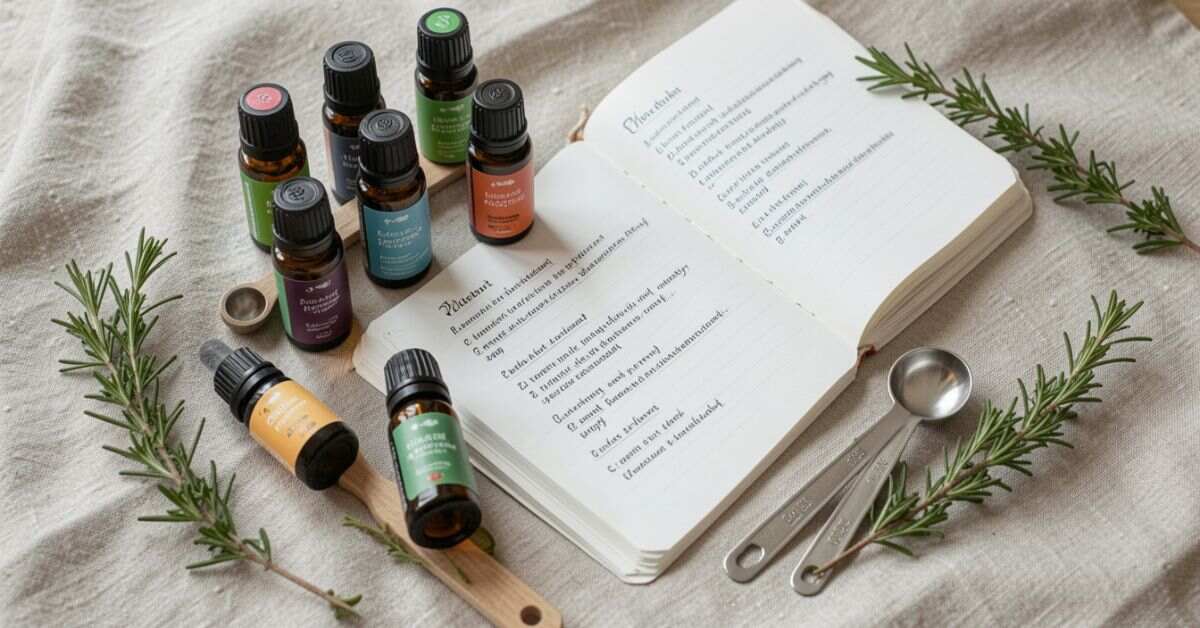
Introduction:
Learning how to mix essential oils is both simple and creative when you understand the basics. At first, blending may look like a guessing game. However, once you know how scent notes work, how to balance different oil families, and how to dilute them safely, you can create blends that smell beautiful and feel purposeful.
This guide gives you a clear, beginner-friendly path.It explains what essential oil mixing really means, why people blend oils for aroma and wellness, and how to build combinations that feel smooth instead of sharp or overwhelming. In fact, it also helps you understand the purpose behind blending rather than just mixing scents randomly. Moreover, this foundation makes it easier to create balanced and intentional recipes.
In addition, you will learn the difference between top notes, middle notes, and base notes because a strong blend always depends on proper balance. Therefore, understanding these layers is essential for creating professional-quality results. Furthermore, each note plays a specific role in shaping the final aroma, which improves both structure and performance.
Finally, you will see how to mix essential oils for diffuser use, skin use, hair use, sprays, perfumes, and reed diffusers with more confidence. As a result, you can apply the same blending principles across different products. Ultimately, this makes your essential oil knowledge more practical, flexible, and effective in everyday use.
Many beginners make the mistake of combining too many oils too quickly. As a result, the blend can smell messy or become unsafe to use. This article helps you avoid that problem. It keeps everything practical, clear, and SEO-friendly while still giving you enough detail to create real blends at home.
What Does It Mean to Mix Essential Oils?
Mixing essential oils means combining two or more oils to create a new scent or a more focused purpose. In simple words, you do not use one oil alone every time. Instead, you build a blend that, in fact, smells better, moreover feels more balanced, and therefore works more effectively for your goal.
That goal may be relaxation, focus, freshness, skincare, hair care, or home fragrance.
Understanding the Purpose of Blending
When people learn how to mix essential oils, they often start by thinking only about scent. However, good blending is about more than smell. It is also about harmony. Some oils feel bright and sharp. Others feel soft and deep. Some fade quickly, while others stay longer on the skin or in the air. In fact, this difference in evaporation speed is what creates depth in a fragrance. Moreover, each oil behaves differently depending on its chemical structure and note type.
Therefore, mixing oils is really the art of balancing these qualities so the final blend feels complete. In addition, this balance ensures that no single scent dominates or disappears too quickly. As a result, the fragrance remains smooth, layered, and well-rounded from start to finish.
How Different Oils Work Together
For example, a citrus oil can make a blend feel fresh and lively. A floral oil can soften it. A woody oil can help the scent last longer. When you combine them carefully, the result feels smoother than any single oil on its own. That is why essential oil blending is so popular in aromatherapy, personal care, and home fragrance.
Why Blending Gives You More Control
This process also gives you more control. In fact, it allows you to design a custom blend that matches your personal taste instead of relying on ready-made products. Moreover, it helps you understand how different oils interact with each other in real use.
Additionally, you can adjust the strength, mood, and purpose of the blend based on your needs. As a result, each mixture becomes more personalized and effective. Therefore, you are not limited to fixed formulas and can experiment safely with confidence.
A diffuser blend may need a different balance than a spray or perfume blend. Similarly, each application requires its own structure to perform properly. On the other hand, a skin blend must follow safe dilution rules, while a hair blend may need a richer carrier oil base. Consequently, understanding these differences helps you create safer and more suitable blends for every purpose.
The Core Idea Behind Blending Essential Oils
A good blend should never feel chaotic. It should feel intentional. That is the real meaning of how to mix essential oils: choosing oils that work together, support each other, and create a pleasant final result. In fact, this process is not just about combining scents randomly. Moreover, it is about understanding how each oil interacts within a blend.
Therefore, when you choose oils carefully, you create more balanced and harmonious results. In addition, each oil contributes something unique to the final aroma. As a result, the blend feels smoother, more natural, and more enjoyable to use.
Key Benefits of Mixing Essential Oils
In simple terms, mixing essential oils helps you:
Make your blends feel more professional and purposeful
Create a more balanced aroma
Customize blends for different uses
Improve the staying power of a scent
Benefits of Mixing Essential Oils for Aroma and Wellness
Learning how to mix essential oils, in fact, gives more than just a pleasant fragrance. Moreover, it also creates a deeper sensory experience. In addition, it helps you understand how different aromas work together.
A well-made blend improves aroma quality, supports wellness goals, and increases flexibility in everyday use. Instead of using one oil alone, you combine multiple oils to create balance, depth, and a more powerful sensory experience.
How to Mix Essential Oils for Aroma Complexity
One major benefit of blending is aroma complexity. A single essential oil often smells flat or one-dimensional.However, when you mix compatible oils, the fragrance develops layers that change over time. In fact, this layered development is what makes well-blended oils feel more complex and professional. Moreover, it allows the scent to evolve naturally instead of remaining flat or one-dimensional.
As a result, the aroma becomes richer, smoother, and more enjoyable as it unfolds. Therefore, proper blending plays a key role in creating balanced and long-lasting fragrance experiences.
As a result, the scent, therefore, feels richer and more natural, and in fact, more balanced overall.
Top notes give the first impression, middle notes build the body, and base notes create depth. When you combine these correctly, you create a professional-quality aroma that feels complete and long-lasting.
How to Mix Essential Oils for Customization and Personal Use
Another key benefit of learning how to mix essential oils is full customization. Everyone prefers different scents. Some people, in fact, enjoy fresh citrus blends, whereas others, on the other hand, prefer floral, herbal, or woody aromas.
By creating your own blends, you control:
- Scent strength
- Aroma type
- Emotional effect
- Usage purpose (relaxation, focus, freshness)
This makes blending more personal and more effective than ready-made products. In fact, it gives you complete control over the scent, strength, and purpose of your mixture. Moreover, you can adjust every detail according to your personal preference instead of relying on fixed formulas.
As a result, your blends become more unique and better suited to your needs. Therefore, this flexibility makes essential oil blending a more creative and satisfying process compared to pre-made products.
How to Mix Essential Oils to Balance Strong Scents
Some essential oils smell very strong when used alone. In fact, oils like mint or clove can feel overpowering if not balanced properly. Moreover, their intensity often dominates a blend when used in higher amounts.
However, blending helps soften these strong notes and brings harmony to the overall scent. In addition, it allows stronger oils to work together with lighter or sweeter aromas instead of overpowering them. As a result, the final fragrance feels smoother and more pleasant.
When you combine strong oils with lighter or sweeter scents, the result becomes much more balanced. Therefore, even beginners can create well-rounded blends without overwhelming the senses. Furthermore, this approach makes it easier to control aroma strength and achieve professional-quality results.
How to Mix Essential Oils for Aroma and Wellness Benefits
Many people use essential oil blends for wellness routines. Different combinations support different moods and environments.
For example:
- Relaxing blends support evening calmness
- Citrus blends support energy and focus
- Herbal blends create a fresh and clean atmosphere
This is why learning how to mix essential oils for wellness applications is so useful in daily life. In fact, it provides a practical way to support different moods, routines, and environments. Moreover, it allows you to create personalized blends that match your specific needs instead of using generic options.
As a result, you gain more control over your daily wellness practices. Therefore, essential oil blending becomes not only useful but also highly adaptable for everyday situations.
Why Many People Prefer Essential Oil Blends
| Benefit | How It Helps |
|---|---|
| Balanced Aroma | Creates a smooth and pleasant scent |
| Customization | Allows unique personal blends |
| Fragrance Depth | Combines multiple scent layers |
| Versatile Use | Works in diffusers, sprays, perfumes |
| Longer-Lasting Scent | Some oils extend fragrance life |
| Creative Control | Encourages experimentation |
How Blending Improves Different Applications
Blending becomes even more powerful when you apply it to specific uses. In fact, this is where essential oil knowledge becomes truly practical and effective. Moreover, it allows you to tailor each blend according to its intended purpose.
As a result, you can create more targeted and efficient combinations for different needs. Therefore, understanding application-specific blending significantly improves both performance and results.
People often learn how to mix essential oils for skin care by combining gentle oils with proper dilution. Similarly, many explore how to mix essential oils for hair care to support shine and freshness.
Blends also work well in a variety of applications. In fact, they can be used across different personal care and home fragrance products with great results. Moreover, each application allows you to experience essential oils in a new and practical way.
- Room sprays
- Perfumes
- Reed diffusers
Knowing how to mix essential oils for spray, how to mix essential oils for perfume, and how to mix essential oils for reed diffuser use helps you create personalized fragrances for every space.
Quick Tip for Better Essential Oil Blends
Always combine oils from different scent categories. Mix:
- Top notes (fresh and light)
- Middle notes (floral or herbal balance)
- Base notes (deep and long-lasting)
This structure creates a more stable and professional blend.
Final Insight
Once you understand how scent notes work together, learning how to mix essential oils becomes much easier. You can create balanced, long-lasting, and fully customized blends for both aroma and wellness purposes.
Understanding Essential Oil Notes Before You Start Mixing
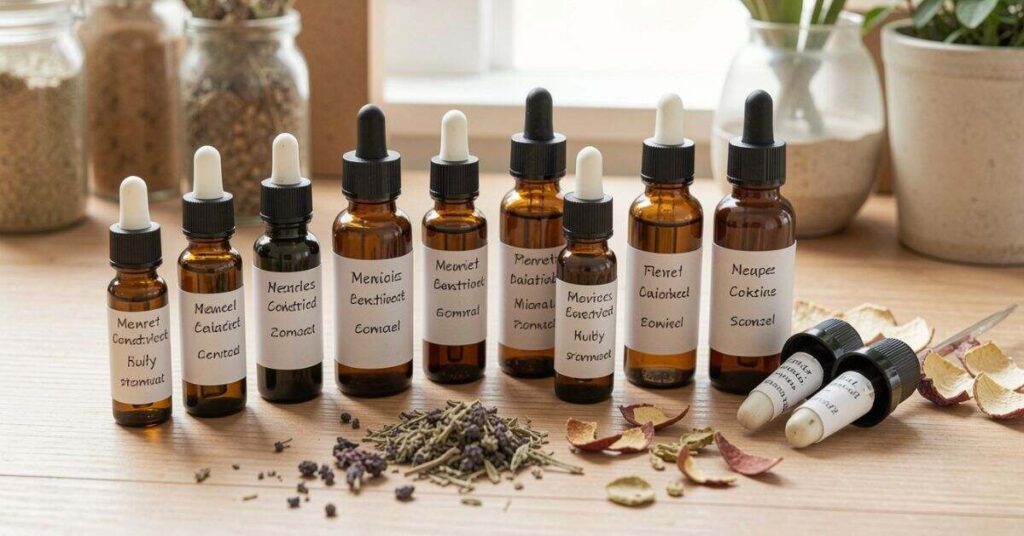
One of the most important parts of learning how to mix essential oils is understanding fragrance notes. In fact, this knowledge forms the foundation of every successful blend. Moreover, it helps you recognize how different oils interact with each other.
As a result, you can create more balanced and harmonious combinations. Therefore, understanding fragrance notes is essential for anyone who wants to master essential oil blending.Essential oil notes describe how quickly a scent appears, develops, and fades. Every oil belongs to a scent layer known as a top note, middle note, or base note. Together, these layers create the overall character of a blend.
Think of an essential oil blend like a musical performance. Each note has a specific role. Some scents make the first impression, others form the heart of the blend, and some provide depth and longevity. When these notes work together, the result feels balanced and professional. However, when one note dominates too much, the blend can smell incomplete or overwhelming.
Understanding scent notes helps beginners choose oils that complement each other. It also makes it easier to build blends for diffusers, perfumes, sprays, skincare products, and aromatherapy applications. In fact, this versatility allows you to apply the same knowledge across different uses. Moreover, it gives you more control over both scent strength and purpose. Therefore, you can design blends that are more consistent and effective.
In addition, this understanding reduces guesswork when creating new recipes. As a result, your blending process becomes more structured and predictable. Furthermore, before you start experimenting with recipes, it is worth learning how each note contributes to the final aroma. Ultimately, this knowledge helps you create more balanced, professional-quality blends with confidence.
Top Notes
Top notes are the first scents you notice when you smell a blend. They create the initial impression and are usually fresh, bright, and uplifting. However, they also evaporate the fastest. In fact, this quick evaporation is what makes them noticeable immediately after application. Moreover, it explains why their scent does not last as long as other fragrance notes.
Most top-note oils have light molecules, which is why their scent appears quickly but fades sooner than other notes. Therefore, they are often described as the “first impression” of a blend. In addition, this behavior is completely natural due to their molecular structure. As a result, they rise quickly into the air but disappear just as fast.
Despite their short lifespan, they play an important role because they attract attention and give a blend its opening character. Furthermore, they create the initial freshness that draws the user in. Ultimately, without top notes, a blend would feel flat and incomplete from the very first moment.
Common top-note essential oils include:
| Top Note Oils | Aroma Profile |
| Lemon | Fresh and clean |
| Sweet Orange | Bright and cheerful |
| Grapefruit | Crisp and uplifting |
| Bergamot | Citrusy with floral undertones |
| Lime | Sharp and refreshing |
Top notes are commonly used in blends designed for energy, freshness, and daytime use. They are especially popular when learning how to mix essential oils for diffuser blends because they quickly fill a room with fragrance.
Middle Notes
Middle notes, often called heart notes, form the core of an essential oil blend. They appear after the top notes begin to fade and help connect the lighter scents to the deeper base notes.
These oils usually provide balance and harmony. In many blends, the middle note makes up the largest portion because it defines the overall personality of the fragrance.
Popular middle-note oils include:
| Middle Note Oils | Aroma Profile |
| Lavender | Soft and calming |
| Geranium | Floral and balanced |
| Rosemary | Fresh and herbaceous |
| Chamomile | Sweet and soothing |
| Tea Tree | Clean and medicinal |
Middle notes are frequently used in relaxation blends, skincare products, and wellness-focused aromatherapy recipes. They also play an important role when learning how to mix essential oils for skin because many popular skincare oils belong to this category.
Base Notes
Base notes are the foundation of a blend. They appear later than top and middle notes, but they stay noticeable for much longer. As a result, they help anchor the fragrance and improve its longevity.
These oils often have rich, warm, earthy, woody, or resinous aromas. Even a few drops can significantly influence the character of a blend.
Common base-note oils include:
| Base Note Oils | Aroma Profile |
| Cedarwood | Warm and woody |
| Sandalwood | Smooth and rich |
| Frankincense | Deep and resinous |
| Patchouli | Earthy and grounding |
| Vetiver | Smoky and earthy |
Base notes are especially valuable when creating perfumes and long-lasting home fragrances. Therefore, people learning how to mix essential oils for perfume often rely on base-note oils to extend scent duration.
How Scent Notes Create a Balanced Blend
A successful essential oil blend usually contains a combination of top, middle, and base notes. Each layer contributes something unique to the overall fragrance experience.
A simple way to understand this balance is:
- Top notes provide the first impression.
- Middle notes create the heart of the blend.
- Base notes add depth and staying power.
For beginners, a common blending approach is:
| Note Type | Approximate Percentage |
| Top Notes | 20–30% |
| Middle Notes | 50–60% |
| Base Notes | 20–30% |
For example, a relaxing blend might combine sweet orange as a top note, lavender as a middle note, and cedarwood as a base note. Together, these oils create a fragrance that starts bright, remains soft and calming, and finishes with a warm, grounding aroma.
Once you understand how scent notes interact, choosing compatible oils becomes much easier. Moreover, your blends will smell more balanced, last longer, and feel more refined.
Read More:https://pureoilshub.com/eucalyptus-oil-for-hair/
Essential Oil Scent Families and Their Characteristics
After understanding top, middle, and base notes, the next step in learning how to mix essential oils is becoming familiar with scent families. Essential oils are often grouped into families based on their dominant aroma characteristics. These categories make blending easier because oils within the same family or complementary families typically work well together.
Knowing scent families can save time and reduce trial and error. Instead of randomly combining oils, you can choose fragrances that naturally complement one another. As a result, your blends will smell more balanced, pleasant, and professional.
Most essential oils fall into one of six major scent families: citrus, floral, woody, herbaceous, minty, and spicy or resinous. Each family brings unique qualities to a blend and serves a different purpose.
Citrus Oils
Citrus essential oils are among the most popular choices for beginners. They have bright, fresh, and uplifting aromas that instantly make a space feel cleaner and more energetic.
These oils are usually classified as top notes because they evaporate quickly. Nevertheless, they provide an excellent opening scent that captures attention and adds vibrancy to a blend.
Common citrus oils include:
| Citrus Oil | Aroma Description |
| Lemon | Fresh and zesty |
| Sweet Orange | Sweet and cheerful |
| Grapefruit | Crisp and energizing |
| Lime | Bright and sharp |
| Bergamot | Citrus with floral undertones |
Citrus oils blend particularly well with floral, herbaceous, and woody oils. In fact, they are widely considered one of the most versatile scent categories in aromatherapy. Moreover, their bright and uplifting nature makes them suitable for many different blend types.
Therefore, they are frequently used when learning how to mix essential oils for diffuser blends and home fragrance recipes. In addition, they help create fresh and energizing atmospheres in both personal and home environments. As a result, citrus oils are often included as top notes to enhance the overall brightness of a blend.
Floral Oils
Floral oils bring softness, elegance, and balance to essential oil blends. Their aromas often feel calming, comforting, and sophisticated.
Most floral oils function as middle notes, making them ideal for creating harmony between lighter and heavier scents. In addition, they are widely used in perfumes, skincare products, and relaxation blends.
Popular floral oils include:
| Floral Oil | Aroma Description |
| Lavender | Soft and calming |
| Geranium | Sweet and balanced |
| Rose | Rich and luxurious |
| Ylang Ylang | Exotic and sweet |
| Jasmine | Deep and floral |
Many people exploring how to mix essential oils for skin choose floral oils because they pair beautifully with carrier oils and complement many fragrance profiles.
Woody Oils
They are commonly used as base notes because their aromas linger longer than lighter scents. In fact, these oils form the foundation of many well-balanced blends. Moreover, they help anchor the fragrance and give it lasting depth.
In addition, these oils create a grounding effect that improves the overall stability of a blend. As a result, they help extend the overall life of a fragrance significantly. Therefore, they are highly valued in perfume making and advanced blending. Furthermore, they ensure that lighter top and middle notes do not fade too quickly, which ultimately improves the overall scent performance.
Common woody oils include:
| Woody Oil | Aroma Description |
| Cedarwood | Warm and earthy |
| Sandalwood | Rich and smooth |
| Pine | Fresh and woody |
| Cypress | Clean and forest-like |
| Ho Wood | Soft and woody |
Woody oils pair exceptionally well with citrus and floral scents. This combination often creates blends that feel both fresh and sophisticated.
Herbaceous Oils
Herbaceous oils have fresh, green, and slightly earthy aromas. They often remind people of gardens, herbs, and nature.
These oils usually act as middle notes and help bring freshness and balance to a blend. Furthermore, they work well in both wellness-focused and home fragrance recipes.
Popular herbaceous oils include:
| Herbaceous Oil | Aroma Description |
| Rosemary | Fresh and herbal |
| Basil | Sweet and green |
| Sage | Earthy and herb-like |
| Thyme | Strong and aromatic |
| Marjoram | Warm and herbaceous |
Herbaceous oils blend nicely with citrus, floral, and woody oils, making them versatile additions to many recipes.
Minty Oils
Minty oils provide cooling, refreshing, and invigorating aromas. They are often used when creating blends designed to feel clean, crisp, and energizing. In fact, mint oils are especially popular in refreshing diffuser and aromatherapy blends. Moreover, they add a cooling effect that enhances the overall sensory experience.
Because mint oils have powerful scents, they are usually added in smaller amounts. In addition, even a few drops can significantly influence the overall fragrance. Therefore, careful measurement is very important when working with these oils. As a result, the final blend stays balanced and not overpowering.
Common minty oils include:
| Minty Oil | Aroma Description |
| Peppermint | Cool and refreshing |
| Spearmint | Sweet and minty |
| Eucalyptus | Fresh and camphoraceous |
| Cornmint | Sharp and cooling |
Minty oils are frequently used when learning how to mix essential oils for spray products because they help create a fresh and clean atmosphere.
Spicy and Resinous Oils
Spicy and resinous oils are rich, warm, and complex. They often serve as base notes and add depth, character, and longevity to blends.
Although these oils are powerful, they can transform a simple blend into something more sophisticated when used correctly.
Popular spicy and resinous oils include:
| Spicy/Resinous Oil | Aroma Description |
| Frankincense | Deep and resinous |
| Myrrh | Warm and earthy |
| Cinnamon Leaf | Spicy and sweet |
| Clove | Rich and warming |
| Black Pepper | Sharp and spicy |
These oils are commonly found in perfumes, seasonal blends, and luxury aromatherapy products. Additionally, they are useful when learning how to mix essential oils for perfume because they help create lasting fragrance depth.
Quick Blending Guide
The following combinations generally work well together:
| Scent Family | Blends Well With |
| Citrus | Floral, Woody, Herbaceous |
| Floral | Citrus, Woody, Resinous |
| Woody | Citrus, Floral, Spicy |
| Herbaceous | Citrus, Floral, Minty |
| Minty | Citrus, Herbaceous, Woody |
| Spicy & Resinous | Floral, Woody, Citrus |
Understanding scent families makes essential oil blending much easier. Instead of relying on guesswork, you can build blends based on proven aroma relationships. Consequently, your blends will smell more balanced, harmonious, and enjoyable.
Tools and Supplies Needed to Mix Essential Oils
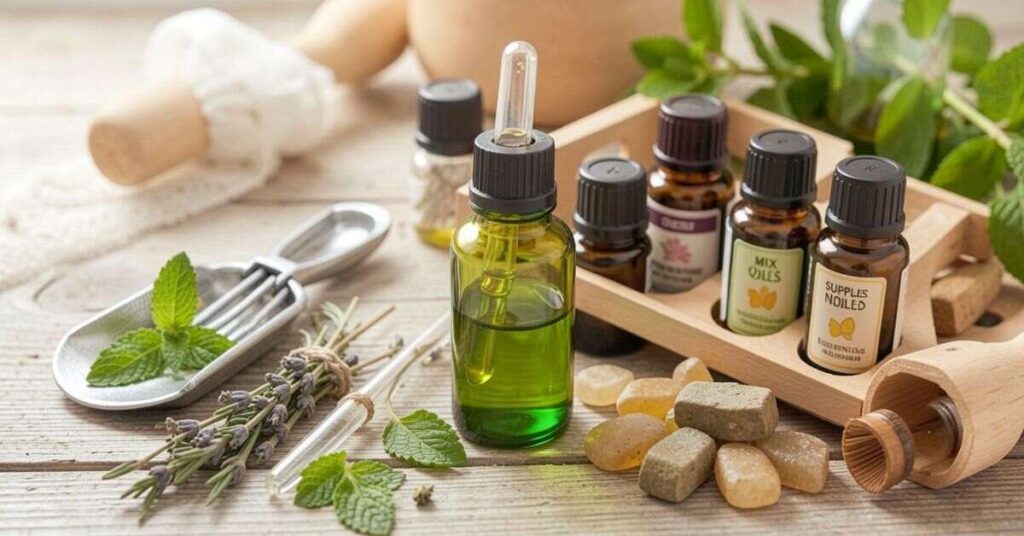
Before you start learning how to mix essential oils, it is important to gather the right tools and supplies. While essential oil blending is a creative process, accurate measurements and proper storage can make a significant difference in the quality of your final blend.
Using the correct equipment helps maintain consistency, reduces waste, and improves safety. Moreover, it allows you to recreate successful recipes whenever you want. Whether you plan to make diffuser blends, skincare oils, perfumes, sprays, or hair treatments, having a few basic supplies will make the process much easier.
Fortunately, beginners do not need expensive equipment. A small collection of measuring tools, glass containers, and carrier oils is enough to create countless blends at home.
Measuring Tools
Accurate measurement is one of the most important parts of essential oil blending. Since essential oils are highly concentrated, even a few extra drops can change the aroma and overall balance of a blend.
Many beginners simply count drops directly from the bottle. While this works for small projects, using dedicated measuring tools provides greater precision, especially when creating larger batches.
Useful measuring tools include:
| Tool | Purpose |
| Dropper Pipettes | Transfer oils accurately |
| Glass Droppers | Measure and add drops precisely |
| Measuring Spoons | Useful for carrier oils |
| Small Funnels | Prevent spills when filling bottles |
| Digital Scale | Helpful for advanced blending |
| Graduated Cylinders | Measure liquid volumes accurately |
For beginners, pipettes and droppers are usually enough. As your blending skills improve, you may choose to use more advanced measuring equipment.
Essential Tip
Always keep separate droppers or pipettes for different oils whenever possible. This practice helps prevent cross-contamination and preserves the purity of each essential oil.
Glass Bottles and Containers
Proper containers are essential for maintaining the quality of your blends. Essential oils can react with certain plastics over time, which may affect both the oil and the container. Therefore, glass bottles are generally the preferred choice.
Dark-colored glass bottles help protect oils from light exposure, which can reduce potency and shorten shelf life.
Common container options include:
| Container Type | Best Use |
| Amber Glass Bottles | Long-term storage |
| Cobalt Blue Bottles | Protect oils from light |
| Roller Bottles | Personal fragrance blends |
| Spray Bottles | Room sprays and body mists |
| Dropper Bottles | Custom oil blends |
| Glass Jars | Balm and cream formulations |
If you are learning how to mix essential oils for spray, a glass spray bottle is one of the most useful items to keep on hand. Likewise, roller bottles are excellent for perfume and personal aromatherapy blends.
Storage Tip
Store blended oils in dark glass containers and keep them away from direct sunlight, heat, and moisture. This simple habit helps maintain fragrance quality and extends shelf life.
Carrier Oils for Dilution
Carrier oils are vegetable-based oils used to dilute essential oils before topical application. In fact, because essential oils are highly concentrated, applying them directly to the skin can sometimes cause irritation. Therefore, proper dilution is essential for safety and long-term skin health.
Moreover, carrier oils do more than just reduce concentration. They also help spread essential oils evenly across the skin and hair. As a result, the blend becomes easier to apply and absorbs more smoothly. In addition, this improves overall effectiveness and comfort during use.
Popular carrier oils include:
| Carrier Oil | Characteristics |
| Sweet Almond Oil | Lightweight and versatile |
| Jojoba Oil | Similar to natural skin oils |
| Coconut Oil | Nourishing and moisturizing |
| Grapeseed Oil | Light and fast-absorbing |
| Argan Oil | Popular for hair care |
| Avocado Oil | Rich and deeply moisturizing |
If you are learning how to mix essential oils for skin, choosing the right carrier oil is just as important as selecting the essential oils themselves. Similarly, people exploring how to mix essential oils for hair often prefer argan, jojoba, or coconut oil because they work well in hair care routines.
Beginner Starter Kit Checklist
Before creating your first blend, try to have the following:
Essential oils of your choice
Glass droppers or pipettes
Dark glass bottles
Small funnel
Carrier oil
Labels for identifying blends
Notebook for recording recipes
Keeping notes is especially helpful. When you create a blend you love, you can easily recreate it later using the exact same measurements.
Why Quality Tools Matter
Good tools do more than improve convenience. They help you blend more accurately, store oils safely, and maintain consistency from one batch to another. As a result, your blends will smell better, last longer, and produce more reliable results.
Once your supplies are ready, you can begin the actual blending process. The next section will walk through how to mix essential oils step by step, including choosing a purpose, selecting compatible oils, balancing scent notes, and testing your blend for the best results.
How to Mix Essential Oils Step by Step
Now that you understand scent notes, scent families, and the tools needed for blending, it is time to learn how to mix essential oils step by step. Although blending may seem complicated at first, the process becomes much easier when you follow a structured approach. In fact, once you understand the method, you can create balanced blends with confidence. Moreover, each step helps you control aroma, strength, and purpose more effectively.
In addition, this structured approach gives you better control over the final result. As a result, you avoid random mixing and achieve more consistent blends. Furthermore, it allows you to understand how each oil interacts with others. Therefore, your overall blending skills improve much faster.
At the same time, you also gain the ability to adjust recipes based on your needs. For example, you can easily make a blend stronger, softer, or more balanced. Similarly, you can experiment safely without losing control of the scent profile. Ultimately, this makes the entire process more predictable and professional.
First of all, start by choosing the purpose of your blend. For example, decide whether you want relaxation, energy, focus, or freshness. In addition, this step gives direction to your entire blending process. As a result, you avoid random combinations that may not work well together.
Next, select your essential oils based on scent families and notes. For instance, you can combine citrus oils for freshness, floral oils for softness, and woody oils for depth. Furthermore, this balance creates a more complete and pleasant aroma. Therefore, your blend becomes more structured from the beginning.
Step 1: Choose the Purpose of Your Blend
Every successful blend starts with a clear goal. Before selecting oils, decide exactly what you want the blend to achieve. This simple step helps narrow your choices and prevents unnecessary mixing.
For example, a relaxing evening blend will use different oils than an energizing morning blend. Similarly, oils chosen for skincare may differ from those used in a home fragrance recipe.
Common blending goals include:
| Purpose | Common Oil Types |
| Relaxation | Lavender, Chamomile, Cedarwood |
| Energy | Lemon, Grapefruit, Peppermint |
| Focus | Rosemary, Basil, Peppermint |
| Home Fragrance | Orange, Eucalyptus, Pine |
| Perfume | Rose, Sandalwood, Frankincense |
| Hair Care | Rosemary, Lavender, Cedarwood |
Knowing your purpose first makes the entire blending process easier and more effective.
Step 2: Select Compatible Essential Oils
Once you know the purpose of your blend, the next step is choosing oils that work well together. This is where understanding scent families becomes useful.
As a general rule, oils from complementary scent families tend to blend more smoothly. Citrus oils often pair well with floral and woody oils, while herbaceous oils frequently complement minty and citrus scents.
Here are a few beginner-friendly combinations:
| Combination | Why It Works |
| Lemon + Lavender | Fresh and balanced |
| Orange + Cedarwood | Bright with warm depth |
| Peppermint + Rosemary | Clean and energizing |
| Bergamot + Geranium | Fresh and floral |
| Frankincense + Lavender | Calm and sophisticated |
When learning how to mix essential oils for diffuser blends, starting with two or three oils is often the easiest approach. Too many oils can make the fragrance confusing and difficult to balance.
Step 3: Balance Top, Middle, and Base Notes
After selecting compatible oils, arrange them according to their scent notes. A balanced blend usually includes top, middle, and base notes.
Each note contributes a different role:
- Top notes create the first impression.
- Middle notes form the heart of the blend.
- Base notes provide depth and longevity.
A simple beginner formula often follows this structure:
| Note Type | Approximate Share |
| Top Notes | 30% |
| Middle Notes | 50% |
| Base Notes | 20% |
For example:
- Sweet Orange (Top Note)
- Lavender (Middle Note)
- Cedarwood (Base Note)
This combination creates a fragrance that opens bright, stays soft and calming, and finishes with a warm woody foundation.
Step 4: Follow Proper Mixing Ratios
The next step is determining how many drops of each oil to use. Following a ratio helps maintain balance and prevents one scent from overpowering the others.
For a simple 10-drop blend:
| Note Type | Drops |
| Top Note | 3 Drops |
| Middle Note | 5 Drops |
| Base Note | 2 Drops |
For example:
- 3 drops Sweet Orange
- 5 drops Lavender
- 2 drops Cedarwood
This ratio provides a balanced starting point for most beginner blends.
If you are creating products for topical use, remember that dilution with a carrier oil is necessary. This is especially important when learning how to mix essential oils for skin or how to mix essential oils for hair.
Step 5: Test and Adjust Your Blend
Testing is where blending becomes both a science and an art. Even when you follow a recipe, slight adjustments can dramatically improve the final aroma.
After mixing:
- Gently swirl the oils together.
- Allow the blend to rest for a few minutes.
- Smell the blend on a scent strip or cotton pad.
- Identify any notes that seem too strong or too weak.
- Adjust one drop at a time if needed.
Patience is important during this stage. Sometimes a blend smells different after sitting for several hours or even a few days. Therefore, avoid making major adjustments too quickly.
Beginner Blending Example
Here is a simple beginner recipe that follows all five steps:
| Oil | Role | Drops |
| Lemon | Top Note | 3 |
| Lavender | Middle Note | 5 |
| Cedarwood | Base Note | 2 |
This blend works well in a diffuser and demonstrates how scent layers combine to create a balanced fragrance.
Pro Tip for Better Results
Keep a blending journal. Record:
- Oil names
- Number of drops
- Purpose of the blend
- Personal observations
This habit helps you recreate successful recipes and improve future blends more quickly.
By following these five steps, you can confidently create custom blends for wellness, home fragrance, skincare, and aromatherapy. More importantly, you will develop a better understanding of how different oils interact with one another.
Essential Oil Mixing Ratios for Beginners

Understanding ratios is one of the most important parts of learning how to mix essential oils. Even the best combination of oils can smell unbalanced if the proportions are incorrect. A blend with too much citrus may fade quickly, while too much of a strong base note can overwhelm the entire fragrance.
Fortunately, beginners do not need complicated formulas. By following a few simple blending guidelines, you can create balanced and pleasant aromas while avoiding common mistakes. Moreover, proper ratios make it easier to recreate successful blends in the future.
Think of ratios as the blueprint of your blend. They help determine how the fragrance opens, develops, and lingers over time.
Basic Blending Formula
A classic essential oil blending formula uses top, middle, and base notes in a balanced proportion. This approach works well for most diffuser blends, perfumes, sprays, and aromatherapy recipes.
A common beginner formula is:
| Note Type | Percentage |
| Top Notes | 30% |
| Middle Notes | 50% |
| Base Notes | 20% |
This ratio creates a fragrance that opens with freshness, develops a strong heart, and finishes with lasting depth.
For example:
| Oil | Note Type |
| Lemon | Top Note |
| Lavender | Middle Note |
| Cedarwood | Base Note |
This combination produces a balanced blend that feels bright, calming, and grounded at the same time.
Alternative Beginner Formula
Some beginners prefer an even simpler ratio:
| Note Type | Ratio |
| Top Notes | 3 Parts |
| Middle Notes | 2 Parts |
| Base Notes | 1 Part |
This method is easy to remember and works well when experimenting with small batches.
Recommended Number of Drops
Many beginner recipes are measured by drops instead of percentages. This makes blending easier because you can create small test batches without complicated calculations.
Here are some common examples:
10-Drop Blend
| Note Type | Drops |
| Top Note | 3 |
| Middle Note | 5 |
| Base Note | 2 |
20-Drop Blend
| Note Type | Drops |
| Top Note | 6 |
| Middle Note | 10 |
| Base Note | 4 |
30-Drop Blend
| Note Type | Drops |
| Top Note | 9 |
| Middle Note | 15 |
| Base Note | 6 |
Starting with small batches is often the best approach. If you enjoy the aroma, you can easily scale up the recipe later.
Quick Tip
When testing a new blend, create a 10-drop sample first. This method reduces waste and makes adjustments easier.
Dilution Guidelines for Safe Use
While ratios help balance fragrance, dilution helps ensure safety. Essential oils are highly concentrated and should usually be diluted before applying them to the skin or hair.
This is especially important for anyone learning how to mix essential oils for skin or how to mix essential oils for hair.
The following table provides general dilution guidelines:
| Use | Dilution Percentage |
| Facial Products | 0.5–1% |
| Daily Body Use | 1–2% |
| Massage Oils | 2–3% |
| Spot Applications | Up to 5% |
| Short-Term Intensive Use | Up to 10% (with caution) |
Beginner Dilution Example
For a 30 ml (1 oz) bottle of carrier oil:
| Dilution | Essential Oil Drops |
| 1% | 6 Drops |
| 2% | 12 Drops |
| 3% | 18 Drops |
Popular carrier oils include:
- Jojoba Oil
- Sweet Almond Oil
- Grapeseed Oil
- Coconut Oil
- Argan Oil
These oils help distribute essential oils evenly while reducing the risk of irritation.
Dilution for Different Applications
Different projects require different approaches:
| Application | Typical Dilution |
| Diffuser Blends | No carrier oil needed |
| Room Sprays | Water plus dispersing agent |
| Perfumes | Carrier oil or alcohol base |
| Hair Oils | 1–2% dilution |
| Skin Oils | 1–2% dilution |
| Reed Diffusers | Carrier base designed for reeds |
Therefore, understanding how to mix essential oils with water is slightly different from learning how to mix essential oils for perfume or topical products. Each application has unique requirements for performance and safety.
Common Ratio Mistakes Beginners Make
Many new blenders accidentally:
- Use too many oils in one blend.
- Add excessive base notes.
- Ignore dilution guidelines.
- Skip testing small batches.
- Change multiple ingredients at once.
Instead, make adjustments gradually. Adding or removing one drop at a time often produces better results and helps you understand how each oil influences the final aroma.
Essential Oil Blending Chart for Beginners
This simple essential oil blending chart can help guide your first recipes:
| Blend Size | Top Notes | Middle Notes | Base Notes |
| 10 Drops | 3 | 5 | 2 |
| 20 Drops | 6 | 10 | 4 |
| 30 Drops | 9 | 15 | 6 |
| 50 Drops | 15 | 25 | 10 |
Using these ratios provides a reliable starting point for creating balanced and pleasant essential oil blends.
Once you understand ratios and dilution, you can begin creating blends for specific goals. Whether you want relaxation, energy, focus, seasonal aromas, or home fragrance, the next section will show exactly how to mix essential oils for different purposes using practical blending strategies.
How to Mix Essential Oils for Different Purposes
Once you understand ratios and scent balance, the next step in learning how to mix essential oils is applying that knowledge to real-life uses. Different purposes require different blending styles. A calming blend will not look the same as an energizing one, and a diffuser mix will differ from a skin or hair formulation.
In this section, you will learn how to create targeted blends for relaxation, energy, home freshness, and seasonal aromatherapy. Each category uses specific oil types and balances to achieve the desired effect. Moreover, this helps you move from basic blending into more practical, everyday use.
Relaxation Blends
Relaxation blends are designed to calm the mind, reduce stress, and create a peaceful environment. These blends usually rely on soft floral, grounding woody, and gentle herbal oils.
Common oils used include lavender, chamomile, frankincense, and cedarwood. These oils work together to slow down the sensory experience and promote a soothing atmosphere.
A simple relaxation diffuser blend:
| Oil | Role | Drops |
| Lavender | Middle Note | 4 |
| Chamomile | Middle Note | 3 |
| Cedarwood | Base Note | 3 |
This blend works especially well in the evening or before sleep.
Many beginners exploring how to mix essential oils for diffuser use relaxation blends as their first experiment because they are easy to balance and very forgiving.
Energy and Focus Blends
Energy blends aim to refresh the mind, improve alertness, and increase productivity. These blends typically include citrus, minty, and herbaceous oils.
Popular choices include peppermint, lemon, rosemary, and grapefruit. These oils stimulate the senses and create a bright, uplifting environment.
Example focus blend:
| Oil | Role | Drops |
| Lemon | Top Note | 4 |
| Peppermint | Top Note | 3 |
| Rosemary | Middle Note | 3 |
This combination is commonly used in workspaces, study rooms, and morning routines.
It is also useful for people learning how to mix essential oils for spray, as it creates a refreshing room mist for daytime use.
Fresh and Clean Home Fragrance Blends
Fresh home blends are designed to eliminate stale odors and create a clean, inviting atmosphere. These blends often include citrus, minty, and light woody oils.
Eucalyptus, lemon, tea tree, and pine are frequently used in these combinations.
Example home freshness blend:
| Oil | Role | Drops |
| Lemon | Top Note | 5 |
| Eucalyptus | Middle Note | 3 |
| Pine | Base Note | 2 |
This blend works well in kitchens, bathrooms, and living spaces.
It is especially helpful when learning how to mix essential oils with water for DIY room sprays and cleaning mists.
Seasonal Aromatherapy Blends
Seasonal blends help match the mood of different times of the year. They often use warm spices in winter and light citrus or floral oils in summer.
Winter Warm Blend
| Oil | Role | Drops |
| Orange | Top Note | 4 |
| Clove | Middle Note | 3 |
| Cinnamon Leaf | Base Note | 3 |
This blend creates a warm, cozy atmosphere.
Summer Fresh Blend
| Oil | Role | Drops |
| Grapefruit | Top Note | 5 |
| Lavender | Middle Note | 3 |
| Mint | Middle Note | 2 |
This blend feels light, fresh, and cooling.
Seasonal blends are especially popular for people exploring how to mix essential oils for diffuser use throughout the year because they help adjust the atmosphere naturally.
Quick Blending Insight
Each purpose follows the same rule: balance freshness, depth, and heart notes. However, the dominant oil type changes depending on the goal. For relaxation, floral and woody oils dominate. For energy, citrus and minty oils take the lead.
Pro Tip
Start with three oils only. Once you understand how they interact, you can expand into more complex blends. Simplicity often produces the most elegant results.
Advanced Essential Oil Mixing Techniques
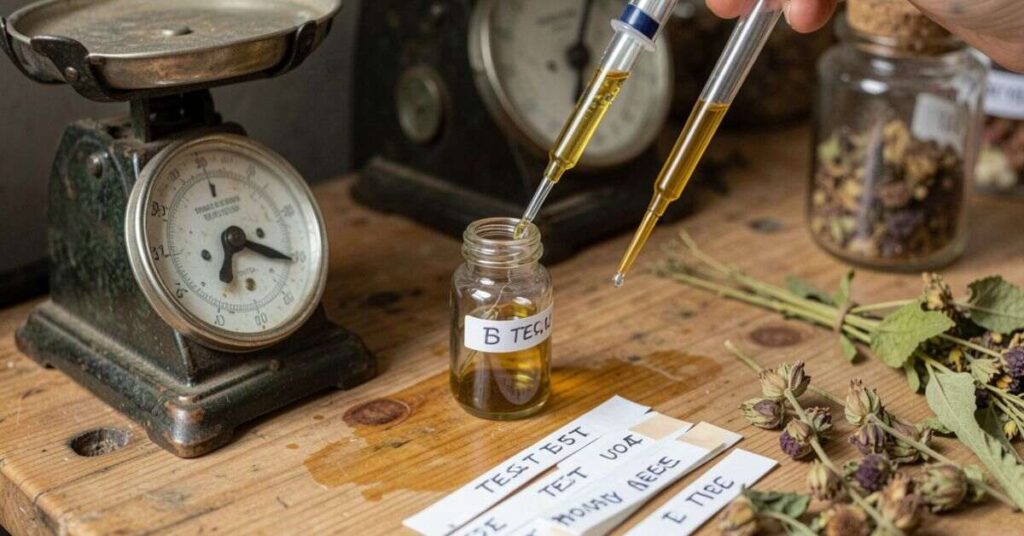
Once you understand the basics of how to mix essential oils, you can move into more advanced blending techniques. These methods help you create more refined, complex, and professional-quality blends. At this stage, you are no longer just mixing scents—you are designing fragrances with intention, structure, and depth.
Advanced blending focuses on improving how oils interact with each other over time. It also helps you build unique signature scents that feel more personalized and long-lasting.
Understanding Synergy in Essential Oil Blends
Synergy happens when essential oils work better together than they do alone. Instead of simply combining scents, you create a new aromatic experience that feels smoother, richer, and more balanced.
In synergy, each oil plays a supporting role. One oil may brighten the blend, another may soften it, and another may anchor it. When these roles work together, the final aroma feels complete.
For example:
- Lemon adds freshness
- Lavender adds calm balance
- Frankincense adds depth and harmony
When combined, these oils create a blend that feels more rounded than any single oil alone.
This concept is especially important when learning how to mix essential oils for perfume, because perfumes rely heavily on layered complexity and long-lasting scent evolution.
Aging Essential Oil Blends for Better Aroma
Aging is a technique where you allow a blended essential oil mixture to rest for a period of time before using it. This resting period allows the oils to fully combine and mature.
Immediately after mixing, oils may smell sharp or separate. However, after a few days or weeks, the fragrance often becomes smoother and more unified.
Aging is commonly used for:
- Perfume blends
- Reed diffuser mixtures
- Complex aromatherapy recipes
Basic aging process:
- Mix your essential oils in a glass bottle.
- Seal the bottle tightly.
- Store it in a cool, dark place.
- Let it rest for 3–14 days.
- Shake gently before use.
This simple method improves aroma quality without changing ingredients. It is especially helpful when exploring how to mix essential oils for reed diffuser blends, where long-lasting scent stability is important.
Creating Custom Signature Blends
A signature blend is a unique fragrance that reflects your personal style. It is often more complex than beginner recipes and usually involves careful experimentation.
To create a signature blend, start by choosing a scent direction:
- Fresh and citrusy
- Soft and floral
- Warm and woody
- Clean and herbal
- Spicy and rich
Then build your blend step by step:
- Choose one dominant oil (main identity).
- Add a supporting middle note.
- Finish with a grounding base note.
- Adjust slowly, one drop at a time.
Example signature blend:
| Oil | Role |
| Bergamot | Bright top note foundation |
| Lavender | Soft heart note |
| Sandalwood | Deep base note |
This combination creates a balanced yet distinctive fragrance.
Signature blends are especially useful when learning how to mix essential oils for perfume, because they help you build a recognizable scent profile instead of relying on standard recipes.
Pro Blending Tip
Always document your experiments. Even small changes in drop count can significantly alter the final aroma. A blending journal helps you track what works and refine your future recipes.
Essential Oil Safety Tips Every Beginner Should Know
When learning how to mix essential oils, safety should always come before creativity. Essential oils are highly concentrated plant extracts, which means even a small mistake in usage can cause irritation or unwanted reactions. Therefore, understanding basic safety rules helps you enjoy blending without risk.
Many beginners focus only on fragrance, but safe dilution, proper oil selection, and correct application methods are just as important. Moreover, different uses such as skin care, hair care, and diffusion all require different safety approaches.
By following a few simple guidelines, you can confidently create blends that are both effective and safe for daily use.
Safe Dilution Practices
Dilution is the most important safety rule in essential oil blending. Since essential oils are very strong, they should almost never be used directly on the skin.
Instead, they should be mixed with a carrier oil to reduce concentration and prevent irritation.
General dilution guidelines:
| Use Case | Safe Dilution |
| Face Use | 0.5% – 1% |
| Body Use | 1% – 2% |
| Massage | 2% – 3% |
| Short-Term Use | Up to 5% (caution) |
For example, if you are learning how to mix essential oils for skin, a 1% dilution is usually the safest starting point. This ensures the blend is gentle while still effective.
Common carrier oils include jojoba oil, sweet almond oil, coconut oil, and grapeseed oil. These oils help spread essential oils evenly across the skin and reduce irritation risk.
Photosensitive Oils
Some essential oils can increase skin sensitivity to sunlight. This means if you apply them to the skin and then go into direct sunlight, they may cause redness or irritation.
These are called photosensitive oils, and they require extra caution.
Common photosensitive oils include:
- Bergamot (especially cold-pressed)
- Lemon
- Lime
- Grapefruit
If you are learning how to mix essential oils for skin, it is important to avoid using these oils in daytime skincare blends unless they are properly treated or used in very low amounts.
Safety tip: If you use photosensitive oils, avoid sun exposure on treated skin for at least 12–24 hours.
Pregnancy and Nursing Considerations
During pregnancy and breastfeeding, the body becomes more sensitive, and certain essential oils should be avoided or used with extreme caution.
Some oils may not be suitable during this time due to their strong physiological effects.
Oils commonly avoided include:
- Rosemary
- Clary sage (in early pregnancy)
- Cinnamon
- Clove
- Peppermint (in high amounts)
If you are pregnant or nursing, always consult a qualified professional before using essential oils. Even when learning how to mix essential oils for diffuser, mild blends should be preferred during this period.
Choosing Quality Essential Oils
The quality of essential oils directly affects safety and performance. Low-quality or synthetic oils may not provide the same benefits and can sometimes cause unwanted reactions.
When choosing oils, look for:
- 100% pure essential oil labeling
- Botanical (Latin) name listed
- No synthetic fragrance added
- Reputable supplier or brand
- Proper packaging in dark glass bottles
High-quality oils blend more effectively and are safer for both topical and aromatic use.
Quick Safety Reminders
Always dilute before skin use
Start with small amounts
Test on a small skin patch first
Avoid sensitive areas like eyes and mucous membranes
Store oils properly away from heat and sunlight
Pro Tip
Even safe oils can cause irritation if overused. Therefore, less is often more in essential oil blending. Start with low concentrations and increase gradually only if needed.
Common Mistakes to Avoid When Mixing Essential Oils
Even after learning how to mix essential oils, beginners often make simple mistakes that affect scent quality, safety, and performance. Blending essential oils is not just about combining nice smells. It requires balance, structure, and proper technique.
Avoiding common errors will instantly improve your blends and help you create more professional results.
How to Mix Essential Oils Without Using Too Many Oils
One major mistake is using too many essential oils in a single blend. While it may feel creative, it usually creates a confusing and unbalanced scent.
When too many oils are added, the fragrance loses clarity. Nothing stands out properly, and the blend feels messy instead of smooth.
Better approach:
Start with 2–3 oils
Build slowly after testing
Keep one dominant oil as the base
This is especially important when learning how to mix essential oils for diffuser use, where simplicity creates the best results.
How to Mix Essential Oils with Proper Scent Balance
Another common mistake is ignoring scent structure. Many beginners mix oils without understanding top, middle, and base notes.
Without balance, the blend may:
Fade too quickly
Smell too sharp
Lack depth and warmth
Correct method:
Use top notes for freshness
Use middle notes for balance
Use base notes for depth and longevity
A properly balanced blend always smells smoother and more professional.
How to Mix Essential Oils Without Overusing Strong Oils
Strong essential oils can easily dominate a blend. Oils like peppermint, cinnamon, clove, and eucalyptus must be used carefully.
Overusing them can:
Overpower other scents
Cause irritation in some uses
Make blends feel harsh
Better practice:
Use strong oils in small amounts
Treat them as accent notes
Add drop by drop and test carefully
This is very important when learning how to mix essential oils for skin applications.
How to Mix Essential Oils Safely with Proper Dilution
Skipping dilution is a serious mistake. Essential oils are highly concentrated and should not be applied directly to the skin.
Common mistake:
Using undiluted oils on skin or hair
Correct approach:
Always mix with a carrier oil
Follow safe dilution ratios
Adjust based on usage area
For example, when learning how to mix essential oils for hair care, carrier oils like coconut or jojoba oil work best.
How to Mix Essential Oils and Test Blends Before Use
Many beginners skip testing their blends before using them. This can lead to unbalanced or unpleasant results.
Without testing, you may:
Miss scent imbalances
Use incorrect strength
Waste ingredients
Better method:
Let blends rest for a few hours
Recheck the aroma
Adjust one drop at a time
Testing ensures a smoother and more refined final blend.
How to Mix Essential Oils and Store Them Properly
Improper storage can damage essential oils and reduce their quality over time.
Common mistakes include:
Using plastic bottles
Leaving bottles open
Storing in sunlight
Correct storage method:
Use dark glass bottles
Seal tightly after use
Store in a cool, dark place
Good storage is essential for long-lasting blends like perfumes and diffuser oils.
Quick Mistake Checklist for Mixing Essential Oils
Simple blends often work better than complex ones. Fewer oils make it easier to control the final scent.
Additionally, balancing scent notes ensures harmony between top, middle, and base layers. As a result, the fragrance feels smoother and more natural.
Avoiding strong oil overuse prevents overpowering scents and keeps blends gentle and pleasant.
Proper dilution protects the skin and ensures safe application.
Testing blends before final use helps you adjust strength and balance.
Correct storage preserves aroma quality and extends shelf life.
Pro Tip for Better Essential Oil Blending
Think of blending like cooking. Simple recipes often taste and smell better than complex ones.
When you keep blends simple:
Each oil has space to express itself
The aroma feels cleaner and more natural
The final scent becomes easier to enjoy
Over time, simple and balanced blends create the most consistent and professional results.
Sample Essential Oil Blend Recipes for Beginners
Now that you understand the basics of how to mix essential oils, it is time to practice with simple, beginner-friendly recipes. In fact, practice helps you build confidence in blending different scents. Moreover, it allows you to understand how each oil behaves in a real mixture.
Additionally, these blends are carefully balanced so you can experience how different scent notes work together in real-life combinations. As a result, you will start noticing how top, middle, and base notes interact. Therefore, your understanding of fragrance structure will improve naturally.
On the other hand, skipping practice may slow down your learning process. Consequently, it becomes harder to create balanced blends on your own. Ultimately, regular practice ensures you develop stronger skills and more refined essential oil combinations over time.
Each recipe below follows proper ratios and includes top, middle, and base notes where needed. You can use these blends in diffusers, personal inhalers, or diluted topical applications (where safe). Moreover, they help you build confidence before creating your own custom blends.
Calming Evening Blend
This blend is designed to create a peaceful and relaxing atmosphere. It is perfect for nighttime routines, meditation, or stress relief after a long day.
| Oil | Role | Drops |
| Lavender | Middle Note | 4 |
| Chamomile | Middle Note | 3 |
| Cedarwood | Base Note | 3 |
This combination works well because lavender and chamomile soften the mood, while cedarwood adds grounding depth. As a result, the overall aroma feels smooth, gentle, and calming.
This is also a great starter recipe for anyone learning how to mix essential oils for diffuser use in the evening.
Uplifting Citrus Blend
This blend is fresh, bright, and energizing. It helps improve mood and create a lively atmosphere in any space.
| Oil | Role | Drops |
| Sweet Orange | Top Note | 4 |
| Lemon | Top Note | 3 |
| Bergamot | Top Note | 3 |
This citrus-heavy blend creates an instant feeling of freshness. However, citrus oils evaporate quickly. In fact, this is one of their most noticeable characteristics in blends. Therefore, their aroma may not last as long as heavier oils.
Moreover, you can improve longevity by adjusting the blend slightly. For example, adding a small amount of cedarwood or frankincense helps stabilize the scent. As a result, the aroma stays present for a much longer time.
Additionally, these base notes support the lighter citrus tones without overpowering them. On the other hand, using too much of them can change the fresh character of the blend. Consequently, balance is very important when combining oils.
Ultimately, with the right proportion, you can enjoy both freshness and long-lasting aroma in the same blend.
It is especially useful for mornings, workspaces, and study areas.
Refreshing Mint Blend
This blend feels cool, clean, and refreshing. It is ideal for clearing the mind and creating a crisp environment.
| Oil | Role | Drops |
| Peppermint | Top Note | 4 |
| Eucalyptus | Middle Note | 3 |
| Rosemary | Middle Note | 3 |
Peppermint provides an instant cooling effect, while eucalyptus and rosemary add clarity and freshness. Together, they create a strong but balanced aromatic experience.
This blend is also popular for those learning how to mix essential oils for spray, especially for refreshing room mists.
Focus and Productivity Blend
This blend is designed to support concentration, mental clarity, and productivity. It is perfect for work, studying, or creative tasks.
| Oil | Role | Drops |
| Lemon | Top Note | 3 |
| Rosemary | Middle Note | 4 |
| Peppermint | Top Note | 3 |
This combination works well because citrus oils uplift the mood. In fact, they are widely used for creating a fresh and energizing atmosphere. Moreover, rosemary supports mental focus, making it ideal for studying or work. Additionally, peppermint enhances alertness by providing a cooling and stimulating effect.
As a result, these three oils work together to improve both mood and concentration. Therefore, they create a balanced environment for focus. On the other hand, using only one of these oils may not give the same complete effect.
Ultimately, when you combine them properly, the blend becomes more effective, and consequently, it supports both mental clarity and energy at the same time.
Many people also use this type of blend when learning how to mix essential oils for diffuser in office or study spaces.
Quick Blending Insight
Each of these recipes follows a simple rule:
- Keep 2–3 oils only
- Maintain clear note structure
- Balance freshness with depth
- Adjust drops slowly if needed
Pro Tip
Always test these blends in small batches first. If a scent feels too strong, reduce the most dominant oil by 1–2 drops. In fact, even a small adjustment can significantly change the balance of the blend. Moreover, this helps you control the intensity without ruining the overall recipe.
Additionally, after reducing the drops, you should always re-test the mixture. As a result, you can clearly understand how the scent has improved. Therefore, small step-by-step changes are more effective than large adjustments.
On the other hand, if you change too many drops at once, the blend may lose its original character. Consequently, it becomes harder to fix the scent again. Ultimately, careful reduction and re-testing ensure a more balanced and pleasant essential oil blend.Small adjustments often make a big difference.
How to Store Mixed Essential Oils Properly
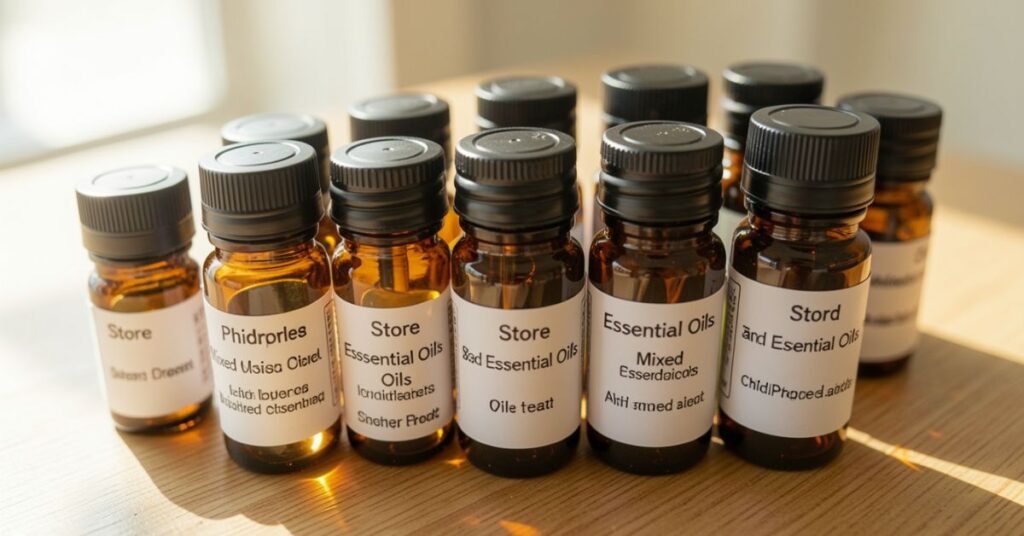
After learning how to mix essential oils, proper storage becomes the next important step. Even a perfectly balanced blend can lose its quality if it is not stored correctly. Essential oils are sensitive to light, heat, air, and plastic exposure. Therefore, correct storage helps maintain aroma strength, safety, and therapeutic quality for a longer time.
Good storage habits also make your blends more consistent. In fact, proper storage protects the natural structure of essential oils. Moreover, it preserves their original scent profile so every blend performs the same way each time.
How to Mix Essential Oils and Store Them in Dark Glass Bottles
The best way to store blends is by using dark glass bottles. These bottles protect oils from sunlight, which can break down their chemical structure over time.
Recommended options:
| Bottle Type | Best Use |
|---|---|
| Amber Glass | General storage and blends |
| Cobalt Blue | Perfume and aromatherapy blends |
| Roller Bottles | Personal application blends |
| Dropper Bottles | Precise oil mixtures |
Avoid plastic containers because essential oils can react with plastic and reduce purity over time.
Plastic may also release unwanted chemicals into the blend, which can affect both safety and quality. Therefore, glass is always the safer and more stable option.
How to Mix Essential Oils and Protect Them from Heat and Sunlight
Heat and direct sunlight are two major enemies of essential oils. High temperatures can change both aroma and effectiveness.
Best practices:
Store bottles in cool, dark places
Avoid windowsills or direct sunlight
Keep away from heaters or stoves
Use closed cabinets or drawers
Even small temperature changes can affect delicate oils like citrus or floral blends.
How to Mix Essential Oils and Prevent Air Exposure
Air exposure slowly weakens essential oils over time. When oxygen enters the bottle, oxidation begins. This process breaks down natural compounds and reduces oil quality.
To prevent this:
Always close caps tightly
Avoid leaving bottles open
Minimize unnecessary shaking
This is especially important when learning how to mix essential oils for diffuser use, because freshness directly affects aroma strength.
How to Mix Essential Oils and Label Blends Correctly
Labeling is a simple but powerful habit. It keeps your blends organized and safe to use. It also helps you quickly identify each mixture.
What to include on a label:
Blend name or purpose
Date of creation
Main essential oils used
Dilution ratio (if applicable)
For example:
“Relaxing Blend – Lavender + Chamomile + Cedarwood – June 2026”
Clear labeling improves safety and prevents confusion between similar blends.
How to Mix Essential Oils and Manage Shelf Life
Different blends have different shelf lives depending on ingredients.
| Blend Type | Shelf Life |
|---|---|
| Citrus Blends | 6–12 months |
| Floral Blends | 1–2 years |
| Woody/Resin Blends | 2–3 years |
| Carrier Oil Blends | 6–12 months |
Citrus oils expire faster due to sensitivity to light and air. Woody and resin oils last longer because they are more stable.
Proper storage can extend shelf life and maintain aroma quality.
Quick Essential Oil Storage Checklist
Use dark glass bottles
Store in cool, dark places
Keep bottles tightly sealed
Avoid plastic containers
Label every blend clearly
Pro Tip for Storing Essential Oil Blends
If a blend smells weak or “off,” it is better to remake it instead of trying to fix it.
Fresh blends always deliver better performance and stronger aroma. Recreating the blend ensures accurate balance, better safety, and consistent results.
Final Thoughts
Learning how to mix essential oils opens the door to endless creativity and natural wellness solutions. Once you understand scent notes, ratios, safety rules, and blending techniques, you can confidently create blends for relaxation, energy, skincare, hair care, perfumes, sprays, and home fragrance.
The key is balance and simplicity. Start small, test your blends, and adjust slowly. Over time, you will develop your own signature style and understand how different oils interact naturally.Most importantly, always prioritize safety and quality so your blends remain effective and enjoyable. In fact, these two factors directly determine how well your essential oil mixtures perform. Moreover, high-quality oils provide stronger and more natural benefits. Therefore, choosing pure and trusted sources should always be your first step.
Additionally, safe usage ensures that you avoid irritation or unwanted reactions. For example, even a small mistake in concentration can affect the overall result. As a result, careful handling becomes essential in every blend you create.
On the other hand, poor-quality oils or careless mixing can reduce effectiveness. Consequently, the final aroma may feel weak or unpleasant. Ultimately, when you consistently focus on safety and quality, your essential oil blends become more reliable, balanced, and enjoyable over time.
With consistent practice, essential oil blending becomes less about guessing and more about creating intentional, beautiful aromas that suit your lifestyle perfectly.
FAQs:
Can I mix essential oils directly without a carrier oil?
Yes, you can mix essential oils directly when using them in a diffuser or aroma device. In fact, this is one of the safest and most common ways to enjoy different blends. Moreover, it allows the scents to spread evenly in the air without causing skin contact issues.
However, for skin or hair use, you should always dilute them with a carrier oil. This is because essential oils are highly concentrated, so direct application can easily cause irritation. Therefore, proper dilution becomes very important for safe use.
In addition, dilution helps your skin absorb the oils more gently and effectively. For example, coconut oil, jojoba oil, or almond oil can act as safe carrier oils. As a result, the blend becomes much milder and suitable for regular application.
Ultimately, when learning how to mix essential oils for skin, you should always prioritize safety first, and consequently, proper dilution should never be skipped.
How many essential oils should I mix together?
For beginners, it is best to mix 2 to 3 essential oils at a time. This keeps the blend simple, balanced, and easy to control. Once you gain experience, you can try more complex blends with 4 to 6 oils. However, too many oils at once can create a confusing or overpowering scent.
What is the best ratio for mixing essential oils?
A safe beginner ratio is:
- 30% Top notes
- 50% Middle notes
- 20% Base notes
This structure creates a balanced aroma that feels smooth and long-lasting. It works well for most diffuser blends, perfumes, and aromatherapy recipes.
Can I Mix Essential Oils with Water?
Yes, you can mix essential oils with water, but they do not naturally dissolve in it. Essential oils are oil-based, while water is a different medium. Because of this difference, they do not combine on their own.
As a result, the oils float on the surface of the water instead of blending in. This separation happens quickly, so the mixture does not stay uniform for long.
Therefore, if you spray or use the mixture, you may notice uneven distribution. Some sprays may feel strong, while others feel very weak.
Why Essential Oils Do Not Mix with Water
Essential oils and water have different chemical properties. Water is polar, while essential oils are non-polar. Because of this, they repel each other instead of blending.
Moreover, this separation can affect how the mixture performs. The scent may not stay consistent, and the effectiveness may decrease over time.
In addition, the oils may gather at the top of the bottle. As a result, each spray may deliver a different strength of fragrance.
How to Properly Mix Essential Oils with Water
To make a stable mixture, you need a dispersing agent or emulsifier. This helps the oil spread evenly in water instead of separating.
For example, you can use ingredients like witch hazel or alcohol. These help bind the oils and water together more effectively.
Furthermore, you should always shake the bottle well before each use. This step temporarily re-blends the mixture and improves consistency.
Step-by-Step Method for Beginners
When learning how to mix essential oils, start with a simple base. First, add water or a water-based solution into a clean spray bottle.
Next, add essential oils drop by drop. This allows you to control the strength of the scent more easily.
After that, add an emulsifier if needed, and shake the bottle thoroughly.
On the other hand, adding too many oils at once can create an unbalanced or overpowering scent. Therefore, gradual mixing always works better.
Benefits of Mixing Essential Oils Properly
Proper mixing gives you a more stable and balanced fragrance. It also improves the overall performance of the spray.
Moreover, it helps reduce waste because the oils distribute evenly in the solution. As a result, every spray feels consistent.
Ultimately, correct preparation gives you better control, a smoother aroma, and a more enjoyable experience when using essential oils.
What essential oils are best for beginners?
Some of the easiest oils to start with include:
- Lavender (calming and versatile)
- Lemon (fresh and uplifting)
- Peppermint (cool and energizing)
- Sweet Orange (happy and bright)
- Cedarwood (warm and grounding)
These oils are easy to blend and work well in many combinations, making them ideal for beginners learning how to mix essential oils.
How long do mixed essential oils last?
Shelf life depends on the ingredients:
- Citrus blends: 6–12 months
- Floral blends: 1–2 years
- Woody blends: 2–3 years
Proper storage in dark glass bottles and cool conditions helps extend their lifespan significantly.
Can I use essential oil blends every day?
Yes, but you should still use them in moderation. For example, diffuser blends can be used daily; however, topical blends must always follow safe dilution guidelines. In addition, you should measure every drop carefully so the mixture stays gentle on the skin.
Moreover, overuse may lead to sensitivity over time, especially if you apply strong oils too frequently. Therefore, it is always better to rotate different blends instead of relying on one single mix. In fact, this rotation helps your skin and scalp adjust more comfortably.
On the other hand, balanced amounts support better long-term results and reduce the risk of irritation. As a result, you can enjoy the benefits of essential oils without creating unnecessary side effects. Ultimately, consistent but careful use gives the safest and most effective outcome.