Introduction
An Essential Oil Dilution Chart is a simple but powerful tool that helps you safely use highly concentrated essential oils by mixing them with carrier oils in the correct ratio. Essential oils are powerful natural extracts that offer strong therapeutic benefits, but you should always use them with care. These oils contain highly concentrated compounds, so direct application may cause skin irritation, sensitivity, or other adverse reactions.
This is where the concept of an essential oil dilution chart becomes extremely important.
An essential oil dilution chart helps you understand the correct ratio of essential oils to carrier oils for safe and effective use. It guides beginners and professionals in preparing blends for skin, hair, and aromatherapy without risking irritation or overuse. Whether you are using oils for relaxation, skincare, or wellness support, proper dilution ensures both safety and better results.
Many people ignore dilution rules and apply oils directly, which often leads to discomfort or reduced effectiveness over time. A structured dilution approach helps you avoid these mistakes and makes your essential oil experience more controlled and beneficial.
In this complete guide, you will learn everything from dilution ratios and calculation methods to practical charts, safety guidelines, and usage tips. By the end, you will clearly understand how to use an essential oil dilution chart correctly in everyday life.
What is an Essential Oil Dilution Chart and Why It Is Important
An essential oil dilution chart is a simple reference system that shows how much essential oil you should mix with a carrier oil before application.
It removes guesswork and provides a safe framework for using essential oils on skin, hair, and in daily routines.
This chart is especially important because essential oils contain highly concentrated plant extracts. Even a few drops can feel very strong, so proper dilution helps you enjoy the benefits without harming the skin or body.
Understanding Essential Oil Dilution Basics
Essential oil dilution means reducing the concentration of pure essential oil by mixing it with a carrier oil such as coconut oil or jojoba oil. This process makes the oil safer for topical use and helps it spread evenly over the skin.
A standard dilution is usually measured in percentages. For example, a 2% dilution means 2 drops of essential oil per 100 drops of carrier oil. This simple concept forms the base of every essential oil dilution chart used in aromatherapy and skincare practices.
Why Proper Dilution Matters for Safety and Effectiveness
Proper dilution is important because essential oils are highly active compounds. Undiluted use can cause redness, burning, or allergic reactions, especially for sensitive skin types.
When oils are correctly diluted, they:
- Reduce the risk of irritation
- Improve absorption into the skin
- Enhance long-term therapeutic benefits
- Make oils safer for daily use
A well-balanced dilution also improves performance, ensuring the oil works gently but effectively instead of overwhelming the skin.
Common Mistakes People Make in Dilution
Many beginners make simple but important mistakes when using essential oils. One common mistake is applying oils directly without any carrier oil, assuming “natural” means completely safe.
Another mistake is guessing ratios instead of following an essential oil dilution chart, which often leads to inconsistent or unsafe blends. Some users also overuse essential oils, thinking more drops will increase effectiveness, but this usually causes the opposite effect.
Avoiding these mistakes ensures safer and more effective use of essential oils in daily life.
Essential Oil Dilution Chart and Standard Dilution Ratios Explained
Understanding dilution ratios is the core of safe aromatherapy practice. A proper essential oil dilution chart helps you choose the right strength depending on the purpose of use, skin type, and sensitivity level. Different situations require different dilution levels, and using the correct ratio ensures both safety and effectiveness.
Most essential oil blends fall into three main categories: low, medium, and high dilution levels. Each level serves a different purpose, from daily skincare to targeted therapeutic use. When you follow a structured approach instead of guessing, you reduce the risk of irritation and improve the overall performance of the oils.
Low, Medium, and High Dilution Levels
People typically use low dilution for sensitive skin, children, or long-term daily application.
It contains a very small amount of essential oil mixed with a higher percentage of carrier oil. This level is gentle and suitable for face care or light body application.
Medium dilution is the most commonly used level. It works well for general skincare, massage blends, and regular aromatherapy use. It offers a balanced strength that provides noticeable benefits without overwhelming the skin.
High dilution works best for short-term or targeted application. It contains a stronger concentration of essential oil, and people usually apply it to specific areas of concern. You should use this level carefully and avoid daily use unless a professional recommends it.
Percentage-Based Dilution Guide (1%, 2%, 3%, and More)
Dilution percentages make it easier to understand how strong a blend is. A 1% dilution is considered very mild and is often used for sensitive individuals or facial applications. A 2% dilution is the standard for most adult uses, including massage and skincare routines.
A 3% dilution offers a slightly stronger blend for short-term therapeutic use or muscle relief. Experts usually reserve higher percentages for very specific needs and recommend careful use.
An essential oil dilution chart usually presents these percentages in drop form, helping users measure accurately and avoid overuse.
Safe Daily Use Dilution Recommendations
For daily use, lower to medium dilution levels are recommended. A 1% to 2% dilution is generally safe for regular application on the skin. This keeps the skin protected while still allowing the essential oils to provide their natural benefits.
For facial care, lighter dilution is always preferred because facial skin is more sensitive. For body massage or general wellness, a 2% dilution works effectively without causing irritation.
Following a structured approach like an essential oil dilution chart ensures that daily use remains safe, balanced, and effective over time.
How to Calculate Essential Oil Dilution Correctly
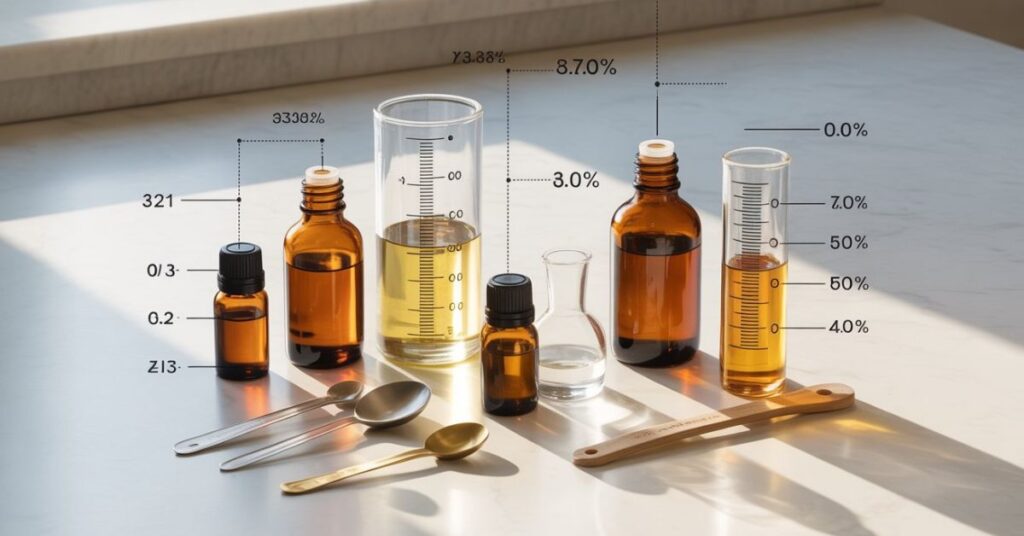
Understanding how to calculate dilution is the most important practical skill when using essential oils. Once you know the simple formula, you can easily create safe blends for skin, hair, and aromatherapy without guessing. A correct calculation ensures your blend matches the strength shown in an essential oil dilution chart, making every use safer and more effective.
Simple Formula for Dilution Calculation
The basic dilution formula is:
Essential Oil Percentage = (Drops of Essential Oil ÷ Total Carrier Oil Drops) × 100
A simpler way to follow this is:
- 1% dilution = 1 drop essential oil per 5 mL carrier oil
- 2% dilution = 2 drops essential oil per 5 mL carrier oil
- 3% dilution = 3 drops essential oil per 5 mL carrier oil
This rule makes it easy to prepare safe blends without complex math. Most users rely on this method when following an essential oil dilution chart for everyday use.
Drops to Milliliters Conversion Guide
To make dilution even easier, you should understand the standard conversion between drops and milliliters.
| Carrier Oil (mL) | 1% Dilution | 2% Dilution | 3% Dilution | 5% Dilution |
| 5 mL | 1 drop | 2 drops | 3 drops | 5 drops |
| 10 mL | 2 drops | 4 drops | 6 drops | 10 drops |
| 15 mL | 3 drops | 6 drops | 9 drops | 15 drops |
| 30 mL | 6 drops | 12 drops | 18 drops | 30 drops |
This table helps you quickly convert measurements without confusion and ensures accuracy in every blend.
Measuring Essential Oils for Beginners
Beginners often struggle with precision, but simple tools can make the process easy. A dropper bottle helps control flow and avoids overuse of essential oil. Always count drops slowly and carefully to maintain accuracy.
It is also helpful to prepare small batches first instead of large quantities. This reduces waste and allows you to adjust the blend if needed. Many beginners also keep a printed essential oil dilution chart nearby for quick reference.
Using consistent measurements builds confidence and ensures your blends remain safe and balanced every time.
Essential Oil Dilution Chart Calculator and Practical Tools
Using an essential oil dilution chart becomes much easier when you combine it with practical tools and calculators. These tools remove guesswork and help you create accurate blends for skincare, hair care, and aromatherapy. A good system ensures every drop stays within safe limits and matches your intended dilution strength.
Modern users often rely on digital calculators, quick reference guides, and bottle-based measurements to speed up the process. When used correctly, these tools make dilution consistent, safe, and beginner-friendly.
How to Use a Dilution Calculator
An essential oil dilution calculator is a simple tool that automatically calculates how many drops of essential oil you need based on your chosen dilution percentage and carrier oil amount.
To use it properly, you usually enter:
- Total carrier oil volume (in mL or oz)
- Desired dilution percentage (1%, 2%, 3%, etc.)
- Type of use (skin, hair, or general application)
The calculator then shows the exact number of essential oil drops required. This helps beginners avoid mistakes and ensures every blend follows the correct essential oil dilution chart guidelines.
Quick Measurement Tips for Accurate Blending
Accuracy is important when working with essential oils. Even small changes in drop count can affect safety and effectiveness. Always hold the bottle vertically when counting drops to maintain consistency.
It is also better to add drops slowly and mix after each addition. This prevents over-concentration and allows better control of the final blend. Many experienced users also keep pre-measured bottles ready for common dilution levels.
These simple habits help maintain accuracy and make dilution faster and more reliable.
Bottle Size-Based Dilution Guide
Different bottle sizes require different drop calculations. Using a fixed reference makes blending much easier and aligns perfectly with an essential oil dilution chart.
Smaller bottles like 5 mL are usually used for facial oils or travel blends, while larger bottles like 30 mL are better for body oils or massage mixtures. Matching bottle size with dilution level ensures proper strength and avoids waste.
For example, people commonly use a 10 mL bottle for daily skincare blends with 1% to 2% strength, while they often choose a 30 mL bottle for massage oils with medium dilution levels.
Read More:https://pureoilshub.com/black-pepper-essential-oil/
Essential Oil Dilution Chart for Different Bottle Sizes
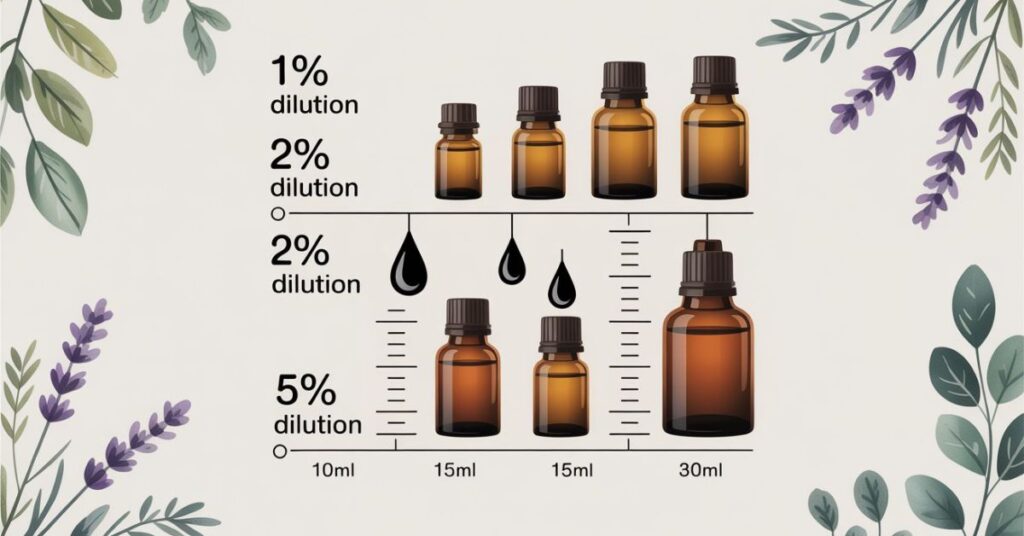
Bottle size plays a major role in creating accurate and safe essential oil blends. A proper essential oil dilution chart helps you quickly understand how many drops of essential oil you should add based on the size of your bottle. This removes confusion and ensures consistency in every mixture.
Different bottle sizes are used for different purposes. Small bottles are ideal for facial oils or travel use, while larger bottles are better for body oils, massage blends, or long-term storage. Using the correct ratio for each size helps maintain safety and effectiveness.
5 mL Bottle Dilution Chart
A 5 mL bottle is commonly used for facial oils, spot treatments, and small test blends. Because the volume is small, even a few drops make a noticeable difference.
| Dilution % | Essential Oil Drops (5 mL) |
| 1% | 1 drop |
| 2% | 2 drops |
| 3% | 3 drops |
| 5% | 5 drops |
This size is ideal for sensitive skin applications and controlled usage where precision is important.
10 mL Bottle Dilution Chart
A 10 mL bottle is one of the most commonly used sizes in aromatherapy. It works well for daily skincare, roller blends, and general wellness use.
| Dilution % | Essential Oil Drops (10 mL) |
| 1% | 2 drops |
| 2% | 4 drops |
| 3% | 6 drops |
| 5% | 10 drops |
This size is often preferred for balanced blends that follow a standard essential oil dilution chart.
15 mL Bottle Dilution Chart
A 15 mL bottle is used for body oils, massage blends, and slightly larger skincare preparations. It allows more flexibility while still maintaining control over dilution strength.
| Dilution % | Essential Oil Drops (15 mL) |
| 1% | 3 drops |
| 2% | 6 drops |
| 3% | 9 drops |
| 5% | 15 drops |
This size is ideal for users who prepare blends for regular personal use.
30 mL Bottle Dilution Chart
A 30 mL bottle is often used for full-body massage oils, bath oils, and longer-term blends. It allows larger batches while keeping dilution consistent.
| Dilution % | Essential Oil Drops (30 mL) |
| 1% | 6 drops |
| 2% | 12 drops |
| 3% | 18 drops |
| 5% | 30 drops |
This size is best for advanced users or those preparing multiple applications at once.
Larger Bottle Dilution Guide
Larger bottles (50 mL and above) are usually used for professional blends, spa treatments, or bulk preparation. The same dilution logic applies, but drop counts increase proportionally.
For example:
- 50 mL at 1% ≈ 10 drops
- 100 mL at 1% ≈ 20 drops
Always follow an essential oil dilution chart carefully when working with larger volumes to avoid over-concentration.
Safe Essential Oil Dilution Guidelines for Everyday Use
Safety is the foundation of every essential oil practice. Although essential oils are natural, they are highly concentrated and must always be used with care. Therefore, a proper essential oil dilution chart helps you stay within safe limits. In addition, understanding daily safety rules is equally important for preventing misuse. As a result, you achieve safer and more balanced essential oil use overall.
When you use essential oils regularly, your skin and body need balanced exposure. Overuse or incorrect dilution can reduce benefits and increase the risk of irritation. Following simple safety guidelines ensures long-term, safe, and effective use.
General Safety Rules for Essential Oils
Essential oils should never be used in full strength on the skin. Always mix them with a carrier oil before application. This reduces concentration and prevents skin sensitivity.
It is also important to start with lower dilution levels and increase only if needed. Patch testing is highly recommended before using any new oil blend. Apply a small amount to the inner arm and wait 24 hours to check for reactions.
Keeping blends simple and following a trusted essential oil dilution chart helps avoid unnecessary risks.
Skin Sensitivity and Proper Usage Levels
Skin sensitivity varies from person to person. Firstly, some individuals can tolerate moderate dilution. However, others require very mild blends. In addition, facial skin is especially sensitive and always needs lower concentration levels. Therefore, adjusting dilution based on skin type is essential for safe and effective use.
For daily skincare, a light dilution is usually enough. Firstly, for body massage or general use, a slightly higher but still controlled dilution works better. However, it is important to always adjust based on how your skin responds. In addition, you should avoid increasing strength too quickly, as this may cause sensitivity. Therefore, gradual adjustment ensures safer and more effective results.
Proper usage levels help maintain skin comfort and reduce long-term irritation risks.
When to Reduce Dilution Strength
You should reduce dilution strength in certain situations. If you notice redness, itching, or burning, it is a clear sign that the blend is too strong. In such cases, immediately switch to a lower dilution.
Firstly, you should reduce strength when using essential oils on children, elderly individuals, or sensitive skin types. Moreover, during long-term use, lighter dilution is always safer. In addition, it reduces buildup and minimizes skin stress over time. Therefore, following this approach helps maintain both safety and comfort in regular use.
A well-balanced essential oil dilution chart always encourages adjusting strength based on condition, not assumption.
Carrier Oils Used in Essential Oil Dilution Chart
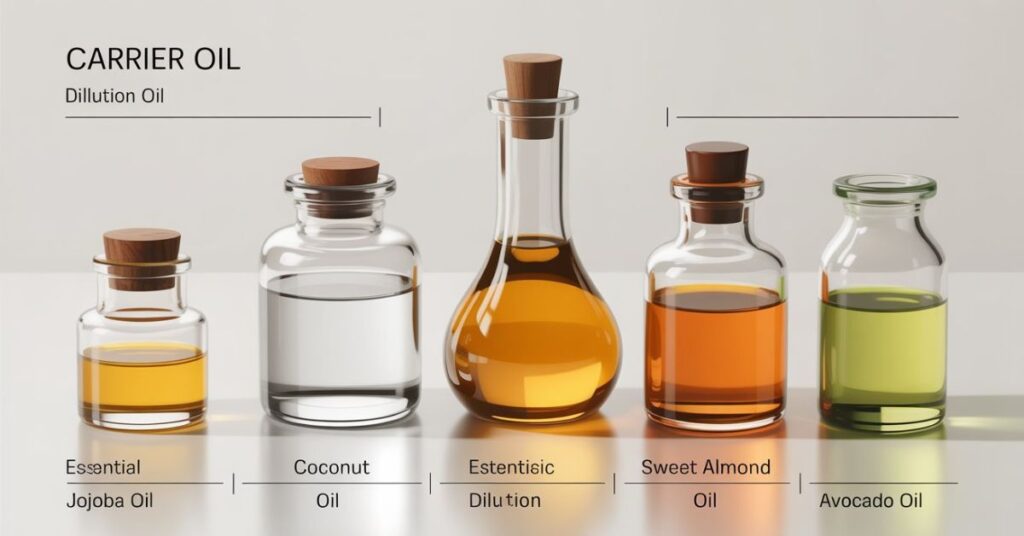
Carrier oils play a key role in every essential oil dilution chart because they help dilute highly concentrated essential oils into a safe, usable form. Without carrier oils, essential oils are too strong for direct skin application and may cause irritation or sensitivity.
Firstly, a carrier oil not only reduces strength but also helps spread essential oils evenly on the skin. Moreover, it improves absorption and enhances overall effectiveness. In addition, different carrier oils offer different benefits, such as hydration, nourishment, or faster absorption. Therefore, choosing the right carrier oil depends on skin type and usage needs.
Fractionated Coconut Oil Benefits
Fractionated coconut oil is one of the most popular carrier oils in aromatherapy. It is lightweight, odorless, and absorbs quickly into the skin without leaving a greasy feel. This makes it ideal for roller blends and daily skincare use.
Moreover, it also has a long shelf life and does not easily oxidize, which helps maintain blend stability. As a result, it supports longer-lasting and more reliable formulations. In addition, many users prefer it in an essential oil dilution chart because it works well with almost all essential oils and skin types. Therefore, it remains a popular and versatile choice in many blending practices.
Jojoba Oil and Its Uses
Jojoba oil closely matches the natural oils produced by human skin, making it highly compatible for skincare use. It absorbs well and helps balance oil production, which makes it suitable for both dry and oily skin types.
It is often used in facial blends and hair treatments due to its nourishing properties. In dilution practices, jojoba oil provides a smooth base that enhances the effectiveness of essential oils without clogging pores.
Sweet Almond Oil for Skin Care
Sweet almond oil is a gentle and nourishing carrier oil widely used in massage therapy and skincare. It is rich in vitamins and fatty acids that help moisturize and soften the skin.
This oil works especially well for dry or sensitive skin and is commonly included in an essential oil dilution chart for body oils. Its smooth texture makes it easy to blend with essential oils for long-lasting hydration.
Avocado and Rosehip Seed Oil Advantages
Avocado oil is deeply moisturizing and rich in nutrients, making it ideal for very dry or mature skin. It helps repair and nourish the skin barrier when used in diluted essential oil blends.
Rosehip seed oil is known for its skin regeneration properties and is often used in facial care routines. It helps improve skin texture and supports natural healing processes.
Both oils are powerful carriers when used correctly in dilution, especially for targeted skincare needs.
Can Essential Oils Be Used Undiluted (Neat Use)?
To begin with, undiluted use of essential oils, also known as “neat application,” means applying pure essential oil directly on the skin without mixing it with a carrier oil. However, while it may sound convenient, this practice is generally not safe for most essential oils and most users. In addition, it can increase the risk of skin irritation or sensitivity. Therefore, dilution remains the safer and more recommended approach in most cases.
Essential oils are highly concentrated plant extracts. Even a single drop can contain the equivalent of many grams of plant material. That is why proper dilution, as shown in an essential oil dilution chart, is strongly recommended for everyday use.
Neat use is only suitable in very limited cases and under specific conditions. Understanding when it is safe and when it is risky is essential for avoiding skin irritation and long-term sensitivity.
Essential Oil Neat Use Safety Overview
| Situation | Neat Use Allowed? | Safety Level | Notes |
| General daily skin application | No | Unsafe | Can cause irritation or burns |
| Facial application | No | High risk | Skin is too sensitive |
| Children & elderly use | No | Unsafe | Always requires dilution |
| Strong therapeutic oils (limited cases) | Rarely | Conditional | Only specific oils under guidance |
| Lavender / Tea tree (small spot use) | Sometimes | Moderate caution | Only on small areas |
| Emergency short-term use | Limited | Controlled | Should not be routine |
Risks of Using Oils Without Dilution
Using essential oils without dilution can lead to several problems. The most common risk is skin irritation, including redness, burning, or itching. In some cases, repeated undiluted use can even cause long-term skin sensitivity.
Another risk is chemical overload on the skin, which reduces the natural barrier function. This makes the skin more reactive over time.For this reason, most experts strongly recommend following a proper essential oil dilution chart before any application. In addition, this helps ensure safer usage by reducing the risk of irritation or sensitivity. Moreover, it provides clear guidance for maintaining correct and balanced concentrations in every blend.
When Neat Use May Be Acceptable
Only a few situations make neat use reasonably safe. People may apply small amounts of oils like lavender or tea tree for targeted spot treatment on insect bites or minor skin spots.
However, even in these cases, neat applications should be occasional rather than daily. Therefore, it is always better to dilute essential oils unless a specific need clearly requires direct use. In addition, this approach helps maintain skin safety and reduces the risk of irritation over time.
Safer Alternatives to Direct Application
Firstly, instead of applying essential oils directly, safer alternatives include mixing them with carrier oils. Moreover, you can also use pre-diluted roller blends for easier and safer application. In addition, these methods significantly reduce the risk of skin irritation. As a result, they still deliver the benefits of essential oils in a controlled and safe way.
Furthermore, you can also use diffuser methods for aromatherapy, which avoid skin contact completely. As a result, this makes it a safer option for sensitive individuals or children. In addition, when used properly, it provides the benefits of essential oils without direct application to the skin.
Following an essential oil dilution chart ensures you always choose the safest and most effective application method.
Essential Oil Dilution Chart for Special Conditions
Not every person can use essential oils at the same strength. Age, health conditions, and skin sensitivity all affect how strong a blend should be. That is why an Essential Oil Dilution Chart becomes even more important when dealing with special conditions.
In these cases, dilution levels must be lower, more controlled, and carefully adjusted. The goal is to gain benefits while avoiding any irritation or unwanted reactions.
Essential Oil Dilution Chart for Children and Babies
Children and babies have much more sensitive skin compared to adults, so they always require very low dilution levels. Strong essential oil concentrations can easily cause irritation or discomfort in young skin.
For children, a very mild dilution is typically used, and only specific gentle oils are considered suitable. Babies require even more caution, and in many cases, essential oils should only be used under professional guidance.
A strict Essential Oil Dilution Chart for children and babies always prioritizes safety over strength, ensuring minimal exposure and maximum care.
Essential Oil Dilution Chart for Safe Use During Pregnancy
During pregnancy, the body becomes more sensitive to strong scents and active compounds. This means essential oils should be used carefully and in lower concentrations.
Mild dilution is preferred, and only pregnancy-safe oils should be selected. Heavy or stimulating oils should be avoided altogether during this period.
Using a controlled Essential Oil Dilution Chart during pregnancy helps maintain safety while still allowing gentle aromatherapy support for relaxation and comfort.
Essential Oil Dilution Chart for Sensitive Skin and Medical Conditions
People with sensitive skin, eczema, allergies, or other skin conditions must use very low dilution levels. Even small increases in concentration can trigger reactions.
It is also important for individuals with medical conditions to consult guidance before using essential oils regularly. Patch testing becomes essential in these cases to ensure safety.
A carefully followed Essential Oil Dilution Chart for sensitive skin and medical conditions helps reduce risk and allows controlled use without overwhelming the skin.
Essential Oil Dilution Chart Tips for Better Blending
Firstly, good blending is not just about following ratios. Instead, it is also about technique, consistency, and understanding how oils behave together. Moreover, when you follow an essential oil dilution chart correctly, you improve overall safety. In addition, applying proper blending methods helps ensure more effective results. As a result, you get safer, more effective, and longer-lasting outcomes from your blends.
These tips help you improve accuracy, enhance fragrance balance, and maintain therapeutic value in every blend.
Essential Oil Blending Tips Guide Table
| Blending Area | Best Practice | Why It Matters | Common Mistake to Avoid |
| Measurement Accuracy | Use drop-by-drop method | Ensures correct dilution strength | Pouring directly without counting |
| Oil Mixing Order | Add essential oil first, then carrier oil | Helps better blending control | Mixing carrier first without planning |
| Blend Testing | Always test small batch first | Prevents waste and irritation | Making large batches without testing |
| Skin Compatibility | Follow essential oil dilution chart strictly | Reduces skin sensitivity risk | Using same strength for all skin types |
| Storage Method | Use dark glass bottles | Protects oil potency | Using plastic containers |
| Blending Time | Shake or mix thoroughly | Ensures even distribution | Not mixing properly |
| Usage Planning | Prepare based on purpose (skin, hair, diffuser) | Improves effectiveness | Using one blend for all uses |
Expert Blending Techniques
Firstly, expert blending focuses on balance and precision. Moreover, instead of randomly mixing oils, experienced users follow structured ratios. In addition, they adjust blends based on aroma strength and intended purpose. As a result, they achieve more consistent and effective outcomes in their formulations.
Moreover, they also layer oils carefully to create harmony between top, middle, and base notes. As a result, this improves both fragrance quality and therapeutic performance. In addition, following a reliable essential oil dilution chart ensures these blends remain safe and consistent. Therefore, users achieve better balance, safety, and overall effectiveness in their blends.
Perfume vs Therapeutic Dilution Differences
Perfume blends and therapeutic blends use different dilution strategies. Perfume-style blends often focus more on fragrance strength, while therapeutic blends focus on safety and healing benefits.
Therapeutic blends usually use lower dilution levels to protect the skin. In contrast, perfume blends may use slightly higher concentrations for stronger scent projection. As a result, each type of blend serves a different purpose depending on whether safety or fragrance strength is the priority.
Understanding this difference helps you choose the right ratio for your purpose.
Storage and Usage Best Practices
Proper storage is essential for maintaining oil quality. Essential oil blends should always be stored in dark glass bottles away from heat and sunlight.
It is also important to label each blend clearly with dilution strength and purpose. This prevents misuse and ensures consistency over time.
Using a well-structured essential oil dilution chart helps maintain long-term safety and effectiveness in every blend you create.
Printable Essential Oil Dilution Chart for Quick Reference
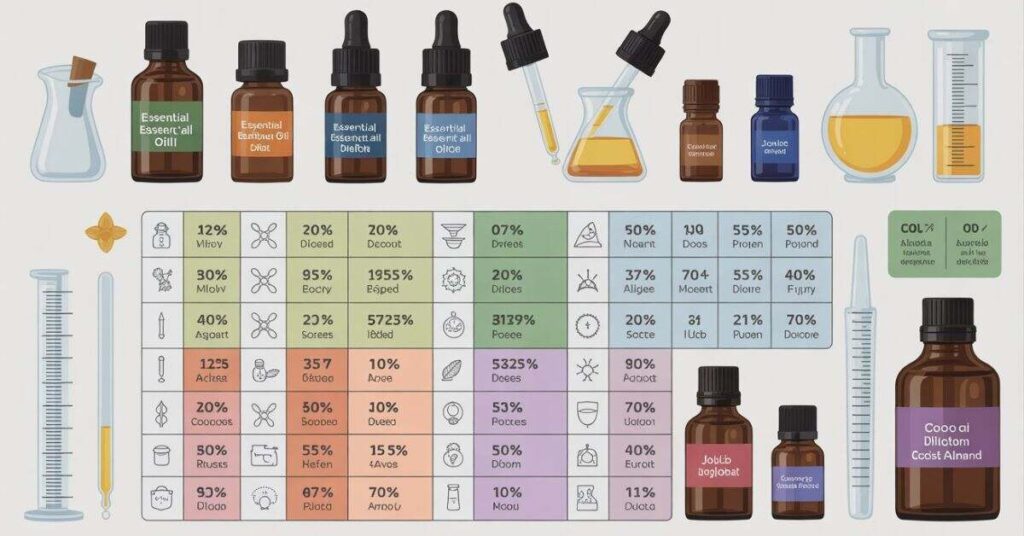
A printable essential oil dilution chart provides a fast and simple way to check safe dilution ratios without recalculating every time. Furthermore, many users keep a printed copy near their blending station, skincare area, or aromatherapy supplies for quick access during daily use. As a result, they can quickly check proper dilution ratios whenever needed. In addition, this practice helps reduce mistakes and improves overall safety during daily essential oil use.
To begin with, this type of chart is especially useful for beginners because it removes confusion and helps maintain consistent measurements. Moreover, whether you are preparing oils for skin care, massage blends, hair treatments, or aromatherapy, a quick-reference chart saves time. In addition, it improves accuracy and ensures safer and more reliable results.
The table below offers a practical and easy-to-follow essential oil dilution chart that works for most common bottle sizes and dilution levels.
Printable Essential Oil Dilution Chart
| Bottle Size | 1% Dilution | 2% Dilution | 3% Dilution | 5% Dilution |
| 5 mL | 1 drop | 2 drops | 3 drops | 5 drops |
| 10 mL | 2 drops | 4 drops | 6 drops | 10 drops |
| 15 mL | 3 drops | 6 drops | 9 drops | 15 drops |
| 30 mL | 6 drops | 12 drops | 18 drops | 30 drops |
| 50 mL | 10 drops | 20 drops | 30 drops | 50 drops |
| 100 mL | 20 drops | 40 drops | 60 drops | 100 drops |
Quick Tips for Using This Chart
- Use 1% dilution for sensitive skin and facial care
- Use 2% dilution for standard daily adult use
- Use 3% dilution for short-term targeted application
- Avoid high dilution for children or sensitive individuals
- Always mix essential oils with a carrier oil before skin application
Keeping this printable essential oil dilution chart nearby helps you blend safely, reduce mistakes, and maintain proper dilution every time.
Conclusion:
To begin with, an essential oil dilution chart is one of the most important tools for safe and effective essential oil use. Moreover, it helps ensure that oils are applied in the correct strength for different purposes. As a result, it supports both safety and better overall results.
It helps beginners and experienced users understand proper ratios, avoid skin irritation, and create balanced blends for skincare, hair care, massage, and aromatherapy.
Firstly, correct dilution improves both safety and performance. In addition, it allows essential oils to work gently while protecting the skin from unnecessary stress or sensitivity. Moreover, whether you use oils occasionally or every day, following proper dilution guidelines ensures long-term benefits. As a result, it also supports a safer and more balanced experience overall.
From understanding dilution percentages to choosing carrier oils and calculating bottle-based ratios, every step matters. A well-structured essential oil dilution chart simplifies the entire process and removes uncertainty from blending.
Furthermore, by using the right measurements, you can achieve better control over blend strength. In addition, following proper safety practices ensures that essential oils remain safe for regular use. Moreover, adjusting dilution based on age or skin sensitivity helps prevent irritation. As a result, you can confidently enjoy the natural benefits of essential oils while maintaining complete control over application and strength.
FAQs :
What is the safest essential oil dilution ratio for beginners?
A 1% to 2% dilution is considered the safest starting point for most beginners. This level works well for daily skincare and general topical use while reducing the risk of irritation. An essential oil dilution chart helps beginners measure the correct number of drops accurately.
Can I apply essential oils directly to my skin?
Most essential oils should not be applied directly to the skin without dilution. Undiluted use may cause redness, burning, or long-term sensitivity. Mixing oils with a carrier oil creates a safer and more balanced application.
Which carrier oil works best for essential oil dilution?
Fractionated coconut oil, jojoba oil, and sweet almond oil are among the most commonly used carrier oils. The best option depends on your skin type and intended use. Many people prefer jojoba oil for facial care and coconut oil for massage blends.
How many drops of essential oil should I use in 10 mL?
A standard essential oil dilution chart recommends:
- 2 drops for 1% dilution
- 4 drops for 2% dilution
- 6 drops for 3% dilution
These measurements help maintain safe and effective blending.
Is there an essential oil dilution chart for kids?
Yes, there are special dilution guidelines designed for children. Kids require much lower dilution levels because their skin is more sensitive than adult skin. Always use gentle oils and very mild concentrations for children.
Can I use the same dilution ratio for hair and skin?
Not always. Hair blends can sometimes tolerate slightly stronger dilution compared to facial skincare blends. However, scalp sensitivity still matters. Therefore, using a proper essential oil dilution chart for hair helps maintain safe concentrations. In addition, it helps reduce the risk of irritation while supporting healthier hair and scalp care.
Why is proper dilution important in aromatherapy?
Proper dilution improves safety, prevents irritation, and helps essential oils absorb more effectively into the skin. Moreover, it also allows long-term use without overwhelming the body. In addition, it helps prevent sensitivity reactions when oils are used consistently over time. As a result, the blend remains safer for regular and extended hair care routines.