


Introduction:
Are you struggling with persistent frizz, dry scalp flakes, or stubborn hair thinning that expensive salon products just cannot seem to fix? If so, the secret to restoring your locks might already be hiding in traditional botanical remedies. Among nature’s most effective beauty oils, sesame oil for hair stands out as an absolute powerhouse for deep hydration, scalp revitalization, and natural shine.
For centuries, holistic hair practices like Ayurveda have relied on this rich golden elixir to nourish dry strands from the inside out. Unlike heavy synthetic serums that merely coat the surface, pure organic sesame oil for hair penetrates deep into the scalp tissue to deliver essential fatty acids, antioxidants, and vital minerals right where healthy hair growth begins.
Whether you want to learn how to use sesame oil for hair as a warm scalp treatment, compare sesame oil vs coconut oil for hair, or explore sesame oil for hair benefits for seasonal dryness, this complete guide covers everything you need to know.
What Is Sesame Oil and Why Is It Good for Hair?

Sesame oil is one of the oldest botanical remedies in holistic beauty care, cherished for centuries across traditional Ayurvedic practices for its deep conditioning properties. Extracted from nutrient-rich Sesamum indicum seeds, this natural golden oil acts as a powerful restorative elixir for tired tresses.
When you apply sesame oil for hair, you are not simply coating your hair strands with surface shine. Instead, its tiny molecular weight allows it to penetrate deep into the hair shaft and scalp tissue, delivering essential nutrients right where damage begins.
Nutritional Profile: Key Vitamins, Minerals, and Fatty Acids for Hair Health
The secret behind the transformative power of sesame oil for hair lies in its exceptional biochemical lineup. It is packed with vital nutrients that work synergistically to repair damage, strengthen follicles, and restore natural resilience.
- Vitamin E (Tocopherol): A potent lipid-soluble antioxidant that neutralizes free radicals, protects follicles from oxidative stress, and prevents split ends.
- Essential Fatty Acids: Rich in Omega-3, Omega-6 (linoleic acid), and Omega-9 (oleic acid), which lock in lasting moisture, restore elasticity, and seal open cuticles.
- Vital Minerals: Contains high amounts of zinc, magnesium, calcium, and copper, which bolster scalp health, strengthen protein structures, and curb excess shedding.
- Lignans (Sesamin & Sesamolin): Unique natural antioxidants exclusive to sesame seeds that offer anti-inflammatory and soothing properties for irritated scalps.
Cold-Pressed vs. Refined vs. Black Sesame Oil for Hair Growth
Not all sesame oils are created equal. The extraction process and raw seed variety directly influence how effective the oil will be for your hair care routine.
Choosing cold pressed sesame oil for hair ensures you receive the highest concentration of heat-sensitive vitamins and antioxidants, as no high heat or chemical solvents are used during extraction.
| Sesame Oil Type | Extraction Method | Key Characteristics | Best Hair Use Case |
| Cold-Pressed Sesame Oil | Mechanical pressing without added heat | Light golden color, delicate nutty aroma, raw nutrients intact | Daily hair oiling, leave-in scalp treatment, deep hydration |
| Refined Sesame Oil | Heat-processed and chemically treated | Pale color, neutral scent, stripped of vital antioxidants | Basic lubrication, lower therapeutic value |
| Black Sesame Oil | Extracted from raw black sesame seeds | Darker color, potent antioxidant profile, rich mineral content | Treating premature greying, intense hair growth therapies |
Eating Sesame Seeds vs. Applying Sesame Oil: What Works Better for Hair Growth?
A common question among natural hair care enthusiasts is whether internal consumption yields better results than topical application. The short answer is that both methods complement each other, but they target hair health through distinct mechanisms.
Dietary consumption of raw sesame seeds nourishes your hair from within. When you digest sesame seeds, your bloodstream absorbs copper, zinc, and healthy fats, distributing them to the dermal papilla, the living base of your hair follicle.
Conversely, applying sesame oil for hair topically works directly on existing hair strands and the scalp surface. Topical application instantly smooths raised cuticles, combats scalp fungus, reduces friction damage, and seals in essential moisture that diet alone cannot provide. For maximum results, combining a nutrient-dense diet with weekly topical scalp massages delivers the ultimate targeted care.
Key Benefits of Sesame Oil for Hair Growth and Scalp Health
Using sesame oil for hair benefits your locks from root to tip, transforming weak, brittle strands into vibrant, resilient tresses. Because this natural seed oil contains a rich blend of fatty acids, essential minerals, and powerful antioxidants, it actively addresses multiple hair concerns simultaneously.
Whether you are battling seasonal dryness, thinning edges, or annoying flakes, integrating this oil into your regular routine produces noticeable improvements in texture and overall hair density.
How Sesame Oil Stimulates Hair Growth and Prevents Hair Thinning
If you are struggling with excessive shedding or slow hair growth, sesame oil for hair growth provides a deeply invigorating treatment. The oil contains essential fatty acids like linoleic and oleic acids, which penetrate deep into hair follicles to revive stagnant roots.
- Boosts Scalp Circulation: Massaging warm sesame oil onto your scalp increases blood flow, ensuring oxygen and vital nutrient delivery directly to dormant hair roots.
- Strengthens the Hair Shaft: High amounts of protein and zinc help repair damaged keratin structures, reducing breakage and snapped ends significantly.
- Protects Follicles: Sesamin and sesamolin antioxidants neutralize environmental free radicals, preventing premature follicle shrinkage and hair thinning.
Deep Hydration and Moisture Retention for Dry, Damaged, and Frizzy Hair
Dry and porous hair absorbs moisture quickly but loses it just as fast, leading to chronic frizz and flyaways. Sesame oil for hair acts as an exceptional emollient that seals open hair cuticles to trap essential hydration inside.
Moreover, its light molecular texture ensures that your hair stays moisturized without feeling greasy or uncomfortably heavy. By forming a protective hydrophobic barrier around every strand, sesame oil keeps humidity out while preserving internal moisture, leaving your hair smooth, silky, and easy to manage throughout the day.
Controlling Dandruff and Relieving Dry, Itchy Scalp Conditions
Dandruff and scalp inflammation often stem from dry skin, fungal imbalances, or product buildup. Fortunately, sesame oil for hair contains natural antibacterial, antifungal, and anti-inflammatory properties that calm troubled scalps fast.
- Kills Dandruff-Causing Fungus: Inhibits Malassezia fungal overgrowth, which is the primary trigger behind persistent dandruff flakes.
- Soothes Irritation: Calms intense redness, tightness, and itching associated with dry scalps or mild eczema.
- Dissolves Sebum Buildup: Softens stubborn flaky crusts and dead skin cells so they rinse away easily without aggressive scrubbing.
Preventing Premature Greying and Restoring Natural Hair Pigment
Loss of natural hair pigment occurs when melanin production inside the hair bulb slows down due to oxidative stress and aging. The rich antioxidant profile of sesame oil for hair helps slow down this process naturally.
Regular application helps maintain your natural hair tone by protecting melanocyte cells from oxidative damage. Furthermore, when combined with herbal infusions like curry leaves or bhringraj, cold-pressed sesame oil helps darken silver strands over time while restoring rich, youthful shine to dull hair.
Protecting Hair Strands from UV Rays, Heat, and Environmental Pollution
Sun damage is a major cause of hair color fading, dry texture, and structural weakness. Sesame oil for hair acts as a natural sun blocking agent, offering mild resistance against harmful ultraviolet radiation.
Additionally, coating your hair with a few drops of sesame oil before stepping outside creates a shield against urban air pollution, smog, and harsh winter winds. It prevents airborne toxic particles from stripping away your natural oils, making it a reliable defense mechanism for daily hair protection.
Seasonal Benefits: Using Sesame Oil in Winter to Combat Severe Frizz and Dryness
Winter weather brings freezing air outside and dry artificial heat indoors, creating the perfect recipe for severe frizz, static, and split ends. Using cold pressed sesame oil for hair during colder months offers deep warming properties that nourish dry scalps.
Because sesame oil is categorized as a warming oil in traditional Ayurvedic wellness, massaging it warm onto your scalp during winter improves localized circulation and prevents winter-induced scalp tightness. It repairs rough textures, tames static, and keeps hair soft even in extreme cold.
How to Use Sesame Oil for Hair: Step-by-Step Application Guide
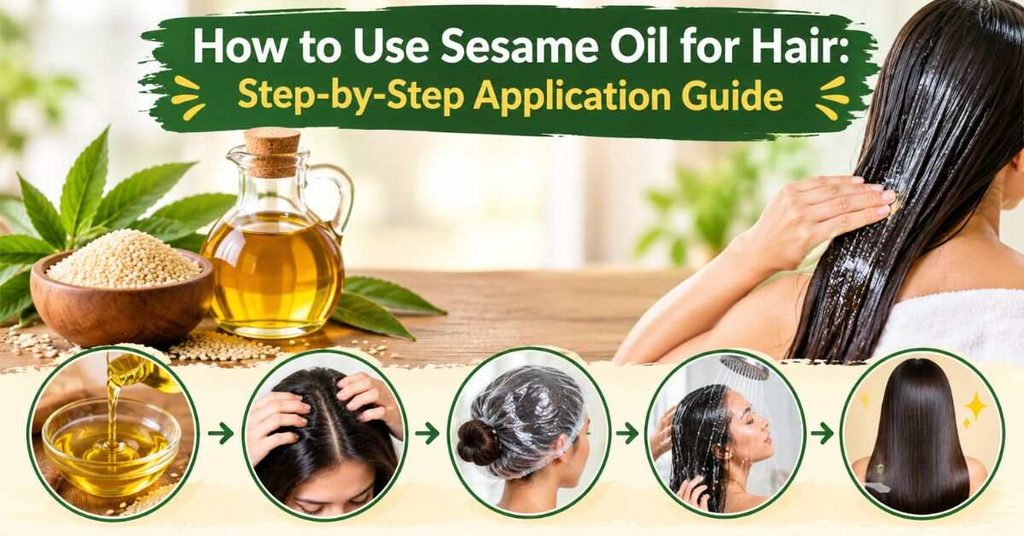
Knowing how to use sesame oil for hair correctly is the key to unlocking its full potential without causing scalp buildup or heavy, limp strands. Because sesame oil is concentrated and nutrient-dense, adopting the right technique makes a massive difference in how quickly your scalp absorbs the nutrients.
Whether you want a relaxing weekly massage routine or a quick targeted fix for damaged ends, following these structured methods guarantees the best possible results for your specific hair type.
Warm Sesame Oil Hot Treatment for Deep Scalp Nourishment (Ayurvedic Technique)
The traditional Ayurvedic practice of Abhyanga (warm oil treatment) opens up scalp pores, improves circulation, and delivers deep moisture to thirsty roots.
- Warm the Oil Gently: Pour 2–3 tablespoons of organic sesame oil for hair into a glass bowl. Place the bowl inside a warm water bath for 2–3 minutes. Avoid microwaving directly to preserve sensitive antioxidants.
- Section Your Hair: Detangle your hair using a wide-tooth wooden comb and divide it into four manageable sections.
- Apply to the Scalp: Dip your fingertips into the warm oil and massage your scalp using gentle, circular motions for 10–12 minutes.
- Distribute to Lengths: Coat the middle lengths and dry ends with the remaining oil on your palms.
- Wrap and Rest: Cover your hair with a warm, damp towel or a shower cap. Allow the warm oil to penetrate for 30 to 45 minutes before washing off.
DIY Sesame Oil Hair Masks and Essential Oil Blends for Hair Growth
Combining sesame oil for hair with target ingredients boosts its restorative power for specific hair concerns. Here are two highly effective homemade recipes you can prepare in minutes:
- Growth-Boosting Rosemary & Sesame Blend: Mix 2 tablespoons of cold pressed sesame oil for hair with 4–5 drops of pure rosemary essential oil. Apply to the scalp twice weekly to stimulate sluggish follicles and improve strand thickness.
- Deep Hydration Honey & Sesame Mask: Combine 2 tablespoons of sesame oil, 1 tablespoon of raw organic honey, and 1 egg yolk. Blend thoroughly, apply from root to tip, leave on for 30 minutes, and rinse out with cool water for silky, frizz-free tresses.
How to Apply Sesame Oil for Oily Scalp vs. Dry Scalp Types
Your scalp type determines how often and where you should apply botanical oils to avoid pore clogging or excessive dryness.
- For Dry and Flaky Scalp Types: Focus the application generously on the scalp and roots. You can leave sesame oil for hair on for up to 2 hours or overnight as an intensive treatment before shampooing.
- For Oily and Fine Scalp Types: Avoid applying heavy amounts directly to the scalp. Instead, focus strictly on the middle lengths and split ends as a pre-shampoo conditioning treatment for 15–20 minutes.
How Often Should You Apply Sesame Oil to Hair?
Consistency is essential for visible hair improvement, but over-application can lead to heavy buildup.
- Normal to Dry Hair: Apply sesame oil for hair 2 to 3 times per week for optimal softness and continuous growth support.
- Oily Hair: Limit application to 1 time per week, focusing mostly on dry, frizzy ends.
- Color-Treated or Damaged Hair: Use 2 times per week as a warm oil mask to repair porous strands and restore lost shine.
Read More: essential oil blending chart || fish oil benefits for hair || tea tree oil for hair growth || oil slick hair
Sesame Oil vs. Coconut Oil for Hair: Which Is Better for Hair Care?
When comparing sesame oil vs coconut oil for hair, choosing the right option depends entirely on your specific hair texture, scalp condition, and unique care goals. Both botanical oils enjoy legendary status in natural beauty, but their fatty acid profiles and penetrative qualities affect hair differently.
While coconut oil is famous for its high lauric acid content, sesame oil for hair brings a broader balance of omega fatty acids, natural sun protection, and a unique warming quality that rejuvenates tired follicles.
Detailed Comparison Table: Sesame Oil vs. Coconut Oil
Here is a side-by-side comparison to help you determine which oil suits your hair routine best:
| Feature / Benefit | Sesame Oil for Hair | Coconut Oil for Hair |
| Primary Fatty Acids | Oleic Acid (Omega-9) & Linoleic Acid (Omega-6) | Lauric Acid & Medium-Chain Triglycerides |
| Consistency & Feel | Light to medium, warming, non-greasy finish | Heavy, cooling, can solidify in cold temperatures |
| Scalp Absorption | Deep absorption without easily clogging pores | Medium absorption; can build up on fine hair |
| Best For Hair Type | Dry, thinning, grey-prone, or frizz-heavy hair | Protein-deficient, coarse, or highly porous hair |
| UV & Sun Protection | Natural UV resistance (protects against sun damage) | Minimal natural sun protection |
| Dandruff Control | High antibacterial & antifungal activity | Mild antibacterial properties |
Key Differences in Performance and Scalp Suitability
To select the best match for your daily routine, consider how each oil behaves on different scalp types:
- For Fine or Low-Porosity Hair: Coconut oil can sometimes cause protein buildup, making low-porosity hair feel stiff or straw-like over time. Conversely, organic sesame oil for hair offers a lighter texture that hydrates without heavy buildup or stiffness.
- For Hair Growth and Thinning: While coconut oil reduces surface protein loss, sesame oil for hair growth actively stimulates micro-circulation around the hair follicles, providing vital zinc and copper to encourage thicker growth.
- For Winter Care and Frizz Control: Sesame oil acts as a natural warming oil, making it ideal for soothing cold, tight scalps and controlling static frizz during dry winter months.
Can You Mix Sesame Oil and Coconut Oil Together?
Yes! Combining both oils creates a powerful hair treatment that gives you the best of both worlds.
By mixing equal parts of cold pressed sesame oil for hair and pure virgin coconut oil, you combine coconut oil’s protein-protecting lauric acid with sesame oil’s rich vitamin E and antioxidant profile. This combination works exceptionally well as a warm oil scalp treatment for deep repair and lasting shine.
Side Effects of Sesame Oil for Hair and Precautionary Tips

While sesame oil for hair is widely celebrated for its gentle and nourishing properties, no natural ingredient is completely free from potential side effects. Understanding how your scalp reacts to plant-based oils ensures you reap maximum benefits without experiencing unnecessary irritation, breakouts, or heavy buildup.
Taking simple safety precautions before applying any new botanical oil helps keep your scalp healthy, balanced, and perfectly clear.
Potential Risks: Can Sesame Oil Clog Scalp Pores?
Because sesame oil has a light-to-medium comedogenic rating, it generally absorbs smoothly without leaving a thick film. However, applying excessive amounts or failing to wash it out thoroughly can lead to specific problems:
- Folliculitis and Clogged Pores: Leaving thick layers of oil on an oily scalp can trap dirt, dead skin cells, and excess sebum, leading to inflamed hair follicles.
- Excess Scalp Greasiness: Overusing sesame oil for hair makes strands limp and heavy, requiring harsh shampooing that strips away natural moisture.
- Exacerbating Existing Seborrheic Dermatitis: If you suffer from severe fungal scalp infections, leaving raw oils on your scalp for long periods can feed yeast fungi, potentially worsening scaling and itching.
Who Should Avoid Using Sesame Oil on Scalp?
Although sesame oil for hair benefits most hair types, certain individuals should exercise caution or avoid direct application:
- People with Known Sesame Allergies: If you have a documented allergy to sesame seeds, applying the oil topically can trigger severe contact dermatitis, redness, swelling, and hives.
- Individuals with Extremely Oily Scalps: If your scalp naturally produces excessive sebum, avoid heavy hot-oil treatments. Instead, use a few drops strictly on your dry hair ends.
- Active Scalp Lesions or Open Wounds: Never apply unsterilized oils over broken skin, open sores, or severe active acne to prevent bacterial contamination.
Essential Precautionary Tips for Safe Application
To ensure a completely safe experience when introducing organic sesame oil for hair into your routine, follow these practical safety guidelines:
- Always Perform a Patch Test: Apply 2–3 drops of cold pressed sesame oil for hair to your inner forearm or behind your ear. Wait 24 hours to check for any redness, itching, or irritation before applying it to your scalp.
- Avoid Leaving Oil on for Extended Days: Wash the oil out within 1 to 2 hours (or after overnight use at maximum). Leaving heavy oil on your head for multiple days attracts urban dust and clogs pores.
- Rinse Thoroughly with Mild Shampoo: Use a gentle, sulfate-free clarifying shampoo with lukewarm water to remove all oil residue completely.
Debunking Common Myths About Sesame Oil for Hair Growth
Despite the widespread popularity of natural remedies, several misconceptions still prevent people from using sesame oil for hair correctly. Separating marketing hype from proven botanical science helps you set realistic expectations and achieve genuine results for your hair care journey.
Let us dismantle four of the most frequent myths surrounding this legendary golden oil.
Myth 1: Sesame Oil Can Permanently Stop Hair Fall Overnight
The Reality: No natural oil acts as an instantaneous cure for severe hair loss. While sesame oil for hair growth nourishes dormant follicles and strengthens weak strands over time, hair growth follows a natural biological cycle lasting several months. Consistent weekly application over 8 to 12 weeks is necessary to notice reduced shedding and stronger regrowth.
Myth 2: Cooking Sesame Oil Works Just as Well as Cold-Pressed Oil for Hair
Undoubtedly, standard grocery store cooking oils undergo heavy industrial refining. In fact, processors expose these commercial products to extreme heat and chemical solvents.
Consequently, this aggressive processing destroys delicate nutrients like vitamin E and active lignin’s. Therefore, refined options offer minimal therapeutic value for your scalp.
To achieve maximum restorative benefits, you must select cold pressed sesame oil for hair. Alternatively, choose certified organic sesame oil for hair to ensure full nutrient density. As a result, your hair roots absorb pure, unadulterated antioxidants with every treatment.
Myth 3: Leaving Sesame Oil on for Days Will Accelerate Growth
The Reality: Saturating your head with oil for days does not speed up results. Instead, leaving heavy oil on your scalp for prolonged periods traps environmental dust, pollutes open pores, and causes fungal irritation. For maximum absorption, leave sesame oil for hair on for 30 minutes to 2 hours before washing it out thoroughly.
Myth 4: Sesame Oil Works Exactly the Same for Every Single Scalp Type
The Reality: Hair texture and scalp sebum production vary dramatically from person to person. While dry and porous hair thrives on rich oil massages, fine or greasy hair requires lighter, targeted application on split ends only. Customizing how to use sesame oil for hair based on your unique scalp environment is essential for best results.
How to Choose and Store Pure Sesame Oil for Maximum Results

Finding the right bottle of oil is just as important as mastering how to use sesame oil for hair. Because commercial beauty and grocery aisles offer everything from heavily refined cooking oils to pure therapeutic extracts, knowing what to look for ensures you receive 100% active nutrients without synthetic additives or artificial fragrances.
Preserving your oil properly also prevents rancidity, protecting its precious vitamin E and essential fatty acid profile over time.
What to Look for When Buying Sesame Oil
When shopping for hair care ingredients, reading product labels carefully prevents you from buying diluted or chemically altered oils. Look for these key markers of quality:
- Cold-Pressed Extraction: Ensure the label explicitly states cold pressed sesame oil for hair, indicating mechanical extraction without heat or chemical solvents.
- Certified Organic Standards: Choosing organic sesame oil for hair guarantees that the seeds were grown without synthetic pesticides, heavy metals, or artificial fertilizers.
- 100% Pure and Unrefined: Check the ingredient list to ensure it contains only single-ingredient Sesamum indicum oil, free from mineral oil fillers, artificial silicones, and synthetic fragrances.
- Dark Glass Packaging: Pure botanical oils degrade when exposed to direct sunlight. Select products packaged in amber or dark green glass bottles to protect active nutrients.
Best Practices for Storing Sesame Oil to Prevent Rancidity
Because cold-pressed botanical oils contain high amounts of delicate unsaturated fatty acids, improper storage can cause them to oxidize and go rancid quickly. Follow these golden storage rules to extend shelf life:
- Store in a Cool, Dark Place: Keep your bottle away from direct sunlight, stove heat, and humid bathroom counters. A pantry or cupboard is the ideal spot.
- Seal the Cap Tightly: Always screw the lid on firmly immediately after use to prevent oxygen exposure, which accelerates oil breakdown.
- Check the Expiry and Aroma: Fresh sesame oil carries a pleasant, nutty scent. If your oil develops a sour, sharp, or paint-like odor, it has oxidized and should be discarded immediately.
Final Takeaway:
Indeed, adding sesame oil for hair to your weekly routine transforms weak tresses naturally. In fact, this time-tested golden elixir yields healthier, stronger, and more resilient strands.
Furthermore, it boosts scalp micro-circulation and seals in deep moisture effectively. Additionally, it calms persistent dandruff without harsh synthetic chemicals or costly salon procedures.
Consequently, choosing cold pressed ensures optimal therapeutic purity. Moreover, selecting certified organic sesame oil for hair supplies vital vitamins, minerals, and antioxidants. As a result, these active nutrients reach your hair roots directly to support sustainable growth.
Quick Summary of Best Practices:
- For Dry Scalp & Frizz: Enjoy a warm hot-oil treatment 2 to 3 times a week.
- For Fine or Oily Hair: Apply sparingly to lengths and ends once a week before shampooing.
- For Consistency: Stick to a regular routine for 8 to 12 weeks to see visible improvements in growth, shine, and texture.
Ready to transform your hair care journey naturally? Grab a bottle of pure, unrefined sesame oil and experience the restorative power of this Ayurvedic secret today!
FAQs:
Can I leave sesame oil in my hair overnight?
Yes, you can leave the overnight if you have an extremely dry scalp or severe frizzy ends. However, wrap your head in a satin bonnet or towel to protect your bedding. If you have an oily scalp or are prone to acne, limit treatment to 30 to 60 minutes to prevent pore congestion.
Can sesame oil regrow lost hair on bald spots?
Admittedly, natural oils cannot revive completely dead or scarred hair follicles. However, sesame oil for hair growth works wonderfully on dormant roots in thinning areas. Specifically, applying warm cold pressed sesame oil for hair stimulates localized blood flow to sluggish scalp pores.
Consequently, your hair roots receive an immediate supply of essential zinc and copper. As a result, this deep nutritional boost encourages sleeping follicles to re-enter an active growth phase. Therefore, regular scalp massages effectively strengthen weak strands and noticeably boost natural hair density over time.
Is black sesame oil better than white sesame oil for hair growth?
Black sesame seeds naturally yield an intensely rich oil. In fact, this dark variety packs superior concentrations of antioxidants, lignans, and essential minerals compared to lighter seeds. Consequently, using black organic sesame oil for hair remains a top choice for reviving dull strands.
Moreover, this potent extract excels at target concerns like premature greying. It helps nourish follicle cells to support natural hair pigment. Additionally, it provides deep scalp revitalization by boosting root health. Meanwhile, both white and black varieties deliver outstanding moisture retention for dry hair.
How do I wash out thick sesame oil from my hair easily?
To wash out sesame oil for hair without stripping away natural moisture, use a gentle lukewarm water rinse first to loosen the oil. Next, apply a sulfate-free shampoo directly to your roots and emulsify thoroughly before adding extra water. Rinsing with lukewarm water ensures a complete clean without leaving greasy residue.