


Introduction to Coconut Oil for Baking
What Makes Coconut Oil for Baking So Popular Today?
If you have spent any time browsing modern baking blogs or scrolling through healthy-recipe reels lately, you have probably noticed a massive shift in pantry staples. Traditional blocks of dairy butter and refined vegetable oils are increasingly sharing shelf space with a jar of tropical goodness. Coconut oil for baking has rapidly transformed from an alternative health fad into a mainstream culinary powerhouse. Bakers ranging from home cooks experimenting on weekends to professional pastry chefs are embracing this ingredient because it bridges the gap between indulgent texture and wholesome living.
The secret to its surge in popularity lies in its versatility. Unlike standard oils that can leave baked goods tasting flat or overly greasy, a quality jar introduces a subtle, luxurious richness that elevates everything from chocolate chip cookies to vegan muffins. Furthermore, as dietary preferences evolve toward plant-based, dairy-free, and minimally processed eating habits, bakers want fats that align with their lifestyle without sacrificing flavor or crumb structure.
The Unique Baking Power of Coconut Oil in Modern Kitchens
When working in a modern kitchen, understanding the unique behavior of your fats is the hallmark of an experienced baker. Coconut oil for baking acts differently than liquid canola oil or solid shortening due to its unique fatty acid profile, which is predominantly made up of medium-chain triglycerides (MCTs). These unique chemical bonds give it a distinct melting behavior that can completely transform the mouthfeel of your pastries.
- Structural Versatility: It can be used in its solid state to mimic shortening or butter, or melted down to integrate smoothly into liquid batters.
- Moisture Retention: The natural lipids help trap moisture inside cakes and quick breads, keeping them soft and tender for days after baking.
- Clean Flavor Profile: Depending on whether you choose a refined or unrefined variety, it either imparts a tropical aroma or steps completely out of the way to let your primary ingredients shine.
Is It Actually Healthy to Use Coconut Oil for Baking?
One of the most common questions home bakers ask before swapping out their traditional fats is whether this tropical oil is actually a healthy choice. While it is calorie-dense just like butter, lard, or olive oil its nutritional makeup sets it apart. The saturated fats found here are largely lauric acid and other medium-chain fatty acids, which your body metabolizes differently than the long-chain fats found in many animal products.
However, moderation and balance remain key principles of healthy eating. Incorporating coconut oil for baking allows you to cut out dairy-based saturated fats and avoid heavily processed, chemically extracted seed oils. When paired with whole grains, natural sweeteners, and nutrient-dense mix-ins, it fits seamlessly into a balanced, health-conscious lifestyle.
A Brief Overview of What You Will Learn in This Guide
Mastering this ingredient takes more than just swapping it 1:1 into your favorite family recipe. Throughout this comprehensive, expert-backed guide, you will uncover everything you need to know to achieve bakery-quality results every single time.
- Varieties Breakdown: Learn the differences between cold-pressed, virgin, and refined options so you never ruin a delicate vanilla cake with a strong tropical aroma.
- Chemical Rules: Understand how the 76 degree Fahrenheit melting point impacts cookie spreading, cake rising, and texture control.
- Step-by-Step Substitution: Master exact measurement techniques, pan-greasing tricks, and liquid ingredient adjustments.
- Head-to-Head Comparisons: Discover how it stacks up against butter, olive oil, vegetable oil, and shortening.
- Bonus Uses & Recipes: Explore tested kitchen recipes alongside natural skincare and haircare tips to get the most out of your pantry jar.
Understanding the Different Types of Coconut Oil for Baking
Cold-Pressed vs. Refined Coconut Oil: Which Wins for Baking?
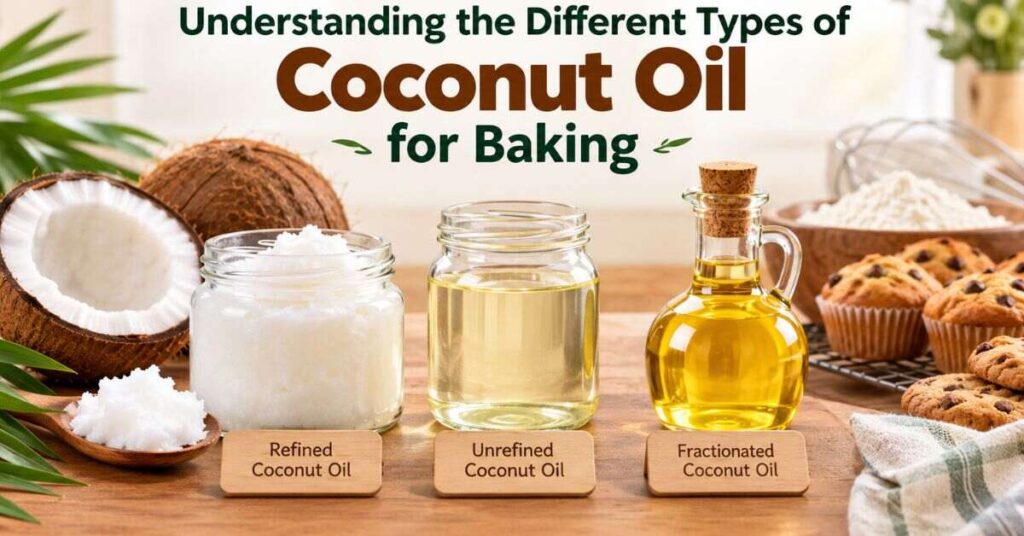
When you walk down the baking aisle or browse online grocery stores, choosing the right jar can feel overwhelming. The two primary contenders you will encounter are cold-pressed (often labeled virgin or unrefined) and refined coconut oil. Winning the battle in your kitchen depends entirely on what you are baking. How to use coconut oil for baking successfully starts with matching the right grade to your specific recipe.
Cold-pressed options retain their natural coconut flavor and aroma because they are extracted from fresh coconut meat without high heat or harsh chemical solvents. This makes them fantastic when you want a hint of tropical sweetness in cookies, granola bars, or tropical-themed pastries. On the other hand, refined options undergo a gentle steam-cleaning and filtering process to neutralize the taste and scent. If you want to bake a classic, neutral-flavored vanilla pound cake or savory dinner rolls without any tropical undertones, refined oil is your ultimate winner.
Virgin, Unrefined, Standard, and Refined Coconut Oils Explained
Decoding product labels requires a clear understanding of manufacturing terminology. Manufacturers use various terms to market their products, but they generally fall into two main chemical categories.
- Virgin / Unrefined: Made from fresh coconut meat, mechanically pressed, and left unbleached and un-deodorized. It features a distinct coconut scent and flavor, with a slightly lower smoke point.
- Refined: Made from dried coconut meat (copra), which is mechanically pressed, filtered, and steam-purified. It has a completely neutral flavor, no scent, and a higher smoke point, making it ideal for high-heat cooking and neutral-flavored baked goods.
- Organic Options: Certified organic variants ensure that the coconuts were grown without synthetic pesticides or fertilizers, giving you a cleaner, more sustainable ingredient for coconut oil for baking bread or daily desserts.
Do Different Kinds of Coconut Oil Have Different Smoke Points?
Smoke point is a critical factor if your baking involves high-temperature preheating, searing, or roasting. While baking typically happens between 350°F and 400°F, understanding smoke points prevents unwanted burnt flavors and the degradation of healthy fats.
| Coconut Oil Variety | Extraction Method | Flavor Profile | Smoke Point | Best Culinary Use |
| Virgin / Unrefined | Cold-pressed from fresh meat | Rich, natural coconut | 350°F (177°C) | Cookies, granolas, tropical treats |
| Refined | Filtered and steam-purified | Completely neutral | 400°F (204°C) | Bread, cakes, high-heat roasting |
| Organic Refined | Chemical-free mechanical refinement | Neutral and smooth | 400°F (204°C) | All-purpose baking and frying |
How Taste and Aroma Vary Across Coconut Oil Varieties
Flavor control is what separates amateur bakers from professionals. If you use virgin oil in a delicate lemon tart, the heavy coconut aroma will completely overpower the citrus notes. However, that same coconut aroma can work wonders when paired with chocolate chips, cinnamon, macadamia nuts, or brown sugar.
When focusing on coconut oil for baking bread, flavor management becomes even more critical. You want your artisan loaf or sandwich bread to taste like traditional bakery bread, not a tropical piña colada. Therefore, using refined coconut oil ensures your crust stays golden and crisp while letting the yeasty, savory flavors take center stage.
What to Look for on Product Labels Before Buying
Navigating grocery labels can be tricky with so many marketing buzzwords. To ensure you purchase top-tier ingredients for your recipes, keep an eye out for these essential indicators:
- Purity Statement: Look for 100% pure coconut oil with no hidden additives, hydrogenated oils, or artificial preservatives.
- Extraction Method: Check whether it explicitly states “cold-pressed” for virgin varieties or “steam-refined” for neutral varieties.
- Certifications: USDA Organic, Non-GMO Project Verified, and Fair Trade certifications often point to higher manufacturing standards.
Which Kind of Coconut Oil is Best for Cooking and Baking?
Ultimately, having both a jar of virgin and a jar of refined coconut oil in your pantry provides the ultimate culinary flexibility. Use virgin oil when you want to enhance sweet treats with a delightful aroma, and rely on refined oil as your go-to neutral fat for everyday cooking, frying, and How to use coconut oil for baking across all your favorite pastry projects.
Chemical Properties & Essential Rules When Using Coconut Oil for Baking
Why the 76°F Melting Point Matters for Your Recipes
Understanding the physical behavior of fats is crucial when experimenting with plant-based alternatives. Coconut oil for baking possesses a unique melting point of approximately 76°F (24°C). In cooler room temperatures or inside an air-conditioned kitchen, it remains a solid block similar to butter or shortening. However, on a warm summer afternoon, it instantly liquefies into a clear oil.
This dramatic phase shift directly dictates how your ingredients bind together. Creaming solid fat with sugar traps air pockets for fluffy cakes. However, using liquid oil results in dense bakes. Conversely, brownies require smooth fat. Therefore, melting coconut oil for baking beforehand ensures seamless batter incorporation.
How to Use Solid, Room-Temperature Coconut Oil in Place of Butter
When substituting for traditional dairy butter in recipes that demand a flaky crumb, such as pie crusts or drop cookies, you must keep your coconut oil in its solid, chilled state. How to use coconut oil for baking in solid form requires treating it just like cold butter.
- Chilling the Fat: Place your jar in the refrigerator for 20 to 30 minutes prior to baking if your kitchen is warm, ensuring it reaches a firm, scoopable consistency.
- Cutting into Flour: Use a pastry blender or your fingertips to quickly cut solid chunks into your dry flour mixture before adding cold water or milk, creating distinct pockets of fat that melt during baking to produce flakiness.
- Textural Balance: Because it lacks the water content found in regular butter (which is roughly 15-20% water), solid coconut oil provides a rich, tender bite without altering the liquid balance of your dough.
Why You Should Always Use Room-Temperature Ingredients
Mixing cold dairy with coconut oil for baking creates common kitchen pitfalls. Because of its low melting point, cold milk solidifies the fat instantly. Consequently, bringing all ingredients to room temperature prevents hard bits and ensures smooth batter consistency.
This sudden temperature shock ruins your batter’s emulsion, resulting in a curdled mixture and unevenly textured baked goods. Always ensure that your eggs, plant-based milks, and other liquids are at comfortable room temperature before combining them with your fat base.
Will Your Baked Goods Taste Like Coconut? (Flavor Control Tips)
A frequent concern among bakers is whether their pastries will taste like a tropical island vacation. The answer depends entirely on your product selection and flavor pairings.
- Embracing the Aroma: If you are baking chocolate chip cookies, spice cakes, or banana bread, the natural coconut undertones from virgin varieties complement the profile beautifully.
- Neutralizing the Flavor: If you are preparing delicate vanilla cupcakes, savory dinner rolls, or Coconut oil for baking bread, switch exclusively to refined coconut oil to keep the taste entirely neutral.
- Enhancing Extracts: Doubling down on vanilla extract, almond extract, or warm spices like cinnamon and nutmeg can easily mask or harmonize with any residual coconut notes.
Baking with Organic Coconut Oil: Is It Worth the Upgrade?
Investing in certified organic ingredients offers peace of mind regarding purity and environmental sustainability. When selecting fats for long-term health and daily culinary use, choosing organic ensures that the coconuts were harvested without synthetic pesticides, chemical fertilizers, or harsh processing agents. While standard refined oils still perform well structurally, organic alternatives deliver superior peace of mind for health-conscious bakers.
Pro Tips for Handling Coconut Oil Textures in Warm vs. Cold Climates
Kitchen temperatures can fluctuate wildly depending on the season, directly impacting your baking workflow. Winter temperatures turn your jar rock-solid. Consequently, it requires gentle warming in warm water. Alternatively, summer heat melts your fat prematurely. Therefore, chilling your mixing bowls prevents premature melting while applying How to use coconut oil for baking.
Troubleshooting Common Texture Issues When Baking with Coconut Oil
Even experienced bakers occasionally run into unexpected texture roadblocks when switching to plant-based fats.
- Problem: Cookies spreading too thin and greasy on the baking sheet.
- Solution: Your fat was too warm or fully melted. Chill your cookie dough balls for 30 minutes in the refrigerator before baking to firm up the lipids.
- Problem: Cakes turning out dense and heavy.
- Avoid overmixing the batter after combining wet and dry ingredients. Furthermore, verify that your baking powder remains fresh and active when using coconut oil for baking.
How Temperature Shifts Impact Cookie Spreading and Cake Rising
The structural integrity of your final dessert relies heavily on how fat behaves inside a hot oven. During early baking minutes, solid fat pockets melt. This releases trapped steam to lift cakes. Therefore, using coconut oil for baking correctly prevents dense crumb structures. If fat enters the oven completely liquid, vital air pockets fail to form.Mastering these thermal dynamics ensures professional-grade results every single time.
Read More: black castor oil for hair || Coconut oil for perineal massage || mielle hair oil lawsuit || essential oil spray
Step-by-Step Instructions on How to Substitute Coconut Oil for Baking
Mastering the 1:1 Fat Substitution Ratio for Seamless Swaps
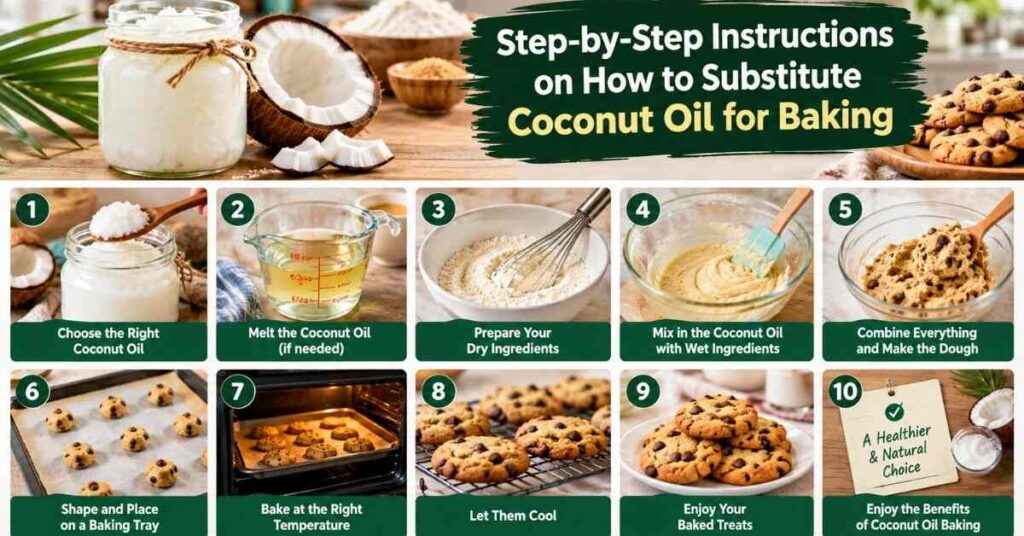
Transitioning your favorite family recipes from traditional dairy butter or vegetable shortening to a plant-based alternative is surprisingly straightforward. The golden rule when exploring How to use coconut oil for baking is that it replaces butter, margarine, lard, and vegetable shortening at an exact 1:1 ratio.
If a trusted recipe calls for one cup of softened butter, you can scoop exactly one cup of coconut oil into your mixing bowl. However, because butter contains roughly 15 to 20 percent water while coconut oil is 100 percent pure fat, minor adjustments to your liquid ingredients may be necessary to maintain the ideal moisture balance in delicate pastries and cakes.
How to Measure Liquid vs. Solid Coconut Oil Accurately
Measuring fat correctly prevents heavy, dry, or greasy baked goods. Because coconut oil shifts between solid and liquid states depending on your kitchen temperature, your measuring technique must match its physical form:
- Measuring Solid Fat: Use standard dry measuring cups. Pack the solid coconut oil firmly into the cup with a spatula to eliminate any air pockets, then level off the top flat with a knife, exactly as you would pack brown sugar.
- Measuring Liquid Fat: Once melted, pour the warm oil into a clear glass or plastic liquid measuring cup and check the measurement at eye level on a flat surface to ensure precision.
- Weighing for Precision: For absolute professional accuracy, weigh your fat using a digital kitchen scale in grams, ensuring your ratios remain foolproof across every baking session.
Using Coconut Oil to Grease Baking Pans, Tins, and Skillets
Before pouring your batter into pans, greasing them properly ensures your cakes, loaves, and muffins release effortlessly. Instead of using chemical aerosol sprays or heavy liquid vegetable oils, a spoonful of coconut oil works wonders.
Take a small dollop of solid or semi-soft oil on a paper towel or pastry brush and rub it evenly across the interior surface of your cake pans, muffin tins, or cast-iron skillets. Its high-heat stability and clean release properties prevent your baked goods from sticking, leaving behind a subtle, pleasant aroma.
Adjusting Liquid Ingredients When Swapping Butter for Oil
Because traditional dairy butter contains water that evaporates during the baking process, replacing it with 100 percent pure fat can occasionally lead to a slightly drier texture if not accounted for. When substituting butter in cakes, quick breads, or Coconut oil for baking bread, consider these simple adjustments:
- The Moisture Fix: Add an extra tablespoon of water, plant-based milk, or orange juice per cup of oil used to compensate for the missing water content in butter.
- Egg Balance: If a recipe is sensitive to moisture shifts, incorporating an extra egg yolk can provide the necessary emulsification and richness.
- Monitoring Texture: Keep track of how your batter looks; if it feels overly thick or stiff compared to your usual batches, splash in a tiny amount of extra liquid.
Common Mistakes to Avoid When Substituting Fats in Recipes
Even with a straightforward 1:1 ratio, bakers occasionally stumble into a few common pitfalls. Avoiding these missteps guarantees flawless results:
- Using Ice-Cold Liquids with Warm Oil: As covered earlier, pouring cold milk into warm, melted fat will cause the oil to solidify instantly, ruining your batter’s texture.
- Overlooking Flavor Profiles: Using unrefined, heavily scented oil in a delicate vanilla or savory recipe will overpower the dish. Always match your oil variety to the flavor profile.
- Skipping the Refrigerator Step for Cookies: If your melted oil makes your cookie dough runny, chill the formed dough balls for 30 minutes before baking to prevent flat, greasy cookies.
Can You Mix Coconut Oil with Other Plant-Best Butters for Baking?
Yes, absolutely! Many experienced bakers enjoy creating custom fat blends to achieve the absolute best of both worlds. Combining equal parts solid coconut oil and vegan butter or shortening gives you the structural stability and flakiness needed for pie crusts and laminated pastries while retaining a rich, buttery mouthfeel. This blending technique allows you to customize the flavor, melting point, and crumb structure of your gourmet baked creations.
Head-to-Head Comparisons: Coconut Oil vs. Other Baking Fats
Is It Healthier to Bake with Butter or Coconut Oil?
When evaluating health profiles in the kitchen, both dairy butter and coconut oil are calorie-dense saturated fats. However, their biochemical makeup differs significantly, making the choice dependent on individual nutritional goals. Coconut oil for baking delivers high amounts of medium-chain triglycerides (MCTs), primarily lauric acid, which the human body processes differently than the long-chain fatty acids found in standard dairy products.
Butter, on the other hand, contains short- and medium-chain fatty acids alongside dairy proteins, lactose, and water.Plant-based diets benefit greatly from this tropical fat. It provides a seamless, dairy-free alternative that completely eliminates animal-derived cholesterol. Furthermore, swapping heavy dairy for pure plant lipids simplifies daily meal preparation while utilizing How to use coconut oil for baking.
Is Coconut Oil Better Than Olive Oil for Baking?
Olive oil features heart-healthy fats and antioxidants. However, its baking performance varies by recipe. Extra virgin varieties carry a robust, fruity flavor. Consequently, this strong taste can clash with delicate sweet pastries and cakes. Therefore, using coconut oil for baking offers a milder, sweeter profile.
- Flavor Neutrality: Refined coconut oil provides a completely neutral canvas, whereas olive oil will always impart its signature herbaceous taste to your baked goods.
- Structural Behavior: Because olive oil remains liquid at room temperature, it works wonderfully for rustic Italian olive oil cakes, focaccia, and savory breads, but it fails to replicate the solid creaming and flakiness required for pie crusts and layered celebration cakes.
- Heat Stability: Both fats handle standard baking temperatures well, but refined coconut oil offers superior versatility when you need a solid fat structure.
Coconut Oil vs. Vegetable Oil: Performance and Taste Showdown
Standard vegetable oils such as canola, soybean, and corn oil are heavily processed, highly refined liquid oils designed to be completely neutral in taste and inexpensive to produce. When comparing them to How to use coconut oil for baking, several key performance differences emerge:
| Feature | Coconut Oil | Standard Vegetable Oil |
| Physical State | Solid below 76°F, liquid when warmed | Always liquid at room temperature |
| Processing Level | Ranges from cold-pressed virgin to steam-refined | Highly processed and chemically extracted |
| Flavor Impact | Varies from rich coconut to completely neutral | Completely neutral |
| Best Used For | Cookies, quick breads, crusts, and vegan cakes | Pourable muffin batters, brownies, and sponge cakes |
Vegetable oil suits quick, pourable batters well. However, it fails to trap air pockets during creaming. Consequently, it cannot solidify to form flaky pastry layers. Therefore, utilizing coconut oil for baking provides a superior structural alternative.
Comparing Shortening and Coconut Oil for Flaky Pastries
Commercial shortening uses hydrogenated vegetable oils. Therefore, it maintains a completely solid room-temperature texture and a high melting point.
While shortening creates exceptional flaky textures in pie crusts, critics often target its processed trans fats. Alternatively, Coconut oil for baking bread and pastries serves as a wholesome, plant-based upgrade to artificial alternatives.
Coconut oil for baking bread and pastries serves as a wholesome, plant-based upgrade to artificial shortening. By chilling your coconut oil until firm, you achieve the exact same pocket-forming capability and flaky crumb structure without relying on hydrogenated chemicals, giving you bakery-quality results with clean, natural ingredients.
Health Benefits, Nutrition, and Safety of Coconut Oil for Baking
Is Cooking and Baking with Coconut Oil Good for Your Body?
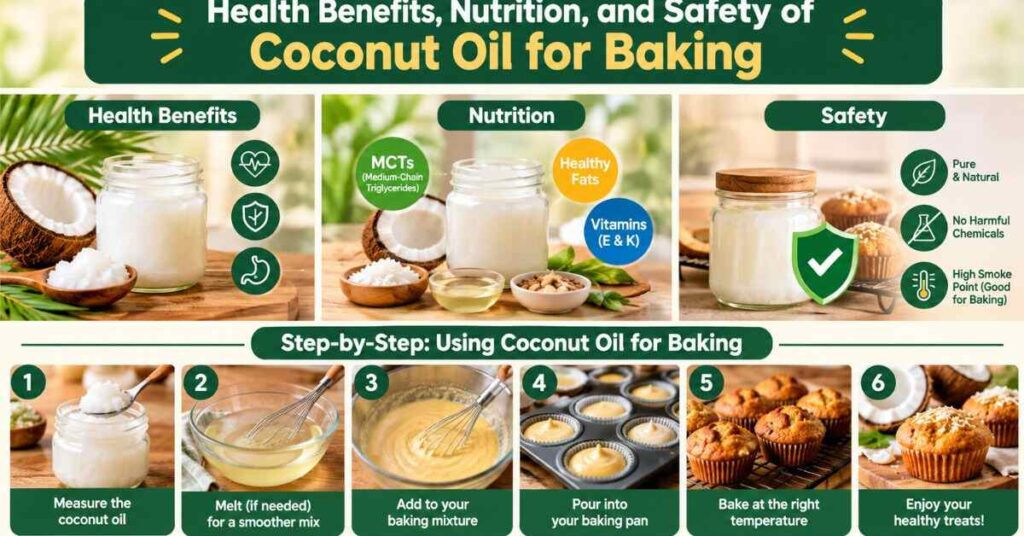
Beyond delivering incredible textures and rich mouthfeels to your favorite pastries, incorporating coconut oil for baking introduces unique nutritional components into your diet. Unlike heavily processed industrial seed oils, pure unrefined or organic options undergo minimal processing, preserving natural bioactive compounds.
The primary nutritional appeal centers on its lipid structure. While traditional cooking fats are predominantly composed of long-chain fatty acids, a significant portion of this tropical oil consists of medium-chain triglycerides (MCTs). These shorter molecular chains are routed directly to the liver, where they can be rapidly utilized for cellular energy rather than being readily stored as adipose tissue.
Can It Serve as a Fast Fuel Source for Your Daily Routine?
Because MCTs bypass standard digestive pathways, they are frequently embraced by individuals following keto, low-carb, or active fitness lifestyles. When you integrate How to use coconut oil for baking into morning breakfast bars, energy muffins, or keto-friendly fat bombs, you gain a quick, sustained source of dietary energy.
- Metabolic Efficiency: MCTs are oxidized rapidly by the body, offering an immediate energy boost without spiking blood sugar levels.
- Satiety Support: Healthy fats promote feelings of fullness and satiety, helping to curb mid-morning sugar cravings and keep your appetite balanced throughout a busy workday.
May Coconut Oil Support Cognitive Function and Brain Health?
Emerging nutritional research has sparked widespread interest in the connection between medium-chain triglycerides and cognitive wellness. When the liver breaks down MCTs, it produces ketone bodies. These ketone molecules serve as an alternative, highly efficient energy substrate for brain cells, particularly when glucose metabolism is less than optimal.
While baking treats should still be enjoyed as occasional indulgences rather than primary medical treatments, using nutrient-dense, wholesome fats aligns with a holistic approach to maintaining long-term mental sharpness and vitality.
Exploring the Link Between Coconut Oil and Weight Management
Maintaining a healthy weight while enjoying delicious baked goods often feels like an impossible balancing act. However, incorporating wholesome fats can actually aid dietary compliance. Because healthy plant fats trigger hormonal signals of fullness, eating a nutrient-rich muffin baked with natural lipids often leaves you more satisfied than consuming refined white flour and processed margarine snacks.
When combined with mindful portion control and an active lifestyle, substituting traditional heavy dairy or artificial shortening with plant-based alternatives supports a cleaner, more balanced nutritional routine.
Tips for Consuming Coconut Oil Safely in Moderation
As with any calorie-dense fat, balance remains the cornerstone of good health. Even though its fatty acid profile offers unique benefits, it is still pure fat containing approximately 120 calories per tablespoon.
- Practice Portion Control: Enjoy your favorite baked goods as part of a varied, nutrient-dense diet rich in vegetables, lean proteins, and fiber.
- Rotate Your Cooking Fats: Pair your baking fat with other heart-healthy options like olive oil, avocado oil, and nuts to ensure a broad spectrum of dietary fatty acids.
- Prioritize Quality: Always opt for cold-pressed, virgin, or certified organic products to avoid chemical residues or solvent-extracted variants.
Are There Any Hidden Risks or Side Effects to Keep in Mind?
While generally safe for the vast majority of people, introducing new high-fat ingredients into your diet can occasionally cause mild digestive adjustments if consumed in large quantities initially. If you are new to MCT-rich fats, start by incorporating them gradually into your meals. Additionally, individuals with specific cardiovascular conditions or strict medical dietary restrictions should consult a healthcare professional regarding their total saturated fat intake.
Bonus Uses: Transitioning Coconut Oil from Kitchen to Skincare & Haircare
Can Coconut Oil Give Your Face and Skin a Healthy Glow?
Keeping a jar of coconut oil for baking in your pantry offers incredible multi-purpose utility. Long before it became a culinary staple for pastries, coastal cultures celebrated this tropical treasure as a beauty elixir. Nourishing lipids that keep homemade cakes moist also work wonders when applied topically to hydrate skin.
Furthermore, it forms a breathable lipid barrier on the skin’s surface. This barrier locks in natural moisture and shields against harsh elements. Whether your hands feel dry or your elbows need intense hydration, a small dab absorbs deeply. Consequently, it restores a radiant glow without synthetic additives.
Using Coconut Oil as a Daily Facial Moisturizer and Night Cream
Integrating natural oils into your evening beauty ritual is a fantastic way to nourish your skin while you sleep. However, applying it to your face requires understanding your unique skin type.
- Dry and Normal Skin Types: Massaging a pea-sized amount of virgin oil onto slightly damp skin right before bed acts as an ultra-rich overnight sealing cream, locking in hydration.
- Combination Skin Types: Apply sparingly only to dry patches, avoiding the T-zone to prevent clogging pores.
- The Natural Cleansing Method: It also doubles as a luxurious, chemical-free makeup remover that effortlessly dissolves stubborn waterproof mascara and long-wear foundation without stripping your skin’s natural protective barrier.
Is Coconut Oil Safe to Apply Directly on Sensitive Facial Skin?
While natural remedies are exceptionally popular, it is vital to know that coconut oil sits relatively high on the comedogenic scale, meaning it has a moderate-to-high potential to clog pores for certain skin types. If you have acne-prone, oily, or highly sensitive facial skin, slathering it directly onto your face might trigger breakouts.
Always perform a patch test on your inner forearm or neck 24 hours before applying it to your face. If you find your facial skin reacts negatively, you can easily pivot to using your jar exclusively for body moisturizers, hand creams, and dry-skin treatments.
Natural Hair Care: Deep Conditioning with Coconut Oil Masks
If your hair feels brittle, frizzy, or damaged, a DIY hair mask delivers salon-quality nourishment. Furthermore, unlike commercial silicone serums, the lauric acid in coconut oil for baking and beauty penetrates deep inside the hair cuticle.
- Pre-Shampoo Treatment: Warm two tablespoons of oil until liquid, massage it thoroughly from mid-length down to your split ends, and let it sit for 30 minutes.
- The Cleansing Rinse: Wash thoroughly with your favorite shampoo (you may need two laps of shampoo to fully remove the excess oil) to reveal exceptionally silky, manageable, and glossy locks.
How to Use Coconut Oil for Dandruff and Scalp Health
A flaky, irritated scalp can be both uncomfortable and frustrating to manage. Massaging pure oil directly into your roots helps soothe dryness and balances the scalp’s natural microbiome. Natural fatty acids possess soothing properties that alleviate dry skin. Consequently, they make a wonderful holistic addition to your weekly self-care routine while you master How to use coconut oil for baking in the kitchen.
Tested Recipes and Kitchen Ideas for Coconut Oil for Baking
Best Tested Recipes to Bake and Cook with Coconut Oil
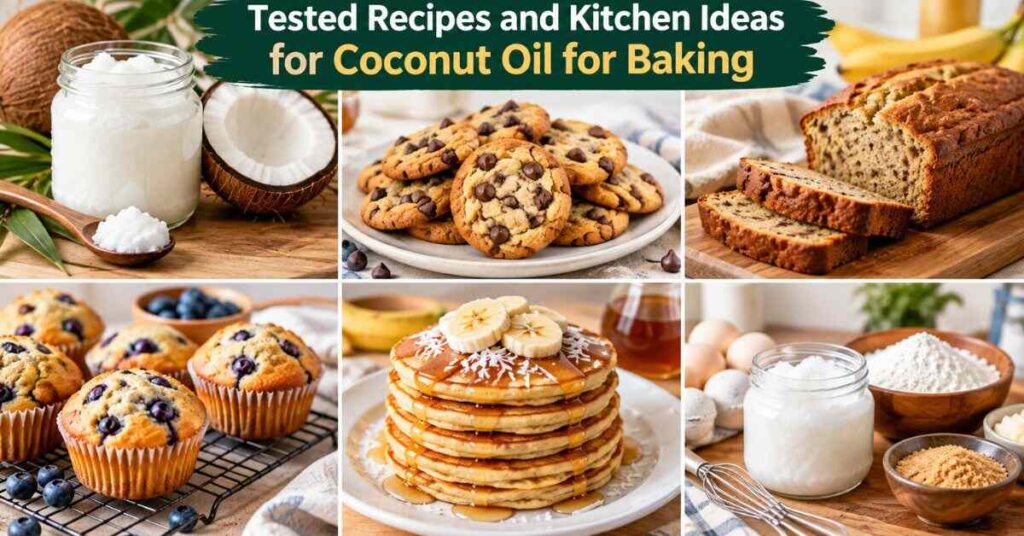
Putting theory into delicious practice is where the real magic happens in the kitchen. Now that you have mastered the fundamental chemical properties, substitution ratios, and temperature rules, it is time to put your skills to the test. Coconut oil for baking shines brilliantly across a wide variety of sweet and savory applications, transforming ordinary pantry staples into gourmet treats.
Whether you are craving chewy cookies with crisp edges, tender morning muffins, or an artisan loaf of Coconut oil for baking bread, having a reliable arsenal of kitchen-tested recipes ensures success every single time. Let us explore two foolproof, crowd-pleasing recipes designed to showcase the incredible versatility of your pantry jar.
How to Make Flaky Cookies Using Solid Coconut Oil
Nothing beats the comforting aroma of freshly baked cookies filling your home. This recipe utilizes chilled, solid coconut oil to achieve a rich, decadent texture without relying on dairy butter.
- Ingredients:
- 1/2 cup solid, chilled coconut oil (unrefined for a tropical hint, or refined for neutral flavor)
- 1/2 cup organic coconut sugar or brown sugar
- 1/2 cup pure organic cane sugar
- 1 large room-temperature egg (or flax egg for a vegan option)
- 1 teaspoon pure vanilla extract
- 1 and 3/4 cups all-purpose flour (or a 1:1 gluten-free baking blend)
- 1/2 teaspoon baking soda
- 1/4 teaspoon sea salt
- 1 cup dark chocolate chunks
- Step-by-Step Instructions:
- In a large mixing bowl, cream the chilled solid coconut oil and sugars together using a hand mixer or wooden spoon until smooth and fluffy.
- Beat in the room-temperature egg and vanilla extract until fully incorporated.
- In a separate bowl, whisk together the flour, baking soda, and sea salt. Gradually blend the dry ingredients into the wet mixture just until combined.
- Fold in the dark chocolate chunks gently.
- Chill the formed cookie dough balls in the refrigerator for 30 minutes to prevent the cookies from spreading too thin in the oven.
- Bake at 350°F (175°C) for 10 to 12 minutes until the edges are golden brown and set. Cool on the pan for 5 minutes before transferring to a wire rack.
Delicious Quick Breads and Muffins Made with Melted Coconut Oil
When baking quick breads like banana bread, zucchini loaves, or blueberry muffins, liquid fats provide superior moisture retention and a tender crumb structure.
- Ingredients:
- 1/3 cup melted refined coconut oil (cooled to room temperature)
- 1/2 cup pure maple syrup or honey
- 2 ripe mashed bananas (or 1 cup grated zucchini)
- 2 room-temperature eggs
- 1/4 cup plant-based milk or regular milk
- 1 teaspoon baking soda
- 1 teaspoon ground cinnamon
- 1 and 3/4 cups whole wheat pastry flour or all-purpose flour
- Step-by-Step Instructions:
- Preheat your oven to 350°F (175°C) and grease your loaf pan or muffin tin lightly with a dollop of coconut oil.
- In a large bowl, whisk together the melted coconut oil, maple syrup, mashed bananas, eggs, and milk until completely smooth.
- Stir in the baking soda, cinnamon, and flour, mixing gently just until the dry pockets disappear. Avoid overmixing to keep your bread light and fluffy.
- Pour the batter into your prepared pan and bake for 45 to 50 minutes for a loaf (or 20 to 22 minutes for muffins) until a toothpick inserted into the center comes out clean.
Conclusion: Elevating Your Baking Game with Coconut Oil
Mastering coconut oil for baking unlocks incredible culinary creativity and wholesome nutrition. Whether you bake crispy cookies or artisan loaves of Coconut oil for baking bread, understanding fat behavior matters.
Therefore, respect the 76 degree Fahrenheit melting point. Furthermore, match refined varieties to your target flavor profile. Following precise 1:1 ratios lets you replace traditional butter successfully without sacrificing texture. Embrace these expert techniques, keep your ingredients at room temperature, and enjoy the delicious, professional-quality results of your baking adventures!
About the Author
Noor Fatima | SEO Expert & Natural Oils Specialist
Credentials:
As an SEO expert and the driving force behind Pure Oils Hub (pureoilshub.com), I combine over 8 years of digital strategy and search optimization with a deep, lifelong passion for organic aromatherapy and plant-based living.
First-Hand Experience:
“Navigating the digital landscape for more than 8 years while researching pure botanical and carrier oils has shown me that creating a truly helpful website takes more than just technical SEO. It requires a genuine commitment to cutting through the noise of commercial, synthetic products to deliver honest, thoroughly researched, and practical guides. My goal is to make natural wellness accessible to everyone, helping you discover the simple, powerful ways pure oils can transform your daily self-care routine.”
FAQs
Can I use coconut oil in any baking recipe?
Yes, you can substitute coconut oil into virtually any recipe that calls for butter, shortening, or vegetable oil by following a precise 1:1 ratio. However, you must consider the flavor profile and your kitchen temperature. If you are baking a delicate vanilla sponge cake where coconut flavor would clash, always select refined coconut oil. If you are baking chocolate chip cookies or spice muffins, virgin oil adds a delightful, aromatic touch.
Why does my coconut oil harden when mixed with cold milk?
This is one of the most common issues bakers face when exploring How to use coconut oil for baking. Coconut oil has a solid-to-liquid melting point of roughly 76°F (24°C). When you pour ice-cold milk or refrigerated eggs directly into warm coconut oil for baking, sudden temperature shifts happen. This thermal shock causes fat lipids to solidify instantly into tiny, hard beads. This ruins your batter’s emulsion. Always ensure your liquids (milk, eggs, and extracts) are at comfortable room temperature before combining them with your fat.
Storage and Shelf Life Secrets to Keep Your Baking Oil Fresh
Proper storage ensures your pantry staples stay fresh and free of rancidity for months.
- Pantry Placement: Store your jar in a cool, dark cupboard away from direct sunlight and the heat of your oven or stove.
- Avoid Water Contamination: Always use a clean, dry spoon or measuring cup when scooping out solid oil to prevent moisture and food particles from introducing bacteria into the jar.
- Shelf Life: High-quality unrefined and refined coconut oils typically boast a long shelf life of 18 to 24 months when sealed tightly.
Does organic status change the baking performance of coconut oil?
From a purely chemical and structural standpoint, certified organic coconut oil performs identically to standard non-organic varieties. Both options share the same melting point, creaming ability, and 1:1 substitution ratios.
However, farming and manufacturing standards set them apart. Organic variants guarantee that coconuts grow without synthetic fertilizers or chemical pesticides. Consequently, this provides a cleaner and more natural ingredient for your kitchen and your family’s health.