Introduction
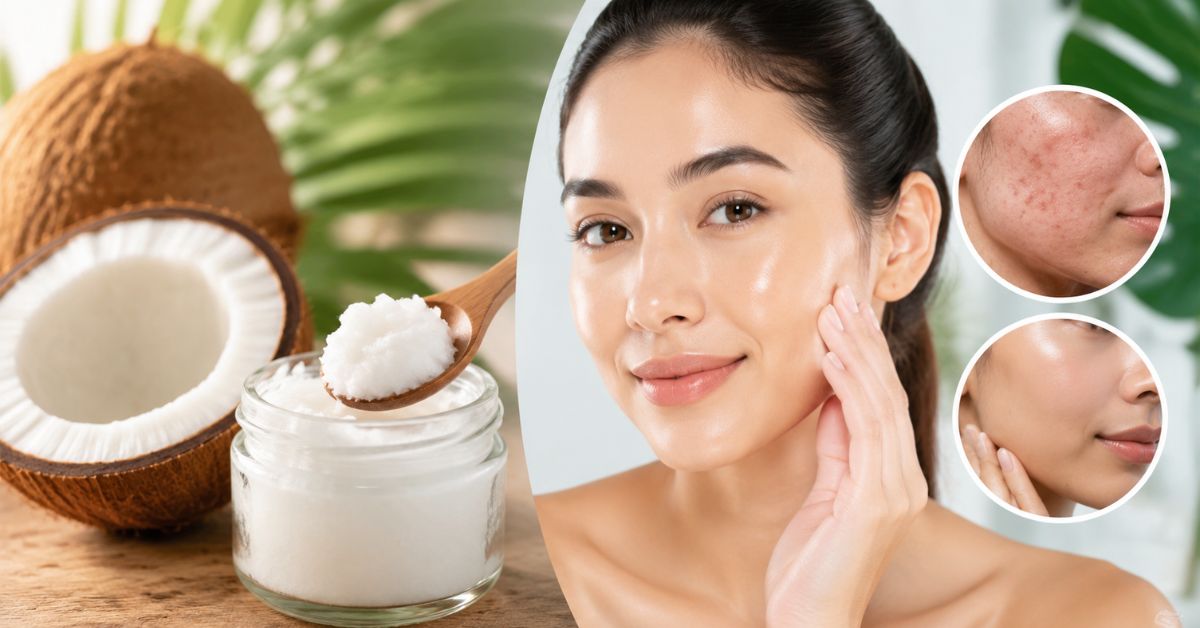
Coconut oil has become one of the most popular natural ingredients in skincare. People use it to moisturize dry skin, remove makeup, soothe irritation, and strengthen the skin’s natural moisture barrier. However, despite its many benefits, one question continues to appear in skincare discussions: is coconut oil comedogenic? The answer matters because an ingredient that works well for one person can cause clogged pores and breakouts for another.
Why Is Coconut Oil’s Comedogenicity So Controversial?
Coconut oil is widely recognized for its nourishing and moisturizing properties, but dermatologists often advise caution when using it on the face. It has a relatively high comedogenic rating of about 4 out of 5, meaning it has a greater tendency to block pores than many other plant oils. However, a high comedogenic rating does not guarantee that everyone will develop acne. Your skin type, genetics, sebum production, skincare routine, and how frequently you apply coconut oil all influence the outcome.
This explains why experiences vary so much. Some people report softer, healthier-looking skin after using coconut oil, while others notice blackheads, whiteheads, or acne within weeks. These different experiences often appear in online skincare communities and is coconut oil comedogenic Reddit discussions, but individual opinions should never replace scientific evidence or dermatological guidance.
What You’ll Learn in This Guide
Understanding how coconut oil interacts with different skin types is the key to deciding whether it belongs in your skincare routine. Throughout this guide, you’ll discover what comedogenic actually means, why coconut oil has earned its reputation for clogging pores, and which skin types are most likely to benefit—or experience problems—from using it.
You’ll also learn whether is coconut oil comedogenic for face, is coconut oil comedogenic for acne, and is coconut oil comedogenic for dry skin have different answers. In addition, we’ll compare virgin vs. refined coconut oil, explain whether one is less likely to clog pores, share expert-backed tips for using coconut oil safely, and recommend lightweight alternatives for people with oily or acne-prone skin.
By the end of this guide, you’ll have a science-backed understanding of coconut oil’s comedogenic potential, allowing you to make an informed decision about whether it deserves a place in your skincare routine or if another facial oil would be a better choice for maintaining healthy, clear skin.
What Does “Is Coconut Oil Comedogenic” Really Mean?

Before deciding whether coconut oil belongs in your skincare routine, it’s important to understand what the word comedogenic actually means. Many people assume that a comedogenic ingredient automatically causes acne, but that is not entirely accurate. Instead, the term describes how likely an ingredient is to block pores, which may eventually contribute to blackheads, whiteheads, or acne in people who are already prone to breakouts.
When people search is coconut oil comedogenic, they are usually trying to determine whether using coconut oil will damage their skin. The reality is much more personal. An ingredient can be highly comedogenic on one person’s skin while causing no issues for someone else. Skin type, genetics, climate, skincare routine, and even how often you apply the oil all influence the outcome.
Coconut oil has become popular because it is rich in moisturizing fatty acids and antioxidants. However, those same fatty acids also give the oil a thicker texture that may remain on the skin longer than lighter oils. For some individuals, this creates an environment where excess oil, dead skin cells, and debris become trapped inside pores.
Understanding the science behind comedogenicity helps you separate internet myths from evidence-based skincare advice. Once you know why coconut oil receives its rating, you can make a better decision based on your own skin rather than following general opinions online.
What Is a Comedogenic Ingredient?
A comedogenic ingredient is any substance that has the potential to clog hair follicles and pores. When a pore becomes blocked with sebum, dead skin cells, bacteria, or heavy skincare products, it can develop into a comedo. Comedones include both blackheads and whiteheads, which may later become inflamed pimples.
Dermatologists often describe comedogenicity using a rating scale that ranges from 0 to 5.
| Comedogenic Rating | Meaning | Risk of Clogged Pores |
| 0 | Non-comedogenic | Very low |
| 1 | Very low risk | Minimal |
| 2 | Low risk | Usually suitable for most skin types |
| 3 | Moderate risk | May clog pores in some people |
| 4 | High risk | More likely to clog pores |
| 5 | Very high risk | High chance of blocking pores |
Although these ratings provide useful guidance, they should not be treated as absolute rules. Most comedogenicity studies were conducted under controlled laboratory conditions, and real-life skincare habits vary significantly. The concentration of an ingredient, the complete product formula, and individual skin characteristics all influence whether clogged pores actually develop.
For example, an ingredient with a higher comedogenic rating may never cause problems on dry skin, while someone with naturally oily skin could develop acne from the same product after only a few weeks.
This is why skincare professionals recommend evaluating products based on your own skin’s response rather than relying solely on numerical ratings.
Why Coconut Oil Has a Comedogenic Rating
One of the main reasons coconut oil receives a relatively high comedogenic rating is its unique fatty acid composition. Coconut oil contains a large amount of saturated fatty acids, particularly lauric acid, along with myristic and palmitic acids. These fatty acids make the oil rich, thick, and highly effective at reducing moisture loss from the skin.
While this rich texture is excellent for repairing dry or damaged skin, it can also make the oil difficult for oily skin to tolerate. Instead of absorbing quickly, coconut oil often forms a protective layer on the surface of the skin. On acne-prone complexions, this layer may trap excess sebum, dead skin cells, sweat, sunscreen, or cosmetic residue inside pores.
Because of this, coconut oil is commonly assigned a comedogenic rating of around 4 out of 5, although ratings can vary slightly depending on the testing method and the specific type of coconut oil being evaluated. A rating of 4 does not mean coconut oil will always clog pores. Instead, it indicates that it has a higher likelihood of doing so compared with lightweight oils such as jojoba, grapeseed, or squalane.
Despite its reputation, coconut oil also offers several skin benefits. It contains antioxidants, supports the skin’s moisture barrier, and has naturally occurring antimicrobial properties. These qualities explain why many people with dry or mature skin continue to use it successfully.
Ultimately, asking “is coconut oil comedogenic?” should lead to a more nuanced answer than a simple yes or no. Coconut oil has a high pore-clogging potential, but whether it affects your skin depends largely on your skin type, application method, and overall skincare routine. Understanding these factors allows you to use coconut oil more safely and decide whether it truly suits your individual skin needs.
Is Coconut Oil Comedogenic for Every Skin Type?
The answer to is coconut oil comedogenic depends largely on your skin type. Although coconut oil has a relatively high comedogenic rating, it does not affect everyone in the same way. Some people can apply it regularly without experiencing clogged pores, while others notice blackheads, whiteheads, or acne after only a few uses.
Your skin naturally produces different amounts of sebum, has varying pore sizes, and responds differently to oils. Climate, hormones, genetics, and your existing skincare routine also influence how coconut oil behaves on your skin. This is why one person’s “holy grail” moisturizer may become another person’s breakout trigger.
Dermatologists generally recommend matching skincare products to your skin’s specific needs rather than relying solely on ingredient popularity. Coconut oil excels at preventing moisture loss and strengthening the skin barrier, but its thick consistency makes it less suitable for certain skin types.
The following sections explain how coconut oil affects oily, acne-prone, combination, sensitive, dry, and mature skin so you can determine whether it deserves a place in your skincare routine.
Is Coconut Oil Comedogenic for Oily Skin?
For most people with oily skin, the answer is yes coconut oil is more likely to be comedogenic. Oily skin naturally produces excess sebum, and adding a heavy oil on top can increase the likelihood of clogged pores. Although coconut oil itself does not create acne-causing bacteria, it may trap sebum, dead skin cells, sunscreen residue, and environmental debris beneath its protective layer.
This is one reason why dermatologists rarely recommend pure coconut oil as a daily facial moisturizer for oily complexions. Instead of absorbing quickly, it often remains on the skin’s surface, leaving a greasy feeling that some people mistake for hydration.
If you have oily skin but still want to use coconut oil, consider limiting it to very dry areas rather than your entire face. Using it occasionally as an overnight treatment on rough patches may be better than applying it every day. Always cleanse thoroughly afterward to remove excess oil and reduce the chance of blocked pores.
People with oily skin usually achieve better long-term results with lightweight, non-comedogenic oils such as jojoba or squalane, which hydrate without creating the same heavy film.
Is Coconut Oil Comedogenic for Acne-Prone Skin?
When people search is coconut oil comedogenic for acne or is coconut oil comedogenic for pimples, they are usually concerned about worsening existing breakouts. In many cases, that concern is justified.
Acne-prone skin already has a tendency for pores to become blocked. Since coconut oil has a high comedogenic rating, applying it directly to acne-prone facial skin may increase the risk of developing additional whiteheads, blackheads, and inflamed blemishes.
Interestingly, coconut oil contains lauric acid, which has natural antimicrobial properties against certain bacteria associated with acne. This often creates confusion because people assume an antibacterial ingredient must also be suitable for acne. However, while lauric acid may help reduce some bacteria, the oil’s thick texture can still trap excess sebum inside pores. As a result, its potential to clog pores often outweighs its antibacterial benefits for acne-prone individuals.
That said, skincare is highly individual. Some people with mild acne tolerate coconut oil without any noticeable problems. Others develop breakouts within days. The safest approach is to perform a patch test before using it regularly and discontinue use if new blemishes appear.
If your acne is persistent or moderate to severe, lighter oils with lower comedogenic ratings are generally a safer choice than pure coconut oil.
Is Coconut Oil Comedogenic for Combination Skin?
Combination skin presents a unique challenge because different areas of the face have different needs. The forehead, nose, and chin commonly called the T-zone often produce excess oil, while the cheeks may remain dry or normal.
For people with combination skin, coconut oil may work well on the drier areas but become problematic on oilier regions. Applying it across the entire face can increase the risk of congestion in the T-zone while providing unnecessary heaviness where the skin already produces enough natural oil.
A more balanced approach is to use coconut oil only where extra moisture is needed. Many people with combination skin successfully apply it to dry cheeks, around the jawline, or on flaky areas while avoiding the nose, forehead, and chin.
Watching how your skin responds over several weeks is important because clogged pores usually develop gradually rather than overnight. If you notice an increase in small bumps or blackheads, it may be time to switch to a lighter moisturizer that hydrates all areas of your face more evenly.
Is Coconut Oil Comedogenic for Sensitive Skin?
Sensitive skin does not automatically mean acne-prone skin. Many people with sensitive skin have a weakened skin barrier, making them more likely to experience redness, dryness, or irritation rather than clogged pores.
Pure coconut oil contains very few ingredients, which reduces the likelihood of irritation caused by fragrances, preservatives, or alcohol commonly found in commercial skincare products. Because of this, some people with sensitive skin find coconut oil soothing and comforting, especially during cold or dry weather.
However, sensitivity and comedogenicity are two separate concerns. Even if coconut oil does not cause irritation, it may still block pores if your skin is naturally prone to congestion. Therefore, having sensitive skin does not guarantee that coconut oil will be suitable.
A patch test is especially valuable for sensitive skin. Apply a small amount behind the ear or along the jawline for several days before introducing it into your regular routine. This allows you to monitor both irritation and pore congestion without exposing your entire face to a potential reaction.
Can Dry and Mature Skin Benefit from Coconut Oil?
Among all skin types, dry and mature skin often gains the greatest benefits from coconut oil. People searching is coconut oil comedogenic for dry skin are frequently surprised to learn that, despite its high comedogenic rating, coconut oil can still be an excellent moisturizer for skin that lacks natural oils.
Dry skin loses moisture more easily because its protective barrier is weaker. Coconut oil helps reduce water loss by forming a protective layer over the skin, allowing hydration to remain locked in for longer periods. This can leave rough or flaky skin feeling softer, smoother, and more comfortable.
Mature skin also tends to become thinner and drier with age. The nourishing fatty acids and antioxidant compounds naturally found in coconut oil may help support the skin barrier while improving the appearance of dryness and rough texture. Although coconut oil cannot eliminate wrinkles, well-moisturized skin often appears healthier and more supple.
Even so, dry skin does not eliminate the possibility of clogged pores. If you are using coconut oil on your face, apply a thin layer rather than a thick coating and monitor your skin over time. Many people with dry skin enjoy its moisturizing benefits without experiencing breakouts, while others may still prefer lighter facial oils that provide hydration with a lower comedogenic risk.
Ultimately, whether is coconut oil comedogenic for face has a positive or negative answer depends on your individual skin biology. Understanding your skin type is the first step toward using coconut oil safely and effectively.
Benefits of Coconut Oil for Skin Despite Being Comedogenic

Although many people focus on the question “is coconut oil comedogenic?”, it is equally important to understand why coconut oil remains one of the most widely used natural skincare ingredients. A high comedogenic rating does not automatically make an ingredient harmful. Instead, it simply means that some skin types are more likely to experience clogged pores when using it.
Coconut oil contains beneficial fatty acids, antioxidants, and skin-conditioning compounds that help nourish and protect the skin. For individuals with dry, normal, or mature skin, these properties often outweigh the potential drawbacks. In fact, coconut oil has been used for generations as a natural moisturizer because of its ability to soften rough skin and reduce moisture loss.
The key is using coconut oil on the right skin type and in the right way. While people with oily or acne-prone skin should exercise caution, many others can enjoy its moisturizing and soothing benefits without experiencing breakouts.
Below are the primary skincare benefits that explain why coconut oil continues to be a popular ingredient despite concerns about comedogenicity.
Moisturizes Dry Skin
One of the biggest advantages of coconut oil is its ability to deeply moisturize dry skin. Unlike water-based moisturizers that mainly provide hydration, coconut oil forms a protective layer on the skin’s surface that helps lock in existing moisture. This makes it especially useful for skin that feels tight, flaky, or rough after cleansing or exposure to cold weather.
The high concentration of saturated fatty acids allows coconut oil to soften dry patches while improving overall skin smoothness. Many people notice that their skin feels more supple and comfortable after consistent use on areas prone to dryness, such as the cheeks, elbows, knees, and hands.
For people asking is coconut oil comedogenic for dry skin, the answer is more balanced than for oily skin. Although coconut oil still carries a relatively high comedogenic rating, dry skin often tolerates it much better because it produces less natural oil. When applied in a thin layer, it can provide long-lasting moisture without causing problems for many individuals.
However, moderation remains important. Applying excessive amounts can leave a heavy residue that may eventually contribute to clogged pores, even on dry skin.
Supports the Skin Barrier
The skin barrier acts as the body’s first line of defense against environmental pollutants, allergens, bacteria, and moisture loss. When this protective barrier becomes damaged, the skin often feels dry, irritated, and more sensitive.
Coconut oil helps strengthen this barrier by supplying lipids that support the outer layer of the skin. These lipids reduce transepidermal water loss, allowing the skin to retain hydration for longer periods. As the barrier improves, the skin often appears smoother, healthier, and less prone to irritation caused by external factors.
A stronger skin barrier also helps reduce excessive dryness that can occur after frequent cleansing or exposure to harsh weather conditions. This is one reason coconut oil is commonly found in body creams, healing balms, and moisturizing lotions designed for dry skin.
Even though is coconut oil comedogenic remains a valid concern for facial skincare, its barrier-supporting properties make it an excellent option for many parts of the body where pore congestion is less common.
Antimicrobial Properties
One of coconut oil’s most interesting characteristics is its naturally occurring antimicrobial activity. It contains lauric acid, a medium-chain fatty acid that has demonstrated activity against certain bacteria, fungi, and other microorganisms in laboratory studies.
This antimicrobial effect contributes to coconut oil’s reputation as a natural skincare ingredient. By helping limit the growth of some microbes on the skin’s surface, coconut oil may assist in maintaining a healthier skin environment. This explains why it is sometimes included in products designed for dry, compromised, or easily irritated skin.
However, it is important to understand that antimicrobial properties do not automatically make coconut oil an acne treatment. Many people searching is coconut oil comedogenic for acne assume its antibacterial effects will prevent breakouts. In reality, acne is influenced by several factors, including hormones, inflammation, excess oil production, genetics, and clogged pores. While lauric acid may offer certain benefits, the thick texture of coconut oil can still increase the likelihood of pore blockage in acne-prone skin.
Therefore, coconut oil should not replace proven acne treatments recommended by skincare professionals.
Anti-Inflammatory Benefits
Inflammation plays a role in many common skin concerns, including dryness, irritation, and environmental stress. Coconut oil contains antioxidant compounds and beneficial fatty acids that may help calm the skin when used appropriately.
People with dry or mildly irritated skin often report that coconut oil reduces feelings of tightness while leaving the skin more comfortable. This soothing effect may be particularly noticeable after sun exposure, shaving, or exposure to cold, dry air that strips moisture from the skin.
Its antioxidant content also helps defend the skin against oxidative stress caused by free radicals. Although antioxidants cannot completely prevent skin aging, they contribute to maintaining healthier-looking skin over time when combined with a consistent skincare routine.
Even so, people with active inflammatory acne should remain cautious. Since is coconut oil comedogenic for pimples is a common concern, using coconut oil directly on inflamed acne lesions may not be the best choice if your pores clog easily.
May Help Soothe Dry or Irritated Skin
Coconut oil is often chosen because it provides immediate comfort to skin that feels dry, rough, or irritated. Its rich texture creates a protective layer that shields the skin from excessive moisture loss while allowing damaged areas to recover more effectively.
Many people apply coconut oil to areas that frequently become dry, including the hands, feet, elbows, knees, and legs. These thicker areas of skin generally tolerate coconut oil better than the face because they contain fewer oil glands and are less susceptible to clogged pores.
For individuals with seasonal dryness or compromised skin caused by environmental factors, coconut oil can serve as an effective overnight moisturizer that restores softness by morning. Some people also use it after bathing, when slightly damp skin helps seal in hydration more efficiently.
Nevertheless, if you’re specifically wondering is coconut oil comedogenic for face, the answer still depends on your skin type. While the oil may soothe dryness on facial skin, people with oily or acne-prone complexions should monitor their skin carefully for signs of congestion. Applying a small amount only where needed is generally a safer approach than coating the entire face.
Overall, coconut oil offers several well-recognized skincare benefits despite its comedogenic reputation. Understanding both its strengths and limitations allows you to use it more effectively while minimizing the risk of clogged pores.
Why Is Coconut Oil Comedogenic for Some People?
Although coconut oil offers several skincare benefits, it does not work equally well for everyone. This is why the question “is coconut oil comedogenic?” has different answers depending on the individual. Some people can use coconut oil for months without any issues, while others develop clogged pores, blackheads, or acne within a short period.
The difference lies in how your skin naturally functions. Factors such as oil production, pore size, genetics, climate, hormones, and your overall skincare routine all influence how coconut oil behaves on your skin. Since coconut oil is rich in saturated fatty acids and has a thick texture, it sits on the skin longer than many lightweight facial oils. For skin that already produces excess sebum, this extra layer can increase the chance of pore congestion.
It is also important to remember that coconut oil does not directly cause acne. Instead, it may create conditions that make clogged pores more likely. Once a pore becomes blocked with oil, dead skin cells, and debris, acne-causing bacteria can multiply inside the pore, leading to inflammation and breakouts.
Understanding why coconut oil causes problems for some people helps you decide whether it is suitable for your skincare routine or whether a lighter alternative would be a better choice.
How Coconut Oil Can Clog Pores
Coconut oil becomes comedogenic primarily because of its rich composition and occlusive nature. Instead of absorbing quickly, it forms a protective layer that reduces water loss. While this is beneficial for dry skin, it can also increase the likelihood of clogged pores in oily or acne-prone skin.
Here’s how pore clogging can happen:
- Coconut oil forms a thick barrier on the skin’s surface.
- Excess sebum becomes trapped beneath this layer.
- Dead skin cells may not shed as efficiently.
- Dirt, sunscreen, and makeup residue can remain inside pores.
- Blocked pores gradually develop into blackheads or whiteheads.
- Inflamed acne may appear if bacteria multiply inside clogged pores.
This process usually happens over time rather than immediately. A single application is unlikely to cause noticeable breakouts, but repeated use may increase congestion if your skin is naturally prone to clogged pores.
Why Some People Get Breakouts
Not everyone experiences acne after using coconut oil because every person’s skin is unique. Skin biology, hormone levels, lifestyle, and even weather conditions influence how well your skin tolerates heavier oils.
People are generally more likely to experience breakouts if they have:
- Naturally oily skin.
- Acne-prone skin with frequent clogged pores.
- Enlarged pores.
- Excessive sebum production.
- Hormonal acne.
- A skincare routine that already includes heavy creams or occlusive products.
- Incomplete cleansing after applying coconut oil.
On the other hand, many individuals with dry or mature skin use coconut oil without developing acne because their skin produces less oil naturally.
This explains why people searching is coconut oil comedogenic for acne or is coconut oil comedogenic for pimples often find mixed opinions online. Personal experience varies because skin type plays a much bigger role than the ingredient alone.
Signs Coconut Oil Is Clogging Your Pores
If you recently introduced coconut oil into your skincare routine, pay close attention to how your skin changes over the following two to four weeks. Clogged pores usually develop gradually rather than overnight.
Common signs that coconut oil may not be suitable for your skin include:
- Small white bumps appearing in areas where you applied the oil.
- An increase in blackheads, especially around the nose or chin.
- New whiteheads that were not present before.
- Painful inflamed pimples developing more frequently.
- Skin feeling unusually greasy several hours after application.
- Rough or bumpy texture despite regular cleansing.
- Makeup sitting unevenly because of congested pores.
If you notice these symptoms consistently after using coconut oil, discontinue use for several weeks and observe whether your skin improves. If the breakouts disappear, coconut oil may simply be too heavy for your skin type.
For people with oily or acne-prone skin, switching to lightweight oils such as jojoba or squalane often provides hydration with a lower risk of clogged pores.
Read More:https://pureoilshub.com/coconut-oil-for-makeup-removal/
Is Coconut Oil Comedogenic on the Face but Safe for the Body?

Many people notice that coconut oil works well on their arms, legs, or hands but causes breakouts when applied to the face. This raises an important question: is coconut oil comedogenic on the face but safe for the body? In many cases, the answer is yes.
The skin on your face is very different from the skin on the rest of your body. Facial skin contains more sebaceous (oil) glands, larger concentrations of hair follicles, and is constantly exposed to makeup, sunscreen, pollution, and sweat. These factors make facial pores much more likely to become clogged.
In contrast, most areas of the body have fewer oil glands and larger skin surfaces, allowing richer moisturizers like coconut oil to work without causing the same level of congestion. This is why coconut oil is commonly found in body lotions, body butters, massage oils, and hand creams.
If you’re wondering is coconut oil comedogenic for face, it’s important to evaluate facial and body use separately. While your face may react negatively, your body may benefit from coconut oil’s moisturizing and skin-protecting properties.
Why Facial Skin Reacts Differently
Facial skin has unique characteristics that make it more vulnerable to clogged pores than the skin on most other parts of the body.
Here are the main reasons why facial skin reacts differently:
- The face contains a higher number of oil-producing sebaceous glands.
- Facial pores are more likely to trap excess sebum and dead skin cells.
- Makeup, sunscreen, and skincare products add additional layers that can mix with coconut oil.
- Hormonal changes often increase oil production on the face.
- Areas like the forehead, nose, and chin (the T-zone) naturally produce more oil.
- Facial acne is more common than body acne because pores become blocked more easily.
Since coconut oil forms a protective layer on the skin, these conditions can increase the likelihood of congestion in people with oily or acne-prone skin. This is why dermatologists generally recommend using caution before applying pure coconut oil as a daily facial moisturizer.
Where Coconut Oil Works Best on the Body
Although coconut oil may not suit every face, it can be highly effective on many areas of the body where clogged pores are less of a concern.
Coconut oil often works well on:
- Hands that become dry from frequent washing.
- Elbows with rough or flaky skin.
- Knees that need extra moisture.
- Feet and cracked heels.
- Legs after shaving to reduce dryness.
- Cuticles to soften dry skin around the nails.
- Arms and shoulders that experience seasonal dryness.
- Dry patches on the body caused by cold weather.
These areas typically have fewer active oil glands than the face, allowing coconut oil to provide long-lasting hydration without causing significant pore congestion.
However, if you are prone to body acne especially on the chest, shoulders, or upper back it is still wise to use coconut oil carefully. These areas contain more sebaceous glands than the arms or legs and may react similarly to facial skin.
For best results, apply coconut oil immediately after showering while the skin is still slightly damp. This helps lock in moisture and leaves the skin feeling soft without requiring a large amount of product. Using a thin layer rather than a heavy coating also reduces the likelihood of residue building up on the skin over time.
Virgin vs. Refined Coconut Oil: Does It Affect Comedogenicity?
Many people assume that switching from refined coconut oil to virgin coconut oil will reduce the risk of clogged pores. However, when it comes to the question of whether coconut oil is comedogenic, the extraction method makes far less difference than most people expect.
Both virgin and refined coconut oil share a nearly identical fatty acid profile, meaning their physical behavior on your skin barrier is virtually the same.
Why Cos Virgin Coconut Oil Less Comedogenic Than Refined Coconut Oil?
Many people believe that virgin coconut oil is less likely to clog pores than refined coconut oil. This idea comes from the fact that virgin coconut oil is less processed and contains more natural nutrients. However, current scientific evidence does not show a meaningful difference in their ability to clog pores. If you are asking “is coconut oil comedogenic?”, the answer is largely the same for both types.
Virgin and refined coconut oil have nearly identical fatty acid compositions. They are both rich in lauric acid, myristic acid, and palmitic acid, which create a thick, protective layer on the skin. While this helps reduce moisture loss and keeps dry skin soft, it can also trap dead skin cells, excess sebum, and debris inside pores. For this reason, both oils are commonly given a comedogenic rating of around 4 out of 5, making them a poor choice for many people with acne-prone or oily skin.
The biggest difference lies in how each oil is produced rather than how it behaves on the skin. Virgin coconut oil is extracted from fresh coconut meat using minimal processing, which helps preserve antioxidants, polyphenols, vitamin E, and other naturally occurring plant compounds. Refined coconut oil is made from dried coconut (copra) and undergoes additional processing to remove impurities, odor, and flavor. Although refining slightly reduces the antioxidant content, it does not significantly change the oil’s pore-clogging potential.
Virgin Coconut Oil vs Refined Coconut Oil Comparison
| Feature | Virgin Coconut Oil | Refined Coconut Oil |
|---|---|---|
| Source | Fresh coconut meat | Dried coconut (copra) |
| Processing | Minimal processing | More refined processing |
| Aroma | Natural coconut scent | Neutral or odorless |
| Antioxidants | Higher | Slightly lower |
| Texture | Rich and smooth | Rich and smooth |
| Comedogenic Rating | Around 4/5 | Around 4/5 |
| Best Uses | Dry skin, body care, hair care | Dry skin, body care, hair care |
Although virgin coconut oil contains more antioxidants, these extra nutrients do not appear to reduce its tendency to block pores. Instead, they may provide additional skin barrier support and help protect the skin from environmental stress. This makes virgin coconut oil a slightly better option for people with dry, dehydrated, or mature skin, but not necessarily for those who frequently experience acne.
Which Type Should You Choose for Your Skin?
Your skin type plays a much bigger role than the type of coconut oil you choose. If your skin is oily, combination, or acne-prone, switching from refined to virgin coconut oil is unlikely to prevent clogged pores or breakouts. Both oils can create an occlusive layer that may increase the risk of blackheads and whiteheads in susceptible individuals.
If you have dry or normal skin, virgin coconut oil may be the better option because it retains more beneficial compounds while providing the same intense moisturizing effect. Many people successfully use it on dry areas such as the cheeks, neck, elbows, hands, legs, and body without experiencing pore congestion.
To reduce the risk of clogged pores, follow these simple guidelines:
- Choose 100% pure, cold-pressed virgin coconut oil without added fragrances or mineral oils.
- Apply only a thin layer, especially if using it on the face.
- Avoid applying it to oily areas like the forehead, nose, and chin.
- Perform a patch test before regular use.
- Stop using it if you notice new blackheads, whiteheads, or acne.
- Reserve coconut oil for body care or hair care if your facial skin breaks out easily.
Overall, whether you choose virgin or refined coconut oil, the answer to “is coconut oil comedogenic for the face?” remains largely unchanged. Both oils have a relatively high likelihood of clogging pores, particularly in oily and acne-prone skin. However, when used appropriately, especially on dry areas of the body or on naturally dry skin, they can still serve as excellent natural moisturizers with long-lasting hydration.
Pure Coconut Oil vs Skincare Products with Coconut Oil
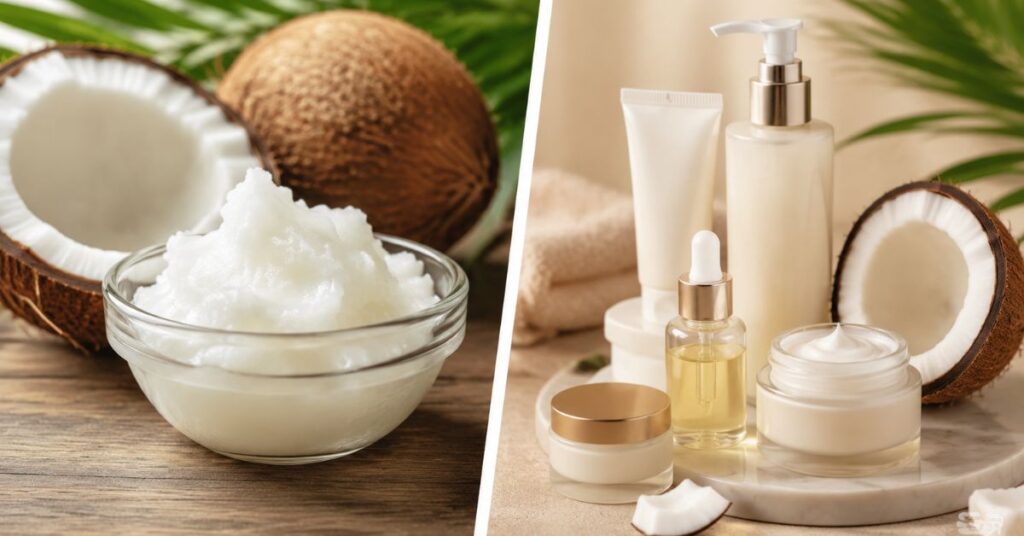
Not all products containing coconut oil affect the skin in the same way. Many people assume that if pure coconut oil is comedogenic, then every cleanser, moisturizer, or serum containing coconut oil will also clog pores. In reality, the overall formulation of a skincare product plays a much bigger role than a single ingredient.
Pure coconut oil is applied directly to the skin in its concentrated form, which makes it more likely to create a heavy, occlusive layer. In contrast, skincare products usually contain coconut oil in smaller amounts alongside lightweight moisturizers, emulsifiers, humectants, and other skin-conditioning ingredients. These formulations are carefully balanced to provide hydration without leaving an overly greasy residue.
If you’re wondering is coconut oil comedogenic for face, understanding the difference between pure oil and professionally formulated skincare products can help you make a better choice especially if your skin is oily or acne-prone.
Pure Coconut Oil
Pure coconut oil contains only one ingredient and is valued for its simplicity and natural moisturizing properties. Because it is highly concentrated, it provides intense hydration and helps reduce moisture loss by forming a protective barrier over the skin.
Benefits of pure coconut oil include:
- Deeply moisturizes dry skin.
- Helps reduce moisture loss.
- Softens rough or flaky areas.
- Supports the skin’s natural barrier.
- Contains naturally occurring antioxidants.
- Provides antimicrobial properties due to lauric acid.
- Works well for dry elbows, knees, hands, feet, and cuticles.
Potential drawbacks include:
- Thick texture that absorbs slowly.
- Higher chance of clogging facial pores.
- May trigger breakouts in oily or acne-prone skin.
- Can leave a greasy residue.
- Not ideal as a daily facial moisturizer for most acne-prone individuals.
Because it is undiluted, pure coconut oil is generally best suited for dry body skin rather than oily facial skin.
Coconut Oil in Cleansers and Moisturizers
Skincare products that contain coconut oil are formulated differently from pure coconut oil. Manufacturers often combine small amounts of coconut oil with ingredients such as glycerin, ceramides, hyaluronic acid, niacinamide, or lightweight plant oils to create products that are easier to absorb and less likely to leave a heavy film.
Why formulated skincare products may be a better option:
- Coconut oil is usually present in lower concentrations.
- Other ingredients improve absorption.
- Many formulas rinse away completely, especially cleansers.
- Lightweight moisturizers balance hydration without excessive heaviness.
- Products are often tested for stability and skin compatibility.
- Some formulas are specifically designed to be non-comedogenic.
For example, cleansing balms and oil cleansers often use coconut-derived ingredients to dissolve makeup and sunscreen. Since these products are rinsed off rather than left on the skin, they generally pose a lower risk of clogging pores than applying pure coconut oil as a leave-on moisturizer.
Likewise, many facial moisturizers contain coconut-derived ingredients in carefully measured amounts, allowing users to enjoy moisturizing benefits without experiencing the same level of pore congestion.
Which Option Is Better for Acne-Prone Skin?
If you have acne-prone skin, choosing the right product can make a significant difference. Although pure coconut oil has beneficial properties, its rich texture often makes it less suitable for skin that is already prone to clogged pores.
For acne-prone skin, dermatologists generally recommend:
- Choosing lightweight, non-comedogenic moisturizers.
- Using skincare products formulated with small amounts of coconut oil instead of applying pure coconut oil directly.
- Looking for labels such as “non-comedogenic” or “oil-free” when buying facial skincare.
- Performing a patch test before introducing any new product.
- Monitoring your skin for new blackheads, whiteheads, or pimples during the first few weeks of use.
It may be best to avoid pure coconut oil if you have:
- Active acne.
- Very oily skin.
- Frequent clogged pores.
- Large visible pores.
- A history of breakouts after using heavy oils.
Ultimately, the answer to is coconut oil comedogenic for acne depends not only on the ingredient itself but also on the product’s formulation. While pure coconut oil may increase the risk of clogged pores, a well-formulated cleanser or moisturizer containing coconut oil can often provide hydration without causing the same problems. Choosing products that match your skin type is always more important than judging a single ingredient in isolation.
How to Use Coconut Oil Safely If You’re Worried About Clogged Pores
If you’re still interested in using coconut oil but are concerned about clogged pores, you don’t necessarily have to avoid it completely. The key is to use it strategically and pay close attention to how your skin responds. Since is coconut oil comedogenic has a different answer for every individual, following a few simple precautions can significantly reduce the likelihood of unwanted breakouts.
People with dry or mature skin often tolerate coconut oil well, while those with oily or acne-prone skin should be more cautious. Regardless of your skin type, introducing coconut oil gradually allows you to identify potential problems before they become widespread.
Following these best practices can help you enjoy the moisturizing benefits of coconut oil while minimizing the risk of pore congestion.
Perform a Patch Test
A patch test is the safest way to determine whether coconut oil is compatible with your skin before applying it to your entire face.
How to perform a patch test:
- Apply a small amount of coconut oil behind your ear or along your jawline.
- Leave it on as you normally would.
- Continue using it on the same small area for 3–5 days.
- Watch for redness, itching, whiteheads, blackheads, or new pimples.
- If no reaction occurs, gradually introduce it into your routine.
A patch test cannot guarantee that you’ll never experience clogged pores, but it greatly reduces the risk of unexpected breakouts.
Choose the Right Type of Coconut Oil
The quality of coconut oil matters, even though both virgin and refined coconut oil have similar comedogenic ratings.
For skincare, choose:
- 100% pure coconut oil.
- Cold-pressed or virgin coconut oil.
- Unrefined products with no added fragrances.
- Products free from mineral oil and artificial fillers.
Avoid products that contain:
- Synthetic fragrances.
- Unnecessary dyes.
- Heavy additives that may further increase pore congestion.
- Low-quality blends with unknown ingredients.
Using a high-quality product helps reduce the chance of skin irritation, even if it does not eliminate the possibility of clogged pores.
Apply a Small Amount
When it comes to coconut oil, more is not better. Applying excessive amounts can leave a thick layer on the skin, making it more difficult for pores to remain clear.
For best results:
- Use only a pea-sized amount for the face.
- Warm the oil between your fingertips before applying.
- Spread it into a thin, even layer.
- Avoid repeatedly layering more oil throughout the day.
- Remove any excess if your skin feels overly greasy.
A light application provides moisture while reducing the likelihood of product buildup.
Avoid the T-Zone
The T-zone which includes the forehead, nose, and chin is usually the oiliest part of the face. These areas contain a higher concentration of sebaceous glands and are more prone to blackheads and acne.
If you’re worried about clogged pores:
- Avoid applying coconut oil directly to the forehead.
- Skip the nose if you frequently experience blackheads.
- Limit use around the chin if hormonal acne is common.
- Apply coconut oil only to dry areas such as the cheeks if needed.
This targeted approach allows you to moisturize dry skin without unnecessarily increasing the risk of congestion where oil production is already high.
Monitor Your Skin for Breakouts
Even if coconut oil works well initially, it’s important to continue monitoring your skin over time. Some clogged pores develop slowly and may not become noticeable for several weeks.
Watch for these warning signs:
- New whiteheads appearing after regular use.
- An increase in blackheads.
- Small bumps under the skin.
- More frequent pimples than usual.
- Excessive oiliness after application.
- Rough or uneven skin texture.
If these symptoms consistently appear after introducing coconut oil, discontinue use for two to four weeks and observe whether your skin improves. If breakouts decrease, coconut oil is likely too heavy for your skin type.
Ultimately, the safest approach is to let your skin guide your decision. While some people can use coconut oil without any issues, others may benefit more from lightweight alternatives that provide hydration without increasing the risk of clogged pores.
Best Alternatives If Coconut Oil Is Comedogenic for Your Skin

If you’ve discovered that coconut oil clogs your pores, don’t worry there are plenty of lightweight oils that provide excellent hydration without the same level of comedogenic risk. In fact, many dermatologists recommend choosing facial oils based on your skin type rather than simply opting for the most popular natural ingredient.
When asking “is coconut oil comedogenic?”, it’s equally important to ask which oils can deliver similar benefits while being less likely to trigger breakouts. Fortunately, several plant-based oils closely mimic the skin’s natural sebum, absorb quickly, and help maintain a healthy skin barrier without leaving a heavy residue.
Below are some of the best alternatives to coconut oil, especially for oily, combination, and acne-prone skin.
Jojoba Oil
Jojoba oil is one of the most dermatologist-recommended alternatives to coconut oil because its composition closely resembles the skin’s natural sebum. This allows it to moisturize effectively without feeling greasy or overly heavy.
Why jojoba oil is a great alternative:
- Low comedogenic rating (around 2).
- Lightweight and fast-absorbing.
- Helps balance natural oil production.
- Suitable for oily, combination, and acne-prone skin.
- Supports the skin barrier without clogging pores.
- Works well as a daily facial moisturizer.
Many people who cannot tolerate coconut oil find that jojoba oil provides similar softness without causing new breakouts.
Squalane
Squalane has become one of the most popular facial oils because it hydrates deeply while remaining incredibly lightweight. Unlike heavier oils, it absorbs quickly and leaves little to no greasy residue.
Benefits of squalane include:
- Very low comedogenic rating (0–1).
- Suitable for nearly all skin types.
- Strengthens the skin’s moisture barrier.
- Helps reduce moisture loss.
- Non-greasy finish.
- Layers well with other skincare products.
Because of its excellent compatibility with oily and acne-prone skin, squalane is often recommended as a safer replacement for coconut oil.
Rosehip Oil
Rosehip oil is rich in essential fatty acids, antioxidants, and naturally occurring vitamin A compounds that support skin renewal. It is especially popular among people looking to improve skin tone while maintaining hydration.
Why many people choose rosehip oil:
- Low comedogenic rating (around 1).
- Lightweight texture.
- Rich in antioxidants.
- Supports skin repair.
- Helps improve the appearance of post-acne marks.
- Suitable for normal, combination, and mature skin.
Although rosehip oil is generally well tolerated, introducing it gradually is still recommended to ensure your skin responds positively.
Grapeseed Oil
Grapeseed oil is another excellent choice for people who struggle with clogged pores. Its thin consistency allows it to absorb rapidly without creating the heavy layer often associated with coconut oil.
Advantages of grapeseed oil:
- Very low comedogenic rating (around 1).
- Lightweight and non-greasy.
- Rich in vitamin E and antioxidants.
- Supports a healthy skin barrier.
- Ideal for oily and acne-prone skin.
- Leaves the skin feeling smooth without excessive shine.
Many facial serums and lightweight moisturizers include grapeseed oil because of its versatility and skin-friendly texture.
Hemp Seed Oil
Hemp seed oil is widely recognized for its balanced fatty acid profile and calming properties. It provides hydration while helping maintain the skin’s natural oil balance, making it an excellent option for people who experience both dryness and excess oil.
Reasons to consider hemp seed oil:
- Low comedogenic rating (around 0–1).
- Lightweight consistency.
- Rich in omega-3 and omega-6 fatty acids.
- Helps support the skin barrier.
- May calm the appearance of redness.
- Well suited for oily, combination, and acne-prone skin.
Unlike coconut oil, hemp seed oil is less likely to leave a thick film on the skin, making it a preferred choice for daily facial use.
Quick Comparison Table
| Oil | Comedogenic Rating* | Best For |
| Coconut Oil | 4 | Dry body skin, very dry facial skin (with caution) |
| Jojoba Oil | 2 | Oily, combination, and acne-prone skin |
| Squalane | 0–1 | All skin types, especially sensitive and acne-prone skin |
| Rosehip Oil | 1 | Mature, normal, and combination skin |
| Grapeseed Oil | 1 | Oily and acne-prone skin |
| Hemp Seed Oil | 0–1 | Oily, combination, and blemish-prone skin |
Note: Comedogenic ratings are general guidelines, not guarantees. Your individual skin type, skincare routine, and product formulation all influence whether an oil will clog your pores.
If you’ve determined that is coconut oil comedogenic for acne or is coconut oil comedogenic for face applies to your skin, switching to one of these lightweight alternatives can help you maintain hydration while reducing the likelihood of clogged pores and future breakouts.
Final Verdict: Is Coconut Oil Comedogenic and Should You Use It?
So, is coconut oil comedogenic? The short answer is yes, but the complete answer is far more nuanced. Coconut oil has a relatively high comedogenic rating, meaning it is more likely to clog pores than many other plant oils. However, that does not mean it is harmful or unsuitable for everyone.
If you have oily, combination, or acne-prone skin, pure coconut oil may increase the likelihood of blackheads, whiteheads, and breakouts, particularly when used as a leave-on facial moisturizer. In these cases, lightweight alternatives such as squalane, jojoba oil, grapeseed oil, or hemp seed oil are usually better choices.
On the other hand, if you have dry, normal, or mature skin, coconut oil can be an excellent moisturizer. Its rich fatty acids help strengthen the skin barrier, reduce moisture loss, and leave the skin feeling soft and nourished. It also works particularly well on the body, including dry hands, elbows, knees, feet, and other rough areas where clogged pores are less of a concern.
Ultimately, skincare is never one-size-fits-all. Rather than relying solely on a comedogenic rating, pay attention to how your own skin responds. Start with a patch test, use only a small amount, and monitor for signs of congestion over the following weeks. If your skin remains clear and comfortable, coconut oil may be a valuable addition to your routine. If not, switching to a lighter facial oil can provide similar hydration with a lower risk of clogged pores.
The best skincare routine is one that matches your skin type, your concerns, and your long-term skin health not simply what works for someone else. By understanding both the benefits and limitations of coconut oil, you can make an informed decision and choose the option that keeps your skin healthy, balanced, and glowing.
FAQs:
Is coconut oil comedogenic for acne-prone skin?
Yes, coconut oil is generally considered comedogenic for acne-prone skin because it has a relatively high comedogenic rating of around 4 out of 5. Its thick texture can trap excess oil, dead skin cells, and impurities inside pores, increasing the likelihood of blackheads, whiteheads, and inflammatory acne. However, not everyone with acne-prone skin will react the same way. Some people tolerate coconut oil without issues, while others experience breakouts after regular use. If you have acne-prone skin, perform a patch test first and monitor your skin closely before making it a permanent part of your skincare routine.
Can coconut oil cause pimples?
Yes, coconut oil can contribute to pimples in some people, but it does not directly cause acne. Pimples develop when pores become blocked with excess sebum, dead skin cells, and bacteria. Since coconut oil forms a rich, protective layer on the skin, it may increase the chance of pore congestion, particularly in people with oily or acne-prone skin. If you notice new blemishes after introducing coconut oil into your routine, stop using it for a few weeks and observe whether your skin improves. If the breakouts disappear, coconut oil may simply be too heavy for your skin type.
Is virgin coconut oil less comedogenic?
Not significantly. Although virgin coconut oil contains more natural antioxidants and undergoes less processing than refined coconut oil, both have a similar fatty acid composition. As a result, both are generally assigned a comedogenic rating of around 4/5. Choosing virgin coconut oil may provide additional skin-nourishing compounds, but it does not substantially reduce the likelihood of clogged pores. Your skin type remains the biggest factor in determining whether coconut oil will work well for you.
Can I use coconut oil as a makeup remover?
Yes, coconut oil can be an effective makeup remover because it easily dissolves long-wearing foundation, sunscreen, and waterproof eye makeup. However, people with oily or acne-prone skin should avoid leaving coconut oil on the face after cleansing. For best results, use it as the first step of a double-cleansing routine. Massage a small amount onto dry skin, rinse thoroughly, and follow with a gentle water-based cleanser to remove any remaining oil residue. This helps reduce the risk of clogged pores while still benefiting from coconut oil’s cleansing properties.
Is coconut oil good for dry skin?
Yes, coconut oil is often an excellent moisturizer for dry skin. It helps reduce moisture loss by forming a protective barrier over the skin and contains nourishing fatty acids that soften rough, flaky areas. Many people with dry or mature skin use coconut oil successfully without experiencing clogged pores. However, even if your skin is dry, it is still best to apply a thin layer and monitor your skin’s response, especially when using it on the face.
What oil is less comedogenic than coconut oil?
Several facial oils are considered less comedogenic than coconut oil and are often better suited for oily or acne-prone skin. Some of the best options include:
- Squalane – Very lightweight with a comedogenic rating of 0–1.
- Hemp Seed Oil – Low pore-clogging potential and rich in essential fatty acids.
- Grapeseed Oil – Fast-absorbing and suitable for oily skin.
- Rosehip Oil – Lightweight and rich in antioxidants.
- Jojoba Oil – Closely resembles the skin’s natural sebum and helps balance oil production.
These oils provide hydration while generally posing a lower risk of clogged pores than coconut oil.