Introduction
Many people ask, does coconut oil need to be refrigerated to stay fresh and safe for daily use. Coconut oil is one of the most stable natural oils used in kitchens and skincare routines because of its high saturated fat content and long shelf life.
In most cases, coconut oil does not need refrigeration at all. The best storage method depends on room temperature, oil type, and how often you use it. Proper storage helps preserve freshness, texture, and quality for a longer time.
This guide explains everything in detail so you can clearly understand whether coconut oil needs refrigeration, how coconut oil behaves in different environments, and the best ways to store it safely. You will also learn when refrigeration can help and when it is completely unnecessary.
Does Coconut Oil Need to Be Refrigerated and What It Really Means
When people ask whether coconut oil needs refrigeration, they usually worry about spoilage, changes in smell, or a loss of quality.
Coconut oil is naturally rich in saturated fats, which makes it highly stable at room temperature.
In normal conditions, you do not need to refrigerate it. It stays solid in cool weather and turns liquid in warm temperatures without losing its nutritional value. This natural behavior often confuses users who think texture change means spoilage.
To understand whether coconut oil needs refrigeration, you first need to know that refrigeration is optional, not required.
Does coconut oil need to be refrigerated or can it stay at room temperature
Most people store coconut oil in kitchens without refrigeration. So, does coconut oil need refrigeration, or can you safely store it at room temperature?
The answer is simple: it can safely stay at room temperature.
Coconut oil remains stable between 20°C to 27°C. It does not easily oxidize like many vegetable oils.This is why people who ask whether coconut oil needs refrigeration often conclude that pantry storage works perfectly.
Keep it in a dry, cool place away from direct sunlight for best results.
Does coconut oil need refrigeration in daily home storage situations?
In daily use, many people open and close the jar multiple times.In such situations, the question of whether coconut oil needs refrigeration in daily home storage becomes an important concern.
The answer remains no. Daily exposure does not require refrigeration as long as you:
- Keep the lid tightly closed
- Avoid water contamination
- Store it in a stable environment
Even with frequent use, coconut oil maintains quality without refrigeration.
Is coconut oil naturally shelf-stable, or does it need to be refrigerated?
Coconut oil is naturally shelf-stable due to its fatty acid structure.So when we ask whether coconut oil needs refrigeration or is naturally shelf-stable, science clearly supports its shelf stability.
It resists oxidation better than most cooking oils. That means:
- No refrigeration needed
- Long shelf life (up to 2 years or more)
- Stable flavor and texture
This makes coconut oil one of the easiest oils to store at home.
Does the Type of Coconut Oil Affect Storage?
Not all coconut oils are processed the same way, so storage recommendations can vary slightly depending on the type. However, most coconut oils remain highly stable and usually do not require refrigeration.
The biggest differences come from processing methods, aroma, and purity levels. These factors may affect flavor and texture, but they rarely change the oil’s overall shelf stability.
Understanding different coconut oil types can help you store them correctly and maintain freshness for longer.
Refined Coconut Oil
Refined coconut oil is processed to remove impurities, strong scent, and flavor. Because of this extra processing, it becomes extremely stable and resistant to oxidation.
This type of coconut oil stores very well at room temperature and is commonly used for high-heat cooking. A cool pantry or kitchen cabinet is usually all you need for proper storage.
Virgin and Extra Virgin Coconut Oil
Virgin and extra virgin coconut oils are less processed and retain more natural coconut aroma and nutrients. Some people assume this makes them spoil faster, but coconut oil naturally remains stable because of its high saturated fat content.
These oils can safely stay at room temperature as long as they are stored away from direct sunlight, heat, and moisture.
Cold-Pressed and Organic Coconut Oil
Cold-pressed and organic coconut oils are often marketed as more natural or premium products. However, these labels do not mean the oil requires refrigeration.
Cold-pressed oil keeps more natural compounds during processing, while organic certification simply refers to farming methods. Both types still have strong shelf stability and can be stored safely in a cool, dry place.
Best Storage Tip for All Types
No matter which type you use, the best way to maintain coconut oil quality is to:
- Keep the container tightly sealed
- Store it away from sunlight
- Avoid moisture contamination
- Use clean, dry utensils when scooping oil
Following these simple habits is usually more important than refrigeration itself.
How Weather and Temperature Affect Coconut Oil
Climate and room temperature often confuse people when storing coconut oil. Many assume melting or hardening means the oil is going bad, but that is not true.
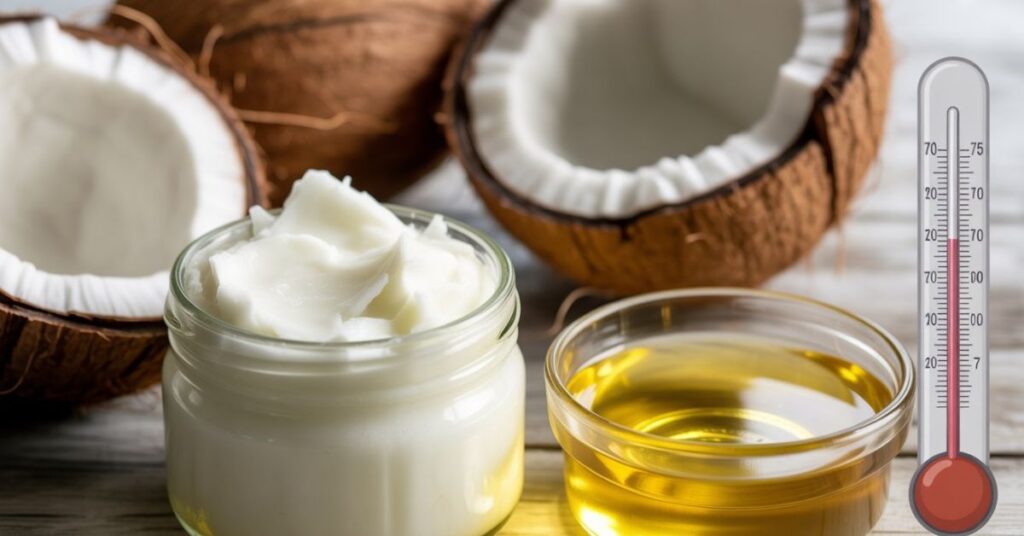
Coconut oil naturally changes texture depending on temperature. It becomes liquid in warm conditions and solid in cooler environments, yet it usually remains stable and safe in both states.
Understanding how weather affects coconut oil helps you store it properly throughout the year.
Storing Coconut Oil in Hot Weather
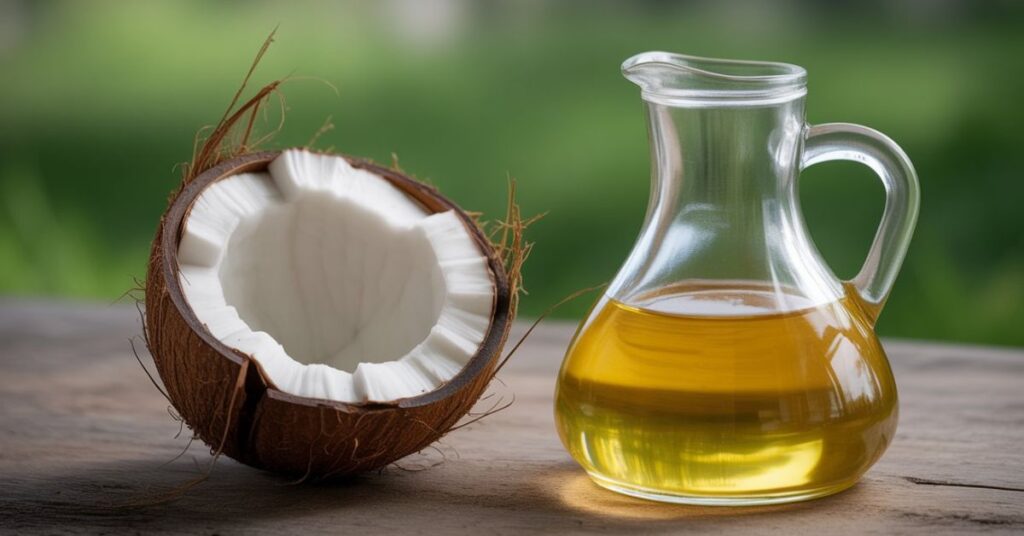
During summer or in warm climates, coconut oil often melts completely into a clear liquid. This is a natural reaction to heat and does not mean the oil has spoiled.
Even in hot weather, refrigeration is usually unnecessary. Coconut oil can safely remain at room temperature without losing quality.
If your kitchen becomes extremely hot for long periods, storing the jar in a cool cabinet or shaded pantry can help maintain consistency and freshness.
What Happens in Cold Temperatures?
In winter or colder environments, coconut oil naturally hardens and may become solid like butter. This is completely normal and does not affect safety or nutritional value.
Solidification simply happens because coconut oil contains a high amount of saturated fat. You can still scoop, melt, and use it normally without any problem.
Do Temperature Changes Damage Coconut Oil?
Many kitchens experience frequent temperature fluctuations throughout the day due to cooking heat or changing weather. Fortunately, coconut oil handles these changes very well.
Switching repeatedly between liquid and solid form does not damage:
- Quality
- Freshness
- Safety
- Nutritional properties
The most important factor is keeping the container sealed and protected from moisture or contamination.
Best Storage Advice in Any Climate
No matter the season, coconut oil stays fresh longest when stored in:
- A cool, dry place
- A tightly sealed container
- An area away from direct sunlight
- A moisture-free environment
These simple storage habits are far more important than refrigeration in most situations.
Read More:https://pureoilshub.com/coconut-oil-shelf-life/
Does Coconut Oil Need to Be Refrigerated for Long-Term Storage
When people plan long-term storage, they often ask whether coconut oil needs refrigeration to extend its shelf life. Coconut oil is already one of the most stable natural oils, so you usually do not need to refrigerate it even for long-term use.
Proper storage matters more than refrigeration. If you store it correctly, coconut oil can last for years without losing quality.
Let’s break it down in detail.
Does refrigeration increase coconut oil’s shelf life?
A common belief is that refrigeration increases shelf life. However, when we consider whether coconut oil needs refrigeration for this purpose, the answer is still no.
Coconut oil naturally resists oxidation because it contains high saturated fats. This means it already has a long shelf life at room temperature.
Refrigeration does not significantly improve its lifespan. Instead, it only changes texture and makes it harder to use.
Does coconut oil need refrigeration after you open the jar?
After opening, exposure to air becomes the main concern. Many users wonder whether coconut oil needs refrigeration after opening the jar to keep it fresh.
Even after opening, refrigeration is not necessary. You only need to:
- Close the lid tightly after each use
- Avoid introducing water or food particles
- Store it in a cool, dry place
These simple steps are enough to maintain quality for a long time.
Does coconut oil need refrigeration for bulk or commercial storage?
In bulk storage or commercial use, stability becomes more important. Still, when people ask whether coconut oil needs refrigeration for bulk or commercial storage, the answer is usually no.
Workers and suppliers often store large containers in warehouses at room temperature under controlled conditions.
The key is avoiding heat, sunlight, and moisture exposure.
Storage Methods vs Shelf Life Impact Table
| Storage Method | Refrigeration Needed | Shelf Life Impact | Best Use Case |
| Room temperature (sealed jar) | No | 18–24 months or more | Daily home use |
| Pantry storage (cool & dark) | No | Up to 2 years+ | Regular cooking use |
| Refrigerator storage | Optional | No major improvement | Hot climates or preference |
| Bulk storage containers | No | Long-term stability | Commercial/warehouse storage |
Can Coconut Oil Stay at Room Temperature?
One of the most common storage concerns is whether coconut oil should be refrigerated or kept at room temperature. In most situations, coconut oil stays perfectly safe and stable without refrigeration.
Because coconut oil contains a high amount of saturated fats, it naturally resists oxidation and spoilage better than many other cooking oils. This makes room temperature storage suitable for daily use in both cooking and skincare routines.
Pantry Storage Is Usually Best
For most households, a cool and dry pantry is the ideal place to store coconut oil. Proper pantry storage protects the oil from the factors that actually affect quality, such as heat, sunlight, and moisture.
Helpful storage habits include:
- Keeping the container tightly sealed
- Storing it away from direct sunlight
- Avoiding areas close to stove heat or steam
With these simple precautions, coconut oil can remain fresh for a long time without refrigeration.
Using Coconut Oil for Skin and Hair Care
Many people keep coconut oil in the bathroom for skincare or haircare use. While refrigeration is still unnecessary, bathrooms may not be the best storage location because of humidity and changing temperatures.
For better long-term quality:
- Store the jar in a dry cabinet
- Keep the lid closed after each use
- Avoid introducing water with wet hands or tools
A stable and dry environment helps maintain freshness more effectively than refrigeration.
Keeping Coconut Oil in the Kitchen
If you regularly use coconut oil for cooking or baking, room temperature storage is often the most convenient option.
Keeping it accessible on a kitchen shelf or counter makes daily use easier, and the oil’s natural stability allows it to handle normal kitchen conditions well.
Whether coconut oil is solid or liquid does not affect its cooking performance. It naturally melts and hardens depending on room temperature while still remaining safe to use.
The Most Important Storage Rule
The key to maintaining coconut oil quality is not refrigeration but proper handling. No matter where you store it, always:
- Keep moisture out of the container
- Use clean utensils
- Protect it from excessive heat and sunlight
- Seal the container properly after use
Following these habits is usually enough to keep coconut oil fresh at room temperature for many months.
Does Coconut Oil Need to Be Refrigerated When It Changes Form
Coconut oil is unique because it naturally changes form depending on temperature. It can be solid in cool conditions and liquid in warm conditions. This often confuses users and leads them to ask whether coconut oil needs refrigeration when these changes happen.
The important thing to understand is that these physical changes are completely normal. They do not affect quality, safety, or usability.
Let’s break it down clearly.
Does coconut oil need refrigeration when it becomes solid in cold temperatures?
In colder temperatures, coconut oil naturally turns solid and becomes white or creamy in texture. Many people think this means it needs refrigeration.
So, does coconut oil need refrigeration when it becomes solid in cold temperatures?
No. It does not require refrigeration because solidification is a natural response to temperature, not a sign of spoilage.
You can still use it directly in cooking or skincare without any issue.
Does coconut oil need refrigeration when it melts and then re-solidifies?
Coconut oil often melts in warm weather and re-solidifies when it cools again. This cycle is completely normal in daily use.
So, does coconut oil need refrigeration when it melts and then re-solidifies?
No. These changes are purely physical and do not affect chemical stability or shelf life.
Coconut oil remains safe even after multiple melting and solidifying cycles.
Does coconut oil need refrigeration if its texture or color changes?
Sometimes coconut oil may show slight texture variations or appear cloudy or grainy. This leads to concern about storage.
So, does coconut oil need refrigeration if its texture or color changes?
Not necessarily. Most temperature fluctuations cause these changes, not spoilage.
However, if you notice a strong bad smell or unusual taste, it may indicate degradation not a refrigeration issue.
Normal signs like:
- White solid texture
- Clear liquid form
- Slight cloudiness in cold
are all safe and expected.
How to Store Coconut Oil Properly Without Refrigeration
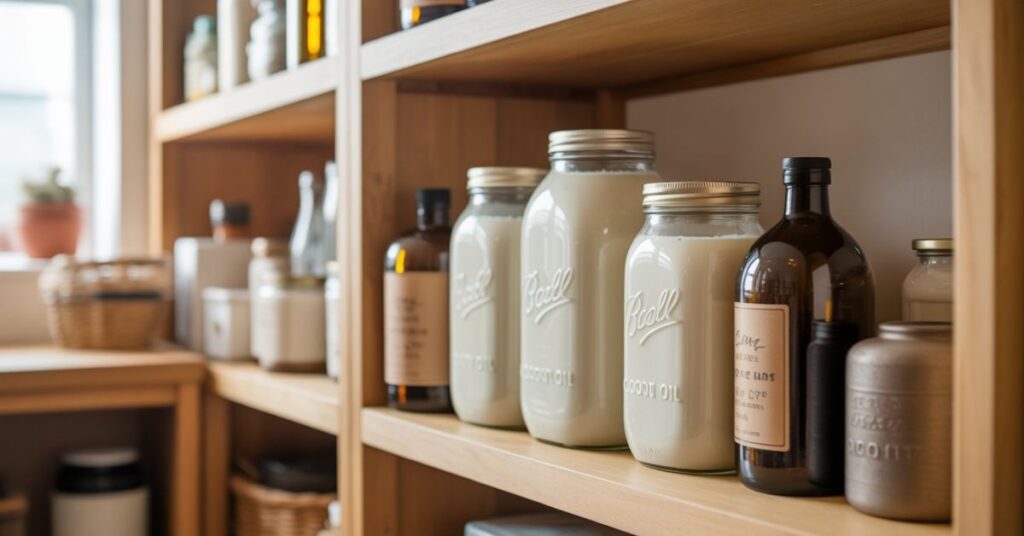
Many people wonder whether coconut oil needs refrigeration, but the more important question is actually how to store it correctly. Coconut oil is naturally stable, and with proper handling, it can stay fresh for a long time without refrigeration.
The key is not cold storage—it’s protecting the oil from heat, moisture, air, and contamination. These factors have a much bigger impact on quality than temperature alone.
Let’s explore the most effective storage methods.
Why Proper Sealing Matters More Than Refrigeration
One of the biggest mistakes people make is leaving coconut oil exposed to air for long periods. Instead of focusing on whether coconut oil needs refrigeration, sealing the container properly is far more important.
Good storage habits include:
- Keeping the lid tightly closed after every use
- Minimizing air exposure inside the jar
- Preventing water, food particles, or moisture from entering
Air and contamination are the real causes of slow quality loss not room temperature.
How Coconut Oil Compares to Other Cooking Oils
When comparing different cooking oils, coconut oil is one of the most stable options available.
In general:
- Coconut oil → very stable, long shelf life, no refrigeration needed
- Olive oil → stable but sensitive to heat and light
- Sunflower oil → more prone to oxidation over time
Because of its natural composition, coconut oil resists spoilage better than many common kitchen oils, making refrigeration unnecessary in most cases.
The Role of Light, Heat, and Storage Environment
Instead of asking whether coconut oil needs refrigeration, it is more useful to focus on environmental protection.
To maintain freshness:
- Store in a dark cupboard or pantry
- Keep away from stoves, ovens, or direct heat sources
- Avoid sunlight exposure for long periods
- Use a clean, dry spoon each time
Heat and light gradually reduce quality over time, while a cool, stable environment helps preserve its natural properties.
Best Practice for Long-Term Freshness
The best way to store coconut oil is simple and consistent. You don’t need refrigeration if you follow basic care habits:
- Seal it tightly
- Keep it dry
- Store it in a cool, shaded place
- Avoid contamination during use
With these practices, coconut oil can stay fresh, safe, and usable for many months without needing a refrigerator.
How to Tell If Coconut Oil Has Gone Bad
Many users worry about spoilage and ask whether coconut oil should be refrigerated for safety. The truth is that coconut oil is naturally stable, but like any natural product, it can eventually lose quality if stored improperly or kept for too long.
Refrigeration is not the main factor that prevents spoilage. Proper storage habits and recognizing warning signs are much more important.
Let’s understand how to identify changes in coconut oil quality.
What Causes Coconut Oil to Spoil?
Coconut oil naturally resists bacterial growth because it contains very little water. This makes it more stable than many other cooking oils and fats.
Most quality problems happen because of:
- Excessive heat exposure
- Air and moisture contamination
- Direct sunlight
- Storage beyond its shelf life
Poor storage conditions are usually the real cause of spoilage, not the lack of refrigeration.
Signs Your Coconut Oil May Be Bad
One of the easiest ways to identify spoiled coconut oil is by checking its smell, taste, and appearance.
Common warning signs include:
- Rancid or sour odor
- Bitter or unpleasant taste
- Yellowish or dark discoloration
- Unusual texture changes
Fresh coconut oil normally has a mild, clean coconut aroma. If the smell becomes sharp or unpleasant, the oil should be discarded.
Can Refrigeration Fix Spoiled Coconut Oil?
Some people think refrigeration can restore bad coconut oil, but that is not true.
If coconut oil already smells sour or tastes unusual, refrigeration will not improve its quality. Once the oil becomes rancid, it should no longer be used for cooking or skincare.
What Happens After Coconut Oil Passes Its Shelf Life?
Coconut oil usually lasts around 18–24 months or even longer when stored correctly. However, after the recommended shelf life, the oil may slowly begin to break down.
You should consider discarding coconut oil if:
- It smells unpleasant
- The texture becomes strange
- It is far beyond the expiration date
- The color changes significantly
Even if expired coconut oil still looks normal, its freshness and effectiveness may decline over time.
Final Conclusion
Coconut oil is one of the most stable natural oils available. Across all conditions, types, and storage methods, the conclusion remains consistent:
does coconut oil need to be refrigerated no, it does not require refrigeration in normal home use.
Proper storage in a cool, dry, and dark place is enough to maintain quality, freshness, and usability for a long time.
FAQs
Does coconut oil need to be refrigerated for safety reasons
No, coconut oil does not need refrigeration for safety. When users ask does coconut oil need to be refrigerated for safety reasons, the answer remains no because coconut oil naturally resists bacteria and spoilage due to its high saturated fat content.
Proper sealing and clean handling are enough to keep it safe.
Does coconut oil need to be refrigerated if stored for 2 years
If you store coconut oil for a long time, you may wonder does coconut oil need to be refrigerated if stored for 2 years.
Even for long storage periods, refrigeration is not required. However, it must be kept in a cool, dark place. If stored properly, coconut oil can remain usable for up to 2 years or more without refrigeration.
Does coconut oil need to be refrigerated after opening the container
Many people ask does coconut oil need to be refrigerated after opening the container because exposure to air seems risky.
The answer is still no. After opening, just make sure to:
- Close the lid tightly
- Avoid moisture contamination
- Store it in a stable environment
This is enough to maintain freshness.
Does coconut oil need to be refrigerated or is it safe unrefrigerated
The most common question is does coconut oil need to be refrigerated or is it safe unrefrigerated.
Coconut oil is completely safe and unrefrigerated when stored properly. Its natural composition makes it resistant to spoilage, so refrigeration is optional and not necessary for everyday use.