Introduction
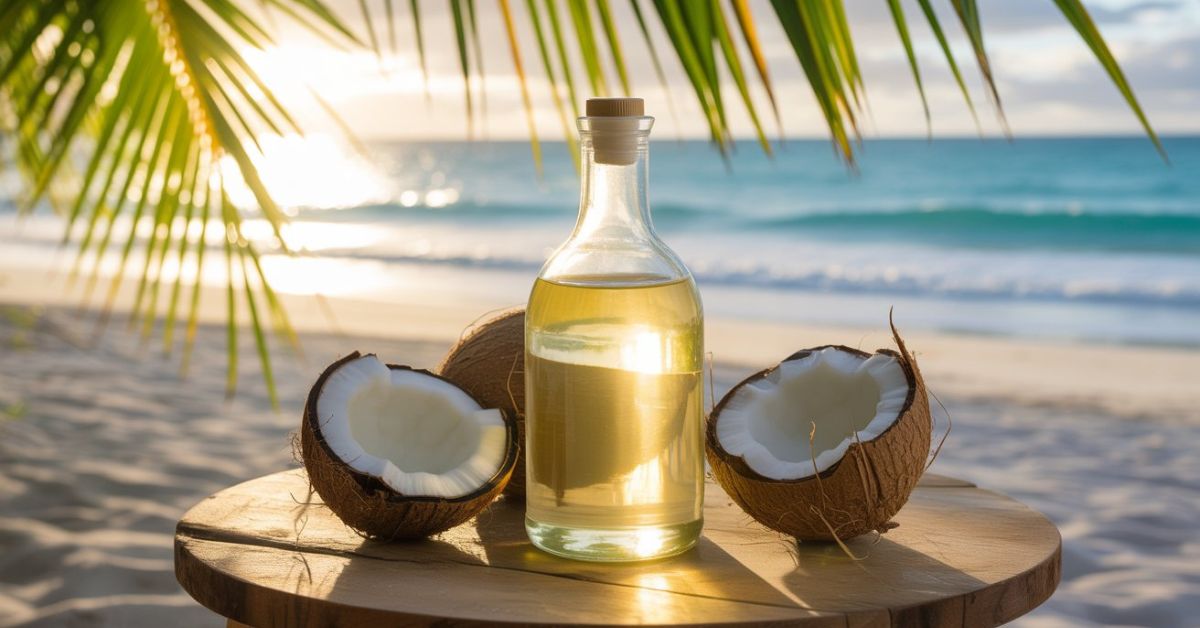
Coconut oil as sunscreen has become a popular topic in natural skincare discussions. Many people believe it can replace chemical sunscreens and offer safe sun protection. This belief comes from its natural origin, moisturizing properties, and traditional use in skincare routines.
However, when we carefully analyze coconut oil as sunscreen, the reality is more complex. It does provide some level of protection, but it is not strong enough to fully block harmful UV rays. This is why dermatologists often warn against relying on it as a complete sun protection solution.
In this guide, we will explore coconut oil as sunscreen in detail, including its SPF level, scientific evidence, benefits, risks, and safe usage. You will also learn whether it is a myth, a partial solution, or a complete replacement for modern sunscreen.
What Is Coconut Oil and Why Is Coconut Oil as Sunscreen Trending?
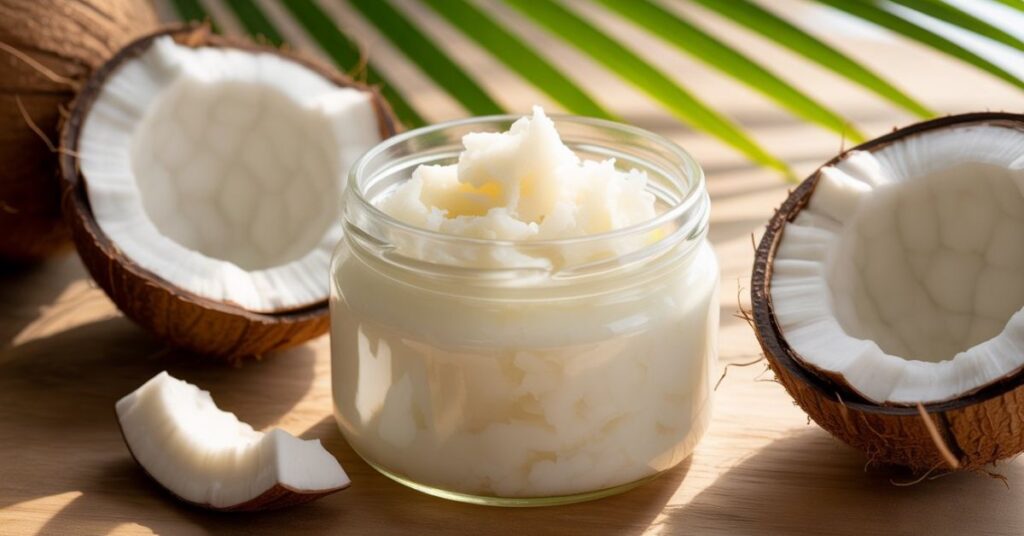
Coconut oil comes from mature coconuts. People use it widely in cooking, hair care, and skin care because it contains rich fatty acids and provides strong moisturizing benefits.
In recent years, coconut oil as sunscreen has gained attention on social media and natural lifestyle communities.
Many people are shifting toward “chemical-free” skincare products, which is one reason why is becoming so popular. It is affordable, easily available, and often promoted as a natural alternative to commercial sunscreens.
However, popularity does not always mean effectiveness, and this is where confusion begins around as sunscreen.
What Makes Coconut Oil Popular for Skin Care
Coconut oil is popular because it feels lightweight on the skin and provides deep hydration. It creates a soft layer that locks moisture inside the skin, making it appealing for dry skin users.
Another reason coconut oil as is discussed is its natural antioxidant content. People assume that if it is good for skin repair, it must also protect from sun damage, which is not entirely accurate.
Key Compounds Behind Coconut Oil Benefits
Coconut oil contains lauric acid, fatty acids, and small amounts of antioxidants. These compounds help in moisturizing and soothing the skin.
However, these compounds do not provide strong UV filtering ability, which is why as sunscreen has limited scientific support when it comes to sun protection.
Traditional Uses vs Modern Trends
Traditionally, people in tropical regions used coconut oil to prevent dryness and soothe skin after sun exposure. They never intended it to fully block UV rays.
Can Coconut Oil as Sunscreen Really Work?
When people search for as sunscreen, the main question behind it is simple: can it actually protect the skin from the sun? The answer is partly yes, but with important limitations.
they does have some mild ability to block UV rays, but it is not strong or consistent enough to act as a full sunscreen. It can slightly reduce UV exposure, but it cannot provide reliable protection during long sun exposure.
What “Natural Sunscreen” Means
The term “natural sunscreen” describes oils and plant-based ingredients that provide only minimal UV protection. Coconut oil fits into this category because it is natural, chemical-free, and gentle on the skin.
However, “natural” does not automatically mean “effective.” Natural oils may provide hydration and minor protection, but they rarely match the performance of tested SPF products.
In simple terms, coconut oil as can support skin comfort but cannot guarantee full UV protection.
Is Coconut Oil as Sunscreen Effective or a Myth?
Coconut oil as sunscreen is partly a myth and partly misunderstood truth. It is true that coconut oil has a small natural SPF value, but it is very low compared to commercial sunscreens.
Most dermatologists agree that relying only on as can increase the risk of sunburn and long-term skin damage. So while it is not completely useless, it is definitely not enough on its own.
How Coconut Oil Interacts with Sunlight
Coconut oil forms a thin oily layer on the skin surface. This layer can slightly reduce water loss and provide a soft barrier. Because of this, it may partially reduce some UV rays.
However, sunlight contains strong UVA and UVB rays that easily penetrate this weak barrier. That is why as sunscreen cannot stop deep skin damage or prevent tanning effectively.
In short, it offers minimal surface-level protection but not real sun defense.
Coconut Oil as Sunscreen SPF and UV Protection Explained
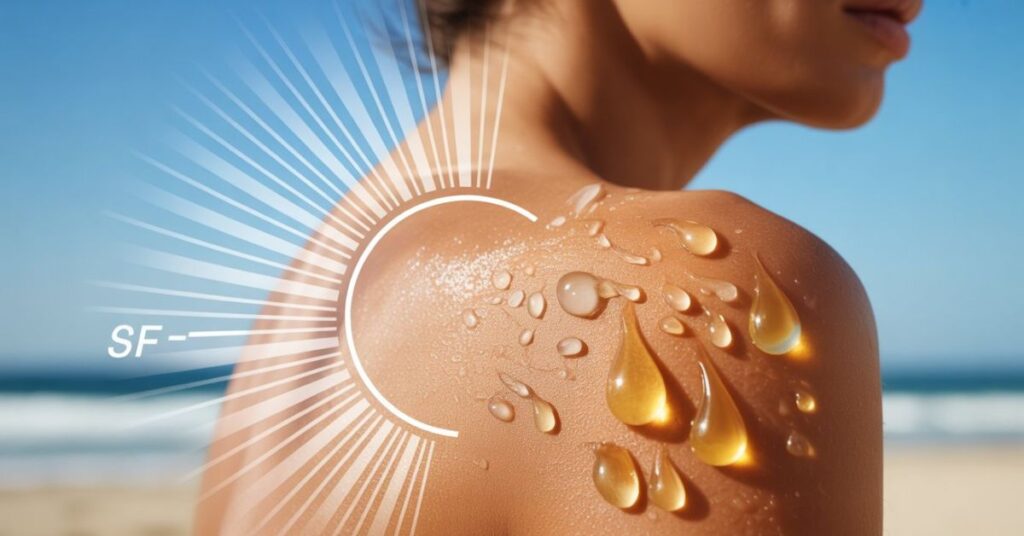
One of the most important things to understand about as sunscreen is its SPF level and how it interacts with UV radiation. Many people assume that because it is natural, it must offer strong protection. In reality, the protection level is very low compared to dermatologically tested sunscreens.
SPF (Sun Protection Factor) measures how well a product protects the skin from UVB rays, which are mainly responsible for sunburn. Coconut oil as has a very limited SPF value, which makes it unsuitable as a standalone sun protection method.
What Is the SPF of Coconut Oil as Sunscreen?
Studies suggest that coconut oil as has an estimated SPF of around 4 to 7.
To put it in perspective:
- SPF 15 blocks about 93% of UVB rays
- SPF 30 blocks about 97%
- SPF 50 blocks about 98%
Coconut oil as sunscreen does not even come close to these levels. This means it may slightly delay sun damage, but it cannot prevent it effectively.
UVA vs UVB Protection in Coconut Oil as Sunscreen
Sunlight contains two main harmful rays: UVA and UVB.
- UVB rays cause sunburn and surface skin damage
- UVA rays penetrate deeper and cause aging and long-term skin damage
Coconut oil as offers very limited protection against UVB rays and almost no reliable protection against UVA rays. This is a major limitation because both types of rays affect skin health differently.
Because of this imbalance, they cannot be considered a full-spectrum sunscreen.
Why Coconut Oil as Sunscreen Has Limited Protection
There are a few key reasons why as sunscreen is not highly effective:
First, it does not contain strong UV-filtering compounds like zinc oxide or titanium dioxide. These are the ingredients that block or reflect UV rays in real sunscreens.
Second, coconut oil absorbs into the skin rather than forming a strong protective layer on top. This reduces its ability to act as a barrier.
Finally, its protection level is not stable and can change depending on heat, sweating, and skin type.
Scientific Evidence on Coconut Oil as Sunscreen
When we move beyond trends and look at as from a scientific point of view, the evidence becomes much clearer. While coconut oil does show some mild protective properties in laboratory settings, there is no strong clinical proof that it can work as a reliable sunscreen in real-life sun exposure.
Most scientific research on coconut oil focuses on its moisturizing, antibacterial, and anti-inflammatory effects, not on full UV protection. This is an important distinction because effectiveness requires consistent and tested UV blocking ability, which coconut oil does not fully provide.
Research Studies on Coconut Oil as Sunscreen
Some small studies suggest that coconut oil as may offer minimal UVB protection due to its natural fatty acid composition. However, these studies are limited and do not meet modern sunscreen testing standards.
In most dermatological research, coconut oil is categorized as a skin-conditioning agent rather than a UV filter. This means it can improve skin hydration but cannot reliably prevent sunburn or long-term UV damage.
Because of this, scientific literature does not recommend coconut oil as a primary sun protection method.
Testing Methods and Results
Sunscreens are tested using standardized SPF testing methods that measure how long skin can stay protected under UV exposure.
When as oil is tested under these conditions, results show:
- Very low and inconsistent SPF values
- No strong UVA protection
- High variability depending on skin absorption and application thickness
Unlike commercial sunscreens, coconut oil does not maintain a stable protective barrier on the skin, which reduces its reliability.
Comparison with Regular Sunscreens
When compared with regular products, coconut oil as sunscreen falls significantly behind.
- Commercial sunscreens are designed with UV filters that block or absorb harmful rays effectively
- Coconut oil mainly works as a moisturizer with weak incidental UV resistance
Even “natural” mineral sunscreens containing zinc oxide or titanium dioxide perform far better in protecting the skin.
This comparison clearly shows that as sunscreen cannot replace medically approved sun protection products.
Read More:https://pureoilshub.com/what-is-fractionated-coconut-oil/
Benefits of Coconut Oil as Sunscreen for Skin

Even though coconut oil as is not a complete sun protection solution, it still offers some real skincare benefits. These benefits are mainly related to hydration, skin comfort, and barrier support rather than UV blocking.
Many people use coconut oil because it feels natural, soothing, and nourishing on the skin. When used correctly, it can support overall skin health, especially in dry or damaged skin conditions.
However, it is important to remember that these benefits do not replace proper sunscreen protection.
Moisturizing Effects of Coconut Oil as Sunscreen
One of the strongest benefits of as sunscreen is its deep moisturizing ability. It penetrates the skin easily and helps lock in moisture.
This makes the skin feel soft and smooth, especially after sun exposure. However, this effect is hydration-based, not UV protection-based.
Antioxidant and Anti-Inflammatory Benefits
Coconut oil contains natural antioxidants that help reduce oxidative stress on the skin. This can slightly soothe irritation caused by sun exposure.
It also has mild anti-inflammatory properties that may help calm redness or dryness. This is why some people apply coconut oil after sun exposure rather than before.
Skin Barrier Support
Coconut oil as can support the skin’s natural barrier by reducing moisture loss. A stronger skin barrier helps the skin stay healthier and more resistant to environmental stress.
However, this support is indirect and does not mean it blocks UV rays effectively.
Benefits Overview Table
| Benefit Area | How Coconut Oil Helps | Limitation |
| Moisturizing | Deep hydration and soft skin | No UV protection |
| Antioxidants | Helps reduce skin stress | Weak against sun damage |
| Anti-inflammatory | Soothes redness and irritation | Not a treatment for sunburn |
| Skin barrier | Prevents moisture loss | Does not block UVA/UVB rays |
Why Coconut Oil as Sunscreen Is Not Enough
Even though coconut oil as is popular in natural skincare discussions, it is not enough to protect the skin from harmful sun exposure. The main issue is that it does not provide reliable or consistent UV protection.
Sunlight contains strong UVA and UVB rays that can damage skin cells even on cloudy days. Coconut oil may feel protective on the skin, but it does not block these rays effectively. This is why it should never be considered a complete sunscreen alternative.
Risks of Using Coconut Oil as Sunscreen Alone
Using coconut oil as alone creates a false sense of safety. People may stay in the sun longer, thinking they are protected, which increases the risk of skin damage.
This is especially dangerous during peak sunlight hours when UV radiation is strongest. Over time, this can lead to premature aging and uneven skin tone.
Sunburn and Skin Damage Risks
Coconut oil as cannot prevent sunburn in high UV conditions. Since its SPF level is very low, skin can still burn quickly during direct sunlight exposure.
Repeated sunburn increases the risk of long-term issues such as:
- Dark spots
- Fine lines
- Sun damage accumulation
- Increased skin sensitivity
This shows that coconut oil alone is not a safe sun protection method.
Dermatologist Opinions on Coconut Oil as Sunscreen
Most dermatologists clearly state that as should not replace commercial SPF products. While it may help with skin hydration, it does not provide scientifically proven UV protection.
Experts recommend using broad-spectrum sunscreen with SPF 30 or higher for daily protection. Coconut oil can be used alongside skincare routines, but not as the main defense against the sun.
Risks and Limitations of Coconut Oil as Sunscreen
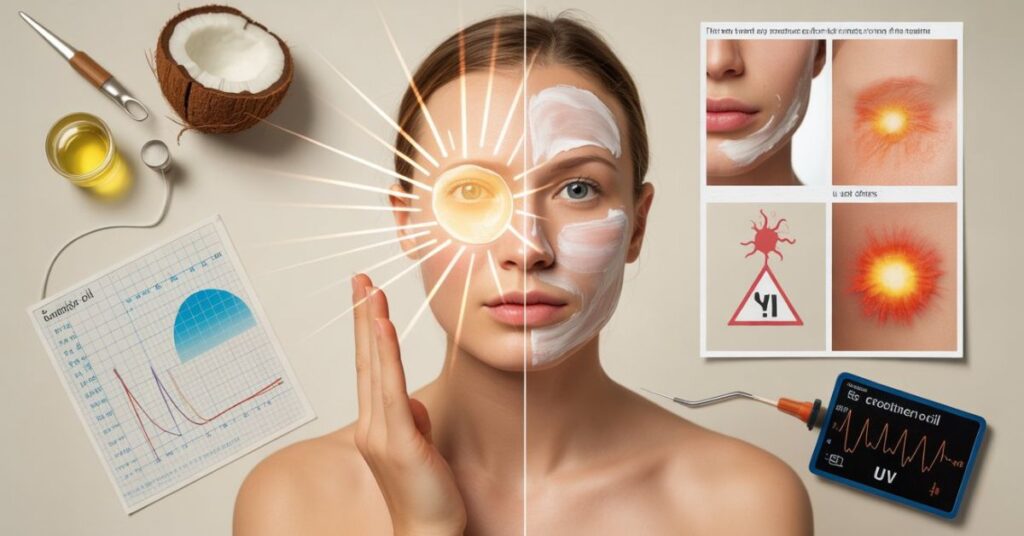
While coconut oil as is often promoted as a natural alternative, it comes with several serious limitations that users should understand before relying on it for sun protection. The biggest concern is that it does not provide dependable UV defense, which is essential for preventing skin damage.
Many people underestimate the strength of UV rays, and using coconut oil alone can create a risky gap in protection. This is where most problems begin.
Long-Term Damage Risks
Using coconut oil as over a long period without proper SPF protection can lead to gradual skin damage. Since it does not effectively block UVA and UVB rays, the skin remains exposed even if it feels moisturized.
Over time, this exposure may contribute to:
- Early signs of aging
- Uneven skin tone
- Loss of skin elasticity
- Increased pigmentation
These effects build slowly, making the risk even more dangerous because it is not immediately visible.
False Sense of Protection
One of the biggest problems with is psychological. It feels protective because it makes the skin soft and shiny, but this does not mean it is blocking UV rays.
This false sense of security often leads people to stay longer in the sun without real protection. As a result, the skin gets more UV exposure than expected, increasing the risk of damage.
Who Should Avoid Coconut Oil as Sunscreen
Not everyone should rely on coconut oil as sunscreen, especially people with sensitive skin or high sun exposure lifestyles.
It is strongly not recommended for:
- People with fair or sensitive skin
- Individuals living in hot or tropical climates
- Outdoor workers or athletes
- Anyone exposed to strong midday sunlight
For these groups, coconut oil alone is not enough and can significantly increase skin risk.
Safe Ways to Use Coconut Oil as Sunscreen Alternative
Even though coconut oil as sunscreen is not strong enough to replace real sun protection, it can still be used safely in certain ways. The key is understanding its role: it works better as a supportive skincare oil rather than a full UV shield.
When used correctly and at the right time, coconut oil can complement your skincare routine without putting your skin at unnecessary risk.
When Coconut Oil Can Be Used Safely
Coconut oil works best as sunscreen when you do not rely on it as your primary sunblock. Instead, you can use it in situations with minimal sun exposure.
For example:
- Early morning or late afternoon sun
- Short outdoor exposure
- Indoor skincare routines
In these cases, coconut oil helps moisturize the skin without exposing it to strong UV risks.
Coconut Oil as Sunscreen for Short Exposure
For very brief sun exposure, coconut oil as sunscreen may provide slight comfort by reducing dryness. However, even in short exposure, it should not be the only layer of protection.
It works best when combined with protective clothing, shade, or a proper sunscreen underneath or over it. On its own, it is not reliable for even moderate sun time.
Using Coconut Oil After Sun Exposure
One of the safest and most effective uses of coconut oil is after sun exposure.
After being in the sun, skin often becomes dry or irritated. Coconut oil helps:
- Rehydrate the skin
- Soothe mild redness
- Restore moisture balance
- Improve skin softness
In this way, coconut oil as sunscreen is more accurate when used as a post-sun skincare product, not as a protective barrier before sun exposure.
Coconut Oil as Sunscreen in DIY Recipes
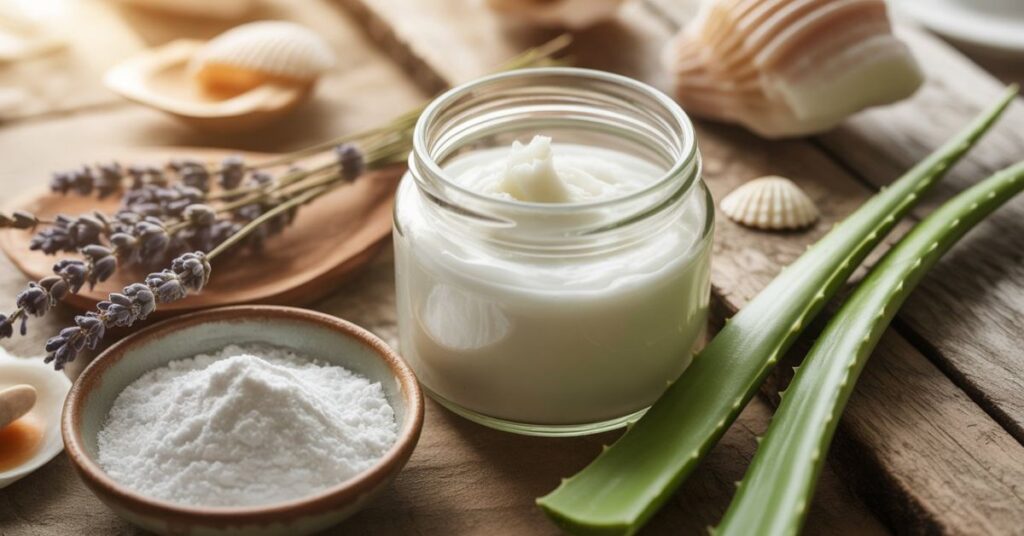
Many people try to turn coconut oil as sunscreen into homemade (DIY) sun protection products by mixing it with other natural ingredients. These recipes are popular in blogs and social media because they feel safe, cheap, and chemical-free.
However, it is very important to understand that DIY mixtures do not automatically become effective sunscreen. In most cases, they still lack proper UV testing and consistent SPF protection.
Why DIY Coconut Oil as Sunscreen Is Risky
The biggest issue with DIY coconut oil as sunscreen recipes is the absence of scientific testing. Even if natural ingredients are added, there is no guarantee of UV protection.
People often assume that combining oils, butters, or zinc powder creates a safe sunscreen. In reality, without lab testing, the SPF level is unknown and unreliable.
This can lead to unprotected sun exposure without the user realizing it.
Common Recipe Mistakes
Many DIY versions of coconut oil as sunscreen include ingredients like shea butter, essential oils, or zinc oxide powder. While these ingredients may benefit skin health, people often use them in incorrect ratios.
Common mistakes include:
- Adding too little or unevenly mixed zinc oxide
- Using essential oils that increase sun sensitivity
- Over-relying on coconut oil as the base protection
- Ignoring proper SPF formulation standards
These errors make the final product unsafe for real sun protection.
Safety Concerns
The main safety concern with coconut oil as sunscreen DIY recipes is false protection. Users may believe they are fully protected while they are actually exposed to harmful UV rays.
This increases the risk of:
- Sunburn
- Skin irritation
- Long-term UV damage
- Uneven pigmentation
Because of this, dermatologists strongly advise against replacing certified sunscreen with homemade versions.
How to Use Coconut Oil as Sunscreen Correctly
To understand coconut oil as sunscreen properly, it is important to set realistic expectations. You should not treat it as a full sun protection product. Instead, use it as a supportive skincare oil that works alongside proper sunscreen.
When used correctly, coconut oil can still fit into a healthy skincare and sun-care routine without increasing skin risks.
Combining Coconut Oil with Real Sunscreen
The safest way to use coconut oil as sunscreen is to combine it with a clinically tested sunscreen.
You can apply a broad-spectrum sunscreen first to protect the skin from UVA and UVB rays, and then use coconut oil lightly for added moisture if needed.
In this way, coconut oil acts as a hydration layer, not a protective barrier. This combination allows you to enjoy the benefits of both skincare and proper sun defense.
Best Practices for Skin Protection
If you are using coconut oil as sunscreen in any form, it is important to follow safe sun habits.
These include:
- Avoiding direct sun during peak hours (10 AM to 4 PM)
- Wearing protective clothing and sunglasses
- Staying in shaded areas when possible
- Reapplying real sunscreen regularly
Coconut oil alone should never be considered enough protection in these conditions.
Smart Skincare Routine
A balanced routine that includes coconut oil as sunscreen safely looks like this:
First, apply a proper sunscreen before sun exposure. After returning indoors, coconut oil can be used to soothe and moisturize the skin.
This approach ensures that your skin gets protection when it needs it and recovery when it is exposed.
Over time, this routine helps maintain healthier skin without relying on coconut oil as a protective sun shield.
Factors That Affect Coconut Oil as Sunscreen Effectiveness
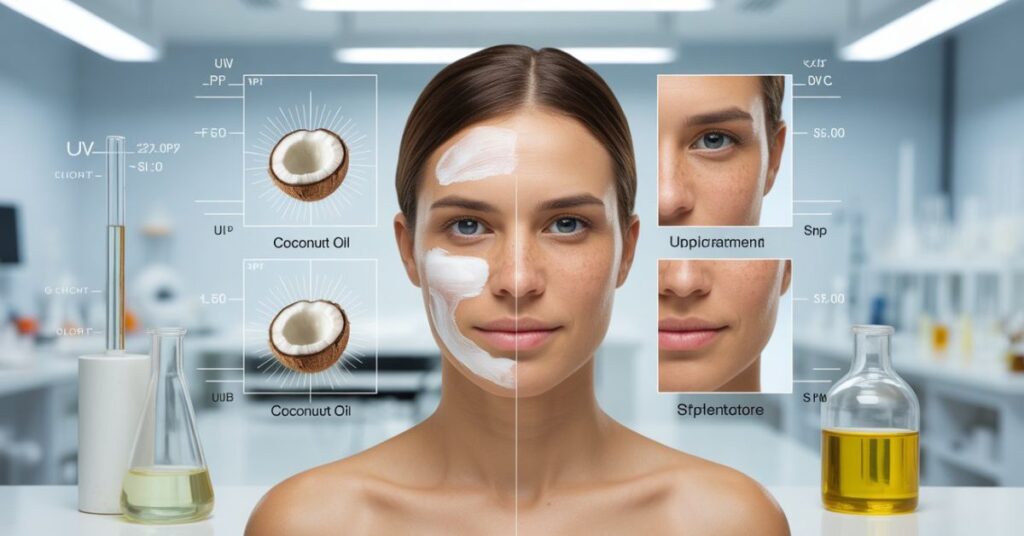
The performance of coconut oil as sunscreen is not fixed. It can change depending on several natural and product-related factors. These variations are one of the main reasons why coconut oil cannot be considered a reliable or consistent sun protection option.
Understanding these factors helps clarify why its SPF level is low and unstable in real-world conditions.
Virgin vs Refined Coconut Oil
One of the biggest differences comes from the type of coconut oil used.
Virgin coconut oil is less processed and contains more natural compounds, antioxidants, and aroma. Refined coconut oil is processed to remove smell and impurities, making it more stable but less nutrient-rich.
In terms of coconut oil as sunscreen, neither type provides strong UV protection. However, virgin coconut oil is often preferred for skincare because it is less chemically altered and more nourishing for the skin.
Still, both types remain weak when it comes to blocking UV rays.
Extraction Methods
The way coconut oil is extracted also affects its quality and skin performance. Cold-pressed methods preserve more natural nutrients, while heat extraction may reduce some beneficial compounds.
Even though better extraction methods can improve skin-feel and moisturizing ability, they do not significantly improve coconut oil as sunscreen effectiveness.
This means the extraction method mainly influences skincare benefits, not sun protection strength.
Quality Differences
Not all coconut oils are the same. Quality depends on freshness, purity, storage conditions, and processing standards.
High-quality coconut oil may feel smoother on the skin and absorb better, but it still does not provide reliable SPF protection.
Poor-quality or expired coconut oil may even irritate the skin, making it unsuitable for use on sensitive skin types.
This variation in quality is another reason why coconut oil as sunscreen cannot be standardized or trusted for UV protection.
Final Verdict
After analyzing coconut oil as sunscreen from scientific, practical, and dermatological perspectives, the conclusion is quite clear. Coconut oil has some skincare benefits, but it is not a reliable or safe replacement for proper sunscreen.
It may offer slight moisturization and very minimal UV resistance, but it cannot provide the level of protection needed to prevent sunburn, premature aging, or long-term skin damage.
Is Coconut Oil as Sunscreen Worth It?
Coconut oil as sunscreen is not worth using as your main sun protection method. While it feels natural and nourishing, its SPF level is too low to protect against real UV exposure.
It can be useful in skincare routines for hydration and post-sun care, but depending on it during sun exposure is risky.
In simple terms, it is supportive not protective.
Better Alternatives for Sun Protection
If you want safe and effective sun protection, dermatologists recommend using:
- Broad-spectrum sunscreen (SPF 30 or higher)
- Mineral sunscreens with zinc oxide or titanium dioxide
- Protective clothing and hats
- Seeking shade during peak sun hours
These methods are scientifically tested and proven to reduce UV damage significantly.
Coconut oil as sunscreen can still be part of your skincare routine, but only as a supplement, not a replacement.
FAQs
Does coconut oil as sunscreen protect from UV rays?
Coconut oil as sunscreen provides only very limited protection against UV rays. It may slightly reduce UVB exposure, but it does not offer strong or reliable defense against UVA and UVB radiation. That is why it cannot replace proper sunscreen.
Can coconut oil as sunscreen prevent tanning?
No, coconut oil as sunscreen cannot fully prevent tanning. Since its SPF level is very low, skin can still absorb UV rays, which leads to tanning over time. It may slow it down slightly, but it will not stop it.
Is coconut oil as sunscreen safe daily?
Coconut oil is safe for daily skin use as a moisturizer, but not safe as a daily sun protection method on its own. If used in the sun without proper sunscreen, it may increase the risk of skin damage.
Can it replace sunscreen completely?
No, coconut oil as sunscreen cannot replace sunscreen completely. It lacks strong UVA and UVB protection, which are essential for preventing sunburn, aging, and long-term skin damage. It should only be used as a skincare support product.
Why do people believe in coconut oil as sunscreen?
People believe in coconut oil as sunscreen because it is natural, widely available, and feels protective on the skin. Social media trends and traditional use also contribute to this belief. However, scientific evidence does not support it as a full sunscreen replacement.