Introduction:
Olive oil is one of the most versatile and widely used oils in kitchens worldwide. But beyond its taste and aroma, understanding the olive oil smoke point is crucial for safe and healthy cooking. Cooking above the smoke point can damage the oil, create harmful compounds, and affect flavor. Whether you are frying, sautéing, or baking, knowing the smoke point of different types of olive oil ensures you cook efficiently while preserving nutrients.
In this guide, we will explore olive oil types, factors affecting smoke point, cooking tips, myths, and comparisons with other popular oils to help you become a confident cook using the right oil at the right temperature.
What Is Olive Oil and Why It Matters in Cooking
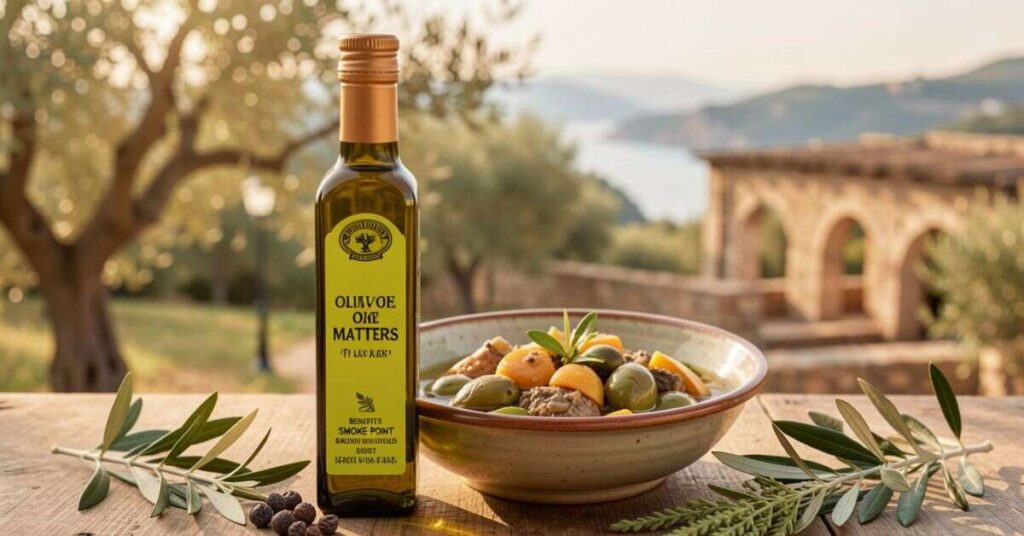
Olive oil is extracted from the fruit of the olive tree and has been a staple in Mediterranean cuisine for centuries. Its popularity comes not only from its flavour but also from its health benefits and versatility in cooking.
Types of Olive Oil
- Extra Virgin Olive Oil (EVOO):
- Extracted using cold-pressing methods without chemical treatment.
- Rich in antioxidants, polyphenols, and vitamins.
- Has a lower smoke point (around 190–210°C / 374–410°F), making it ideal for dressings, drizzling, or low-heat cooking.
- Extracted using cold-pressing methods without chemical treatment.
- Virgin Olive Oil:
- Slightly refined compared to EVOO.
- Smoke point ranges between 210–220°C (410–428°F).
- Slightly refined compared to EVOO.
- Refined Olive Oil:
- Chemically or heat-refined to remove impurities.
- Higher smoke point (220–240°C / 428–464°F), suitable for frying and high-heat cooking.
- Chemically or heat-refined to remove impurities.
- Olive Pomace Oil:
- Extracted from the residue left after pressing olives.
- Often used for deep frying due to its high smoke point.
- Extracted from the residue left after pressing olives.
Importance in Cooking
Using the right type of olive oil ensures:
- Proper flavor development.
- Preservation of nutrients and antioxidants.
- Safe cooking without producing smoke or harmful compounds.
For example, using extra virgin oil as a guide ensures you don’t overheat your oil, preserving both taste and health benefits.
Understanding Olive Oil Smoke Point: Definition and Importance
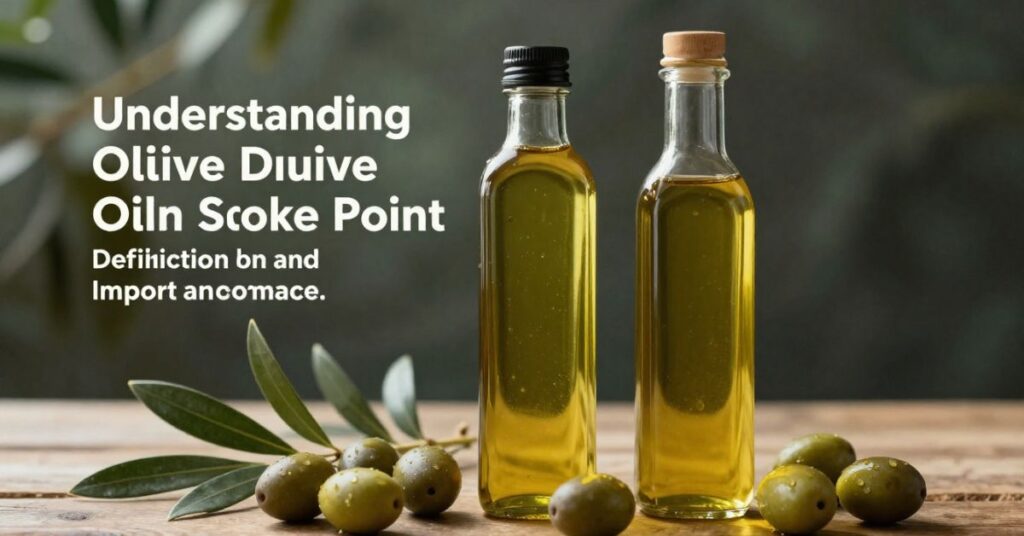
The olive oil smoke point is the temperature at which olive oil starts to produce visible smoke when heated. This is not just a visual cue it signals chemical changes in the oil that can affect flavour, nutrition, and safety. Cooking above the smoke point can break down healthy fats, create free radicals, and give your food a burnt or bitter taste.
Why Olive Oil Smoke Point Matters
- Flavour Preservation:
Heating olive oil beyond its smoke point alters its delicate flavour. For example, extra virgin oil is lower, so drizzling it over salads or lightly sautéing preserves its fruity and peppery notes. - Nutrient Protection:
Olive oil contains antioxidants like polyphenols and vitamin E. Overheating can destroy these beneficial compounds. Understanding oil vs avocado or other oils helps you select the right oil for high-heat cooking while protecting nutrients. - Cooking Safety:
When oil smokes, it can release harmful compounds and irritate the respiratory system. Knowing the olive oil smoke point dangerous threshold ensures safer cooking. - Cooking Method Guidance:
Different cooking methods require different smoke points. For example:
- Frying: High smoke point oils are safer.
- Baking: Medium smoke point oils like refined olive oil work well.
- Sautéing: EVOO works if used at moderate temperatures.
- Frying: High smoke point oils are safer.
Quick Fact:
Extra virgin olive oil smoke point is often confused as “too low for cooking,” but it is perfectly suitable for most stovetop methods if monitored carefully.
By understanding the olive oil smoke point, cooks can make smarter choices, prevent wasted oil, and maximize both flavor and health benefits.
Factors That Influence Olive Oil Smoke Point
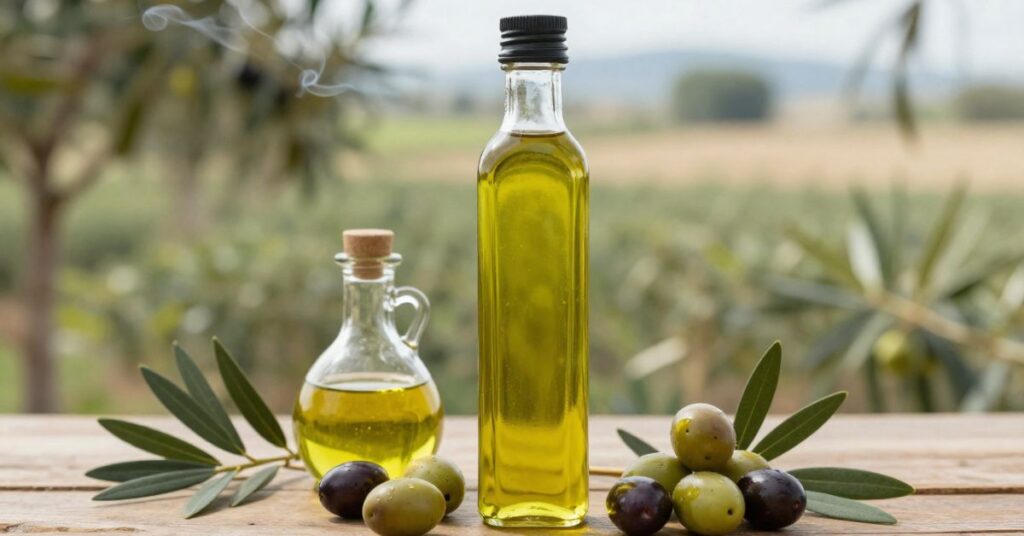
The olive oil smoke point is not a fixed number. Several factors influence it, making it important for cooks to understand what affects how high you can safely heat your oil. Choosing the right type of olive oil for your cooking method depends on knowing these key elements.
Type of Olive Oil and Refinement Level
The most important factor is the type of olive oil you use. Extra virgin olive oil is minimally processed, which preserves flavor and nutrients but results in a lower smoke point, usually around 190–210°C (374–410°F). On the other hand, refined olive oil has impurities removed through heat or chemical processing, which increases the to around 220–240°C (428–464°F). This is why high-heat cooking like frying is safer with refined oils. The refinement level directly affects how resistant the oil is to breaking down at high temperatures, and understanding vs extra virgin helps in selecting the right oil for your dish.
Freshness and Storage
Freshness also plays a crucial role in determining the olive oil smoke point. Oxidation over time can lower the temperature at which oil begins to smoke. Exposure to air, light, and heat can degrade the oil, making it more prone to burning. Storing olive oil in a cool, dark place and using it within its recommended shelf life ensures that the remains stable. Even high-quality EVOO can develop a lower smoke point if stored improperly.
Stability vs Smoke Point
While smoke point is a useful guide, it does not fully indicate oil stability. Stability refers to how well an oil resists oxidation and maintains its nutrients when heated. Extra virgin olive oil has excellent stability due to high levels of antioxidants, even if its smoke point is moderate. This means you can safely cook at slightly lower temperatures without losing nutritional value. It’s also why some chefs prefer EVOO for sautéing or low-to-medium heat frying, relying on stability rather than just smoke point alone.
Additional Factors
Other factors like the presence of food particles, repeated heating, and even cooking equipment can affect when olive oil begins to smoke. For instance, leftover residue in a pan can lower the effective oil, causing smoking at lower temperatures than expected.
Understanding these factors ensures you can cook safely, retain flavor, and protect the health benefits of olive oil. By considering type, freshness, and stability together, you can make informed decisions and avoid cooking mishaps caused by overheated oil.
Cooking Techniques and Olive Oil Smoke Point Guidelines
Understanding the olive oil smoke point is essential for selecting the right oil for different cooking methods. Using olive oil above its smoke point can not only ruin the flavor of your dish but also reduce its nutritional benefits and produce harmful compounds. By matching the cooking technique with the proper olive oil type and temperature, you can ensure safe and delicious results.
Safe Temperature Ranges for Common Cooking Methods
Different cooking methods require different temperature ranges, and knowing the oil helps you stay within safe limits:
- Sautéing: Low to medium heat is ideal for extra virgin olive oil. The delicate flavor and antioxidants are preserved when temperatures remain below 190–200°C (374–392°F). This makes EVOO perfect for vegetables, light meats, and stir-fries.
- Frying: Deep frying or pan-frying requires higher heat. Refined or pure olive oil is better suited here due to its higher olive oil smoke point of 220–240°C (428–464°F). Using EVOO for frying can lead to smoke and loss of nutrients.
- Baking: Olive oil is often used in baked goods, and the oven temperature rarely exceeds 200°C (392°F). Both extra virgin and refined olive oils work well, making it versatile for cakes, bread, or roasted vegetables.
- Roasting: High-temperature roasting (above 200°C / 392°F) is best with refined olive oil or blends. EVOO can be used if temperatures are kept moderate, but overheating may trigger oil dangerous levels.
How Olive Oil Smoke Point Affects Different Cooking Methods
Using olive oil at or below its preserves its flavour and health benefits. Overheating causes oils to break down into free radicals, which can affect both taste and health. For instance, frying chicken at too high a temperature with EVOO may create a bitter taste and degrade antioxidants, whereas using refined olive oil maintains safety and flavor.
Quick Reference Table: Olive Oil Types and Cooking Guidelines
| Olive Oil Type | Smoke Point (°C / °F) | Best Cooking Use |
| Extra Virgin Olive Oil (EVOO) | 190–210°C / 374–410°F | Sautéing, salad dressings, light roasting |
| Virgin Olive Oil | 210–220°C / 410–428°F | Medium-heat cooking, baking |
| Refined Olive Oil | 220–240°C / 428–464°F | Frying, high-heat roasting |
| Olive Pomace Oil | 230–240°C / 446–464°F | Deep frying, high-heat cooking |
This table makes it easy to pick the right olive oil for your cooking needs and ensures you stay safely below the olive oil smoke point.
Expert Tips for Buying Olive Oil to Maximize Smoke Point
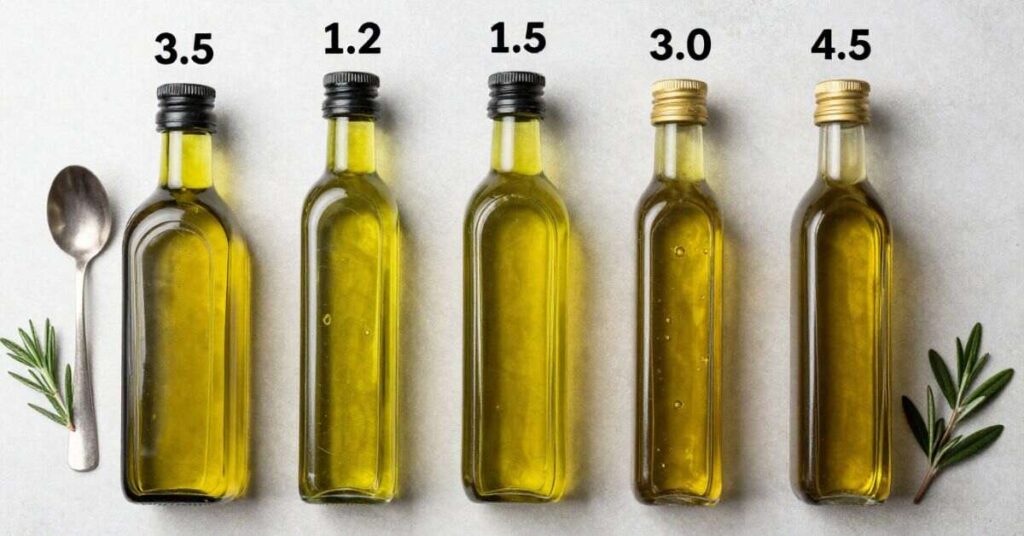
Choosing the right olive oil is key to cooking safely and preserving flavor and nutrients. Understanding the oil helps you pick oils that match your cooking style and temperature needs. Here are expert tips for buying and storing olive oil to get the most out of every bottle.
Choosing High-Quality Olive Oil
Not all olive oils are created equal. High-quality olive oils tend to have a higher effective smoke point because they are fresh, properly processed, and free of impurities. When buying, look for:
- Extra Virgin Olive Oil: Best for flavor and low-to-medium heat cooking. Check for certifications such as PDO (Protected Designation of Origin) or COOC (California Olive Oil Council) for authenticity.
- Refined or Pure Olive Oil: Better for frying or high-heat cooking. The refining process removes impurities that can lower the smoke point.
- Packaging: Dark glass bottles or tins protect the oil from light and maintain its stability. Avoid clear plastic bottles that can degrade oil quality over time.
Knowing the extra virgin helps you understand why certain bottles are ideal for drizzling or sautéing, while refined oils are better for frying.
Storing Olive Oil to Preserve Smoke Point and Flavor
How you store the oil matters as much as the oil you select.Even high-quality olive oil can lose its smoke point if stored improperly. Keep these tips in mind:
- Temperature: Store olive oil in a cool, dark place, ideally between 14–18°C (57–64°F). Avoid keeping it near stoves, ovens, or sunlight.
- Seal: Always tightly close the cap after use. Exposure to air accelerates oxidation, which lowers the olive oil smoke point.
- Shelf Life: Use olive oil within 12–18 months of bottling. Over time, oils lose flavor, antioxidants, and heat stability.
- Pouring Practices: Avoid dipping food repeatedly into the bottle to prevent contamination, which can reduce the smoke point.
Bonus Tip: Checking Smoke Point in Practice
A simple way to test your oil before high-heat cooking is to heat a small amount in a pan. If it starts to shimmer but doesn’t smoke, it is within a safe range. Observing the oil in real-time can prevent overheating and protect both taste and nutrients.
By following these expert buying and storage tips, you ensure that your olive oil maintains its quality, flavor, and maximum smoke point. Cooking with fresh, properly stored olive oil makes a huge difference in both safety and culinary results.
Common Myths and Facts About Olive Oil Smoke Point
Despite being a kitchen staple, olive oil is surrounded by many misconceptions. Understanding the truth about the helps cooks make informed decisions and use it safely for both flavor and health.
Myth 1: Extra Virgin Olive Oil Can’t Be Heated
A common belief is that extra virgin is too low for any cooking. While EVOO has a lower smoke point (190–210°C / 374–410°F), it is perfect for sautéing, light frying, and roasting at moderate temperatures. Its rich antioxidants and flavor actually make it very stable under medium heat. The truth is, EVOO can handle more heat than most people think, as long as it is not pushed beyond its smoke point.
Myth 2: All Olive Oils Smoke at the Same Temperature
Another misconception is that all olive oils have the same smoke point. In reality, oil varies by type, refinement level, and freshness. Refined oils and pomace olive oil have higher smoke points than extra virgin olive oil, making them better for high-heat cooking. Factors like storage, age, and impurities also influence the smoke point, so one bottle of EVOO may smoke earlier than another.
Myth 3: Smoke Point Determines Nutritional Value
Some believe that a high smoke point means better nutrients. This is not true. The stability of olive oil, due to antioxidants, is a better indicator of how well it retains nutrients when heated. Extra virgin olive oil may have a lower but is highly stable and retains most antioxidants when used within safe temperature ranges.
Myth 4: Overheating Olive Oil is Harmless
Cooking above the smoke point can be dangerous. Olive oil dangerous levels produce free radicals and acrolein, a compound that can irritate the eyes and lungs. Avoiding overheating preserves both flavor and health benefits.
Quick Facts to Remember
- EVOO is ideal for low-to-medium heat cooking.
- Refined olive oil is better for frying and high-heat methods.
- Smoke is a visual cue for overheating, not just a flavor change.
- Proper storage maintains both smoke point and nutrient content.
By understanding these myths and facts, you can use olive oil confidently, knowing when and how to heat it for optimal safety, flavor, and nutrition.
Health Benefits of Extra Virgin Olive Oil (EVOO) and Its Smoke Point
Extra virgin olive oil (EVOO) is celebrated not just for its flavor but for its remarkable health benefits. Understanding the oil is essential to maximizing these benefits while cooking safely.
Heart Health and Antioxidants
EVOO is packed with monounsaturated fats, which help promote cardiovascular health. Regular consumption can help lower LDL (bad cholesterol) and maintain healthy blood pressure. It also contains polyphenols and vitamin E, powerful antioxidants that protect cells from damage. Cooking within the safe extra virgin oil ensures these compounds remain intact, allowing you to enjoy both flavour and nutrition.
Anti-Inflammatory Properties
EVOO polyphenols help fight inflammation naturally in the body. Overheating oil beyond its smoke point can degrade these compounds, reducing its ability to fight inflammation. By understanding vs canola or other oils, you can choose the right oil for cooking while preserving these anti-inflammatory benefits.
Preserving Nutrients While Cooking
Cooking with olive oil at temperatures below its preserves nutrients. For example, sautéing vegetables at medium heat in EVOO retains antioxidants, while frying at too high a temperature may destroy them. Using olive oil correctly ensures that you get maximum nutritional value from your meals.
Extra Tips for Health-Conscious Cooking
- Use EVOO for dressings, light sautéing, and roasting at moderate temperatures.
- For high-heat cooking, consider refined olive oil, which has a higher olive oil but fewer antioxidants.
- Avoid reusing overheated oil, as it can form harmful compounds that affect health.
By cooking within the appropriate olive oil smoke point, you not only enhance flavor but also preserve heart-healthy fats, antioxidants, and anti-inflammatory properties. This makes olive oil both a tasty and smart choice for health-conscious cooking.
Troubleshooting Olive Oil Smoke Point: What to Do When Oil Smokes
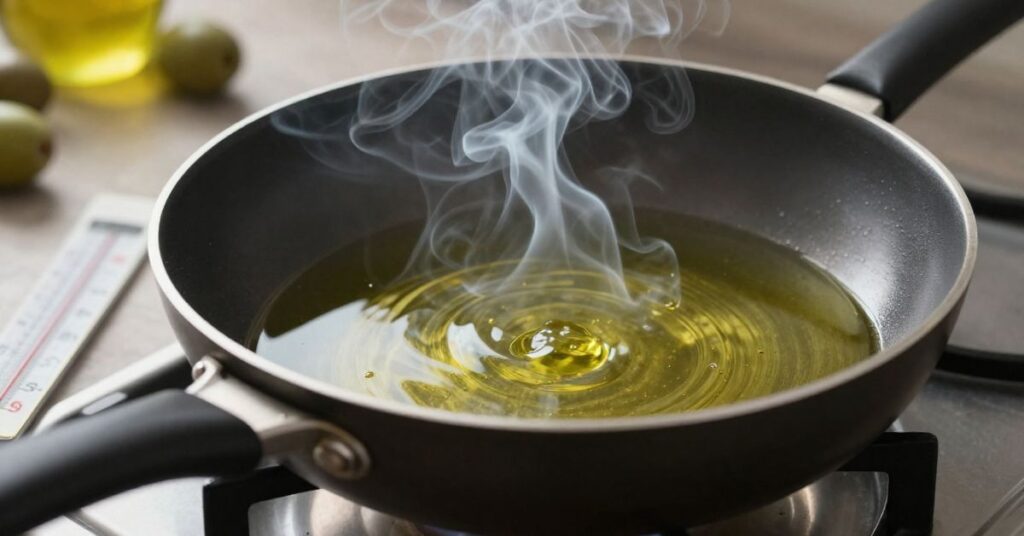
Even experienced cooks sometimes face the issue of olive oil smoking. Understanding why it happens and how to handle it can save your dish and protect your health.
Why Olive Oil Smokes
Olive oil begins to smoke when heated beyond its smoke point, signaling that the oil is breaking down. This can happen with any type of olive oil, but extra virgin olive oil, with its lower smoke point (190–210°C / 374–410°F), is particularly sensitive. Factors such as old oil, impurities, or residues in the pan can also lower the effective the, causing smoking at lower temperatures than expected.
Preventing Smoking
- Monitor Heat Carefully: Avoid preheating your pan excessively. Medium heat is sufficient for sautéing with EVOO.
- Use the Right Oil: For frying or high-heat cooking, choose refined olive oil or blends with a higher oil.
- Fresh Oil Matters: Older oil or poorly stored oil is more likely to smoke. Always check expiration dates and store bottles away from heat and light.
- Clean Cookware: Residue from previous cooking can reduce the smoke point. Ensure pans are clean before adding oil.
Relation Between Smoke Point and Stability
It’s important to distinguish between smoke point and oil stability. Extra virgin oil has excellent stability due to antioxidants, even if its smoke point is moderate. This means EVOO can withstand medium heat cooking without losing nutrients, as long as it doesn’t reach the temperature where smoking occurs. Observing oil oven or stovetop behavior is key to keeping the oil safe and flavorful.
Quick Tip
If your olive oil starts to smoke, immediately reduce the heat or remove the pan from the flame. Continuing to cook with smoking oil can produce free radicals and harmful compounds, affecting both taste and health.
By understanding the dangerous situations, you can troubleshoot cooking issues effectively, keeping meals safe and delicious.
Comparing Olive Oil Smoke Point With Other Popular Cooking Oils
Cooking oils vary widely in smoke point, stability, and flavor. Understanding oil vs other oils helps you choose the best oil for your cooking method while maximizing both safety and nutrition.
Olive Oil vs Avocado Oil
Avocado oil has a high smoke point of around 271°C (520°F), making it ideal for high-heat cooking like frying and searing. By comparison, extra virgin olive oil smoke point is lower (190–210°C / 374–410°F), so it’s better suited for sautéing, light roasting, or finishing dishes. While avocado oil handles heat better, it lacks the strong flavor and antioxidants present in EVOO.
Olive Oil vs Canola Oil
Canola oil has a oil of approximately 204°C (400°F), slightly higher than EVOO but lower than refined olive oil. Canola oil is neutral in flavor, making it versatile, but it doesn’t offer the antioxidant benefits of extra virgin olive oil. Understanding olive oil smoke point vs canola ensures you select the right oil for taste and health priorities.
Olive Oil vs Other Popular Oils
Here’s a quick comparison to help guide your cooking decisions:
| Cooking Oil | Smoke Point (°C / °F) | Best Use |
| Extra Virgin Olive Oil | 190–210°C / 374–410°F | Sautéing, light roasting, dressings |
| Refined Olive Oil | 220–240°C / 428–464°F | Frying, high-heat cooking |
| Avocado Oil | 271°C / 520°F | High-heat frying, searing |
| Canola Oil | 204°C / 400°F | Baking, sautéing |
| Vegetable Oil | 215–230°C / 419–446°F | Frying, roasting |
| Peanut Oil | 232°C / 450°F | Deep frying |
| Grapeseed Oil | 216°C / 421°F | Sautéing, baking |
| Sunflower Oil | 227°C / 440°F | Frying, roasting |
| Sesame Oil | 210°C / 410°F | Sautéing, stir-fry |
| Coconut Oil | 177°C / 350°F | Baking, medium-heat cooking |
| Flaxseed Oil | 107°C / 225°F | Cold use only, dressings |
Choosing the Best Oil for Your Cooking Method
- High-Heat Cooking: Refined olive oil, avocado oil, peanut oil.
- Medium Heat Cooking: EVOO, canola, sunflower, vegetable oil.
- Cold Use or Low Heat: Extra virgin olive oil, flaxseed oil, unrefined sesame oil.
By understanding olive oil smoke point high or low in comparison to other oils, you can match your cooking method to the right oil. This ensures better flavor, safety, and nutrient retention.
Conclusion: Mastering Cooking with Olive Oil Smoke Point
Understanding the olive oil smoke point is key to safe, flavorful, and healthy cooking. Whether you are using extra virgin olive oil for its rich antioxidants or refined olive oil for high-heat frying, knowing the right temperatures ensures your food tastes great and retains maximum nutrients.
By considering the type of olive oil, its freshness, storage, and the cooking method, you can prevent overheating, smoke, and potential health risks. Remember that oil dangerous levels are avoidable with simple monitoring and proper cooking practices.
Key Takeaways
- Choose the right olive oil: EVOO for low-to-medium heat, refined or pomace oil for high heat.
- Monitor temperature: Cooking below the smoke point preserves flavor, antioxidants, and safety.
- Store properly: Keep olive oil in a cool, dark place to maintain its smoke point and nutrient content.
- Use the right oil for the right cooking method: Comparing oil vs avocado, canola, and other oils helps optimize both taste and health.
By mastering the olive oil smoke point, you unlock the full potential of this versatile oil enhancing taste, health benefits, and culinary confidence. A well-informed cook can sauté, fry, roast, and drizzle with olive oil safely, ensuring every dish is delicious and nutritious.
FAQs About Olive Oil Smoke Point
Q1: What is the smoke point of olive oil?
The olive oil smoke point is the temperature at which olive oil starts to produce visible smoke. Extra virgin olive oil typically smokes at 190–210°C (374–410°F), while refined olive oil can reach 220–240°C (428–464°F). Cooking above this temperature can affect flavor and release harmful compounds.
Q2: Is it dangerous if olive oil smokes while cooking?
Yes, heating olive oil beyond its smoke point can produce free radicals and irritants, making it olive oil smoke point dangerous. To avoid this, monitor the heat and use oil suitable for your cooking method, such as refined olive oil for frying.
Q3: Can I use extra virgin olive oil for frying?
Extra virgin olive oil can be used for low to medium heat cooking, sautéing, and roasting. However, for high-heat frying, it’s better to use refined olive oil or blends with a higher olive oil smoke point to prevent smoking and nutrient loss.
Q4: How does olive oil compare to other oils in smoke point?
Olive oil smoke point vs avocado, canola, and other oils varies widely. Avocado oil has a very high smoke point (~271°C / 520°F), while EVOO has a moderate smoke point (~190–210°C / 374–410°F). Choosing the right oil depends on your cooking method and heat requirements.
Q5: How can I preserve the smoke point of olive oil?
To maintain your oil, store it in a cool, dark place, avoid exposure to light and heat, use fresh oil, and ensure your cookware is clean. Proper storage keeps the oil stable and flavorful while preventing premature smoking.