Introduction:
Essential oils have become very popular in modern homes. However, pet owners must carefully choose essential oils that are safe for cats before using them indoors. Many people use oils for relaxation, cleaning, and aromatherapy, but some oils can harm cats because their bodies process chemicals very differently from humans.
Many pet owners ask about essential oils that are safe for cats and whether they can safely use aromatherapy around their pets. While a few oils may be safer when used correctly, many others can be toxic even in small amounts. Cats have sensitive respiratory systems and a unique liver metabolism that makes them vulnerable to certain compounds found in essential oils.
Understanding how essential oils work and how cats react to them is the first step toward creating a safe environment. This guide explains essential oils that are safe for cats to smell, oils that are dangerous, and how to use pet safe essential oils for diffuser setups without risking your cat’s health.
If you use aromatherapy or natural cleaning products, learning the correct safety practices can help protect your cat while still allowing you to enjoy essential oils in your home.
What Are Essential Oils and How Do They Affect Cats?
Essential oils are concentrated plant extracts. They contain natural chemical compounds that give plants their scent and therapeutic properties. People often use them in aromatherapy, skin care, cleaning products, and diffusers.
However, cats process these plant compounds differently from humans. Their bodies lack certain liver enzymes needed to break down many essential oil chemicals. Because of this, even oils that seem harmless to people may create health risks for cats.
Understanding how these oils interact with a cat’s body helps explain why pet owners must be cautious when using them indoors.
How Essential Oils Work in Aromatherapy
Aromatherapy uses plant oils to influence mood, relaxation, and wellness. Essential oils release aromatic molecules into the air through diffusers, sprays, or direct application.
When humans inhale these scents, the molecules travel through the nose to the brain’s limbic system. This area controls emotions, stress levels, and memory. That is why oils like lavender or chamomile often create calming effects.
In aromatherapy, there are various methods for using essential oils:
- Diffusers that release oil particles into the air
- Topical application diluted with carrier oils
- Natural cleaning or household sprays
- Bath or spa treatments
While these methods work well for people, they can affect pets differently. Airborne oil particles may settle on a cat’s fur, skin, or breathing passages. Cats then ingest these compounds when they groom themselves.
For this reason, even cat safe essential oils for diffuser setups must be used carefully. Ventilation and proper dilution play an important role in reducing potential risks.
Why Cats Are Sensitive to Essential Oils
Cats have a unique metabolism that makes them especially sensitive to certain plant chemicals. Their liver lacks an important enzyme called glucuronyl transferase, which helps break down toxins.
Because of this limitation, cats cannot efficiently process many substances found in essential oils. When exposure occurs repeatedly, the chemicals may accumulate in the body.
Several factors increase the risk of toxicity:
- Small body size
- Frequent grooming behavior
- Sensitive respiratory system
- Slow detoxification process
Even oils sometimes listed among essential oils that are safe for cats and dogs may still cause problems for cats if used incorrectly. Dogs have a different metabolism and tolerate many oils better than cats.
Young kittens, senior cats, and cats with liver disease face an even higher risk. Their bodies may struggle to eliminate toxins, making even mild exposure dangerous.
How a Cat’s Sense of Smell Responds to Strong Scents
Cats have an incredibly powerful sense of smell. In fact, their noses contain nearly 200 million scent receptors, which is far more than humans.
This heightened sense allows cats to detect subtle changes in their environment. However, it also means strong scents from essential oils may overwhelm them.
When exposed to concentrated aromas, cats may react by:
- Leaving the room quickly
- Sneezing or coughing
- Acting restless or anxious
- Avoiding certain areas of the home
Even essential oils that are safe for cats to smell should always be used in very small amounts and only in well-ventilated spaces.
Strong scents can also irritate a cat’s respiratory tract. Diffusers, sprays, and candles may release particles that irritate sensitive lungs. For this reason, veterinarians often recommend caution when using pet safe essential oils for diffuser systems around cats.
Creating distance between your cat and aromatic products is one of the simplest ways to reduce risk while still enjoying essential oils.
Are Essential Oils Safe for Cats?
Many pet owners enjoy aromatherapy, but they often wonder whether essential oils that are safe for cats truly exist. The truth is more complex than a simple yes or no. Some essential oils may be used cautiously around cats, while others are highly toxic and should never be present in a cat’s environment.
Cats process chemicals very differently from humans. Their liver lacks certain enzymes that help break down compounds found in many essential oils. Because of this, exposure can lead to toxin buildup in the body. Even small amounts inhaled from the air or absorbed through the skin may create health risks over time.
This does not mean every oil automatically harms cats. Some oils are considered lower risk when diluted properly and used in well-ventilated areas. For example, certain cat safe essential oils for diffuser setups may be acceptable when the cat can leave the room freely and the diffuser runs for a short time.
However, responsible use is extremely important. Pet owners should always research essential oils that are safe for cats to smell, avoid strong concentrations, and monitor their pets for unusual behavior after exposure.
Understanding the risks helps create a safer home environment where both aromatherapy and pet safety can coexist.
Understanding the Risks of Essential Oils for Cats
Essential oils contain highly concentrated plant compounds. While these natural substances may benefit humans, they can overwhelm a cat’s delicate system.
There are three main ways cats become exposed to essential oils:
| Exposure Type | How It Happens | Risk Level |
| Inhalation | Breathing in diffuser vapors | Moderate risk |
| Skin Contact | Oils touching fur or skin | High risk |
| Ingestion | Grooming oil particles from fur | Very high risk |
Because cats groom themselves frequently, even small droplets of oil that settle on their fur can become dangerous. Once ingested, the chemicals move into the bloodstream and may affect the liver, nervous system, or respiratory tract.
Another important factor is concentration. Essential oils are extremely potent. One drop may contain the concentrated essence of several plants. This strength makes them useful in aromatherapy but also increases the risk for pets.
When searching for pet safe essential oils for diffuser, always remember that “safe” usually means lower risk when diluted, not completely harmless.
When Essential Oils Become Harmful to Pets
Essential oils can become harmful when exposure levels exceed what a cat’s body can tolerate. Toxicity often depends on the type of oil, the amount used, and the duration of exposure.
Several situations increase the likelihood of harm:
Strong essential oil diffusers running for long periods in closed rooms can overwhelm a cat’s respiratory system. Poor ventilation allows oil particles to build up in the air, increasing inhalation exposure.
Direct application of essential oils to a cat’s fur or skin is another common cause of poisoning. Cats cannot safely metabolize many oil compounds, so topical use should always be avoided unless specifically directed by a veterinarian.
Certain oils are naturally more dangerous than others. Pet owners frequently ask questions such as is lemon essential oil safe for cats, is vanilla essential oil safe for cats, or is orange essential oil safe for cats. Citrus oils in particular contain compounds that can irritate a cat’s nervous system and digestive tract.
Repeated exposure also increases risk. Even oils sometimes listed among essential oils that are safe for cats and dogs may accumulate in a cat’s body over time if used too often.
For this reason, experts recommend limiting essential oil use around cats and choosing only carefully researched options.
Essential Oils That Are Safe for Cats
While many essential oils can be harmful to cats, there are a few that are considered lower-risk when used carefully. The key is proper dilution, ventilation, and monitoring. These oils may offer calming, refreshing, or mood-enhancing benefits without putting your feline friends at serious risk. Remember, “safe” does not mean completely harmless always observe your cat’s behavior after exposure.
List of Essential Oils That Are Considered Safer for Cats
Here is a list of essential oils that are generally regarded as cat safe essential oils for diffuser when used properly:
| Essential Oil | Common Uses | Notes for Cats |
| Lavender | Calming, stress relief | Use minimal amounts; ensure proper ventilation |
| Chamomile | Relaxation, sleep aid | Gentle scent; monitor for allergic reactions |
| Frankincense | Air purification, calm environment | Low-toxicity, safe in diffuser only |
| Cedarwood | Soothing, grounding | Can be calming; avoid topical application |
| Myrrh | Respiratory support, calm | Safe in well-ventilated spaces |
Tip: Always use a diffuser in a room your cat can leave freely. Do not leave oils running continuously, and avoid direct contact with the cat’s skin or fur.
Naturally Calming Essential Oils for Cats
Some essential oils offer natural calming effects, helping reduce stress or anxiety in cats:
- Lavender: Known for soothing and relaxation. Can be diffused in short intervals.
- Chamomile: Gentle and calming; also promotes restful sleep.
- Frankincense: Supports a calm environment and can reduce nervousness.
Using these oils in small, controlled amounts may help create a stress-free environment for cats without the risks associated with more potent oils.
Conditions for Using Essential Oils Safely Around Cats
Even safer oils require strict safety precautions:
- Diluting essential oils is crucial because they are highly concentrated.
- Ventilation matters: Run diffusers in rooms with open windows or doors so your cat can leave if they choose.
- Time-limited exposure: Limit diffusion to 15–30 minutes at a time. Avoid continuous operation.
- Observe your cat: Watch for sneezing, coughing, drooling, or unusual behavior. Stop using the oil if any reaction occurs.
- Avoid direct contact: Never apply essential oils to your cat’s fur, skin, or paws. Cats groom themselves and may ingest harmful compounds.
By following these steps, you can enjoy aromatherapy while keeping your cat safe. Even essential oils that are safe for cats doterra should be treated with care and respect for your pet’s unique sensitivity.
Essential Oils That Are Toxic to Cats
While some essential oils can be used safely around cats, many are highly toxic and can cause serious health issues even in small amounts. Understanding which oils to avoid is critical for every cat owner. Exposure can happen through inhalation, ingestion, or skin contact, and cats are particularly vulnerable due to their unique metabolism.
Most Dangerous Essential Oils for Cats
The following essential oils are known to be highly toxic and should never be used around cats:
| Essential Oil | Common Uses | Risk to Cats |
| Tea Tree (Melaleuca) | Skin care, antifungal | Can cause liver failure, drooling, tremors |
| Pennyroyal | Insect repellent | Highly toxic; may cause seizures and death |
| Cinnamon | Baking, aromatherapy | Can irritate skin and respiratory system |
| Citrus Oils (Lemon, Orange, Grapefruit) | Cleaning, diffusers | Can cause vomiting, drooling, depression |
| Pine | Cleaning, air fresheners | May lead to liver damage and respiratory distress |
| Eucalyptus | Cold relief, cleaning | Respiratory issues, lethargy, weakness |
| Wintergreen | Pain relief | Very toxic; can cause nausea and liver damage |
| Clove | Spices, aromatherapy | Liver toxicity and gastrointestinal issues |
Quick tip: Even small amounts of these oils in a diffuser or applied topically can be dangerous for cats. Always double-check labels of cleaning products, candles, and sprays for these oils.
Why Tea Tree Oil Is Especially Dangerous for Cats
Tea tree oil (Melaleuca) is one of the most common essential oils but also one of the most dangerous for cats. Even a single drop of pure tea tree oil can cause:
- Drooling
- Tremors
- Weakness
- Hypothermia
- Liver failure
Cats cannot metabolize the compounds in tea tree oil, which makes it extremely toxic whether inhaled, ingested, or applied to the skin. This is why tea tree oil should never be used in a home with cats, even in diluted forms.
Essential Oils That Are Also Toxic to Dogs
Some essential oils are harmful to both cats and dogs. While dogs are generally more resilient than cats, exposure can still cause illness. Common oils that are toxic to both species include:
- Tea Tree (Melaleuca)
- Pennyroyal
- Wintergreen
- Eucalyptus
- Cinnamon
- Clove
If you have multiple pets, it’s important to avoid these oils entirely to prevent accidental poisoning.
Signs of Essential Oil Poisoning in Cats
Even small exposure to toxic essential oils can cause noticeable symptoms in cats. Early recognition of these signs is crucial to prevent serious health issues. Cats often hide discomfort, so careful observation is key when using essential oils that are safe for cats or any household products containing oils.
Common Symptoms Like Drooling and Breathing Problems
Cats exposed to harmful essential oils may display a range of symptoms. Some of the most common signs include:
- Excessive drooling or foaming at the mouth
- Coughing, sneezing, or labored breathing
- Vomiting or diarrhea
- Lethargy or unusual tiredness
- Tremors or unsteady walking
- Skin irritation or redness if oils contact the fur or paws
Even low-level exposure can irritate a cat’s respiratory system or digestive tract. For example, diffusing citrus oils like lemon or orange in a room without ventilation may lead to coughing or sneezing. Observing your cat closely after using cat safe essential oils for diffuser is essential.
How to Tell If Your Cat Is Reacting to Essential Oils
Cats may not always show immediate reactions. Some signs to watch for include:
- Avoiding the room where oils are used
- Grooming excessively (trying to remove oils from fur)
- Hiding or acting unusually anxious
- Loss of appetite or refusal to drink water
Even if you’re using oils considered safer, such as lavender or chamomile, your cat may still react. Each cat’s sensitivity varies, so monitor behavior carefully.
When to Call the Veterinarian Immediately
Some symptoms require urgent veterinary attention. Contact a vet if your cat shows:
- Continuous vomiting or diarrhea
- Difficulty breathing or wheezing
- Severe lethargy or collapse
- Tremors, seizures, or uncoordinated movement
- Persistent drooling after exposure
Quick intervention can prevent severe complications. If possible, take the essential oil container or diffuser details with you to help the veterinarian identify the toxic compound.
What to Do If Your Cat Is Exposed to Essential Oils
Accidental exposure to essential oils can happen even in the most careful households. Acting quickly and calmly can prevent serious health problems. Knowing the proper steps ensures your cat stays safe while you manage the situation effectively.
Immediate Steps to Protect Your Cat
- Remove Your Cat From the Area: If a diffuser, candle, or cleaning product caused exposure, move your cat to a well-ventilated room away from the scent immediately.
- Ventilate the Room: Open windows and doors to disperse lingering oils in the air. Turn off any diffusers or candles.
- Wipe Off Oils (If Contacted): If oil has touched your cat’s fur or paws, gently wipe with a soft cloth dampened with cool water. Avoid using soaps or human cleaning products.
- Monitor Behavior: Watch for drooling, coughing, vomiting, lethargy, or unusual movements. Early signs of distress help determine urgency.
Tip: Never induce vomiting or give home remedies without consulting a veterinarian first. Some oils can cause more harm if ingested improperly.
When to Contact a Veterinarian
Immediate veterinary care is necessary if your cat shows serious or persistent symptoms. Consult a veterinarian if your cat exhibits any of the following signs:
- Difficulty breathing or wheezing
- Continuous vomiting or diarrhea
- Tremors, seizures, or unsteady walking
- Excessive drooling or foaming at the mouth
Provide the veterinarian with details about the essential oil involved, the exposure method, and the approximate amount. If available, bring the product container to help with identification.
Helpful Resources for Pet Owners
Being informed is the best way to protect your cat. Trusted resources include:
- ASPCA Animal Poison Control Center – Offers guidance on pet poison emergencies
- Pet Poison Helpline – 24/7 support for accidental exposures
- Veterinarian advice – Personalized guidance based on your cat’s health
- Reputable websites on essential oils that are safe for cats to smell
Having these resources readily available helps reduce stress and ensures your cat receives prompt treatment if needed.
Are Diffusers Safe When Using Essential Oils Around Cats
A common way to use essential oils at home is by using a diffuser. They release aromatic molecules into the air, creating a calming or refreshing environment. However, when cats are present, special precautions are necessary. Even essential oils that are safe for cats to smell can cause discomfort or health issues if misused.
How Diffusers Spread Essential Oils in the Air
Diffusers operate by spreading small particles of essential oil throughout the air. There are several types:
- Ultrasonic Diffusers: Use water and ultrasonic vibrations to create a fine mist.
- Nebulizing Diffusers: Release concentrated oil directly into the air without water.
- Heat Diffusers: Use gentle heat to evaporate the oil.
- Evaporative Diffusers: Use airflow to disperse oil molecules.
While these methods work well for humans, cats are more sensitive to airborne oils. Inhalation can irritate their respiratory system, especially with strong scents like citrus or peppermint. Even “safer” oils like lavender should be used with care.
Can Cats Stay in a Room With a Diffuser?
Cats are curious and may enter rooms with a diffuser running. Some key points to remember:
- Cats should always have the option to leave. Never confine them to a room with active diffusion.
- Observe their behavior. If your cat sneezes, coughs, or tries to escape, stop using the diffuser.
- Short diffusion periods are safer than continuous operation. A typical duration of fifteen to thirty minutes is usually enough.
Following these practices ensures that your cat can enjoy the space without being forced to breathe concentrated essential oil particles.
Safe Diffuser Practices for Pet Owners
To use pet safe essential oils for diffuser safely, consider these guidelines:
- Use only low-risk oils like lavender, chamomile, or frankincense.
- Dilute properly. Even safe oils should be used in very small amounts.
- Run the diffuser in a well-ventilated area. Open windows or doors.
- Limit exposure time. Avoid running the diffuser continuously.
- Keep the diffuser out of reach. Prevent accidental spills or direct contact with your cat.
By following these simple steps, you can enjoy aromatherapy at home without compromising your cat’s health.
How to Use Essential Oils Safely in a Home With Cats
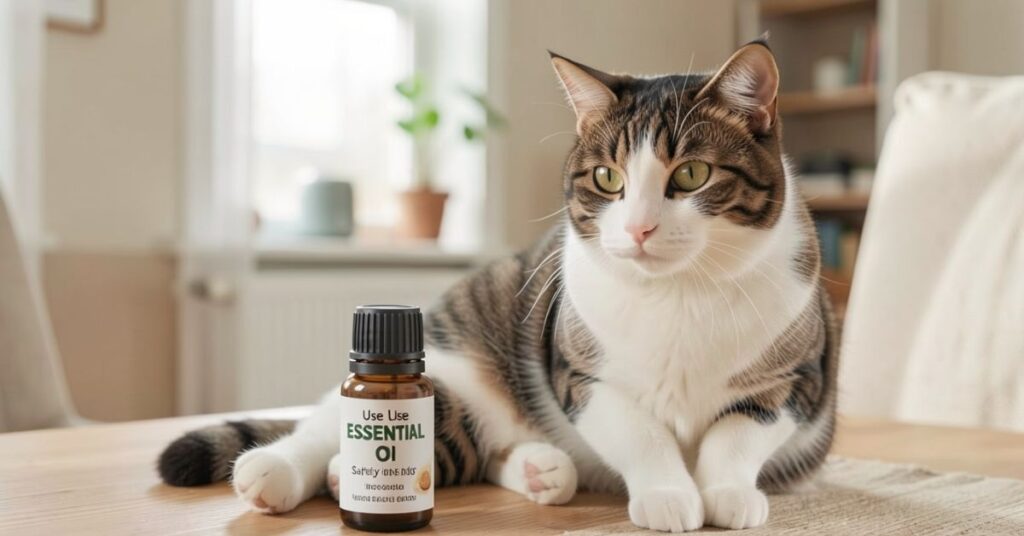
Creating a home that incorporates aromatherapy while keeping cats safe requires careful planning and responsible practices. Even essential oils that are safe for cats doterra must be used thoughtfully to prevent accidental exposure or stress.
General Safety Guidelines for Cat Owners
Keeping your cat safe around essential oils starts with understanding their unique sensitivities:
- Always research oils before use. Not all oils are safe; check reliable sources.
- Never apply oils directly to your cat. Cats groom themselves and can ingest harmful compounds.
- Provide escape routes. Ensure your cat can leave rooms where oils are diffused.
- Use minimal amounts. A few drops in a diffuser are sufficient. More does not increase benefits for humans and may harm pets.
- Store oils securely. Keep bottles out of reach to prevent accidental ingestion or spills.
Following these basic rules reduces risk and allows cats to coexist safely with essential oils in the home.
Tips for Reducing Risk When Using Essential Oils
Even safe oils require careful handling to minimize risk:
- Dilution is critical: Use water or a carrier oil for any diffuser or topical preparation.
- Short diffusion periods: Limit diffusion to 15–30 minutes and monitor your cat’s reaction.
- Ventilation is key: Open windows or doors to prevent buildup of airborne particles.
- Observe behavioral changes: Sneezing, coughing, drooling, or hiding may indicate sensitivity.
- Separate areas for pets: Consider designating a “cat-free zone” where strong scents are used.
These steps help you enjoy aromatherapy without compromising your cat’s health.
Creating a Cat-Friendly Aromatherapy Environment
You can make aromatherapy part of your home safely by adapting your environment:
- Choose low-risk oils: Lavender, chamomile, frankincense, and cedarwood are generally safer.
- Use diffusers responsibly: Avoid high-concentration nebulizing diffusers in shared spaces.
- Limit exposure to common areas: Keep diffusers in areas your cat can leave easily.
- Monitor air quality: Ensure that oils do not linger in enclosed spaces.
- Educate household members: Everyone should know which oils are safe and how to handle them.
By combining careful oil selection, proper diffusion, and observation, you can enjoy essential oils that are safe for cats to smell while maintaining a comfortable and healthy environment for your feline companions.
Using Essential Oils in Household Cleaning Around Cats
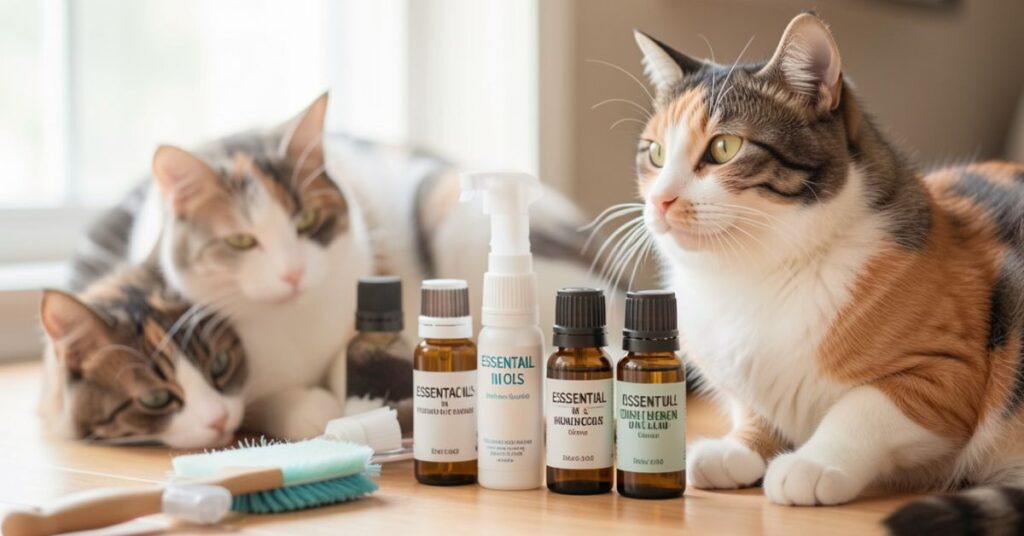
Essential oils are increasingly used in natural cleaning products for their pleasant scents and antimicrobial properties. However, when cats are present, special care is necessary. Even pet safe essential oils for diffuser may cause harm if used in concentrated cleaning solutions or applied directly on surfaces your cat frequently contacts.
Are Cleaning Products with Essential Oils Safe for Cats?
Not all essential oils are safe for cleaning around cats. Oils like tea tree, citrus (lemon, orange, grapefruit), cinnamon, and eucalyptus are toxic and should never be used in cleaning products in a home with cats.
Even “safer” oils such as lavender, chamomile, or frankincense should be used with caution. Cleaning products may leave residues on floors, counters, or furniture that cats can ingest while grooming.
Guidelines for safer cleaning:
- Check product ingredients: Avoid products containing oils known to be toxic to cats.
- Dilute oils properly: Use very small amounts when making homemade cleaning solutions.
- Rinse surfaces if necessary: Remove residual oil from floors or counters to prevent ingestion.
- Keep cats out of the area: Let surfaces dry completely before allowing your cat to roam.
Using essential oils responsibly in cleaning ensures a safer home for your cat while still enjoying the benefits of natural scents.
Tips for Using Essential Oils Safely in Cleaning
Here are some practical tips for cat-safe cleaning:
- Opt for low-risk oils: Lavender or cedarwood can be used sparingly in cleaning solutions.
- Use water-based solutions: Combine essential oils with plenty of water to reduce concentration.
- Ventilate well: Open windows and doors to disperse any lingering airborne particles.
- Avoid high-contact areas: Don’t apply essential oils on surfaces your cat frequently walks or lies on.
- Store oils securely: Keep bottles in closed cabinets away from pets.
By following these precautions, you can maintain a clean, fresh-smelling home without putting your cat at risk from essential oils that are safe for cats and dogs.
Conclusion
Using essential oils in a home with cats requires knowledge, caution, and careful planning. While some oils are considered essential oils that are safe for cats, even low-risk oils must be used responsibly. Cats are highly sensitive to strong scents, and their unique metabolism makes them vulnerable to many compounds found in essential oils.
By following these key practices, you can create a safe aromatherapy environment:
- Use only cat safe essential oils for diffuser in well-ventilated areas.
- Limit diffusion time and allow your cat to leave the room freely.
- Avoid direct contact or ingestion of oils.
- Monitor your cat closely for any signs of discomfort or illness.
- Keep toxic oils like tea tree, citrus, and wintergreen completely out of reach.
With proper precautions, you can enjoy the benefits of essential oils while keeping your feline friends safe, happy, and healthy. Educate yourself, follow safety guidelines, and always prioritize your cat’s well-being.
FAQs
What is a naturally calming essential oil for cats?
Naturally calming oils can help reduce stress and anxiety in cats. Lavender, chamomile, and frankincense are the most commonly recommended. These oils are generally considered cat safe essential oils for diffuser when used in small, diluted amounts.
Tips for use:
- Diffuse for 15–30 minutes at a time.
- Ensure the room is well-ventilated and your cat can leave freely.
- Avoid applying oils directly to your cat.
Even calming oils should be introduced gradually, and you should watch for any signs of discomfort.
Can cats be in the same room as a diffuser?
Yes, but with precautions. Cats should always have the option to leave the room while a diffuser is running. Continuous diffusion in a closed space can overwhelm a cat’s sensitive respiratory system.
Best practices:
- Stick to low-risk oils such as lavender or chamomile.
- Limit diffusion time and ensure ventilation.
- Monitor your cat for sneezing, coughing, or attempts to escape.
If your cat shows any negative reactions, stop using the diffuser immediately.
Which essential oils should cats avoid?
Certain oils are highly toxic to cats and should never be used around them. These include:
- Tea tree (Melaleuca)
- Pennyroyal
- Wintergreen
- Cinnamon
- Citrus oils (lemon, orange, grapefruit)
- Clove
- Eucalyptus
Even small exposure through diffusion, skin contact, or ingestion can cause serious health issues, including liver damage, respiratory problems, and nervous system effects.
What should I do if my cat reacts to essential oils?
If your cat shows symptoms such as drooling, vomiting, coughing, tremors, or lethargy after exposure:
- Remove your cat from the area immediately.
- Ensure proper airflow by opening windows and door.
- Gently wipe off any oil from fur or paws if direct contact occurred.
- Reach out to a veterinarian right away, particularly if the symptoms are serious.
- .Have essential oil information ready to inform the vet, including the type of oil, exposure method, and approximate amount.
Prompt action can prevent severe complications and ensure your cat recovers safely.