Introduction
Coconut products have become kitchen and beauty staples, but many people often wonder about the differences between coconut butter and coconut oil. Both come from coconuts, yet they serve different purposes in cooking, skincare, and overall nutrition. Understanding coconut butter vs coconut oil is essential for anyone looking to make healthier choices or enhance their daily routines.
Coconut oil is widely used for cooking, hair care, and skin hydration, thanks to its unique fatty acids and antibacterial properties. On the other hand, coconut butter is a creamy spread that retains the fiber and nutrients of the whole coconut, making it a more nutrient-dense option for both culinary and cosmetic uses.
Many people get confused because both products are derived from coconuts and share a similar taste and aroma. However, the differences in texture, nutritional content, and uses make each product unique. In this guide, we will explore coconut butter vs coconut oil in depth covering their nutritional profiles, health benefits, skin and hair care applications, cooking uses, and practical tips for daily use.
By the end of this article, you will know exactly which product suits your needs best and how to incorporate it into your lifestyle, whether for skin care, hair care, or nutrition.
Coconut Butter vs Coconut Oil: Understanding the Basics
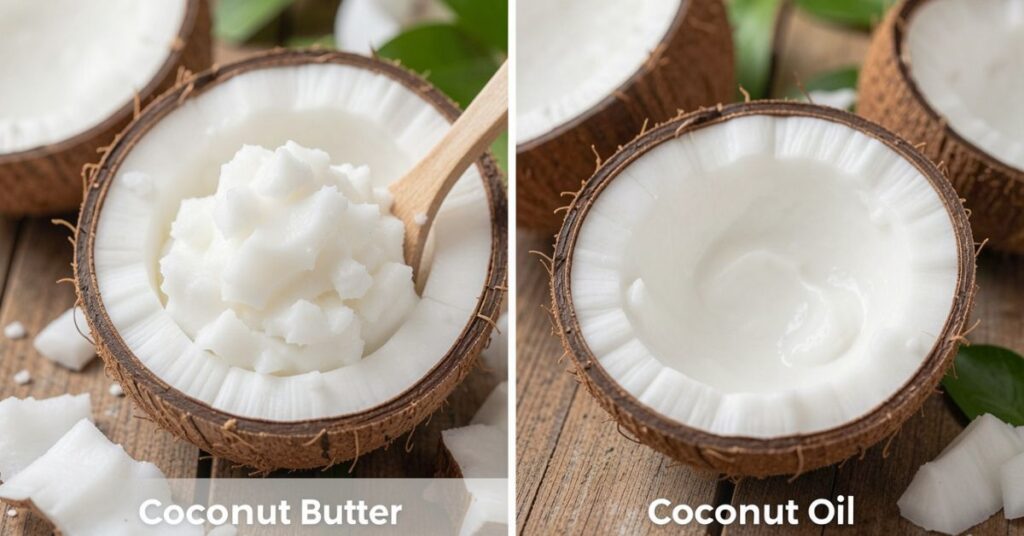
When it comes to coconut products, knowing the basics helps you make informed choices for your health, cooking, and beauty routines. Coconut butter vs coconut oil may seem similar, but they differ in origin, texture, and nutrient content. Let’s break it down.
What Is Coconut Oil?
Coconut oil is derived from the flesh of fully matured coconuts.It is primarily pure fat, with very little fiber or protein. Coconut oil comes in two main types: virgin (unrefined) coconut oil and refined coconut oil. Virgin coconut oil retains a strong coconut flavor and aroma, while refined coconut oil has a neutral taste and higher smoke point, making it suitable for high-temperature cooking.
Coconut oil is popular not only in kitchens but also in skincare and hair care. Its medium-chain triglycerides (MCTs) support weight management and may boost energy. Additionally, coconut oil contains lauric acid, known for its antibacterial and antifungal properties.
What Is Coconut Butter?
Coconut butter, also known as coconut manna, is made by grinding whole coconut meat, including both oil and fiber, into a creamy paste. Unlike coconut oil, coconut butter contains all the nutrients of the coconut meat, including fiber, protein, and healthy fats.
Its creamy consistency makes it ideal for spreads, smoothies, and baking, adding natural sweetness and a rich coconut flavor. In skincare, coconut butter offers deeper hydration due to the combination of oil and fiber, making it excellent for dry or sensitive skin.
Why Coconut Butter and Coconut Oil Are Often Confused
Many people confuse coconut butter and coconut oil because they share a similar flavor and are both derived from coconuts. However, the main difference lies in composition and texture. Coconut oil is purely fat, while coconut butter includes fiber, protein, and natural sugars.
This distinction affects their culinary and cosmetic applications. For example, coconut oil is better for frying or sautéing due to its higher smoke point, while coconut butter is preferred for spreading on toast or adding to desserts. In skincare, coconut butter offers more substantial hydration, while coconut oil is lighter and absorbs faster.
Understanding these basics ensures you use each product effectively, whether in the kitchen or for beauty routines.
Coconut Butter vs Coconut Oil: Key Differences Explained
Understanding the key differences between coconut butter vs coconut oil helps you choose the right product for cooking, nutrition, and beauty. While they come from the same fruit, their texture, taste, production process, and nutrient content vary significantly.
Differences in Texture and Consistency
Coconut oil is smooth, liquid at room temperature (in warmer climates), or solid at cooler temperatures. Its texture is purely oily, making it ideal for frying, sautéing, or moisturizing the skin.
Coconut butter, on the other hand, is thicker and creamier, as it includes the fibrous meat of the coconut. At room temperature, it is usually solid but can be softened with gentle heat.Its smooth, creamy consistency makes it ideal for spreading, baking, and making desserts.
Differences in Taste and Flavor
Coconut oil, especially virgin coconut oil, has a subtle to moderate coconut flavor. Refined coconut oil has a neutral taste, which is better for recipes where you don’t want a strong coconut aroma.
Coconut butter offers a richer and sweeter coconut flavor due to the inclusion of natural sugars and fiber. This makes it more flavorful in smoothies, desserts, or as a spread.
How Coconut Oil and Coconut Butter Are Made
Coconut oil is produced by extracting oil from dried or fresh coconut meat. Methods include cold-pressing for virgin oil or using refining and bleaching for neutral-flavored oil.
Coconut butter is made by grinding whole dried coconut meat (copra) or fresh coconut meat into a smooth paste. No separation occurs, so the resulting product retains all natural fiber, fat, and protein.
Coconut Butter vs Coconut Oil: Nutritional Differences
Coconut oil is almost 100% fat, mainly saturated fatty acids like medium-chain triglycerides (MCTs). It contains minimal protein, fiber, or carbohydrates.
Coconut butter provides a more balanced nutrient profile. It contains healthy fats, fiber, protein, and small amounts of vitamins and minerals like manganese, iron, and potassium. The fiber in coconut butter can also aid digestion, making it more nutrient-dense compared to coconut oil.
Coconut Butter vs Coconut Oil: Nutrition Comparison
When comparing coconut butter vs coconut oil nutrition, it’s clear that while both are derived from coconuts, their nutrient profiles are quite different. Knowing these differences helps you choose the right option for weight management, cooking, or overall health.
Nutritional Profile of Coconut Oil
Coconut oil is primarily fat, providing about 120 calories per tablespoon, nearly all from saturated fat. The main type of fat is medium-chain triglycerides (MCTs), which are metabolized quickly by the body for energy rather than being stored as fat.
Key nutritional highlights of coconut oil include:
- Contains lauric acid, which may help fight bacteria and support immunity.
- Provides minimal protein or fiber, so it’s not a source of significant vitamins or minerals.
- High-calorie density makes it useful in energy-rich recipes or cooking at high heat.
Despite its benefits, coconut oil should be consumed in moderation, especially for those monitoring cholesterol or heart health, as it is highly saturated.
Nutritional Profile of Coconut Butter
Coconut butter offers a richer nutritional profile because it contains the whole coconut meat. This includes fat, fiber, protein, and trace minerals.
Nutritional highlights of coconut butter (per tablespoon):
- Calories: ~90–100
- Fat: ~9 grams (mostly saturated, including MCTs)
- Fiber: ~2 grams
- Protein: ~1 gram
- Minerals: Iron, manganese, potassium
The presence of fiber and protein makes coconut butter more filling and slightly better for weight management than coconut oil alone. Its natural sugars and minerals add extra nutritional value, especially for those using it in smoothies or spreads.
Key Nutrients and Fatty Acids
Both coconut oil and coconut butter are rich in saturated fats, primarily MCTs like lauric acid, capric acid, and caprylic acid. These fatty acids are believed to:
- Boost metabolism and energy
- Support brain health
- Provide antimicrobial benefits
However, coconut butter has the added advantage of fiber, protein, and trace minerals, making it a more nutrient-dense choice for daily use.
| Feature | Coconut Oil | Coconut Butter |
| Calories per Tbsp | 120 | 90–100 |
| Fat | 14g | 9g |
| Fiber | 0g | 2g |
| Protein | 0g | 1g |
| Key Nutrients | Lauric acid | Lauric acid, fiber, iron, manganese |
| Best For | High-heat cooking, skin & hair care | Spreads, smoothies, baking, skin hydration |
Health Benefits of Coconut Butter vs Coconut Oil
Both coconut butter and coconut oil offer health benefits, but their effects vary due to differences in composition and nutrient content. Knowing which product suits your health goals can make a big difference in your daily routine.
Health Benefits of Coconut Oil
Coconut oil is rich in medium-chain triglycerides (MCTs), which are quickly metabolized for energy. Its key health benefits include:
- Supports Heart Health: Lauric acid in coconut oil may increase good HDL cholesterol.
- Boosts Energy and Metabolism: MCTs are easily absorbed and used for immediate energy.
- Antimicrobial Properties: Lauric, capric, and caprylic acids help combat bacteria, viruses, and fungi.
- Supports Brain Function: MCTs may enhance cognitive performance and support neurological health.
- Skin & Hair Care Benefits: Coconut oil hydrates skin, reduces dryness, and strengthens hair shafts.
Coconut oil is versatile and can be used in cooking, supplements, or topical applications, making it a staple for many health-conscious individuals.
Health Benefits of Coconut Butter
Coconut butter contains the whole coconut meat, which adds fiber, protein, and minerals to its health profile. Its benefits include:
- Nutrient-Rich: Provides iron, manganese, potassium, and healthy fats.
- Supports Digestion: Fiber content promotes healthy bowel movements and gut health.
- Sustained Energy: Healthy fats and protein help maintain energy levels longer than oil alone.
- Skin Hydration: Offers deep moisturizing properties due to both oil and fiber content.
- Weight Management: Can be more filling than coconut oil alone, helping control appetite.
Coconut butter is ideal for spreads, smoothies, baking, and natural remedies, combining taste with nutrition.
Which One Is Healthier?
Choosing between coconut butter vs coconut oil depends on your goals:
- For high-fat cooking or topical applications, coconut oil is usually preferred.
- For nutritional benefits, fiber intake, and richer taste, coconut butter is more advantageous.
- Both are high in saturated fats, so moderation is key.
In essence, coconut oil supports quick energy and, at the same time, promotes topical health. Meanwhile, coconut butter provides a nutrient-dense option that benefits both daily nutrition and long-lasting hydration. Thus, choosing between the two depends on whether you prioritize immediate energy or richer nutrients.
Coconut Butter vs Coconut Oil for Skin Care
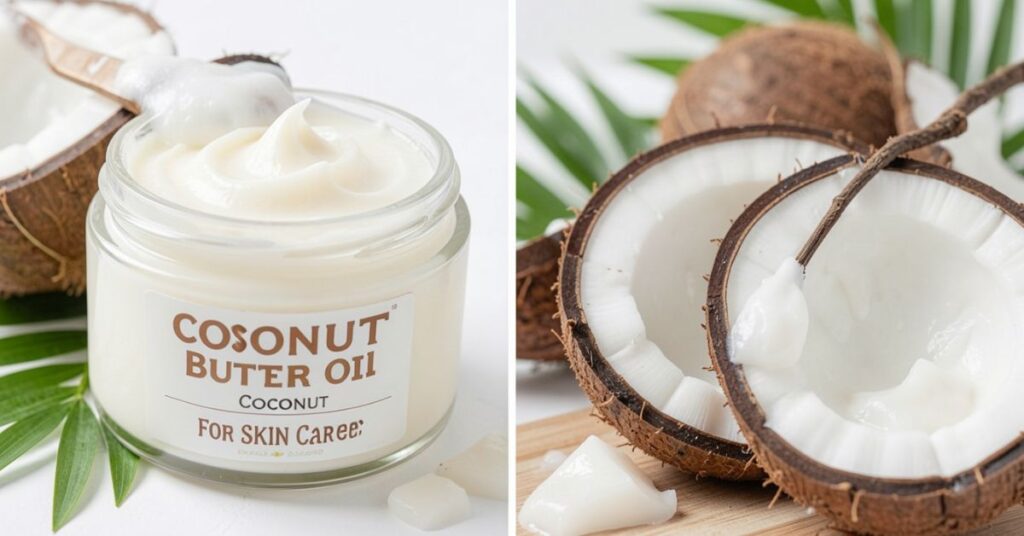
Coconut products are widely used in skincare because of their moisturizing, antibacterial, and nourishing properties. Understanding the differences between coconut butter vs coconut oil for skin helps you choose the right product for your skin type and needs.
Skincare Benefits of Coconut Oil
Coconut oil is a lightweight moisturizer that absorbs quickly into the skin. Its benefits include:
- Hydration: Helps reduce dryness and flakiness.
- Antibacterial and Antifungal: Lauric acid fights acne-causing bacteria.
- Soothing Properties: Can calm irritated skin and minor rashes.
- Makeup Removal: Gentle oil-based cleanser that dissolves dirt and makeup.
Coconut oil is ideal for daily moisturizing, hair care, and as a natural makeup remover, especially for normal to oily skin types.
Skincare Benefits of Coconut Butter
Coconut butter contains both oil and fiber, making it thicker and more nourishing than coconut oil. Its skin benefits include:
- Deep Moisturization: Ideal for dry or cracked skin.
- Rich Nutrient Content: Provides vitamins and minerals that support skin health.
- Protective Layer: Creates a barrier to prevent moisture loss.
- Soothing for Sensitive Skin: Gentle and nourishing for delicate areas.
Coconut butter works well as a body lotion, hand cream, or lip balm, offering long-lasting hydration.
Absorption Rate on the Skin
Lightweight and fast-absorbing, coconut oil is ideal for everyday use. In contrast, coconut butter has a thicker texture, so it takes longer to absorb. This thickness delivers more intense, long-lasting hydration.
Coconut Butter vs Coconut Oil: Which Is Better for Dry Skin?
For dry skin, coconut butter is usually more effective because of its higher fat content and fiber, both of which help lock in moisture. In comparison, coconut oil can also be used, but it may require reapplication throughout the day, especially for very dry areas. Consequently, choosing the right product ultimately depends on your skin’s hydration needs and personal preferences.
Coconut Butter vs Coconut Oil for Oily Skin
For oily skin, coconut oil is preferable because it absorbs faster and is less likely to feel heavy or greasy. Coconut butter may feel too rich for oily skin and could clog pores if overused.
Coconut Butter or Coconut Oil: Best for Sensitive Skin
Both coconut oil and coconut butter are generally safe for sensitive skin; however, coconut butter is often better for soothing and repairing delicate areas because of its higher nutrient density. Moreover, its combination of fiber, protein, and minerals can provide longer-lasting hydration compared to coconut oil. Always patch-test first to avoid potential irritation.
Cooking With Coconut Butter vs Coconut Oil
Coconut products are not only beneficial for health and skin care they also bring unique flavors and textures to the kitchen. Understanding coconut butter vs coconut oil in cooking helps you select the right ingredient for your recipes.
Cooking Uses of Coconut Oil
Coconut oil is versatile in cooking due to its high smoke point (especially refined coconut oil) and mild flavor. Common uses include:
- Sautéing and Stir-Frying: Ideal for high-heat cooking without breaking down.
- Baking: Adds subtle coconut flavor to cakes, cookies, and muffins.
- Frying: Virgin or refined coconut oil can be used for deep-frying or pan-frying.
- Smoothies and Coffee: Adds healthy fats and creamy texture.
Its light texture and stable fat profile make coconut oil perfect for both sweet and savory dishes.
Cooking Uses of Coconut Butter
Coconut butter is richer and creamier, providing both flavor and nutrition. Common uses include:
- Spreads: Excellent on toast, crackers, or pancakes.
- Smoothies and Shakes: Adds natural sweetness and thickness.
- Baking: Works in recipes that require a creamy or nutty texture.
- Desserts: Can be used in energy balls, fudge, or frosting.
Unlike coconut oil, coconut butter is not ideal for high-heat cooking, as it can burn more easily due to its fiber content.
Can You Substitute Coconut Oil for Coconut Butter?
Yes, in some recipes, but there are caveats:
- Texture Difference: Coconut oil is liquid (or soft), while coconut butter is thick and creamy. Substituting may affect consistency.
- Flavor Difference: Coconut butter is naturally sweeter and richer, so desserts may taste different.
- Cooking Method: Coconut oil is better for frying, while coconut butter is better for spreads and no-bake recipes.
How Texture Affects Cooking Uses
The texture of coconut products influences their culinary applications:
- Coconut Oil: Smooth, light, and liquid-like; ideal for even cooking and blending.
- Coconut Butter: Thick and creamy; best for spreads, dessert bases, or adding richness to smoothies and sauces.
By understanding these differences, you can choose the right product to enhance flavor, texture, and nutritional content in your dishes.
Other Uses of Coconut Butter vs Coconut Oil
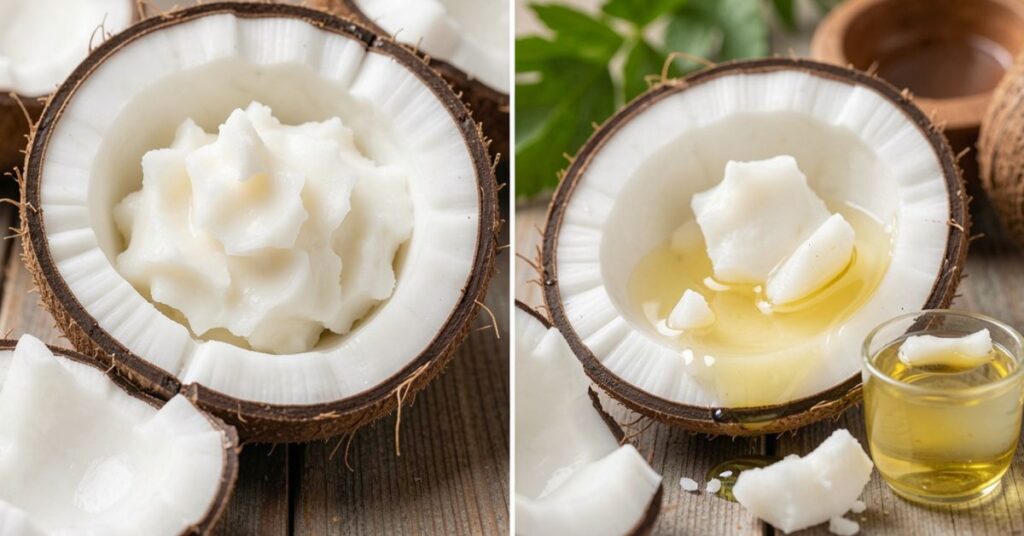
Beyond cooking and skincare, coconut products have a wide range of applications for hair care, beauty, and moisturizing routines. Understanding the differences helps you maximize their benefits in daily life.
Hair Care Benefits
Both coconut oil and coconut butter are popular hair care ingredients, but their effects differ:
- Coconut Oil: Lightweight and quickly absorbed, coconut oil strengthens hair, prevents protein loss, and adds shine. It’s ideal for scalp massages, conditioning treatments, and frizz control.
- Coconut Butter: Richer and thicker, coconut butter provides deep hydration, making it perfect for dry or damaged hair. It can be used as a leave-in treatment or deep conditioner.
Using coconut products regularly can improve hair health, reduce breakage, and enhance natural shine.
Beauty and Moisturizing Uses
Coconut oil and coconut butter are also excellent for general beauty and moisturizing purposes:
- Coconut Oil: Works well as a light moisturizer for normal to oily skin, makeup remover, or soothing balm for minor irritations.
- Coconut Butter: Provides intense hydration for dry skin, lips, and hands. It can be used in DIY lotions, lip balms, or body butters.
By choosing the right product for your skin type, you can enjoy natural, chemical-free beauty solutions that nourish and protect your skin.
DIY Skincare Recipes Using Coconut Butter and Coconut Oil
Coconut products are perfect for homemade skincare because they are natural, safe, and deeply nourishing. Here are some simple DIY recipes using coconut butter vs coconut oil that you can make at home.
Coconut Butter Body Lotion
Ingredients:
- 1/2 cup coconut butter
- 1/4 cup shea butter
- 1 tbsp almond oil (optional)
Instructions:
- Melt the coconut butter and shea butter over low heat.
- Take it off the heat and mix in the almond oil.
- Let it cool slightly and whip until creamy.
- Store in a jar and apply to dry skin for intense hydration.
Coconut butter provides long-lasting moisture, perfect for winter or dry areas like elbows and knees.
Coconut Oil Face Cleanser
Ingredients:
- 2 tbsp virgin coconut oil
- 1 tsp honey
Instructions:
- Mix the ingredients until smooth.
- Gently massage onto your face using circular motions for 1–2 minutes.
- Rinse with warm water and pat dry.
Coconut oil gently removes dirt, makeup, and impurities, leaving the skin soft without stripping natural oils.
Coconut Butter Lip Balm
Ingredients:
- 1 tbsp coconut butter
- 1 tsp cocoa butter
- 2–3 drops of essential oil (optional)
Instructions:
- Melt the coconut and cocoa butter together.
- Add essential oil and stir well.
- Pour into small containers and let it solidify.
- Apply to lips as needed for soft, hydrated lips.
Coconut butter nourishes and prevents chapped lips naturally.
Exfoliating Coconut Scrub
Ingredients:
- 2 tbsp coconut butter
- 2 tbsp brown sugar
- 1 tsp honey
Instructions:
- Mix all ingredients to form a paste.
- Lightly massage the skin using circular motions.
- Rinse with warm water and pat dry.
This scrub combines exfoliation and hydration, leaving your skin soft, smooth, and radiant.
How to Use Coconut Butter and Coconut Oil in Your Daily Routine
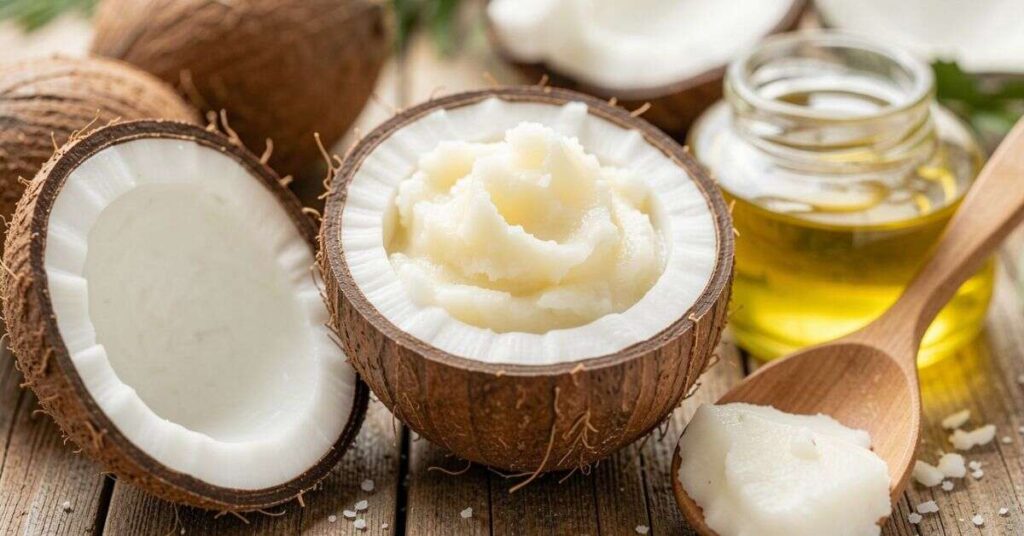
Incorporating coconut products into your daily routine can improve skin, hair, and overall wellness. Understanding how to use coconut butter vs coconut oil ensures you get the maximum benefits.
Moisturizing With Coconut Butter
Coconut butter is thicker and richer, making it perfect for deep skin hydration.
- Apply a small amount to dry areas like elbows, knees, and hands after showering.
- Use as a nighttime moisturizer to allow skin to absorb nutrients while you sleep.
- Can be blended with other natural ingredients like shea butter or essential oils for enhanced hydration.
Its nutrient-rich profile helps lock in moisture and improve skin elasticity.
Cleansing With Coconut Oil
Coconut oil is excellent for lightweight cleansing and removing impurities.
- Use a small amount to massage your face and remove makeup.
- Combine with sugar or coffee grounds for a gentle exfoliating scrub.
- Apply to hair as a pre-shampoo treatment to nourish the scalp and reduce frizz.
Coconut oil’s quick absorption makes it ideal for daily cleansing without leaving a greasy residue.
Simple Everyday Uses
Both coconut butter and coconut oil can be easily integrated into daily life:
- Morning: Add coconut butter to smoothies or toast for a nutrient boost.
- Afternoon: Use coconut oil as a light hand moisturizer or lip balm.
- Evening: Apply coconut butter on dry skin or coconut oil as a hair mask before bed.
By alternating between coconut butter and coconut oil, you can maximize hydration, nutrition, and natural beauty benefits throughout the day.
Where to Buy Coconut Butter and Coconut Oil
Knowing where and how to buy coconut products ensures you get high-quality, nutrient-rich options for cooking, skincare, and daily use.
What to Look for When Buying
When purchasing coconut butter or coconut oil, consider these factors:
- Purity: Look for products labeled 100% pure with no added preservatives or fillers.
- Organic: Organic options are free from pesticides and chemical residues.
- Cold-Pressed or Virgin: For coconut oil, virgin or cold-pressed varieties retain more nutrients and natural aroma.
- Texture and Packaging: Coconut butter should be smooth and creamy, while coconut oil should be clear and free from rancid odors.
Always check expiration dates and ensure the product is stored in airtight containers for maximum freshness.
Raw vs Refined Coconut Products
Understanding the difference between raw and refined coconut products helps you choose the best option:
- Raw/Unrefined: Retains natural flavor, aroma, and nutrients. Ideal for skin, hair, and cold recipes.
- Refined: Has a neutral taste, higher smoke point, and is suitable for high-heat cooking.
- Coconut Butter: Usually unrefined to preserve fiber, protein, and minerals, making it nutrient-dense.
Choosing the right product depends on your intended use—raw for maximum nutrition and topical benefits, refined for high-temperature cooking.
Coconut Butter vs Coconut Oil: Which One Should You Choose?
Deciding between coconut butter vs coconut oil depends on your health goals, cooking needs, and skincare routine. Both products are beneficial, but their uses differ significantly.
- Choose Coconut Oil if:
- You want a lightweight moisturizer or hair treatment.
- You need high-heat cooking oil for frying, sautéing, or baking.
- You prefer a product with a neutral flavor for recipes.
- You want a lightweight moisturizer or hair treatment.
- Choose Coconut Butter if:
- You want nutrient-dense spreads for toast, smoothies, or desserts.
- You need deep hydration for dry skin or sensitive areas.
- You want the benefits of fiber, protein, and minerals along with healthy fats.
- You want nutrient-dense spreads for toast, smoothies, or desserts.
In many cases, having both in your pantry is ideal. Coconut oil provides quick absorption and versatility, while coconut butter offers rich nutrition and lasting hydration.
In the end, the best option depends on your personal needs and preferences. For balanced use, consider coconut oil for cooking and quick skin care, and coconut butter for spreads, baking, and deep hydration.
Conclusion
Both coconut butter and coconut oil are versatile, natural products that provide unique benefits for health, cooking, and skincare. While they share a common origin the coconut their composition, texture, and uses are different.
Coconut oil is lightweight, quick-absorbing, and ideal for high-heat cooking or everyday skin and hair care. Coconut butter, on the other hand, is nutrient-dense, creamy, and perfect for spreads, baking, and deep hydration.
Understanding the differences between coconut butter vs coconut oil allows you to make informed choices that suit your lifestyle, dietary preferences, and beauty routine. For maximum benefits, consider keeping both products on hand: coconut oil for light, versatile use, and coconut butter for rich, nourishing applications.
By using them wisely, you can enhance your nutrition, beauty, and daily wellness naturally, while enjoying the delicious flavor and health benefits of coconut in multiple forms.
FAQs
1. How does coconut butter differ from coconut oil?
Coconut butter is made from whole coconut meat, which contains fiber, protein, and minerals; therefore, it is richer in nutrients. In contrast, coconut oil is pure fat extracted from coconut meat, making it lighter and more suitable for cooking as well as quick skin absorption.
2. Can I use coconut butter instead of coconut oil in recipes?
Yes, but there are differences. Coconut butter is thicker and creamier, so it works best in spreads, smoothies, and baking. Coconut oil is more suitable for frying, sautéing, and high-heat cooking due to its higher smoke point.
3. Which is better for skin: coconut butter or coconut oil?
It depends on your skin type. Coconut oil is lightweight and absorbs quickly, ideal for normal to oily skin. Coconut butter is thicker and more nourishing, perfect for dry or sensitive skin needing deep hydration.
4. Is coconut butter healthier than coconut oil?
Coconut butter is more nutrient-dense because it contains fiber, protein, and minerals in addition to healthy fats. Coconut oil is mostly saturated fat, providing energy but fewer additional nutrients. Both are healthy in moderation.
5. Can coconut butter or coconut oil help with weight loss?
Both coconut butter and coconut oil contain medium-chain triglycerides (MCTs), which means they can boost metabolism and provide quick energy. Additionally, coconut butter contains fiber and protein, which may help with satiety and appetite control. However, it is important to practice portion control because both are high-calorie foods.