

Introduction:
If you are looking for tea tree oil for hair growth, you may have seen claims that it can make hair grow faster, reduce shedding, or improve scalp health. Tea tree oil is an essential oil made from the leaves of Melaleuca alternifolia, a plant native to Australia. It is commonly used in scalp and hair-care products because of its antimicrobial properties.
However, tea tree oil is not a proven treatment for hair loss or faster hair growth. Research has looked more closely at its potential role in scalp conditions such as dandruff than at its ability to directly stimulate new hair growth.
In this guide, we will look at what is known about tea tree oil for hair growth, its potential benefits for the scalp, how to use it safely, and the risks you should know before applying it. We will also explain what the available evidence can and cannot tell us.
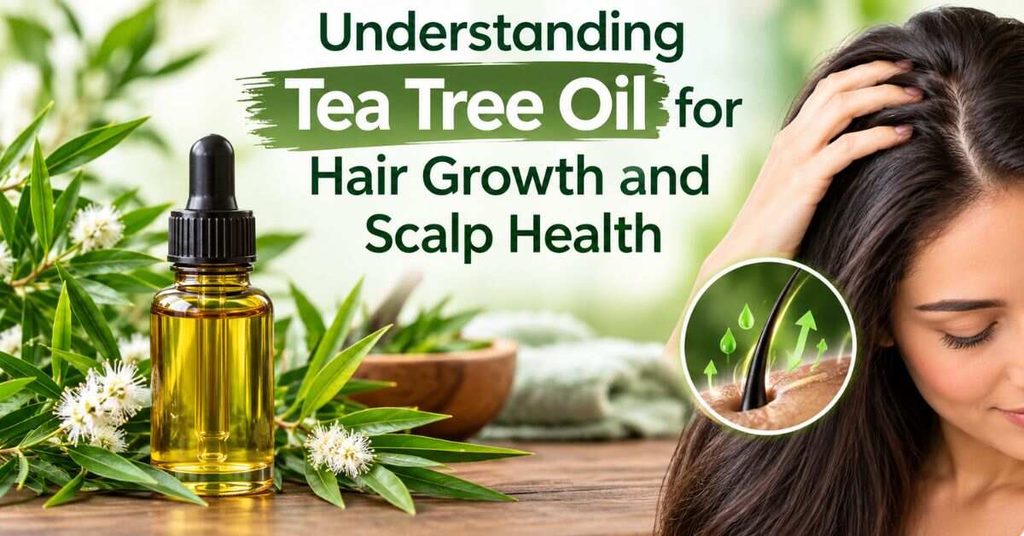
Understanding Tea Tree Oil for Hair Growth and Scalp Health
What Is It and Where Does It Come From?
Tea tree oil is an essential oil made from the leaves of Melaleuca alternifolia, a plant native to Australia. It is usually produced through steam distillation, a process that extracts volatile compounds from the plant material. Tea tree oil contains several natural compounds, including terpinen-4-ol. These compounds are responsible for many of the oil’s antimicrobial properties. Because of these properties, tea tree oil is commonly included in products designed for scalp cleansing and dandruff care.
Tea tree oil should not be confused with regular hair oils such as coconut, jojoba, or olive oil. Unlike these carrier oils, tea tree oil is highly concentrated and should generally be diluted before it is applied to the skin. It is also important to understand what tea tree oil can and cannot do. Its antimicrobial properties may make it useful as part of a scalp-care routine, particularly when dandruff or scalp buildup is a concern. However, there is not enough evidence to say that tea tree oil directly stimulates hair follicles or makes hair grow faster. For this reason, tea tree oil is better described as a scalp-care ingredient rather than a proven hair-growth treatment.
The Function of Terpinen-4-ol
Terpinen-4-ol is one of the main naturally occurring compounds found in tea tree oil. It is an important part of the oil’s chemical profile and has been studied for its antimicrobial and anti-inflammatory properties. These properties help explain why tea tree oil is commonly used in scalp-care products. Laboratory and clinical research suggests that tea tree oil may affect certain microorganisms and may help support the management of some scalp concerns. However, the presence of terpinen-4-ol does not mean that tea tree oil has been proven to stimulate hair growth directly.
There is currently limited evidence showing that terpinen-4-ol can increase the number of hair follicles, speed up hair growth, or reverse hair loss. For hair and scalp care, its potential value is more closely related to scalp health than direct hair regrowth. The strength and effectiveness of a product can also depend on its concentration and the other ingredients in the formulation. Because terpinen-4-ol is part of a concentrated essential oil, tea tree oil should be used carefully. Applying undiluted tea tree oil to the scalp can cause irritation or allergic reactions in some people.
Natural Extracts vs. Synthetic Alternatives
Tea tree oil and commercial hair products are not necessarily alternatives. They serve different purposes, and a product containing synthetic or laboratory-made ingredients is not automatically harmful to the scalp or hair. Pure tea tree oil is a concentrated essential oil. It contains naturally occurring plant compounds and is usually added to hair-care products in small amounts. Because it is highly concentrated, it should not normally be applied directly to the scalp without appropriate dilution.
Commercial shampoos, conditioners, and scalp treatments may contain cleansing agents, moisturizing ingredients, preservatives, fragrances, and other ingredients. These products are formulated to provide specific functions, such as cleansing the scalp, conditioning the hair, or managing dandruff. The important factor is not simply whether an ingredient is natural or synthetic. What matters is how the product is formulated, how it is used, and whether it is suitable for your scalp and hair type. If you choose pure tea tree oil, look for the botanical name Melaleuca alternifolia on the label and follow the manufacturer’s instructions. If you prefer a ready-made product, a properly formulated tea tree oil shampoo or scalp treatment may be easier to use because the ingredients are already combined at an appropriate concentration. Tea tree oil can be part of a hair-care routine, but choosing a natural ingredient does not guarantee better hair growth.
Does Tea Tree Oil for Hair Growth Really Work?
What the Clinical Research Says About Tea Tree Oil and Hair Thinning
When looking at tea tree oil for hair growth, it is important to separate evidence about scalp health from evidence about hair regrowth.
Research on tea tree oil has mainly focused on its antimicrobial properties and its possible use in products for scalp conditions such as dandruff. One clinical study investigated a shampoo containing 5% tea tree oil and reported improvement in dandruff severity compared with placebo after regular use. However, this does not prove that tea tree oil itself increases hair growth or reverses hair loss.
There is much less clinical evidence showing that tea tree oil can stimulate new hair growth. Hair thinning can have many different causes, including genetics, hormonal changes, nutritional deficiencies, certain illnesses, medications, and scalp conditions.
For this reason, tea tree oil should not be presented as a treatment for pattern hair loss or unexplained hair thinning. If you have sudden, severe, or persistent hair loss, it is better to speak with a dermatologist or another qualified healthcare professional to identify the cause.
Tea tree oil may have a useful role in scalp care, particularly when dandruff or another scalp concern is present, but current evidence does not establish it as a proven hair-growth treatment.
How Scalp Health Can Support Healthy Hair
A healthy scalp is an important part of a good hair-care routine, but keeping the scalp clean does not automatically make hair grow faster. Several factors control hair growth, including the natural hair-growth cycle, genetics, hormones, age, and other factors.
Good scalp care can still be useful because problems such as dandruff, excessive oiliness, dryness, or irritation can make the scalp uncomfortable and may affect how well you can maintain your hair.
Tea tree oil may be helpful for some people because of its antimicrobial properties. Research has also investigated tea tree oil in dandruff shampoos, although this does not mean that the oil can directly stimulate hair follicles or increase hair-growth speed.
A simple scalp-care routine can include:
- Regular cleansing: Wash your scalp often enough to remove excess oil, sweat, and product residue without causing excessive dryness.
- Gentle hair care: Avoid aggressive scratching, very hot water, and excessive pulling or tension on the hair.
- Treat scalp problems: Persistent dandruff, itching, redness, or scaling may require a suitable treatment rather than simply adding more oils.
- Use essential oils carefully: If you use tea tree oil, dilute it properly and stop using it if irritation develops.
The goal of scalp care should be to maintain a comfortable scalp rather than trying to force hair to grow faster.
Does Tea Tree Oil Make Your Hair Grow Faster?
There is currently not enough clinical evidence to show that tea tree oil makes hair grow faster.
Hair grows through a natural cycle that includes periods of growth, rest, and shedding. The speed of growth varies from person to person and can depend on genetics, age, hormones, nutrition, health, and other factors.
For this reason, do not describe tea tree oil as a product that directly speeds up the hair-growth cycle.Its potential value is more closely related to scalp care. For example, tea tree oil is used in some products designed to help manage dandruff and other scalp concerns.
Keeping the scalp comfortable and addressing problems such as persistent dandruff may make it easier to maintain a healthy hair-care routine. However, this is different from actually increasing the biological rate at which hair grows.
If your main concern is slow growth, noticeable thinning, or increased shedding, tea tree oil may not address the underlying cause. Persistent or sudden hair loss can have many possible causes and may require evaluation by a dermatologist.
In short, tea tree oil may support scalp care, but it has not been established as a treatment that makes hair grow faster.
Can Tea Tree Oil Reverse Hair Loss and Breakage?
Research has not shown that tea tree oil can reverse hair loss or regrow lost hair. This point matters especially for people with genetic or pattern hair loss because essential oils cannot replace evidence-based hair-loss treatments.
Tea tree oil may support scalp care, but it does not treat the underlying causes of genetic hair loss. If you notice ongoing thinning or excessive shedding, speak with a dermatologist to identify the cause and discuss suitable treatment options.
Tea tree oil may have a more limited role when scalp problems are affecting your hair-care routine. For example, dandruff can cause itching and scratching, which may make the scalp uncomfortable. A shampoo that contains tea tree oil may help some people manage dandruff, but dandruff treatment does not address the underlying cause of hair loss.
Hair breakage is also different from hair loss. Breakage happens when the hair shaft becomes damaged and snaps, while hair loss involves hair shedding from the follicle. Tea tree oil has not been established as a treatment that repairs damaged hair shafts or prevents all types of breakage.
If you are experiencing ongoing thinning, bald patches, sudden shedding, or significant changes in hair density, it is better to identify the cause rather than relying on tea tree oil alone.
Read More: oil slick hair || essential oils for vertigo || Coconut oil for dogs skin || vanilla bean essential oil
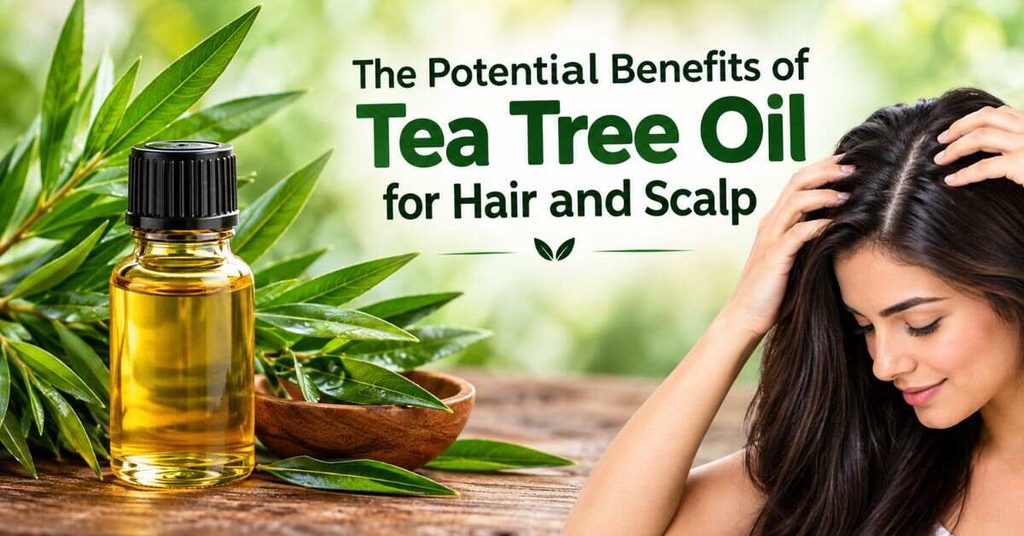
The Potential Benefits of Tea Tree Oil for Hair and Scalp
How Tea Tree Oil May Help With an Oily Scalp
An oily scalp produces more sebum, the natural oil made by the skin. Sebum is not automatically a problem because it helps protect the skin and hair. However, excess oil can make the hair look greasy and may contribute to buildup when it mixes with sweat, dead skin cells, and styling products.
Tea tree oil is sometimes included in shampoos and scalp treatments designed for oily or dandruff-prone scalps. Its antimicrobial properties may be useful as part of a cleansing routine, but there is not enough evidence to say that tea tree oil directly controls or reduces the amount of sebum your scalp produces.
If you have an oily scalp, regular cleansing is usually more important than applying more oil. Choose a shampoo that cleans your scalp effectively without leaving it excessively dry or irritated.
Tea tree oil should be treated as an optional ingredient rather than a guaranteed solution for excess sebum.
Tea Tree Oil for Dandruff and Flaking
Dandruff is a common scalp condition that can cause visible flakes and itching. It is associated with several factors, including the scalp’s response to Malassezia yeast, oil production, and individual skin sensitivity.
Tea tree oil has antimicrobial properties, which is one reason it has been studied as an ingredient in dandruff shampoos. A clinical trial involving a 5% tea tree oil shampoo reported improvement in dandruff severity after regular use.
However, this research does not mean that applying pure tea tree oil directly to the scalp is a proven dandruff treatment. Concentrated tea tree oil can irritate the skin and may cause allergic reactions.
If you want to try tea tree oil for dandruff, a properly formulated shampoo may be a simpler option than creating a concentrated DIY mixture. Persistent or severe dandruff may require a medicated treatment recommended by a healthcare professional.
Soothing a Dry, Itchy, or Irritated Scalp
An itchy scalp can have many causes, including dandruff, dry skin, contact dermatitis, psoriasis, or reactions to hair products.
Researchers have studied tea tree oil for its antimicrobial and anti-inflammatory properties, but that does not mean it suits every irritated scalp.Essential oils can themselves trigger irritation or allergic contact dermatitis.
If you choose to use tea tree oil, it should be properly diluted and used cautiously. Do not apply it to broken, scratched, or severely inflamed skin.
If itching, redness, swelling, scaling, or discomfort continues, stop using the product and consider speaking with a dermatologist. Finding the cause is more useful than repeatedly applying different oils.
Can Tea Tree Oil Remove Scalp Buildup?
Scalp buildup can come from styling products, excess sebum, sweat, dead skin cells, and infrequent cleansing. A suitable shampoo can usually remove much of this buildup.
Tea tree oil is not a replacement for a cleansing shampoo, and there is not enough evidence to say that it can literally “unblock” hair follicles.
If you have heavy product buildup, focus on regular scalp cleansing and avoid applying excessive amounts of oils or styling products. A clarifying shampoo may sometimes be useful, depending on your hair type and the products you use.
Some cleansing products may contain tea tree oil, but its presence does not guarantee that the product will remove all buildup or improve hair growth.
Tea Tree Oil and Head Lice
Researchers have studied tea tree oil for its activity against lice and other insects, but it should not replace established lice treatments.
If you suspect head lice, check the scalp and hair carefully and use an appropriate treatment according to professional or product guidance. Avoid applying concentrated essential oils to the scalp in an attempt to eliminate an infestation.
Some products marketed for scalp or hair care contain tea tree oil, but “natural” does not automatically mean effective or safe for treating an active infestation.
Tea Tree Oil for Hair Growth vs. Other Natural Oils
Tea Tree Oil vs. Eucalyptus Oil for Scalp Care
Both tea tree oil and eucalyptus oil belong to the essential-oil family, but their chemical compositions differ. Their potential uses also vary, especially in scalp-care products. When using either oil, proper dilution remains important because concentrated essential oils can irritate the skin.
Researchers commonly study tea tree oil for its antimicrobial properties, and manufacturers often include it in products for scalp cleansing and dandruff care.
Manufacturers also use eucalyptus oil in personal-care products, and the oil has antimicrobial properties. However, current evidence does not show that eucalyptus oil works better than tea tree oil for hair growth.
Neither oil should be considered a proven treatment for genetic hair loss. If your goal is scalp care, choose products based on their formulation, safety, and suitability for your scalp rather than assuming that one essential oil is automatically superior.
Tea Tree Oil vs. Rosemary Oil for Hair Growth
People often discuss rosemary oil and tea tree oil together online, but their evidence and proposed uses differ.
Rosemary oil has been studied in relation to hair growth, including a small clinical study comparing rosemary oil with minoxidil for androgenetic alopecia. However, researchers need more evidence before they can make broad claims about its effectiveness.
Tea tree oil has stronger associations with antimicrobial and scalp-care uses than with direct hair regrowth.
This means you should not simply compare the two oils as competing hair-growth treatments. Tea tree oil may be more relevant for scalp care, while researchers have studied rosemary oil more directly for its potential role in hair growth.
Neither should replace medical evaluation when significant hair loss is present.
Is Tea Tree Oil Better Than Coconut Oil for Hair Hydration?
Tea tree oil and coconut oil have very different roles.
Tea tree oil is a concentrated essential oil that people mainly use in small amounts as part of scalp and personal-care formulations. It is not a moisturizing oil for the hair shaft.
You can apply coconut oil to your hair in different ways. It contains fatty acids that make it a useful carrier oil. Research has suggested that coconut oil may reduce protein loss from hair when used as a pre- or post-wash treatment.
Because their functions differ, it is not useful to ask which one is simply “better.” You can use tea tree oil for scalp-focused care, while coconut oil works better for conditioning and protecting the hair shaft.
Comparing Natural Oils for Hair and Scalp Care
To help you understand how different botanical oils stack up against each other, here is a quick breakdown of their primary functions:
| Oil Type | Primary Function / Benefit | Best Used For |
| Tea Tree Oil | Clarifying, Antimicrobial & Antifungal | Clearing dandruff, excess sebum, and scalp buildup |
| Rosemary Oil | Stimulating & Strengthening | Boosting microcirculation and supporting follicle vitality |
| Coconut Oil | Deep Conditioning & Hydration | Reducing protein loss and locking in moisture on hair shafts |
| Jojoba Oil | Moisturizing Carrier | Balancing scalp moisture and diluting essential oils safely |
Can You Combine Tea Tree Oil With Other Oils?
You can combine tea tree oil with a suitable carrier oil for scalp care. Carrier oils such as jojoba or sweet almond oil can dilute the essential oil before you apply it to your skin.
However, combining several essential oils does not automatically make a treatment more effective. Every additional essential oil also introduces another possible source of irritation or allergy.
If you decide to create a DIY mixture, keep the formulation simple, use an appropriate dilution, and patch test before applying it more widely.
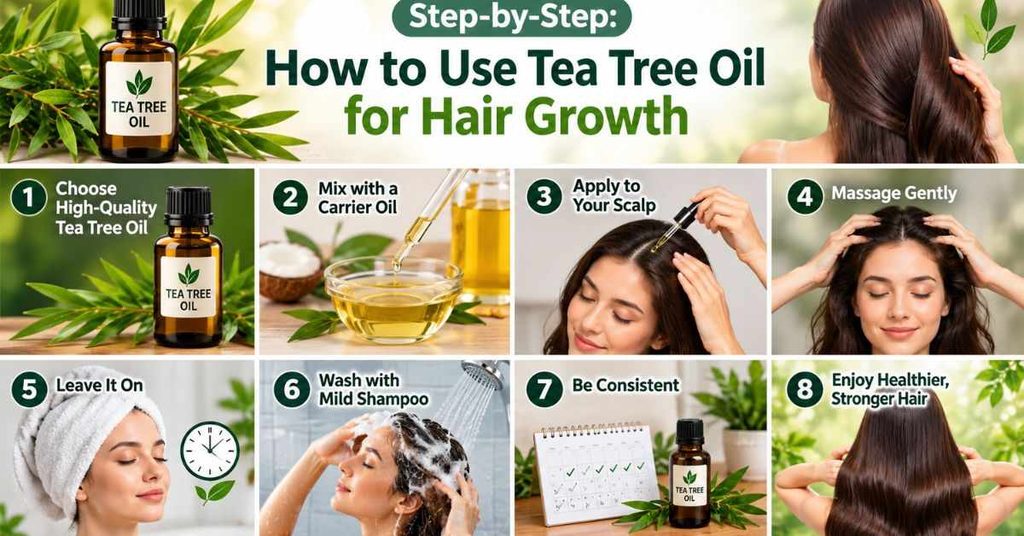
Step-by-Step: How to Use Tea Tree Oil for Hair Growth
Why Dilution Is Important
Tea tree oil is highly concentrated. Applying it directly to the skin can cause irritation, burning, redness, or allergic contact dermatitis in some people.
Diluting an essential oil with a suitable carrier oil reduces the concentration that reaches the skin. This does not guarantee that a reaction will not occur, but it can reduce the risk associated with using a highly concentrated product.
Do not assume that because tea tree oil is natural, it is safe to apply undiluted.
Best Carrier Oils to Mix With Tea Tree Oil
Carrier oils are vegetable oils used to dilute essential oils.
Jojoba oil is a lightweight option that is commonly used in scalp and skin products. It can be useful for people who prefer a less heavy-feeling carrier.
Coconut oil has a richer texture, so many people use it to condition their hair. It may be more suitable for people who like heavier treatments, although some hair types can feel weighed down by it.
Sweet almond oil has a relatively lightweight texture, which makes it a popular choice as a carrier oil.
The best carrier oil depends on your hair type, scalp preference, and how your skin reacts. Research has not shown that any of these carrier oils makes tea tree oil more effective for hair growth.
DIY Scalp Massage With Diluted Tea Tree Oil
If you want to try a diluted tea tree oil scalp treatment, keep the mixture simple.
One commonly used approach is to dilute a small amount of tea tree oil in a carrier oil to create a low-concentration mixture. For example, 2 to 3 drops of tea tree oil in 1 tablespoon of carrier oil produces approximately a 1% dilution.
Apply a small amount to the scalp rather than soaking the hair. Gently massage with your fingertips without scratching the skin.
Leave the treatment on for a limited period and then wash the scalp thoroughly.
Do not use more tea tree oil simply because you want faster results. A higher concentration does not mean better hair growth and may increase the chance of irritation.
How to Use Tea Tree Oil Shampoo
A ready-made tea tree oil shampoo may be easier to use than adding essential oil yourself.
Follow the product’s instructions rather than adding extra tea tree oil to the bottle. Manufacturers formulate commercial products with specific ingredient concentrations, and changing the formula can make the final concentration unpredictable.
Apply the shampoo to the scalp, massage gently, and rinse thoroughly. Avoid getting it into the eyes.
If the product causes burning, persistent itching, redness, or swelling, stop using it.
Pre-Shampoo Tea Tree Oil Treatment
Some people prefer applying a diluted scalp treatment before shampooing.
If you use this method, apply a small amount of a properly diluted mixture to the scalp and avoid broken or irritated skin. Leave it on only for the period recommended by the formulation or product instructions, then wash the scalp thoroughly.
There is no evidence that leaving tea tree oil on the scalp for longer periods will produce faster hair growth.
For sensitive scalps, a ready-made product with a tested formulation may be a better option than a DIY treatment.
Risks, Side Effects, and Warnings
Potential Allergic Reactions and Contact Dermatitis
Tea tree oil can cause skin irritation or allergic contact dermatitis in some people. The risk may increase when you use highly concentrated oil, store it improperly, or allow it to oxidize.
Possible symptoms include:
- redness
- itching
- burning
- swelling
- rash
- scaling
- discomfort
If you develop a reaction, stop using the product and wash the affected area. Seek medical advice if the reaction is severe or does not improve.
Why Patch Testing Is Important
A patch test can help you identify whether your skin reacts to a product before you use it more extensively.
For a diluted tea tree oil mixture, apply a small amount to a limited area of skin according to the product’s safety instructions. Monitor the area for signs of irritation or allergy.
A patch test cannot guarantee that you will not react when you use the product elsewhere, but it can provide a useful precaution.
Do not patch test an essential oil mixture on already damaged or irritated skin.
Who Should Be Careful With Tea Tree Oil?
People with sensitive skin, eczema, existing scalp irritation, or a history of reactions to essential oils should be particularly cautious.
Children should not use essential oils without appropriate professional guidance. Keep essential oils away from your eyes, and never swallow them.
If you are pregnant, breastfeeding, taking medication, or managing a medical condition, ask a healthcare professional whether a particular essential-oil product is appropriate for you.
Never use tea tree oil as a substitute for medical treatment when a scalp condition or hair-loss problem requires professional care.
Signs That You Are Using Too Much Tea Tree Oil
Using more tea tree oil does not make it more effective.
Signs that your scalp may not tolerate the product include:
- persistent burning
- redness
- itching
- dryness
- swelling
- rash
- increased scalp discomfort
If these symptoms occur, stop using the product.
Avoid repeatedly applying tea tree oil to an irritated scalp because continued exposure may make the problem worse.
Choosing a Tea Tree Oil Product
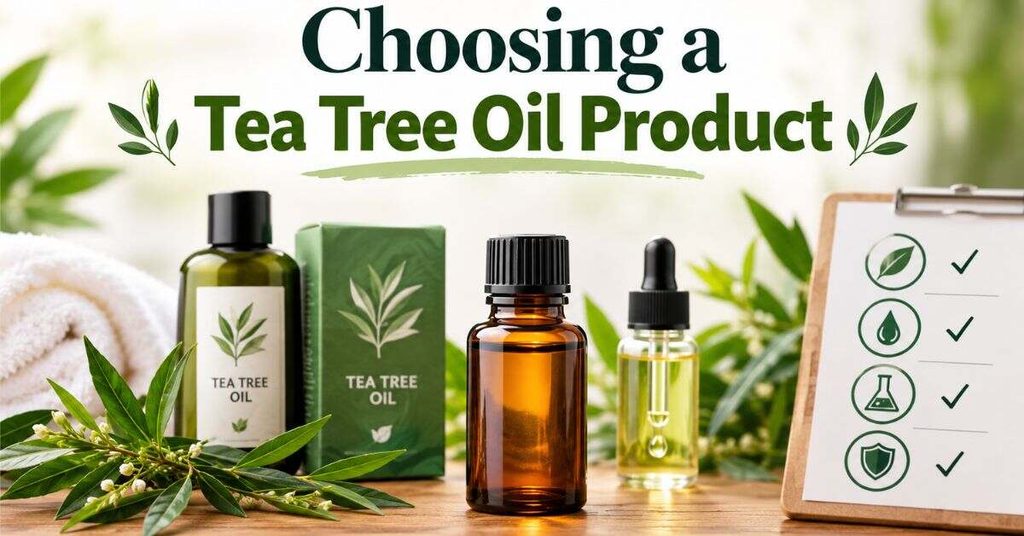
How to Identify a Quality Tea Tree Oil
When buying tea tree oil, check the label carefully.
Look for the botanical name Melaleuca alternifolia. The label should also clearly identify the product as tea tree essential oil and provide appropriate usage information.
Dark-colored glass packaging can help protect essential oils from light exposure. A clear ingredient list and reputable manufacturer are also useful signs when choosing a product.
Be cautious with marketing terms that suggest an oil works better simply because sellers describe it as “therapeutic grade.” The term “therapeutic grade” does not represent a universally recognized scientific quality standard.
Pure Essential Oil vs. Tea Tree Oil Shampoo
Pure essential oil contains highly concentrated compounds, so use it carefully and dilute it properly before applying it.
A ready-made tea tree oil shampoo is different because the manufacturer has already formulated the product with cleansing agents and other ingredients.
For people who are new to essential oils, a properly formulated commercial product may be easier to use than creating a DIY mixture.
The choice depends on your routine, scalp sensitivity, and the specific purpose of the product.
What to Look for in a Commercial Product
When choosing a tea tree oil shampoo or scalp treatment, look beyond the presence of tea tree oil alone.
Consider:
- the complete ingredient list
- the product’s intended use
- instructions for application
- fragrance and other ingredients if you have sensitive skin
- whether the product targets dandruff, cleansing, or general scalp care
A product containing tea tree oil is not automatically a hair-growth treatment. Read the claims carefully and avoid products that promise unrealistic results.
When Tea Tree Oil Is Not the Right Solution
Tea tree oil may not be appropriate for every hair or scalp concern.
If you have sudden hair loss, bald patches, severe scalp pain, bleeding, crusting, persistent redness, or significant changes in hair density, an essential oil may not address the underlying problem.
Hair loss can result from many different conditions. Some require medical diagnosis and treatment.
Similarly, severe dandruff or persistent itching may need a medicated shampoo or another treatment rather than repeated applications of essential oils.
Knowing when to stop experimenting with home remedies is an important part of safe hair care.
Final Thoughts:
Tea tree oil can be a useful ingredient in a scalp-care routine, particularly because of its antimicrobial properties and its use in products designed for dandruff and cleansing.
However, the evidence does not establish tea tree oil as a proven treatment for faster hair growth or hair loss.
If you are interested in using tea tree oil, focus on realistic goals. It may support scalp care, but research does not show that it can regrow lost hair or change your natural rate of hair growth.
Use it carefully, dilute pure essential oil appropriately, follow product instructions, and stop using it if irritation develops.
Most importantly, persistent hair thinning or significant hair loss deserves attention to the underlying cause. A healthy scalp routine can be useful, but it is only one part of maintaining healthy hair.
FAQs:
How long does it take to see results from tea tree oil for hair growth?
Researchers have not established a specific timeframe for hair-growth results because studies have not shown that tea tree oil directly increases hair growth.
If you are using a tea tree oil product for dandruff or scalp care, changes in flaking or itching may occur with regular use, depending on the product and the individual. Follow the product instructions rather than expecting a specific number of days or weeks.
Can I leave tea tree oil in my hair overnight?
Avoid leaving pure tea tree oil on your scalp overnight.Undiluted essential oil can irritate the skin and may cause allergic reactions.
If you use a tea tree oil product, follow its instructions for how long it should remain on the scalp. Do not assume that longer contact will produce better results.
How many drops of tea tree oil should I use?
The amount depends on the intended use and the final concentration of the product.
For a DIY scalp mixture, a low dilution is generally preferable to using concentrated tea tree oil. For example, 2 to 3 drops in 1 tablespoon of carrier oil produces approximately a 1% dilution.
If you are using a commercial shampoo or scalp treatment, follow the manufacturer’s instructions instead of adding extra essential oil.
Does tea tree oil dry out curly or coarse hair?
It can. Tea tree oil is a concentrated essential oil and is not a moisturizing treatment for the hair shaft.
People with curly, coily, or coarse hair may prefer to focus tea tree oil products on the scalp and use a separate conditioner or moisturizing product on the lengths and ends.
If your hair feels dry or brittle after using a product, reduce its use or discontinue it.
Which essential oil is best for hair growth?
No essential oil currently stands out as the universally “best” treatment for hair growth.
Tea tree oil mainly supports scalp care and provides antimicrobial properties. Researchers have studied rosemary oil more directly for its potential effect on hair growth, but the available evidence remains limited.
If you have significant hair thinning, it is more useful to identify the cause than to rely on an essential oil alone.
Can you apply tea tree oil directly to the scalp?
It is better not to apply pure tea tree oil directly to the scalp. Essential oils contain highly concentrated compounds, so they can irritate the skin or trigger allergic contact dermatitis in some people.
If you want to use tea tree oil on the scalp, use a properly formulated product or dilute the essential oil appropriately according to reliable safety guidance.
Does tea tree oil unblock hair follicles?
There is not enough evidence to say that tea tree oil literally unblocks hair follicles.
Some cleansing products contain tea tree oil, which may provide antimicrobial benefits. However, current evidence does not support claims that tea tree oil removes follicle blockages or directly improves hair growth.
Regular scalp cleansing is a more reliable way to remove excess oil, sweat, dead skin cells, and styling-product residue.
Is tea tree oil safe for color-treated or chemically processed hair?
A properly formulated tea tree oil hair product may be suitable for some color-treated or chemically processed hair, but individual products can differ.
Because concentrated essential oils may irritate the scalp, follow the product’s directions and avoid excessive use. If you are concerned about color fading or chemical treatment, check the product information and test it carefully before regular use.
If your scalp reacts with burning, itching, redness, or swelling, stop using the product.