Introduction:
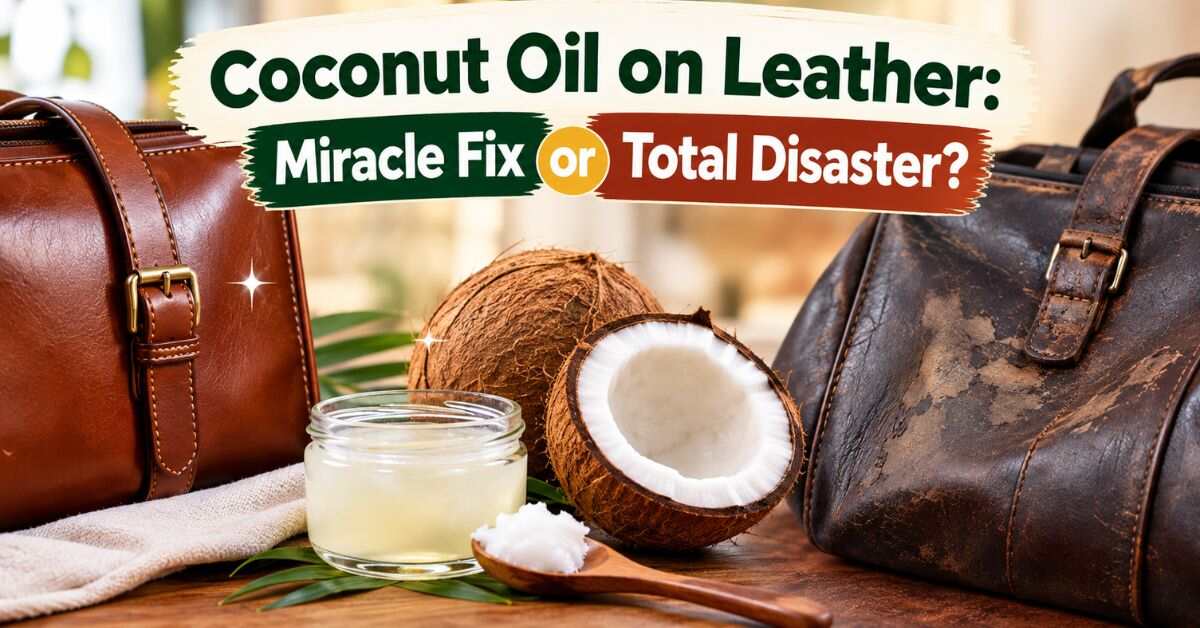
Staring at a scuffed pair of boots or a dry leather jacket while holding a jar of coconut oil makes DIY maintenance look tempting, fast, and effortless. Internet life hacks promise that rubbing coconut oil on leather will restore suppleness and deep color in seconds. However, what starts as a quick kitchen fix often turns into a long-term disaster for your favorite goods.
Tropical plant fats interact poorly with animal collagen fibers. Therefore, understand how coconut oil on leather shoes behaves differently than native oils. This gloss hides a serious risk of rancidity and dry rot. Consequently, follow proper care rules. Thus, your leather gear survives decades instead of rotting internally.
Key Takeaways at a Glance
- The Core Verdict: While coconut oil on leather offers a quick, cheap softening effect upfront, its high lauric acid content oxidizes over time, turning rancid, attracting dirt, and rotting cotton or linen stitching.
- Why It Fails Long-Term: Plant triglycerides clog microscopic hide pores, blocking natural breathability and accelerating dry rot within 6 to 12 months.
- Better Alternatives: Switch to industry standards like Lexol, Leather Honey, Saphir Renovateur, or pure jojoba oil to nourish collagen safely without greasiness.
The Science: What Happens When You Put Coconut Oil on Leather?
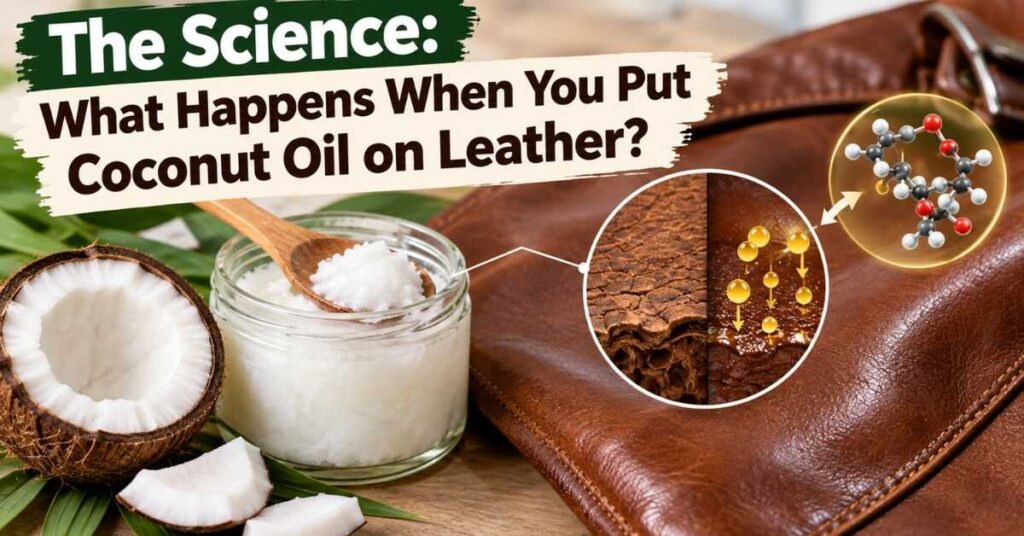
How coconut oil triglycerides penetrate animal hide fibers
Leather is not a synthetic material; it is a complex, three-dimensional network of protein collagen fibers harvested from animal skin. When you massage coconut oil on leather, the medium-chain triglycerides, primarily lauric acid, act as a low-viscosity penetrant. Because the molecular structure of coconut oil is remarkably small compared to heavy animal fats, it slides effortlessly into the microscopic interstitial spaces between collagen fibrils. Initially, this creates a dramatic illusion of deep hydration as the oil displaces trapped air and moisture within the hide.
Short-term fiber lubrication vs. long-term lipid breakdown
In the first few days, your boots or jacket will feel buttery, look intensely dark, and repel light water splashes. However, coconut oil on leather shoes and apparel initiates a chemical conflict beneath the surface. Natural animal hide relies on native structural oils and compatible long-chain fatty acids to maintain tensile strength. Plant-based saturated fats lack the specific structural bonding affinity required by tanned collagen. Over a period of weeks to months, these foreign triglycerides begin to oxidize, breaking down the natural protein matrix and leaving the leather fibers brittle once the initial grease evaporates or goes foul.
Why plant-based saturated fats behave differently than natural hide oils
Tanners use specialized animal- or mineral-based emulsions (such as neatsfoot, mink, or lanolin oils) because their hydrocarbon chains mirror the natural composition of skin. Coconut oil is a tropical plant fat that solidifies at room temperatures below 24°C (76°F). When applied to leather jackets or bags, the oil fluctuates between a semi-solid and liquid state depending on ambient weather. This thermal instability causes the individual collagen strands to stick together awkwardly, destroying the supple, breathing characteristic that high-grade leather is prized for.
Coconut Oil on Leather: Pros, Cons, and Reality Check
The Pros: Instant deep sheen, low cost, and initial soft hand-feel
When you first rub coconut oil on leather, the results look like a DIY miracle. The leather instantly drinks up the fat, turning dry, scuffed surfaces into a rich, dark, lustrous finish. It provides a quick-fix softening effect that makes stiff leather feel pliable within minutes, all for a fraction of the cost of boutique leather balms sitting on a cobbler’s shelf.
The Cons: Why coconut oil goes rancid, traps dust, and attracts mold
Despite the tempting short-term glow, applying coconut oil on leather bags or footwear comes with severe long-term drawbacks:
- Oxidation and Rancidity: Unlike synthetic or mineral-based conditioners, plant lipids decompose over time. As the coconut oil breaks down inside the hide, it emits a sour, stale, or rancid odor that is nearly impossible to scrub out.
- Tackiness and Dust Magnet: Because coconut oil sits in the upper grain rather than bonding permanently with the collagen, it leaves a sticky film that magnetically pulls in airborne dust, lint, and pocket grit.
- Microbial and Mold Growth: Plant fats act as an organic food source for mold and mildew spores especially if your treated coconut oil on leather boots encounters damp weather or dark closet storage.
Coconut Oil vs. Commercial Leather Conditioners: Direct formula comparison
To understand why purists advise against pantry shortcuts, look at how coconut oil stacks up against a dedicated leather formula:
| Feature / Metric | Virgin/Refined Coconut Oil | Commercial Leather Conditioner (e.g., Lexol / Leather Honey) |
| Primary Ingredient | Plant-derived saturated fats (Lauric acid) | Refined animal fats, lanolin, or synthetic polymer emulsions |
| Penetration Depth | Over-saturates upper grain; weak deep-collagen bond | Balanced penetration to nourish inner dermal layers |
| Oxidation Risk | High (spoils, turns rancid, smells sour) | Low (chemically stabilized for long-term preservation) |
| Breathability | Severely blocked (clogs pores, risks dry rot) | Maintained (allows hide to flex and breathe naturally) |
| Finish & Tacky Feel | Greasy, sticky, attracts dirt and lint | Clean, matte-to-soft satin, non-transferable |
Can Coconut Oil Rot Leather Stitching? The impact on cotton and linen threads
Leather goods are rarely held together by glue alone; they rely on heavy-duty stitching made from spun cotton, linen, or untreated polyester. When you slather coconut oil on leather, the migrating fatty acids soak directly into the thread fibers. Natural cotton and linen threads absorb the plant oil and hold onto it indefinitely. Over months, the trapped organic fat goes rancid and acidic, chemically rotting the stitching until seams unravel under normal tension. Even if your hide survives the treatment, your seams likely won’t.
Item-by-Item Breakdown: Using Coconut Oil on Leather Goods
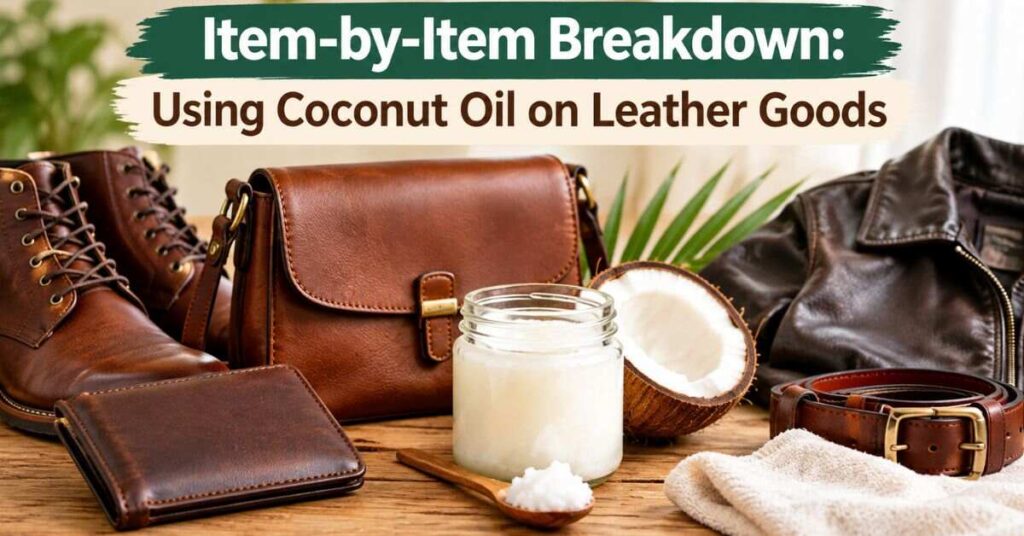
| Leather Type / Item | Can You Use Coconut Oil? | Best Safe Alternative | Expected Long-Term Result of Coconut Oil |
| Full-Grain Work Boots | Risky (Emergency only) | Mink Oil / Neatsfoot Oil | Darkens severely, softens ankle support, risks seam rot |
| Fashion Shoes & Dress Leather | No | Saphir Renovateur | Bleeds through lining, stains socks, ruins fine finish |
| Motorcycle & Heavy Jackets | Use Extreme Caution | Lexol Conditioner | Traps body heat, transfers oil to shirts/seats |
| Delicate Lambskin / Aniline | No | Jojoba Oil | Flattens texture, creates permanent translucent grease spots |
| Handbags & Tote Bags | No | Leather Honey | Leaves sticky film, attracts lint, stains clothing |
| Wallets & Briefcases | No | Jojoba Oil / Beeswax | Melts with hand warmth, leaks oil onto cards and cash |
| Sofas & Leather Furniture | No | Lexol pH-Balanced | Ruined clothing, foul rancid smell, cracks top-coat |
| Car Seats & Interior Trim | No | Dedicated Automotive Balm | Extreme slickness in heat, bakes hide until it cracks |
Footwear & Boots
Thick work boots made of raw steerhide can occasionally take a tiny dab of coconut oil during an emergency field fix, yet this shortcut darkens the hide into a muddy tone and permanently softens the ankle support.
Dress shoes and sleek city boots must stay strictly clear of kitchen fats; saturated plant oils soak straight past the lining to stain socks, ruin toe caps, and leave behind ugly, permanent dark blotches.
Jackets & Outerwear
Motorcycle riding gear boasts tough hides that hold their shape initially, though coconut oil dries into a stiff, greasy crust that body heat melts onto your car seats, shirts, and home sofas.
Delicate lambskin and soft aniline fashion pieces absorb heavy plant triglycerides almost instantly, creating greasy halos that even dry cleaners cannot get out.
Bags & Everyday Carry
Carrying a treated handbag on a warm afternoon risks transferring oily smears directly onto your clothes, while the lipids slowly bleed through the leather to ruin paper documents or tech gadgets.
Wallets and briefcases absorb the warmth of your hands, turning solid coconut oil into a slick liquid that leaks through inner dividers and ruins receipts or cash.
Furniture & Car Interiors
Coating an entire living room sofa with coconut oil results in an expensive headache, leaving a sticky film that ruins light-colored garments, smells foul after a few months of indoor warmth, and strips away modern dye finishes.
Parked summer vehicles turn into ovens that push past 60°C (140°F), baking coconut oil deep into car seats until the leather turns slick, brittle, and cracked.
Read More: cannabis coconut oil || coconut oil popcorn || essential oils to repel spiders || essential oil for bug bites
The Chemistry & pH Balance: Why Coconut Oil Affects Hides
Fatty acid profile of coconut oil (the role of lauric acid)
To understand why putting coconut oil on leather is a technical gamble, you have to look at what’s happening at a molecular level. Coconut oil is an outlier among natural fats because it consists of roughly 45% to 50% lauric acid, a medium-chain saturated fatty acid. Unlike long-chain fatty acids found in natural animal tallows or olive oil for leather, lauric acid has a remarkably low molecular weight. This low weight allows it to bypass normal dermal resistance, flooding the upper strata of the hide and displacing the moisture-protein balance that keeps the material supple.
How clogged hide pores reduce breathability and cause dry rot
Live animal hide naturally breathes, releasing residual humidity and absorbing ambient air to keep its cellular matrix flexible. When heavy plant fats plug those microscopic pores, the hide suffocates. Over time, trapped internal moisture mixes with the degrading lauric acid film, creating an acidic micro-environment. This chemical shift accelerates dry rot, causing the leather to turn brittle, crack along flex points, and snap under stress rather than stretch safely.
Accelerated patina vs. premature structural degradation
Many DIY enthusiasts mistake the instant dark, glossy transformation of coconut oil on leather for a rich, vintage patina. In reality, a genuine patina is formed slowly over years through gentle hand oils, sunlight, wax application, and normal wear that respects the hide’s surface. Coconut oil forces a premature, artificial darkening by literally soaking the upper grain in liquid fat. Rather than aging gracefully, the leather suffers accelerated structural fatigue, leading to split seams and flaking top coats long before its natural lifespan should end.
Coconut Oil vs. Other Household & Natural Oils on Leather
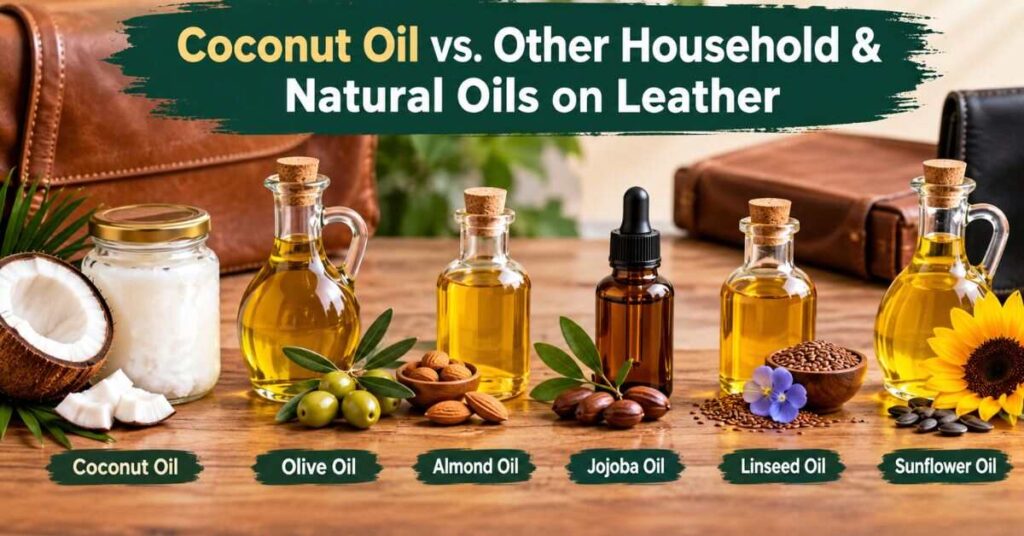
Coconut oil vs. olive oil on leather surfaces
While both are pantry staples, olive oil for leather and coconut oil pose different risks to your gear. Olive oil is a monounsaturated liquid fat rich in oleic acid; it penetrates even deeper than coconut oil and virtually never dries or cures, leaving your leather in a permanently greasy, weeping state that attracts every speck of dirt in the room. Coconut oil at least solidifies at cooler room temperatures, yet its high lauric acid content makes it prone to rapid chemical rancidity and sticky surface residue. Neither belongs on quality hide, as both disrupt the native protein bonds far worse than an actual best natural oil for leather formulated for footwear.
Coconut oil vs. baby oil, mineral oil, or petroleum jelly
Reaching for petroleum-based products or baby oil feels harmless until you realize how they interact with tanned hides. Mineral oil and baby oil are refined petroleum distillates that lack any genuine conditioning nutrients; they sit in the upper pores, dissolve factory-applied waterproofing finishes, and prevent the leather from ever accepting a proper wax or cream polish again. Petroleum jelly (like Vaseline) acts as an occlusive heavy blanket it traps internal fibers in a suffocating seal that accelerates dry rot and turns stitching into weak, crumbly thread.
Coconut oil vs. pure beeswax and commercial balms
If you want real protection without destroying your gear, pure beeswax and professional balms operate on an entirely different scientific level. Beeswax provides a breathable, flexible exterior armor that locks out moisture while allowing the collagen to flex safely. When blended with natural animal fats or refined plant waxes like carnauba, commercial conditioners nourish the dermal layers without clogging pores or turning rancid. Using coconut oil as a cheap substitute for a dedicated wax-balm hybrid sacrifices a $200 leather jacket or pair of boots just to save a few dollars on maintenance.
Why Do People Recommend Coconut Oil on Leather?
The viral DIY myth: Why internet blogs misjudge botanical oils
Scroll through social media or short-form video platforms, and you will find countless tutorials claiming that rubbing coconut oil on leather is a secret life hack for reviving old boots and jackets. The confusion stems from a simple visual trick: dry, thirsty leather acts like a sponge, drinking up any oil you throw at it. Content creators confuse immediate physical absorption with true chemical restoration. Because botanical oils are cheap, pleasant-smelling, and readily available in kitchen pantries, influencers promote them without understanding how plant triglycerides behave inside an animal protein matrix over a 6-to-12-month horizon.
Short-term visual deception vs. 6-month structural reality
When you apply coconut oil on leather shoes or a favorite bag, the first 48 hours look remarkable. Scuffs vanish, colors deepen into a rich espresso hue, and the surface feels baby-soft. However, the true story unfolds months later:
- Month 1 to 2: The oil begins to oxidize and attract airborne dust, transforming the soft sheen into a dull, tacky film.
- Month 3 to 4: The lauric acid degrades, emitting a stale or rancid smell whenever body heat or friction warms the material.
- Month 5 to 6: Cotton and linen stitching rots from acid exposure, individual collagen fibers turn brittle, and micro-cracks erupt across the flex points.
Rare exceptions: When ancient or rock-hard dry leather actually tolerates it
There is one very narrow scenario where does coconut oil ruin leather turns into a nuanced debate: severely neglected, sun-baked, rock-hard museum or archaeological leather (such as century-old tack or dry saddle leather) that is already dead to the world and cracking to dust. In a desperate emergency where no neatsfoot or lanolin is available, a micro-drop of oil might prevent total snap-failure. Yet even in these extreme recovery cases, experienced conservators treat it as a hazardous last resort rather than standard maintenance.
How to Apply Coconut Oil on Leather (If You Choose to Use It)
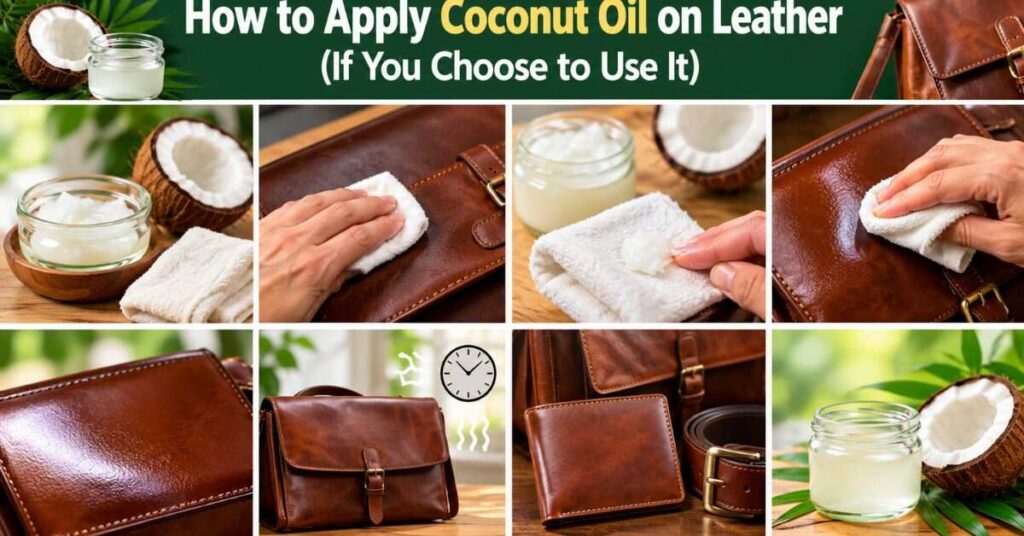
Step 1: Deep cleaning and stripping surface dirt with saddle soap
Before introducing any fatty substance to a hide, you must clear away grit, dried mud, and old wax buildup that can grind into the grain. Work up a rich, creamy lather using a pH-balanced saddle soap and a damp horsehair brush or soft sponge. Scrub the surface in gentle circular motions to lift embedded grime without soaking the hide. Wipe away the dirty foam immediately with a clean, damp microfiber cloth, and allow the leather to dry completely at room temperature for at least 24 hours away from direct heat or sunlight.
Step 2: Performing a patch test on a hidden seam or interior panel
Never apply coconut oil on leather surfaces blindly across an entire jacket or pair of boots. Because plant fats cause severe and irreversible darkening, select an inconspicuous area such as an inner flap, a gusset beneath a buckle, or the bottom seam of a handbag. Dab a microscopic pinhead-sized amount of oil onto that spot, wait 24 hours to observe the true color shift, and check whether the leather turns overly dark, blotchy, or slick.
Step 3: Ultra-sparing application using a lint-free microfiber cloth
If you decide to proceed, moderation is your only safety net against total ruin. Warm a tiny dab of coconut oil between your fingertips until it liquefies, then load an absolute minimum onto a clean, lint-free microfiber cloth. Buff the cloth across the hide using fast, feather-light, circular strokes. Your goal is to coat the surface in a whisper-thin haze rather than soaking the material. If the leather looks wet or slick a minute later, you have already used far too much.
Step 4: Curing time and buffing away tacky surface residue
Let the treated item rest in a cool, well-ventilated room for 6 to 12 hours so the excess lipids settle into the outer grain. Once the curing window closes, take a dry, clean microfiber cloth and vigorously buff the entire surface to strip away unabsorbed oil sitting on top of the pores. Finish with a firm horsehair brush sweep to restore a natural, non-greasy luster before wearing or storing your gear.
How to Fix Leather Ruined or Over-Saturated with Coconut Oil
How to draw out excess grease and oil from saturated hide fibers
If you slathered coconut oil on leather boots or a prized jacket and now have a dark, water-logged, weeping mess, you need to pull the trapped lipids back out before the collagen breaks down. Dust the entire surface heavily with an absorbent powder such as cornstarch, Fuller’s earth, or baby powder and let it sit undisturbed for 24 to 48 hours. The fine particles act like a molecular sponge, drawing migrating plant fats out of the upper pores. Brush away the powder with a stiff horsehair brush and repeat the poultice process until the surface no longer feels slick to the touch.
Removing sticky surface buildup and greasy hand-transfer
Once you extract the bulk of the internal fat, you have to strip the gummy, oxidized film left clinging to the exterior grain. Wash the item thoroughly using a concentrated leather-safe degreaser or a traditional pH-balanced saddle soap, working it into a dense foam to dissolve surface residue. Wipe away the grime with a clean damp cloth, and avoid household dish soaps or alcohol-based cleaners, which strip away the hide’s remaining natural tannins and leave it stiff like cardboard.
Neutralizing rancid odors left behind by degraded plant fats
When coconut oil on leather begins to spoil, it leaves behind a sour, stale smell that lingers every time the material warms up. Place the item in a well-ventilated, shaded outdoor space for a few days to let trapped volatile fatty acids air out. For stubborn odors, stuff the interior of the boots, bag, or jacket with activated charcoal pouches or cedar blocks for a week to absorb the rancid scent molecules without introducing harsh chemical masking agents.
Best Alternative Oils to Coconut Oil for Leather Care
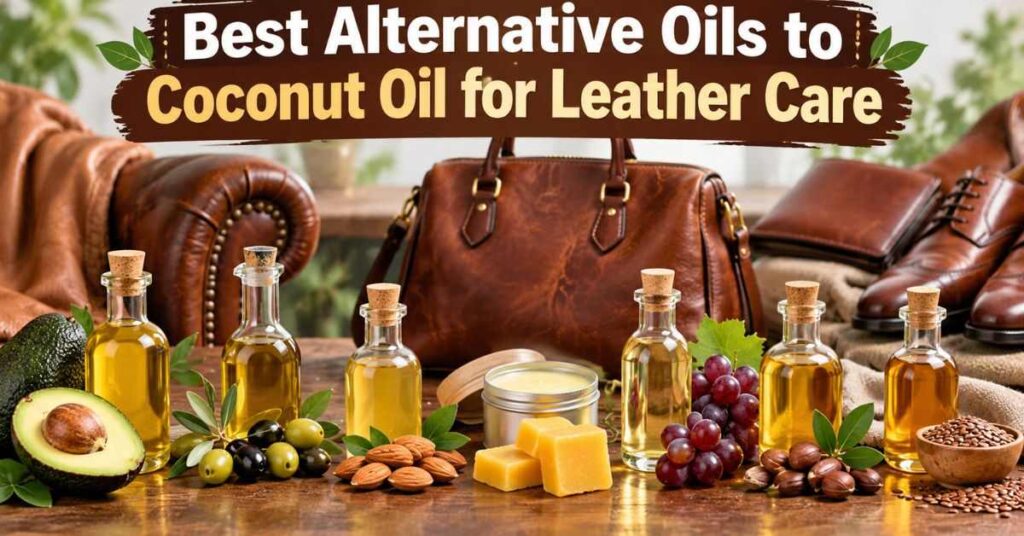
Why mink oil provides proper animal-lipid replacement
Mink oil is an industry classic because its animal-based fatty acid profile closely mirrors the natural oils found in mammalian hides. Unlike plant fats, mink oil absorbs deeply into the collagen matrix without clogging the hide’s microscopic pores or turning rancid over time. It softens stiff work boots, repels rain, and restores suppleness to dry leather without leaving behind a sticky, dust-magnet film.
Why pure neatsfoot oil suits heavy-duty outdoor gear
Rendered from the shin bones and feet of cattle, pure neatsfoot oil has been the gold standard for saddles, harnesses, and rugged outdoor footwear for centuries. It lubricates dry, weather-beaten leather fibers from the inside out, restoring high tensile strength and flexibility. Because it darkens leather significantly, save it for work boots, tool belts, and heavy-duty gear rather than delicate dress shoes or designer handbags.
Plant-based safety picks: Jojoba oil and sweet almond oil
Skip kitchen pantries for plant-derived alternatives. Choose stable liquid waxes like jojoba oil or sweet almond oil instead. Jojoba oil is a liquid wax ester. Its molecular structure matches human sebum and animal oils. This natural wax resists oxidation, prevents rancidity, and conditions coconut oil on leather surfaces without heavy greasiness.
Industry gold standards: Leather Honey, Lexol, and Saphir Renovateur
When you want professional-grade preservation without risking your favorite pieces, commercial formulations engineered by leather artisans deliver unmatched safety and performance:
- Leather Honey: A non-toxic, water-repellent conditioning oil that deeply penetrates and revitalizes dry or cracked leather without silicone or harsh solvents.
- Lexol pH-Balanced Conditioner: A classic, non-greasy liquid emulsion that restores natural oils to car interiors, furniture, and apparel without altering the original color or leaving residue.
- Saphir Médaille d’Or Renovateur: A luxury mink-oil and beeswax cream celebrated worldwide by bootmakers and cobblers for feeding, cleansing, and shining fine calfskin without suffocating the grain.
How to Condition Leather Properly (Step-by-Step)
Step 1: Pre-cleansing the grain with a pH-balanced saddle soap
Never condition dirty leather. You will trap grit, road salt, and debris deep inside the hide pores. Dampen a horsehair brush or soft sponge. Work up a gentle lather with a pH-balanced saddle soap. Wipe the entire surface down in circular motions. Immediately remove residual suds with a clean, slightly damp microfiber cloth. Let the material air-dry completely at room temperature for twelve to twenty-four hours before applying coconut oil on leather.
Step 2: Selecting the right formulation for your specific leather type
Match your conditioning product to the exact role and grade of your item rather than grabbing a generic kitchen jar:
- Rugged work boots and outdoor gear: Opt for a deep-penetrating animal tallow, mink oil, or pure neatsfoot oil.
- Fine dress shoes, jackets, and everyday bags: Choose a balanced wax-cream emulsion like Saphir Renovateur or Lexol.
- Lightweight or delicate lambskin: Use a pure liquid wax ester like jojoba oil or a non-darkening specialty lotion.
Step 3: Massaging the product in circular, even strokes
Scoop a dime-sized amount of leather conditioner onto a soft cloth or foam pad. Never pour product straight onto the natural hide. Next, rub the balm using overlapping circular motions. Therefore, focus on high-flex stress points like toe creases and elbow bends. This technique protects coconut oil on leather alternatives while nourishing dry fibers evenly. just enough to saturate the surface evenly without leaving puddles or thick wet spots.
Step 4: Resting, drying, and final horsehair-brush buffing
Allow the leather to sit undisturbed in a cool, ventilated room for 4 to 8 hours so the lipids bond properly with the collagen matrix. Once the product has fully absorbed, take a clean dry microfiber cloth to wipe away any leftover surface sheen. Finish by briskly sweeping a horsehair brush across the entire item to generate friction, heat the natural waxes, and bring out a rich, satin-to-high-gloss finish.
Conclusion:
Using coconut oil on leather seems like a quick kitchen fix. However, the chemistry ruins the material. Initially, the hide feels soft and deeply nourished. Yet, the oil oxidizes over time. Consequently, trapped dirt accumulates, stitching rots, and fibers turn brittle. Therefore, avoid pantry hacks. Instead, apply a dedicated leather balm like Saphir Renovateur or Leather Honey. Thus, your favorite boots and jackets age gracefully without internal decay.
About the Author
Noor Fatima | SEO Expert & Natural Oils Specialist
Credentials:
As an SEO expert and the driving force behind Pure Oils Hub (pureoilshub.com), I combine over 8 years of digital strategy and search optimization with a deep, lifelong passion for organic aromatherapy and plant-based living.
First-Hand Experience:
“Navigating the digital landscape for more than 8 years while researching pure botanical and carrier oils has shown me that creating a truly helpful website takes more than just technical SEO. It requires a genuine commitment to cutting through the noise of commercial, synthetic products to deliver honest, thoroughly researched, and practical guides. My goal is to make natural wellness accessible to everyone, helping you discover the simple, powerful ways pure oils can transform your daily self-care routine.”
FAQs:
Can you use coconut oil on leather?
Yes, you can, but doing so is a high-risk gamble. Initially, coconut oil on leather softens stiff fibers and masks scuffs. However, its lauric acid content oxidizes gradually. Consequently, the residue turns rancid, draws in surface dirt, and eventually destroys cotton stitching. Therefore, skipping plant fats protects your valuable leather goods.
Is coconut oil safe for leather work boots?
Only as an emergency, last-resort measure on thick, distressed work boots where waterproofing matters more than longevity. Even then, heavy application causes the leather to lose its structural rigidity and accelerates dry rot at the welt seams.
Will coconut oil ruin an expensive leather jacket?
Yes, in most cases. Jackets crafted from lambskin, calfskin, or treated designer hide reject heavy plant fats. Consequently, coconut oil on leather leaves permanent grease rings. Moreover, this lipid buildup flattens the grain texture and smears onto shirts or car seats. Therefore, avoid using plant oils on fine leather apparel.
Does coconut oil darken leather permanently?
Yes. Coconut oil causes an intense, deep-darkening effect that rarely fades back to the original shade. If you apply coconut oil on leather shoes or bags, expect the leather to remain several shades darker permanently.
How long does coconut oil stay sticky on leather?
If over-applied, coconut oil can remain tacky for weeks because it does not dry or polymerize the way proper wax-resin finishes do. That residual stickiness actively acts as a magnet for household dust and pocket lint.
Can you mix coconut oil and beeswax for a DIY leather balm?
You can melt them together, but you are still compounding a plant fat that spoils into a wax base. A traditional, stable mixture uses refined beeswax combined with neat’s-foot, mink, or jojoba oil rather than prone-to-rancidity coconut oil.
What is the single best homemade alternative to coconut oil?
Pure jojoba oil is the safest plant-derived alternative because it is technically a liquid wax ester rather than a triglyceride. It mirrors natural sebum, resists oxidation, and conditions leather without turning sour or gummy.
What substances should you never put on genuine leather?
- Alcohol or hand sanitizer: Strips natural tannins and turns leather brittle.
- Household dish soap or laundry detergent: Over-strips essential oils and ruins the hide’s pH balance.
- Petroleum jelly / Vaseline: Forms an airtight seal that traps moisture and triggers premature dry rot.
How do you test if your leather is over-saturated with coconut oil?
Press a clean dry paper towel firmly against the leather for 30 seconds. A translucent oil spot or slick feel means coconut oil on leather is severely over-saturated. Therefore, apply an absorbent powder poultice right away. Consequently, this clay or baking soda layer draws out excess lipids. Because trapped grease degrades fibers, quick action prevents permanent dark staining and preserves the natural hide.
Should you use virgin coconut oil or refined coconut oil on leather?
Neither. Both grades share similar medium-chain triglycerides and lauric acid. This exact chemical composition breaks down animal collagen. Over a period of six to twelve months, it steadily rots the leather stitching.