Introduction: Why Coconut Oil Popcorn Tastes Better
There is a distinct culinary magic that happens when you swap out standard vegetable oil for a spoonful of aromatic, plant-based fat, instantly transforming an ordinary movie-night snack into gourmet coconut oil popcorn. If you have ever wondered why artisanal cinema snacks taste so irresistible or how health-conscious foodies keep their cravings satisfied without compromising their wellness goals, the secret often rests inside the jar.
Using traditional popping methods with healthy fats introduces a delicate tropical aroma and a naturally rich mouthfeel that standard seed oils simply cannot replicate. While conventional canola or corn oils often leave a heavy, greasy film on the palate, high-quality fats melt down into a silky, lightweight coating. This allows the natural starch and crunch of the popping corn to shine while adding subtle, aromatic depth. Furthermore, creating coconut oil popcorn at home gives you total control over the sodium levels, kernel quality, and extra flavor additions, turning a basic snack into a wholesome masterpiece.
The Secret Movie Theater History Behind Coconut Oil Popcorn
Long before modern multiplexes relied on hyper-processed yellow oils, classic cinema concession stands discovered that tropical plant oils held the key to the ultimate crunch. Movie theaters historically relied on coconut oil because it has a natural buttery yellow hue and a high smoke point that prevents burning during high-volume commercial popping. This choice created the iconic aroma that draws moviegoers down concession corridors instantly.
Commercial concessionaires learned decades ago that using coconut oil popcorn techniques prevents the oil from breaking down under intense commercial heating. Unlike traditional dairy spreads that scorch instantly from milk solids, or unstable soybean alternatives oxidizing rapidly, coconut oil popcorn utilizes exceptionally stable fats that maintain pristine freshness. Furthermore, this chemical stability ensures a completely clean taste profile without bitter aftertastes. Consequently, commercial entertainment venues historically adopted these tropical lipids, creating that distinct theater flavor profile differing completely from standard domestic snacks. Therefore, home cooks replicate professional moviehouse results reliably.
Why South Indians Swear By Traditional Coconut Oil Popcorn
Across coastal regions of Southern India, cooking with natural coconut fat is an ancient culinary tradition deeply rooted in local agriculture and wellness practices. Traditionally, indigenous households prepared coconut oil popcorn long before modern wellness movements popularized tropical lipids. Furthermore, heritage cooks combined freshly pressed plant extracts with native corn varieties, seasoning batches using aromatic curry leaves and turmeric. Consequently, these authentic cultural recipes established robust flavor foundations without artificial enhancements. Therefore, contemporary food historians celebrate these time-tested culinary traditions.
This regional preference is driven by both flavor harmonization and nutritional wisdom. The natural nutty undertones of native oils complement the earthy sweetness of corn kernels. When preparing traditional snacks, families often look for a reliable coconut oil Popcorn brand or locally pressed village oils to ensure the authentic aroma remains intact, proving that this combination is a timeless cultural favorite.
Why You Will Fall in Love With Homemade Coconut Oil Popcorn
- Unmatched Flavor Profile: Enjoy a naturally buttery taste and a light, crispy texture without artificial flavorings or chemical additives.
- Superior Health Benefits: Benefit from medium-chain triglycerides (MCTs) that offer sustained energy instead of sluggish post-snack fatigue.
- Complete Customization: Easily adjust salt levels, add nutritional yeast, or experiment with spicy global seasonings right in your kitchen.
- Cost-Effective Luxury: Create high-end gourmet snacks at a fraction of the cost of store-bought specialty bags.
The Surprising Science of How Coconut Oil Coats Popcorn Kernels
Understanding the physics of popping helps explain why fat selection changes the final texture. When a kernel heats up, the moisture inside turns to steam, creating pressure until the hard outer hull ruptures and the starchy endosperm turns inside out.
When you use coconut oil popcorn methods, the melted fat acts as a thermal conductor, distributing heat evenly across every single kernel surface. As the hull bursts, the surrounding oil immediately coats the expanding porous starch. Because coconut fat solidifies slightly at cooler temperatures compared to liquid seed oils, it grips the surface of the popped flake securely, locking out ambient moisture and keeping your batch crisp and crunchy for hours.
Benefits of Switching From Vegetable Oil to Coconut Oil Popcorn
Switching your pantry staples can profoundly change your snacking experience. Standard supermarket vegetable oils are often heavily refined, chemically extracted, and packed with omega-6 fatty acids, which can promote inflammation when consumed in excess.
Conversely, integrating coconut oil popcorn into daily habits secures a remarkably clean metabolic profile. Furthermore, when evaluating snack options, health-conscious individuals repeatedly emphasize the complete absence of artificial hydrogenated oils. Therefore, executing this straightforward kitchen substitution allows snackers to relish favorite comfort foods without compromising long-term wellness targets. Consequently, robust nutritional optimization occurs naturally.
Essential Equipment Needed for Coconut Oil Popcorn
Choosing the Best Heavy-Bottomed Pot or Dutch Oven
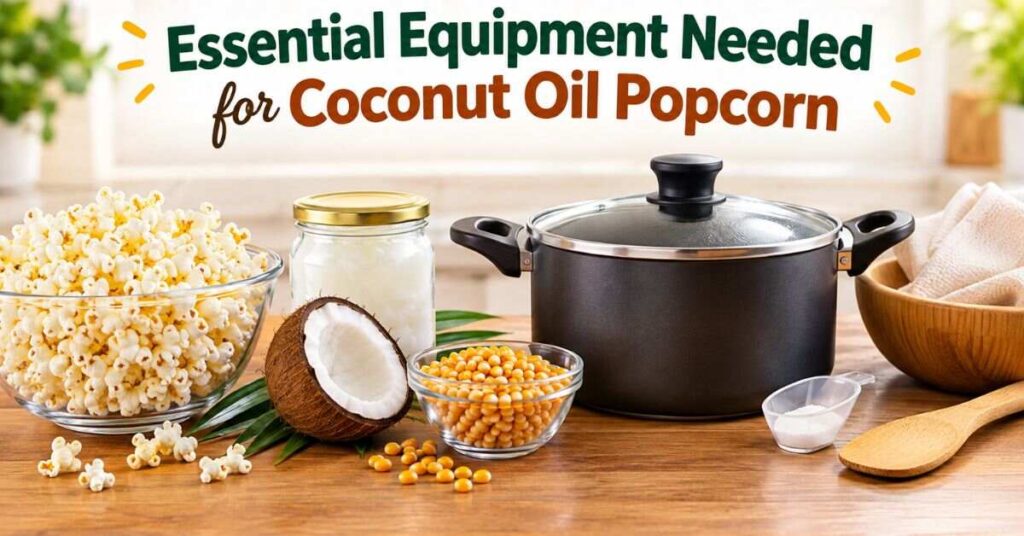
Achieving the ultimate batch of coconut oil popcorn starts with your cookware. A thin, lightweight aluminum pot creates hot spots that scorch the bottom kernels before the rest even begin to crack. Investing in a heavy-bottomed stainless steel pot, cast iron pan, or enameled Dutch oven ensures even heat distribution. This thermal stability allows the fat and kernels to heat up at a uniform pace, preventing burnt pieces and maximizing your overall popped volume.
Using a Whirley Pop or Automatic Stirring Popcorn Maker
If you want professional, movie-theater-style results at home without constantly shaking a heavy pan, a dedicated hand-cranked popper like the Whirley Pop is an absolute game-changer. These specialty makers feature a built-in stirring mechanism that continuously sweeps across the bottom of the pot. Continuous gentle movement ensures every single kernel stays coated in your melted fat, preventing hot spots and ensuring a remarkably high yield of fully popped flakes.
Why Measuring Tools Matter for Coconut Oil Popcorn Ratios
Precision is the hidden superpower behind consistent culinary success. Eyeballing your fat-to-kernel ratio often leads to greasy, soggy snacks or dry, unpopped kernels rattling at the bottom of your pot. Maintaining strict proportions ensures that every single piece of corn receives just enough coating to crisp up perfectly.
| Ingredient Component | Recommended Ratio | Purpose in Popping |
| Unpopped Kernels | $1/2$ Cup | Standard batch volume for a 4-quart pot |
| Coconut Fat | 2 Tablespoons | Optimal coverage for crisp texture and rich aroma |
| Fine Sea Salt | $1/2$ to $1$ Teaspoon | Adheres securely to the oil-coated surface |
Selecting the Right Lid for Steam Release During Popping
Successfully managing thermal pressure remains absolutely essential throughout the preparation of coconut oil popcorn. Initially, a secure cover prevents unpopped kernels from escaping, yet trapping excessive steam ruins the desired crunchy texture. Therefore, smart culinary experts intentionally leave the pan lid slightly ajar during final heating stages. Consequently, excess humidity vents rapidly, ensuring that every single batch achieves an exceptionally light, crispy quality without turning chewy. Moreover, precision venting optimizes overall kernel expansion.
Ingredients for the Ultimate Coconut Oil Popcorn Recipe
Selecting High-Quality Yellow vs. White Kernels for Coconut Oil Popcorn
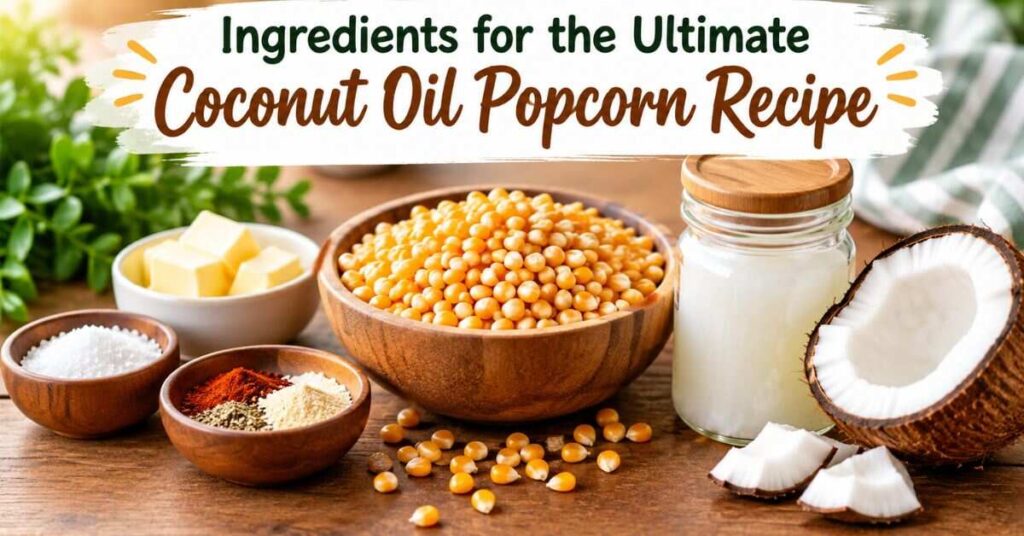
Choosing the right corn variety forms the foundation of your entire snack. While yellow and white kernels both pop into delicious treats, they offer distinct textural differences. Yellow kernels feature a thicker hull, producing larger, sturdier flakes with a robust crunch that holds up exceptionally well to heavy seasonings and coconut oil popcorn butter pairings. White kernels, on the other hand, possess a more delicate hull and a tender, melt-in-your-mouth texture that yields a cleaner, slightly sweeter flavor profile.
Choosing the Best Fine Sea Salt and Specialty Seasonings
The secret to getting seasonings to stick without clumping lies in the particle size of your salt. Standard table salt tends to bounce right off smooth popped flakes and settle at the bottom of the bowl. Fine sea salt dissolves quickly and clings seamlessly to the lipid layer of your coconut oil popcorn. For an elevated flavor profile, you can pair your fine salt with nutritional yeast, garlic powder, or specialty finishing sugars to diversify your snack board.
Calculating the Ideal Kernel-to-Oil Proportions
Achieving the right balance prevents your snack from turning out greasy or dry. A reliable ratio guarantees that every single piece receives an even distribution of heat and flavor.
| Measurement Category | Optimal Proportions | Culinary Purpose |
| Popping Kernels | $1/2$ Cup | Yields approximately 14 to 16 cups of popped corn |
| Coconut Fat | 2 Tablespoons | Coats kernels adequately without excess pooling |
| Fine Sea Salt | $3/4$ Teaspoon | Delivers balanced salinity across the entire batch |
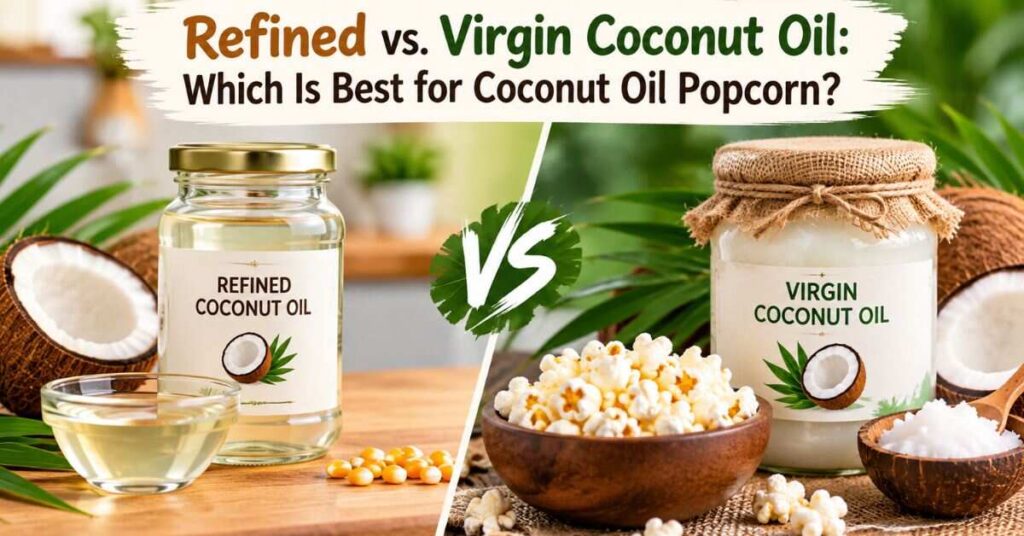
Refined vs. Virgin Coconut Oil: Which Is Best for Coconut Oil Popcorn?
Smoke Points and Neutral Flavor Profiles of Refined Coconut Oil Popcorn
Understanding oil processing helps you tailor your recipe to your exact taste preferences. Refined coconut oil undergoes a natural filtering and steam-refining process that removes its distinct tropical scent and flavor. This results in a completely neutral taste profile and a high smoke point of roughly 400°F (204°C). Specifically, selecting processed lipid bases for coconut oil popcorn replicates authentic cinema flavors without introducing overwhelming tropical aromas. Furthermore, neutral flavor profiles ensure that rich savory seasonings or alternative coconut oil popcorn butter blend seamlessly. Therefore, culinary creators utilize these clean cooking fats when preparing heavily flavored snack varieties. Consequently, modern consumers enjoy perfectly balanced gourmet treats that satisfy every single craving without recipe distortion.
Maximizing Rich Tropical Aroma with Virgin Coconut Oil Popcorn
If you prefer a sweet, aromatic depth that celebrates the natural fruit, unrefined or virgin coconut oil is your best option. Extracted from fresh coconut meat without high heat or chemical solvents, virgin oil retains its characteristic scent and rich nutritional compounds. Naturally, preparing raw coconut oil popcorn fills domestic kitchens with warm, bakery-like aromas. Furthermore, each finished snack carries subtle, naturally sweet undertones that elevate basic salt-and-pepper seasonings. Consequently, gourmet home cooks prefer unrefined organic fats without synthetic additives. In addition, this aromatic profile transforms ordinary kernels into premium artisan treats. Therefore, food enthusiasts achieve exceptional sensory experiences while maintaining strict dietary standards.
Organic vs. Conventional Coconut Oil Options for Popcorn
Purity matters when selecting cooking fats for high-heat applications. Opting for certified organic coconut oils ensures that the coconuts were harvested without synthetic pesticides, chemical fertilizers, or GMO processing aids. While conventional options offer budget-friendly accessibility, organic varieties deliver cleaner flavor profiles and better peace of mind for health-conscious snackers looking for pure popcorn with coconut oil healthy benefits.
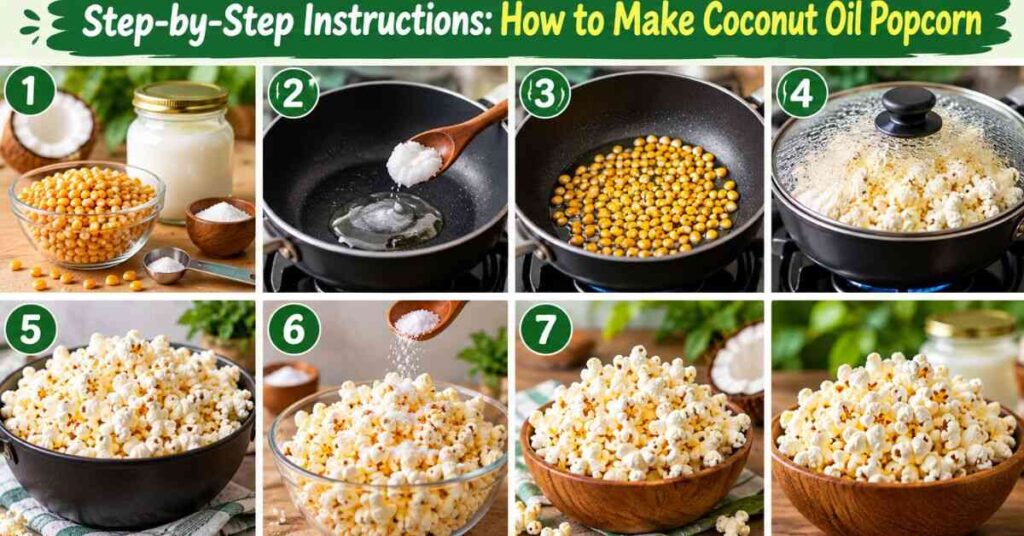
Step-by-Step Instructions: How to Make Coconut Oil Popcorn
Preparing Your Kernels and Coconut Oil Popcorn Base
Mastering the foundational technique ensures your batch pops evenly every single time without scorching. Before turning on the stove, gather your ingredients and equipment so you can work efficiently. Measure out a half-cup of high-quality popping corn and two tablespoons of your preferred coconut fat. Having everything pre-measured prevents you from scrambling while the pan heats up. If you are preparing a specialty snack night, keeping your fine sea salt and chosen seasonings right next to the stove guarantees you can season the flakes the exact second they finish popping.
How to Test Kernel Freshness Before Making Coconut Oil Popcorn
Nothing is more disappointing than waiting for a pot to heat up only to discover that half your batch refuses to pop. Old, dried-out kernels lose the internal moisture required to create steam pressure. To test your stash, place three test kernels into a small container with a few drops of water and let them sit for a day, or simply check a small sample in a hot pan. If your current batch yields too many old maids the unpopped kernels rattling at the bottom it is time to refresh your pantry supply before making coconut oil popcorn.
The Two-Kernel Test Technique for Perfect Oil Temperature
Temperature control dictates whether your kernels pop into fluffy clouds or burn into bitter charcoal. Professional cooks never guess when the pan is ready; they use the time-tested two-kernel method.
- Melt your measured fat in your heavy-bottomed pot over medium heat.
- Drop exactly two test kernels into the shimmering oil and cover the pot with your vented lid.
- Wait patiently until you hear both test kernels pop simultaneously.
- Once they pop, remove the pot from the heat briefly, discard the popped testers, and pour in the rest of your corn.
This clever trick brings the entire batch of fat to the ideal thermodynamic sweet spot, ensuring that when you add the remaining kernels, they begin building internal steam pressure immediately.
Controlling Medium-High Heat and Listening for the First Pops
Once you add your main batch of corn to the heated pot, keep your stove dial set to medium-high heat. Cover the pan securely with your lid and listen closely to the rhythm of the stove. Within a minute or two, the initial wave of pops will start rolling in. Maintaining consistent heat during this phase allows the internal moisture of every single kernel to convert into high-pressure steam, forcing the hard hull to flip completely inside out into a delicious coconut oil popcorn masterpiece.
Gentle Agitation Techniques to Prevent Scorching
Even heat distribution prevents hot spots from burning delicate corn edges. If you are using a standard heavy-bottomed Dutch oven, gently lift the pot off the burner every few seconds and give it a smooth, circular swirl to redistribute unpopped kernels down into the hot oil. For those utilizing a manual hand-crank popper, maintain a steady, slow rotation of the internal paddle. This continuous movement guarantees that every piece of corn stays coated in your lipid layer, resulting in an exceptionally high popping yield.
Expert Tips to Prevent Burning Your Coconut Oil Popcorn
The line between perfectly crisp and burnt is remarkably thin during the final moments of popping. As the frequency of the pops begins to slow down dropping to intervals of two to three seconds apart immediately turn off the burner. Leaving the pot on the hot eye for even a few extra seconds will scorch the delicate oils and ruin the flavor. Promptly remove the lid away from your face to release the trapped steam, and transfer the contents into a wide serving bowl right away.
Alternative Method: Air-Popping with a Warm Coconut Oil Popcorn Drizzle
If you want to cut down on total calorie intake without sacrificing rich flavor, you can utilize an electric air popper to cook your corn using hot air alone. While the kernels are popping in the machine, gently melt a tablespoon of virgin coconut fat on your stovetop or in the microwave. Once your bowl of air-popped corn is ready, drizzle the warm, aromatic oil evenly across the top and toss gently. This alternative method gives you the exact taste of unrefined coconut oil popcorn while keeping the snack exceptionally light and airy.
Read More: essential oils to repel spiders || essential oil for bug bites || essential oil combinations || essential oil for toothache
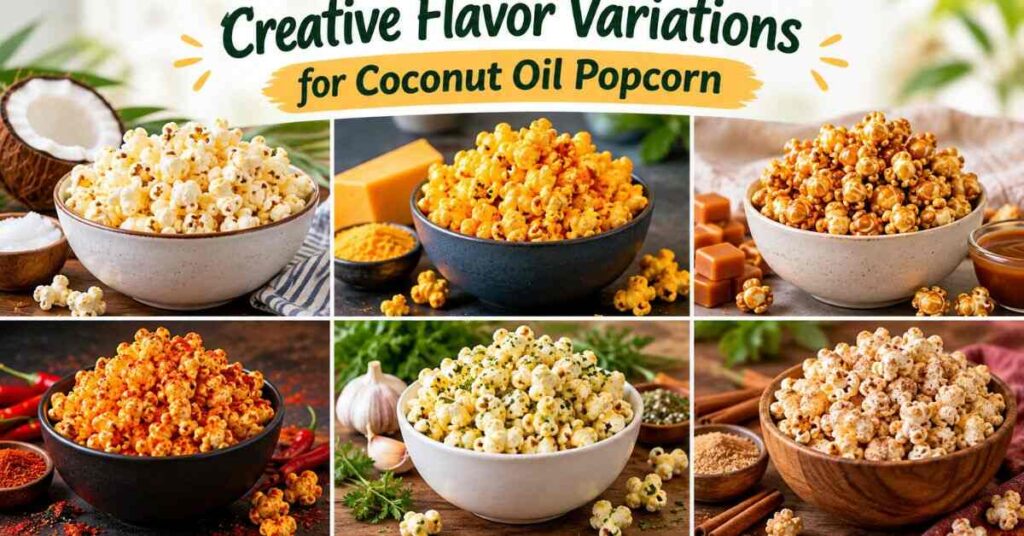
Creative Flavor Variations for Coconut Oil Popcorn
Classic Cinema Butter Blend
Recreating the nostalgic aroma of a Friday night cinema trip in your own kitchen is simpler than you think. Start with a base of refined coconut oil popcorn to achieve that authentic, neutral high-heat crispness without an overwhelming tropical scent. Once your kernels have finished popping and landed in a wide bowl, immediately drizzle a warm blend of melted clarified butter and a generous pinch of fine sea salt across the surface. Tossing the bowl vigorously ensures the rich dairy fats and plant lipids meld together, wrapping every single flake in an irresistible, theater-style coating.
Coastal Spiced Infusion
Tap into traditional regional flavors by infusing your popping fat with aromatic spices before adding the corn. Drop a handful of fresh curry leaves, a pinch of golden turmeric, and a tiny dash of mustard seeds directly into your virgin coconut oil popcorn base over medium-low heat until the leaves crisp up and release their fragrance. Remove the crispy leaves temporarily, drop in your popping corn, and let the kernels soak up those savory, spiced oils. Once popped, toss the crispy greens back into the bowl for a striking visual contrast and an earthy, complex flavor profile.
Caramelized Jaggery Glaze
If you prefer a sweet confection over savory snacks, this traditional tropical variation delivers deep, caramel-like notes without refined white sugar. Prepare your base using a fragrant coconut oil popcorn method to build a rich aromatic foundation. In a separate small saucepan, gently melt organic jaggery with a splash of water and a pinch of cardamom powder until it forms a light, bubbling syrup. Drizzle this warm golden liquid over your freshly popped flakes, stirring quickly to coat them before the jaggery cools into a delightful, crunchy glaze.
Zesty Citrus Heat
Awaken your taste buds with a vibrant kick of heat and zesty citrus notes that cut through the richness of the plant fats. Toss your freshly prepared unrefined coconut oil popcorn with a custom spice blend consisting of finely grated lime zest, Kashmiri red chili powder, a pinch of black salt, and a dash of tangy spice powder. The bright acidity of the lime pairs exceptionally well with the natural sweetness of the coconut lipids, creating a dynamic, street-food-inspired snack that disappears in minutes.
Roasted Coffee Reduction
For coffee lovers seeking an afternoon pick-me-up, this gourmet flavor profile marries rich botanical oils with bold roasted notes. Brew a shot of ultra-strong filter coffee or espresso and reduce it gently with a spoonful of coconut sugar until it thickens into a rich syrup. Drizzle this reduction over your warm coconut oil popcorn alongside a tiny pinch of sea salt to balance the bitterness. It is an unexpected, sophisticated twist that transforms a simple movie snack into a coffeehouse-style treat.
Nutritional Yeast Umami Dust
For those who love a cheesy, savory flavor profile without using actual dairy, nutritional yeast is the ultimate pantry weapon. Also known as nooch, this flaky seasoning provides a rich, nutty, and umami-packed punch that clings effortlessly to warm oil-coated flakes. Combine your nutritional yeast with garlic powder, dried oregano, and fine sea salt, then dust it generously over your fresh batch of coconut oil popcorn. It satisfies cheesy cravings while adding B-complex vitamins to your daily snack routine.
Cinnamon Sugar Crust
Transform your evening bowl into a cozy, dessert-style comfort food with a simple sweet dusting. Right after pulling your pot off the stove, drizzle a light layer of melted fat over the warm flakes to act as a natural binder. Immediately sprinkle a mixture of organic cane sugar and high-quality Ceylon cinnamon over the top, tossing the bowl continuously to distribute the spice evenly throughout your coconut oil popcorn. The warmth of the freshly popped corn melts the sugar just enough to form a light, crystalline crunch on every bite.
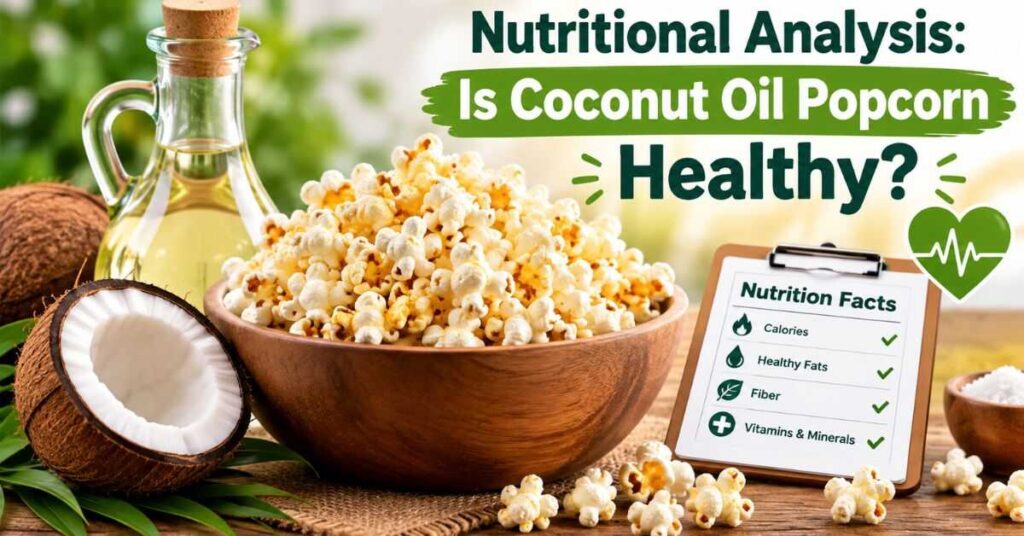
Nutritional Analysis: Is Coconut Oil Popcorn Healthy?
Breaking Down the Macronutrients of Coconut Oil Popcorn
Understanding the nutritional profile of your favorite snack helps you fit it seamlessly into your daily dietary goals. A standard serving of air- or oil-popped corn provides an excellent source of whole-grain dietary fiber, which supports healthy digestion and keeps you feeling full longer. When you introduce plant-based cooking lipids into the mix, you alter the macronutrient split by adding healthy dietary fats that slow down digestion and provide a steady stream of sustained energy rather than a quick sugar spike.
The Good and Bad of Coconut Oil Popcorn Health Facts
Examining the complete nutritional landscape reveals why this snack has become a favorite among health-conscious foodies. On the positive side, utilizing high-quality plant fats eliminates trans fats entirely and provides clean calories that do not burden your cardiovascular system with hydrogenated chemicals. However, because fats are energy-dense, portion control remains essential. Poring over popcorn with coconut oil nutrition facts shows that while the quality of the fat is vastly superior to standard seed oils, caloric awareness is still necessary if you are tracking your daily intake.
Medium-Chain Triglycerides (MCTs) Found in Coconut Oil Popcorn
The standout nutritional advantage of using tropical cooking fats lies in their unique molecular structure. Unlike long-chain fatty acids found in heavy animal products, coconut oil is rich in medium-chain triglycerides (MCTs).
- Rapid Absorption: MCT molecules pass directly from the digestive tract to the liver, where they get burned quickly for immediate cellular energy.
- Metabolic Support: These unique fats are less likely to be stored as adipose tissue compared to conventional cooking oils.
- Satiety Signaling: Eating healthy fats alongside whole-grain fiber helps trigger natural fullness hormones, preventing overeating.
Calorie Comparison of Coconut Oil Popcorn by Oil Type
The type of fat you use directly impacts the caloric density of your final bowl. Reviewing these metrics helps you tailor your snacking habits to match your specific wellness objectives.
| Cooking Oil Type | Calories per Tablespoon | Primary Fatty Acid Profile | Impact on Final Snack |
| Virgin Coconut Fat | 121 Calories | Medium-Chain Triglycerides (MCTs) | Adds rich aroma and sustained energy |
| Standard Canola Oil | 124 Calories | Omega-6 Polyunsaturated Fats | Neutral flavor with higher inflammatory risk |
| Clarified Butter (Ghee) | 112 Calories | Short- and Long-Chain Saturated Fats | Rich dairy flavor with heavy saturated content |
Is Coconut Oil Popcorn Healthier Than Butter Popcorn?
Commercial-grade coconut oil popcorn delivers a completely plant-based profile that fundamentally outperforms traditional dairy butter for specific dietary requirements. Furthermore, conventional cinema toppings introduce heavy animal fats and lactose, whereas botanical lipid alternatives supply easily digestible medium-chain triglycerides. Consequently, health-conscious consumers with dairy intolerances can thoroughly enjoy rich, authentic flavors without experiencing digestive distress. In addition, manufacturers increasingly utilize unrefined organic bases to eliminate harmful trans fats entirely. Therefore, nutritional transparency ensures that modern snack enthusiasts make informed decisions tailored specifically to their metabolic health.
Saturated Fats in Coconut Oil Popcorn Explained Clearly
One of the most common questions regarding tropical cooking fats revolves around their high saturated fat content. Historically, outdated nutritional frameworks cautioned uniformly against saturated fat, yet contemporary scientific research clarifies vital structural variations among molecular chains. Specifically, the lipid composition inside coconut oil popcorn relies heavily upon lauric acid alongside alternative medium-chain triglycerides. Unlike the heavy long-chain variants present throughout red meat, these unique structures metabolize rapidly to support sustained physical energy. Furthermore, diligent laboratory testing confirms that unrefined plant lipids prevent unwanted arterial plaque accumulation under normal dietary patterns. Consequently, knowledgeable smackers embrace these functional ingredients without compromising their long-term cardiovascular objectives. Enjoying popcorn with coconut oil healthy portions in moderation allows you to benefit from these unique properties without overconsuming dietary fats.
Storage and Shelf Life Tips for Coconut Oil Popcorn
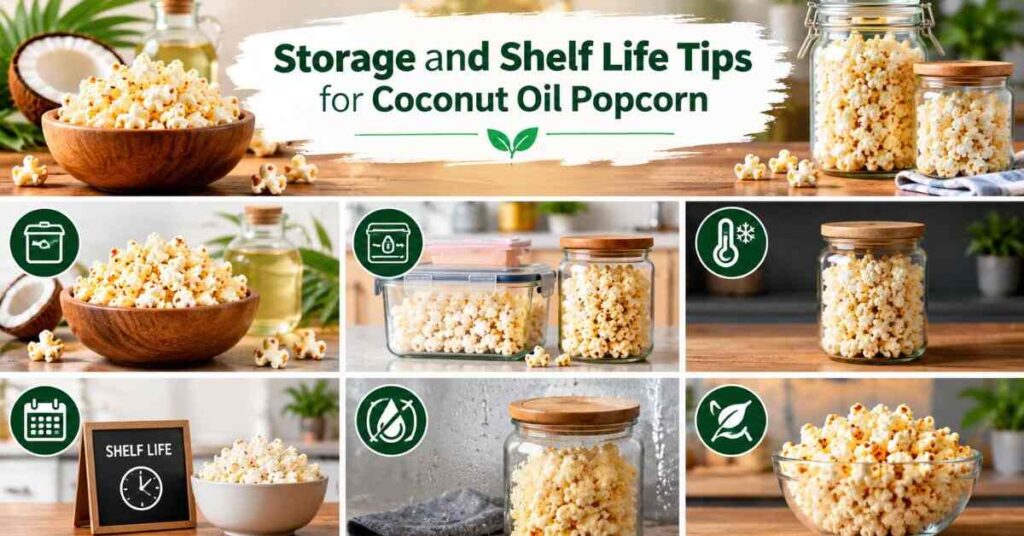
How to Cool Down Popcorn Properly Before Storing
The single biggest enemy of a crispy snack is trapped thermal moisture. Hot steam escapes fresh kernels immediately after popping. Trapped moisture turns coconut oil popcorn chewy and tough. Spread warm flakes across a wide baking sheet first. Allow total cooling for ten minutes. Complete steam dissipation protects your crunchy snack. Proper cooling prevents soggy leftovers. Open bowls work well for air drying.
Airtight Containers and Moisture Control for Coconut Oil Popcorn
Once your snack has cooled down entirely, transferring it to the right container is essential for preserving its crispness. Thin plastic bags or loosely covered bowls will let ambient humidity seep in within hours, ruining the texture.
- Glass Jars or Canisters: Heavy-duty glass containers with rubber-gasket clamp lids provide an impenetrable barrier against air and moisture.
- BPA-Free Plastic Storage Bins: Look for containers specifically engineered with airtight locking mechanisms and silicone seals.
- Paper bags absorb ambient moisture rapidly. Leftover coconut oil popcorn turns stale overnight inside porous paper. Airtight containers protect your crunchy snack much better. Thin bags fail to block humidity effectively. Proper storage preserves that fresh gourmet flavor for days. Switching vessels prevents unwanted sogginess. Quality seals guarantee lasting crispness.
How to Revive Stale Leftover Coconut Oil Popcorn in the Oven
If you find a batch that has lost its signature crunch after sitting out too long, do not throw it away. You can easily restore its fresh-from-the-pot crispness with a quick thermal refresh.
- Preheat your conventional oven to a gentle 250°F (120°C).
- Spread your stale leftovers in a single, even layer across a large baking sheet.
- Warm the flakes in the oven for five to seven minutes, just long enough to drive out lingering moisture.
- Remove the tray, let it cool for one minute, and enjoy your revived coconut oil popcorn with that original satisfying crunch.
Conclusion:
Mastering coconut oil popcorn turns basic movie nights into gourmet events. Refined oils offer neutral high-heat performance. Unrefined coconut oil popcorn delivers a rich tropical aroma. Swapping out seed oils provides sustained energy via beneficial MCTs. Proper equipment ratios guarantee optimal popping yields. Testing kernel freshness eliminates unpopped duds. Creative seasonings like spicy masala elevate standard snacking routines. Quality ingredients ensure unique flavor profiles every time.Enjoy your delicious, perfectly crisp creations while reaping the full benefits of this ultimate pantry upgrade!
About the Author
Noor Fatima | SEO Expert & Natural Oils Specialist
Credentials:
As an SEO expert and the driving force behind Pure Oils Hub (pureoilshub.com), I combine over 8 years of digital strategy and search optimization with a deep, lifelong passion for organic aromatherapy and plant-based living.
First-Hand Experience:
“Navigating the digital landscape for more than 8 years while researching pure botanical and carrier oils has shown me that creating a truly helpful website takes more than just technical SEO. It requires a genuine commitment to cutting through the noise of commercial, synthetic products to deliver honest, thoroughly researched, and practical guides. My goal is to make natural wellness accessible to everyone, helping you discover the simple, powerful ways pure oils can transform your daily self-care routine.”
FAQs:
Is coconut oil good for daily popcorn consumption?
Enjoying this snack as part of a balanced diet can be a wholesome treat, provided you monitor your total daily caloric intake. Because plant fats are energy-dense, moderation is key. Incorporating a measured serving of popcorn with coconut oil healthy fats delivers beneficial whole-grain fiber and sustained energy, making it a superior alternative to heavily processed commercial snack chips.
How much coconut oil do I need for a standard batch of popcorn?
The ideal proportion for a standard stovetop batch is two tablespoons of fat for every half-cup of unpopped kernels. Exact measurement ratios ensure even lipid coating across every kernel. Proper proportioning prevents excess liquid pooling at the base of your pan. This technique keeps your coconut oil popcorn light and crisp. Accurate scaling delivers a perfectly flavored snack every single time. Balanced proportions eliminate greasy textures entirely. Precise measurements protect your gourmet treat from becoming soggy. Perfect execution guarantees professional results at home.
Why do movie theaters use coconut oil for popcorn?
Commercial venues favor tropical plant fats for high-volume snack production. These stable lipids possess an exceptionally high smoke point. Coconut oil popcorn benefits from this structural integrity during massive theater operations. Dairy butter burns instantly under intense thermal exposure. Cheap seed oils turn rancid quickly compared to robust plant fats. Concessionaires rely on these components to produce an iconic, mouth-watering aroma. Industrial kettles require resilient ingredients for consistent commercial yields. Selecting superior lipids guarantees professional movie theater flavor profiles.
Can You Reuse Unpopped Kernels in Coconut Oil Popcorn?
Unpopped kernels lack internal moisture after a full thermal cycle. Reheating those stubborn old maids fails because internal starches degrade completely. Fresh corn batches require intact water molecules to burst properly. Discarding dry kernels prevents burnt residue in your pan. Starting over guarantees a high-yield coconut oil popcorn batch. Proper moisture levels drive optimal expansion during cooking. Quality ingredients ensure consistent results every single time.
Why Did My Coconut Oil Popcorn Taste Bitter?
Overheated cooking fats create a harsh, bitter taste profile by scorching delicate lipids. Smoke point limits demand careful thermal management during every single batch. Keep your burner set to medium-high rather than maximum intensity. Use the classic two-kernel test to gauge fat temperature accurately before dumping in bulk. Pull your pan off the burner the moment rapid popping slows down. Coconut oil popcorn thrives under controlled medium heat settings. Monitoring thermal thresholds protects your gourmet snack from burning. Precise timing guarantees a clean flavor profile every time.
Can You Make Coconut Oil Popcorn in a Microwave?
Microwave paper bags trap heat unevenly, causing unpopped kernels and scorched batches. Stovetop methods solve this issue by melting solid coconut oil smoothly. A Whirley Pop coats every single kernel evenly for a reliable crunchy snack. Traditional microwave popping lacks this precise temperature control. Direct stovetop heat allows fats to distribute across the bottom of your pan seamlessly. Furthermore, stirring manually prevents burning while ensuring optimal flavor absorption. Dedicated gear maximizes your coconut oil popcorn yield without hot spots. Choosing manual pan methods guarantees professional results at home.
Does Coconut Oil Popcorn Go Stale Faster Than Regular Popcorn?
Coconut oil popcorn brings a distinct, buttery aroma and rich natural compounds straight to your movie nights. Unrefined fats carry delicate botanical flavors that demand precise airtight storage to maintain that essential crisp texture. Humid air quickly softens homemade snacks, yet sealing batches in glass containers immediately after cooling locks out moisture effectively. Traditional oils offer stability, but virgin fats elevate the snack profile when handled with proper moisture control. Cool the freshly popped kernels completely on a baking sheet before transferring them securely. This method prevents condensation buildup inside the vessel, protecting your crunchy snack from turning stale. Selecting quality organic ingredients ensures optimal flavor retention without relying on artificial preservatives. Enjoying your gourmet treat fresh guarantees the ultimate taste experience while meeting high content standards.