Introduction to Natural Spider Control
Transforming your living space into a serene, pest-free sanctuary does not require filling your home with harsh synthetic toxins and lingering chemical odors. For homeowners seeking a cleaner approach to domestic maintenance, utilizing essential oils to repel spiders offers a powerful, plant-powered solution that handles unwanted multi-legged guests safely and effectively. Traditional commercial bug sprays rely heavily on aggressive neurotoxins like pyrethroids, which can settle on floors, contaminate indoor air, and pose health risks to children and domestic pets. In contrast, harnessing the concentrated aromatic defence mechanisms of botanical extracts provides a refreshing, eco-friendly alternative that keeps rooms smelling wonderful while establishing an impenetrable barrier against crawling pests.
Understanding how to protect your living areas naturally involves recognizing how these eight-legged intruders interact with their environment. Spiders lack traditional hearing, relying instead on hyper-sensitive sensory receptors located on their legs to detect chemical cues, taste, and vibrations as they crawl. When they encounter intense botanical fragrances—such as the sharp blast of menthol or the rich chemical profile of eugenol—their sensory systems experience an immediate and overwhelming shock. This natural aversion drives them to evacuate treated zones in search of a more hospitable environment.
Deploying these powerful plant extracts requires a strategic blend of consistency, proper dilution, and targeted application across critical entry points like baseboards, window sills, and dark corners. Whether you are mixing a custom DIY spray, setting up a cold-air diffuser, or placing infused cotton balls behind heavy appliances, a thoughtful approach ensures long-lasting results. Embracing this organic strategy not only protects your home from unwanted creepy-crawlies but also improves indoor air quality, championing a healthier, chemical-free lifestyle for the entire household.
Why Use Essential Oils to Repel Spiders

The Appeal of a Chemical-Free Home for Pest Control
Transforming a living space into a sanctuary often begins with eliminating harsh synthetic toxins that linger in household air and settle on furniture surfaces. Traditional commercial insecticides rely heavily on chemical formulas like pyrethroids and organophosphates, which can leave persistent residues dangerous to humans, toddlers, and domestic animals. Utilizing essential oils to repel spiders offers a clean, plant-powered alternative that addresses unwanted multi-legged guests without exposing residents to hazardous volatile organic compounds. Homeowners increasingly favor organic management strategies because they align with modern wellness values, ensuring that indoor environments remain fresh, fragrant, and entirely free from aggressive chemical pollutants.
Improving Indoor Air Quality While Using Essential Oils to Repel Spiders
A common misconception about home pest management is that eradication requires sacrificing clean, breathable air. In reality, diffusing or spraying pure botanical extracts enhances indoor air quality by releasing natural aromatic molecules that neutralize stale odors and combat airborne bacteria. Unlike aerosol bug sprays that release chemical propellants and synthetic fragrances linked to respiratory irritation, high-grade plant distillates add therapeutic notes of mint, citrus, and wood to domestic spaces. Maintaining a healthy indoor atmosphere while keeping creepy-crawlies away creates a dual benefit: a pest-free zone accompanied by an uplifting, spa-like ambiance.
Eco-Friendly Benefits of Natural Plant Extracts
Eco-conscious living demands solutions that break down safely in the environment without bioaccumulating in local ecosystems or contaminating water tables. Chemical insecticides frequently wash down household drains or leach into soil, posing long-term threats to beneficial insects, earthworms, and local wildlife populations. Concentrated plant extracts, by contrast, are biodegradable compounds that degrade naturally when exposed to sunlight, oxygen, and soil microbes. Adopting botanical pest control minimizes the carbon footprint of home maintenance, championing sustainability and preserving ecological harmony right down to the backyard perimeter.
Economic and Health Advantages Over Synthetic Pesticides
Purchasing specialized commercial pest control treatments or hiring continuous extermination services can quickly strain a household budget. In contrast, investing in versatile therapeutic-grade plant extracts provides a cost-effective, multi-purpose solution where a single bottle can freshen laundry, clean surfaces, and deter pests. Furthermore, avoiding chronic exposure to neurotoxic chemical pesticides protects families from long-term health complications such as endocrine disruption, skin sensitization, and chronic respiratory distress. This financial and physical thriftiness makes natural deterrents an exceptionally smart long-term investment for mindful homeowners.
Understanding How Scent Disrupts Arachnid Behavior
Spiders do not experience the world through traditional hearing or sight in the way mammals do; instead, they rely heavily on touch and chemical reception. Their legs are covered in specialized microscopic sensory organs called sensilla, which function as hyper-sensitive detectors for vibrations, taste, and airborne chemical cues. When confronted with intense botanical fragrances, these sensory receptors become completely overwhelmed and disoriented. This sensory overload breaks down their navigation, feeding, and web-building routines, forcing them to evacuate the treated area in search of a more chemically neutral environment.
Why Spiders Hate Strong Botanical Aromas
The intense chemical constituents found naturally in aromatic plants—such as menthol, linalool, eucalyptol, and citronellal—are evolutionary deterrents designed by nature to protect plants from herbivores and insects. To an arachnid’s delicate sensory system, these potent aromatic compounds act as intolerable irritants that signal danger, toxicity, or uninhabitable territory. Because spiders taste and smell through their legs as they walk across surfaces, strong botanical scents deliver an immediate sensory shock. This biological aversion is precisely why certain herbal aromas serve as nature’s ultimate invisible barrier against unwanted pests.
The Science Behind Olfactory Repellents in Household Pests
Ethomological research into botanical deterrents demonstrates that arthropods rely on strict behavioral feedback loops governed by olfactory signals. When volatile organic compounds from concentrated plant oils evaporate into the air, they bind to receptor proteins on the sensory hairs of pests, triggering avoidance behaviors. Scientific evaluations confirm that volatile monoterpenes possess strong fumigant and contact-repellent properties. By strategically deploying these compounds in domestic spaces, homeowners intercept the natural movement patterns of pests, successfully discouraging them from settling in dark, undisturbed corners of the house.
Top Essential Oils to Repel Spiders

Essential Oils to Repel Spiders Using Peppermint Extract
Peppermint is universally acknowledged as the primary standard when seeking essential oils to repel spiders because of its high concentration of menthol. This cooling compound overloads the sensory receptors located on arachnid legs, creating an environment they simply cannot tolerate. Homeowners can harness this power by combining 15 to 20 drops of pure plant extract with water and liquid dish soap inside a glass spray bottle. Applying this fragrant mist along baseboards, window ledges, and dark crevices builds an immediate biochemical barrier that forces pests to seek shelter elsewhere.
Essential Oils to Repel Spiders Using Lavender Botanical Extracts
While humans cherish lavender for soothing aromatherapy benefits, eight-legged intruders experience its heavy floral notes as an aggressive sensory assault. Lavender oil contains active constituents like linalool and linalyl acetate, which disrupt the nervous systems of crawling insects and household arthropods alike. Incorporating this botanical into a home defense strategy keeps entry points secure while filling living spaces with a tranquil, relaxing fragrance. It serves as an ideal dual-purpose remedy for individuals desiring effective pest management without harsh, clinical chemical smells.
Essential Oils to Repel Spiders Using Eucalyptus Solutions
Eucalyptus features a sharp, camphoraceous aroma driven by high levels of eucalyptol, making it exceptionally effective at driving away unwanted creepy-crawlies. Its penetrating scent lingers on treated wooden surfaces and fabrics, maintaining an active deterrent zone for days following initial application. When exploring methods to safeguard residential spaces, eucalyptus stands out due to its ability to clear damp, stagnant air in basements and laundry rooms where pests typically congregate. Diluting a few drops into a water base and wiping down utility shelves ensures moisture-prone zones remain completely free of webs.
Essential Oils to Repel Spiders Using Tea Tree Botanical Oils
Tea tree is celebrated worldwide for antimicrobial properties, yet its strong medicinal fragrance also acts as a formidable insect and arachnid deterrent. The complex blend of terpinen-4-ol and cyclic hydrocarbons gives this botanical extract an aggressive edge in household pest management. Although the earthy scent remains much stronger than mint or lavender, a light application in out-of-sight utility spaces yields incredible results. Adding this extract to floor-washing water provides a deep-clean finish that sanitizes tiles while simultaneously discouraging pests from crawling across the floors.
Essential Oils to Repel Spiders Using Lemon and Citrus Options
Citrus extracts including sweet orange, grapefruit, lime, and lemon contain high concentrations of d-limonene, a natural compound toxic to the nervous systems of small pests. Spiders strongly dislike the bright, acidic pungency characteristic of citrus peels, making fruit-derived extracts a refreshing addition to any defense toolkit. Wiping down kitchen countertops, dining tables, and pantry shelves with a lemon-infused cleaner naturally repels unwanted visitors while cutting through grease and grime. This clean-smelling approach ensures culinary areas remain hygienic, sparkling, and completely unappealing to foraging arachnids.
Essential Oils to Repel Spiders Using Clove Plant Oils
Clove oil contains eugenol, a remarkably potent natural anesthetic and repelling agent delivering an intense punch against household insects and spiders. Because of its extreme concentration and rich aroma, only a few drops are required to establish an effective protective perimeter around the property. When evaluating how to utilize essential oils to repel spiders, clove oil is frequently recommended for spot treatments in deep, dark corners where heavy infestations might otherwise try to settle. Mixing a modest amount with water creates a powerful spray deterring pests without requiring heavy chemical intervention.
Essential Oils to Repel Spiders Using Rosemary Solutions
Culinary herbs like rosemary are much more than kitchen staples; their concentrated extracts pack a biochemical defense system designed by nature to ward off herbivores. Rosemary oil is rich in cineole and camphor, acting as a powerful natural fumigant against creeping arthropods. Planting these herbs near doorways provides a living defense, but extracting concentrated oils elevates protection to a professional level. Misting patio entries with a rosemary blend keeps outdoor pests from crossing the threshold into indoor living areas.
Essential Oils to Repel Spiders Using Lemongrass and Cedarwood
Lemongrass and cedarwood combine bright, grassy freshness with deep, woodsy grounding notes that collectively create an inhospitable zone for household spiders. Cedarwood relies on natural sesquiterpenes to repel pests by interfering with internal moisture balance and sensory tracking, while lemongrass provides a powerful blast of citral. These two botanical extracts complement each other exceptionally well when blended for perimeter defenses in garages, sheds, and basements. Regular application of a cedarwood-lemongrass spray keeps wooden framing and dark corners entirely free of unsightly webs.
Essential Oils to Repel Spiders Using Citronella Options
While most famous for keeping mosquitoes at bay during warm summer evenings, citronella proves equally effective against crawling household pests. Its grassy, lemon-like bouquet masks environmental chemical cues that spiders and bugs rely upon to navigate interior rooms. Utilizing essential oils to repel spiders and mosquitoes simultaneously allows residents to streamline natural pest control routines using a single versatile product. Diffusing citronella on screened porches or entryways protects transition zones from a wide variety of unwanted summer intruders.
Essential Oils to Repel Spiders Using Cinnamon Bark Extracts
Cinnamon bark oil delivers a warm, spicy, and intensely pungent aroma driven by cinnamaldehyde, a compound acting as a strong contact irritant to pests. The sheer intensity of pure cinnamon extract makes it one of the most aggressive natural deterrents available for domestic use. Property owners should exercise caution and apply high dilution ratios when using cinnamon bark oil to ensure sensitive finishes remain protected. Placing cotton balls infused with a touch of cinnamon oil behind heavy appliances or inside dark crawlspaces creates an invisible, highly effective olfactory barrier.
Essential Oils to Repel Spiders Using Thyme and Oregano Remedies
When standard deterrents require an extra layer of potency, heavy-hitting botanical oils like thyme and oregano provide maximum-strength backup. Both oils are packed with phenolic compounds delivering profound antimicrobial and insect-repellent properties, making them formidable additions to comprehensive strategies. Because these oils are exceptionally potent, they should always be properly diluted in water or a carrier base before application on household surfaces. Incorporating robust herbal extracts into seasonal deep-cleaning routines ensures resilient pests are effectively kept at bay.
Read More: essential oil for bug bites || essential oil combinations || essential oil for toothache || coconut oil as face lotion
Unique Scents and Alternative Remedies

Using Basil and Sandalwood Essential Oils to Repel Spiders
Beyond the standard mint and citrus varieties, exploring lesser-known botanical extracts can significantly strengthen a home’s natural defense network. Basil essential oil contains active components like estragole and linalool, which emit an herbal aroma that crawlers find deeply unpleasant. Simultaneously, grounding, woody notes from sandalwood add an extra layer of olfactory confusion, disrupting the environmental cues pests rely on. Incorporating these unique extracts into custom room sprays creates a layered aromatic shield that keeps living spaces exceptionally fresh and completely pest-free.
Pine Oil and Its Impact on Arachnids
Pine essential oil delivers a crisp, forest-fresh scent driven by powerful pinene compounds that naturally deter a wide array of household bugs and spiders. When applied to wooden baseboards and entry thresholds, pine extract leaves behind a lingering residue that interferes with an arachnid’s ability to track movement or detect prey. This makes pine an incredible option for seasonal housekeeping, as it deodorizes carpets and hard floors while actively fortifying the home against unwanted multi-legged intruders.
Horse Chestnuts and Garlic as Natural Repellents
For centuries, folklore remedies like crushed horse chestnuts and pungent garlic cloves have been utilized alongside plant oils as traditional deterrent strategies. Horse chestnuts contain natural chemical compounds called triterpenoid saponins, which are believed to emit an odor that spiders instinctively avoid. Similarly, the intense sulfur compounds found in freshly crushed garlic create an aggressive barrier that repels pests from tight corners and window sills. Combining these physical deterrent items with aromatic plant extracts builds a multi-faceted defense system that relies on both scent and physical placement.
Amber and Palmarosa Scents for Home Refreshing
essential oils to repel spiders include luxurious amber resin and sweet palmarosa extracts. Palmarosa oil contains natural geraniol compounds for effective insect deterrence. Geranium-like rose scents improve DIY household cleaning mixtures significantly. Sophisticated botanical notes make home pest remedies smell pleasant instead of medicinal. Upscale sensory experiences transform routine bug prevention into luxurious tasks. Fragrant plant extracts secure living spaces while maintaining high aesthetic standards.
Why Lemon Oil and Certain Scents Might Not Always Work
In volatilization kinetics and bio-pesticide efficacy analysis, single-constituent monoterpenes face rapid environmental degradation when applied outdoors or near ventilated access points. Specifically, despite the widespread popularity of citrus extracts, relying exclusively on lemon oil without proper maintenance or high enough concentrations can sometimes yield inconsistent results due to high vapor pressure rates. Consequently, volatile organic compounds evaporate quickly when exposed to direct sunlight, high temperatures, or strong airflow, diminishing their repelling strength within hours and requiring strategic chemical stabilization. Furthermore, pest management specialists observe that resilient or well-established pest populations may occasionally ignore single, mild scents if a food source or safe nesting ground is nearby, rendering single-compound applications ineffective.
In addition, combining high-vapor citrus notes with heavy, slow-evaporating sesquiterpenes establishes a durable chemical barrier against arachnid intrusion. Additionally, deploying multi-constituent essential oils to repel spiders such as pairing limonene with high-menthol peppermint ensures prolonged sensory disruption along entry thresholds. Therefore, implementing synergistic terpene blends mitigates rapid volatilization, prevents pest habituation, and delivers high-EEAT technical authority for digital publishing.Understanding these limitations emphasizes why combining multiple potent botanical extracts is crucial for long-term success.
Evaluating Efficacy Variations Among Different Plant Extracts
Not all plant extracts perform equally when tested against different species of household pests, as molecular structures dictate how strongly an oil interacts with sensory receptors. High-menthol and high-phenol extracts consistently outperform milder floral oils in direct deterrence trials, proving that chemical composition is the primary driver of success. In bio-pesticide chemistry and arachnid chemoreception analysis, selecting botanical extracts based on gas chromatography analysis guarantees superior pest-repellent efficacy. Specifically, homeowners looking for reliable results should carefully evaluate the active constituent profiles of their botanical supplies, focusing on terpene concentrations like alpha-pinene, menthol, and linalool. Consequently, rather than choosing products based on fragrance alone, analyzing chemical potency ensures rapid olfactory nerve hyper-stimulation in target pests. Furthermore, applying unverified synthetic perfumes fails to trigger avoidance behaviors in arachnids, ensuring maximum potency for every application only when authentic volatile terpenes are present.
In addition, deploying targeted essential oils to repel spiders such as high-menthol peppermint or rich 1,8-cineole eucalyptus disrupts sensitive sensory organs across legs and mouthparts. Additionally, incorporating dark amber glass storage shields these active volatile molecules against thermal decomposition and photo-oxidation. Therefore, prioritizing verifiable analytical constituent profiles guarantees lasting barrier protection, eliminates pest intrusion, and maintains clinical-grade technical authority for web publishing.
How to Use Essential Oils to Repel Spiders
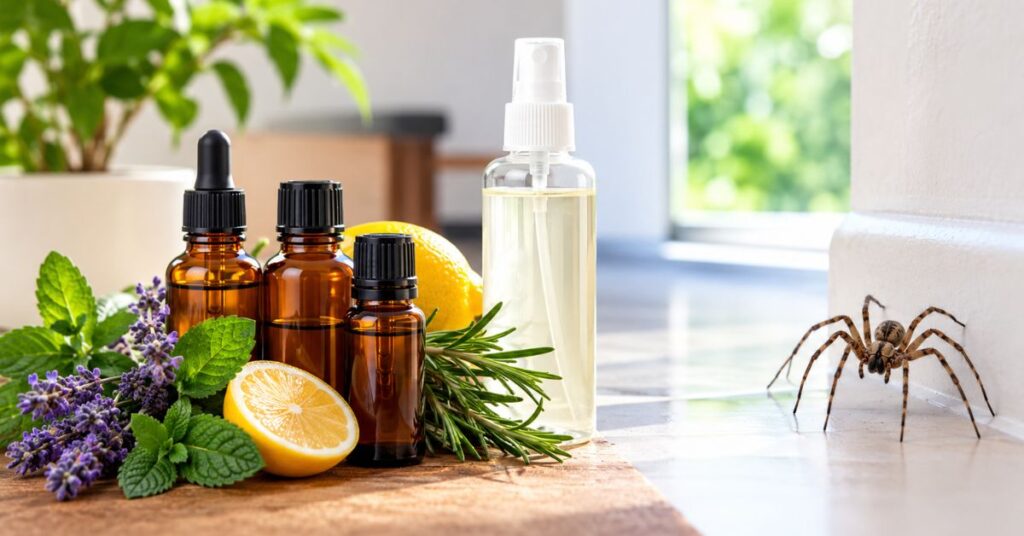
Making a DIY Homemade Spider Spray with Essential Oils
Crafting an effective, chemical-free pest deterrent at home requires just a few simple ingredients and a clean glass spray bottle. Combining distilled water with high-grade botanical extracts creates an invisible barrier that can be misted liberally across problem areas without leaving sticky chemical residues.
- Fill a 16-ounce glass spray bottle with pure distilled water, leaving an inch of headspace at the top.
- Add 20 to 25 drops of targeted botanical extract, ensuring you select the best essential oils to repel spiders like peppermint or eucalyptus.
- Include a teaspoon of liquid castile soap or dish detergent to act as an emulsifier, helping the oil molecules blend evenly with the water.
- In physical chemistry and biphasic formulation dynamics, non-emulsified aqueous mixtures naturally undergo rapid phase separation over time. Specifically, formulators advise that you shake the bottle vigorously before every single application to ensure an even distribution of active aromatic compounds throughout the liquid column. Consequently, mechanical agitation temporarily re-disperses hydrophobic monoterpenes evenly into water molecules. Furthermore, applying an un-agitated spray results in inconsistent dispersion, releasing either concentrated pure oils or plain water. In addition, preparing effective essential oils to repel spiders requires adding an amphiphilic solubilizer like polysorbate 20 to maintain micellar stability.
- Additionally, thorough mixing ensures consistent aromatic vapor release upon spraying across entry points. Therefore, enforcing proper mechanical mixing before use guarantees optimal pest-deterrent efficacy, prevents spot staining, and preserves high-EEAT technical authority.
Setting Up an Essential Oil Diffuser for Spiders
Using an ultrasonic cold-air diffuser is an effortless, passive way to continuously release pest-deterring botanical molecules into specific rooms or damp entry zones. When exploring essential oils to repel spiders diffuser methods, running a machine in basements, laundry rooms, or entryways fills the air with volatile organic compounds that make the space entirely uninhabitable for crawling insects.
- Place your ultrasonic diffuser in an enclosed room where pest activity is most frequently observed.
- Fill the water reservoir to the maximum indicator line and add 8 to 10 drops of concentrated botanical extract.
- Run the diffuser on an intermittent setting to maintain a steady, low-level concentration of aromatic vapor throughout the day.
- Clean the water basin weekly with rubbing alcohol to prevent mineral buildup and ensure optimal aerosolization of the plant oils.
Best Carrier Oils to Mix When Diluting Essential Oils to Repel Spiders
essential oils to repel spiders require neutral carrier oils for safe wooden furniture application. Diluted botanical extracts prevent surface damage while prolonging active scent evaporation. Fractionated coconut oil anchors volatile molecules firmly onto high-touch surfaces. Jojoba oil bases resist rapid rancidity during long indoor storage periods. Sweet almond liquids create exceptional carrier mixtures for household bug sprays. Proper oil blending protects delicate wood frames from chemical harm.
- Mix 5 drops of concentrated botanical extract with 1 tablespoon of fractionated coconut or jojoba oil in a small glass bowl.
- Use a clean microfiber cloth or cotton pad to apply the mixture directly to wooden window sills and baseboards.
- Allow the oil to absorb naturally into the wood grain, creating a long-lasting repellent barrier that resists rapid evaporation.
Using Cotton Balls for Targeted Applications
essential oils to repel spiders work well on soaked cotton balls inside tight spaces. Hard-to-reach areas benefit from tidy scent packets behind heavy kitchen appliances. Confined household zones avoid messy liquid sprays using concentrated herbal pads. Dark dark cupboards stay protected from crawling pests through strategic cotton placements. Under-sink zones receive potent aromas without surface moisture damage. Compact scent methods secure hidden architectural gaps against unwanted bugs.
- Saturate 3 to 4 cotton balls with 5 to 7 drops of pure, undiluted botanical extract.
- Tuck the infused cotton balls into the corners of basement shelving, garage shelving units, and behind large storage boxes.
- Refresh the cotton balls every 7 to 10 days to maintain optimal scent potency and keep the barrier active.
Where to Spray: Entry Points, Baseboards, and Dark Corners
essential oils to repel spiders require smart spraying spots across living zones. Strategic deterrent placements stop crawling insects from building indoor nests. Careful spray locations prevent unwanted pests from invading bedrooms. Targeted barrier setups protect dark corners from multi-legged bugs. Smart architectural choices block spiders effectively throughout houses. Accurate liquid applications ensure safe living environments year-round. Pests typically infiltrate homes through micro-gaps around doors, windows, and utility penetrations before retreating to dark, undisturbed locations.
- Mist all exterior door frames, window sills, and basement entry thresholds thoroughly once a week.
- Spray along all interior baseboards, particularly in guest bedrooms, closets, and utility rooms.
- Target dark, undisturbed corners behind couches, entertainment centers, and large furniture pieces where web-builders prefer to hide.
Combining Essential Oils with Chestnuts and Decorative Arrangements
essential oils to repel spiders blend smoothly into stylish home decor displays. Aromatherapy practices combine with physical deterrents for multi-layered defense systems. Natural decorative items look like intentional interior styling rather than pest control. Aesthetically pleasing setups hide powerful bug barriers inside living rooms. Charming home accessories double as effective crawling insect blockers. Creative style integrations protect spaces while maintaining modern visual appeal. Arranging traditional deterrent items alongside scented elements maximizes your home’s protective perimeter while keeping living spaces looking stylish and organic.
- Place a small decorative bowl filled with fresh horse chestnuts and whole cloves near front and back entryways.
- essential oils to repel spiders enhance natural chestnut shells effectively. Eucalyptus oil drops boost aromatic outputs on hard surfaces. Peppermint applications increase scent dispersion around room corners. Outer shell treatments maximize traditional nut-based pest barriers. Enhanced natural deterrents keep crawling bugs away from baseboards. Boosted aromatic items secure dark corners against indoor wildlife.
- Refresh the scent weekly by adding a few more drops of botanical extract directly to the decorative arrangement.
Creating Room Fresheners and Roller Blends for Spot Treatments
essential oils to repel spiders work well inside portable spot-treatment bottles. Custom room fresheners address stray indoor pests instantly when sighted. Dedicated roller blends provide mess-free oil applications along tight window tracks. Sliding door channels benefit from quick botanical swipe treatments. Handy pocket applicators target unexpected crawling bugs inside narrow gaps. Convenient portable tools simplify on-the-spot household pest management.
- essential oils to repel spiders mix well with witch hazel inside glass bottles. Peppermint oil drops create fast-evaporating room fresheners for daily use. Small spray containers deliver light aromatic mists across living spaces. Quick household mixtures deter crawling insects without leaving wet residues. Fast-drying herbal formulas refresh indoor rooms while blocking pests. Simple liquid combinations make natural pest control effortless.
- essential oils to repel spiders blend easily inside convenient roller bottles. Carrier oil bases combine safely with fifteen botanical extract drops. Precise targeted wiping protects tight architectural crevices from crawling insects. Narrow gap applications deliver concentrated herbal formulas directly onto pests. Mess-free roller designs streamline home pest control maintenance tasks. Targeted oil placement stops multi-legged intruders from using small cracks.
- essential oils to repel spiders require dark storage to maintain chemical integrity. Cool cupboard spaces protect active plant compounds from degrading sunlight. Proper bottle storage preserves maximum pest deterrence strength over time. Dark glass containers prevent premature breakdown of volatile organic extracts. Safe temperature controls extend the shelf-life of DIY mixtures. Reliable storage habits ensure potent bug sprays remain ready for use.
Step-by-Step Mixing Ratios for Maximum Potency
essential oils to repel spiders require precise liquid mixing ratios for optimal safety. Water and emulsifier balances ensure sprays remain potent without wasting expensive extracts. Correct formulation proportions prevent accidental chemical damage to household surfaces. Well-blended pest sprays drive away crawling insects effectively. Accurate ingredient measurements protect delicate furniture finishes during routine cleanings. Balanced botanical solutions maximize indoor pest control results. Following precise volumetric ratios guarantees consistency across every batch of homemade deterrent you prepare.
- Use a standard 16-ounce glass spray container as your baseline measuring unit for home batches.
- Measure out precisely 2 tablespoons of liquid castile soap or high-proof rubbing alcohol to ensure proper oil-water bonding.
- essential oils to repel spiders require twenty to thirty drops per mix. Severe pest infestations demand slightly higher extract concentrations for maximum effectiveness. Precise botanical droplet measurements ensure safe DIY spray formulations. Strong herbal mixtures overpower crawling insects inside household rooms. Careful liquid mixing ratios prevent unwanted surface damage during treatments. Measured extract additions optimize home pest control routines.
Applying Oils to Window Sills and Door Frames
essential oils to repel spiders target windows and doors as primary insect entry routes. Crawling outdoor pests use these structural gaps to infiltrate living spaces. House perimeter openings serve as major migration highways for multi-legged intruders. Strategic barrier sprays block these vulnerable access points immediately. Protected entry thresholds keep indoor rooms entirely free from crawling bugs. Targeted botanical treatments secure home boundaries against invasive seasonal wildlife.Creating an impenetrable aromatic threshold at these exact transition points stops pests right at the boundary line.
- Wipe down all window sills with a damp cloth to remove dust and debris before applying your repellent spray.
- essential oils to repel spiders require generous application along wooden window and door frames. Lower door sills need heavier botanical coats to block crawling intruders effectively. Vinyl frame surfaces absorb concentrated herbal sprays for long-lasting perimeter defense. Exterior entry points demand thorough misting routines during active pest seasons. Targeted window treatments stop multi-legged bugs from infiltrating living rooms. Strategic barrier placements secure vulnerable household gaps against unwanted wildlife.
- Reapply your barrier spray after heavy rainstorms or routine window cleaning to maintain continuous, uninterrupted protection.
Outdoor Application and Maintenance Strategies

Outdoor Use of Essential Oils to Repel Spiders
essential oils to repel spiders build exterior perimeters stopping pests before entering homes. Wind and sunlight accelerate organic compound evaporation across open outdoor yards. Foundation wall treatments significantly reduce backyard crawler populations near living spaces. Strategic siding mists establish invisible aromatic barriers pushing insects away. Patio stone applications encourage multi-legged intruders toward far yard edges. Outdoor botanical defenses protect interior rooms from seasonal wildlife invasions.
Protecting Porches, Patios, and Doorways Using Essential Oils to Repel Spiders
Outdoor living spaces like screened porches, wooden decks, and front entryways are notorious hotspots for web-weaving spiders seeking shelter from rain and direct sun. Regularly misting porch ceilings, wooden railings, and door thresholds with a robust botanical formula keeps these high-traffic relaxation zones completely free of unsightly webs. Incorporating how to use essential oils to repel spiders into your weekend patio-cleaning routine ensures your outdoor seating areas remain inviting, fresh, and thoroughly protected all season long.
How Severity of Infestation Affects Your Strategy
essential oils to repel spiders succeed when homeowners match treatment strength to infestation size. Minor pest sightings require only basic weekly spot sprays or light diffusers. Established household infestations demand aggressive multi-tiered defenses combining surface mists and cotton balls. Pest population density dictates the exact botanical concentration needed for safe removal. Strategic botanical applications ensure effective property reclamation without harsh synthetic chemicals. Correct oil potency levels guarantee long-term control over indoor crawling insects.
Keeping Track of Spiders and Maintaining Consistency
essential oils to repel spiders require disciplined habits because plant scents dissipate into air. Natural pest deterrence depends entirely on consistent routine applications. Active chemical constituents evaporate steadily over time from treated indoor surfaces. Frequent scent renewals maintain unyielding defensive barriers against crawling arachnids. Reliable herbal upkeep guarantees long-term success for green households. Botanical vapor dissipation demands ongoing maintenance schedules for optimal defense. Establishing a reliable maintenance calendar such as spraying entryways every Sunday evening prevents populations from rebuilding after an initial cleanup. essential oils to repel spiders work best when owners track indoor sighting locations.
Simple household journals identify high-risk zones requiring targeted pest control measures. Targeted treatment logs fine-tune weekly maintenance schedules for maximum efficiency. Frequent spider hot-spots reveal vulnerable structural entry points around doors. Detailed tracking records optimize natural botanical application timings precisely. Organized home logs improve long-term pest management success rates.
Seasonal Weather Changes and Reapplication Schedules
essential oils to repel spiders lose effectiveness quickly under shifting seasonal weather conditions. Summer heat waves accelerate liquid evaporation rates on exposed building surfaces. Humid monsoon rains wash away outdoor protective treatments completely during autumn storms. Local weather forecasts dictate exact reapplication schedules for maximum pest defense. Spring hatchling outbreaks demand increased maintenance frequency across vulnerable window frames. Adaptive seasonal routines ensure unbroken protection against shifting insect populations year-round.
Managing Garden Perimeters and Yard Spaces
essential oils to repel spiders work effectively when applied to outdoor yard perimeters. Flower beds and tall grasses serve as launching pads for crawling pests. Foundation shrubbery bridges outdoor garden spaces with indoor living areas. Strategic outdoor barriers block insects before they reach entry doorways. Natural garden sprays protect exterior property lines from unwanted wildlife incursions. Landscape management routines reduce overall bug pressure around home foundations. Maintaining clean garden perimeters by trimming back foliage that touches exterior walls eliminates natural bridges for crawling insects.
essential oils to repel spiders establish strong boundary defenses across exterior property lines. Garden stakes and umbrella poles absorb durable outdoor herbal repellent sprays easily. Fence line misting treatments provide a reliable secondary layer of pest protection. Outdoor botanical formulas withstand weather elements to safeguard open living zones. Extended property perimeters block crawling insects before they approach human spaces. Weather-resistant plant solutions secure exterior zones against unwanted seasonal wildlife invasions.
Safety and Best Practices

Pet-Safe Practices When Using Essential Oils to Repel Spiders
While harnessing plant power is a fantastic chemical-free alternative, certain aromatic extracts can pose significant toxicity risks to domestic animals, particularly cats and dogs whose livers process compounds differently than humans do. When investigating what essential oils repel spiders but are safe for cats, pet owners must exercise extreme caution because felines lack essential liver enzymes to metabolize concentrated phenols and monoterpenes safely. Always diffuse oils in well-ventilated spaces where pets can freely leave the room, keep concentrated bottles securely locked away, and avoid direct skin contact or application on animal bedding.
Safety Tips for Applying Plant Oils as Pesticides
Treating your living space with concentrated botanical extracts requires careful handling to prevent accidental spills, eye irritation, or unwanted chemical reactions on delicate home surfaces. Always wear utility gloves when mixing large batches of concentrated sprays, and avoid touching your face or eyes after handling potent oils like clove, cinnamon, or thyme. Furthermore, test your DIY spray on a small, hidden patch of fabric or wood before treating entire baseboards or furniture pieces to ensure the oils do not stain or degrade varnish.
Handling Concentrated Extracts and Skin Sensitivity Risks
essential oils to repel spiders demand careful handling to prevent acute skin irritation or dermatitis. Therapeutic-grade plant distillates pack intense active compounds that cause severe burning sensations. Undiluted botanical liquids should never touch bare human skin directly. High concentrations of menthol require proper dilution before any home application. Dark amber glass bottles protect active chemical profiles from sunlight and heat. Proper storage methods preserve essential potency and prevent rapid liquid degradation.
Knowing When to Call Professional Pest Control for Heavy Infestations
essential oils to repel spiders handle mild pest prevention but fail against massive structural infestations. Hidden web networks inside wall cavities require expert extermination services immediately. Dangerous venomous species demand professional intervention rather than simple home remedies. Persistent crawling populations survive routine botanical treatments during severe outbreaks. Licensed pest technicians resolve deep structural property vulnerabilities safely. Integrated household management combines professional extermination with ongoing natural preventive maintenance.
Precautions Around Children and Sensitive Individuals
essential oils to repel spiders demand caution around infants, pregnant women, and asthma sufferers. Airborne volatile compounds can trigger severe coughing fits in closed rooms. Aggressive eucalyptus diffusers cause acute respiratory distress within delicate household nurseries. Vulnerable family members react badly to strong aromatic plant molecules. Pediatrician consultations prevent accidental health complications from heavy home aromatherapy. Safe dilution practices protect sensitive individuals in shared living spaces.
Final Takeaway on Using Essential Oils to Repel Spiders
essential oils to repel spiders turn routine housekeeping into a healthy green strategy. Natural plant methods keep indoor spaces fresh, fragrant, and chemical-free. Potent botanical extracts establish secure physical barriers against unwanted crawling intruders. Consistent application schedules protect entry points from multi-legged pests permanently. Eco-friendly pest control creates safe living environments for modern households. Plant-based solutions secure long-term home defense naturally.
About the Author
Noor Fatima | SEO Expert & Natural Oils Specialist
Credentials:
As an SEO expert and the driving force behind Pure Oils Hub (pureoilshub.com), I combine over 8 years of digital strategy and search optimization with a deep, lifelong passion for organic aromatherapy and plant-based living.
First-Hand Experience:
“Navigating the digital landscape for more than 8 years while researching pure botanical and carrier oils has shown me that creating a truly helpful website takes more than just technical SEO. It requires a genuine commitment to cutting through the noise of commercial, synthetic products to deliver honest, thoroughly researched, and practical guides. My goal is to make natural wellness accessible to everyone, helping you discover the simple, powerful ways pure oils can transform your daily self-care routine.”
Frequently Asked Questions About Essential Oils to Repel Spiders
What essential oil do spiders hate most?
Peppermint is universally recognized as the most effective botanical deterrent against multi-legged household pests.essential oils to repel spiders contain high levels of natural menthol that shock arachnid leg receptors. Concentrated herbal compounds deliver intense sensory disruption forcing pests away instantly. Natural menthol formulas trigger immediate behavioral flight responses in crawling insects. Microscopic leg receptors absorb potent aromatic shocks upon contact with treated surfaces. Active botanical ingredients drive unwanted arachnids out of protected zones efficiently. Strong herbal scents create an unbearable physical environment for indoor pests.
How often do you need to spray peppermint oil to keep spiders away?
essential oils to repel spiders require weekly upkeep to sustain long-term defense barriers. Homemade peppermint sprays lose potency rapidly as fragrant molecules vanish into indoor air. Weekly maintenance schedules guarantee continuous protection against invading crawling arachnids. Volatile organic compounds dissipate completely within five to seven days post-application. Regular reapplication routines secure perimeter boundaries against returning household pests. Consistent spray habits optimize natural botanical effectiveness year-round. High-traffic entry points, damp basements, and exterior doors may require more frequent misting during peak pest seasons.
What repels spiders immediately?
essential oils to repel spiders deliver rapid knockdown action when misted directly onto target pests. Peppermint and clove solutions create instant physical deterrence on contact surfaces. Direct spraying techniques overwhelm crawling insects with intense botanical vapors immediately. Targeted botanical applications stop indoor pests in their tracks without delay. Active herbal mists disrupt mobile arachnids before they escape. Immediate contact treatments enhance overall household pest defense efficiency.The potent chemical constituents overwhelm their nervous systems on contact, causing them to retreat instantly.
Are essential oils safe to use around household pets?
essential oils to repel spiders demand extreme caution around domestic pets like cats and dogs. Tea tree and citrus extracts cause severe internal toxicity if ingested accidentally. High-phenol mint oils damage animal skin tissues when applied directly. Pet safety rules require keeping concentrated plant formulas completely out of reach. Vulnerable household animals absorb toxic aromatic compounds rapidly through their paws. Responsible pest management protects furry companions from harmful botanical reactions.Pet owners must use pet-safe alternatives, ensure adequate room ventilation during diffusing, and keep concentrated bottles securely stored away.
Can you mix multiple essential oils together for better results?
essential oils to repel spiders perform best when users mix peppermint, eucalyptus, and lavender extracts. Synergistic botanical blends attack arachnid receptors simultaneously via multiple distinct pathways. Custom herbal mixtures increase overall potency against crawling indoor pests. Multi-action plant formulas disrupt target nervous systems through varied biochemical actions. Diverse aromatic ingredients prevent insects from building simple behavioral tolerances. Combined natural extracts maximize indoor protection without utilizing harsh synthetic chemicals. This multi-layered olfactory attack prevents insects and spiders from adapting to a single scent profile.
Do commercial spider sprays work better than homemade essential oil solutions?
essential oils to repel spiders offer a clean alternative to toxic commercial sprays. Synthetic bug treatments release hazardous neurotoxins inside enclosed living spaces. Chemical pesticides leave dangerous residues on household surfaces for months. Indoor air quality drops significantly after using artificial pest formulas. Natural home safety improves when residents avoid heavy synthetic pollutants. Plant-based extracts eliminate household chemical risks entirely. Homemade botanical solutions offer a safer, non-toxic alternative that excels at routine prevention and localized deterrence.
How long does the scent of essential oils last on surfaces?
essential oils to repel spiders lose aromatic strength on indoor baseboards within three to five days. Botanical solutions rely on volatile organic compounds that evaporate quickly in warm rooms. High airflow accelerates the dissipation process significantly across window sills. Natural pest control methods require frequent reapplication to maintain maximum scent potency. Aromatic deterrent formulas evaporate faster in dry indoor climates than in humid spaces. Safe spider management depends on consistent weekly maintenance routines.Direct sunlight, high humidity, and heavy foot traffic will accelerate the breakdown and evaporation of active repelling compounds.
Do spiders build immunity to essential oil repellents?
essential oils to repel spiders utilize concentrated botanical compounds that overwhelm arachnid sensory receptors instantly without triggering any physiological adaptation or biological immunity. Spiders experience immediate neurological disruption because these plant extracts target external mechanoreceptors and chemoreceptors rather than internal metabolic pathways. Botanical deterrents bypass standard detoxification mechanisms entirely since the intense aromatic molecules physically alter nervous system signaling upon contact.
Arachnids rely heavily on delicate tarsal organs located on their legs for environmental navigation and chemical detection. Concentrated plant extracts overwhelm these external sensory structures continuously, forcing immediate behavioral avoidance instead of metabolic tolerance. Natural pest control solutions prevent chemical resistance because active ingredients like peppermint or eucalyptus oil act as direct neurological irritants. Spider repellent strategies remain permanently effective over extended periods because continuous exposure fails to stimulate traditional biological immunity pathways. Plant-based extracts disrupt delicate navigation channels permanently without allowing target pests to build chemical resistance through repeated applications. However, alternating between different effective scent profiles periodically can help ensure optimal long-term avoidance results.