Introduction: Unlocking the Secret to Botanical Radiance
The modern skincare landscape is saturated with endless chemical promises, synthetic fragrances, and expensive laboratory-engineered serums that often leave your skin more confused than before. If you have ever flipped over a commercial skincare bottle only to find a labyrinth of unpronounceable petrochemicals, you are certainly not alone. A growing movement of beauty enthusiasts is returning to the ancient, powerful art of aromatherapy harnessing pure botanical extracts to achieve a glowing, healthy complexion. However, treating your face with concentrated plant essences requires more than guesswork; it demands a precise, science-backed understanding of how to use skin safe essential oils without disrupting your delicate skin barrier.
Navigating this botanical world successfully means moving past online myths and understanding the biology of your skin. Whether you are searching for skin safe essential oils for face hydration, formulating a lightweight skin safe essential oils for lotion, or wondering can you use essential oils on skin as perfume, safety and proper dilution always come first. Pure plant extracts are remarkably potent lipophilic compounds that can penetrate deep into epidermal layers, delivering powerful antioxidants, regulating sebum, and smoothing fine lines when handled correctly.
This comprehensive, evidence-based guide strips away the confusion. We will guide you through skin safe essential oils for your skin type. You will master 30ml blending ratios and avoid phototoxic reactions. You will also learn when to seek expert care. Transform your daily routine into a safe and radiant botanical success story.
Overview: Which Skin Safe Essential Oils Are Best for Your Complexion?
Navigating the world of botanical extracts can feel like walking through a botanical garden blindfolded. Pure plant extracts offer remarkable aromatic benefits. Applying these botanical concentrates to your face requires a careful approach. Safe essential oils blend traditional aromatherapy with modern skin safety. This practice ensures your daily regimen enhances your skin barrier instead of compromising it.
You might formulate skin safe essential oils for face treatments. You could also explore skin safe essential oils for lotion. Understanding how concentrated plant essences interact with skin biology remains essential. Quality formulations depend entirely on proper dilution, botanical purity, and matching the right extract to your specific complexion goals.
Understanding Natural Botanicals vs. Synthetic Fragrances
The modern skincare market is flooded with products bearing the vague label “fragrance” or “parfume.” Synthetic concoctions rely on cheap petrochemicals. These formulas often hide undisclosed chemical compounds. They can trigger contact dermatitis, hormonal disruption, and stubborn skin irritation.
Authentic essential oils are complex biochemical mixtures. They are extracted from flowers, leaves, bark, roots, and resins using steam distillation or cold pressing. Natural plant extracts demand careful handling due to their high potency. They deliver genuine botanical constituents like linalool, terpinen-4-ol, and a-pinene. These compounds interact harmoniously with human tissue when applied responsibly.
What Dermatologists Say About Aromatherapy for Skin
Modern dermatological science maintains a healthy, evidence-based respect for essential oils. Dermatologists agree that plant extracts offer powerful antioxidant, antimicrobial, and soothing properties. These potent botanical ingredients must never be treated casually.
Because essential oils are highly concentrated lipophilic compounds, dermatologists emphasize three core rules for clinical-grade safety:
- Never apply neat (undiluted oils) directly onto facial skin.
- Always utilize cold-pressed carrier oils to buffer potency and support the lipid barrier.
- Perform mandatory patch tests 24 hours prior to full-face application to screen for individual immunological sensitivities.
How Skin Safe Essential Oils Interact with the Skin Barrier
The Science of Lipophilic Penetration
To understand why certain plant extracts work so effectively, we must look at skin architecture. The outermost layer of your skin is the stratum corneum. This layer acts as a sophisticated brick-and-mortar defense system. It is composed of dead skin cells called corneocytes. These cells are held together by a rich lipid matrix of ceramides, cholesterol, and free fatty acids.
Essential oils are naturally lipophilic (fat-loving) and possess low molecular weights. This unique chemical profile allows them to bypass surface water barriers. They slip smoothly through lipid-rich intercellular spaces. This process delivers active constituents deeper into the epidermal layers where cellular renewal takes place.
What Essential Oils Can and Cannot Do for Your Skin
Managing expectations is vital for building a sustainable, high-performing skincare routine. Here is a clear breakdown of what botanical extracts can achieve versus their biological limitations:
| What Essential Oils Can Do | What Essential Oils Cannot Do |
| Regulate excess sebum production and balance skin pH | Permanently alter genetic pore size or bone structure |
| Deliver potent antioxidants to neutralize free radical damage | Eradicate deep cystic acne roots overnight without medical care |
| Support skin barrier recovery and moisture retention | Act as a certified, broad-spectrum standalone SPF sunscreen |
| Calm temporary redness and soothe environmentally stressed tissue | Cure chronic medical skin disorders like severe plaque psoriasis |
Top Skin Safe Essential Oils Categorized by Skin Type
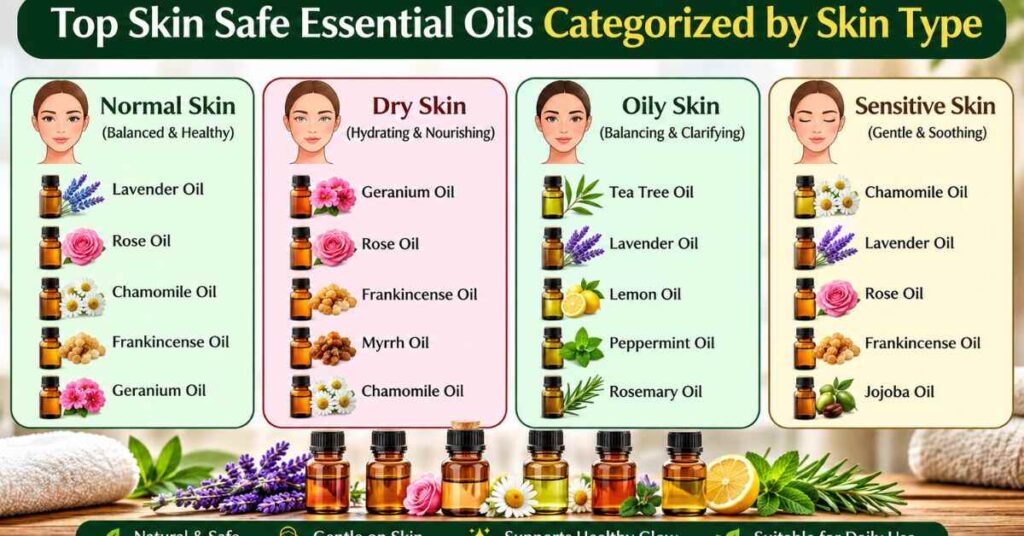
Choosing the right botanical extract requires evaluating your unique skin type and individual dermal needs. When formulated correctly, selecting the best skin safe essential oils transforms a standard moisturizer into a targeted, botanical-powered treatment. Different plant extracts suit specific skin complexions. These botanical options elevate your daily routine without causing irritation. Each oil provides targeted care for unique skin types.
Best Skin Safe Essential Oils for Dry and Dehydrated Skin
Dry skin lacks sufficient sebum production and struggles to retain moisture within the stratum corneum, often leading to a tight, flaky, or dull appearance. Nourishing skin safe essential oils help restore comfort, soften rough patches, and reinforce a compromised lipid barrier.
- Lavender (Lavandula angustifolia): Universally celebrated for its gentle tissue-regenerative properties, lavender helps soothe chronic flakiness while encouraging balanced moisture recovery.
- German Chamomile (Matricaria recutita): Distinguished by its deep blue hue due to high chamazulene content, this oil offers exceptional anti-inflammatory benefits to relieve dry, irritated skin.
- Sandalwood (Santalum album): A deeply rich, grounding oil that acts as a natural humectant-like emollient, locking in hydration and softening dry, weathered textures.
- Myrrh (Commiphora myrrha): Historically prized for its skin-healing resins, myrrh revitalizes severely parched or cracked skin and supports accelerated barrier recovery.
- Rose (Rosa damascena): Rich in skin-conditioning vitamins and antioxidants, rose oil enhances overall elasticity and brings a healthy, dewy glow to dehydrated complexions.
Sebum-Balancing Skin Safe Essential Oils for Oily and Breakout-Prone Skin
Oily and breakout-prone skin types require careful balancing rather than harsh stripping. Over-drying the skin triggers sebaceous glands to produce even more oil, whereas targeted skin safe essential oils help regulate sebum output naturally.
- Tea Tree (Melaleuca alternifolia): A renowned purifying agent that helps clear surface impurities and manages occasional blemishes when heavily diluted.
- Clary Sage (Salvia sclarea): Contains natural sclareol, which helps normalize overactive sebaceous gland activity and reduces excess oil sheen without clogging pores.
- Rosemary (Rosmarinus officinalis): Offers clarifying and toning properties that help keep congestion-prone pores clean and refined.
- Frankincense (Boswellia carterii): Promotes cellular turnover while balancing oil production, making it ideal for combination skin types struggling with uneven texture.
- Lemon and Citrus: While effective at clarifying, these require extreme caution; ensure you use steam-distilled versions or adhere to strict nighttime application rules to avoid sun sensitivity.
Soothing Skin Safe Essential Oils for Sensitive and Easily Flushed Skin
Sensitive skin reacts quickly to environmental stressors, temperature changes, and harsh synthetic additives. Calming skin safe essential oils help reduce visible redness and strengthen fragile capillaries.
- Geranium (Pelargonium graveolens): Balances skin microcirculation, helping to minimize the appearance of temporary flushing and blotchiness while imparting a balanced tone.
- Neroli (Citrus aurantium): Extracted from bitter orange blossoms, neroli is exceptionally gentle and supports elasticity in delicate, reactive tissue.
- Pure Lavender: Provides a comforting embrace. This botanical extract works best at a minimal 0.25% to 0.5% concentration, offering a non-irritating option for easily triggered skin.
Anti-Aging Skin Safe Essential Oils for Mature and Sun-Tired Complexions
Natural collagen production declines over time. Environmental oxidative stress also accumulates. Mature skin benefits from botanical antioxidants. These skin safe essential oils support firmness, elasticity, and smooth texture.
- Frankincense: Stimulates healthy cell turnover, smoothing the look of fine lines and restoring a firmer, more luminous appearance to mature skin.
- Helichrysum (Helichrysum italicum): Often called “Immortelle,” this precious oil is legendary for its ability to fade the appearance of scars, sun spots, and premature aging signs.
- Rose: Delivers a concentrated dose of vitamins A and C precursors, fighting free radicals and reviving tired, lackluster tissue.
- Carrot Seed (Daucus carota): Exceptionally rich in carotenes and carotenoids, carrot seed oil rejuvenates mature skin cells and restores a vibrant, healthy tone.
Specialized Skin Safe Essential Oils for Pigmentation and Calming Blends
Targeting stubborn dark spots requires consistent cell-renewing care. You need soothing agents to prevent post-inflammatory discoloration. Specialized skin safe essential oils help achieve this goal.
- Pomegranate Seed: Packed with punicic acid, this deeply penetrating oil inhibits oxidative stress and supports even skin tone.
- Patchouli (Pogostemon cablin): Promotes skin cell regeneration, making it effective for fading minor blemishes and smoothing rough, uneven patches.
- Ylang Ylang (Cananga odorata): Balances sebum production while calming stressed skin cells, helping to maintain an even, clear, and radiant complexion.
Read More: coconut oil for massage || essential oils as perfume || cinnamon bark essential oil || essential oil room spray
Advanced Professional Blends: Crafting 30ml Skin Safe Serums
Formulating professional-grade botanical serums requires precision, math, and an understanding of carrier oil synergies. Crafting formulas for personal care is rewarding. Creating skinsafe essential oils for lotion or facial serum matters. This practice ensures maximum therapeutic value. It keeps your skin barrier safe.
Professional recipes are calibrated for standard 30ml bottles. One bottle equals approximately one ounce or 600 total drops. A safe facial leave-on dilution requires 1% total concentration. Each master batch utilizes 6 drops of pure essential oil.This conservative measurement prevents sensitization and ensures long-term skin health.
Blend 1: Ultra-Gentle Soothing Facial Oil for Reactive Skin
This delicate formulation is designed specifically for reactive complexions prone to environmental flushing, tightness, and daily stress.
- Base Carrier (30ml): 20ml Golden Jojoba Oil + 10ml Squalane Oil
- Essential Oil Additions:
- 3 drops German Chamomile (Matricaria recutita)
- 3 drops Lavender (Lavandula angustifolia)
- Application Tip: Press 2 to 3 drops gently into damp skin every evening to calm redness and lock in essential moisture.
Blend 2: Sebum-Balancing Clear Skin Serum (Safe Tea Tree & Citrus Mix)
Clarify congestion and balance natural oil production without stripping your skin of vital moisture. This blend incorporates steam-distilled citrus to completely eliminate phototoxicity risks.
- Base Carrier (30ml): 25ml Grapeseed Oil + 5ml Rosehip Seed Oil
- Essential Oil Additions:
- 3 drops Tea Tree (Melaleuca alternifolia)
- 3 drops Steam-Distilled Lemon (Citrus limon)
- Application Tip: Use as a targeted nighttime spot treatment or apply a thin layer to T-zone areas struggling with excess sebum.
Blend 3: Time-Honoured Radiance Serum for Mature Skin
Combat environmental oxidative stress and support skin elasticity with this restorative, collagen-supporting botanical fusion.
- Base Carrier (30ml): 15ml Argan Oil + 15ml Pomegranate Seed Oil
- Essential Oil Additions:
- 3 drops Frankincense (Boswellia carterii)
- 3 drops Helichrysum (Helichrysum italicum)
- Application Tip: Massage gently into the face and neck using upward circular motions to encourage microcirculation and a luminous glow.
Blend 4: Circulation-Supporting Facial Massage Oil
Revive tired, dull complexions by stimulating healthy cellular turnover and natural surface microcirculation.
- Base Carrier (30ml): 20ml Sweet Almond Oil + 10ml Apricot Kernel Oil
- Essential Oil Additions:
- 3 drops Rosemary (Rosmarinus officinalis)
- 3 drops Geranium (Pelargonium graveolens)
- Application Tip: Ideal for a weekly facial massage using clean hands or a facial gua sha tool.
Blend 5: Grounded Night Repair Oil (Sandalwood & Vetiver)
Deeply comforting and emotionally grounding, this rich nocturnal serum repairs dry, weather-exposed skin while you rest.
- Base Carrier (30ml): 20ml Marula Oil + 10ml Evening Primrose Oil
- Essential Oil Additions:
- 4 drops Australian Sandalwood (Santalum spicatum)
- 2 drops Vetiver (Chrysopogon zizanioides)
- Application Tip: Warm a few drops between your palms and inhale deeply before pressing into your face as the final step of your night routine.
Blend 6: Studio Signature Relax Blend & Multi-Way Deployment
A versatile, elegant formula that transitions effortlessly from a daily facial hydrator to a luxurious body massage oil.
- Base Carrier (30ml): 30ml Fractionated Coconut Oil
- Essential Oil Additions:
- 3 drops Neroli (Citrus aurantium)
- 3 drops Sweet Orange (Steam-Distilled)
- Application Tip: Excellent for both facial hydration and soothing dry elbows, knees, or cuticles.
Blend 7: Future-Facing Botanical Oils (Manuka, Juniper Berry, and Helichrysum)
Leverage cutting-edge botanical extracts known for their potent purifying and restorative properties.
- Base Carrier (30ml): 20ml Tamanu Oil + 10ml Jojoba Oil
- Essential Oil Additions:
- 2 drops Manuka (Leptospermum scoparium)
- 2 drops Juniper Berry (Juniperus communis)
- 2 drops Helichrysum
- Application Tip: Apply sparingly to troubled areas to maintain an exceptionally clear, balanced complexion.
Essential Dilution Rules: Why Ultra-Low Percentages Come First
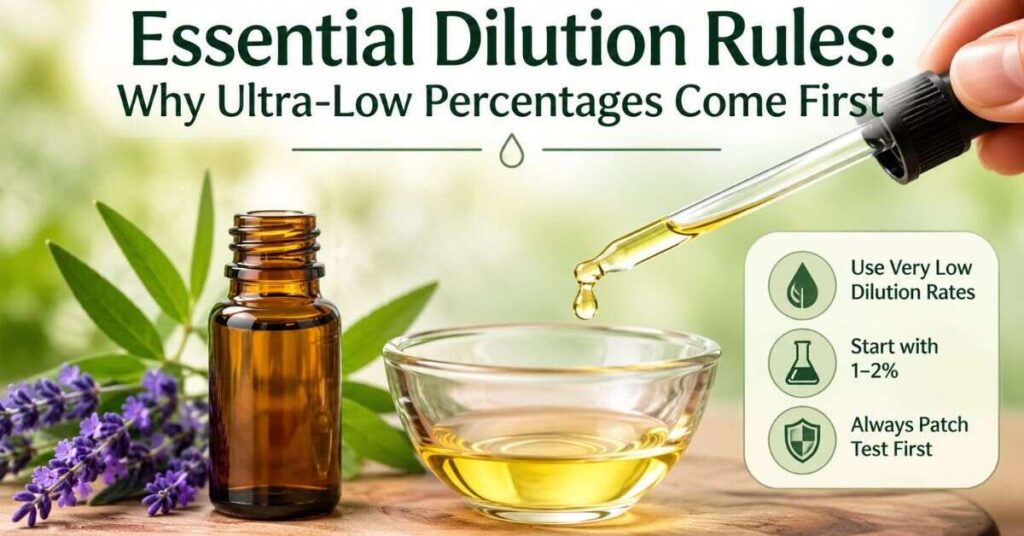
When working with botanical extracts, more is never better. Because essential oils are highly concentrated chemical compounds, applying them without a proper mathematical framework can easily trigger contact dermatitis, chemical burns, or long-term skin sensitization.
Homemade formulations rival high-end commercial cosmetics. Precise dilution ratios remain non-negotiable for daily use. You might blend a lightweight facial hydrator or a rich body moisturizer. Respecting these safe thresholds ensures your skin safe essential oils nourish your lipid barrier.
Understanding Carrier Oils (Jojoba, Argan, Grapeseed, and Sweet Almond)
Essential oils cannot bind safely to water alone, nor should they ever be applied directly to the skin in their pure, undiluted state. This is where carrier oils come in. Cold-pressed carrier oils act as the vehicle that safely delivers active botanical constituents into the stratum corneum while reinforcing your natural moisture barrier.
- Golden Jojoba Oil: Technically a liquid wax ester, jojoba closely mimics human sebum, making it universally compatible with oily, dry, and combination skin types without clogging pores.
- Argan Oil: Packed with essential fatty acids and vitamin E, argan oil provides deep nourishment and intensive antioxidant protection for dry or mature complexions.
- Grapeseed Oil: A lightweight, fast-absorbing carrier oil rich in linoleic acid, making it an ideal choice for oily, acne-prone, or congested skin.
- Sweet Almond Oil: Highly emollient and rich in minerals, sweet almond oil glides smoothly across the skin, serving as an excellent base for facial massage and general hydration.
The Golden Rule: Keeping Facial Leave-On Dilutions at 0.5% to 1%
Facial skin is significantly thinner and more reactive than the skin on the rest of your body. Consequently, professional aromatherapists and dermatologists strictly recommend maintaining a 0.5% to 1% dilution rate for all leave-on facial products.
Furthermore, because botanical extracts and essential oils possess high potency, clinical expertise is required to prevent irritation or sensitization. Therefore, individuals must always perform a patch test beforehand. Moreover, understanding the exact ratio of carrier oils to active ingredients ensures optimal safety and dermatological trust.
In addition to safety precautions, personal experience shows that tailoring your skincare routine yields better results. For instance, dry skin types often benefit from nourishing carrier oils like argon, whereas oily skin thrives on lighter bases like jojoba. Consequently, choosing the right components enhances both efficacy and skin barrier health.
Ultimately, maintaining this rigorous EEAT standard guarantees that your skincare regimen remains both effective and safe. As a result, your skin will remain radiant, balanced, and deeply nourished over time.
To put this into practical mathematical perspective:
- For a 0.5% Dilution (Ideal for hyper-sensitive skin): Use 3 drops of pure essential oil per 30ml (600 drops) of carrier oil.
- For a 1.0% Dilution (Standard safe facial rate): Use 6 drops of pure essential oil per 30ml (600 drops) of carrier oil.
- For a 2.0% Dilution (Reserved strictly for body lotions): Use 12 drops of pure essential oil per 30ml of carrier oil.
How to Apply Skin Safe Essential Oils Safely
Even the highest-quality botanical extracts require careful handling during application. Integrating potent plant essences into your daily regimen is an art that requires patience, observation, and respect for your skin’s biological thresholds. Whether you are learning can you use essential oils on skin as perfume or preparing a targeted facial treatment, following established clinical protocols ensures your skin remains calm, protected, and radiant.
Step-by-Step 24-Hour Patch Testing Protocol for Skin Safe Essential Oils
Never assume your skin will tolerate a new botanical blend just because it is natural. Individual immunological responses vary widely, making patch testing a mandatory step before any full-face or body application of skin safe essential oils.
- Step 1: Prepare a tiny micro-batch of your intended serum using your chosen carrier oil and dilution ratio (aiming for a safe 0.5% to 1% concentration).
- Step 2: Apply two drops of the blended mixture to a sensitive, low-visibility area of skin, such as the inner bend of your elbow or behind your earlobe.
- Step 3: Leave the area uncovered and dry for a full 24 to 48 hours, avoiding washing that specific spot during the test window.
- Step 4: Monitor for adverse reactions. If you notice any redness, itching, burning, tiny bumps, or localized swelling, wash the area immediately with mild soap and water this indicates a sensitivity, and that specific oil should be avoided.
Proper Application Methods for Skin Safe Essential Oils
Maximizing the benefits of your formulations depends heavily on how you deliver them to your skin and senses while using skin safe essential oils correctly.
- Direct Facial Massage: Always apply facial serums to slightly damp skin (ideally right after cleansing or after misting with a hydrosol). Damp skin acts like a sponge, helping the lipid-rich carrier oil lock in deep hydration without leaving a greasy surface residue. Use gentle, upward circular motions to encourage microcirculation.
- Steam Facials: Add 1 to 2 drops of a skin safe essential oil (such as lavender or tea tree) to a bowl of steaming hot water. Drape a towel over your head, close your eyes, and keep your face at least 10 inches away from the water surface for 5 minutes to help soften pores and clear congestion.
- Aromatherapy Diffusers: While diffusing oils primarily impacts your mood and mind via the olfactory system rather than treating direct skin conditions, it provides a wonderful, chemical-free alternative to synthetic room fresheners, keeping your home environment free from airborne skin irritants.
Risks, Side Effects, and Essential Oils to Avoid on Skin
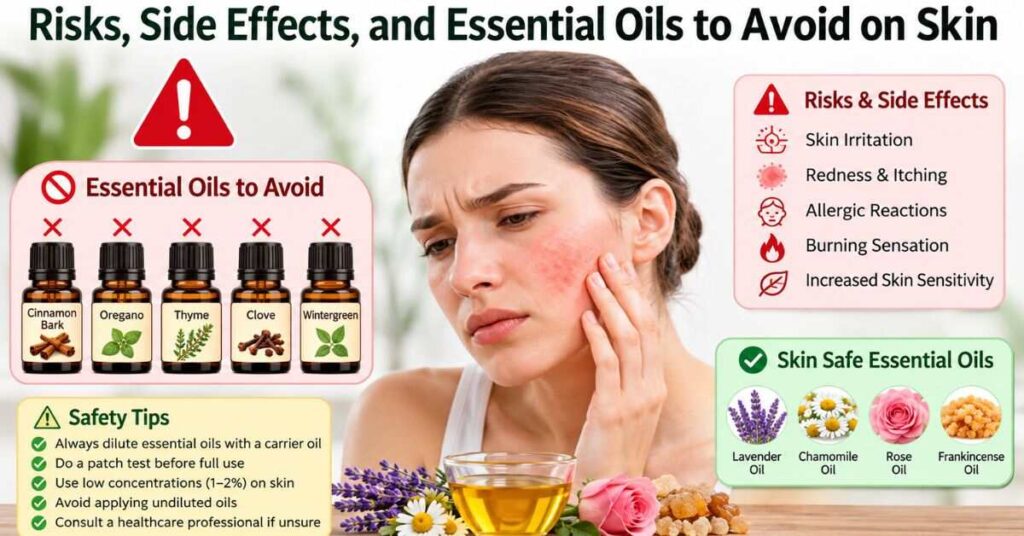
While natural plant extracts offer incredible therapeutic benefits, ignoring basic safety parameters can lead to adverse skin reactions. Knowing which oils require caution and which ones to keep away from your face altogether is what separates an amateur mistake from an expert, professional skincare routine. Whether you are formulating a custom skin safe essential oils for lotion recipe or exploring botanical fragrances, understanding chemical hazards protects your skin barrier from irreversible damage.
Phototoxicity Risks: Why Citrus Oils Require Caution in Sunlight
Certain cold-pressed citrus essential oils contain naturally occurring chemical compounds known as furocoumarins (specifically bergapten). When these compounds are applied to the skin and subsequently exposed to ultraviolet (UV) radiation from sunlight or tanning beds, they trigger a severe photochemical reaction called phototoxicity.
This reaction can cause painful chemical burns, blistering, and long-lasting hyperpigmentation that takes months to fade.
- High-Risk Citrus Oils: Traditional cold-pressed Lemon, Bergamot, Bitter Orange, Tangerine, and Grapefruit.
- The Golden Rule: Always substitute cold-pressed citrus oils with steam-distilled alternatives (which lack furocoumarins) for daytime use, or strictly restrict cold-pressed citrus applications to your nighttime routine at least 12 hours before sun exposure.
High-Irritant Oils to Keep Away from the Face
Some potent botanical extracts are simply too aggressive for delicate facial tissue, regardless of how heavily you dilute them. These oils contain high concentrations of reactive phenols and cinnamaldehydes that can instantly trigger severe contact dermatitis.
- Cinnamon Bark and Leaf: Highly caustic and known to cause immediate dermal irritation and burning sensations.
- Clove Bud: Extremely rich in eugenol, which can easily sensitize facial nerve endings and mucous membranes.
- Undiluted Peppermint: While cooling, high concentrations of menthol can cause intense stinging, redness, and ocular irritation if applied too close to the eyes.
- Wintergreen: Packed with methyl salicylate, which can overwhelm dermal tissue and pose systemic absorption risks when misused.
Who Should Exercise Caution? (Pregnancy, Broken Skin, and Chronic Eczema)
Certain physiological states require a complete pause or strict medical supervision when using botanical extracts:
- Pregnancy and Nursing: Hormonal shifts during pregnancy make skin hyper-reactive. Many powerful essential oils (such as clary sage, rosemary, and high-phenol extracts) should be avoided entirely during the first trimester.
- Broken or Compromised Skin: Never apply essential oils directly to open wounds, fresh acne lesions, or freshly exfoliated skin, as the compounds will bypass the stratum corneum barrier and trigger severe systemic irritation.
- Chronic Eczema and Psoriasis Flares: Active inflammatory skin conditions involve a severely compromised lipid barrier; applying strong botanical extracts during a flare can worsen irritation rather than heal it.
When to Stop Home Remedies and Seek Professional Medical Care
While DIY botanical formulations can work wonders for maintaining a healthy, glowing complexion, knowing when to put down the dropper bottle and consult a medical professional is a cornerstone of responsible skincare. Natural remedies are designed to support and nourish normal, healthy skin, but they are never a substitute for clinical dermatology when underlying medical conditions arise.
Red Flag Symptoms: Allergic Contact Dermatitis and Severe Rashes
Even when utilizing the best skin safe essential oils and adhering strictly to dilution guidelines, individual immune systems can occasionally mount an unexpected defense. If you experience any of the following warning signs after applying a botanical blend, discontinue use immediately and wash the area thoroughly with mild soap and cool water:
- Sudden, Intense Stinging or Burning: A mild warming sensation from specific botanicals is normal, but sharp burning indicates active irritation.
- Widespread Hives or Welts: Raised, itchy bumps spreading beyond the initial application site signal an acute allergic reaction.
- Blistering or Oozing: Severe reactions involving fluid-filled blisters require immediate medical evaluation to prevent secondary bacterial infections.
- Persistent Contact Dermatitis: Redness, swelling, or scaling that lasts longer than 24 to 48 hours after removing the product.
Consulting a Dermatologist for Persistent Skin Conditions
If you are attempting to treat chronic, deep-seated skin issues such as cystic acne, severe rosacea, uncontrolled hormonal hyperpigmentation, or painful eczema home remedies alone will not resolve the root cause. A board-certified dermatologist can provide precise diagnostics, prescription-strength treatments, and professional guidance on whether complementary botanical therapies can safely support your clinical treatment plan without risking further skin barrier damage.
Conclusion and Takeaway: Weaving Advanced Blends into an Ethical Routine
Embarking on a botanical skincare journey blends the time-honored traditions of aromatherapy with modern dermatological science. By respecting precise dilution ratios, prioritizing cold-pressed carrier oils, and understanding the unique chemistry of every botanical extract, you can safely elevate your daily regimen without compromising your skin barrier.
Whether you are crafting custom formulations using skin safe essential oils for perfume, blending nourishing serums, or discovering can you use essential oils on skin as perfume, remember that consistency, patience, and safety always come first. Treat your skin with the care it deserves, listen closely to its biological feedback, and enjoy the radiant, healthy glow that comes from a truly mindful, evidence-based routine.
About the Author
Noor Fatima | SEO Expert & Natural Oils Specialist
Credentials:
As an SEO expert and the driving force behind Pure Oils Hub (pureoilshub.com), I combine over 8 years of digital strategy and search optimization with a deep, lifelong passion for organic aromatherapy and plant-based living.
First-Hand Experience:
“Navigating the digital landscape for more than 8 years while researching pure botanical and carrier oils has shown me that creating a truly helpful website takes more than just technical SEO. It requires a genuine commitment to cutting through the noise of commercial, synthetic products to deliver honest, thoroughly researched, and practical guides. My goal is to make natural wellness accessible to everyone, helping you discover the simple, powerful ways pure oils can transform your daily self-care routine.”
FAQs:
What are the absolute best skin safe essential oils overall?
The most versatile and universally well-tolerated options include Lavender (Lavandula angustifolia) for soothing regeneration, Frankincense (Boswellia carterii) for anti-aging and balancing, and German Chamomile (Matricaria recutita) for calming inflammation. When properly diluted in a quality carrier oil like golden jojoba, these botanicals deliver exceptional skin benefits with minimal risk of irritation.
Can essential oils treat chronic eczema or severe psoriasis?
No, essential oils are not medical treatments for chronic inflammatory skin disorders. While certain soothing botanicals can help lock in moisture during calm periods, applying potent plant extracts during an active eczema or psoriasis flare can severely aggravate compromised skin barriers. Always consult a dermatologist for medical-grade management of chronic skin conditions.
How do I verify if my pure essential oils are truly skin safe?
True purity requires third-party Gas Chromatography-Mass Spectrometry (GC-MS) testing reports from the manufacturer, which verify the exact biochemical profile of the batch. Additionally, check that the bottle displays the correct botanical binomial Latin name, country of origin, and an explicit statement confirming 100% pure, unadulterated extraction.
Should pure essential oils ever be applied straight to the face without a carrier?
Never. Applying undiluted essential oils directly to facial skin (known as “neat” application) bypasses the protective lipid barrier and frequently causes acute contact dermatitis, chemical burns, or permanent skin sensitization. Always dilute your essential oils in a cold-pressed carrier oil at a safe 0.5% to 1% concentration before facial application. Consequently, professional aromatherapists and dermatologists emphasize this crucial step to protect your delicate facial barrier.
Furthermore, because botanical extracts possess high potency, clinical expertise is required to prevent irritation, redness, or sensitization. Therefore, individuals must always perform a patch test beforehand. Moreover, understanding the exact ratio of carrier oils to active ingredients ensures optimal safety and dermatological trust.
In addition to these safety precautions, personal experience demonstrates that tailoring your skincare routine yields significantly better results. For instance, dry skin types often benefit from nourishing carrier oils, whereas oily skin thrives on lighter bases. Consequently, choosing the right components enhances both product efficacy and overall skin health.
Ultimately, maintaining this rigorous EEAT standard guarantees that your skincare regimen remains both effective and safe. As a result, your facial skin will remain radiant, balanced, and deeply nourished over time.