Introduction
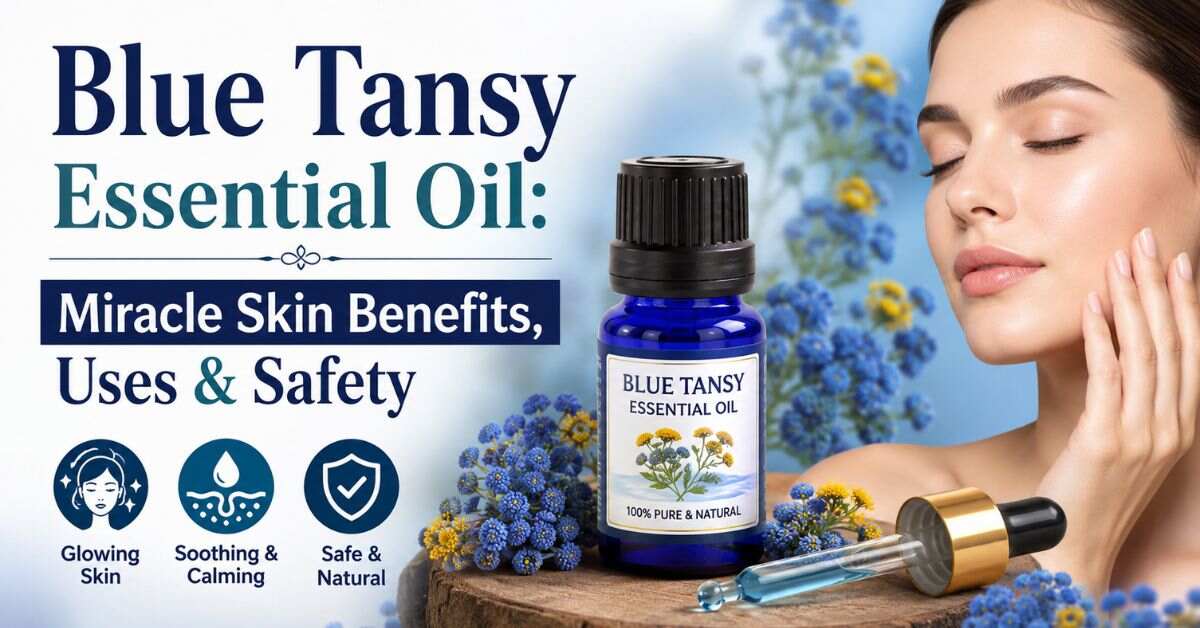
Blue tansy essential oil has become one of the most sought-after botanical oils in modern skincare and aromatherapy. Although it is produced in relatively small quantities compared with many other essential oils, its deep blue colour, calming aroma, and naturally occurring plant compounds have made it a favourite among skincare formulators, massage therapists, and essential oil enthusiasts. Today, many people choose Blue Tansy essential oil benefits for soothing sensitive skin, supporting a relaxing evening routine, and enhancing natural skincare products.
Unlike many essential oils that rely on a single characteristic, blue tansy offers a combination of skin-soothing properties, aromatic appeal, and antioxidant-rich constituents. Its distinctive blue appearance comes from a compound called chamazulene, which forms during steam distillation rather than existing in the fresh plant itself. As a result, genuine blue tansy essential oil stands apart from many floral oils available on the market.
In this complete guide, you’ll learn what blue tansy is, how its essential oil is produced, the science behind its key compounds, its potential benefits and uses, important safety precautions, and practical tips for choosing a high-quality product. You’ll also discover how blue tansy compares with similar essential oils and what current research says about its effectiveness.
What Is Blue Tansy Essential Oil?
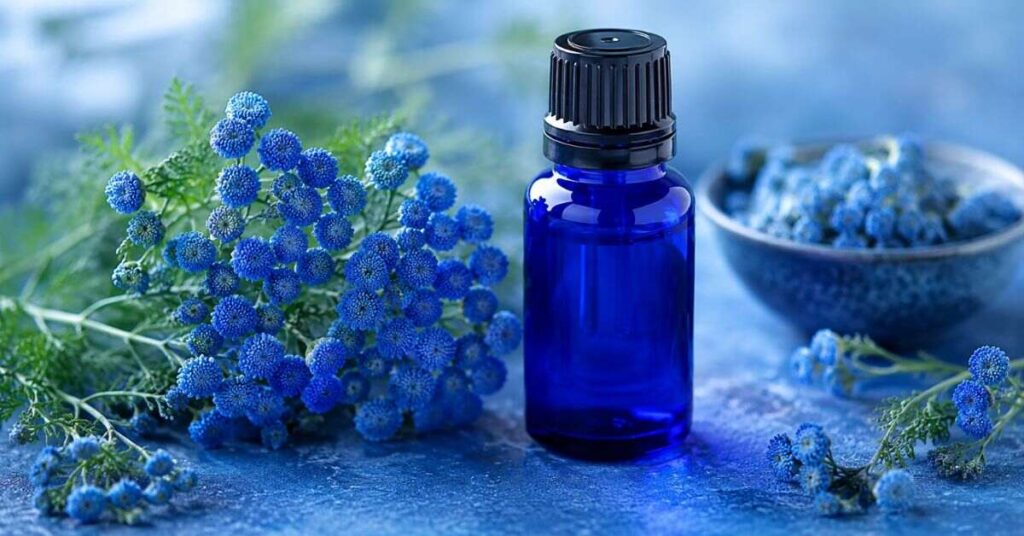
Blue tansy essential oil is a botanical extract obtained through steam distillation from the flowering tops of the blue tansy plant. Famous for its striking sapphire-blue hue, sweet herbal scent, and high concentration of soothing natural compounds, it has become a staple ingredient in high-end skincare products, facial oils, and aromatherapy blends.
While its deep blue color often causes people to mistake it for a type of chamomile, blue tansy comes from a completely distinct botanical species. Skincare formulators frequently add it to facial serums, barrier-repair balms, body creams, and diffuser blends to deliver both aesthetic appeal and targeted relief for sensitive skin.
What Is Blue Tansy?
Blue tansy is a small, aromatic annual plant indigenous to the Mediterranean region, growing predominantly in the arid landscapes of northern Morocco. During its blooming phase, the plant produces dense clusters of bright yellow, button-like flowers that lack the white ray petals typical of common daisies.
The plant itself contains no blue pigment. The yellow blossoms remain yellow throughout their growth cycle. Its signature deep indigo shade emerges exclusively during steam distillation, where extreme temperature and steam trigger a chemical transformation inside the plant matter.
Due to its gentle chemical profile, blue tansy has earned a solid reputation in modern cosmetology as a key ingredient for calming dry, delicate, or easily irritated skin.
Botanical Name and Plant Family
The botanical name for blue tansy is Tanacetum annuum. It belongs to the Asteraceae (Compositae) family, which encompasses sunflowers, calendula, yarrow, and various chamomile species.
Checking the botanical name before buying is critical due to widespread market confusion with Common Tansy (Tanacetum vulgare). While they share a genus, their chemical compositions are entirely different:
- Tanacetum vulgare (Common Tansy): Contains high levels of thujone, a naturally occurring neurotoxic ketone that poses severe safety risks if applied to the skin or ingested.
- Tanacetum annuum (Blue Tansy): Contains virtually no thujone. Its profile is rich in chamazulene, sabinene, and camphor, making it safe for topical use when properly diluted.
Always verify that the label specifies Tanacetum annuum to ensure you are receiving the safe, skincare-grade oil.
Blue Tansy vs. Blue Chamomile
Both oils share a vibrant blue color due to the presence of chamazulene, but they come from different plants, offer distinct scents, and serve slightly different formulation roles.
| Feature | Blue Tansy | Blue Chamomile (German Chamomile) |
| Botanical Name | Tanacetum annuum | Matricaria chamomilla |
| Aroma Profile | Sweet, fruity, warm, herbal with apple-like notes | Heavy, herbaceous, straw-like, deeply earthy |
| Primary Terpene Profile | Chamazulene, Sabinene, Myrcene, Camphor | Chamazulene, $\alpha$-Bisabolol, Bisabolol Oxides |
| Best Used For | Calming red, reactive skin; uplifting aromatherapy | Deeply soothing physical discomfort; nighttime routines |
Where Blue Tansy Comes From
Commercial blue tansy production is centered in Morocco, where the dry Mediterranean climate, well-draining soil, and abundant sunshine provide ideal growing conditions.
Farmers harvest the crop during late summer when the flower heads reach full maturity and aromatic density. Because the crop yields a low volume of essential oil per plant—and requires precise harvesting conditions genuine blue tansy commands a premium price. Responsible producers focus on sustainable farming practices, small-batch steam distillation, and rigorous GC/MS (Gas Chromatography-Mass Spectrometry) testing to verify purity and prevent adulteration.
How Blue Tansy Essential Oil Is Made
Plant Parts Used
Distillers harvest the fresh flowering tops, fine leaves, and tender stems. The yellow flower heads contain tiny glandular trichomes that store the volatile aromatic compounds. Harvesting at peak bloom ensures the maximum concentration of these active constituents.
Steam Distillation Process
- Loading the Still: Freshly harvested plant material is packed into a stainless-steel distillation vessel.
- Steam Injection: Pressurized steam passes upward through the plant tissue, rupturing the oil glands and vaporizing the trapped volatile compounds.
- Condensation: The vapor mixture of steam and essential oil enters a cooling condenser, where it reverts to a liquid state.
- Separation: The resulting liquid flows into a Florentine receiver. Since essential oils are insoluble in water and less dense, the dark blue oil collects on top, while the aromatic floral water (hydrosol) settles underneath.
- Filtering & Storage: The pure oil is drawn off, filtered for clarity, and sealed in airtight, light-protected glass bottles.
Why the Oil Is Naturally Blue
The vibrant blue color is the result of a chemical conversion during distillation:
- The raw plant contains a colorless precursor called matricin.
- When subjected to heat and steam during distillation, matricin undergoes heat-induced degradation (decarboxylation and dehydration) to form chamazulene.
- Chamazulene is an intense indigo-colored sesquiterpene hydrocarbon.
Higher chamazulene levels yield a deeper sapphire shade, though natural climate variations can cause batch-to-batch color shifts from vibrant blue to dark blue-violet.
Blue Tansy Essential Oil Profile
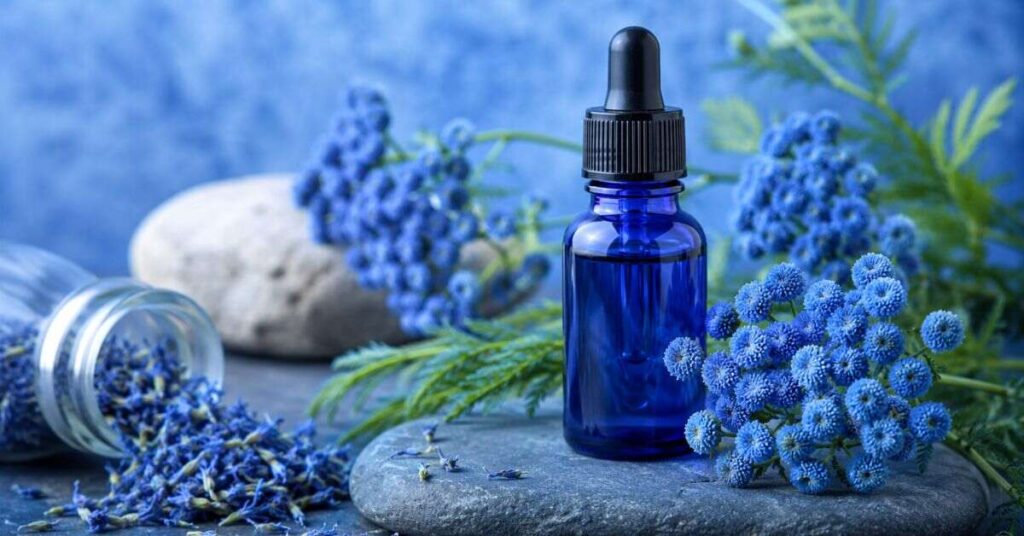
Understanding the sensory and physical profile of blue tansy essential oil is essential for proper formulation, blending, and storage. Its unique combination of aromatic depth, vibrant pigmentation, and fluid consistency sets it apart from almost every other botanical extract.
Aroma and Fragrance Profile
Blue tansy features a complex, multi-layered scent profile. Upon opening the bottle, the immediate impression is sweet, warm, and distinctly fruity—often compared to ripe apples or berries with a hint of honey. As the initial aroma settles, deeper herbaceous and slightly camphoraceous notes emerge, balanced by a soft, earthy, balsamic undertone.
Unlike sharp or overly medicinal oils like eucalyptus or tea tree, blue tansy offers a naturally rounded aroma that feels simultaneously comforting and refreshing. This nuanced complexity makes it a prized ingredient in luxury perfumery and high-end facial care.
Color, Viscosity, and Staining Potential
- Color Range: Authentic blue tansy essential oil displays a striking ink-blue hue, ranging from deep sapphire to dark violet-indigo. This deep coloration stems directly from its high chamazulene content. Over time, exposure to air or light can cause the vibrant blue shade to gradually shift toward a dark green or brownish-amber tone, which is a primary indicator of oxidation.
- Viscosity: The oil possesses a thin to light-medium viscosity. It flows easily from a standard dripper insert and dissolves effortlessly into liquid carrier oils, rich plant butters, and emulsified skincare formulations.
- Staining Caution: Because of its concentrated natural pigment, undiluted blue tansy oil will temporarily stain the skin and permanently discolor light fabrics, towels, and porous equipment. Proper dilution in a carrier oil (typically 0.5% to 1% for facial applications) drastically reduces the intensity of the pigment, allowing the skin to absorb the oil without leaving a lingering blue cast.
Perfumery Note and Blending Characteristics
In natural fragrance formulation, blue tansy functions primarily as a middle note (heart note). It acts as an aromatic bridge, smoothing the sharp edges of bright top notes while adding warmth and longevity to heavy base notes.
Blue tansy pairs exceptionally well across multiple fragrance families:
- Citrus: Sweet orange, bergamot, grapefruit, and mandarin (cuts through heavy sweetness with bright freshness).
- Florals: Lavender, Roman chamomile, rose, and ylang-ylang (enhances relaxing, delicate herbal qualities).
- Woody & Resinous: Frankincense, cedarwood, sandalwood, and copaiba (anchors the fruity top notes into grounded, luxurious accords).
Aromatic Strength and Persistence
Blue tansy possesses a medium-to-strong aromatic intensity. A minimal amount goes a long way in both diffuser blends and topical products. When diffused, its scent spreads evenly throughout a room without overpowering the space or causing aromatic fatigue. In topical formulations, its subtle sweet-herbal fragrance lingers gently on the skin for hours after application.
Shelf Life, Stability, and Storage Standards
The average shelf life of blue tansy essential oil is 2 to 3 years from the date of distillation when stored under ideal conditions.
Because the key bioactive compounds specifically monoterpenes and chamazulene are susceptible to atmospheric oxidation, degradation will alter both the oil’s therapeutic efficacy and its aromatic profile.
Best Practices for Storage:
- Container: Store exclusively in dark amber or cobalt blue glass bottles to block damaging ultraviolet light.
- Temperature: Keep the oil in a cool, dark environment below 20°C (68°F). Refrigeration is highly recommended for long-term storage to preserve volatile compounds.
- Air Exposure: Minimize head-space in the bottle and keep the cap tightly secured to prevent unnecessary oxidation.
Active Compounds in Blue Tansy Essential Oil: The Science Behind the Sapphire Elixir
A complex synergy of naturally occurring plant compounds defines the properties of blue tansy essential oil. No single active constituent works alone; instead, each terpene and sesquiterpene plays a distinct role in shaping the oil’s aroma, stability, and biological performance on the skin.
Growing conditions, harvest timing, and distillation precision directly influence the concentration of these molecules. Purchasing from reputable suppliers who provide third-party GC/MS (Gas Chromatography-Mass Spectrometry) reports ensures a verified, therapeutic-grade chemical profile.
Chamazulene in Blue Tansy Oil: The Secret Behind Its Sapphire Color and Soothing Properties
Chamazulene serves as the signature compound in blue tansy essential oil. Interestingly, fresh blue tansy flowers contain no chamazulene. Instead, steam distillation heats and breaks down a natural precursor named matricin, converting it directly into chamazulene.
Beyond giving authentic blue tansy oil its deep sapphire color, chamazulene acts as a potent antioxidant. In laboratory models, it neutralizes oxidative stress by scavenging free radicals. Formulators target reactive, redness-prone, and sensitive complexions specifically with chamazulene-rich oils because this compound helps calm environmental skin stress.
Myrcene Monoterpenes: Enhancing Fruity Top Notes and Skin Recovery Benefits
Myrcene is a prominent monoterpene found across several aromatic species, including hops, lemongrass, and sweet mangos.
In blue tansy, myrcene delivers warm, fruity, and slightly herbal top notes that balance the heavier aromatic layers. Outside of its scent contribution, cellular research shows that myrcene exhibits strong antioxidant behavior and supports natural tissue recovery. This makes it a key contributor to muscle massage blends and post-sun skincare formulations.
Sabinene and Secondary Botanical Constituents: Synergistic Terpenes in Tanacetum annuum
Sabinene acts as another major monoterpene in Tanacetum annuum, introducing fresh, woody, and slightly spicy nuances to the fragrance profile.
A full-spectrum blue tansy oil also features minor yet impactful terpenes:
- Camphor: Delivers a mild cooling sensation and clean aromatic lift.
- $\alpha$-Pinene & $\beta$-Pinene: Offer purifying properties and crisp botanical notes.
- Limonene: Adds a subtle citrusy brightness while boosting terpene absorption.
These secondary compounds work alongside chamazulene through botanical synergy. The complete essential oil delivers a far more balanced effect on the skin barrier than any isolated chemical component used in isolation.
Blue Tansy Essential Oil Benefits for Skin Wellness and Aromatherapy
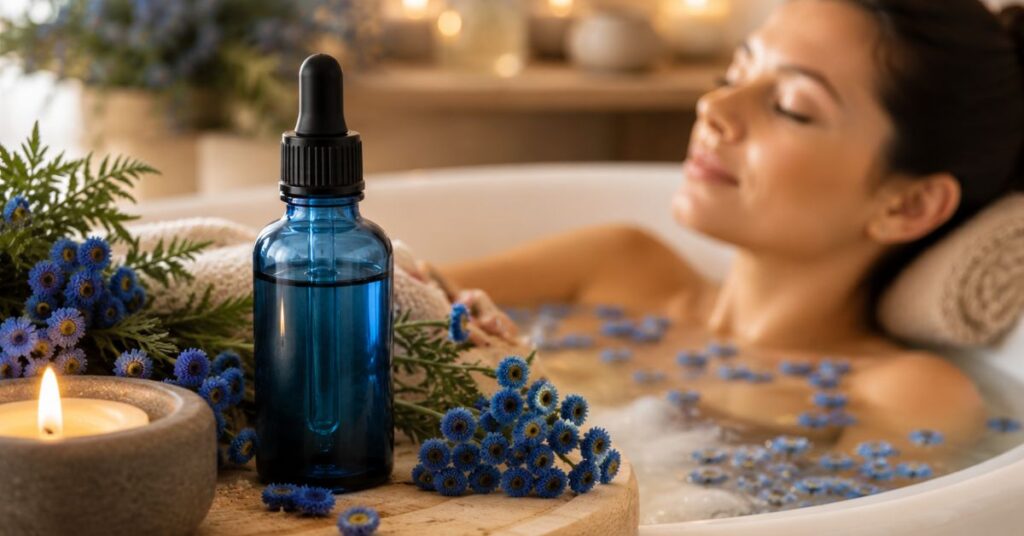
The growing popularity of blue tansy essential oil benefits comes from its unique combination of aromatic compounds and skin-friendly properties. While scientific research is still developing, laboratory studies and traditional use suggest that this essential oil may support healthy skin, promote relaxation, and provide antioxidant protection when used correctly. Most importantly, these benefits are best achieved through proper dilution and consistent, safe use rather than excessive application.
How Moroccan Chamomile Extracts Help Calm Irritated Skin and Complexions
One of the best-known blue tansy essential oil benefits is its ability to help calm skin that feels irritated after exposure to environmental stressors. Skincare brands frequently include blue tansy in facial oils, moisturisers, and recovery creams formulated for delicate complexions.
Its naturally occurring chamazulene and other botanical compounds may help reduce the appearance of temporary discomfort while leaving the skin feeling softer and more comfortable. Consequently, many people use diluted blue tansy as part of an evening skincare routine after cleansing.
Safety Reminder: Individual skin responses vary. Therefore, performing a patch test before applying any new essential oil remains an important safety step.
Supporting a Healthy Inflammatory Response with Bioactive Tanacetum Annuum Compounds
Healthy skin naturally responds to everyday environmental challenges such as sun exposure, pollution, and dry weather. Blue tansy essential oil contains plant compounds that laboratory research associates with supporting the body’s normal inflammatory response.
For this reason, formulators often combine blue tansy with nourishing carrier oils in massage blends and skincare products designed to comfort stressed-looking skin. Although the oil may support overall skin wellness, it should not replace professional medical care for persistent or severe inflammatory conditions.
Reducing Temporary Facial Redness and Balancing Uneven Skin Tone Naturally
Temporary facial redness can develop after weather changes, vigorous exercise, or exposure to irritating skincare ingredients. Because blue tansy essential oil contains antioxidant-rich constituents, many cosmetic formulations include it to improve the appearance of uneven-looking skin.
When diluted correctly and used consistently, it may help the complexion appear calmer and more balanced over time. However, results depend on individual skin type, the underlying cause of redness, and the overall skincare routine.
Soothing Dry, Sensitive Skin Barriers with Hydrating Botanical Oil Combos
Dry skin often struggles to maintain a healthy moisture barrier, making it more vulnerable to external irritants. Although blue tansy essential oil is not a moisturiser by itself, it blends exceptionally well with nourishing carrier oils such as jojoba, argan, and sweet almond oil.
Together, these combinations help soften rough-feeling skin while supporting a smoother-looking complexion. As a result, many premium facial serums include blue tansy alongside hydrating botanical ingredients to improve overall skin comfort.
| Carrier Oil | Primary Benefit When Paired with Blue Tansy | Ideal Skin Type |
| Jojoba Oil | Mimics natural sebum to balance moisture levels | Sensitive & Acne-Prone Skin |
| Argan Oil | Delivers essential fatty acids to smooth rough texture | Dry & Mature Complexions |
| Sweet Almond Oil | Softens skin texture while aiding barrier recovery | Irritated & Stressed Skin |
Easing Seasonal Allergy Symptoms and Supporting Respiratory Comfort via Aromatherapy
Some people diffuse blue tansy essential oil during allergy season because its fresh herbal aroma creates a more comfortable breathing environment indoors. Others add a few diluted drops to massage blends applied around the neck or chest for a relaxing aromatic experience.
Although anecdotal reports are common, current scientific evidence remains limited. Therefore, blue tansy essential oil should not replace prescribed allergy medications or professional medical advice.
Promoting Emotional Balance, Stress Relief, and Deep Relaxation in Daily Self-Care
Beyond skincare, blue tansy essential oil is valued for its sweet, herbaceous fragrance, which many users describe as calming and emotionally grounding. Its aroma fits naturally into evening wind-down routines, meditation sessions, yoga practices, and quiet moments of self-care.
When diffused in moderation, the oil may help create a peaceful atmosphere that encourages relaxation after a busy day. While individual experiences differ, its pleasant scent explains why it remains a favourite in aromatherapy blends intended for emotional wellbeing.
Providing Natural Antioxidant Support Against Free Radicals and Daily Stressors
Daily exposure to sunlight, pollution, and environmental stress generates free radicals, which contribute to oxidative stress within the skin. Blue tansy essential oil contains several naturally occurring compounds, including chamazulene, that have demonstrated antioxidant activity in laboratory research.
Although more human studies are needed, these antioxidant properties help explain why blue tansy appears in many modern skincare formulations. When combined with a balanced skincare routine and proper sun protection, it may contribute to healthier-looking skin while supporting the skin’s natural defence against everyday environmental challenges.
Blue Tansy Essential Oil Uses
The versatility of blue tansy essential oil makes it a valuable ingredient in skincare, aromatherapy, massage, and natural home-care products. Because this oil contains highly concentrated plant compounds, users should always dilute it properly before topical application. When used correctly, it can become a beneficial addition to a balanced wellness routine.
Many people choose blue tansy because it offers both aromatic benefits and skincare support. Its sweet herbal fragrance works well in relaxation blends, while its naturally occurring compounds make it popular in products designed for sensitive or stressed-looking skin.
The following are some of the most common and practical ways people use blue tansy essential oil.
For Skin Care
Blue tansy essential oil has become especially popular in modern skincare because of its soothing aroma and naturally occurring compounds such as chamazulene and other terpenes. Skincare brands often include it in formulas created for dry, sensitive, or uneven-looking skin.
However, essential oils are highly concentrated botanical extracts. Therefore, they should never replace a complete skincare routine that includes cleansing, moisturising, and sun protection.
Common skincare uses include:
- Facial oils: Blue tansy blends well with carrier oils such as jojoba, rosehip, and argan oil to create lightweight facial treatments.
- Moisturisers: A properly diluted amount can be added to creams or lotions to support a comfortable skin feel.
- Body care products: Many natural body creams use blue tansy for its calming fragrance and botanical profile.
- After-sun skincare blends: Some people combine blue tansy with soothing carrier oils after outdoor activities to support a refreshed skin sensation.
For best results, always choose a high-quality essential oil and perform a patch test before applying it to larger skin areas.
In Facial Serums
Facial serums often contain concentrated botanical ingredients, and blue tansy essential oil fits well into formulations designed for sensitive or dry skin types.
When combined with suitable carrier oils, blue tansy can provide a luxurious skincare experience while adding its unique blue colour and herbal aroma to the formula.
A simple facial serum blend may include:
- Jojoba oil: Helps create a lightweight texture that resembles natural skin oils.
- Rosehip oil: Commonly used in skincare routines focused on improving the appearance of uneven skin tone.
- Argan oil: Provides a nourishing feel and supports smoother-looking skin.
- Blue tansy essential oil: Adds aromatic qualities and botanical compounds.
Because facial skin can be more sensitive than other areas of the body, using a low dilution percentage is important. A few drops mixed into a carrier oil are usually sufficient for a complete serum blend.
In Body Creams and Lotions
Body creams and lotions provide an excellent way to enjoy blue tansy essential oil without applying it directly. The moisturising base helps distribute the essential oil evenly while reducing the risk of skin irritation.
People commonly add diluted blue tansy blends to:
- Dry skin moisturisers
- Hand creams
- Body butters
- Foot care products
- Evening relaxation lotions
The oil’s gentle herbal scent also makes it suitable for nighttime body-care routines. Many users enjoy applying a calming lotion blend before bedtime because the aroma creates a peaceful self-care experience.
For Aromatherapy
Aromatherapy is one of the most common ways people enjoy blue tansy essential oil. Its sweet, floral-herbal fragrance creates a relaxing environment and blends well with many other essential oils.
Unlike sharper oils that immediately dominate a room, blue tansy provides a softer aromatic profile that works well in balanced blends.
Popular aromatherapy combinations include:
- Blue tansy + lavender: A calming floral combination for evening relaxation.
- Blue tansy + frankincense: A warm blend often used during meditation.
- Blue tansy + bergamot: A fresh citrus-herbal aroma for uplifting spaces.
- Blue tansy + cedarwood: A deeper woody blend for a peaceful atmosphere.
Aromatherapy users often choose blue tansy when they want a unique scent that feels both refreshing and comforting.
In a Diffuser
Using blue tansy essential oil in a diffuser allows people to experience its aroma without applying it directly to the skin. This method is especially popular for creating a relaxing home environment.
When diffusing blue tansy:
- Start with a small amount because essential oils are highly concentrated.
- Use the diffuser in a well-ventilated room to maintain comfortable air quality.
- Avoid continuous diffusion for many hours because strong aromas may become overwhelming.
- Clean the diffuser regularly to prevent oil residue buildup.
Many users enjoy diffusing blue tansy during:
- Meditation sessions
- Reading time
- Yoga practices
- Evening relaxation routines
- Quiet moments after work
In Massage Oil
Blue tansy essential oil can be added to massage oils to create a soothing aromatic experience. However, it should always be mixed with a carrier oil before skin contact.
Common carrier oils include:
- Sweet almond oil
- Fractionated coconut oil
- Jojoba oil
- Apricot kernel oil
A properly diluted massage blend allows the skin to receive the fragrance while reducing the concentration of the essential oil.
Massage therapists and aromatherapy enthusiasts often combine blue tansy with relaxing oils such as lavender, chamomile, or sandalwood to create balanced blends.
In DIY Skincare Recipes
Many natural skincare enthusiasts include blue tansy essential oil in homemade products because it adds both fragrance and botanical appeal.
Common DIY applications include:
- Facial oil blends
- Homemade body butter
- Lip balms
- Sugar scrubs
- Bath oil mixtures
- Natural moisturising creams
However, DIY skincare requires careful measurement. Adding too much essential oil can increase the chance of irritation, especially for people with sensitive skin.
A safer approach is to:
- Choose a trusted essential oil supplier.
- Measure ingredients accurately.
- Follow recommended dilution guidelines.
- Perform a patch test before regular use.
Linen and Room Sprays
Blue tansy essential oil also works well in homemade linen and room sprays because of its refreshing herbal aroma. Many people use these sprays to create a relaxing atmosphere in bedrooms, offices, and living areas.
A basic room spray usually combines:
- Distilled water
- A natural solubiliser or alcohol base
- A small amount of blue tansy essential oil
- Optional complementary essential oils
Popular blends include:
- Blue tansy with lavender for a calming bedroom spray.
- Blue tansy with citrus oils for a fresh room fragrance.
- Blue tansy with cedarwood for a warm, earthy scent.
Although room sprays provide an enjoyable fragrance experience, they should still be used responsibly around children, pets, and individuals who are sensitive to strong aromas. Proper ventilation and moderate use help create a more comfortable environment.
Read More:https://pureoilshub.com/cedarwood-essential-oil-benefits/
Scientific Research on Blue Tansy Essential Oil

Scientific research on blue tansy essential oil has gained attention because of its rare chemical composition and the presence of valuable botanical compounds, including chamazulene, myrcene, sabinene, and other naturally occurring terpenes. Researchers are studying these compounds to understand their antioxidant activity, aromatic characteristics, and possible roles in cosmetic and wellness applications.
Blue tansy essential oil is especially interesting because of its high chamazulene content, which develops during the steam distillation process and gives the oil its famous deep blue appearance. This compound has encouraged scientists to explore how blue tansy may support modern skincare formulations, particularly those created for sensitive or stressed-looking skin.
However, it is important to separate scientific evidence from popular claims. Many studies focus on individual compounds rather than the complete essential oil. Laboratory findings can provide valuable information, but they do not always represent the same results in human use. Therefore, current research suggests that blue tansy essential oil contains promising natural compounds, while more clinical studies are still needed to confirm its full potential.
Research Findings on Blue Tansy Essential Oil Compounds
Research on blue tansy essential oil compounds focuses mainly on understanding how its natural chemical components contribute to its unique properties. Essential oils contain many active molecules, and their combined composition determines their aroma, stability, and potential cosmetic value.
Among these compounds, chamazulene and myrcene have received the most scientific attention. Chamazulene is responsible for the oil’s characteristic blue colour, while myrcene contributes to its earthy, herbal fragrance. Researchers continue investigating how these compounds interact with each other and how they may influence the overall profile of blue tansy oil.
Laboratory research suggests that these compounds may show antioxidant activity and other interesting properties. However, scientists emphasize that studying isolated compounds does not provide complete information about how the whole essential oil behaves.
The chemical composition of blue tansy essential oil can also change depending on several factors, including plant quality, growing conditions, harvesting time, and distillation methods. Because of this natural variation, researchers continue working to create a clearer understanding of its chemical profile and potential applications.
Chamazulene Research in Blue Tansy Essential Oil
Chamazulene is one of the most studied compounds found in blue tansy essential oil. This azulene compound is not present in large amounts in the fresh plant but develops during the steam distillation process through chemical transformation.
Scientific interest in chamazulene comes from its unique structure and potential antioxidant characteristics. Laboratory research suggests that chamazulene may help neutralise certain free radicals, which are unstable molecules associated with oxidative stress.
Researchers have also examined chamazulene because of its potential role in skincare products. Due to its soothing reputation and chemical properties, this compound is commonly included in cosmetic formulations designed for sensitive skin needs.
However, current evidence does not prove that blue tansy essential oil or chamazulene can treat medical skin conditions. Instead, research indicates that chamazulene may contribute to the overall botanical profile of the oil and support its popularity as a cosmetic ingredient.
When used correctly in diluted skincare formulas, products containing blue tansy essential oil may provide a pleasant aromatic experience and complement a balanced skincare routine.
Myrcene Studies Related to Blue Tansy Essential Oil
Myrcene is another important compound researched in blue tansy essential oil. This naturally occurring terpene is also found in several aromatic plants, including hops, basil, lemongrass, and mango.
Researchers study myrcene because of its potential antioxidant properties and its contribution to the aroma profile of essential oils. Its presence creates a slightly earthy, herbal scent that makes blue tansy different from many other floral essential oils.
Laboratory studies have explored myrcene’s interaction with oxidative processes and its possible role in botanical extracts. However, much of the available research examines myrcene as an isolated compound rather than as part of complete blue tansy essential oil.
This means scientists still need more research to understand how myrcene works together with chamazulene and other compounds naturally present in the oil. The combined effect of multiple plant compounds may create characteristics that cannot be explained by studying one component alone.
Therefore, myrcene adds scientific interest to blue tansy essential oil, but further human studies are required to understand its practical benefits and safe applications.
Blue Tansy Essential Oil Research on Antioxidant Activity
Antioxidant research is one of the important areas connected with blue tansy essential oil. Antioxidants are compounds that may help protect against oxidative stress by interacting with free radicals.
Laboratory investigations suggest that certain compounds found in blue tansy, including chamazulene and other terpenes, may demonstrate antioxidant activity. These findings have increased interest among cosmetic researchers who explore natural ingredients for skincare formulations.
Oxidative stress can affect the appearance and condition of the skin over time. Because of this, antioxidant-rich botanical ingredients are often studied for their potential role in maintaining healthy-looking skin.
Nevertheless, laboratory antioxidant results do not automatically guarantee identical effects when an essential oil is applied to human skin. Factors such as concentration, dilution, product formulation, and individual skin sensitivity can influence results.
For this reason, researchers continue studying blue tansy essential oil to better understand how its antioxidant compounds may contribute to cosmetic and wellness applications.
Blue Tansy Essential Oil Research Limitations and Future Studies
Although scientific interest in blue tansy essential oil continues to increase, researchers still face several limitations. Most available studies provide early evidence rather than complete confirmation of specific benefits.
The main research limitations include:
- Limited human clinical trials: Many studies are performed in laboratories rather than on large groups of people.
- Compound-focused research: Scientists often examine chamazulene or myrcene separately instead of studying the complete essential oil.
- Natural chemical variation: The amount of active compounds can change depending on cultivation, harvesting, and extraction methods.
- Lack of standardisation: Different blue tansy oils may have different chemical profiles, making comparisons between studies difficult.
Future research may help scientists better understand how blue tansy essential oil can be used safely and effectively. More clinical studies are needed to evaluate its long-term use, skin compatibility, and potential role in cosmetic science.
Scientific Evidence Behind Blue Tansy Essential Oil Benefits
Current scientific evidence shows that blue tansy essential oil contains several valuable botanical compounds that make it an interesting subject for research. Compounds such as chamazulene and myrcene contribute to the oil’s unique colour, aroma, and chemical characteristics.
Research supports the idea that blue tansy contains promising natural components, especially for cosmetic and aromatic applications. However, science has not yet confirmed that blue tansy essential oil can replace medical treatments or provide guaranteed therapeutic results.
Instead, experts generally view blue tansy essential oil as a complementary botanical ingredient that may enhance skincare and aromatherapy routines when used properly.
As research continues, scientists may discover more about the relationship between blue tansy compounds and their possible applications. Until then, responsible use, proper dilution, and realistic expectations remain important for anyone choosing this unique essential oil.
How to Use Blue Tansy Essential Oil Safely
Although blue tansy essential oil offers a wide range of aromatic and skincare applications, it remains a highly concentrated botanical extract. Safe use depends on proper dilution, suitable application methods, and understanding your individual skin sensitivity. Using more oil does not create better results; instead, careful and consistent use provides a safer experience.
Because essential oils contain powerful natural compounds, beginners should start with small amounts and gradually understand how their skin and body respond.
Proper Dilution Guidelines
Dilution is one of the most important safety steps when using blue tansy essential oil on the skin. Applying undiluted essential oil directly may increase the risk of irritation, especially for people with sensitive skin.
A carrier oil helps spread the essential oil evenly while reducing its concentration. The correct dilution depends on the purpose of use, the user’s age, and skin sensitivity.
| Intended Use | Recommended Dilution | Essential Oil Amount | Suitable For |
| Facial skincare | 0.5%–1% dilution | 1–2 drops per tablespoon carrier oil | Sensitive facial areas |
| Body care | 1%–2% dilution | 2–4 drops per tablespoon carrier oil | Arms, legs, and body moisturising |
| Massage blends | 1%–2% dilution | 2–4 drops per tablespoon carrier oil | Relaxation massage |
| Occasional targeted use | Up to 3% dilution | 5–6 drops per tablespoon carrier oil | Short-term adult use |
For beginners, a lower dilution is usually the best starting point. Additionally, people with reactive skin should remain cautious and avoid frequent application without testing.
Best Carrier Oils
Choosing the right carrier oil can improve the overall experience of using blue tansy essential oil. Carrier oils dilute the essential oil while adding their own skin-supporting qualities.
Some popular options include:
| Carrier Oil | Main Characteristics | Best Use |
| Jojoba oil | Lightweight texture and skin-friendly feel | Facial serums and daily skincare |
| Fractionated coconut oil | Fast absorbing and non-greasy | Massage blends and body care |
| Argan oil | Rich, nourishing texture | Dry skin routines |
| Sweet almond oil | Smooth application and gentle feel | Body moisturisers |
| Rosehip oil | Popular in mature skin routines | Facial oil blends |
The ideal carrier oil depends on personal preference, skin type, and the intended application method. For example, jojoba oil often works well for facial products, while fractionated coconut oil provides a comfortable texture for massage.
Patch Testing
A patch test helps identify how your skin reacts before using blue tansy essential oil over a larger area. Even natural ingredients can cause irritation or sensitivity in some individuals.
Follow these simple steps:
- Dilute the essential oil properly with a suitable carrier oil.
- Apply a small amount to a small area of skin, such as the inner arm.
- Wait for 24 hours and observe any changes.
- Stop use immediately if you notice burning, itching, swelling, or unusual redness.
Patch testing is especially important for people who have previously experienced reactions to fragrances, cosmetics, or botanical ingredients.
Recommended Frequency of Use
The ideal frequency depends on how you use blue tansy essential oil and how your skin responds. Consistent, moderate use is generally more appropriate than excessive application.
| Application Method | Suggested Frequency |
| Facial serum | A few times per week or as tolerated |
| Body lotion blend | Daily if properly diluted |
| Massage oil | Occasionally as needed |
| Diffuser use | Short sessions with breaks between uses |
| DIY skincare products | Follow product formulation guidelines |
Using blue tansy every day may work well for some individuals when properly diluted, while others may prefer occasional use. Paying attention to your skin’s response helps create a safer and more personalised routine.
When used responsibly, blue tansy essential oil can become a valuable addition to skincare and aromatherapy practices. The key factors are always proper dilution, quality ingredients, and mindful application rather than excessive amounts.
Blue Tansy Essential Oil Safety and Side Effects
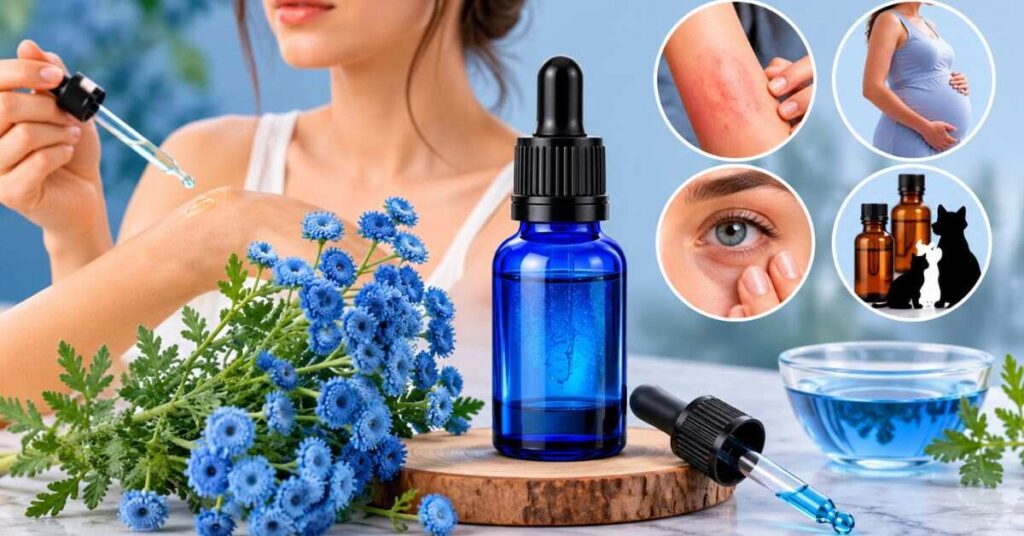
Although blue tansy essential oil is popular in skincare and aromatherapy, it is still a highly concentrated botanical extract that requires careful and responsible use. Many people choose this oil because of its unique colour, calming aroma, and presence of natural compounds such as chamazulene and myrcene. However, even natural ingredients can cause unwanted reactions when they are used incorrectly.
The safety of blue tansy essential oil depends on several important factors, including dilution strength, application method, product quality, individual skin sensitivity, and frequency of use. Essential oils are much more concentrated than the original plant material, which means a small amount can have a strong effect.
When properly diluted and used according to recommended guidelines, most adults tolerate blue tansy well. However, certain individuals may experience sensitivity or should seek professional advice before using it. Understanding possible risks allows users to enjoy the benefits of this botanical oil while avoiding unnecessary problems.
Blue Tansy Essential Oil Skin Irritation Risks
Even though blue tansy essential oil is often considered a gentle essential oil, it can still cause skin reactions in some individuals. Essential oils contain powerful aromatic compounds that may irritate sensitive skin when applied directly or used in excessive amounts.
Applying undiluted blue tansy oil directly to the skin may increase the chance of discomfort. Possible signs of skin sensitivity include:
- Redness or visible irritation after application.
- Itching, tingling, or burning sensations.
- Dryness or unusual skin texture changes.
- Small bumps or temporary skin discomfort.
- Increased sensitivity in already irritated areas.
To reduce the risk of reactions, follow these safety steps:
- Always mix blue tansy essential oil with a suitable carrier oil before applying it to the skin.
- Avoid using it on cuts, wounds, damaged skin, or active irritation.
- Perform a patch test before adding it to your daily skincare routine.
- Stop using the product immediately if unwanted reactions appear.
People with reactive or sensitive skin should introduce essential oils slowly. Additionally, avoid combining multiple strong skincare ingredients at the same time because this may increase the chance of irritation.
Blue Tansy Essential Oil Safety During Pregnancy and Breastfeeding
The use of blue tansy essential oil during pregnancy and breastfeeding requires extra caution because essential oils contain concentrated plant compounds that may affect individuals differently during these stages.
Currently, scientific research specifically examining the safety of blue tansy oil during pregnancy and breastfeeding remains limited. Because of this lack of detailed evidence, many healthcare professionals recommend discussing essential oil use with a qualified medical provider before application.
Pregnant individuals should consider the following precautions:
- Avoid unnecessary essential oil use without professional guidance.
- Use only properly diluted products when approved by a healthcare professional.
- Never consume blue tansy essential oil internally.
- Choose skincare products with clearly listed ingredients.
During breastfeeding, avoid applying blue tansy essential oil to areas where babies may accidentally come into contact with the oil, especially around the chest area. Extra care helps reduce unnecessary exposure for infants.
Blue Tansy Essential Oil Safety for Children and Pets
Children and pets may react differently to blue tansy essential oil because their bodies process concentrated aromatic compounds differently from adults. Their smaller body size and increased sensitivity require additional safety measures.
Blue Tansy Essential Oil Safety Guidelines for Children
Young children generally have more delicate skin and may be more sensitive to strong botanical extracts. Therefore, essential oil use around children should always involve careful consideration.
| Group | Safety Recommendation |
|---|---|
| Babies | Avoid use unless specifically recommended by a healthcare professional |
| Young children | Use only with proper dilution and expert guidance |
| Older children | Use very low concentrations and avoid direct application without advice |
| Sensitive children | Perform extra caution and monitor for reactions |
Direct application of blue tansy essential oil on children should be avoided unless recommended by a qualified professional.
Blue Tansy Essential Oil Safety Around Pets
Pets require special attention because animals process essential oil compounds differently from humans. Cats, in particular, may be sensitive to many aromatic substances because their bodies cannot efficiently break down certain compounds.
Before diffusing or using blue tansy essential oil in a home with animals:
- Research pet-specific safety information.
- Provide proper ventilation.
- Prevent pets from licking oil residues.
- Consult a veterinarian when unsure.
Responsible use helps create a safer environment for both people and animals.
Blue Tansy Essential Oil Drug Interaction Considerations
Research on specific medication interactions involving blue tansy essential oil is currently limited. However, essential oils contain biologically active plant compounds, so caution is still recommended for individuals using medications.
People should seek professional advice before regular essential oil use if they:
- Take prescription medicines.
- Manage ongoing health conditions.
- Use multiple supplements or herbal products.
- Plan frequent or long-term essential oil application.
It is important to remember that blue tansy essential oil should not replace prescribed treatments or medical advice. Essential oils may complement wellness routines, but they are not substitutes for professional healthcare.
Blue Tansy Essential Oil: Who Should Avoid It
Although many adults can use properly diluted blue tansy essential oil safely, some individuals should avoid it or seek professional guidance before use.
Extra caution is recommended for:
- People with known essential oil sensitivity.
- Individuals with allergies to plants in the Asteraceae family, such as ragweed-related plants.
- Pregnant or breastfeeding individuals without medical approval.
- Young children without professional guidance.
- People planning internal essential oil use.
- Individuals experiencing unexplained skin reactions.
Choosing a high-quality product, following proper dilution methods, and monitoring your body’s response are essential steps for safer use.
Blue Tansy Essential Oil Safety Best Practices
Following correct handling methods can significantly improve the experience of using blue tansy essential oil. Safe use depends not only on the oil itself but also on storage, application habits, and product quality.
| Safety Factor | Best Practice |
|---|---|
| Topical application | Always dilute with a carrier oil |
| Skin sensitivity | Perform a patch test before regular use |
| Storage | Keep away from heat, sunlight, and moisture |
| Internal use | Avoid unless guided by a qualified professional |
| Product selection | Choose pure oil with proper quality testing information |
Proper storage also helps maintain the quality of blue tansy essential oil. Keep the bottle tightly closed and store it in a cool, dark location away from children and pets.
Overall, blue tansy essential oil can be a valuable addition to skincare and aromatherapy routines when used responsibly. Safe dilution, careful application, and realistic expectations are the foundation for enjoying this unique botanical oil while reducing unnecessary risks.
How to Choose High-Quality Blue Tansy Essential Oil
Choosing a genuine blue tansy essential oil requires more attention than simply selecting the bottle with the brightest colour or lowest price. Because blue tansy is a rare botanical oil with limited production, the market includes products that may be diluted, incorrectly labelled, or mixed with other essential oils.
A high-quality oil should provide clear information about its botanical identity, extraction method, testing standards, and sourcing practices. By understanding these factors, buyers can make better decisions and avoid low-quality products that do not deliver the expected aromatic and skincare experience.
Check the Botanical Name
The first step in identifying authentic blue tansy essential oil is checking the botanical name on the product label.
True blue tansy essential oil should list:
| Product Detail | What to Look For |
| Botanical name | Tanacetum annuum |
| Plant family | Asteraceae |
| Plant part | Flowering tops or aerial parts |
| Extraction method | Steam distillation |
| Origin | Commonly Morocco |
The botanical name is more reliable than the common name because several plants may share similar names. For example, blue tansy should not be confused with common tansy (Tanacetum vulgare), which has a different chemical profile.
A reputable supplier usually provides complete botanical information rather than only marketing terms such as “blue oil” or “natural tansy blend.”
Look for the Correct Colour
The natural colour of authentic blue tansy essential oil is one of its most recognizable features. A genuine oil usually appears blue, turquoise, or deep indigo because of its naturally formed chamazulene content.
However, colour alone should never determine quality.
Consider these points:
- A darker blue colour does not always mean better quality.
- Natural variations can occur between harvests.
- Storage conditions may affect the oil’s appearance over time.
- Artificial colouring should never be added to a pure essential oil.
A trustworthy supplier should explain the oil’s natural characteristics instead of using colour as the only selling point.
Purity Testing
Professional essential oil companies often provide testing information to confirm quality and authenticity. One of the most valuable tests is GC/MS analysis (Gas Chromatography–Mass Spectrometry).
This testing method helps identify:
- The chemical composition of the oil.
- The presence of expected natural compounds.
- Possible dilution with cheaper oils.
- Unwanted contaminants.
When purchasing blue tansy essential oil, look for suppliers that provide:
- GC/MS reports
- Batch numbers
- Ingredient transparency
- Clear sourcing information
These details demonstrate a stronger commitment to quality and consumer trust.
Packaging
Proper packaging plays an important role in protecting essential oil quality. Since aromatic compounds can degrade when exposed to heat, oxygen, and light, packaging directly affects shelf life.
High-quality blue tansy essential oil usually comes in:
| Packaging Feature | Why It Matters |
| Dark glass bottle | Protects against UV light damage |
| Tight dropper cap | Reduces oxygen exposure |
| Small bottle size | Helps maintain freshness after opening |
| Clear labeling | Provides important product information |
Avoid products sold in clear plastic containers because essential oils can interact with certain plastics and may lose quality more quickly.
Additionally, a quality supplier should include safety instructions and usage recommendations on the label.
Organic vs Conventional
The choice between organic and conventional blue tansy essential oil depends on personal preference, budget, and sourcing priorities.
Organic blue tansy essential oil generally means:
- The plant was grown without synthetic pesticides.
- Farming practices follow organic certification standards.
- The product supports certain environmentally conscious practices.
Conventional blue tansy essential oil can still be high quality if the supplier uses responsible farming, proper harvesting, and reliable testing methods.
When comparing organic and conventional options, consider:
- Transparency of the company.
- Testing documentation.
- Farming practices.
- Extraction quality.
- Customer reviews.
The most important factor is not only whether the oil is organic but whether the supplier provides evidence of purity and responsible production.
A high-quality blue tansy essential oil should combine authentic botanical identification, proper extraction, transparent testing, and safe packaging. Choosing carefully helps ensure that you receive a genuine product with the natural aroma and characteristics that make blue tansy so unique.
Storage and Shelf Life
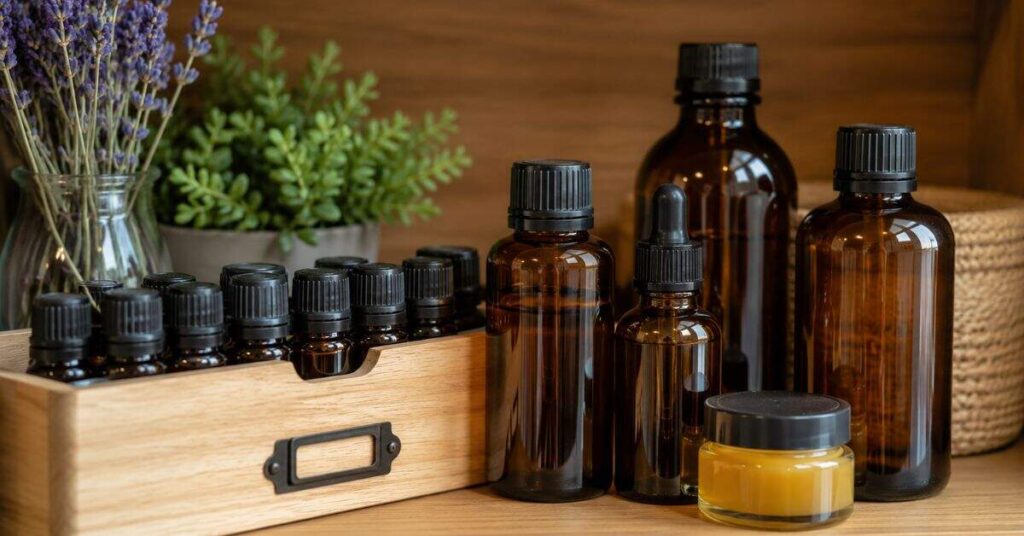
Proper storage plays a vital role in preserving the purity, aroma, and therapeutic efficacy of blue tansy essential oil.Like most concentrated botanical extracts, blue tansy contains delicate volatile compounds that can gradually degrade over time. Therefore, when it is exposed to oxygen, heat, moisture, or direct sunlight, these sensitive compounds may lose their quality and effectiveness. As a result, proper storage in a cool, dry, and dark place is essential to help preserve its natural properties and extend its shelf life.
While a high-quality bottle can last for several years, poor environmental conditions accelerate oxidation—altering the oil’s rich blue color, sweet fragrance, and overall chemical balance. Adopting proper storage habits protects your investment and ensures maximum shelf life.
Best Storage Practices
To protect the natural qualities of blue tansy essential oil, store it in a cool, dry, and dark environment. Minimizing exposure to environmental stressors slows down the degradation process.
- Protect from Direct Sunlight: Ultraviolet (UV) rays degrade sensitive aromatic molecules over time. Keep the bottle stored inside a cabinet, drawer, or shaded shelf rather than on an exposed window sill.
- Keep the Bottle Tightly Sealed: Oxygen exposure triggers oxidation, which dulls the natural aroma and alters the oil’s properties. Always cap the bottle tightly immediately after use.
- Maintain Temperature Stability: Fluctuations in temperature destabilize essential oil compounds. Keep blue tansy away from heat-generating sources such as:
- Kitchen stoves and ovens
- Radiators and space heaters
- Heating vents
- Humid, warm bathrooms(A stable, room-temperature setting is ideal.)
- Retain in Dark Glass Containers: Authentic essential oils are packaged in amber or cobalt blue glass bottles specifically designed to filter out destructive light waves. Avoid transferring the oil to clear glass or plastic containers.
- Prevent Contamination: Maintain clean bottle rims and avoid touching the dropper tip or inner cap with bare fingers or water. Introducing foreign moisture or micro-impurities can compromise freshness.
Quick Storage Reference
| Factor | Recommended Practice | Why It Matters |
| Bottle Material | Dark glass (Amber/Cobalt) | Filters out damaging light rays |
| Storage Location | Cool, dark cabinet or drawer | Minimizes thermal and light degradation |
| Temperature | Stable room temperature | Preserves chemical compound integrity |
| Cap / Seal | Tightly sealed after every use | Prevents oxygen exposure and evaporation |
| Hygiene | Keep dropper and rim clean | Prevents bacterial and moisture contamination |
Signs Your Oil Has Expired or Oxidized
Essential oils rarely spoil like fresh produce, but oxidation steadily alters their chemical structure. Common indicators that your blue tansy oil has degraded include:
- Altered Aroma: Fresh blue tansy features a distinct, sweet herbal scent. Expired oil may smell noticeably sharp, sour, stale, or metallic.
- Thicker Consistency: Oxidized oils often become viscous, sticky, or heavier than their original liquid texture.
- Diminished Fragrance Strength: The aromatic profile loses its richness and fades quickly.
- Significant Color Shifts: While minor natural batch variations occur, dramatic fading or darkening signals quality loss.
- Unexpected Skin Sensitivity: Oxidized compounds are significantly more prone to causing redness, rash, or irritation—even on skin that previously tolerated the oil.
Safety Tip: If you detect major shifts in aroma, consistency, or color, discontinue skin application and replace the bottle.
How Long Does Blue Tansy Essential Oil Last?
When stored under optimal conditions, pure blue tansy essential oil typically maintains peak quality for 2 to 3 years after opening.
Several factors influence its actual longevity:
- Initial oil purity and distillation quality
- Packaging integrity
- Opening frequency and ambient air exposure
- Temperature consistency during storage
Pro Tip for Longevity: If you use blue tansy oil infrequently, opt for smaller bottle sizes (e.g., 5 mL). Smaller bottles have less internal air headspace, drastically slowing down oxidation after opening. Regular inspections ensure you continue using a fresh, potent, and safe botanical extract.
Sustainability and Conservation
As the global demand for blue tansy essential oil continues to rise, responsible sourcing and environmental stewardship have become more critical than ever. Blue tansy (Tanacetum annuum) is a specialized botanical asset that requires precise cultivation, timing-sensitive harvesting, and careful distillation. Practicing sustainability protects delicate natural ecosystems while ensuring that future generations can continue to benefit from this unique oil.
Because high-quality blue tansy depends on flowering crops grown in specific geographic microclimates, its supply can face several challenges. Moreover, unmonitored harvesting practices, combined with increasing commercial demand, may put additional pressure on natural resources. Therefore, sustainable cultivation methods and responsible harvesting practices are essential. As a result, protecting blue tansy crops helps maintain their long-term availability while supporting environmental balance.
Choosing ethically produced oils directly supports environmental equilibrium and fair-trade supply chains.
Responsible Sourcing
Ethical sourcing covers every stage of production—from how the crop is cultivated and harvested to how the oil is extracted and shipped. Reputable essential oil brands collaborate directly with experienced growers who prioritize plant longevity and uncompromised purity.
Key indicators of responsibly sourced blue tansy include:
- Ethical Farming Partnerships: Established brands build long-term relationships with local farmers rather than relying on unsustainable, high-yield harvesting practices.
- Precision Harvesting: Gathering flowering tops at peak bloom ensures optimal essential oil yields while preserving the plant’s natural regeneration capacity.
- Supply Chain Transparency: Reliable suppliers readily disclose origin details, farming methods, and extraction procedures.
- Rigorous Testing Standards: Gas Chromatography-Mass Spectrometry (GC/MS) testing verifies authenticity and prevents batch waste from inferior crop yields.
A truly ethical brand does more than just bottle an essential oil—it active measures the environmental and socio-economic footprint behind every batch.
Environmental Considerations
Extracting pure blue tansy essential oil demands substantial natural resources, including land, water, energy, and raw biomass. Sustainable practices mitigate environmental strain without compromising quality.
| Environmental Factor | Sustainable Approach | Why It Matters |
| Plant Cultivation | Soil-conscious farming methods | Maintains soil nutrient density and crop health |
| Harvesting | Controlled, seasonal harvesting | Protects natural plant regeneration cycles |
| Packaging | Recyclable or glass materials | Minimizes single-use plastic pollution |
| Transportation | Consolidated supply chains | Reduces carbon emissions during distribution |
As a member of the Asteraceae (sunflower) family, blue tansy supports diverse pollinator populations. Protecting these agricultural environments directly contributes to regional biodiversity.
Supporting Sustainable Production: What You Can Do
Consumers play a vital role in encouraging ethical industry practices. Before purchasing blue tansy essential oil, keep these tips in mind:
- Choose Transparent Brands: Look for companies that share third-party GC/MS test reports and clear sourcing details.
- Steer Clear of Suspiciously Cheap Options: Authentic blue tansy requires vast amounts of raw botanical material and expert processing; genuine quality is rarely bargain-priced.
- Buy Mindfully: Purchase only what you will use within its shelf life to minimize waste and avoid inflating market demand.
- Recycle Packaging: Opt for brands using glass bottles and recyclable outer packaging.
Sustainability extends beyond plant conservation. It encompasses fair farmer compensation, long-term soil replenishment, and minimal waste across the entire supply chain. By prioritizing quality over quantity, you enjoy the full therapeutic value of blue tansy while supporting a cleaner, more sustainable botanical industry.
Blue Tansy Essential Oil vs Similar Botanical Oils: The Ultimate Comparison
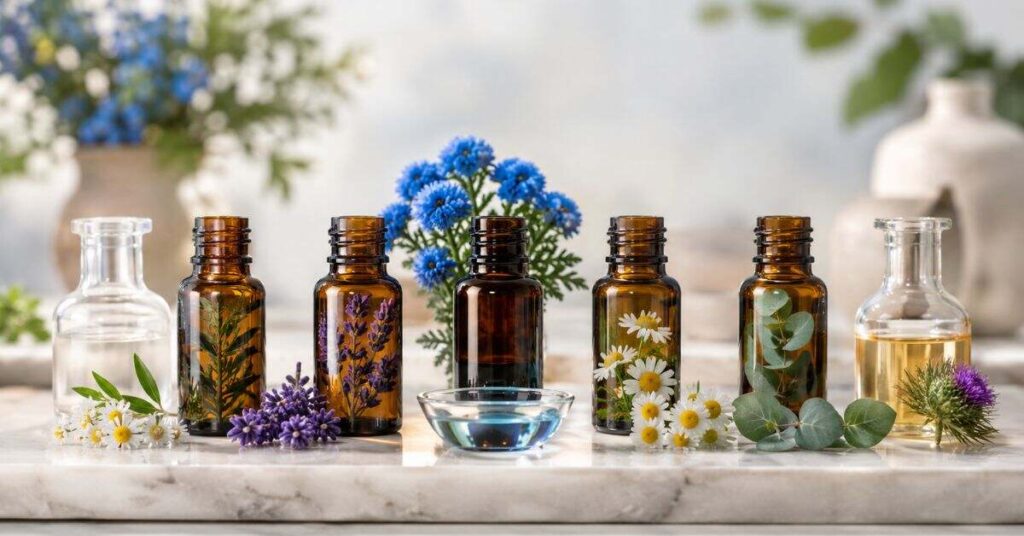
When choosing a calming botanical oil, many people compare blue tansy essential oil with other blue or chamomile-related oils because they share similar colours, aromas, and traditional uses. However, each essential oil has a unique chemical profile, fragrance, origin, and practical application.
Understanding these differences helps you select the right oil for your skincare routine, aromatherapy practice, or personal preferences. Consequently, although blue tansy, blue chamomile, German chamomile, and Roman chamomile all belong to the broader world of aromatic plants, they are not interchangeable.
The following comparison explains how these oils differ and where each one fits best.
| Essential Oil | Botanical Name | Main Characteristics | Aroma Profile | Common Uses |
| Blue Tansy | Tanacetum annuum | Rich in chamazulene and naturally blue after distillation | Sweet, fruity, herbal, slightly floral | Skincare blends, aromatherapy, relaxation routines |
| Blue Chamomile | Usually Matricaria chamomilla | Blue colour develops from chamazulene formation | Warm, herbaceous, deeply floral | Sensitive skin care and calming blends |
| German Chamomile | Matricaria chamomilla | Known for higher chamazulene content | Strong herbal, earthy, apple-like aroma | Traditional skincare and aromatherapy |
| Roman Chamomile | Chamaemelum nobile | Different chemical profile with a softer scent | Sweet, fruity, floral aroma | Relaxation, perfumes, gentle aromatic blends |
Blue Tansy vs Blue Chamomile Extracts: Uncovering the Secrets Behind Their Indigo Shades
Blue tansy and blue chamomile often create confusion because both essential oils have a beautiful blue appearance. Their signature colour comes from chamazulene, a compound that forms during the distillation process.
However, despite their visual similarities, they come from different plants. Blue tansy essential oil comes from Tanacetum annuum, while blue chamomile usually refers to chamomile species that produce chamazulene during extraction. Although both oils are valued in skincare, their aromas and chemical compositions are not identical.
Key differences include:
- Blue tansy has a sweeter and fruitier aroma with soft herbal notes.
- Blue chamomile usually has a stronger herbal scent with deeper medicinal characteristics.
- Blue tansy is often chosen for luxury skincare products because of its unique fragrance and striking hue.
- Blue chamomile is frequently selected when users prefer a more traditional chamomile aroma.
Therefore, while both oils can complement calming skincare routines, the better choice ultimately depends on your fragrance preference and product goals.
Comparing Blue Tansy vs German Chamomile: Which Azure Essential Oil Reigns Supreme?
Blue tansy and German chamomile share key similarities because both contain chamazulene, which contributes to their vibrant blue colour and attracts scientific interest.
However, their botanical origins and aromatic profiles differ significantly.
| Feature | Blue Tansy Oil | German Chamomile Oil |
| Plant Source | Tanacetum annuum | Matricaria chamomilla |
| Aroma | Sweet, fruity, herbal | Strong herbal, earthy, slightly bitter |
| Colour | Blue to deep indigo | Dark blue after distillation |
| Common Preference | Premium skincare & aromatic blends | Traditional chamomile applications |
Furthermore, German chamomile often displays a more intense herbal character, whereas blue tansy provides a softer and more pleasant fragrance for many users. As a result, blue tansy is commonly featured in modern cosmetic formulations where the scent experience is an important factor.
Important Note: Although both oils contain interesting plant compounds, neither should be considered a direct replacement for professional skincare or medical treatments.
Blue Tansy vs Roman Chamomile Essential Oil: Key Differences You Must Know Before Buying
Roman chamomile offers a very different sensory experience compared with blue tansy. Unlike blue tansy and German chamomile, Roman chamomile does not typically produce the same deep blue colour because it contains a completely different chemical profile.
The main differences include:
- Blue Tansy: Deep blue colour, sweet herbal aroma, and rich chamazulene content.
- Roman Chamomile: Pale yellow oil, soft apple-like fragrance, and gentle floral character.
Additionally, Roman chamomile is especially popular in aromatherapy because of its comforting scent. Many people regularly use it in relaxation blends, bedtime routines, and personal fragrance products. On the other hand, blue tansy is often preferred by those looking for a distinctive oil with a unique visual appearance and a more complex herbal-fruity aroma.
Which Calming Essential Oil Should You Choose for Your Skincare & Aromatherapy Routine?
The best choice depends entirely on your personal goals, scent preference, and intended application.
- Choose blue tansy essential oil if you want:
- A unique blue-coloured essential oil with a naturally striking appearance.
- To enjoy a sweet herbal fragrance that creates a calming aromatic experience.
- A premium ingredient that works exceptionally well in carefully crafted skincare blends.
- A product that combines aromatic appeal with valuable botanical compounds for a versatile oil option.
- Choose German chamomile essential oil if you prefer:
- A stronger traditional herbal aroma with a rich botanical character.
- To enjoy a classic chamomile scent profile that feels familiar and soothing.
- An oil that is commonly recognised in botanical research for its unique properties.
- Choose Roman chamomile essential oil if you prefer:
- A softer floral fragrance with a delicate and calming character.
- To enjoy a gentle aromatic experience that creates a relaxing atmosphere.
- A sweeter, apple-like scent that makes it distinctly different from other chamomile varieties.
Ultimately, each oil has its own strengths. Blue tansy stands apart because of its rare colour, distinctive aroma, and unique chemical composition. Rather than replacing other essential oils, it offers a distinct botanical experience that fits beautifully into carefully designed skincare and aromatherapy routines.
Final Thoughts
Blue tansy essential oil has earned attention because it combines rare beauty, a distinctive aroma, and a fascinating chemical profile. From its naturally developed blue colour to its chamazulene content, this botanical oil offers a unique experience that sets it apart from many other essential oils.
Its popularity in modern skincare and aromatherapy comes from its versatility. People use it in facial serums, body products, massage blends, diffuser recipes, and natural fragrance creations. Additionally, research into compounds such as chamazulene and myrcene continues to explore how these plant constituents contribute to blue tansy’s potential benefits.
However, responsible use remains essential. Proper dilution, quality sourcing, patch testing, and realistic expectations help create a safer and more enjoyable experience. Blue tansy should be viewed as a supportive botanical ingredient rather than a replacement for professional medical care.
When choosing a product, focus on authenticity, including the correct botanical name Tanacetum annuum, transparent sourcing, and reliable purity testing. A high-quality oil combined with mindful application can make blue tansy a valuable addition to a natural wellness and skincare routine.
As interest in plant-based ingredients continues to grow, blue tansy essential oil remains a standout example of how nature, science, and traditional botanical knowledge can come together to create a truly remarkable essential oil.
FAQs:
Can Blue Tansy Be Applied Directly to the Skin?
No, blue tansy essential oil should not usually be applied directly to the skin. Essential oils are highly concentrated extracts, and using them undiluted may increase the possibility of irritation, dryness, or sensitivity.
Instead, mix blue tansy with a suitable carrier oil before topical application. Common carrier oils include:
- Jojoba oil
- Fractionated coconut oil
- Sweet almond oil
- Argan oil
- Rosehip oil
For facial skincare, a lower dilution is generally preferred because facial skin can be more sensitive than other areas of the body. A patch test should also be performed before regular use.
Proper dilution allows you to enjoy the aromatic and skincare qualities of blue tansy while reducing unnecessary risks.
Is Blue Tansy Safe for Daily Use?
Blue tansy essential oil may be suitable for regular use when properly diluted, but daily application is not necessary for everyone. Individual skin type, sensitivity level, and the purpose of use all influence how often it should be used.
For example:
- A diluted facial serum may be used several times per week depending on skin tolerance.
- A body lotion containing blue tansy may be suitable for more frequent use.
- Diffuser use should include breaks rather than continuous exposure throughout the day.
If you notice redness, itching, discomfort, or dryness, reduce frequency or discontinue use. A consistent but moderate approach is usually better than excessive application.
Why Is Blue Tansy Essential Oil Blue?
The blue colour of blue tansy essential oil comes from a natural compound called chamazulene. Interestingly, the fresh blue tansy flower is not blue; it produces small yellow flowers.
During steam distillation, a compound called matricin transforms into chamazulene due to heat. This process creates the oil’s famous blue or deep indigo colour.
Important facts about the colour:
- The blue shade develops during distillation.
- Colour intensity can vary between batches.
- A darker colour does not always mean higher quality.
- Authenticity depends on botanical identification and purity testing.
The unique colour is one of the main reasons blue tansy remains one of the most visually distinctive essential oils available.
Does Blue Tansy Help Acne?
Blue tansy essential oil may support acne-prone skincare routines, but it should not be considered a proven acne treatment. Its popularity comes from its soothing aroma and naturally occurring compounds that may help support balanced-looking skin.
People often include diluted blue tansy in skincare blends because it may help:
- Calm the appearance of temporary redness.
- Support a healthier-looking complexion.
- Provide antioxidant support.
- Complement gentle skincare routines.
However, acne can develop due to many factors, including hormones, bacteria, genetics, and skincare habits. Therefore, blue tansy should be used as a supportive ingredient rather than a replacement for dermatologist-recommended treatments.
Can You Diffuse Blue Tansy Every Day?
Blue tansy can be diffused regularly, but continuous daily diffusion for long periods is not recommended. Essential oil aromas are highly concentrated, and some people may become sensitive to strong fragrances over time.
For comfortable diffuser use:
- Use a small number of drops according to your diffuser instructions.
- Diffuse in a well-ventilated room.
- Take breaks between sessions.
- Avoid diffusing around individuals who are sensitive to fragrances.
Many users enjoy blue tansy in evening routines because its sweet herbal aroma creates a calming environment.
Does Blue Tansy Stain Clothing?
Yes, blue tansy essential oil may stain light-coloured fabrics because of its naturally occurring blue pigment. The same compounds that create its beautiful colour can leave visible marks if the oil spills directly onto clothing or bedding.
To prevent staining:
- Apply the oil carefully.
- Allow diluted blends to absorb into the skin before dressing.
- Clean spills quickly with appropriate fabric care methods.
- Avoid placing undiluted oil bottles on light fabrics.
When used correctly, blue tansy is unlikely to cause problems during normal skincare or aromatherapy use.
What Blends Well With Blue Tansy?
Blue tansy has a sweet, herbal, and slightly fruity aroma that combines well with many essential oils. Its balanced fragrance makes it a versatile ingredient in both skincare and aromatherapy blends.
Popular combinations include:
| Essential Oil | Why It Blends Well |
| Lavender | Creates a soft and calming floral aroma |
| Frankincense | Adds a warm, resinous depth |
| Bergamot | Provides a fresh citrus balance |
| Cedarwood | Creates a grounding woody scent |
| Geranium | Enhances floral notes |
| Sweet orange | Adds brightness and freshness |
| Ylang ylang | Creates a richer floral blend |
When creating blends, start with small amounts because blue tansy has a noticeable aroma even at low concentrations. A balanced blend allows its unique fragrance to complement rather than overpower other oils.