Introduction:
Pets experience the world through an incredibly sensitive sense of smell, which means essential oils can affect them much more strongly than they affect people. While some oils may support a calm and comfortable environment when used correctly, others can quickly become harmful, especially for cats and small dogs. Understanding the difference between pet safe essential oils and toxic oils is essential before bringing any aromatic product into your home.
Many pet owners use essential oils in diffusers, natural cleaning products, and home wellness routines. However, information online often conflicts, leaving people unsure about what is actually safe. The truth is that no essential oil is completely risk-free for every pet. Safety depends on the type of oil, the species of animal, the concentration, the method of use, the room’s ventilation, and the pet’s overall health.
This guide explains which essential oils may be safer for dogs and cats, which oils experts recommend avoiding, how to use diffusers responsibly, and what signs of toxicity every pet owner should recognise. You’ll also learn practical safety measures, emergency steps, and veterinary recommendations that help reduce unnecessary risks while creating a more pet-friendly home.
What Are Pet Safe Essential Oils?
Pet safe essential oils are plant-derived aromatic extracts that may pose a lower risk to pets when owners choose them carefully, dilute them correctly, and use them with proper veterinary guidance. However, these oils do not guarantee complete safety and can still cause health problems if used incorrectly. Experts consider some essential oils safer because they are less likely to cause toxic reactions compared with oils that are widely known to harm pets.
Unlike synthetic fragrances, essential oils contain hundreds of naturally occurring chemical compounds. Dogs and cats process these compounds differently from humans. Their smaller body size, unique metabolism, and heightened sense of smell mean even a small amount can produce a much stronger effect. For that reason, responsible use always matters more than the oil itself.
Some pet owners choose pet safe essential oils for diffuser use to create a relaxing environment, while others prefer them in carefully formulated cleaning products. Regardless of the purpose, introduce every essential oil gradually and allow pets to leave the area freely if they feel uncomfortable.
Are Pet Safe Essential Oils Really Safe?
The word “safe” can be misleading. No essential oil carries a universal guarantee of safety for every animal. Age, breed, medical conditions, pregnancy, respiratory disease, and existing liver problems all influence how a pet responds to aromatic compounds.
Many veterinarians recommend treating essential oils as products that require caution rather than everyday household items. Even oils that are commonly regarded as safer can become dangerous if they are highly concentrated, applied directly to the skin, used in poorly ventilated rooms, or accidentally swallowed.
A safer approach focuses on proper dilution, limited exposure, excellent ventilation, and continuous observation. If a pet shows signs of discomfort, the oil should be removed immediately, and fresh air should be provided.
How Essential Oils Affect Dogs and Cats Differently
Dogs and cats react differently because their bodies process essential oil compounds in different ways. Dogs generally have more metabolic pathways for breaking down certain plant chemicals, although that does not make them immune to toxicity.
Cats require much greater caution because their liver lacks sufficient amounts of specific enzymes responsible for processing many essential oil constituents. As a result, substances that a dog may tolerate can build up inside a cat’s body and increase the risk of poisoning.
Their behaviour also differs. Dogs may investigate spills by licking surfaces, while cats frequently groom their fur, increasing the chance of ingesting oils that settle on their coat. This difference explains why cat and dog safe essential oils for diffuser should never be treated as interchangeable.
In addition, birds, rabbits, reptiles, and other small household pets can have entirely different sensitivities. Therefore, households with multiple animals should always choose the most cautious approach instead of assuming one guideline applies to every species.
Benefits of Pet Safe Essential Oils
Pet safe essential oils are often used by pet owners who want to create a more comfortable and natural-feeling home environment. However, the real value of essential oils around animals comes from responsible use, not from using strong fragrances or applying oils directly to pets.
When selected carefully and used correctly, some essential oils may help support a peaceful atmosphere, reduce unwanted household odours, and create a more relaxing routine for both pets and owners. These benefits are mainly related to the environment rather than direct effects on the animal.
Every pet reacts differently. A scent that seems pleasant to one dog may feel overwhelming to another. Therefore, understanding your pet’s behaviour, choosing appropriate products, and limiting exposure are the most important parts of safe essential oil use.
How Pet Safe Essential Oils May Support Pet Wellness
Many pet safe essential oils for dogs can help create a calm environment during stressful situations like thunderstorms, fireworks, travel, visitors, or changes in daily routines.
A gentle aroma may help some dogs feel more comfortable because smell plays an important role in how animals experience their surroundings. However, essential oils do not replace proper training, exercise, medical treatment, or veterinary support for anxiety-related problems.
Some potential ways carefully used essential oils may support a pet-friendly environment include:
- Creating a calming atmosphere: Mild scents may make the home environment feel more relaxing for some pets.
- Reducing unpleasant odours: Properly selected products may help freshen indoor spaces without relying on harsh artificial fragrances.
- Supporting a cleaner routine: Certain diluted cleaning products may provide a natural scent while maintaining a fresh living area.
- Improving owner comfort: A pleasant environment can help owners create a more enjoyable daily routine with their pets.
For example, a dog that becomes nervous during loud noises may benefit more from a quiet room, familiar bedding, and a consistent routine. An essential oil diffuser, if appropriate, should only be considered an additional environmental choice rather than the main solution.
Many pet owners also search for pet safe essential oils reddit discussions to learn from other experiences. While these communities can provide personal stories and ideas, they should not replace veterinary recommendations because every animal has different health needs.
When Pet Safe Essential Oils Should Not Be Used
Even oils considered safer should not be used around every pet. Some animals have increased sensitivity due to age, medical conditions, or individual reactions.
Avoid using essential oils around pets that have:
- Breathing problems or respiratory sensitivity
- Existing liver concerns
- A history of allergic reactions
- Severe skin sensitivity
- Young age or advanced age
- Pregnancy-related concerns
You should also stop using essential oils if your pet shows signs of discomfort. Common warning signs include sneezing, coughing, hiding, excessive grooming, watery eyes, drooling, unusual tiredness, or attempts to leave the area.
Another important factor is the method of use. Direct application, ingestion, and highly concentrated exposure create much higher risks compared with limited indirect exposure in a ventilated space.
The safest rule is simple: if your pet does not seem comfortable, remove the scent and choose a fragrance-free environment.
Safe Alternatives to Essential Oils for Pets
Essential oils are not necessary for creating a healthy and comfortable home. Many safer alternatives can provide similar benefits without introducing additional fragrance exposure.
Pet-friendly options include:
- Regular cleaning and ventilation to maintain fresh indoor air.
- Washing pet bedding frequently to control odours naturally.
- Using veterinarian-approved calming products when needed.
- Providing exercise, enrichment activities, and predictable routines.
- Choosing unscented household products for sensitive pets.
For families searching for baby and pet safe essential oils, reducing strong fragrances is often the safest approach because babies and animals can both be more sensitive to airborne irritants.
A truly pet-friendly home focuses on comfort, safety, and health first. Essential oils may have a place in some households, but they should always be used carefully, occasionally, and with your pet’s wellbeing as the top priority.
Best Pet Safe Essential Oils for Dogs
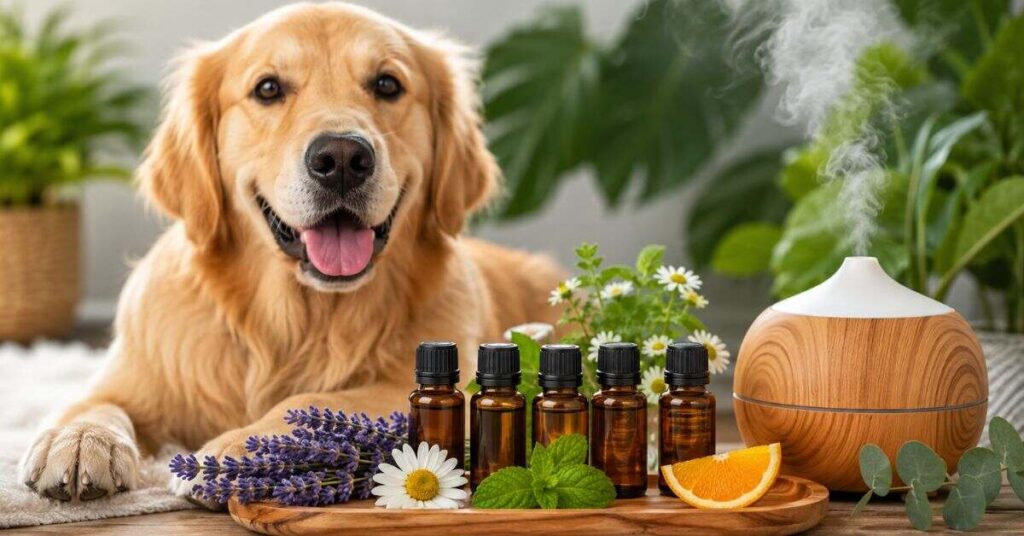
Some essential oils are generally considered lower risk for dogs when they are properly diluted, used occasionally, and introduced with veterinary guidance. Even then, no essential oil is completely risk-free. A dog’s age, breed, health condition, and sensitivity can all influence how it reacts. The safest approach is to use essential oils sparingly, ensure good ventilation, and always allow your dog to leave the area if it chooses.
Below are some of the most commonly recommended pet safe essential oils for dogs and why they are often included in pet-friendly households.
Lavender Essential Oil
Lavender essential oil is one of the most widely recognised options for dogs because of its gentle aroma. Many pet owners use it to create a peaceful environment during stressful situations, including fireworks, thunderstorms, or travel. While some dogs appear to relax in its presence, every animal responds differently, so careful observation remains essential.
If you use lavender in a diffuser, keep the concentration low and place the diffuser in a well-ventilated room. Your dog should always have the freedom to move into another area if it prefers fresh air. Direct application to the skin or fur should be avoided unless a veterinarian specifically recommends a properly diluted product.
Frankincense Essential Oil
Frankincense essential oil is another oil that many veterinarians and professional aromatherapists consider among the safer choices for dogs when used responsibly. Its mild woody scent is often selected for creating a calm indoor atmosphere without producing an overpowering fragrance.
Some owners choose frankincense during quiet evenings or after changes in routine because it contributes to a more relaxing environment. However, it should never replace veterinary care for behavioural or medical concerns. Proper dilution and limited exposure remain the most important safety measures.
Chamomile Essential Oil
Chamomile essential oil, particularly Roman chamomile, has a soft floral scent that many people associate with relaxation. When used appropriately around dogs, it may help maintain a peaceful environment during temporary periods of stress or excitement.
Because chamomile can still irritate sensitive animals, start with very short exposure times and monitor your dog’s behaviour closely. If you notice coughing, sneezing, excessive panting, watery eyes, or unusual restlessness, discontinue use immediately and increase ventilation.
Cedarwood Essential Oil
Cedarwood essential oil offers a warm, earthy aroma that many pet owners enjoy in their homes. Certain varieties, such as Virginia cedarwood, are generally considered safer than others when used around dogs in highly diluted amounts. Since cedarwood oils vary by species, checking the exact botanical source is important before use.
This oil should only be diffused occasionally in open, well-ventilated spaces. Dogs should never come into direct contact with concentrated cedarwood oil, and the bottle should remain securely stored to prevent accidental spills or ingestion.
Copaiba Essential Oil
Copaiba essential oil has become increasingly popular because of its relatively mild aroma and gentle chemical profile. Some pet owners include it in their home wellness routines after discussing its use with a veterinarian who understands essential oil safety.
Like other pet safe essential oils, copaiba requires careful use. Never apply it directly to your dog’s skin or add it to food or drinking water. Use a diffuser with small amounts for short periods, and watch your dog’s reaction to ensure comfort and safety.
Although many experts consider these oils safer options, responsible use plays a more important role than the product itself. Choosing high-quality oils, using minimal quantities, maintaining proper ventilation, and watching your dog’s behaviour carefully will help reduce unnecessary risks while allowing you to enjoy a pet-friendly home.
Best Pet Safe Essential Oils for Cats
Cats require a much higher level of caution around essential oils compared with many other household pets. Although some essential oils are commonly promoted online as gentle or natural, cats have unique biological differences that make them more sensitive to many concentrated plant compounds.
Unlike humans, cats cannot efficiently process certain chemicals found in essential oils because their liver lacks some of the enzymes needed for proper breakdown. As a result, repeated exposure or accidental ingestion may increase the risk of harmful effects.
For this reason, there is no essential oil that can be considered completely safe for every cat. The safest approach is to avoid unnecessary exposure, seek veterinary guidance before use, and focus on creating a comfortable environment rather than adding strong fragrances.
Are Any Essential Oils Safe for Cats?
The answer is more complicated than a simple yes or no. Some essential oils may have a lower risk profile when used carefully, but cats remain more vulnerable than dogs because of their different metabolism and grooming habits.
A cat may be exposed to essential oils in several ways:
- Breathing concentrated vapours from a diffuser
- Walking on surfaces cleaned with essential oils
- Getting oil residue on fur and later grooming it off
- Licking spilled oil from floors or furniture
- Contact with scented sprays, collars, or products
Because cats groom themselves frequently, even a small amount of oil on their coat can become a concern. A product that appears harmless in the air may become problematic if it reaches a cat’s digestive system.
Owners searching for cat safe essential oils for diffuser should understand that many online lists do not consider important factors such as concentration, exposure time, or the individual cat’s health. A safer approach is to evaluate the complete situation rather than relying only on an oil name.
If essential oils are used in a home with cats, the safest practices include:
- Using only minimal amounts when approved by a professional.
- Keeping the room well ventilated.
- Providing a scent-free escape area.
- Avoiding direct contact with the cat.
- Stopping use immediately if any unusual behaviour appears.
Pet Safe Essential Oils That May Be Used with Veterinary Guidance
Experts discuss some essential oils as lower-risk options for cats in controlled situations, but always seek veterinary advice before use. These oils do not guarantee safety, and owners should never use them as daily cat care products.
Potentially lower-risk options that may be discussed with a veterinarian include:
| Essential Oil | Why It May Be Considered |
| Lavender Essential Oil | Often recognised for a mild aroma when used cautiously. |
| Frankincense Essential Oil | Known for its gentle, woody fragrance profile. |
| Roman Chamomile Essential Oil | Selected by some owners for its softer scent. |
| Copaiba Essential Oil | Considered by some professionals due to its mild aromatic profile. |
Even with these options, the method of use matters more than the oil itself. Diffusion, if approved, should involve low exposure, proper airflow, and careful monitoring.
Cats should never receive essential oils by mouth, and owners should avoid applying oils directly to fur, paws, or skin. Products marketed as “natural flea remedies” or “calming treatments” should also be checked carefully because some contain concentrated oils that may create risks.
Why Cats Need Extra Caution Around Essential Oils
Cats have several characteristics that make essential oil exposure more concerning than in many other animals.
First, their liver processes certain compounds differently. Some chemicals found in essential oils may remain in their body longer, increasing the chance of adverse effects.
Second, cats have an extremely powerful sense of smell. A fragrance that seems mild to humans may feel overwhelming to a cat. Strong scents can cause stress, avoidance behaviour, or changes in normal routines.
Third, cats are natural groomers. If essential oil particles settle on their fur, they may ingest them while cleaning themselves. This makes direct application especially risky.
Common warning signs that a cat may not tolerate an essential oil include:
- Drooling
- Vomiting
- Weakness
- Difficulty walking
- Tremors
- Breathing changes
- Hiding more than usual
- Loss of appetite
- Unusual tiredness
For homes with both cats and dogs, remember that cat and dog safe essential oils for diffuser are not always the same thing. Cats usually require the stricter safety standard because their bodies are more sensitive to many aromatic compounds.
The healthiest approach for cat owners is to prioritise fresh air, clean spaces, and low-fragrance living. Essential oils should always remain optional, and your cat’s comfort should guide every decision.
Essential Oils That Are Not Pet Safe
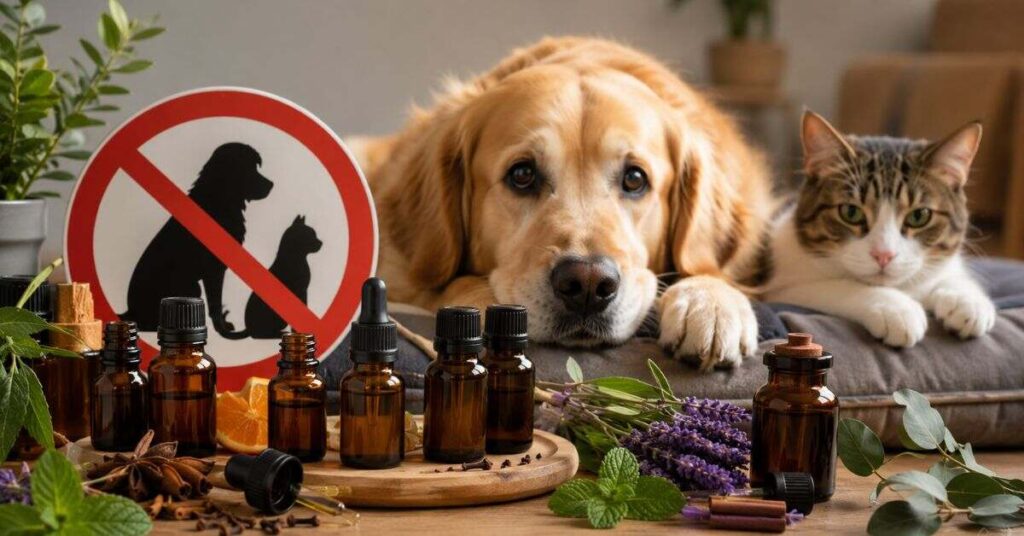
Many essential oils contain concentrated plant chemicals that can irritate the skin, affect the nervous system, damage the liver, or cause breathing difficulties in pets. While some oils receive attention for their potential benefits, others have a well-documented history of causing poisoning in dogs and cats. Understanding which oils to avoid is one of the most important steps in protecting your pet’s health.
Exposure does not only happen through direct contact. Pets may inhale diffused oils, lick contaminated fur, walk through spills, or come into contact with treated surfaces. Even small amounts can become dangerous for sensitive animals, particularly cats. Therefore, keeping toxic oils out of your pet’s environment is just as important as choosing pet safe essential oils.
Toxic Essential Oils for Dogs
Dogs can react severely to several commonly used essential oils. Although the level of toxicity depends on the dose and method of exposure, the following oils are widely recognised as posing a significant risk:
| Essential Oil | Potential Risk to Dogs |
| Tea Tree Oil (Melaleuca) | Can cause weakness, tremors, vomiting, and nervous system depression. |
| Wintergreen Oil | Contains methyl salicylate, which may lead to poisoning even in small amounts. |
| Pennyroyal Oil | Associated with severe liver damage and neurological symptoms. |
| Pine Oil | May irritate the respiratory tract, skin, and digestive system. |
| Birch Oil | Contains compounds similar to aspirin that can be toxic to dogs. |
| Ylang-Ylang Oil | May trigger digestive upset and excessive drooling in sensitive dogs. |
These oils should never be applied directly to your dog, added to food or water, or used in highly concentrated diffusers where the pet cannot escape the fragrance.
Toxic Essential Oils for Cats
Cats are especially vulnerable because they cannot efficiently process many compounds found in essential oils. As a result, several oils that already pose risks to dogs can become even more dangerous for cats.
Some of the most concerning essential oils include:
- Tea Tree Oil
- Eucalyptus Oil
- Peppermint Oil
- Cinnamon Oil
- Clove Oil
- Oregano Oil
- Thyme Oil
- Pennyroyal Oil
- Wintergreen Oil
- Sweet Birch Oil
- Citrus Oils, including lemon, orange, lime, bergamot, and grapefruit
These oils may contribute to drooling, vomiting, difficulty breathing, tremors, poor coordination, lethargy, or seizures. Because cats groom themselves frequently, even oil residue on their fur or bedding can increase the risk of accidental ingestion.
Essential Oils Every Pet Owner Should Avoid
Some essential oils consistently appear in veterinary toxicology reports because they have a greater likelihood of causing serious health problems. Regardless of whether you own a dog, a cat, or both, these oils are best avoided unless a veterinarian specifically recommends a professionally formulated product.
- Tea tree oil
- Wintergreen oil
- Pennyroyal oil
- Sweet birch oil
- Cinnamon oil
- Clove oil
- Oregano oil
- Thyme oil
- Eucalyptus oil
- Peppermint oil
- Camphor oil
- Pine oil
It is equally important to read product labels carefully. Air fresheners, cleaning sprays, candles, room mists, shampoos, and natural insect repellents often contain essential oils that are not immediately obvious. Choosing unscented or pet-specific products can significantly reduce unnecessary exposure.
Finally, avoid relying solely on social media recommendations or anecdotal advice when evaluating essential oil safety. Products marketed as “natural” or “pet-friendly” are not automatically safe for every animal. When in doubt, consult your veterinarian before introducing any new essential oil into your home.
Read More:https://pureoilshub.com/spikenard-essential-oil/
How to Use Pet Safe Essential Oils Safely
Using pet safe essential oils responsibly requires more than choosing the right oil. The concentration, application method, room size, and your pet’s health all influence safety. Even oils that are generally considered lower risk can become harmful if they are overused or introduced incorrectly. Following a few essential precautions can greatly reduce the chance of accidental exposure.
Proper Dilution Guidelines
Essential oils should never be used at full strength around pets. Pure essential oils are highly concentrated, and even a few drops contain powerful plant compounds that may overwhelm a dog’s or cat’s sensitive system.
If an essential oil is used, it should always be properly diluted according to veterinary guidance or the manufacturer’s instructions for pet-safe products. Using more oil does not increase the benefits. Instead, it increases the likelihood of irritation or toxicity.
Remember that dilution alone does not make an unsafe oil safe. Always begin by selecting an oil that is generally regarded as lower risk for pets, and then use the smallest effective amount.
Safe Diffuser Practices Around Pets
Many people enjoy using pet safe essential oils for diffuser purposes, but diffusion requires careful planning. A diffuser should operate only in a large, well-ventilated room where fresh air circulates freely.
Limit diffusion sessions to short periods instead of running the diffuser continuously throughout the day. This reduces prolonged exposure and gives your pet time to return to an unscented environment.
Most importantly, never confine your pet to a room where a diffuser is operating. Dogs and cats should always have the option to leave the scented space whenever they choose.
Why Direct Application Should Be Avoided
Applying essential oils directly to a pet’s skin or coat creates unnecessary risks. Concentrated oils can irritate the skin, damage the protective skin barrier, or cause allergic reactions in sensitive animals.
Dogs and cats may also lick the treated area while grooming. Once swallowed, the oil enters the digestive system and may lead to more serious health problems.
Unless a veterinarian prescribes a professionally formulated veterinary product, avoid applying essential oils directly to your pet, even if the product claims to be natural.
Why Pets Should Never Ingest Essential Oils
Essential oils are not dietary supplements for pets. Swallowing even a small quantity can expose the digestive system, liver, and nervous system to highly concentrated plant chemicals.
Adding essential oils to food, drinking water, treats, or homemade pet remedies is unsafe. Likewise, do not allow pets to lick diffuser residue, spilled oil, bottles, or contaminated hands.
Store every essential oil in a secure cabinet that pets cannot reach. Cleaning spills immediately also helps prevent accidental ingestion.
Introducing Essential Oils to Pets Safely
Whenever you introduce a new essential oil, begin slowly. Diffuse only a small amount for a limited time while carefully observing your pet’s behaviour over the next several hours.
Watch for signs such as sneezing, coughing, drooling, watery eyes, restlessness, hiding, excessive grooming, vomiting, unusual tiredness, or difficulty breathing. These changes may indicate that your pet is not tolerating the oil well.
If your pet appears uncomfortable, stop using the oil immediately, move your pet to fresh air, and clean any surfaces that may have collected oil residue. Should symptoms continue or become more severe, contact your veterinarian without delay.
By prioritising proper dilution, indirect exposure, good ventilation, and close observation, pet owners can significantly reduce unnecessary risks while creating a safer environment for both dogs and cats.
Are Essential Oil Diffusers Safe for Pets?
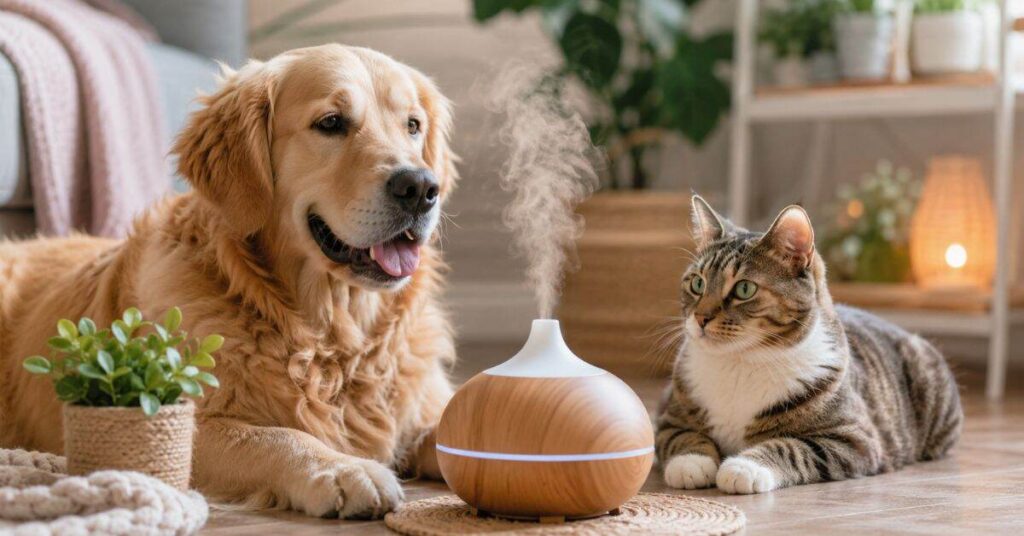
Essential oil diffusers can create a pleasant atmosphere in your home, but their safety around animals depends on how they are used, which oils are selected, and how your pet responds. A diffuser does not make essential oils harmless because it still releases aromatic compounds into the air that pets can inhale.
Dogs and cats have a much stronger sense of smell than humans, which means a fragrance that feels mild to you may feel intense to them. For this reason, pet owners should always use caution, choose lower-risk oils, provide proper ventilation, and allow pets to leave the area whenever they want.
The safest approach is to treat diffusers as an occasional home product rather than something that runs continuously. Short exposure periods, open spaces, and careful observation can help reduce potential risks.
Are Diffusers Safe for Dogs?
Dogs generally tolerate certain essential oil aromas better than cats, but that does not mean every diffuser oil is safe for them. A dog’s reaction depends on factors such as size, age, breed, health condition, and individual sensitivity.
If you use a diffuser around dogs, place it in a spacious room with good airflow. Avoid small areas such as bedrooms, crates, or enclosed spaces where your dog cannot move away from the scent. Your dog should always have access to another room with fresh air.
Some dogs may show positive responses to gentle aromas, while others may dislike them. Signs that your dog is uncomfortable can include sneezing, leaving the room, excessive licking, coughing, or unusual restlessness. If these behaviours appear, stop using the diffuser and remove the scent from the environment.
When selecting oils, many owners look for pet safe essential oils for dogs. However, safety depends on responsible use rather than the oil name alone. Even commonly recommended oils should be used in moderation.
Are Diffusers Safe for Cats?
Cats require much stricter precautions around diffusers because their bodies process many essential oil compounds differently from dogs. Their liver has limited ability to break down certain substances found in concentrated plant oils, increasing their vulnerability.
For this reason, many veterinarians recommend extreme caution or avoiding essential oil diffusion in homes with cats, especially when the cat has respiratory problems, liver concerns, or other health issues.
If a diffuser is used after veterinary approval, the cat should never be trapped in the same room. Always keep the session short, maintain strong ventilation, and watch for changes in behaviour.
Symptoms such as drooling, vomiting, weakness, breathing changes, poor coordination, hiding, or unusual tiredness should be taken seriously. Cats often hide signs of illness, so even small behavioural changes deserve attention.
Best Pet Safe Essential Oils for Diffusers
There is no essential oil that is guaranteed safe for every pet. However, some oils are more commonly discussed as lower-risk options when used carefully and with professional guidance.
Examples include:
| Essential Oil | Why Some Owners Choose It |
| Lavender | Often selected for its gentle and calming aroma. |
| Frankincense | Used by some owners for a mild, earthy scent. |
| Roman Chamomile | Chosen for its soft and relaxing fragrance. |
| Copaiba | Popular because of its mild aroma profile. |
| Cedarwood (specific varieties) | Used cautiously due to its warm, woody scent. |
Even with these options, avoid continuous diffusion, direct exposure, and excessive amounts. The goal is to create a comfortable environment, not a strongly scented one.
Diffuser Safety Tips for Pet Owners
Following simple safety practices can make diffuser use safer in homes with animals:
- Use short diffusion sessions instead of leaving the diffuser running all day.
- Keep rooms ventilated so scents do not become concentrated.
- Place diffusers away from pets to prevent spills or accidental contact.
- Never force a pet to stay near a diffuser if they choose to leave.
- Store essential oils securely because bottles can become dangerous if knocked over or licked.
- Clean spills immediately because concentrated oil residue can harm pets.
For households searching for cat and dog safe essential oils for diffuser, the most important factor is not finding a perfect oil list. Instead, focus on reducing exposure, respecting your pet’s natural behaviour, and choosing the safest possible environment.
A pet-friendly home does not need strong fragrances. In many cases, fresh air, regular cleaning, and natural ventilation provide the safest and healthiest atmosphere for dogs and cats.
Using Pet Safe Essential Oils in Your Home
Many pet owners use essential oils as part of their household routine because they enjoy natural fragrances and prefer plant-based alternatives. However, creating a pet-friendly home requires careful choices because pets interact with their environment differently from humans. Oils used in cleaning products, diffusers, candles, and sprays can leave behind residues that animals may inhale, touch, or accidentally ingest.
The safest approach is to use essential oils minimally and focus on reducing unnecessary exposure. Even when choosing pet safe essential oils, always consider your pet’s species, health condition, and behaviour before introducing any scented product into your living space.
Safe Cleaning with Essential Oils Around Pets
Using essential oils in household cleaning requires extra attention because cleaning products often come into direct contact with floors, furniture, bedding, and surfaces where pets spend time. A dog walking across a freshly cleaned floor or a cat grooming its paws afterward may accidentally come into contact with oil residue.
Some pet owners search for pet safe essential oils for cleaning because they want natural alternatives to strong chemical fragrances. However, “natural” does not automatically mean harmless. Certain essential oils can still irritate pets or become toxic if they are concentrated.
When using essential oils in cleaning routines:
- Choose pet-friendly cleaning products designed specifically for animals.
- Avoid applying concentrated oils to surfaces where pets eat, sleep, or play.
- Allow cleaned areas to dry completely before allowing pets back into the space.
- Store all cleaning mixtures securely away from curious animals.
- Avoid homemade recipes that include oils known to be toxic to pets.
For many households, simple cleaning methods such as regular washing, vacuuming, ventilation, and fragrance-free products provide a safer solution than heavily scented alternatives.
Creating a Pet-Friendly Home with Essential Oils
A comfortable home for pets is not created by fragrance alone. Animals rely on familiar smells to feel secure, and strong artificial or natural scents can sometimes disrupt their normal environment.
If you choose to use essential oils, keep the scent level very mild. A pet-friendly home should always prioritise your animal’s comfort over creating a specific aroma.
Helpful practices include:
- Providing areas where pets can rest away from scented products.
- Keeping windows open when using any aromatic product.
- Avoiding multiple scented products at the same time.
- Watching your pet’s reactions after introducing new smells.
- Choosing unscented options whenever possible.
Pets communicate discomfort through behaviour. A dog that avoids a room, a cat that hides more than usual, or an animal that becomes restless may be showing that the environment feels unpleasant.
A balanced approach allows owners to enjoy occasional scents while maintaining a healthier space for their animals.
Common Household Mistakes to Avoid
Many essential oil-related pet problems happen because of simple mistakes rather than intentional misuse. Understanding these common errors can help prevent accidental exposure.
One major mistake is assuming that oils safe for humans are automatically safe for animals. Pets have different body systems, and their reactions can vary significantly from ours.
Other common mistakes include:
- Leaving essential oil bottles within reach of pets, allowing accidental spills or licking.
- Using highly concentrated oils without proper dilution.
- Running diffusers continuously throughout the day.
- Applying oils directly to pet collars, fur, or bedding.
- Ignoring early warning signs such as sneezing, drooling, hiding, or unusual behaviour.
- Trusting marketing claims without checking ingredients.
Another mistake is using the same safety rules for every animal. A product that may be tolerated by some dogs can still create serious problems for cats. This is why households with multiple pets need a more careful approach.
Responsible essential oil use is about prevention. By limiting exposure, selecting safer options, and paying attention to your pet’s response, you can create a cleaner and more comfortable home without unnecessary risks.
Signs of Essential Oil Poisoning in Pets
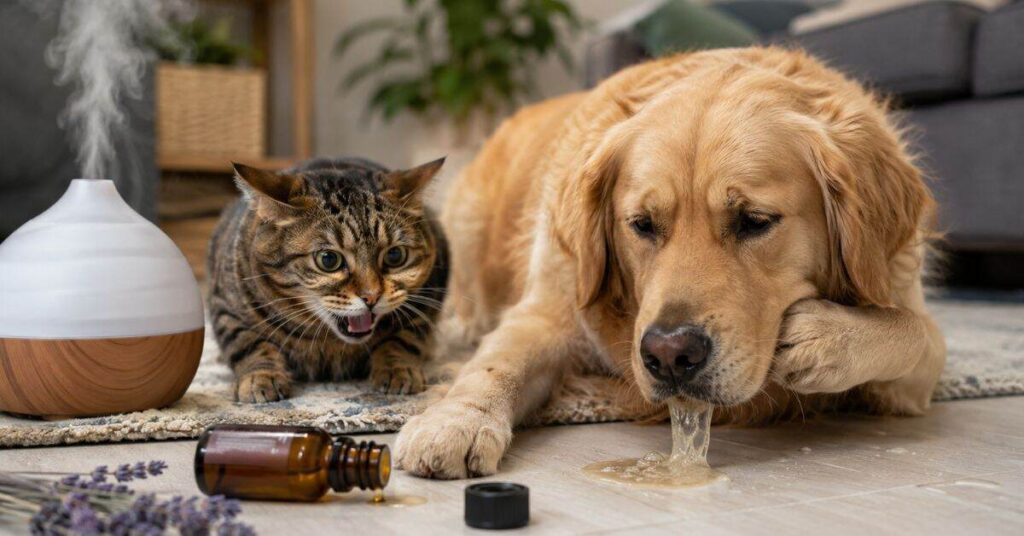
Essential oil poisoning can happen when a pet inhales, licks, swallows, or comes into contact with concentrated oils. Because essential oils contain highly concentrated plant compounds, even a small exposure can create problems for some animals, especially cats and smaller pets.
Recognising the warning signs early can make a major difference. Symptoms may appear within minutes or may develop over several hours depending on the type of essential oil, amount of exposure, and the pet’s health condition.
Pet owners should never ignore unusual behaviour after using a diffuser, cleaning product, or scented item. If your pet suddenly acts differently after essential oil exposure, remove the source immediately and monitor the situation carefully.
Symptoms in Dogs
Dogs may show different reactions depending on the oil involved and the level of exposure. Some dogs experience mild irritation, while others may develop more serious neurological or digestive symptoms.
Common signs of essential oil exposure in dogs include:
- Excessive drooling
- Vomiting or diarrhoea
- Loss of appetite
- Coughing or sneezing
- Difficulty breathing
- Weakness or unusual tiredness
- Tremors or shaking
- Trouble walking normally
- Confusion or changes in behaviour
- Excessive licking or pawing at the mouth
Some dogs may also try to leave a room where a diffuser is operating. This behaviour can indicate that the smell is too strong or irritating for them.
If a dog walks through spilled oil, the affected area should be cleaned carefully to prevent further licking. Since dogs often investigate new smells with their nose and mouth, quick action can help reduce accidental ingestion.
Symptoms in Cats
Cats are particularly sensitive to essential oils because their bodies cannot process many compounds as efficiently as humans and some other animals. Even indirect exposure may create problems, especially in poorly ventilated areas.
Possible signs of essential oil poisoning in cats include:
- Drooling or foaming around the mouth
- Vomiting
- Difficulty breathing
- Weakness
- Loss of coordination
- Tremors
- Dilated pupils
- Extreme tiredness
- Hiding or unusual fear
- Changes in eating or drinking habits
Cats may also develop symptoms after essential oils settle on their fur because they naturally groom themselves. During grooming, they may swallow oil particles that have attached to their coat.
Because cats often hide signs of illness, owners should pay close attention to small changes. A normally active cat that suddenly becomes quiet, avoids interaction, or refuses food should receive careful observation after any possible exposure.
When to Seek Emergency Veterinary Care
Some essential oil reactions require immediate veterinary attention. Do not wait for symptoms to become severe if your pet has swallowed oil, walked through a large spill, or shows signs affecting breathing, movement, or awareness.
Seek emergency veterinary care if your pet experiences:
- Difficulty breathing
- Seizures or severe tremors
- Collapse or extreme weakness
- Loss of coordination
- Continuous vomiting
- Severe drooling
- Unusual unconsciousness or confusion
- Exposure to highly toxic oils such as tea tree, wintergreen, pennyroyal, or eucalyptus
Before contacting your veterinarian, collect important information about the exposure. Keep the essential oil bottle or product label available because the ingredient list helps professionals determine the appropriate response.
Avoid trying to make your pet vomit unless a veterinarian specifically instructs you to do so. Some oils can cause additional damage when they come back through the mouth or airways.
The best protection is prevention. Using pet safe essential oils responsibly, storing oils securely, and learning the early signs of toxicity can help pet owners respond quickly and protect their dogs and cats from avoidable harm.
What to Do If Your Pet Is Exposed to Essential Oils
Accidental essential oil exposure can happen even in careful households. A pet may knock over a bottle, lick oil from a surface, walk through a spill, or inhale a strong concentration from a diffuser. Knowing the correct response can help reduce risks and prevent the situation from becoming more serious.
The first step is to remain calm and remove your pet from the source of exposure. Quick action, careful observation, and professional guidance are the safest ways to handle possible essential oil contact.
Immediate Steps to Take
If your pet comes into contact with essential oils, take action immediately to limit further exposure.
Follow these steps:
- Move your pet to fresh air if the exposure happened through a diffuser or strong fragrance.
- Remove the diffuser, turn it off, and ventilate the room by opening doors or windows.
- If oil spilled on your pet’s fur or skin, prevent licking and gently clean the affected area using appropriate pet-safe methods.
- Remove contaminated bedding, toys, or surfaces that may continue releasing oil residue.
- Keep the essential oil bottle or product container because the ingredients will help professionals understand the risk.
Do not apply water alone to a concentrated oil spill on fur or skin because essential oils do not mix easily with water. Instead, contact a veterinarian for guidance on the safest cleaning method based on the oil involved.
Avoid giving your pet food, milk, or home remedies to “neutralise” the oil unless a veterinary professional specifically recommends it. Incorrect treatment may increase the risk of complications.
When to Contact Your Veterinarian
Contact your veterinarian if your pet shows any unusual symptoms after essential oil exposure or if you know your pet has swallowed any amount of oil.
Professional advice is especially important when:
- A pet has licked or swallowed essential oil.
- The oil contains ingredients known to be dangerous.
- A cat has been exposed to concentrated oils.
- A young, elderly, or medically vulnerable pet is involved.
- Symptoms such as vomiting, weakness, tremors, breathing problems, or confusion appear.
Even if your pet appears normal immediately after exposure, contacting a veterinarian can provide valuable guidance. Some reactions may take time to develop, depending on the oil type and the amount involved.
Never assume that a small amount is harmless. Essential oils are highly concentrated, and the risk depends on the specific chemical compounds rather than only the quantity.
Emergency Pet Poison Resources
In serious exposure situations, professional poison advice can help determine the next safest step. Keep emergency contact information available before you actually need it, especially if you regularly use essential oils, diffusers, or natural cleaning products.
Useful preparation steps include:
- Saving your veterinarian’s emergency phone number.
- Keeping product labels accessible.
- Recording the essential oils used in your home.
- Knowing your pet’s weight, age, and medical history.
- Avoiding delays when serious symptoms appear.
Pet owners should also understand that online advice cannot replace emergency veterinary care. Search results, social media groups, and personal experiences may provide general information, but every exposure situation is different.
The best protection comes from prevention. Store essential oils securely, choose products carefully, and use pet safe essential oils only with responsible practices. If an accident happens, quick action and veterinary support provide the safest path for protecting your pet’s health.
Expert Tips for Using Pet Safe Essential Oils Responsibly
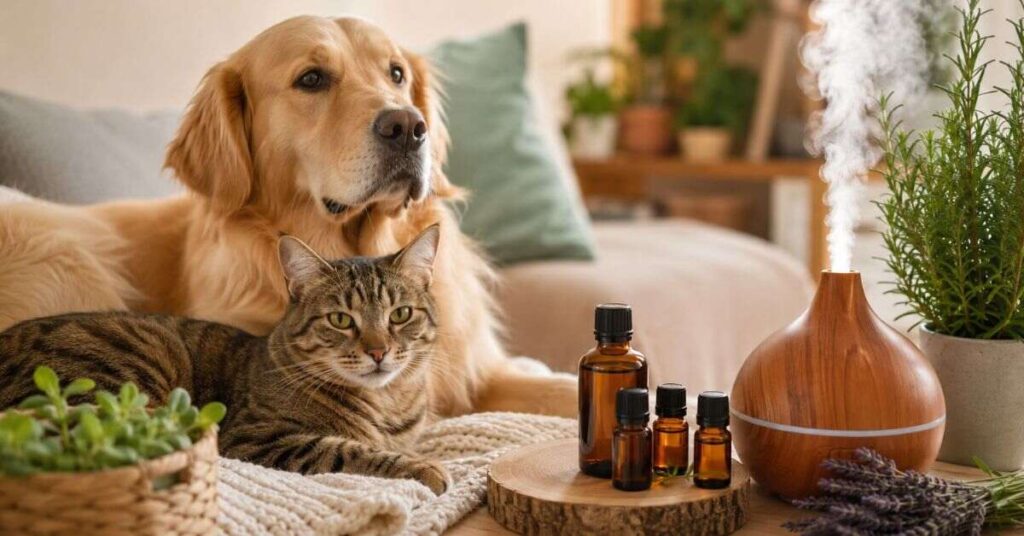
Using essential oils around pets requires awareness, patience, and a safety-focused approach. Even when selecting pet safe essential oils, responsible handling remains the most important factor. A product’s natural origin does not automatically mean it is suitable for every animal.
Experts generally recommend treating essential oils as optional household products rather than essential parts of pet care. The safest approach combines careful selection, limited exposure, proper storage, and close attention to your pet’s individual reactions.
Consult Your Veterinarian First
Before introducing essential oils into a home with dogs or cats, consult your veterinarian, especially if your pet has existing health concerns. Animals with respiratory problems, allergies, liver conditions, neurological disorders, or sensitive skin may have a higher risk of negative reactions.
A veterinarian can help you understand whether essential oils are appropriate for your specific pet and provide guidance based on factors such as:
- Your pet’s age and size
- Breed characteristics
- Current medications
- Existing health conditions
- Previous reactions to fragrances or chemicals
Veterinary advice becomes even more important for cats because their bodies process many essential oil compounds differently from dogs. What works for one animal may not be suitable for another.
Professional guidance can also help you avoid unsafe practices, such as applying oils directly to fur, using concentrated products, or choosing oils that are known to create risks.
Monitor Your Pet’s Behaviour
Every pet communicates differently, so learning your animal’s normal behaviour is one of the best safety tools. When introducing any new scent, observe how your pet responds before continuing regular use.
Positive signs may include normal activity levels, relaxed behaviour, and no noticeable changes in eating, sleeping, or movement patterns.
However, stop using the oil if you notice:
- Sneezing or coughing
- Avoiding the room where the scent is used
- Excessive grooming
- Drooling
- Restlessness
- Hiding
- Changes in appetite
- Unusual tiredness
A pet leaving the area is not bad behaviour. It may simply be their way of avoiding a smell that feels too strong or uncomfortable.
Store Essential Oils Safely
Proper storage prevents many accidental exposures. Essential oils should always be treated as concentrated substances and kept away from curious pets.
Follow these storage practices:
- Keep bottles inside a closed cabinet or secure drawer.
- Avoid leaving oils on tables, counters, or near pet-accessible areas.
- Clean spills immediately.
- Keep diffuser liquids away from animals.
- Store oils separately from pet food and treats.
Cats are especially skilled at reaching high surfaces, while dogs may investigate unfamiliar smells with their mouths. Secure storage protects both types of pets from accidental contact.
Follow Best Practices for Long-Term Safety
Long-term safety depends on creating consistent habits rather than occasional caution. Responsible essential oil use means reducing unnecessary exposure while maintaining a comfortable environment for your pets.
Important long-term practices include:
- Use essential oils occasionally instead of continuously.
- Choose well-researched products from reputable sources.
- Avoid mixing multiple strong scents at the same time.
- Provide pets with fragrance-free areas where they can relax.
- Never use essential oils as a replacement for veterinary treatment.
- Review product ingredients before every use.
For owners searching for pet-safe essential oils for diffuser Australia or other region-specific products, always check the ingredients and avoid relying only on marketing claims. Product labels can vary, and a “natural” description does not guarantee animal safety.
Responsible use is about balance. Essential oils may fit into some pet households when used carefully, but your pet’s comfort and health should always come first. A safe home is not the one with the strongest fragrance; it is the one where animals can breathe comfortably, behave normally, and feel secure.
Conclusion
Pet safe essential oils can be a useful addition to a pet-friendly home when they are used with care, knowledge, and respect for each animal’s unique needs. While some essential oils may help create a calming and pleasant environment, they should never be considered completely risk-free or a replacement for proper veterinary care.
Dogs and cats respond differently to essential oils, and cats require extra caution because of their sensitive metabolism. Choosing lower-risk oils, using proper dilution, avoiding direct application, maintaining good ventilation, and monitoring your pet’s behaviour are essential steps for safer use.
The most important part of essential oil safety is understanding that natural does not always mean harmless. Many popular oils can cause serious problems for pets, especially when they are ingested, applied to the skin, or used in concentrated amounts. Responsible pet owners should always research ingredients, store oils securely, and consult a veterinarian when unsure.
A truly pet-friendly home focuses on your animal’s comfort first. If your pet shows signs of irritation, stress, or unusual behaviour, stop using the product and seek professional advice. With careful choices and safe practices, you can create a healthier environment where both you and your pets feel comfortable and protected.
FAQs:
What Are the Safest Essential Oils for Pets?
The safest essential oils for pets depend on the animal species, health condition, age, and method of use. No essential oil is completely safe for every dog or cat, but some oils are often considered lower risk when used carefully and with professional guidance.
For dogs, oils such as lavender, frankincense, Roman chamomile, cedarwood (specific varieties), and copaiba are commonly discussed as gentler options when properly diluted and used in a controlled environment.
Cats require much more caution because their bodies process many essential oil compounds differently. Even oils considered mild for dogs may create risks for cats. Veterinary approval is strongly recommended before using any essential oil around felines.
The safest approach is not choosing a “perfect” oil but following responsible practices, including:
- Using very small amounts
- Avoiding direct application
- Providing proper ventilation
- Monitoring your pet’s behaviour
- Keeping oils stored securely
A comfortable, fragrance-free environment is often the safest choice for sensitive pets.
Can Dogs and Cats Stay in a Room with a Diffuser?
Dogs and cats may stay in a room with a diffuser only when the essential oil, concentration, and exposure time are carefully managed. However, many factors influence whether a pet tolerates a diffuser, including their health, age, and individual sensitivity.
If a diffuser is used around pets:
- Keep the room well ventilated.
- Use short diffusion periods.
- Never place pets in a closed room with the diffuser.
- Allow animals to leave whenever they choose.
- Stop immediately if signs of discomfort appear.
Cats require extra caution because they are more vulnerable to certain essential oil compounds. A diffuser that seems comfortable for a dog may still create problems for a cat.
Owners searching for cat and dog safe essential oils for diffuser should remember that a product suitable for one species may not be suitable for another. Always consider your specific pet rather than relying only on general labels.
Can I Apply Essential Oils Directly to My Pet?
No, essential oils should generally not be applied directly to your pet’s skin, fur, paws, or collar unless a veterinarian recommends a specifically formulated product.
Pure essential oils are highly concentrated and may cause:
- Skin irritation
- Allergic reactions
- Chemical burns
- Excessive grooming
- Accidental ingestion during licking
Cats face an additional risk because they frequently groom their fur. If oil gets onto their coat, they may swallow it while cleaning themselves.
Even diluted oils should not be applied casually. A product that feels gentle to human skin may still be too strong for an animal’s sensitive body. Diffusion, when appropriate, is usually a lower-contact option than direct application.
What Should I Do If My Pet Licks Essential Oil?
If your pet licks essential oil, remove access to the product immediately and prevent further exposure. Do not attempt home treatments or try to make your pet vomit unless a veterinarian specifically instructs you to do so.
Take these steps:
- Remove the oil bottle or contaminated item.
- Check the product label to identify the ingredients.
- Observe your pet for signs such as drooling, vomiting, weakness, tremors, or breathing changes.
- Contact your veterinarian for guidance.
The seriousness of the situation depends on the type of oil, amount consumed, and the pet’s size and health condition. Some oils are significantly more dangerous than others, so professional advice is always the safest option.
Are Essential Oil Cleaning Products Safe Around Pets?
Essential oil cleaning products are not automatically safe just because they contain natural ingredients. Some cleaning formulas may leave behind residues that pets can inhale, touch, or swallow.
If you use essential oils for household cleaning:
- Choose products specifically designed for pet households.
- Avoid cleaning areas where pets eat or sleep with concentrated oils.
- Allow surfaces to dry fully before pets return.
- Store cleaning products away from animals.
Many owners look for pet safe essential oils for cleaning, but safety depends on the complete formula, not only the essential oil itself. Fragrance-free cleaners, regular washing, and proper ventilation are often safer alternatives for homes with sensitive pets.
Which Essential Oils Are Most Toxic to Pets?
Several essential oils are considered high-risk for dogs and cats because they contain compounds that may cause serious reactions.
Commonly avoided oils include:
- Tea tree oil
- Wintergreen oil
- Pennyroyal oil
- Eucalyptus oil
- Peppermint oil
- Cinnamon oil
- Clove oil
- Pine oil
- Oregano oil
- Thyme oil
- Camphor oil
- Sweet birch oil
Cats are especially vulnerable because their bodies have difficulty processing many concentrated plant compounds. Dogs can also experience toxicity, particularly after ingestion or exposure to highly concentrated oils.
When using pet safe essential oils, the most important rule is caution. Choosing safer options, limiting exposure, and seeking veterinary guidance when uncertain helps create a healthier environment where pets can remain comfortable and protected.