Introduction
Healthy, vibrant hair begins with proper care, and natural oils have long played an important role in nourishing both the scalp and hair. Among the many plant-based oils available today, carrot oil for hair has gained popularity because it contains vitamins, antioxidants, and essential fatty acids that help moisturize the scalp, strengthen hair strands, and improve overall hair health. Whether your goal is to reduce dryness, minimize breakage, or add natural shine, carrot oil has become a common addition to many hair care routines.
Can Carrot Oil Really Support Hair Growth?
The growing popularity of carrot oil for hair growth has led many people to wonder whether it truly stimulates faster hair growth. While no scientific evidence proves that carrot oil alone can make hair grow significantly faster, its rich nutrient profile may create a healthier scalp environment. A well-nourished scalp and stronger hair strands are less likely to break, allowing hair to retain its length and appear thicker over time. When combined with a balanced diet, proper scalp care, and a consistent hair care routine, carrot oil may help support healthier-looking hair.
Why Understanding Carrot Oil Matters
Many people confuse carrot oil with carrot seed essential oil, even though they are different products with different uses. Carrot oil is typically made by infusing fresh carrot roots into a carrier oil, making it suitable for direct application to the hair and scalp. Carrot seed essential oil, on the other hand, is a highly concentrated extract that should always be diluted before use. Knowing the difference helps you choose the right product and avoid unnecessary scalp irritation.
What You’ll Learn in This Guide
This comprehensive guide explores everything you need to know about carrot oil for hair, including its nutritional benefits, potential role in supporting hair growth, the science behind its effectiveness, and the best ways to use it safely. You’ll also discover DIY hair treatments, application methods, how often to use carrot oil, which hair types benefit the most, possible side effects, common mistakes to avoid, and practical tips for selecting a high-quality product. By the end of this guide, you’ll have the knowledge needed to decide whether carrot oil is the right addition to your hair care routine and how to use it for the best possible results.
What Is Carrot Oil for Hair?
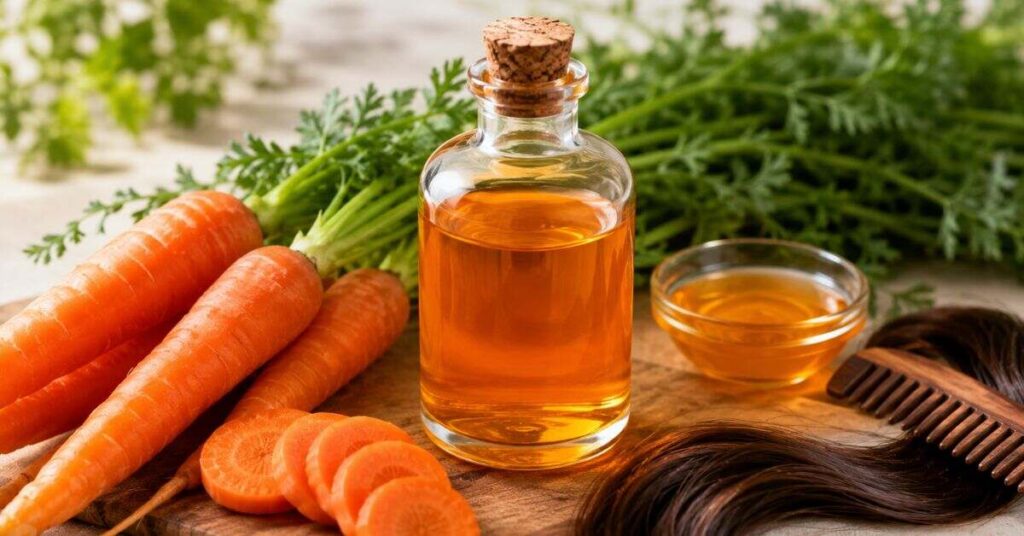
Carrot oil for hair is a nutrient-rich oil used to nourish the scalp, strengthen hair strands, and improve the overall health of your hair. It is typically made by infusing fresh carrot roots into a carrier oil such as olive, coconut, sunflower, or jojoba oil. During this process, the beneficial compounds found in carrots gradually transfer into the carrier oil, creating a natural treatment that is rich in vitamins, antioxidants, and moisturizing fatty acids.
Unlike many commercial hair products that focus on temporary shine, carrot oil works by supporting the scalp and protecting the hair shaft. A healthy scalp creates a better environment for stronger, healthier hair, while well-moisturized strands are less likely to become dry, brittle, or prone to breakage. For this reason, many people include carrot oil in their weekly hair care routine instead of using it only when hair becomes damaged.
One of the reasons carrot oil for hair growth has become so popular is its nutritional profile. Carrots naturally contain beta-carotene, which the body converts into vitamin A, along with vitamins E and C. These nutrients help fight oxidative stress caused by environmental factors such as sunlight, pollution, and heat styling. Although carrot oil cannot force hair to grow faster on its own, it may help maintain healthier hair by reducing damage and improving scalp condition.
Today, carrot oil is commonly used in scalp massages, hot oil treatments, deep-conditioning masks, leave-in treatments, and homemade hair serums. When combined with a balanced diet and a consistent hair care routine, it can become a valuable addition to maintaining healthier-looking hair.
Carrot Oil vs Carrot Seed Oil: What’s the Difference?
One of the biggest misconceptions is that carrot oil and carrot seed oil are the same product. Although their names are similar, they come from different parts of the plant, are produced using different methods, and have different uses in hair care.
Carrot oil is usually an infused oil made by soaking fresh carrot roots in a carrier oil. The infusion captures many of the carrot’s beneficial nutrients while also providing the moisturizing properties of the carrier oil. This makes it suitable for direct application to the scalp and hair.
Carrot seed oil, on the other hand, is an essential oil obtained through steam distillation of wild carrot seeds. It is highly concentrated and should never be applied directly to the scalp without dilution. Instead, only a few drops are mixed with a carrier oil before use.
The table below highlights the key differences.
| Feature | Carrot Oil | Carrot Seed Oil |
| Source | Fresh carrot roots | Wild carrot seeds |
| Production Method | Oil infusion | Steam distillation |
| Concentration | Mild | Highly concentrated |
| Can Be Applied Directly? | Yes | No, requires dilution |
| Best For | Moisturizing hair and scalp | Blending into hair oils and scalp treatments |
| Texture | Rich and nourishing | Lightweight essential oil |
Because these oils serve different purposes, always read the product label carefully before purchasing. Many products are marketed as “carrot oil,” even though they actually contain carrot seed essential oil. Knowing the difference helps you choose the right product and use it safely.
Nutrients Found in Carrot Oil
The effectiveness of carrot oil for hair comes largely from its rich combination of nutrients that help support both the scalp and the hair shaft. While the exact composition varies depending on how the oil is made and the carrier oil used, several naturally occurring compounds contribute to its popularity in hair care.
| Nutrient | Potential Benefit for Hair |
| Beta-carotene | Supports healthy scalp and is converted into vitamin A by the body |
| Vitamin A | Helps maintain healthy skin and scalp cells |
| Vitamin E | Acts as an antioxidant that helps protect hair from oxidative stress |
| Vitamin C | Supports collagen production and protects against free radical damage |
| Essential Fatty Acids | Help lock in moisture and reduce dryness |
| Natural Antioxidants | Help protect hair from environmental damage |
These nutrients work together to improve hydration, reduce dryness, and strengthen the hair shaft. As a result, hair often feels softer, smoother, and easier to manage after consistent use. Although carrot oil is not a substitute for proper nutrition, it can complement a healthy lifestyle by providing additional care directly to the scalp and hair.
How Carrot Oil Is Made
The quality of carrot oil depends greatly on how it is produced. Traditional homemade carrot oil is created by slowly infusing freshly grated carrots into a carrier oil over gentle heat or allowing the mixture to steep naturally for several weeks. This slow infusion helps extract beneficial plant compounds while preserving many of the oil’s nourishing properties.
Commercial manufacturers may use more advanced extraction methods to ensure consistent quality and a longer shelf life. Premium products are often made with cold-pressed carrier oils because they retain more naturally occurring nutrients than highly refined oils.
The basic process generally includes:
- Washing and finely grating fresh carrots.
- Mixing the carrots with a carrier oil such as coconut, olive, or sunflower oil.
- Gently heating or slowly infusing the mixture to transfer the nutrients into the oil.
- Straining out the carrot pieces.
- Storing the finished oil in a clean, dark glass bottle away from heat and direct sunlight.
Whether you purchase a ready-made product or make carrot oil for hair growth at home, choosing high-quality ingredients is essential. Fresh carrots and a nutrient-rich carrier oil produce a more effective final product, while proper storage helps preserve its quality for longer. Consistent use of well-made carrot oil can provide better hydration, improve hair manageability, and support a healthier scalp over time.
Is Carrot Oil Good for Hair?
Carrot oil has earned a strong reputation in natural hair care, but many people still ask whether it truly benefits the hair or if its popularity is based mainly on personal experiences. The answer lies somewhere in between. Carrot oil for hair is not a medically proven cure for hair loss, nor can it instantly make hair grow faster. However, its rich blend of vitamins, antioxidants, and essential fatty acids may help improve the condition of both the scalp and hair strands, creating an environment where healthier hair can thrive.
Healthy hair growth depends on several factors, including genetics, hormones, nutrition, scalp health, and daily hair care habits. While carrot oil cannot change your genetics or treat underlying medical conditions that cause hair loss, it can help reduce some of the everyday problems that prevent hair from reaching its full potential. Dryness, scalp irritation, excessive breakage, heat damage, and weak hair strands often make hair appear thinner than it actually is. By moisturizing the scalp and strengthening the hair shaft, carrot oil may help minimize these issues over time.
Another reason many people include carrot oil in their routine is its ability to improve hair manageability. Hair that stays hydrated is generally softer, shinier, and less likely to tangle or snap during brushing. As breakage decreases, many users notice that their hair appears longer simply because more of the existing hair is retained.
That said, carrot oil should be viewed as one part of a complete hair care routine rather than a standalone solution. When combined with proper nutrition, gentle hair handling, regular scalp care, and a healthy lifestyle, it can become a valuable addition to maintaining stronger, healthier-looking hair.
Does Carrot Oil Really Help Hair Growth? Understanding Length Retention
While marketing claims often position carrot oil as a miracle elixir for rapid hair growth, it is crucial to understand the biological distinction between hair growth and hair length retention. Carrot oil does not alter your genetic growth cycle, nor does it speed up the rate at which your follicles produce new cells.
However, it is highly effective at promoting hair retention. When hair grows from the scalp, it is constantly subjected to mechanical friction, heat styling, and environmental weathering. If the hair fiber is dry, it loses elasticity and snaps off before reaching its maximum potential length.
Carrot oil prevents this by acting as a natural lubricant and sealant. It delivers lipids directly to the porous areas of the hair shaft, reinforcing its structure. This reducing of split ends and mid-shaft breakage allows you to retain the length your scalp naturally produces, making your hair appear thicker, fuller, and longer over time.
What Research Says About Carrot Oil for Hair
Scientific research specifically examining carrot oil as an isolated hair growth treatment remains limited. Most available literature focuses on the individual bioactive compounds and micronutrients found in carrots rather than the commercial oil blend itself. Consequently, many of the celebrated benefits of carrot oil are supported indirectly through established dermatological science regarding vitamin absorption, antioxidant behavior, and scalp barrier function.
The Science Behind Beta-Carotene and Antioxidants
Carrot oil is exceptionally rich in beta-carotene, a carotenoid that the human body metabolizes into Vitamin A (retinol). Vitamin A is fundamental for cellular regeneration, directly supporting the health of the scalp’s epithelial cells and regulating sebum production. Balanced sebum prevents both scalp dryness and excessive oiliness, creating the ideal environment for hair follicles to thrive.
In addition to beta-carotene, carrot oil contains highly concentrated Vitamin E, a potent lipid-soluble antioxidant. Vitamin E actively neutralizes free radicals—unstable molecules triggered by UV radiation, air pollution, and chemical treatments that cause oxidative stress in hair follicles. By mitigating oxidative damage, Vitamin E helps preserve follicle integrity and prevents premature hair thinning.
Dissecting Marketing Claims vs. Clinical Evidence
While the nutrient profile of carrot oil is highly impressive, it is critical to separate evidence-backed science from aggressive marketing claims. Currently, there is no clinical evidence proving that topical carrot oil can cure androgenetic alopecia (pattern baldness) or reverse genetic hair loss.
When excessive hair shedding is driven by internal systemic issues such as thyroid imbalances, iron deficiency anemia, autoimmune conditions, or hormonal fluctuations topical oils cannot solve the root problem. In these instances, carrot oil serves as an excellent external supportive treatment to protect the existing hair shaft, but medical intervention is required to stop the shedding.
Key Evidence-Backed Benefits of Carrot Oil
When integrated into a structured, consistent hair care routine, high-quality carrot oil delivers several clinically logical benefits to the hair and scalp:
- Inhibits Transepidermal Moisture Loss: Rich fatty acids lubricate the cuticle layer, locking in moisture and eliminating frizz.
- Reduces Mechanical Breakage: Improved shaft elasticity prevents snapping during brushing, detangling, and heat styling.
- Protects Follicular Health: Antioxidants shield the scalp from environmental pollutants and environmental aging.
- Enhances Cuticle Alignment: Smooths the outer shingles of the hair shaft, resulting in a visible increase in natural light reflection and shine.
Ultimately, lasting hair health is a holistic process. While carrot oil provides exceptional structural support and external protection, it works best when paired with a nutrient-dense diet, proper hydration, and gentle hair-handling habits.
Benefits of Carrot Oil for Hair

The growing popularity of carrot oil for hair is largely due to its ability to nourish the scalp and improve the condition of hair from root to tip. While it should not be viewed as a miracle solution for every hair concern, its natural vitamins, antioxidants, and essential fatty acids can address many common problems, including dryness, brittleness, dullness, and breakage. Consistent use may help hair look healthier, feel softer, and become more manageable over time.
Most of these benefits come from improving the scalp’s moisture balance and strengthening the hair shaft rather than directly changing how quickly hair grows. When hair receives proper nourishment and experiences less damage, it naturally retains more length and develops a healthier appearance.
May Promote Healthy Hair Growth
One of the main reasons people search for carrot oil for hair growth is the belief that it can make hair grow faster. Although no scientific evidence shows that carrot oil directly stimulates new hair growth, it can help create healthier conditions for hair follicles to function normally.
Carrot oil contains beta-carotene, antioxidants, vitamin E, and beneficial fatty acids that help nourish the scalp. A healthy scalp is essential because hair follicles depend on a balanced environment to produce strong strands. Dryness, inflammation, and poor scalp condition can weaken existing hair and contribute to excessive shedding.
Regular scalp massages with carrot oil may also improve blood circulation to the scalp. While improved circulation alone cannot guarantee faster growth, it helps deliver oxygen and nutrients to hair follicles, supporting their normal function.
When combined with a healthy diet, proper hair care, and consistent use, carrot oil may help reduce breakage, allowing hair to maintain more of its natural length over time.
Helps Strengthen Hair and Reduce Breakage
Weak hair often breaks before it has the opportunity to grow long. Daily brushing, heat styling, chemical treatments, tight hairstyles, and environmental exposure gradually weaken the hair shaft, making strands more vulnerable to snapping.
Carrot oil helps restore moisture while coating the hair shaft with nourishing lipids that improve flexibility. Hair that remains hydrated is generally less brittle and more resistant to everyday stress. Instead of making hair stronger overnight, regular application gradually improves its resilience.
People with fine, damaged, or chemically treated hair often notice fewer broken strands after incorporating carrot oil into their weekly routine. As breakage decreases, hair appears thicker and fuller because more strands remain intact.
Nourishes the Scalp
Healthy hair begins with a healthy scalp. If the scalp becomes excessively dry, irritated, or imbalanced, it may affect the condition of the growing hair.
Carrot oil supplies moisture while helping maintain the scalp’s natural protective barrier. Its antioxidant content also helps defend scalp cells against environmental stress caused by sunlight, pollution, and free radicals.
A well-nourished scalp is more comfortable and better able to support healthy hair growth. Many people also find that regular scalp massages with carrot oil help reduce tightness while leaving the scalp feeling softer and refreshed.
Helps Relieve Dry, Flaky Scalp
Dry scalp is one of the most common hair concerns, especially during colder months or after frequent shampooing. When the scalp loses moisture, it can become itchy, rough, and flaky.
Carrot oil works as a natural emollient that helps restore hydration to dry skin. Its fatty acids help reduce moisture loss while softening rough patches on the scalp. As hydration improves, flaking often becomes less noticeable and itching may decrease.
However, it is important to understand that a dry scalp is not the same as dandruff. Dandruff is commonly associated with excess oil and yeast overgrowth, while dry scalp usually results from insufficient moisture. Carrot oil may be helpful for dryness but is not intended to treat medical scalp conditions.
May Protect Hair from Environmental Damage
Every day, hair is exposed to factors that gradually weaken its structure. Sunlight, pollution, chlorine, salt water, heat styling tools, and harsh weather conditions can strip away moisture and damage the hair’s protective outer layer.
Carrot oil contains antioxidants, including vitamin E and beta-carotene, that help protect hair against oxidative stress. These compounds support the hair’s natural defense system and may reduce damage caused by environmental exposure.
Although carrot oil should never replace a heat protectant before styling, using it regularly may help maintain healthier-looking hair by reducing long-term dryness and improving moisture retention.
Helps Improve Hair Softness and Shine
Dull, rough hair often lacks adequate moisture. As the hair cuticle becomes dry and uneven, it reflects less light, causing hair to lose its natural shine.
Carrot oil smooths the outer cuticle while locking moisture into the hair shaft. A smoother cuticle reflects light more evenly, making hair appear shinier and healthier without relying on heavy silicone-based products.
Many users notice that their hair becomes easier to comb, tangles less frequently, and feels noticeably softer after consistent treatments. This improvement is especially beneficial for naturally dry, coarse, or curly hair textures.
May Reduce Split Ends
Split ends occur when the protective outer layer of the hair becomes damaged, causing the fibers to separate. Once a split end forms, it cannot be permanently repaired and usually requires trimming.
While carrot oil cannot reverse existing split ends, it can help prevent new ones from developing. By keeping hair moisturized and reducing friction during brushing and styling, carrot oil minimizes stress on the hair shaft.
Applying a small amount to the mid-lengths and ends helps improve flexibility, reducing the likelihood of cracking and splitting between trims. This simple habit can contribute to healthier-looking hair over time.
Can Help Define and Seal Curly Hair
Curly and textured hair naturally struggles to retain moisture because scalp oils travel less easily along curved hair strands. As a result, curls often become dry, frizzy, and difficult to manage.
Carrot oil provides lightweight nourishment that helps lock moisture into the hair while smoothing the cuticle. This can improve curl definition, reduce frizz, and leave curls feeling softer without making them stiff.
Many people with curly hair use carrot oil as a finishing oil after applying leave-in conditioner or curl cream. Applying only a small amount helps seal hydration into the hair while maintaining bounce and natural movement.
For the best results, carrot oil should be applied sparingly. Using too much product may weigh down fine curls or create excess buildup, especially if it is not washed out regularly. When used correctly, it can become an effective addition to a curly hair care routine, helping curls stay hydrated, defined, and healthier-looking.
How to Use Carrot Oil for Hair
Using carrot oil for hair correctly is just as important as choosing a high-quality product. Applying too much oil or using it inconsistently may leave your hair feeling greasy without providing long-term benefits. On the other hand, using carrot oil in the right way can help nourish the scalp, strengthen hair strands, improve moisture retention, and reduce breakage.
There is no single method that works for everyone. The best application depends on your hair type, scalp condition, and hair goals. For example, someone with dry or damaged hair may benefit from overnight treatments, while people with oily hair often prefer shorter treatments before shampooing. Likewise, curly hair usually responds well to leave-in applications that help lock in moisture.
Below are some of the most effective ways to use carrot oil as part of your regular hair care routine.
Carrot Oil Scalp Massage
A scalp massage is one of the easiest and most effective ways to use carrot oil for hair growth. Massaging the oil into the scalp helps distribute it evenly while stimulating blood circulation around the hair follicles. Although massage alone does not create new hair follicles, it supports a healthy scalp environment where existing follicles can function more effectively.
Warm a small amount of carrot oil between your palms before applying it directly to your scalp. Use your fingertips—not your nails—to massage in gentle circular motions for five to ten minutes. Once the massage is complete, leave the oil on for at least 30 minutes before washing it out with a mild shampoo. If your scalp tolerates oils well, you can also leave it overnight for deeper nourishment.
For most people, repeating this treatment one or two times each week is enough to maintain a healthy scalp without creating excessive oil buildup.
Hot Oil Treatment
A hot oil treatment allows carrot oil to penetrate the hair shaft more effectively, making it especially beneficial for dry, brittle, or heat-damaged hair.
Gently warm the carrot oil until it is comfortably warm but never hot enough to burn the skin. Apply it evenly from the scalp to the ends of your hair, ensuring every section receives a light coating. Cover your hair with a shower cap or wrap it in a warm towel to help retain heat.
Leave the treatment on for 30 to 45 minutes before shampooing thoroughly. This method helps restore moisture, reduce frizz, and improve softness, making it an excellent weekly treatment for hair that feels rough or dehydrated.
Deep Conditioning Hair Mask
If your hair feels weak or damaged from coloring, bleaching, or heat styling, adding carrot oil to a deep conditioning treatment can provide extra nourishment.
Mix a few teaspoons of carrot oil with your favorite deep conditioner or a natural ingredient such as yogurt, mashed banana, or honey. Apply the mixture from the mid-lengths to the ends, paying extra attention to the driest areas.
Allow the mask to sit for about 20 to 30 minutes before rinsing thoroughly. Regular use can help improve hair elasticity, making strands less likely to snap during brushing or styling.
Leave-In Hair Treatment
People with extremely dry, coarse, or curly hair often benefit from using carrot oil as a leave-in treatment. Since only a very small amount is required, this method helps smooth the hair without making it overly greasy.
Rub two or three drops of carrot oil between your hands and apply it mainly to the mid-lengths and ends of damp hair. Avoid applying large amounts directly to the scalp unless your scalp is very dry.
Using carrot oil this way helps reduce frizz, smooth flyaways, and add a natural-looking shine while protecting hair from daily moisture loss.
Hair Growth Serum
Many people combine carrot oil with other nourishing oils to create a homemade hair growth serum. While no natural oil can guarantee faster hair growth, combining ingredients may help strengthen hair and improve scalp health.
A simple serum may include:
| Ingredient | Purpose |
| Carrot oil | Nourishes the scalp and hair |
| Rosemary oil | Supports a healthy scalp when properly diluted |
| Castor oil | Adds thickness and moisture |
| Jojoba oil | Helps balance scalp hydration |
Massage a small amount of the serum into the scalp once or twice each week before washing your hair. Consistent use is generally more effective than applying large amounts infrequently.
Moisturizing Hair Mask
Hair that is naturally dry often needs more than a standard conditioner to restore moisture. A moisturizing mask containing carrot oil can help replenish hydration while improving softness and manageability.
Blend carrot oil with ingredients such as aloe vera gel, avocado, or shea butter to create a rich treatment. Apply the mask evenly throughout clean, damp hair and leave it on for approximately 30 minutes.
After rinsing thoroughly, many people notice smoother hair with less frizz and improved elasticity. Weekly treatments are usually enough to maintain hydration without weighing hair down.
Weekly Hair Rinse
Although carrot oil does not dissolve in water, it can still be incorporated into a weekly rinse by using it after shampooing and before your final wash.
Massage a light layer of carrot oil through damp hair, focusing mainly on the mid-lengths and ends. Leave it on for about 10 to 15 minutes before rinsing with lukewarm water and, if necessary, using a small amount of conditioner.
This method provides lightweight nourishment while preventing excessive oil buildup, making it suitable for people with normal or slightly oily hair.
Using Carrot Oil on Curly Hair
Curly hair tends to lose moisture more quickly than straight hair because natural scalp oils have difficulty traveling along the twists and bends of each strand. As a result, curls often become dry, frizzy, and prone to breakage.
Carrot oil can help maintain moisture by sealing hydration into the hair after washing. Apply a small amount to damp curls after your leave-in conditioner or styling cream, concentrating on the mid-lengths and ends rather than the roots.
This technique helps improve curl definition, reduce frizz, and keep curls soft without making them feel stiff. However, using too much oil may cause product buildup and reduce volume, so start with a few drops and increase only if needed.
With consistent application and the right technique, how to use carrot oil for hair becomes less about applying more product and more about using it strategically. Matching the application method to your hair type and needs will help you get the most noticeable and long-lasting results.
Read More:https://pureoilshub.com/is-coconut-oil-comedogenic/
DIY Homemade Carrot Oil Recipe

Making your own carrot oil for hair at home is a simple and affordable way to enjoy its nourishing benefits without relying on commercial products that may contain artificial fragrances, preservatives, or unnecessary additives. Homemade carrot oil also gives you complete control over the ingredients, allowing you to choose a high-quality carrier oil that suits your hair type.
If you are wondering how to make carrot oil for hair growth, the process is straightforward. Although homemade carrot oil cannot guarantee faster hair growth, it provides nutrients that help maintain a healthier scalp and reduce hair breakage, making it a valuable addition to your weekly hair care routine.
Ingredients You’ll Need
The quality of your finished carrot oil depends on the freshness of the ingredients you use. Choosing organic carrots and a nutrient-rich carrier oil helps produce a more effective infusion.
You will need:
| Ingredient | Recommended Amount | Purpose |
| Fresh carrots | 2 medium carrots | Provide natural nutrients and antioxidants |
| Carrier oil (olive, coconut, sunflower, jojoba, or sweet almond oil) | 1 cup | Extracts and carries the beneficial compounds |
| Clean glass jar | 1 | For infusing and storing the oil |
| Fine mesh strainer or cheesecloth | 1 | Removes carrot pieces after infusion |
| Dark glass bottle | 1 | Protects the finished oil from light exposure |
Choose the carrier oil based on your hair needs. Coconut oil works well for dry hair, jojoba oil is ideal for oily scalps because it closely resembles natural sebum, while olive oil provides deep nourishment for damaged hair.
Step-by-Step Instructions
Preparing homemade carrot oil requires patience, but the process is simple and does not require specialized equipment.
Begin by washing and peeling the carrots thoroughly to remove dirt and impurities. Finely grate the carrots to expose more surface area, allowing their nutrients to infuse into the oil more effectively.
Place the grated carrots into a clean saucepan or a heat-safe bowl if using a double boiler. Pour the carrier oil over the carrots until they are completely covered.
Heat the mixture over very low heat for approximately 30 to 45 minutes. The oil should become warm but should never reach a boiling point, as excessive heat may damage some of the beneficial compounds. Stir occasionally to prevent the carrots from sticking.
Once the infusion is complete, remove the mixture from the heat and allow it to cool completely. Strain the oil through a fine mesh sieve or cheesecloth to remove all carrot pieces. Discard the solids and transfer the filtered oil into a clean dark glass bottle.
Your homemade carrot oil for hair is now ready to use for scalp massages, hot oil treatments, hair masks, or moisturizing treatments.
Storage Tips
Proper storage is essential for preserving the quality and freshness of homemade carrot oil. Because fresh carrots contain natural moisture, homemade infusions generally have a shorter shelf life than commercially produced oils.
To maximize freshness:
- Store the oil in a dark glass bottle to reduce light exposure.
- Keep the container tightly sealed after every use.
- Store it in a cool, dry place away from direct sunlight and heat.
- If your home is particularly warm, refrigerating the oil can help extend its shelf life.
- Always use clean, dry hands or a dropper to prevent contamination.
- Discard the oil immediately if you notice an unpleasant odor, mold, or changes in color or texture.
Under proper storage conditions, homemade carrot oil typically remains fresh for two to four weeks, depending on the freshness of the carrots and the carrier oil used. Making smaller batches more frequently is often the best approach, as it ensures you always have a fresh, nutrient-rich oil for your hair care routine.
Learning how to make carrot oil for hair growth at home allows you to avoid unnecessary additives while creating a natural treatment tailored to your specific hair needs. When prepared and stored correctly, homemade carrot oil can become an effective part of a consistent routine that supports healthier, softer, and more manageable hair.
Best DIY Carrot Oil Hair Masks
A well-formulated hair mask allows carrot oil for hair to remain on the hair and scalp long enough for its moisturizing and nourishing properties to work effectively. While carrot oil alone can improve softness and reduce dryness, combining it with other natural ingredients can target specific concerns such as hair breakage, frizz, dullness, or scalp dryness.
The key is to choose ingredients that complement carrot oil instead of overpowering it. Each of the following DIY masks is designed for a different hair need, making it easier to customize your routine based on your hair type and goals.
Tip: Apply these masks to clean, slightly damp hair for better absorption. Unless otherwise stated, leave each mask on for 20–30 minutes before rinsing with a mild shampoo.
Carrot Oil and Coconut Oil Mask
If your hair feels rough, dry, or damaged from heat styling, this deeply moisturizing mask can help restore softness while improving manageability.
Coconut oil penetrates the hair shaft more effectively than many other oils, helping reduce protein loss and minimize breakage. When combined with carrot oil, it creates a nourishing treatment that supports healthier-looking hair.
Ingredients
- 2 tablespoons carrot oil
- 2 tablespoons virgin coconut oil
Warm both oils slightly and mix well. Massage the mixture into your scalp before working it through the lengths and ends of your hair. Cover your hair with a shower cap and leave the mask on for about 30 minutes before shampooing thoroughly.
This mask is especially suitable for:
- Dry hair
- Damaged hair
- Thick hair
- Frizzy hair
Using it once a week can help improve softness, reduce dryness, and restore shine.
Carrot Oil and Castor Oil Mask
This mask is popular among people looking to support carrot oil for hair growth while strengthening weak strands.
Castor oil has a thick consistency that coats the hair, helping reduce moisture loss and improve the appearance of fuller hair. Carrot oil balances the blend by adding lightweight nourishment and antioxidant support.
Ingredients
- 1 tablespoon carrot oil
- 1 tablespoon castor oil
- 1 tablespoon jojoba oil (optional for easier application)
Mix the oils thoroughly before applying them directly to the scalp. Massage gently for five minutes, then distribute the remaining oil through the hair.
Leave the treatment on for 30 to 60 minutes before washing it out.
This blend works particularly well for:
- Hair prone to breakage
- Dry scalp
- Thin-looking hair
- Weak hair strands
Because castor oil is thick, using this mask once every week is generally sufficient.
Carrot Oil and Aloe Vera Mask
If your scalp often feels itchy, irritated, or dry, aloe vera and carrot oil create a soothing combination that provides hydration without leaving heavy residue.
Aloe vera contains naturally occurring compounds that help calm dry skin while adding lightweight moisture to both the scalp and hair.
Ingredients
- 2 tablespoons fresh aloe vera gel
- 1 tablespoon carrot oil
Blend the ingredients until smooth and apply the mixture evenly to your scalp and hair.
Leave it on for approximately 25 minutes before rinsing with lukewarm water and a gentle shampoo.
This mask is ideal for:
- Dry scalp
- Mild scalp irritation
- Fine hair
- Oily hair needing lightweight hydration
Regular use may leave the scalp feeling more comfortable while improving overall hair softness.
Carrot Oil and Rosemary Oil Blend
Rosemary essential oil has become one of the most discussed natural ingredients for hair care. While research is still developing, some studies suggest it may help support healthy hair when used consistently and correctly.
Combining rosemary essential oil with carrot oil creates a nourishing scalp treatment rather than a miracle hair growth formula.
Ingredients
- 2 tablespoons carrot oil
- 3–4 drops rosemary essential oil
Mix the rosemary oil into the carrot oil and massage the blend into your scalp using gentle circular motions.
Leave it on for about 30 minutes before shampooing.
This blend may help:
- Maintain a healthier scalp
- Improve scalp hydration
- Reduce hair breakage
- Support stronger-looking hair over time
Important: Never apply rosemary essential oil directly to the scalp without diluting it in a carrier oil like carrot oil.
Carrot Oil and Avocado Hair Mask
Hair that has been chemically treated, bleached, or frequently heat-styled often needs both moisture and conditioning. Avocado naturally contains healthy fats and vitamins that complement the nourishing properties of carrot oil.
Together, they create a rich conditioning treatment that helps improve elasticity while reducing dryness.
Ingredients
- ½ ripe avocado
- 2 tablespoons carrot oil
- 1 teaspoon honey (optional)
Mash the avocado until completely smooth, then mix in the carrot oil and honey.
Apply the mask evenly throughout damp hair, focusing on the mid-lengths and ends.
Allow it to sit for about 30 minutes before rinsing thoroughly and shampooing as usual.
This mask is particularly beneficial for:
- Color-treated hair
- Bleached hair
- Heat-damaged hair
- Curly hair
- Coarse hair
With regular weekly use, hair often becomes noticeably softer, smoother, and easier to style.
Different hair concerns require different solutions, so there is no single DIY mask that works best for everyone. Rotating these treatments based on your hair’s changing needs can help you get the most from carrot oil for hair, keeping your scalp nourished and your strands healthier throughout the year.
Can Carrot Oil Be Used on Every Hair Type?

One of the biggest advantages of carrot oil for hair is its versatility. Unlike some hair oils that work well only for certain textures, carrot oil can benefit most hair types when it is used correctly. However, the amount you apply, how often you use it, and the application method should be adjusted according to your hair’s natural texture, scalp condition, and overall needs.
For example, someone with dry, curly hair may benefit from overnight treatments, while a person with fine or oily hair should use smaller amounts and wash the oil out after a shorter period. Understanding how carrot oil interacts with different hair types can help you enjoy its benefits without dealing with heaviness or product buildup.
Dry Hair
Dry hair often lacks moisture because natural scalp oils do not adequately coat the hair shaft. As a result, hair may become rough, brittle, frizzy, and more likely to develop split ends.
Carrot oil for hair works particularly well for dry hair because it helps lock in moisture while softening the hair cuticle. The fatty acids found in carrot oil coat the hair strands, reducing moisture loss and improving flexibility. Hair that stays hydrated is less prone to breakage and generally feels smoother.
For dry hair, apply carrot oil from the scalp to the ends once or twice a week. Deep-conditioning treatments and overnight oiling sessions usually provide the best results. Pairing carrot oil with coconut oil or avocado can further enhance hydration for severely dry hair.
Oily Hair
People with oily hair often avoid using hair oils because they worry about making their scalp even greasier. However, this does not mean carrot oil should be completely avoided.
The key is moderation. Instead of applying large amounts directly to the scalp, use only a small quantity and focus mainly on the mid-lengths and ends. If your scalp tends to produce excess oil quickly, apply carrot oil as a pre-shampoo treatment and wash it out after 20 to 30 minutes.
Choosing a lightweight carrier oil, such as jojoba oil, when using homemade carrot oil can also help prevent a heavy or greasy feeling. When used sparingly, carrot oil can improve softness without weighing fine or oily hair down.
Curly Hair
Curly hair naturally loses moisture more quickly than straight hair because the scalp’s natural oils have difficulty traveling along the twists and bends of each strand. This makes curls more susceptible to dryness, frizz, and breakage.
Carrot oil is an excellent addition to a curly hair routine because it helps seal moisture into the hair after washing. Applying a few drops over a leave-in conditioner or curl cream helps reduce frizz while improving curl definition and shine.
It is best to concentrate the oil on the mid-lengths and ends rather than the roots. Using too much product near the scalp may cause buildup and reduce volume. With regular use, carrot oil can leave curls looking softer, more defined, and easier to manage.
Damaged Hair
Hair that has been exposed to frequent heat styling, bleaching, coloring, or chemical treatments often develops a weakened cuticle. This can result in rough texture, split ends, and increased breakage.
Carrot oil helps damaged hair by improving moisture retention and reducing friction between hair strands. Although it cannot repair hair that has already split, it can protect the remaining hair from further damage by keeping it hydrated and more flexible.
Weekly hot oil treatments or deep-conditioning masks containing carrot oil are especially beneficial for damaged hair. Over time, these treatments may improve the hair’s appearance, reduce breakage, and restore softness without relying solely on silicone-based products.
Color-Treated Hair
Color-treated hair requires extra care because chemical processing often removes moisture from the hair shaft. Without proper hydration, colored hair can become dull, dry, and more vulnerable to fading.
Carrot oil provides lightweight nourishment that helps maintain softness and reduce dryness without stripping hair color. Applying a small amount to the lengths and ends after washing can improve shine while protecting hair from everyday environmental stress.
If your hair has been recently colored or chemically treated, wait at least a few days before applying any oil treatment unless your stylist recommends otherwise. This allows the hair color to settle properly while reducing the risk of interfering with the coloring process.
Overall, carrot oil for hair can be used successfully on nearly every hair type when applied appropriately. The secret is not using more oil it is using the right amount for your specific hair texture and scalp condition. By tailoring your routine to your individual needs, you can enjoy the nourishing benefits of carrot oil without unnecessary buildup or greasiness.
How Often Should You Use Carrot Oil on Your Hair?
There is no universal schedule for using carrot oil for hair because every hair type has different needs. Factors such as hair texture, scalp oil production, styling habits, and environmental exposure all influence how often you should apply it. While regular use can help improve moisture, softness, and manageability, using too much oil may lead to buildup that makes hair feel heavy or greasy.
Instead of applying carrot oil every day, focus on consistency. Using the right amount at regular intervals is generally more effective than applying large amounts occasionally. Over time, a balanced routine can help reduce breakage, improve scalp hydration, and keep hair healthier without overwhelming it with excess oil.
Carrot Oil Frequency Guidelines by Hair Type
The table below provides a general guideline based on different hair types.
| Hair Type | Recommended Frequency | Best Application Method |
| Dry hair | 2–3 times per week | Overnight treatment or deep conditioning |
| Normal hair | 1–2 times per week | Scalp massage or hot oil treatment |
| Oily hair | Once per week | Pre-shampoo treatment |
| Curly or coily hair | 2 times per week | Leave-in on lengths and ends or deep conditioning |
| Damaged or chemically treated | 2 times per week | Hot oil treatment or nourishing hair mask |
These recommendations serve as a starting point. You may need to adjust the frequency depending on how your hair responds.
How to Apply Carrot Oil for Hair Growth
If you are using carrot oil for hair growth, applying it one or two times each week is usually enough. Massage a small amount into your scalp for five to ten minutes, leave it on for at least 30 minutes, and then wash it out with a gentle shampoo. Consistency over several weeks is more important than frequent application.
Overnight Treatments vs. Quick Pre-Shampoo Runs
People with dry or curly hair often benefit from leaving carrot oil on overnight once a week. This gives the oil more time to moisturize the hair shaft and reduce frizz. However, if your scalp becomes oily easily, an overnight treatment may not be necessary. In that case, using carrot oil as a short pre-shampoo treatment can provide similar benefits without leaving excess residue.
Signs You Are Overusing Carrot Oil
It is also important to pay attention to signs that you may be using too much oil. If your hair feels unusually heavy, looks greasy soon after washing, or develops noticeable product buildup, reduce either the amount of oil or the frequency of application. Using a clarifying shampoo once every few weeks can also help remove accumulated residue from styling products and oils.
On the other hand, if your hair still feels dry, rough, or difficult to manage after several weeks, you may benefit from slightly increasing the frequency or combining carrot oil with other moisturizing ingredients such as coconut oil, aloe vera, or avocado in a weekly hair mask.
Quick Tips for Building Your Carrot Oil Routine
The following tips can help you build an effective routine:
- Start slow: Begin with once a week if you are using carrot oil for the first time.
- Scale up if needed: Increase to twice weekly if your hair remains dry or damaged.
- Less is more: Use only a small amount to avoid weighing hair down.
- Wash thoroughly: Shampoo twice after scalp treatments to remove excess oil.
- Adapt to seasons: Adjust your routine according to seasonal changes, as hair often becomes drier during colder months.
- Give it time: Be patient, as visible improvements in softness, shine, and reduced breakage usually develop gradually.
Ultimately, the best routine is one that matches your individual hair needs. How to use carrot oil for hair is just as important as how often you use it. Applying the right amount consistently while maintaining a healthy overall hair care routine will help you achieve the greatest long-term benefits without unnecessary buildup or irritation.
Risks, Side Effects, and Precautions

Most people tolerate carrot oil for hair well, but every hair care product carries some risk. Individual results depend on factors such as skin sensitivity, allergies, the quality of the oil, and how you apply it. Performing a patch test before full use can help reduce the risk of irritation.
Using too much oil or applying it incorrectly may lead to scalp irritation, product buildup, or greasy hair.
Understanding the possible side effects and following a few simple precautions can help you enjoy the benefits of carrot oil while minimizing the risk of unwanted reactions. If you have a pre-existing scalp condition or persistent hair loss, it is always advisable to consult a dermatologist before adding new products to your routine.
Possible Allergic Reactions
Although uncommon, some people may experience an allergic reaction after using carrot oil. This is more likely if you have sensitive skin or allergies to carrots, celery, parsley, or other plants in the Apiaceae family.
Symptoms of an allergic reaction may include:
- Redness or skin irritation
- Itching or burning sensation
- Swelling
- Small bumps or rash
- Increased scalp sensitivity
These symptoms usually appear shortly after application. If you notice any discomfort, wash the oil off immediately with a mild shampoo and discontinue use. Seek medical advice if the reaction becomes severe or does not improve.
It is also important to remember that some commercial products labeled as carrot oil may contain added fragrances, preservatives, or essential oils that can increase the risk of irritation. Reading the ingredient list before purchasing can help you avoid unnecessary additives if you have sensitive skin.
Can Carrot Oil Make Hair Greasy?
Yes. Like most hair oils, carrot oil can make hair greasy if it is applied in excessive amounts or used too frequently.
This does not mean the oil is harmful. Instead, it usually indicates that more product has been applied than your hair can absorb. Fine or naturally oily hair is especially prone to becoming weighed down by heavy oil treatments.
To avoid greasy hair:
- Apply only a small amount of oil.
- Focus on the mid-lengths and ends if your scalp is already oily.
- Use carrot oil as a pre-shampoo treatment instead of leaving it in.
- Shampoo thoroughly after scalp treatments.
- Avoid layering several heavy oils at the same time unless your hair is extremely dry.
Finding the right amount may require some experimentation, but most people achieve better results by using less rather than more.
Who Should Avoid Carrot Oil?
While carrot oil for hair is suitable for many people, it may not be the best choice for everyone.
You should avoid or use carrot oil with caution if you:
- Have a known allergy to carrots or related plants.
- Have an active scalp infection or open wounds.
- Experience severe eczema or psoriasis on the scalp unless advised by a healthcare professional.
- Develop persistent irritation after using the oil.
- Have extremely oily scalp conditions that worsen with oil-based treatments.
People experiencing sudden or significant hair loss should also avoid relying solely on carrot oil. Hair shedding caused by hormonal changes, thyroid disorders, nutritional deficiencies, autoimmune diseases, or certain medications often requires medical evaluation rather than cosmetic treatments.
Carrot oil may help improve hair condition, but it should not replace professional diagnosis or treatment when underlying health issues are involved.
Patch Test Before Use
A patch test is one of the easiest ways to reduce the risk of irritation before applying carrot oil to your entire scalp.
To perform a patch test:
- Apply a small amount of carrot oil to the inside of your wrist or behind your ear.
- Leave it undisturbed for 24 hours.
- Observe the area for redness, itching, swelling, or irritation.
- If no reaction develops, the oil is generally safe to use on your scalp and hair.
If you are using carrot seed essential oil, always dilute it with a suitable carrier oil before performing the patch test or applying it to your scalp. Essential oils are highly concentrated and should never be used directly on the skin.
Taking this simple precaution can help prevent uncomfortable reactions and allow you to use carrot oil with greater confidence.
When used correctly, carrot oil for hair is well tolerated by most people and can become a beneficial part of a healthy hair care routine. Choosing a high-quality product, using it in moderation, and paying attention to how your scalp responds are the best ways to enjoy its moisturizing and strengthening benefits while minimizing potential side effects.
Choosing the Best Carrot Oil
Not all carrot oil products are created equal. The quality of carrot oil for hair can vary significantly depending on the ingredients, extraction method, and overall formulation. Some products contain pure carrot-infused oil, while others are heavily diluted with mineral oils, synthetic fragrances, or artificial colors that offer little benefit for your hair.
Choosing the right product is important because a high-quality oil is more likely to nourish your scalp, strengthen your hair, and deliver consistent results. Before purchasing, take a few minutes to read the ingredient list and understand exactly what you are buying.
Pure Carrot Oil vs Carrot Seed Oil
One of the most common mistakes people make is confusing pure carrot oil with carrot seed essential oil. Although both come from the carrot plant, they are produced differently and should be used in different ways.
Manufacturers usually make pure carrot oil by infusing fresh carrot roots into a carrier oil such as olive, sunflower, or jojoba oil. You can apply this gentle oil directly to your hair and scalp, making it a popular choice for scalp massages, hot oil treatments, and DIY hair masks. In contrast, manufacturers produce carrot seed essential oil by steam-distilling the seeds of the wild carrot plant. Because it contains highly concentrated plant compounds, you should always dilute it with a carrier oil before applying it to your scalp or skin.
The comparison below makes the differences easier to understand.
| Feature | Pure Carrot Oil | Carrot Seed Oil |
| Source | Fresh carrot roots | Wild carrot seeds |
| Type | Infused carrier oil | Essential oil |
| Ready to use directly | Yes | No |
| Main purpose | Moisturizes hair and scalp | Added in small amounts to oil blends |
| Concentration | Mild | Highly concentrated |
If your goal is to moisturize dry hair or nourish your scalp, pure carrot oil is usually the better choice. Carrot seed oil is better suited for people who already understand how to use essential oils safely.
Cold-Pressed vs Infused Oils
Another factor to consider is how the oil is produced. Different extraction methods can influence both the nutritional value and overall quality of the final product.
Cold-pressed oils are extracted without excessive heat. This process helps preserve many naturally occurring nutrients, antioxidants, and fatty acids found in the carrier oil. If the carrot oil is made using a cold-pressed carrier oil, it often retains more of its beneficial properties.
Infused oils, on the other hand, are created by soaking fresh carrots in a carrier oil over gentle heat or through slow natural infusion. This process allows the oil to absorb many of the carrot’s beneficial compounds while maintaining the moisturizing qualities of the carrier oil.
Both methods can produce high-quality carrot oil when they are done properly. Rather than focusing only on the extraction method, pay attention to the quality of the ingredients used during production.
What to Look for When Buying Carrot Oil for Hair
Whether you shop online or visit a local beauty store, choosing the right product directly impacts your hair health. A carefully selected, nutrient-dense oil provides sustainable long-term benefits, unlike cheap formulations loaded with synthetic additives. Understanding how to evaluate different products ensures you invest in a formula that truly nourishes your scalp and hair shafts.
Essential Quality Checklist for Smart Buyers
The table below outlines the critical factors to evaluate before purchasing your next bottle of carrot oil.
| What to Check | Why It Matters |
| Ingredient List | Pure carrot oil or carrot-infused extract must be positioned near the top of the list. |
| Carrier Oil Quality | Premium base oils like jojoba, coconut, olive, sweet almond, or sunflower offer superior nourishment. |
| Free From Mineral Oil | Mineral oil creates a superficial barrier but delivers zero actual vitamins or nutrients to the hair. |
| No Synthetic Fragrances | Minimizes the risk of contact dermatitis, clogged hair follicles, and scalp irritation. |
| Dark Glass Packaging | Protects the delicate bioactive compounds from UV light degradation and oxidation. |
| Brand Transparency | Reputable manufacturers provide clear ingredient sourcing, batch testing, and clean labels. |
Why Freshness and Shelf Life Determine Effectiveness
Always check the manufacturing and expiration dates before finalized your purchase. Natural, organic botanical oils degrade over time due to exposure to air and temperature fluctuations. Using rancid or expired oil significantly reduces its therapeutic benefits, alters its natural aroma, and can even introduce harmful free radicals to your scalp.
High-quality, premium carrot oil should feature clean, minimally processed ingredients. By choosing a well-formulated, fresh product, you ensure your hair gets a concentrated dose of beta-carotene and vitamin E without the risk of heavy buildup.
How to Find the Best Carrot Oil on Amazon
Millions of shoppers search for carrot oil for hair Amazon to browse a diverse range of international hair care brands. While online marketplaces offer unmatched convenience, they also require smart filtering to avoid counterfeit formulas.
To secure a premium product, always filter for highly rated listings, read verified customer reviews highlighting long-term results, and verify that you are buying directly from the official brand store or an authorized distributor. This simple check protects you from purchasing diluted oils containing cheap mineral bases.
Where to Buy High-Quality Carrot Oil Near Me
If you prefer a hands-on shopping experience, searching for carrot oil for hair near me will direct you to local health food shops, organic beauty boutiques, pharmacies, and specialty herbal retailers.
Buying from a physical store allows you to read the ingredient labels directly, check the expiration date, and inspect the bottle seal firsthand. Supporting trusted local sellers ensures you walk away with an authentic, professional-grade oil that delivers real, visible improvements to your hair texture and strength.
Can You Mix Carrot Oil with Other Oils?

Yes. Carrot oil for hair works exceptionally well when combined with other nourishing oils. In fact, many commercial hair serums and DIY hair treatments use carrot oil as a base because it blends easily with both carrier oils and essential oils.
Mixing oils allows you to customize your hair care routine based on your specific concerns. For example, one blend may provide intense moisture for dry hair, while another may focus on improving scalp health or reducing frizz. The key is to combine oils that complement each other instead of applying several heavy oils in excessive amounts.
When preparing your own oil blend, start with carrot oil as the primary ingredient and add smaller amounts of other oils according to your hair type. This approach helps prevent product buildup while ensuring your hair receives a balanced combination of nutrients.
Coconut Oil
Coconut oil is one of the best companions for carrot oil because of its ability to penetrate the hair shaft and reduce protein loss. While carrot oil nourishes the scalp and improves moisture retention, coconut oil helps strengthen the hair from within, making the combination especially beneficial for dry and damaged hair.
Mix equal parts carrot oil and virgin coconut oil before applying the blend to your scalp and hair. Leave it on for 30 to 60 minutes before shampooing.
This combination may help:
- Improve moisture retention.
- Reduce breakage.
- Smooth rough hair.
- Add natural shine.
- Control frizz.
People with fine or oily hair should apply this blend sparingly, as coconut oil can feel heavy if used in large amounts.
Castor Oil
Castor oil is widely used in hair care because of its thick consistency and excellent moisturizing properties. Although scientific evidence does not confirm that castor oil directly increases hair growth, it can help reduce dryness and make hair appear fuller by coating the strands.
When mixed with carrot oil for hair growth, castor oil creates a nourishing scalp treatment that supports stronger, healthier-looking hair.
A balanced blend includes:
- 2 tablespoons carrot oil
- 1 tablespoon castor oil
Massage the mixture into your scalp once or twice a week before washing your hair.
This blend is particularly suitable for:
- Brittle hair
- Dry scalp
- Hair prone to breakage
- Thick or coarse hair
Because castor oil is quite dense, avoid using excessive amounts to prevent buildup.
Rosemary Oil
Rosemary essential oil is one of the most researched essential oils for hair care. Some studies suggest that it may support healthy hair when used consistently over time, although more research is still needed.
Since rosemary is an essential oil, it should never be applied directly to the scalp. Instead, mix only a few drops with carrot oil before use.
A safe blend consists of:
- 2 tablespoons carrot oil
- 3 to 4 drops rosemary essential oil
Massage the mixture gently into your scalp and leave it on for approximately 30 minutes before shampooing.
Using this blend regularly may help maintain a healthy scalp, reduce dryness, and improve the overall condition of your hair.
Argan Oil
Argan oil is often called “liquid gold” because of its high vitamin E content and lightweight texture. It complements carrot oil by adding softness and shine without making the hair feel excessively greasy.
This combination works particularly well for hair that has been damaged by heat styling, coloring, or frequent chemical treatments.
Mix equal amounts of carrot oil and argan oil, then apply the blend to the mid-lengths and ends of damp hair.
Regular use may help:
- Smooth frizz.
- Improve softness.
- Increase shine.
- Reduce split ends.
- Protect against dryness.
Because argan oil is relatively lightweight, this blend is suitable for most hair types, including fine hair when used in moderation.
Jojoba Oil
Jojoba oil has a unique composition that closely resembles the scalp’s natural sebum. This makes it an excellent option for people with oily or combination scalps because it provides lightweight moisture without leaving heavy residue.
Blending jojoba oil with carrot oil creates a balanced treatment that nourishes the scalp while maintaining a comfortable moisture level.
Combine:
- 2 tablespoons carrot oil
- 2 tablespoons jojoba oil
Apply the mixture as a pre-shampoo scalp treatment or use a few drops on damp hair after washing.
This blend is especially beneficial for:
- Oily scalp
- Fine hair
- Sensitive scalp
- Mild scalp dryness
- Everyday moisture maintenance
Using jojoba oil alongside carrot oil helps deliver nourishment while keeping the hair light, smooth, and easy to manage.
Mixing carrot oil for hair with complementary oils allows you to tailor your routine to your individual needs. However, more oil does not necessarily produce better results. Using a balanced blend in moderate amounts and applying it consistently will usually provide healthier, softer, and stronger-looking hair over time.
Common Mistakes to Avoid When Using Carrot Oil
Adding carrot oil to your hair care routine can dramatically improve scalp hydration, reduce breakage, and restore natural shine. However, many people fail to achieve their desired results due to simple application errors rather than the oil itself. Avoiding these pitfalls is key to maintaining a balanced scalp and obtaining the full benefits of this nutrient-rich treatment.
Critical Pitfalls to Avoid When Using Carrot Oil
The table below highlights the most common mistakes users make and how to fix them for healthier hair.
| Mistake | Why It’s a Problem | Better Approach |
| Over-application | Heavy buildup makes hair look greasy and flat. | Start with a few drops and adjust as needed. |
| Confusing Oil Types | Undiluted carrot seed essential oil causes irritation. | Always dilute essential oils or buy pre-formulated carrier blends. |
| Expecting Overnight Growth | Leads to frustration and premature abandonment of the routine. | Focus on consistent care over several weeks. |
| Skipping Post-Oil Shampoo | Leftover residue clogs hair follicles and attracts dirt. | Double-cleanse with a gentle, sulfate-free shampoo. |
| Applying on Dirty Scalps | Existing product buildup blocks oil absorption. | Apply to a clean or lightly pre-washed scalp. |
| Skipping Patch Tests | Increases the risk of sudden allergic reactions. | Test a small drop on your inner arm or neck first. |
| Improper Storage | Direct sunlight and heat oxidize the oil, ruining its quality. | Keep in a tightly sealed dark glass bottle in a cool place. |
Why Excessive Application and Inconsistency Hold You Back
One of the most frequent mistakes is assuming that applying more oil yields faster results. In reality, your hair shafts and scalp can only absorb a limited amount of moisture. Drenching your hair simply creates an stubborn layer of grease that attracts environmental pollutants and weighs down your natural volume.
Similarly, inconsistency ruins your progress. Applying carrot oil daily for a week and then abandoning it for a month will not deliver lasting results. Natural oils work gradually; establishing a steady, weekly routine is far more effective than heavy, sporadic applications.
The Importance of Proper Massage and Strategic Oil Blends
Many users simply pour oil onto their hair without working it into the skin. Skipping a scalp massage reduces the treatment’s effectiveness. Spending five to ten minutes gently massaging the oil in circular motions stimulates local blood circulation, which helps distribute nutrients directly to the hair roots.
Additionally, avoid the temptation to mix too many heavy oils at once. While carrot oil pairs beautifully with lightweight options like jojoba or argan, combining it with multiple heavy ingredients like castor and coconut oil simultaneously can smother your scalp. Keep your DIY blends simple, limiting them to two or three compatible oils.
Managing Expectations and Addressing Medical Hair Issues
It is essential to understand that while carrot oil for hair growth is excellent for reducing breakage and strengthening strands, it cannot override genetics or cure underlying medical conditions. Healthy hair growth relies on a combination of proper nutrition, hydration, and overall wellness.
Finally, do not rely on carrot oil as a substitute for professional medical advice if you are experiencing sudden, severe shedding, bald patches, or painful scalp inflammation. These symptoms often indicate internal imbalances or dermatological issues that require a consultation with a healthcare professional or trichologist.
Final Verdict: Is Carrot Oil Worth Using for Hair?
Yes, carrot oil is worth adding to your hair care routine if your goal is to improve moisture, reduce breakage, nourish your scalp, and enhance the overall appearance of your hair. While it is not a miracle solution that can instantly regrow hair or cure every type of hair loss, it offers several practical benefits that support healthier, stronger, and more manageable hair over time.
The greatest strength of carrot oil for hair lies in its nutrient-rich composition. Vitamins, antioxidants, and essential fatty acids work together to hydrate the scalp, smooth the hair cuticle, improve softness, and protect strands from everyday environmental stress. When hair is healthier and less prone to breakage, it naturally retains more length and appears fuller.
To achieve the best results, choose a high-quality carrot oil, use it consistently, and tailor the application method to your hair type. Whether you prefer scalp massages, hot oil treatments, deep-conditioning masks, or DIY blends with coconut, castor, rosemary, or jojoba oil, consistency is far more important than using large amounts.
Most importantly, keep realistic expectations. Carrot oil for hair growth should be viewed as a supportive part of a complete hair care routine rather than a replacement for medical treatment. If hair loss is caused by genetics, hormonal imbalances, nutritional deficiencies, or underlying health conditions, professional medical advice remains essential.
When combined with a balanced diet, gentle hair care practices, and regular scalp maintenance, carrot oil can become a valuable natural ingredient that helps keep your hair softer, shinier, stronger, and healthier for the long term.
FAQs:
Can carrot oil regrow hair?
Carrot oil cannot regrow hair on its own, especially if hair loss is caused by genetics, hormonal changes, aging, or certain medical conditions. There is currently no strong scientific evidence showing that carrot oil can reactivate dormant hair follicles or reverse pattern baldness.
However, carrot oil for hair may help create a healthier scalp environment by providing moisture, antioxidants, and essential nutrients. It can also reduce hair breakage and improve the strength of existing strands. As a result, your hair may appear thicker and longer over time because less hair is breaking off.
If you are experiencing sudden, excessive, or patchy hair loss, it is best to consult a healthcare professional to identify the underlying cause instead of relying solely on natural oils.
Is carrot oil better than castor oil?
Neither oil is universally better because they provide different benefits.
Carrot oil is mainly valued for nourishing the scalp, improving moisture, reducing dryness, and protecting hair from environmental damage. Castor oil is thicker and helps coat the hair strands, making them feel fuller while reducing moisture loss.
The comparison below highlights their strengths.
| Feature | Carrot Oil | Castor Oil |
| Lightweight texture | ✔ | ✘ |
| Deep moisturization | ✔ | ✔ |
| Helps reduce breakage | ✔ | ✔ |
| Easy to wash out | ✔ | ✘ |
| Suitable for fine hair | ✔ | Limited |
| Best for very dry hair | Good | Excellent |
For many people, the best approach is not choosing one over the other but combining them in the right proportions. A blend of carrot oil and castor oil can provide balanced hydration while supporting healthier-looking hair.
Can I leave carrot oil in my hair overnight?
Yes. Leaving carrot oil for hair overnight is generally safe for most people, particularly those with dry, coarse, curly, or damaged hair.
An overnight treatment gives the oil more time to moisturize the hair shaft and soften the scalp. To avoid staining your pillow, cover your hair with a satin bonnet, silk scarf, or shower cap before sleeping.
If you have a naturally oily scalp or fine hair, an overnight treatment may feel too heavy. In that case, leaving the oil on for 30 to 60 minutes before shampooing is usually sufficient.
Regardless of the duration, wash your hair thoroughly the next morning with a gentle shampoo to remove excess oil.
Does carrot oil clog hair follicles?
There is no strong scientific evidence suggesting that carrot oil itself clogs hair follicles when used appropriately.
Problems usually occur when excessive amounts of oil are applied repeatedly without proper cleansing. Over time, product residue, dirt, sweat, and styling products can accumulate on the scalp, creating buildup that may interfere with overall scalp health.
To minimize buildup:
- Apply only a moderate amount of carrot oil.
- Wash your scalp thoroughly after oil treatments.
- Use a clarifying shampoo occasionally if you use multiple styling products.
- Avoid layering several heavy oils unnecessarily.
Maintaining good scalp hygiene is far more important than avoiding carrot oil altogether.
Can I use carrot oil every day?
Although it is possible to use carrot oil daily, most people do not need to.
For the majority of hair types, applying carrot oil one or two times per week provides enough nourishment without causing excess oil buildup.
Daily use may be appropriate for extremely dry or curly hair when only a few drops are applied to the ends as a lightweight leave-in treatment. However, applying large amounts every day can make hair greasy and require more frequent washing.
The ideal routine depends on your hair type:
- Dry hair: 2–3 applications per week
- Normal hair: 1–2 applications per week
- Oily hair: Once per week
- Curly hair: 2 applications per week or small leave-in amounts as needed
Consistency is generally more beneficial than frequent application.
Is carrot seed oil the same as carrot oil?
No. Although the names are similar, they are two different products.
Manufacturers create carrot oil by slowly infusing fresh carrot roots into a nourishing carrier oil, making it gentle enough for direct application to the hair and scalp. In contrast, they extract carrot seed essential oil through steam distillation of wild carrot seeds. Its highly concentrated nature requires dilution with a carrier oil before topical use to help minimize the risk of irritation.
| Carrot Oil | Carrot Seed Oil |
| Made from carrot roots | Made from carrot seeds |
| Infused in carrier oil | Steam-distilled essential oil |
| Ready for direct application | Must always be diluted |
| Best for moisturizing hair | Best for blending into hair treatments |
Understanding this distinction helps you choose the correct product and avoid unnecessary scalp irritation.