Introduction:
Eczema can make everyday life uncomfortable. Persistent itching, dry patches, redness, and irritation often come and go without warning. While prescription treatments and moisturizers remain the foundation of eczema care, many people also explore essential oils for eczema as a natural way to support healthier skin and reduce discomfort.
However, not every essential oil is suitable for eczema. Some oils may help calm irritated skin when properly diluted, while others can make symptoms worse or even trigger allergic reactions. Therefore, you should understand which oils research supports, how to use them safely, and when to avoid them before adding them to your skincare routine.
This guide explains everything you need to know about essential oils for eczema, including their potential benefits, scientific evidence, the best oils to consider, possible risks, and safe application methods. By the end, you’ll have a clear understanding of whether these natural remedies deserve a place in your eczema management plan.
What Are Essential Oils for Eczema and Do They Really Work?
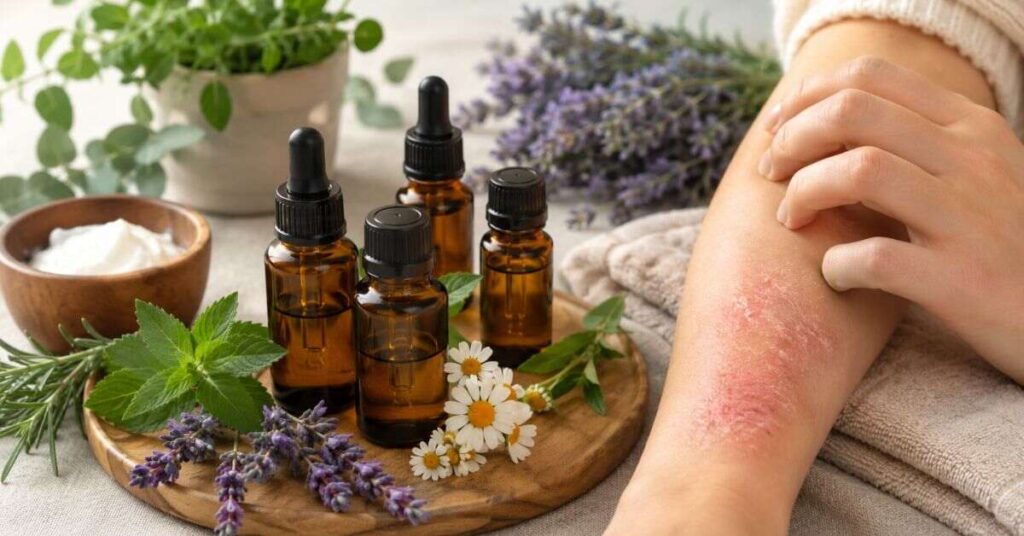
Many people turn to natural remedies after experiencing repeated eczema flare-ups. Many people choose essential oils for eczema because these concentrated plant extracts offer a pleasant aroma and contain natural compounds.Although these oils cannot cure eczema, some may help relieve common symptoms such as itching, dryness, inflammation, and skin discomfort when used correctly.
That said, essential oils are not a replacement for medical treatment. Their effects vary depending on the type of oil, the individual’s skin sensitivity, and proper dilution. In fact, using the wrong oil or applying it incorrectly may worsen eczema rather than improve it.
Therefore, before trying any essential oil, it’s important to understand what they are, how they work, and what current research actually says.
What Are Essential Oils?
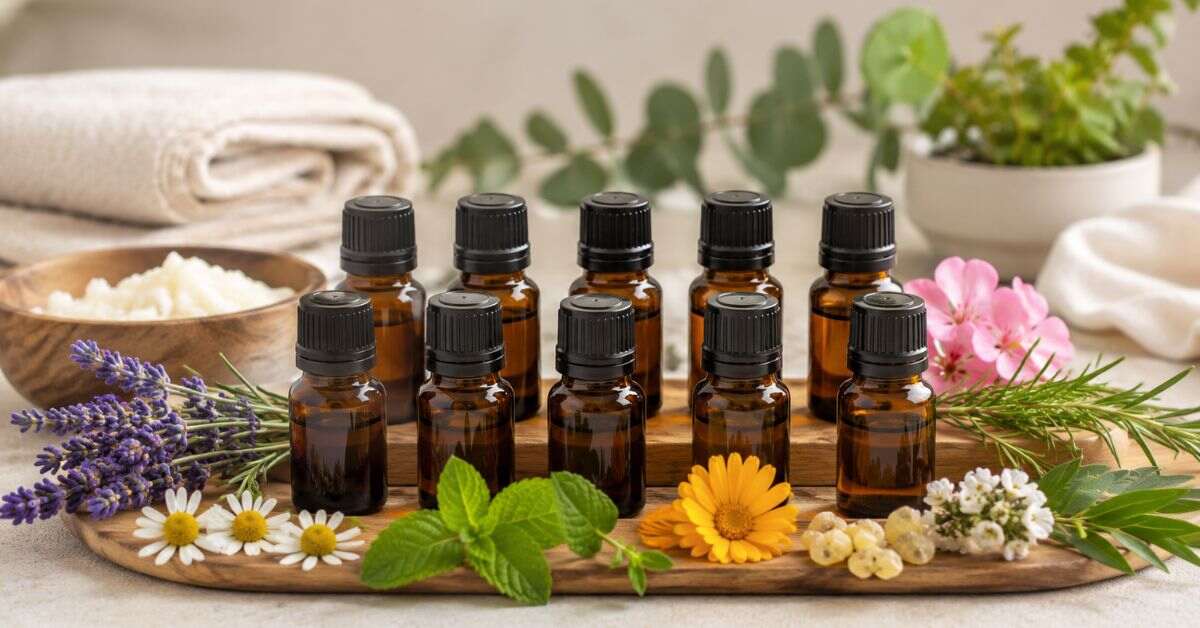
Essential oil producers extract these highly concentrated liquids from different parts of plants, including flowers, leaves, bark, roots, seeds, and peels. Manufacturers commonly obtain these oils through steam distillation or cold pressing, preserving the plant’s natural aromatic compounds.
Unlike vegetable or carrier oils, essential oils contain potent active ingredients in very small amounts. As a result, they should never be applied directly to the skin without dilution.
Many essential oils contain plant compounds such as:
| Natural Compound | Potential Role |
| Terpenes | May provide anti-inflammatory effects. |
| Linalool | May help soothe irritated skin and promote relaxation. |
| Cineole | May offer antimicrobial properties. |
| Chamazulene | Found in chamomile oil and may help calm skin irritation. |
| Alpha-pinene | May support skin recovery and reduce oxidative stress. |
These naturally occurring compounds are the reason many people investigate essential oils for eczema as part of a broader skincare routine. However, their effectiveness depends on proper use rather than simply choosing a popular oil.
It is also important to remember that “natural” does not automatically mean “safe.” Essential oils are highly concentrated and can cause irritation if they are overused, poorly diluted, or applied to damaged skin.
Quick Fact: It can take several pounds of plant material to produce just a small bottle of essential oil, making these extracts far more concentrated than the original plant.
Can Essential Oils Help Eczema?
The short answer is they may help manage symptoms, but they do not cure eczema.
Eczema, also known as atopic dermatitis, develops as a chronic inflammatory skin condition due to genetic factors, immune system changes, environmental triggers, and a weakened skin barrier. Since essential oils do not address these root causes, people should use them only as supportive care and not as a standalone treatment.Eczema, also known as atopic dermatitis, develops as a chronic inflammatory skin condition due to genetic factors, immune system changes, environmental triggers, and a weakened skin barrier. Since essential oils do not address these root causes, people should use them only as supportive care and not as a standalone treatment.
When diluted with an appropriate carrier oil, certain essential oils may provide several supportive benefits.
They may:
- Help reduce itching during mild flare-ups.
- Calm temporary skin inflammation.
- Support the skin’s natural moisture barrier when combined with nourishing carrier oils.
- Reduce the growth of certain surface bacteria that may worsen eczema.
- Promote relaxation and improve sleep, especially when itching keeps you awake.
For example, many people use lavender oil for its calming effects, and they choose chamomile oil for its soothing properties. Similarly, tea tree oil shows antimicrobial activity that may help reduce bacteria on the skin, but users should apply it carefully because it can irritate sensitive skin.
Despite these potential benefits, no essential oil can replace treatments recommended by a dermatologist, such as moisturizers, topical corticosteroids, or prescription medications when necessary.
Instead, many experts consider essential oils for eczema to be a complementary option that may help some individuals manage mild symptoms alongside a medically approved skincare routine.
Expert Tip: The best results usually come from combining gentle skincare, daily moisturizing, trigger avoidance, and carefully selected essential oils not from relying on essential oils alone.
What Research Says About Essential Oils for Eczema
Scientific research on essential oils for eczema is promising but still developing. Most studies include small groups of participants, laboratory testing, or animal research. Therefore, researchers still need larger clinical trials to understand how effective essential oils are for eczema symptoms.
However, early findings suggest that some essential oils may provide supportive benefits when used correctly and safely.
Potential Benefits of Different Essential Oils for Eczema
Research has explored several essential oils because of their soothing, antimicrobial, and anti-inflammatory properties. Some oils may help reduce irritation, support skin comfort, or improve relaxation during eczema flare-ups.
| Essential Oil | Research Findings |
|---|---|
| Lavender Oil | May help reduce skin irritation and promote relaxation, which can support better sleep during eczema flare-ups. |
| Chamomile Oil | Contains natural compounds that may help calm inflamed skin and reduce visible redness. |
| Tea Tree Oil | Shows antimicrobial activity against certain bacteria but may cause allergic reactions in sensitive skin. |
| Frankincense Oil | Laboratory studies suggest anti-inflammatory effects, although more human research is needed. |
| Geranium Oil | May support skin repair and reduce irritation, but researchers need more evidence to confirm these effects. |
Researchers also highlight that some reported improvements may come from carrier oils rather than essential oils alone. Oils such as coconut oil and sunflower seed oil can help strengthen the skin barrier and reduce moisture loss, which makes them an important part of eczema care.
What Experts Say About Using Essential Oils Safely
Medical experts recommend caution when using essential oils for eczema because eczema-prone skin often has a damaged protective barrier. Strong concentrations or improper application can increase irritation, dryness, or allergic reactions.
Most dermatologists suggest diluting essential oils with a suitable carrier oil before applying them to the skin. People with sensitive skin, severe eczema, or frequent flare-ups should also speak with a healthcare professional before adding new products to their routine.
Are Essential Oils a Proven Treatment for Eczema?
Current evidence shows that essential oils may help some people manage eczema-related discomfort, but they are not a proven cure. They work best as a supportive option alongside proven treatments such as regular moisturizing, avoiding triggers, and following dermatologist recommendations.
Bottom Line: Research suggests that some essential oils may provide relief from eczema symptoms, but the strongest evidence still supports a consistent skincare routine, proper hydration, and medical treatment when needed. Essential oils should be viewed as a helpful addition, not a replacement for complete eczema care.
Benefits of Essential Oils for Eczema
Living with eczema often means dealing with persistent itching, dryness, redness, and recurring flare-ups that can affect both comfort and confidence. While essential oils for eczema cannot cure the condition, certain oils may help manage common symptoms when they are diluted correctly and used alongside a gentle skincare routine.
Their potential benefits come from naturally occurring plant compounds that may soothe irritation, support the skin barrier, and promote relaxation. However, results vary from person to person. Factors such as skin sensitivity, eczema severity, and the type of essential oil used all play an important role.
The following sections explain the most well-known benefits of essential oils for eczema and why some people include them in their skincare routine.
May Help Reduce Itching
One of the most frustrating symptoms of eczema is constant itching. Scratching may provide temporary relief, but it often damages the skin further, increases inflammation, and raises the risk of infection. This cycle, commonly called the itch-scratch cycle, can make eczema much harder to control.
Some essential oils for eczema contain soothing plant compounds that may help calm irritated skin and reduce the urge to scratch. For example, many people use lavender essential oil for its calming properties, while Roman chamomile essential oil provides naturally occurring compounds that may help ease skin discomfort.
When people mix these oils with nourishing carrier oils like coconut or sunflower seed oil, the blend may create a soothing and comfortable feel on dry, itchy skin.In addition, applying diluted oils after moisturizing may help lock in hydration, which can further reduce itchiness caused by excessive dryness.
It is important to understand that essential oils do not stop the underlying cause of eczema-related itching. Instead, they may offer temporary symptom relief as part of a broader skincare routine.
Quick Tip: If itching becomes severe, disrupts sleep every night, or causes bleeding, consult a dermatologist instead of relying solely on natural remedies.
May Calm Skin Inflammation
Inflammation is one of the defining characteristics of eczema. During a flare-up, the immune system overreacts, causing redness, swelling, warmth, and irritation. As a result, the skin becomes more sensitive and uncomfortable.
Several best essential oils for eczema contain plant compounds that have shown anti-inflammatory activity in laboratory and preliminary research. Oils such as chamomile, frankincense, and helichrysum are commonly chosen because they may help soothe irritated skin when properly diluted.
Although these oils cannot replace prescription anti-inflammatory treatments, they may complement a dermatologist-approved skincare routine by helping the skin feel calmer during mild flare-ups.
At the same time, it is important to avoid overusing essential oils. Applying too much or using highly concentrated products may increase irritation rather than reduce it. Therefore, proper dilution is essential for both safety and effectiveness.
Did You Know? Eczema inflammation is often triggered by allergens, harsh soaps, stress, weather changes, or irritants. Identifying and avoiding these triggers is just as important as choosing the right skincare products.
May Support the Skin Barrier
A weakened skin barrier is one of the biggest reasons eczema develops and keeps returning. Healthy skin naturally holds moisture inside while protecting the body from bacteria, allergens, and environmental irritants. However, eczema damages this protective barrier, allowing water to escape and irritants to enter more easily.
Some essential oils for eczema may indirectly support the skin barrier when they are blended with moisturizing carrier oils. While the essential oils themselves are not responsible for replacing lost moisture, they may work alongside carrier oils to create a more balanced skincare routine.
For example, combining diluted lavender or frankincense oil with sunflower seed oil or virgin coconut oil may help improve skin comfort while reducing excessive dryness.
To strengthen the skin barrier even further:
- Apply moisturizer immediately after bathing while the skin is still slightly damp.
- Use fragrance-free cleansers instead of harsh soaps.
- Choose carrier oils that are suitable for eczema-prone skin.
- Avoid hot showers, which can strip away natural skin oils.
- Wear soft, breathable fabrics like cotton to reduce irritation.
Building a stronger skin barrier takes time, so consistency is more important than using large amounts of any single product.
Antimicrobial Properties
People with eczema are more likely to have an overgrowth of certain bacteria on their skin, particularly Staphylococcus aureus. This bacterial imbalance can worsen inflammation, increase itching, and sometimes contribute to skin infections.
Some essential oils for eczema, especially tea tree oil, have demonstrated antimicrobial activity in laboratory studies. These natural compounds may help reduce the growth of certain microorganisms on the skin’s surface.
However, stronger antimicrobial activity does not always mean better results for eczema. Tea tree oil, for example, is also one of the oils most likely to cause irritation or allergic contact dermatitis in sensitive individuals.
Because of this, antimicrobial essential oils should always be:
- Properly diluted with a carrier oil.
- Patch tested before regular use.
- Avoided on open wounds, cracked skin, or infected eczema patches unless advised by a healthcare professional.
Maintaining good skincare habits, keeping the skin moisturized, and following medical treatment remain the most effective ways to reduce infection risk.
Important: If your eczema becomes painful, develops yellow crusts, starts oozing, or feels unusually warm, seek medical care promptly. These symptoms may indicate a skin infection that requires professional treatment.
May Improve Sleep During Eczema Flare-Ups
Sleep problems are common among people with eczema. Persistent itching often becomes worse at night, making it difficult to fall asleep or stay asleep. Poor sleep can then increase stress levels, which may trigger additional flare-ups and create a frustrating cycle.
This is where certain essential oils for eczema may offer another supportive benefit.
Essential oils such as lavender, Roman chamomile, and frankincense are frequently used in aromatherapy because of their calming aromas. Although they do not treat eczema directly, they may help create a more relaxing bedtime environment, making it easier to unwind before sleep.
Many people choose to:
- Add a few diluted drops to a relaxing massage oil.
- Use a diffuser in the bedroom before bedtime.
- Practice deep breathing while enjoying the calming scent.
- Pair aromatherapy with a consistent nighttime skincare routine.
Better sleep may also reduce stress-related flare-ups over time, although more clinical research is needed to confirm this connection.
Quick Summary of Potential Benefits
| Potential Benefit | How It May Help |
| Reduces itching | May soothe irritated skin and help break the itch-scratch cycle. |
| Calms inflammation | Some plant compounds may help reduce temporary redness and irritation. |
| Supports the skin barrier | Works best when combined with moisturizing carrier oils. |
| Provides antimicrobial support | Certain oils may help limit surface bacteria, although they should be used carefully. |
| Promotes better sleep | Calming aromas may improve relaxation during nighttime eczema flare-ups. |
Key Takeaway
The biggest advantage of using essential oils for eczema is that they may provide supportive symptom relief, especially for mild itching, irritation, and stress-related discomfort. Nevertheless, they are not a cure, and they work best when combined with regular moisturizing, trigger avoidance, and treatments recommended by your healthcare provider.
10 Best Essential Oils for Eczema
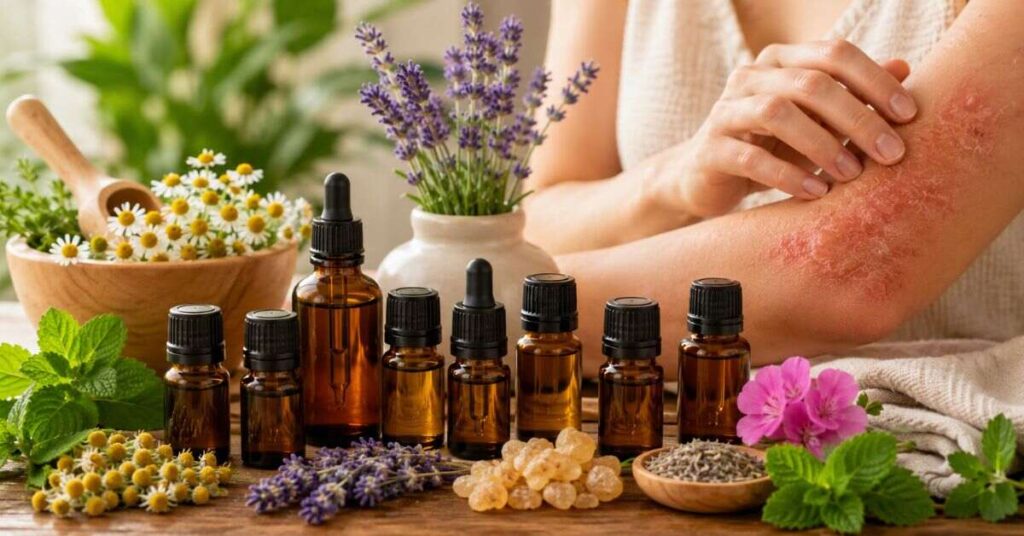
Choosing the right essential oil is just as important as knowing how to use it. Although many plant oils are marketed as natural remedies, only a handful have been studied for their soothing, anti-inflammatory, or antimicrobial properties that may benefit eczema-prone skin. Even then, no essential oil works for everyone. Your skin type, eczema severity, allergies, and existing skincare routine all influence how your skin responds.
The best essential oils for eczema are those that support your skin without causing additional irritation. They should always be diluted with a suitable carrier oil, used on intact skin, and patch tested before regular application. If an oil causes burning, increased redness, or worsening eczema, discontinue use immediately.
The table below provides a quick comparison before exploring each oil in detail.
| Essential Oil | Best For | Main Properties | Use With Caution? |
| Tea Tree Oil | Bacteria-prone skin | Antimicrobial | Yes |
| Lavender Oil | Itchy, irritated skin | Soothing, calming | Low risk when diluted |
| Chamomile Oil | Sensitive skin | Anti-inflammatory | Low risk |
| Frankincense Oil | Dry, mature skin | Skin-soothing | Moderate |
| Geranium Oil | Skin balance | Barrier support | Moderate |
| Helichrysum Oil | Inflamed skin | Skin-calming | Moderate |
| Calendula Oil | Dry, cracked skin | Moisturizing, soothing | Generally well tolerated |
| Rosehip Seed Oil | Damaged skin barrier | Nourishing, restorative | Low risk |
| Peppermint Oil | Temporary cooling effect | Cooling sensation | High caution |
| Eucalyptus Oil | Aromatherapy support | Refreshing, antimicrobial | High caution |
Tea Tree Oil
Tea tree oil is one of the most widely researched essential oils because of its natural antimicrobial and antiseptic properties. People with eczema sometimes experience an overgrowth of bacteria on damaged skin, which can increase irritation and raise the risk of infection. Tea tree oil may help reduce certain bacteria on the skin’s surface, making it a popular choice for mild eczema in carefully selected cases.
Despite these advantages, tea tree oil is not suitable for everyone. It is also one of the most common causes of allergic contact dermatitis when applied incorrectly or in high concentrations. For this reason, dermatologists often recommend extra caution, especially for people with sensitive skin.
If you decide to use tea tree oil:
- Always dilute it with a carrier oil.
- Perform a patch test at least 24 hours before full application.
- Never apply it to cracked, bleeding, or infected eczema.
- Stop using it immediately if irritation increases.
Tea tree oil can be helpful for some people, but it should never replace prescribed eczema treatments or daily moisturizers.
Lavender Oil
Lavender oil is often considered one of the gentlest essential oils for eczema because it combines skin-soothing properties with a calming aroma. Many people choose it to reduce discomfort during flare-ups while also promoting relaxation before bedtime.
Although research is still developing, lavender contains naturally occurring compounds that may help calm irritated skin and reduce the sensation of itching. Better sleep can also make eczema easier to manage, as scratching often becomes worse during the night.
Lavender oil works best when blended with nourishing carrier oils such as sunflower seed oil or virgin coconut oil. This combination helps moisturize dry skin while allowing the diluted essential oil to spread evenly across the affected area.
People with fragrance allergies should still perform a patch test before regular use, even though lavender is generally well tolerated.
Chamomile Oil
Chamomile oil has been used in traditional skincare for centuries because of its gentle nature. It is especially popular among people whose eczema causes redness, irritation, and highly sensitive skin.
Roman chamomile contains natural compounds that may help calm visible inflammation while creating a soothing feeling on irritated skin. Unlike stronger essential oils, chamomile is usually chosen for comfort rather than antimicrobial action.
Because of its mild profile, chamomile oil is often recommended for adults with dry or delicate skin. However, individuals who are allergic to ragweed, daisies, or related plants should avoid it due to the possibility of cross-reactivity.
For many people, chamomile becomes an excellent evening skincare option when mixed with a moisturizing carrier oil and applied after bathing.
Frankincense Oil
Frankincense oil has earned a reputation for supporting skin health and improving the appearance of dry, stressed skin. While scientific evidence specifically for eczema remains limited, laboratory studies suggest that its natural compounds possess anti-inflammatory activity.
People often choose frankincense when eczema leaves the skin feeling rough, flaky, or tight. Instead of providing an instant effect, it is generally used as part of a consistent skincare routine focused on hydration and skin barrier support.
Because frankincense is concentrated, it should always be diluted before touching the skin. Using excessive amounts does not improve results and may increase irritation.
When combined with regular moisturizing, frankincense oil may help create a smoother, more comfortable skin surface over time.
Geranium Oil
Geranium oil is valued for its balancing effect on the skin. Rather than targeting one specific eczema symptom, it is commonly included in natural skincare blends designed to support overall skin condition.
Its natural antioxidant and soothing compounds may help reduce minor irritation while supporting healthier-looking skin. Some people also appreciate its pleasant floral scent, which adds a relaxing element to their skincare routine.
Since fragrance sensitivity varies from person to person, geranium oil should be introduced gradually. Begin with a low dilution ratio and observe how your skin responds over the next 24 hours.
When paired with a carrier oil rich in essential fatty acids, geranium oil may become a useful addition to long-term eczema care for adults without fragrance allergies.
Helichrysum Oil
Helichrysum oil is often described as one of the premium botanical oils used in restorative skincare. It contains naturally occurring plant compounds that are believed to support skin recovery and reduce visible irritation.
Although clinical research for eczema is still limited, many natural skincare enthusiasts value helichrysum because it feels gentle on dry, inflamed skin when diluted correctly.
Its higher price means it is usually reserved for small treatment blends rather than daily full-body application. Even so, quality matters more than quantity. A properly diluted, high-quality oil is far more beneficial than frequent use of a low-grade product.
As with every essential oil, discontinue use if burning, redness, or discomfort develops after application.
Calendula Oil
Calendula oil is frequently recommended for eczema because it focuses on soothing and nourishing extremely dry skin. Unlike many stronger essential oils, calendula is well known for its gentle nature, making it a favorite in products designed for sensitive skin.
It helps soften rough patches while supporting the skin’s natural moisture barrier. This makes it especially useful during periods of dryness when eczema causes flaking or tightness.
Many people apply calendula-infused oil after bathing because damp skin absorbs moisturizing products more effectively. Consistent hydration is often more beneficial than applying larger amounts less frequently.
Although reactions are uncommon, individuals with allergies to plants in the daisy family should use calendula with caution.
Rosehip Seed Oil
Although technically a carrier oil rather than a true essential oil, rosehip seed oil is often included in eczema care because of its exceptional skin-nourishing properties.
It contains essential fatty acids and antioxidants that help improve skin hydration and support the natural skin barrier. Since eczema weakens this protective barrier, maintaining moisture is one of the most effective ways to reduce dryness and discomfort.
Rosehip seed oil has a lightweight texture that absorbs easily without leaving a heavy or greasy finish. Many people combine it with diluted essential oils such as lavender or chamomile to create a balanced skincare blend.
For individuals with dry, mature, or dehydrated skin, rosehip seed oil can become one of the most valuable parts of an eczema routine.
Note: Rosehip seed oil is not an essential oil, but its barrier-supporting properties make it highly relevant for eczema care.
Peppermint Oil
Peppermint oil creates an immediate cooling sensation because it contains menthol. This cooling effect may temporarily distract from itching, leading some people to believe it relieves eczema.
However, peppermint oil is not usually recommended for active eczema. Its cooling compounds can sting damaged skin, increase irritation, and trigger discomfort on sensitive eczema patches.
If used at all, peppermint oil should only be considered for adults with intact skin and should always be heavily diluted. It should never be applied to broken skin, young children, or infants.
For most people with eczema, gentler options such as lavender or chamomile provide a safer choice.
Eucalyptus Oil
Eucalyptus oil is best known for its refreshing aroma and respiratory benefits rather than its direct effects on eczema. While it does possess natural antimicrobial compounds, it can also be irritating to sensitive skin.
Because eczema weakens the skin barrier, eucalyptus oil may cause stinging or redness when applied topically. Therefore, many dermatologists recommend avoiding it during active flare-ups.
Some people prefer using eucalyptus in a diffuser instead of applying it directly to the skin. Aromatherapy may create a more relaxing environment without exposing irritated skin to concentrated oil.
If you have eczema, eucalyptus should be viewed as an optional aromatherapy oil rather than a primary skincare treatment.
Expert Recommendation
No single oil works for every person with eczema. If you are trying essential oils for eczema for the first time, start with lavender, Roman chamomile, or calendula, as these are generally considered gentler choices when properly diluted. Stronger oils such as tea tree, peppermint, and eucalyptus require extra caution because they are more likely to trigger irritation in sensitive skin.
The most effective approach is to combine a suitable oil with a nourishing carrier oil, moisturize consistently, avoid known eczema triggers, and follow your dermatologist’s treatment plan. Natural remedies can support healthy skin, but they should complement not replace evidence-based eczema care.
Best Carrier Oils to Use with Essential Oils for Eczema
Using essential oils for eczema without a carrier oil is one of the biggest mistakes people make. Essential oils are highly concentrated and can easily irritate already sensitive eczema-prone skin. Carrier oils solve this problem by diluting essential oils to a safer strength while adding their own moisturizing and skin-protecting properties.
Unlike essential oils, carrier oils are rich in essential fatty acids, vitamins, and antioxidants that help soften dry skin and reduce moisture loss. Since eczema weakens the skin’s protective barrier, choosing the right carrier oil is just as important as selecting the essential oil itself.
The best results usually come from combining a gentle essential oil with a carrier oil that supports hydration and skin repair. This combination allows the active plant compounds to spread evenly across the skin while minimizing the risk of irritation.
| Carrier Oil | Best For | Key Benefits |
| Virgin Coconut Oil | Very dry, flaky skin | Deeply moisturizes and supports the skin barrier. |
| Sunflower Seed Oil | Sensitive or inflamed skin | Strengthens the skin barrier and helps retain moisture. |
| Safflower Seed Oil | Lightweight daily hydration | Rich in linoleic acid, absorbs quickly without feeling greasy. |
Coconut Oil
Virgin coconut oil is one of the most popular carrier oils for people using essential oils for eczema because it hydrates dry skin while helping reduce moisture loss. It contains natural fatty acids, particularly lauric acid, which has antimicrobial properties and supports healthier skin.
One of coconut oil’s biggest advantages is its ability to soften rough, flaky patches. Applying it after bathing helps lock in moisture, making the skin feel smoother and more comfortable throughout the day. Many people also find that consistent use reduces tightness caused by excessive dryness.
Coconut oil works well with gentle essential oils such as lavender, Roman chamomile, and frankincense because it creates a smooth blend that spreads easily over the skin.
However, coconut oil is not the best choice for everyone. Some individuals with oily or acne-prone skin may find it too rich, especially when used on the face. If you notice clogged pores or increased irritation, consider switching to a lighter carrier oil.
Best paired with: Lavender oil, chamomile oil, frankincense oil.
Sunflower Seed Oil
When dermatologists discuss oils that support eczema-prone skin, sunflower seed oil is often among the first recommendations. Unlike heavier oils, it has a lightweight texture while providing excellent hydration.
Sunflower seed oil is naturally rich in linoleic acid and vitamin E, two components that help strengthen the skin barrier and reduce water loss. Because eczema damages this protective barrier, restoring it is essential for long-term skin health.
Its gentle nature makes sunflower seed oil an excellent choice for people with sensitive skin, including those who experience redness or irritation after trying stronger natural products. It absorbs quickly without leaving a heavy or greasy layer, making it suitable for daily use.
Sunflower seed oil also blends well with calming essential oils, creating a balanced mixture that moisturizes while helping soothe irritated skin.
Best paired with: Lavender oil, geranium oil, helichrysum oil.
Expert Insight: Many skincare experts recommend sunflower seed oil as a first-choice carrier oil for eczema because it focuses on restoring the skin barrier instead of simply coating the skin.
Safflower Seed Oil
Safflower seed oil is another excellent option for diluting essential oils for eczema, particularly if you prefer lightweight skincare products. It spreads easily, absorbs quickly, and leaves very little oily residue, making it comfortable for daily use.
Like sunflower seed oil, safflower oil contains a high concentration of linoleic acid, an essential fatty acid that supports healthy skin and helps reduce moisture loss. This makes it especially beneficial for people whose eczema leaves their skin feeling rough or dehydrated.
Another advantage is its compatibility with many essential oils. Whether you are using lavender, frankincense, or chamomile, safflower seed oil creates a smooth, well-balanced blend that is easy to apply over larger areas.
Although safflower oil is generally well tolerated, it is still wise to perform a patch test before applying any new skincare product regularly. Even gentle oils can cause unexpected reactions in highly sensitive individuals.
Best paired with: Chamomile oil, lavender oil, geranium oil.
Why Carrier Oils Matter
Many people focus entirely on choosing the best essential oils for eczema, yet the carrier oil often has an even greater impact on skin health. While essential oils contribute beneficial plant compounds, carrier oils provide the hydration and nourishment that eczema-prone skin needs every day.
A quality carrier oil can:
- Reduce the risk of irritation by safely diluting concentrated essential oils.
- Improve moisture retention, helping dry skin stay hydrated for longer.
- Support the skin barrier, making it more resistant to everyday irritants.
- Enhance absorption, allowing the diluted blend to spread evenly across the skin.
- Create a gentler skincare routine, especially for people with sensitive or reactive skin.
Choosing the right carrier oil also depends on your skin type. The table below can help you decide.
| Skin Concern | Recommended Carrier Oil |
| Very dry or flaky skin | Virgin Coconut Oil |
| Sensitive or inflamed skin | Sunflower Seed Oil |
| Normal or combination skin | Safflower Seed Oil |
| Daily moisturizing routine | Sunflower or Safflower Seed Oil |
Key Takeaway
If you plan to use essential oils for eczema, never overlook the importance of a carrier oil. A well-chosen carrier oil not only makes essential oils safer to use but also delivers many skin benefits on its own. For most people with eczema, sunflower seed oil offers the best balance of hydration, barrier support, and gentleness, while virgin coconut oil is ideal for very dry skin and safflower seed oil provides a lighter alternative for everyday use.
How to Choose the Best Essential Oils for Eczema
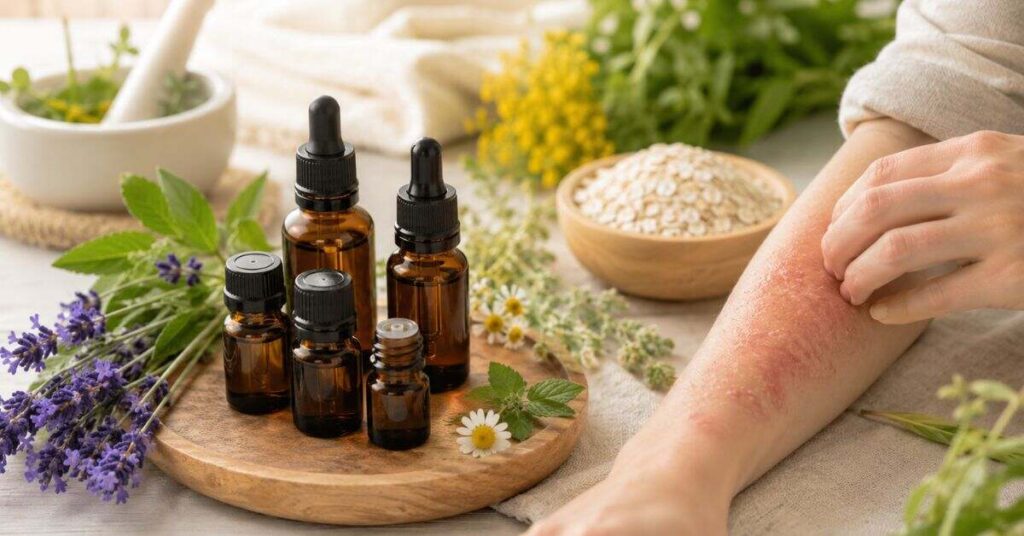
Not every essential oil is suitable for every type of eczema. A product that works well for one person may cause irritation in another because eczema affects each person’s skin differently. Some people struggle mainly with extreme dryness, while others experience intense itching, red inflamed patches, or highly sensitive skin that reacts to almost any new product.
Choosing the right essential oils for eczema starts with understanding your skin’s needs rather than following trends or buying the most expensive oil. It is equally important to consider the quality of the product, how it is diluted, and whether it contains ingredients that may trigger a flare-up.
The following recommendations can help you select the most suitable oils based on your symptoms.
For Dry Skin
Dryness is one of the most common problems associated with eczema. When the skin loses too much moisture, it becomes rough, tight, flaky, and more prone to cracking. In this condition, the goal is not only to soothe irritation but also to protect and strengthen the skin barrier.
If your eczema mainly causes dry patches, look for gentle essential oils that pair well with deeply moisturizing carrier oils.
Good choices include:
- Lavender Oil – Helps soothe discomfort while complementing a moisturizing routine.
- Frankincense Oil – Often chosen for rough, dehydrated skin because of its skin-conditioning properties.
- Calendula Oil – Supports soft, comfortable skin and works well on flaky areas.
- Rosehip Seed Oil – Although technically a carrier oil, it is rich in essential fatty acids that nourish the skin barrier.
For the best results, blend these oils with virgin coconut oil or sunflower seed oil and apply them after bathing while the skin is still slightly damp. This simple habit helps lock in moisture and keeps the skin hydrated for longer.
Pro Tip: Even the best essential oils for eczema cannot replace a good moisturizer. Think of essential oils as an addition to your skincare routine not the main treatment.
For Sensitive Skin
Sensitive skin requires a careful approach because even natural ingredients can trigger irritation. If your skin reacts easily to fragrances, skincare products, or environmental changes, choose essential oils known for their gentle profile and avoid experimenting with multiple new oils at the same time.
For sensitive skin, consider:
- Roman Chamomile Oil – One of the gentlest options for calming irritated skin.
- Lavender Oil – Often well tolerated when properly diluted.
- Calendula Oil – A soothing botanical oil commonly used in products designed for delicate skin.
When trying any new oil:
- Introduce one product at a time.
- Perform a 24-hour patch test before wider application.
- Start with a low dilution and increase only if your skin tolerates it well.
- Avoid using several essential oils together until you know how your skin responds.
People with highly reactive skin often benefit more from a simple routine than from using multiple active ingredients.
For Itchy Skin
Persistent itching is often the most uncomfortable symptom of eczema. Although scratching may provide temporary relief, it damages the skin barrier and increases the likelihood of infection. Choosing the right oil can help make the skin feel more comfortable and reduce the urge to scratch.
Some of the most commonly recommended options include:
- Lavender Oil – Known for its soothing properties and calming aroma.
- Roman Chamomile Oil – Frequently used to comfort irritated, itchy skin.
- Helichrysum Oil – Popular in natural skincare for supporting inflamed or stressed skin.
Pairing these oils with sunflower seed oil creates a blend that hydrates while spreading evenly across the skin.
In addition to using essential oils for eczema, keep these habits in mind:
- Moisturize several times a day.
- Keep your fingernails short to reduce skin damage from scratching.
- Wear soft cotton clothing instead of rough fabrics.
- Avoid overheating, as heat often makes itching worse.
Combining these simple lifestyle changes with a consistent skincare routine usually provides better results than relying on any single product.
Ingredients to Avoid
Selecting the right oil is only part of the equation. Avoiding irritating ingredients is equally important because eczema-prone skin is more vulnerable to reactions than healthy skin.
Before buying any essential oil or skincare blend, check the ingredient list carefully.
Avoid products containing:
- Synthetic fragrances
- Artificial dyes or colors
- Undisclosed “fragrance” blends
- High concentrations of essential oils
- Alcohol-based formulations that dry the skin
- Harsh preservatives known to irritate sensitive skin
You should also be cautious with stronger essential oils that are more likely to cause burning or allergic reactions, including:
- Peppermint Oil
- Eucalyptus Oil
- Clove Oil
- Cinnamon Bark Oil
- Oregano Oil
- Undiluted Tea Tree Oil
These oils may be useful in other situations, but they are generally not the best choice for active eczema flare-ups.
Quick Selection Guide
| Your Skin Concern | Recommended Oils | Carrier Oil |
| Dry, flaky skin | Lavender, Frankincense, Calendula | Virgin Coconut Oil |
| Sensitive skin | Roman Chamomile, Lavender | Sunflower Seed Oil |
| Persistent itching | Lavender, Chamomile, Helichrysum | Sunflower Seed Oil |
| Damaged skin barrier | Rosehip Seed Oil + Lavender | Sunflower or Safflower Seed Oil |
Expert Tip: Don’t choose an oil simply because it’s popular online. The best essential oils for eczema are the ones your skin tolerates well. A high-quality, properly diluted oil that suits your skin type will almost always perform better than a stronger product that causes irritation.
Key Takeaway
Finding the right essential oils for eczema is a personal process. Focus on your primary symptoms, choose high-quality oils, dilute them correctly, and avoid ingredients that commonly trigger sensitive skin. A simple, consistent routine built around gentle products is far more effective than using multiple oils at once or changing products frequently.
Read More:https://pureoilshub.com/essential-oils-for-congestion/
How to Use Essential Oils for Eczema Safely
Using essential oils for eczema correctly is just as important as choosing the right oil. Even an oil known for its soothing properties can trigger burning, redness, or an allergic reaction if it is applied incorrectly. Because eczema weakens the skin’s protective barrier, the skin becomes more vulnerable to irritation from concentrated ingredients.
A safe routine starts with three basic principles: choose a high-quality essential oil, dilute it with a suitable carrier oil, and introduce it gradually. Rushing the process or using excessive amounts will not improve results. In fact, it often increases the risk of irritation and makes eczema symptoms more difficult to manage.
The following guidelines explain how to use essential oils safely while minimizing the chance of unwanted reactions.
Dilute Essential Oils Properly
Essential oils should never be applied directly to eczema-prone skin. Unlike carrier oils, they are highly concentrated plant extracts that contain powerful aromatic compounds. A single drop may contain the equivalent of a large amount of plant material, which is why undiluted application can easily overwhelm sensitive skin.
Dilution reduces this concentration to a level that is much safer for topical use. It also helps the oil spread evenly across the skin and improves comfort during application.
For adults with eczema, a 1% dilution is generally considered a cautious starting point. This equals approximately 1 drop of essential oil per teaspoon (5 mL) of carrier oil. People with very sensitive skin or those trying an oil for the first time may prefer an even lower concentration.
The choice of carrier oil matters just as much as the essential oil itself. Sunflower seed oil is often recommended because it supports the skin barrier and absorbs easily without feeling greasy. Virgin coconut oil is another popular option for very dry skin due to its rich moisturizing properties, while safflower seed oil offers a lighter texture for daily use.
Avoid mixing several essential oils together during your first application. If irritation develops, it becomes difficult to identify which ingredient caused the reaction. Starting with one oil at a time allows you to monitor your skin more accurately.
Recommended Dilution Guide
| Who Is Using It? | Suggested Dilution |
| Adults with normal skin | 1–2% |
| Adults with sensitive or eczema-prone skin | Around 1% |
| Older adults | 0.5–1% |
| Babies and young children | Only under medical guidance |
A lower concentration may seem less effective, but for eczema-prone skin, gentle and consistent application is usually more beneficial than using stronger mixtures.
Perform a Patch Test
Every person’s skin responds differently to essential oils. An oil that feels soothing for one individual may cause redness, itching, or swelling in another. For this reason, a patch test is one of the most important safety steps before using essential oils for eczema.
To perform a patch test:
- Prepare your diluted essential oil blend.
- Apply a small amount to an area of healthy skin, such as the inner forearm or behind the ear.
- Leave the area uncovered and avoid washing it for 24 hours.
- Observe the skin for signs of irritation.
If you notice any of the following, wash the area with mild soap and water and avoid using that oil:
- Burning or stinging
- Persistent redness
- Swelling
- Itching that becomes worse
- Small blisters or a rash
Keep in mind that reactions are not always immediate. Some people develop delayed allergic contact dermatitis, which may appear several hours after application. That is why checking the area over a full day is recommended before applying the oil to larger areas of the body.
How Often Should You Apply Them?
When using essential oils for eczema, more is not better. Applying an oil too frequently can overload the skin, especially during an active flare-up when the skin barrier is already compromised.
For most adults, applying a properly diluted blend once or twice a day is usually sufficient. The ideal time is after bathing or showering, when the skin is still slightly damp. This helps trap moisture and allows the carrier oil to spread more easily.
Consistency is far more important than frequency. A simple routine followed every day is generally more effective than applying large amounts only when symptoms become severe.
It is also worth paying attention to how your skin changes over time. If redness, itching, or dryness increases after several days of use, stop using the product and reassess your routine. Sometimes the carrier oil, fragrance, or another skincare product not the essential oil itself may be responsible for the reaction.
Remember that essential oils for eczema are designed to support your skincare routine, not replace moisturizers, prescription creams, or other treatments recommended by your dermatologist.
Can You Add Essential Oils to a Bath?
Many people enjoy adding essential oils to bathwater because warm baths can feel soothing during an eczema flare-up. However, essential oils should never be poured directly into the bath.
Oil and water do not mix. Without a dispersing agent, concentrated droplets remain on the water’s surface and may come into direct contact with the skin, increasing the risk of irritation or chemical burns.
If you want to enjoy a bath with essential oils:
- Mix the diluted essential oil with a carrier oil before adding it.
- Keep bathwater lukewarm, not hot, as high temperatures can worsen itching and dryness.
- Limit soaking to about 10–15 minutes.
- Pat your skin dry gently with a soft towel rather than rubbing.
- Apply a fragrance-free moisturizer immediately after the bath to lock in hydration.
For many people with eczema, adding colloidal oatmeal to a lukewarm bath may provide more consistent relief than essential oils alone. If you notice increased irritation after using scented bath products, discontinue them and return to a simple moisturizing routine.
Can You Diffuse Essential Oils?
Diffusing essential oils is different from applying them directly to the skin. Instead of targeting eczema patches, a diffuser releases aromatic compounds into the air, creating a calming environment that may help reduce stress and promote relaxation.
This approach may be particularly useful for people whose eczema symptoms worsen during periods of anxiety or poor sleep. Oils such as lavender or Roman chamomile are commonly chosen because of their gentle, relaxing scent.
However, diffusing essential oils does not treat eczema itself. It should be viewed as a way to support overall well-being rather than a replacement for topical skincare.
Keep these precautions in mind:
- Ensure the room is well ventilated.
- Follow the diffuser manufacturer’s instructions.
- Avoid prolonged exposure if the fragrance causes headaches, coughing, or breathing discomfort.
- Use extra caution around babies, young children, and pets, as some essential oils may not be appropriate for them.
If anyone in your household has asthma or other respiratory conditions, speak with a healthcare professional before using essential oils in a diffuser.
Building a Safe Routine That Works
The safest way to use essential oils for eczema is to keep your routine simple. Start with one well-researched essential oil, dilute it correctly, patch test it, and combine it with a gentle carrier oil that supports your skin barrier. Pair this approach with daily moisturizing, fragrance-free skincare products, and trigger avoidance for the best chance of keeping your skin comfortable.
Remember that healthy skin rarely improves overnight. Small, consistent habits rather than frequent product changes are more likely to produce lasting results while reducing the risk of irritation.
Risks and Side Effects of Essential Oils for Eczema

Many people choose essential oils for eczema because they come from natural plant sources. However, natural ingredients are not automatically safe for damaged or sensitive skin. Eczema weakens the skin’s protective barrier, making it easier for irritants and allergens to penetrate the skin. As a result, even a high-quality essential oil can cause discomfort if it is unsuitable for your skin type or used incorrectly.
The likelihood of a reaction depends on several factors, including the type of essential oil, its concentration, the carrier oil used, and your personal sensitivity. People with eczema are also more likely to develop allergic contact dermatitis, which can make existing symptoms worse instead of better.
Understanding the possible risks allows you to make informed choices and avoid common mistakes that may trigger unnecessary flare-ups. Before adding essential oils for eczema to your skincare routine, it is important to know which oils require extra caution, recognize early warning signs of irritation, and understand when it is safer to stop using a product altogether.
Essential Oils That May Trigger Skin Reactions
Not every essential oil is suitable for eczema-prone skin. While some oils are known for their soothing properties, others contain naturally occurring compounds that can irritate an already weakened skin barrier. This is especially true during an active eczema flare-up, when the skin is dry, inflamed, and more sensitive than usual.
Certain essential oils are more likely to trigger burning, redness, itching, or allergic reactions because they contain strong aromatic compounds. These oils may still have therapeutic uses, but they are generally not the first choice for people with eczema.
The following oils deserve extra caution:
| Essential Oil | Reason for Caution |
| Peppermint Oil | Contains menthol, which may sting or burn inflamed skin. |
| Eucalyptus Oil | Can be irritating to sensitive skin and may increase discomfort during flare-ups. |
| Cinnamon Bark Oil | Highly concentrated and commonly associated with skin irritation. |
| Clove Oil | Contains eugenol, a compound that may cause allergic reactions in some people. |
| Oregano Oil | Extremely potent and not suitable for direct application on eczema-prone skin. |
| Undiluted Tea Tree Oil | May trigger allergic contact dermatitis if applied without proper dilution. |
| Lemongrass Oil | Rich in citral, which is a known skin sensitizer for some individuals. |
Another factor to consider is oxidized essential oils. When oils are exposed to air, heat, or sunlight for long periods, their chemical composition changes. An oil that was originally well tolerated may become more irritating after it has expired or been stored improperly. Always check the expiration date and keep bottles tightly sealed in a cool, dark place.
Choosing high-quality essential oils for eczema from reputable manufacturers and using them within their recommended shelf life can reduce the risk of unexpected skin reactions.
Why Natural Doesn’t Always Mean Safe
One of the biggest misconceptions about skincare is the belief that natural products are automatically safer than synthetic ones. In reality, poison ivy, stinging nettles, and many poisonous mushrooms are also natural, yet they can cause significant harm. The same principle applies to essential oils.
Essential oils are highly concentrated extracts containing dozens of active plant compounds. Because of this concentration, they are much stronger than the original plant material. A few drops of essential oil may require a large quantity of flowers, leaves, or bark to produce, making these products incredibly potent.
For people with eczema, this concentration presents a unique challenge. Eczema can damage the skin barrier, which allows active compounds to reach deeper layers than they would on healthy skin. Even oils that many people consider gentle may irritate sensitive skin when users apply them without dilution, use them too often, or mix them with unsuitable skincare products.
Product quality also plays an important role. Some inexpensive oils contain synthetic fragrances, artificial fillers, or undisclosed additives that increase the likelihood of irritation. Others may be mislabeled or diluted with low-quality ingredients that provide little benefit while increasing the chance of a reaction.
When selecting essential oils for eczema, focus on products that are:
- 100% pure essential oils without unnecessary additives.
- Clearly labeled with the botanical plant name.
- Packaged in dark glass bottles to protect the oil from light.
- Purchased from reputable brands that provide quality testing information.
Natural remedies can certainly have a place in eczema care, but they should always be used with the same level of caution as any other skincare product.
Common Side Effects
Most people tolerate properly diluted essential oils for eczema without serious problems, but side effects can still occur. Some reactions appear within minutes, while others develop gradually after repeated use. Recognizing these symptoms early can prevent minor irritation from turning into a more significant flare-up.
Common side effects include:
- Burning or stinging immediately after application.
- Increased redness that lasts longer than a few minutes.
- Persistent itching that becomes worse instead of improving.
- Dryness or peeling, especially when the oil is applied too frequently.
- Skin rash or hives, which may indicate an allergic reaction.
- Swelling around the treated area.
- Small blisters or fluid-filled bumps in severe cases.
These reactions are not always caused by the essential oil itself. Sometimes the carrier oil, preservatives, added fragrance, or another skincare product used at the same time may be responsible. Introducing one new product at a time makes it easier to identify the cause if a reaction occurs.
People with a history of seasonal allergies, asthma, or allergic skin conditions may have a higher risk of developing sensitivity to certain botanical ingredients. Performing a patch test before regular use remains one of the simplest and most effective ways to reduce this risk.
It is also worth remembering that stronger concentrations do not produce faster results. Applying larger amounts of essential oil often increases irritation without providing additional benefits for eczema-prone skin.
Signs You Should Stop Using an Oil
Your skin usually provides clear signals when a product is not suitable. Ignoring these warning signs can worsen eczema symptoms and delay the healing process. Instead of assuming the irritation is part of the treatment, pay close attention to how your skin responds after each application.
Stop using an essential oil immediately if you experience:
- Intense burning or severe stinging that does not quickly improve.
- Rapidly spreading redness beyond the area where the oil was applied.
- Swelling of the face, lips, or eyelids.
- New blisters, oozing, or cracked skin that was not present before.
- Difficulty breathing, wheezing, or dizziness, which could indicate a serious allergic reaction and require emergency medical attention.
- Persistent worsening of eczema symptoms despite several days of careful use.
If a mild reaction occurs, gently wash the affected area with lukewarm water and a fragrance-free cleanser to remove any remaining oil. Avoid applying additional essential oils until the skin has completely recovered. Continuing to use a product that irritates your skin can damage the already weakened skin barrier and increase the risk of infection.
Finally, remember that essential oils for eczema should not complicate your skincare routine. If an oil consistently causes discomfort, it is better to discontinue its use and choose a gentler alternative rather than hoping your skin will eventually adapt. Healthy eczema management is based on protecting the skin barrier, reducing irritation, and using products that your skin tolerates comfortably over the long term.
Mistakes to Avoid When Using Essential Oils for Eczema
Using essential oils for eczema can be a helpful addition to a gentle skincare routine, but mistakes in application can easily turn a soothing practice into a source of irritation. Because eczema affects the skin barrier, even small errors such as applying too much oil or using the wrong method can increase dryness, redness, and discomfort.
Many people assume that because essential oils come from plants, they can be used freely. However, these oils are highly concentrated extracts and require the same level of care as other active skincare ingredients. The goal is not to use more oil but to use the right oil in the right way.
Avoiding common mistakes allows your skin to benefit from a carefully designed routine while reducing the chance of unnecessary flare-ups.
Applying Undiluted Oils
One of the most common mistakes people make when using essential oils for eczema is applying them directly to the skin without dilution. Essential oils are not the same as regular moisturizing oils. They contain concentrated plant compounds that can be too powerful for sensitive or damaged skin.
When applied undiluted, some essential oils may cause:
- Burning sensations
- Increased redness
- Dryness and peeling
- Itching that becomes worse
- Allergic skin reactions
This risk is even higher during an eczema flare-up because the protective skin barrier is already weakened. Small cracks in dry skin allow concentrated ingredients to penetrate more deeply, increasing the possibility of irritation.
A safer approach is to mix essential oils with a suitable carrier oil before topical use. Carrier oils such as sunflower seed oil, safflower seed oil, and virgin coconut oil help reduce concentration while adding their own moisturizing benefits.
For adults with eczema-prone skin, starting with a low dilution is usually the best approach. A weaker blend allows your skin to adjust and makes it easier to identify whether a particular oil works well for you.
Another mistake is assuming that a stronger concentration will create faster results. With eczema, the opposite is often true. The skin usually responds better to gentle, consistent care rather than aggressive treatments.
A properly diluted essential oil blend should feel comfortable on the skin. If it causes immediate burning or discomfort, that is a sign the mixture may be too strong or unsuitable for your skin type.
Using Too Much Oil
More does not always mean better when it comes to skincare. A common misconception is that applying larger amounts of essential oils for eczema will provide stronger or faster results. In reality, excessive use can overwhelm sensitive skin and increase the chance of irritation.
Essential oils are extremely concentrated, meaning only a small amount is needed. Adding extra drops to a blend does not increase the effectiveness proportionally. Instead, it raises the concentration of active compounds, which may trigger dryness, inflammation, or an allergic response.
Using too much oil can also create problems by:
- Making the skin feel greasy and uncomfortable.
- Increasing exposure to potential allergens.
- Causing product buildup that interferes with normal skincare.
- Making it difficult to identify which ingredient caused a reaction.
A better approach is to apply a small amount consistently. Eczema care depends heavily on maintaining a healthy skin barrier, and that usually requires patience rather than aggressive application.
It is also important to remember that essential oils should complement the basics of eczema management. Daily moisturizing, avoiding known triggers, and following dermatologist recommendations remain the foundation of healthy skin.
If you are creating homemade essential oils for eczema treatment blend, resist the temptation to add multiple oils together in high amounts. A simple formula with one gentle essential oil and one nourishing carrier oil is often easier to tolerate and evaluate.
Skipping a Patch Test
A patch test is a simple step, but many people skip it when trying natural skincare products. This mistake can lead to avoidable reactions, especially for individuals with eczema or sensitive skin.
Even oils considered gentle can cause problems because everyone’s immune system responds differently. A person may tolerate lavender oil, chamomile oil, or another botanical ingredient for months, while someone else may develop irritation after a single application.
A proper patch test helps identify potential sensitivity before applying the product to larger areas.
To perform a patch test:
- Apply a small amount of the diluted oil blend to a small area of healthy skin.
- Leave it for about 24 hours.
- Check for redness, swelling, itching, burning, or unusual changes.
- Avoid using the oil if any reaction appears.
Do not test a new essential oil directly on active eczema patches. Inflamed skin is already more reactive, so it may exaggerate the reaction and make it difficult to determine whether the oil is truly unsuitable.
People who have experienced reactions to fragrances, skincare products, or botanical ingredients should be especially careful. Essential oils contain aromatic compounds that may act as skin sensitizers in some individuals.
A patch test does not guarantee that a product will never cause irritation, but it significantly lowers the risk of a severe reaction.
Using Essential Oils on Broken Skin
Applying essential oils for eczema to cracked, bleeding, or damaged skin is another mistake that can delay healing. Although some oils contain compounds with antimicrobial properties, broken skin is much more vulnerable to irritation.
When eczema becomes severe, scratching can create small openings in the skin. Applying concentrated plant extracts to these areas may cause intense stinging and increase inflammation.
Damaged skin needs a different approach. The priority should be restoring moisture and protecting the skin barrier with gentle products recommended for eczema care.
Avoid applying essential oils directly to:
- Open cuts
- Bleeding eczema patches
- Oozing areas
- Freshly scratched skin
- Signs of infection
If your eczema has become painful, warm, swollen, or produces fluid, it may require medical attention rather than home remedies.
Once the skin barrier improves and the area is no longer broken, a properly diluted essential oil blend may be considered if your skin tolerates it.
Expecting Instant Results
Many people begin using natural remedies hoping for immediate improvement, but eczema is a chronic skin condition that usually requires ongoing management. Expecting essential oils for eczema to completely remove symptoms overnight can lead to disappointment and unnecessary product switching.
Essential oils are not a cure for eczema. They may support comfort, hydration, and relaxation, but they work best as part of a complete skincare strategy.
Realistic expectations are important:
- Dry skin may require consistent moisturizing over time.
- Irritated skin may need several days or weeks to calm.
- Trigger management is often necessary to prevent repeated flare-ups.
- Severe eczema may require prescription treatment.
Another common mistake is abandoning a routine too quickly or constantly changing products. Frequent changes make it harder to understand what benefits your skin and what causes irritation.
A successful eczema routine is usually simple: protect the skin barrier, avoid triggers, moisturize regularly, and introduce new products carefully.
The best results come from consistency, patience, and safe use, not from using more products or stronger formulas.
Can You Use Essential Oils with Eczema Medication?
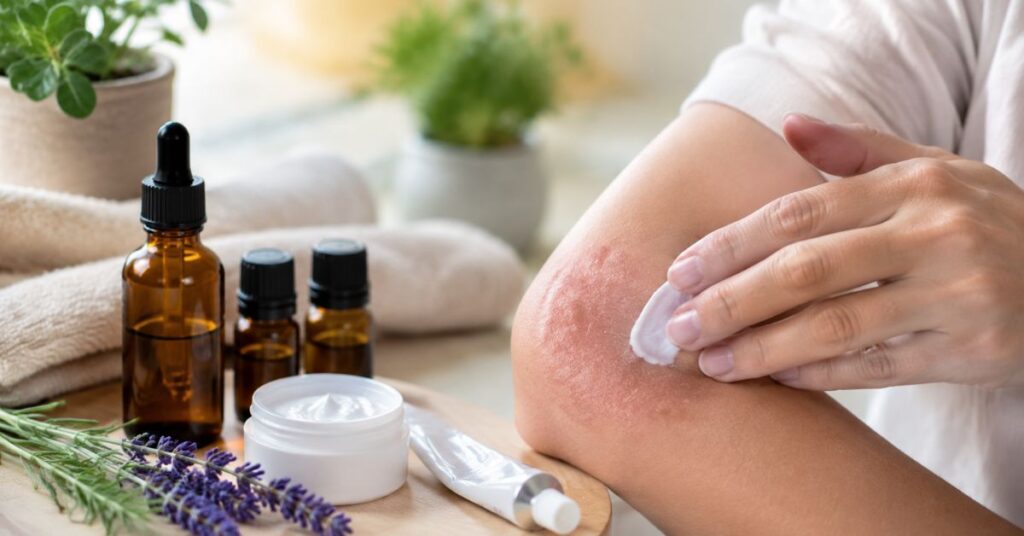
Many people who use essential oils for eczema also rely on prescription creams, moisturizers, or other medical treatments to control flare-ups. This often leads to an important question: can natural oils and eczema medications be used together safely?
In many cases, essential oils may be used as a supportive skincare option, but they should not replace treatments prescribed by a dermatologist. Eczema is an inflammatory skin condition that can vary from mild dryness to severe flare-ups requiring medical care. Prescription treatments work by targeting specific problems, such as inflammation, itching, or infection, while essential oils mainly focus on comfort and skin-supporting properties.
The way you combine these products matters. Applying too many active ingredients at the same time may irritate sensitive skin, reduce tolerance, or make it difficult to identify which product is causing a reaction.
A safer approach is to create a simple routine:
- Use prescribed medication exactly as directed.
- Apply moisturizer regularly to support the skin barrier.
- Introduce essential oils slowly and carefully.
- Avoid mixing multiple new products during an active flare-up.
If you are unsure whether a specific oil is suitable with your medication, your healthcare provider or dermatologist can offer personalized advice based on your eczema severity, skin sensitivity, and treatment plan.
Possible Drug Interactions
When people think about interactions between essential oils and medication, they often imagine only internal use. However, topical products can also affect the skin, especially when the skin barrier is damaged by eczema.
For most commonly prescribed eczema creams, there are no well-established major drug interactions with properly diluted essential oils. However, that does not mean every combination is automatically safe.
The biggest concern is usually skin irritation rather than a direct medication reaction.
For example, applying an essential oil blend immediately after certain topical treatments may:
- Increase stinging or burning sensations.
- Trigger redness on already inflamed skin.
- Make it harder to determine whether a medication is working.
- Cause additional sensitivity if multiple fragranced products are layered together.
People using treatments such as topical corticosteroids, calcineurin inhibitors, or prescription-strength moisturizers should be especially cautious about adding new products during a flare-up. These medications are designed to calm inflammation and repair the skin barrier, while irritating ingredients may work against that goal.
Another factor is product quality. Some commercial essential oil blends contain additional fragrances or botanical extracts that may not be obvious from the product name. These extra ingredients can sometimes cause problems for eczema-prone skin.
If you use prescription medication and want to add essential oils for eczema, introduce the oil at a different time of day rather than applying everything together. This makes it easier to monitor your skin’s response.
For example, a person may use their prescribed cream in the morning and evening while testing a diluted essential oil blend at another time. However, always follow your doctor’s instructions first.
When to Talk to Your Doctor
Although many people explore natural skincare options, eczema is a medical condition that sometimes requires professional guidance. Talking with a healthcare provider before using essential oils is especially important if your symptoms are severe, persistent, or difficult to control.
You should consider discussing essential oils with your doctor if:
- Your eczema covers large areas of your body.
- Your flare-ups frequently return despite treatment.
- Your skin becomes infected or painful.
- You are using multiple prescription medications.
- You have a history of allergic reactions to skincare products.
- You want to use essential oils on a baby or young child.
A dermatologist can help you understand whether a particular oil fits into your current routine or whether it may interfere with your treatment goals.
This is especially important for people searching for combinations such as essential oils for eczema doTERRA, Young Living essential oils for eczema recipe, or homemade blends found online. While some natural recipes are popular, they are not always suitable for eczema-prone skin. Online recommendations may not consider your allergies, medication use, or eczema severity.
Your doctor may also help you identify whether your symptoms are truly eczema or another condition that looks similar, such as contact dermatitis, psoriasis, or a fungal infection. Using the wrong treatment approach can delay proper care.
The safest approach is to view essential oils for eczema as a possible addition to a complete skincare routine not as a replacement for evidence-based treatment. A balanced plan that combines medical guidance, gentle skincare, and careful product selection usually provides the best long-term support for healthier skin.
Are Essential Oils Safe for Babies and Children with Eczema?
Babies and children have much more delicate skin than adults, which means extra caution is needed when considering essential oils for eczema. A young child’s skin barrier is still developing, making it easier for strong ingredients to enter the skin and cause irritation. While some adults may tolerate diluted essential oils, the same product may be too harsh for a baby or young child.
Eczema is also very common during childhood, especially in babies with naturally dry or sensitive skin. Parents often look for gentle, natural solutions because they want to avoid unnecessary chemicals. However, “natural” does not always mean suitable for infants. Essential oils contain highly concentrated plant compounds, and many have not been adequately studied for use on babies.
The safest approach is to focus first on proven eczema care methods, including:
- Regular moisturizing with fragrance-free products.
- Avoiding known triggers such as harsh soaps and perfumes.
- Keeping baths short and using lukewarm water.
- Following advice from a pediatrician or dermatologist.
If parents want to explore essential oils for eczema baby care, they should be extremely careful and avoid applying oils without professional guidance. A baby’s skin can react differently, and even small amounts may cause irritation, allergic reactions, or breathing discomfort from strong aromas.
For young children, the goal should always be protecting the skin barrier rather than experimenting with multiple natural remedies. Gentle care, consistency, and medical advice are usually more valuable than adding complex skincare routines.
Safety Considerations
When it comes to babies and children, safety should always come before experimenting with natural ingredients. The skin of infants is thinner and more sensitive than adult skin, which means essential oils can have a stronger effect.
Before considering any essential oil, parents should understand these important safety points:
- Never apply undiluted essential oils directly to a child’s skin.
- Avoid using essential oils on broken, cracked, or infected eczema patches.
- Do not add essential oils directly to bath water because they can concentrate on the skin.
- Avoid applying essential oils near the eyes, nose, mouth, or hands of babies who frequently touch their face.
- Always perform professional guidance before using oils on infants.
Age is an important factor. A product that may be acceptable for an older child may not be appropriate for a newborn. Many healthcare professionals recommend avoiding topical essential oils on very young babies because their bodies are still developing and their skin can be highly reactive.
Another concern is accidental exposure. Babies explore the world by touching and putting things in their mouths. Strong essential oils left on the skin may accidentally be ingested or transferred to sensitive areas.
Parents should also consider the difference between fragrance and skincare benefits. A pleasant smell does not necessarily mean an ingredient will improve eczema symptoms. In fact, added fragrance is one of the common triggers that may worsen sensitive skin.
A simple routine with gentle moisturizers, protective skincare, and trigger avoidance is often the safest foundation for managing childhood eczema.
Essential Oils to Avoid
Some essential oils are more likely to irritate young skin and should generally be avoided for babies and children with eczema. Children’s skin has a lower tolerance for strong aromatic compounds, and certain oils may cause burning, allergic reactions, or respiratory discomfort.
Essential oils that require extra caution or are commonly avoided in children include:
- Peppermint oil – The high menthol content may create a strong cooling sensation that can irritate sensitive skin and may not be suitable for young children.
- Eucalyptus oil – Strong aromatic compounds may irritate the skin and can be problematic around young children, especially when inhaled in concentrated amounts.
- Cinnamon oil – One of the most irritating essential oils and more likely to cause burning or redness.
- Clove oil – Contains compounds that may trigger skin sensitivity.
- Oregano oil – Extremely concentrated and generally considered too harsh for children’s delicate skin.
- Tea tree oil (especially undiluted) – Although commonly used by adults, it may cause allergic reactions in some children.
Parents should also be careful with popular online recipes, including homemade blends marketed as essential oils for eczema baby treatments. A recipe that works for an adult may not be safe for a child.
Some essential oil brands and communities promote specific blends, such as Young Living essential oils for eczema recipe ideas or essential oils for eczema doTERRA combinations. However, brand recommendations do not automatically mean a product is suitable for children. The child’s age, skin condition, allergies, and medical history matter more than the brand name.
Before using any essential oil around children, especially babies, it is best to consult a healthcare professional who understands the child’s specific needs.
When to See a Pediatrician
Many cases of childhood eczema can be managed with gentle skincare, but some situations require medical attention. Parents should contact a pediatrician if symptoms become severe, continue worsening, or do not improve with basic care.
Seek medical advice if your child experiences:
- Severe itching that affects sleep or daily activities.
- Cracked, bleeding, or painful skin.
- Signs of infection, such as yellow crusts, pus, warmth, swelling, or increasing redness.
- Frequent eczema flare-ups despite consistent moisturizing.
- A rash that spreads quickly or looks different from typical eczema.
- Possible allergic reactions after using a skincare product.
A pediatrician can help confirm whether the condition is eczema or another skin problem that may look similar. Conditions such as allergies, infections, and contact dermatitis can sometimes appear like eczema but require different approaches.
Medical guidance is especially important for babies because they cannot explain discomfort clearly. Persistent scratching, crying during skincare routines, or disturbed sleep may indicate that the condition needs better management.
Parents should also speak with a healthcare provider before trying essential oils for eczema on infants or young children. A professional can help determine whether the benefits outweigh the risks and recommend safer alternatives when needed.
For children with eczema, the most effective approach is usually simple: maintain moisture, avoid irritants, protect the skin barrier, and use treatments that are appropriate for their age. Natural ingredients may have a place in skincare, but safety should always come first.
Other Natural Remedies That May Help Eczema
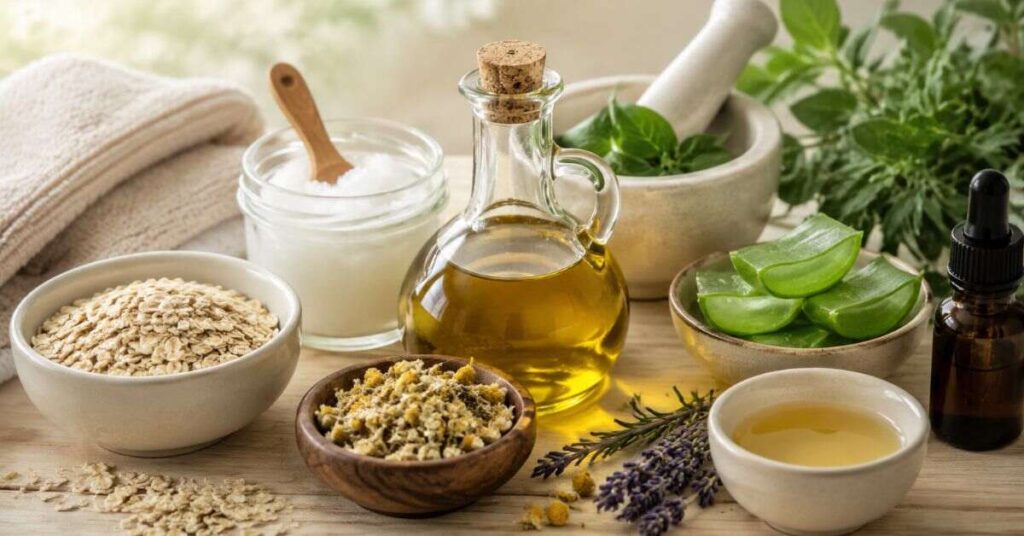
Many people with eczema look for natural ways to support their skin because the condition often involves ongoing dryness, itching, and irritation. While natural remedies cannot cure eczema, some options may help improve comfort by supporting the skin barrier, reducing dryness, and minimizing triggers that lead to flare-ups.
The most effective natural approaches usually focus on skin protection and hydration rather than aggressive treatments. Eczema-prone skin loses moisture more easily because its protective barrier does not work as efficiently as healthy skin. This allows irritants and allergens to enter more easily, which can contribute to inflammation.
Unlike some trendy remedies found online, gentle skincare practices have a stronger foundation because they work with the skin’s natural repair process. These approaches can also be combined with medical treatments when recommended by a healthcare professional.
When using natural remedies alongside essential oils for eczema, it is important to avoid adding too many products at once. Introducing multiple ingredients together makes it difficult to know what is helping and what may be causing irritation.
The following remedies are commonly used to support eczema management and are generally considered gentler options for sensitive skin.
Colloidal Oatmeal
Colloidal oatmeal is one of the most widely used natural ingredients for soothing dry and irritated skin. It is made by finely grinding oats into a powder that can mix with water and create a protective layer over the skin.
Unlike regular oatmeal used for food, colloidal oatmeal is specially processed to release compounds that support skin comfort. It contains components such as beta-glucans, starches, and antioxidants that may help moisturize the skin and reduce the uncomfortable feeling associated with dryness.
People with eczema often experience itching because their skin barrier loses moisture and becomes more reactive. Colloidal oatmeal can help by:
- Supporting moisture retention.
- Creating a temporary protective barrier.
- Helping calm feelings of dryness and irritation.
- Making bathing more comfortable for sensitive skin.
It is commonly used in:
- Bath treatments.
- Moisturizing creams.
- Eczema-focused skincare products.
A lukewarm oatmeal bath may feel soothing during an eczema flare-up. However, hot water should be avoided because it can remove natural oils from the skin and worsen dryness.
Although colloidal oatmeal is generally gentle, some people can still react to plant-based ingredients. If you have extremely sensitive skin, test a small amount first.
Compared with many concentrated botanical products, colloidal oatmeal is often easier for eczema-prone skin to tolerate. This makes it a popular option for people who want a simple natural addition to their skincare routine.
Petroleum Jelly
Petroleum jelly is a simple but highly effective option for protecting dry eczema-prone skin. Although it may not seem like a traditional natural remedy, it has been used for decades because of its ability to create a strong moisture barrier.
The main benefit of petroleum jelly comes from its occlusive properties. Instead of adding water to the skin, it helps prevent existing moisture from escaping. This is especially useful after bathing, when the skin can lose hydration quickly.
For people managing eczema, petroleum jelly may help by:
- Reducing water loss from the skin.
- Protecting irritated areas from external triggers.
- Supporting the healing process of dry, cracked skin.
- Reducing friction caused by clothing.
It is often recommended for babies, children, and adults because it contains fewer ingredients than many scented lotions. This lower ingredient profile can reduce the chance of irritation.
A common mistake is applying petroleum jelly to completely dry skin without first adding moisture. It works best when applied after bathing or after using a gentle moisturizer because it helps lock in hydration.
While some people prefer plant-based oils such as sunflower oil or coconut oil, petroleum jelly remains a reliable option for maintaining the skin barrier. It can also be used alongside carefully selected essential oils for eczema, although mixing products should be done cautiously to avoid irritation.
For eczema management, consistency matters more than complexity. A simple protective routine often provides better long-term results than constantly changing products.
Cool Compress
A cool compress is one of the easiest ways to temporarily calm eczema discomfort. It does not require special ingredients and can be especially helpful during periods of intense itching or irritation.
When eczema becomes inflamed, the skin may feel hot, itchy, and uncomfortable. A cool compress works by lowering the sensation of heat and helping reduce the urge to scratch.
To use a cool compress safely:
- Soak a clean cloth in cool water.
- Gently squeeze out excess water.
- Place it over the irritated area for several minutes.
- Apply moisturizer afterward to prevent dryness.
Avoid using ice directly on eczema patches because extreme cold can damage sensitive skin and create additional irritation.
Cool compresses are particularly useful because scratching is one of the biggest challenges during eczema flare-ups. Scratching can break the skin barrier, increase inflammation, and raise the risk of infection.
This method can also be helpful before bedtime when itching often becomes more noticeable. Combining a cool compress with a consistent moisturizing routine may improve comfort and make nighttime symptoms easier to manage.
While essential oils for eczema are often discussed for soothing effects, a cool compress offers a fragrance-free option that is suitable for many sensitive skin types.
Moisturizing Daily
Daily moisturizing is one of the most important habits for managing eczema. Because eczema affects the skin barrier, regular hydration helps reduce dryness and protects the skin from external irritants.
Many people focus on finding the perfect oil or natural ingredient but overlook the importance of consistency. A simple moisturizer used every day can often provide more support than occasional use of multiple products.
A good eczema-friendly moisturizer should ideally be:
- Fragrance-free
- Gentle on sensitive skin
- Rich enough to prevent moisture loss
- Suitable for your skin type
The best time to moisturize is usually after bathing when the skin is still slightly damp. This helps trap water and improves hydration.
Ingredients commonly used in eczema-friendly moisturizers include:
- Ceramides that support the skin barrier.
- Glycerin that attracts moisture.
- Hyaluronic acid that helps maintain hydration.
- Petrolatum that reduces moisture loss.
Natural oils can also play a role in moisturizing routines. For example, many people choose sunflower seed oil and safflower seed oil because these lightweight oils help maintain comfortable skin hydration.
If you use essential oils for eczema, they should not replace your basic moisturizer. The foundation of eczema care remains protecting and repairing the skin barrier.
Avoiding Eczema Triggers
Identifying and avoiding personal triggers is one of the most effective ways to reduce repeated eczema flare-ups. While treatments can calm symptoms, continued exposure to triggers may keep the skin irritated.
Common eczema triggers include:
- Fragranced skincare products
- Harsh soaps and detergents
- Hot showers
- Dry weather
- Sweat and heat
- Certain fabrics such as rough wool
- Stress
- Specific allergens
Everyone’s triggers are different. One person may react strongly to fragrances, while another may notice symptoms after exposure to certain fabrics or environmental conditions.
Keeping a simple skin diary can help identify patterns. Write down:
- New products you use.
- Foods or environmental changes.
- Weather conditions.
- Times when symptoms become worse.
This information can make it easier to create a personalized skincare routine.
When exploring options such as homemade essential oils for eczema treatment, trigger awareness becomes even more important. A homemade blend may contain ingredients that your skin does not tolerate, even if those ingredients are considered beneficial for others.
A good eczema routine focuses on protection: moisturize your skin regularly, avoid irritants, test new products carefully, and select gentle solutions that work well with your skin over time.
Natural Remedies You Should Avoid for Eczema
When dealing with eczema, many people search for natural solutions because they want gentle alternatives for their skin. However, not every natural remedy is safe or suitable for eczema-prone skin. Some popular treatments shared online can actually damage the skin barrier, increase irritation, and make flare-ups harder to control.
Eczema is not simply dry skin. It involves a weakened protective barrier and an overactive immune response that can make the skin highly sensitive. Because of this, harsh ingredients or extreme home treatments may create more problems than benefits.
Before trying any natural remedy, it is important to consider:
- How the ingredient affects sensitive skin
- Whether it supports or damages the skin barrier
- Whether there is reliable evidence behind its use
- Whether it may increase irritation or allergic reactions
Even with essential oils for eczema, careful selection matters. A remedy that works for one person may trigger discomfort for another. The safest approach is to choose gentle options that focus on hydration, barrier protection, and reducing irritation.
The following remedies are commonly promoted online but may carry unnecessary risks for people with eczema.
Bleach Baths
Bleach baths are one of the most debated home remedies for eczema. Some healthcare professionals may recommend carefully controlled bleach baths for certain patients with frequent skin infections because diluted bleach may reduce certain bacteria on the skin.
However, bleach baths are not a general eczema treatment and should not be used casually without medical guidance.
Incorrect use can cause:
- Skin dryness and irritation
- Burning sensations
- Increased redness
- Worsening eczema symptoms
- Damage to an already weakened skin barrier
People often misunderstand the idea behind bleach baths and assume that stronger concentrations will provide better results. This is dangerous because household bleach is a powerful chemical, and improper dilution can harm sensitive skin.
Extra caution is needed for:
- Babies and young children
- People with severe eczema
- Individuals with cracked or bleeding skin
- Anyone with a history of chemical sensitivity
If a dermatologist recommends a bleach bath, they will usually provide specific instructions about:
- The correct bleach type
- The proper dilution amount
- How often it should be used
- How long the skin should be exposed
For everyday eczema care, gentler options are usually preferred, such as:
- Fragrance-free moisturizers
- Colloidal oatmeal baths
- Petroleum jelly
- Cool compresses
These methods focus on protecting the skin barrier rather than exposing sensitive skin to potentially irritating substances.
Vinegar Baths
Apple cider vinegar and other vinegar-based treatments are frequently promoted online as natural remedies for eczema. The idea behind this method is that vinegar may help balance skin acidity or reduce certain microbes.
However, vinegar is acidic, and applying it to eczema-prone skin can be problematic. When the skin barrier is damaged, acidic substances may cause significant discomfort.
Possible problems with vinegar baths include:
- Stinging or burning sensations
- Increased dryness
- Skin irritation
- Worsening redness
- More discomfort on cracked skin
The risk is higher when vinegar is used:
- In high concentrations
- On broken skin
- During an active eczema flare-up
- Without proper dilution
Although maintaining a healthy skin environment is important, eczema management is not simply about changing skin acidity. The main goal is usually to repair the protective barrier and reduce inflammation.
If someone wants to try vinegar-based skincare, it is best to discuss it with a healthcare professional first, especially for children.
A safer eczema routine usually focuses on proven supportive habits:
- Moisturizing immediately after bathing
- Using gentle cleansers
- Avoiding fragrances and harsh ingredients
- Protecting the skin from environmental triggers
While some people search for homemade essential oils for eczema treatment or other DIY solutions, every ingredient should be evaluated carefully before applying it to sensitive skin.
Highly Irritating Essential Oils
Although some carefully selected oils may support comfort, not all essential oils for eczema are suitable for sensitive skin. Certain essential oils contain compounds that are more likely to cause irritation, especially when used incorrectly.
The biggest mistake is assuming that all plant-based oils are gentle. Essential oils are highly concentrated extracts, and some can be too aggressive for eczema-prone skin.
Essential oils that commonly require extra caution include:
- Cinnamon oil – Can cause strong irritation and burning sensations.
- Clove oil – Contains compounds that may trigger skin sensitivity.
- Oregano oil – Extremely concentrated and often too harsh for topical use.
- Peppermint oil – The cooling effect from menthol may feel uncomfortable on inflamed skin.
- Eucalyptus oil – May irritate sensitive skin and create discomfort for some users.
- Lemongrass oil – Contains components that may increase the risk of skin reactions.
Another concern is using essential oils without proper dilution. Applying concentrated oils directly to eczema patches can worsen dryness and inflammation.
When choosing oils, it is better to focus on:
- Gentle ingredients
- Proper dilution methods
- Patch testing before regular use
- High-quality products without unnecessary fragrances
People also need to be careful with popular online recommendations such as Young Living essential oils for eczema recipe ideas or essential oils for eczema doTERRA blends. A branded product or popular recipe does not guarantee that it will suit every person’s skin.
The safest approach is to treat essential oils as optional supportive products, not as a replacement for proven eczema care. Protecting the skin barrier, reducing triggers, and using gentle moisturizers should always remain the foundation of managing eczema.
When to See a Doctor for Eczema

Eczema is a common skin condition that can often be managed with gentle skincare, moisturizing, and avoiding personal triggers. However, there are situations where home care is not enough and professional medical advice becomes necessary.
Many people try natural approaches, including essential oils for eczema, because they want to reduce discomfort and support their skin naturally. While carefully selected products may be helpful for some individuals, they should not delay medical care when symptoms become severe or unusual.
A dermatologist or healthcare professional can help determine:
- Whether your symptoms are actually caused by eczema.
- Whether an infection has developed.
- Which treatments are suitable for your skin type.
- Whether your current skincare routine needs adjustment.
You should consider medical advice if your eczema:
- Does not improve with consistent moisturizing.
- Keeps returning frequently.
- Becomes painful or difficult to control.
- Affects your sleep or daily activities.
- Spreads to new areas of the body.
Seeking help early can prevent minor flare-ups from becoming more severe problems. Professional guidance is especially important for babies, young children, and people with widespread or persistent eczema.
Signs of Infection
Eczema can make the skin more vulnerable to infections because scratching and dryness may create small breaks in the skin barrier. When bacteria enter these damaged areas, the condition may become more complicated and require medical treatment.
It is important to contact a doctor if you notice signs that your eczema may be infected, including:
- Yellow or golden crusts forming on eczema patches.
- Pus or fluid drainage from the skin.
- Increasing redness that spreads beyond the original affected area.
- Skin that feels unusually warm, swollen, or painful.
- Tenderness that becomes worse over time.
- Fever or feeling generally unwell.
- Sudden worsening of eczema symptoms.
Bacteria such as Staphylococcus aureus often cause common infections in people with eczema, and these bacteria can multiply more easily when a damaged skin barrier weakens protection.
Avoid applying new products, including concentrated botanical remedies, to infected skin without medical advice. Even gentle ingredients may sting or worsen irritation when the skin is open or inflamed.
During an infection, the priority is controlling the cause of the problem and allowing the skin barrier to recover. A doctor may recommend treatments such as:
- Prescription creams.
- Antibiotic treatment when necessary.
- Special wound-care instructions.
- Adjustments to your skincare routine.
If you use essential oils for eczema, stop applying them to any area showing possible infection until you receive professional guidance.
Severe or Persistent Flare-Ups
Occasional eczema flare-ups are common, but frequent or severe episodes may indicate that your current management plan needs improvement.
You should speak with a dermatologist if:
- Your itching is intense and difficult to control.
- Eczema covers large areas of your body.
- Symptoms continue for weeks despite proper care.
- Flare-ups interfere with sleep, work, school, or daily activities.
- Over-the-counter products are no longer providing relief.
Persistent eczema may require a more personalized approach. A healthcare professional can evaluate possible triggers, recommend suitable treatments, and help you build a routine that protects your skin barrier.
Some people spend months trying different natural remedies, including various oils, creams, and homemade mixtures, but constantly changing products can sometimes make sensitive skin more reactive.
A better approach is to identify what your skin tolerates and maintain a consistent routine.
A dermatologist may recommend options such as:
- Prescription anti-inflammatory creams
- Barrier-repair moisturizers
- Allergy or trigger testing
- Advanced eczema treatments for severe cases
Natural skincare options can still have a place, but they work best when combined with proper eczema management. For example, using a suitable carrier oil or carefully diluted essential oils for eczema may complement a routine, but they should not replace necessary medical treatment.
Allergic Reactions to Essential Oils
Although essential oils come from plants, they can still cause allergic reactions. Some people develop allergic contact dermatitis, a delayed skin reaction that occurs when the immune system becomes sensitive to a specific ingredient.
This can happen even with oils that are commonly considered gentle.
Signs of an allergic reaction may include:
- New or worsening redness
- Intense itching after application
- Burning or stinging sensations
- Swelling
- Rash spreading beyond the applied area
- Small bumps or blisters
- Skin becoming unusually dry or irritated
A reaction may appear immediately, but sometimes it develops hours or even days after exposure. This is why patch testing is an important step before using any new essential oil.
Stop using the product if you notice a reaction and avoid applying additional scented products until your skin settles.
You should seek medical help quickly if you experience:
- Swelling around the eyes, lips, or face.
- Difficulty breathing.
- Severe dizziness.
- A rapidly spreading rash.
People searching for options such as what essential oil is good for eczema and psoriasis should remember that eczema and psoriasis are different conditions, and a product suitable for one person may not work for another.
The safest approach is to listen to your skin, introduce products slowly, and seek professional advice when symptoms become difficult to manage. Proper eczema care is not about finding the strongest remedy, it is about creating a routine that keeps your skin calm, protected, and healthy over time.
Final Thoughts
Living with eczema requires patience, consistency, and a skincare routine that focuses on protecting the skin barrier. While many people explore natural solutions like essential oils for eczema, it is important to keep realistic expectations.
Essential oils may provide comfort and support for some individuals, but they are not a guaranteed treatment or a replacement for medically proven eczema care. The right approach focuses on reducing irritation, maintaining moisture, and preventing damage to the skin barrier.
Use Essential Oils for Eczema With Realistic Expectations
The results of essential oils for eczema can vary from person to person. Several factors influence how your skin responds, including the type of essential oil, product quality, dilution method, and your individual skin sensitivity.
An oil that feels calming for one person may cause redness, itching, or irritation in another person. This is especially true for eczema-prone skin because the protective barrier is often weaker and more vulnerable to external ingredients.
Therefore, choosing gentle products and introducing new ingredients slowly is always a safer approach.
Simple Skincare Habits That Support Eczema Management
Before adding essential oils to your routine, focus on basic eczema-friendly habits that help protect and repair the skin barrier.
A consistent routine may include:
- Moisturizing daily with products that support healthy skin hydration.
- Avoiding common triggers such as harsh cleansers, fragrances, and irritating ingredients.
- Introducing new skincare products gradually.
- Performing a patch test before applying any new oil or product.
- Stopping use immediately if you notice burning, increased itching, or worsening irritation.
These simple steps often create a stronger foundation for managing eczema symptoms over time.
How to Use Essential Oils for Eczema More Safely
When used carefully, certain essential oils may complement a gentle skincare routine. However, safe application matters more than simply choosing a popular oil.
Always dilute essential oils with a suitable carrier oil before applying them to the skin. Avoid using concentrated essential oils directly on dry, cracked, or damaged areas because they may increase irritation.
Natural ingredients such as tea tree oil, lavender oil, chamomile oil, and frankincense oil may offer benefits for some people, but every skin type reacts differently. A natural product is not automatically safe for everyone.
When to Seek Professional Advice
Essential oils can be a supportive addition to eczema care, but they should not replace professional treatment when symptoms become severe.
If eczema causes persistent itching, painful cracks, signs of infection, frequent flare-ups, or affects your daily activities, consulting a dermatologist is the safest choice.
The goal of eczema management is not to find the strongest remedy or use multiple products. Instead, it is about understanding your skin, avoiding triggers, and creating habits that reduce irritation over time.
For people interested in essential oils for eczema, the best results usually come from a balanced approach that combines safe product choices, regular moisturizing, proper skin protection, and medical guidance when needed.
A thoughtful skincare routine with realistic expectations can help support healthier, more comfortable skin while reducing unnecessary flare-ups.
FAQs:
What is the best essential oil for eczema?
There is no single essential oil that works best for everyone with eczema because skin sensitivity, triggers, and the severity of symptoms vary from person to person. Many people use certain oils in their skincare routines because these oils contain soothing and calming properties, but each person’s skin may respond differently.
Many people consider lavender oil, chamomile oil, and frankincense oil among the gentler options when they dilute them properly. Users choose lavender for its calming aroma and mild nature, while they value chamomile for its traditional soothing properties. Many skincare enthusiasts add frankincense to their blends because this oil has a long history in cosmetic use.
However, choosing the best essential oils for eczema is not only about the oil itself. Other factors matter, including:
- Your skin sensitivity.
- Whether your eczema is dry, itchy, or inflamed.
- The quality of the essential oil.
- The carrier oil used for dilution.
- Whether you have a history of allergies.
A product that feels comfortable for one person may trigger irritation in another. This is why patch testing is always recommended before applying any essential oil regularly.
It is also important to remember that essential oils are not a cure for eczema. They may support comfort as part of a gentle skincare routine, but the foundation of eczema care remains moisturizing, avoiding triggers, and following medical advice when needed.
Can essential oils cure eczema?
No, essential oils cannot cure eczema. Eczema is a chronic inflammatory skin condition linked to immune responses, genetics, and a weakened skin barrier. While some ingredients may help improve comfort, they cannot remove the underlying factors that cause eczema.
Some people notice that certain oils make their skin feel calmer, especially when dryness or irritation is mild. However, this does not mean the condition has been cured.
A realistic approach is to view essential oils for eczema as a possible supportive option rather than a replacement for proven treatments.
Effective eczema management usually includes:
- Daily moisturizing to reduce water loss.
- Avoiding personal triggers.
- Using gentle skincare products.
- Managing flare-ups with appropriate treatments.
- Protecting the skin barrier.
Claims that a specific oil can permanently eliminate eczema symptoms are usually exaggerated. Even natural products can have limitations and may not work for everyone.
If eczema symptoms are severe, frequent, or affecting daily life, medical guidance is important. A dermatologist can recommend treatments that target inflammation and help prevent recurring flare-ups.
Are essential oils safe for sensitive skin?
Essential oils can be risky for sensitive skin because they are highly concentrated plant extracts. People with eczema often have a weaker skin barrier, which means they may react more easily to fragrances and active botanical compounds.
Some individuals can use properly diluted essential oils without problems, while others may experience:
- Redness.
- Burning sensations.
- Increased itching.
- Dryness.
- Allergic reactions.
The safest way to use essential oils on sensitive skin is to:
- Choose gentle oils from reliable sources.
- Dilute them with a suitable carrier oil.
- Perform a patch test before regular use.
- Avoid applying them to broken or irritated skin.
- Stop immediately if discomfort appears.
People with extremely sensitive skin may prefer fragrance-free moisturizers and barrier-supporting ingredients before experimenting with essential oils.
Sensitive skin requires a careful approach. The goal should always be maintaining comfort and protecting the skin rather than adding too many active ingredients.
Can I use essential oils every day?
Daily use of essential oils for eczema depends on the individual oil, dilution strength, and how your skin responds. Some people may tolerate a gentle diluted blend regularly, while others may experience irritation with repeated exposure.
Using an essential oil more frequently does not necessarily provide better results. In fact, overuse can increase the chance of sensitivity because the skin is repeatedly exposed to concentrated plant compounds.
If you decide to include essential oils in your routine:
- Start with occasional use.
- Apply a small amount.
- Monitor your skin’s response.
- Avoid increasing concentration too quickly.
Daily eczema care should focus primarily on moisturizing and protecting the skin barrier. Essential oils should be considered an additional option rather than the main treatment.
If your skin becomes more irritated after repeated use, reduce frequency or stop using the oil completely.
What dilution is safe for eczema?
For eczema-prone skin, a lower dilution is usually the safest starting point. Because essential oils are highly concentrated, using too much can increase the risk of irritation.
Many adults with sensitive skin begin with around:
- 1% dilution approximately 1 drop of essential oil per teaspoon (5 mL) of carrier oil.
Some people may need an even lower concentration, especially if they have very reactive skin.
A proper dilution helps:
- Reduce irritation risk.
- Spread the oil more evenly.
- Make the product easier to tolerate.
- Allow you to test your skin response.
The carrier oil also matters. Options such as sunflower seed oil, safflower seed oil, and other gentle oils are often used because they help moisturize while reducing essential oil concentration.
Avoid creating strong homemade blends with multiple essential oils, especially when you are testing a new routine. A simple formula is easier to evaluate and safer for sensitive skin.
Can I mix essential oils with prescription creams?
It is best to be cautious when combining essential oils for eczema with prescription creams. While there may not always be a direct interaction, adding new ingredients can increase the chance of irritation or make it difficult to understand what is affecting your skin.
Prescription eczema treatments are designed to target specific problems, such as inflammation or severe itching. Essential oils should not replace these treatments unless advised by a healthcare professional.
Before combining products:
- Follow your doctor’s instructions for prescription medication.
- Avoid mixing essential oils directly into prescription creams.
- Introduce new oils separately.
- Monitor your skin carefully.
If you are using stronger prescription treatments or have severe eczema, speak with your dermatologist before adding essential oils to your routine.
A balanced skincare plan usually works best when medical treatments, moisturizers, and gentle supportive products are used correctly together. The goal is always to calm inflammation, protect the skin barrier, and prevent unnecessary irritation.