Introduction:
Many cat owners look for natural remedies to improve their pet’s health. One question that often comes up is can cats have coconut oil and whether it offers real benefits. Coconut oil has become popular in human wellness routines, but pet owners are now exploring if it can help with issues like dry skin, digestion, and hairballs in cats.
Coconut oil is extracted from the meat of mature coconuts and contains unique fatty acids that may support skin health, digestion, and immune function. Because of these properties, some pet parents add small amounts of coconut oil to their cat’s diet or apply it to the fur and skin.
However, not every natural product is automatically safe for pets. While coconut oil can offer benefits in certain situations, it can also cause side effects if used incorrectly. This leads to common questions such as can cats have coconut oil in their food, can cats have coconut oil everyday, and whether it is truly beneficial for their overall health.
This guide explains everything cat owners should know before using coconut oil. You will learn how coconut oil works for cats, what types are safest, the possible benefits, and when it might not be the best choice for your pet.
What Is Coconut Oil and How Does It Work for Cats?

Coconut oil is a natural oil made from dried coconut flesh. It contains several types of saturated fats known as medium-chain triglycerides (MCTs). These fats are easier for the body to digest compared to many other types of fats, which is why coconut oil is often used in both human and animal nutrition.
When used in small amounts, coconut oil may support a cat’s skin, coat, and digestive system. Some cat owners also apply it directly to their pet’s fur because it may help moisturize dry skin and reduce irritation.
If you are wondering can cats have coconut oil, the answer depends on how it is used and how much is given. Small amounts can sometimes provide benefits, but excessive amounts may lead to digestive upset or weight gain. Understanding how coconut oil works helps cat owners make safer decisions about adding it to their pet’s routine.
Understanding Coconut Oil Composition
The reason coconut oil receives so much attention is its unique fatty acid profile. Unlike many vegetable oils, coconut oil contains a high concentration of medium-chain fatty acids.
Key components include:
| Component | Role in Cats |
| Lauric Acid | May support immune health and antimicrobial defense |
| Caprylic Acid | Known for mild antifungal properties |
| Capric Acid | Helps support digestive balance |
| Medium-Chain Triglycerides (MCTs) | Easily digestible fats that provide quick energy |
Lauric acid is the most abundant compound in coconut oil. It is known for its antimicrobial properties, which is why some people believe coconut oil may help with minor skin issues or infections.
These compounds are also the reason some pet owners explore coconut oil for cats fleas, as the oil may help create an environment that is less attractive to certain parasites when applied to the coat.
However, while the composition sounds beneficial, cats still require balanced nutrition. Coconut oil should only be used as a supplement rather than a replacement for proper veterinary care or a balanced cat diet.
Types of Coconut Oil Safe for Cats
Not all coconut oil products are the same. Choosing the right type is important if you plan to use it for your pet.
The safest options usually include:
Virgin Coconut Oil
Fresh coconut meat naturally produces virgin coconut oil without using chemicals, retaining most of its nutrients and making it a top choice for pets
Cold-Pressed Coconut Oil
Processing oil at low temperatures preserves its beneficial compounds, which is why many pet owners prefer this minimally processed type.
Organic Coconut Oil
Organic coconut oil comes from coconuts grown without pesticides or synthetic chemicals. This can be a safer option for pets with sensitive systems.
When deciding what kind of coconut oil for cats is best, veterinarians often recommend choosing organic, virgin, or cold-pressed coconut oil with no additives or flavorings.
Avoid coconut oil products that contain:
- Artificial flavors
- Sweeteners
- Preservatives
- Added essential oils
These additives can be harmful to cats.
Some cats are also naturally attracted to coconut oil because of its smell and texture. This is one reason people ask why do cats like coconut oil. The mild sweetness and fatty aroma can make it appealing, though not all cats enjoy it.
Is Coconut Oil Safe for Cats?
Many pet owners ask the important question: can cats have coconut oil safely, or is it something that should be avoided. The short answer is that coconut oil can be safe for some cats when used in very small amounts and introduced gradually. However, it is not necessary for a cat’s diet and may not be suitable for every pet.
Veterinarians generally agree that coconut oil is not toxic to cats, but it should be treated as an occasional supplement rather than a daily food ingredient. Cats have sensitive digestive systems, and too much fat can quickly lead to stomach upset, weight gain, or other health concerns.
Some owners use coconut oil topically on their cat’s fur because they believe coconut oil is safe for cats fur and may help with dryness or dull coats. When used externally in small amounts, it may moisturize the skin and improve coat appearance. However, cats tend to groom themselves frequently, which means they may still ingest the oil after it is applied.
Another common question is can cats have coconut oil in their food. Small amounts mixed into food may be tolerated by healthy cats, but it should always be introduced slowly and monitored carefully. If a cat shows any digestive discomfort, it is best to stop using it and consult a veterinarian.
Understanding which cats should avoid coconut oil and when it may actually be helpful can help pet owners make safer choices.
Cats Who Should Avoid Coconut Oil
Although you can sometimes use coconut oil safely, you should avoid it completely for certain cats or give it only under veterinary supervision.
Cats with the following conditions may be more sensitive:
| Condition | Why Coconut Oil May Be Risky |
| Obesity | Coconut oil is high in calories and may lead to weight gain |
| Pancreatitis | High-fat foods can trigger flare-ups |
| Sensitive stomach | May cause diarrhea or vomiting |
| Chronic digestive issues | Extra fat can worsen symptoms |
| Liver disease | Fat metabolism may already be compromised |
Young kittens and senior cats with medical issues may also have difficulty processing additional dietary fats.
Some owners wonder can cats have coconut oil everyday, but most veterinarians advise against daily use unless specifically recommended. Because coconut oil is calorie-dense, frequent use can disrupt a cat’s balanced diet.
If your cat has a medical condition, always speak with a veterinarian before adding any supplements or oils to their routine.
When Coconut Oil May Be Helpful for Cats
While coconut oil is not essential for feline health, there are situations where small amounts may offer supportive benefits.
Some pet owners report improvements in areas such as:
Dry Skin and Dull Coat
Coconut oil may help moisturize dry skin when applied lightly to the coat. This is one reason people explore whether coconut oil is safe for cats fur as a topical conditioner.
Hairball Support
Some cats experience frequent hairballs from grooming. A small amount of oil added to food may help lubricate the digestive tract, making hair easier to pass.
Digestive Support
Certain cat owners try coconut oil for cats for constipation, as small amounts of healthy fats may help soften stool. However, this should only be attempted cautiously and with veterinary advice.
Mild Skin Irritation
When applied externally, coconut oil may help soothe minor dryness or irritation because of its natural moisturizing properties.
Even when used for these purposes, moderation is key. A tiny amount can sometimes be helpful, but excessive use may quickly cause unwanted side effects.
Potential Benefits of Coconut Oil for Cats
Many pet owners become interested in coconut oil after hearing about its possible health benefits. The question can cats have coconut oil often comes from people looking for natural ways to support their cat’s skin, digestion, and overall wellness.
Coconut oil contains medium-chain fatty acids that may provide mild antimicrobial, moisturizing, and anti-inflammatory properties. Because of these qualities, some cat owners use small amounts of coconut oil either in food or applied directly to the coat.
However, it is important to remember that coconut oil is not a miracle treatment. While some cats may benefit from small amounts, results can vary depending on the cat’s health, diet, and sensitivity to fats. Used responsibly, coconut oil may support several aspects of feline health.
Below are some of the most commonly discussed potential benefits.
Improves Skin Health and Promotes a Shiny Coat
One of the most popular uses of coconut oil for pets is improving coat condition. Cats with dry or flaky skin may benefit from a small topical application.
Coconut oil works as a natural moisturizer, helping hydrate the skin and reduce dryness. When applied lightly to the coat, it may improve the overall texture and shine of the fur.
Many pet owners ask is coconut oil safe for cats fur, and in small amounts it can often be used externally without problems. The oil can help soften rough fur and may reduce itching caused by dryness.
Because cats groom themselves frequently, it is important to use very small amounts so the cat does not ingest too much while licking its coat.
Helps Reduce Hairballs in Cats
Hairballs are a common issue for many cats, especially long-haired breeds. When cats groom themselves, they swallow loose fur that may accumulate in the digestive system.
Some owners add a tiny amount of coconut oil to food because it may act as a natural lubricant in the digestive tract. This can help swallowed hair move more easily through the digestive system instead of forming hairballs.
Although coconut oil may help in some cases, it should not replace regular grooming. Brushing your cat frequently is still one of the most effective ways to prevent hairballs.
Supports Digestive Health and Nutrient Absorption
Healthy fats can sometimes help improve digestion when used in moderation. Coconut oil contains medium-chain triglycerides, which are easier to digest than many other fats.
Because of this property, some pet owners explore can cats have coconut oil in their food as a way to support digestive balance. Small amounts may help the body absorb certain nutrients more efficiently.
In some cases, owners also try coconut oil for cats for constipation because fats can help soften stool and support smoother bowel movements. However, you should apply this cautiously, because giving too much oil can easily trigger diarrheal.
Boosts the Immune System
Coconut oil contains lauric acid, a compound known for its antimicrobial properties. Lauric acid may help the body fight certain bacteria, fungi, and viruses.
While research in cats is limited, these compounds appear to support the immune system by helping the body fight harmful microorganisms.
Because of this, some pet owners consider coconut oil a supportive supplement rather than a direct treatment for illness.
Helps Reduce Inflammation and Joint Discomfort
Inflammation can contribute to joint pain and stiffness, particularly in older cats. Some of the fatty acids in coconut oil may have mild anti-inflammatory properties.
These fats may help reduce inflammation in the body, which could potentially support joint comfort in aging cats. Although coconut oil is not a replacement for veterinary treatments, it may serve as a small supportive addition to a balanced diet.
Supports Oral Health and Freshens Breath
Another interesting benefit sometimes discussed is oral health. Some pet owners gently apply coconut oil to a cat’s gums or teeth.
This practice is believed to help reduce harmful bacteria in the mouth. Because of its antimicrobial properties, coconut oil may support healthier gums and fresher breath.
This leads many owners to ask is coconut oil good for cats teeth. While it may offer mild benefits, it should not replace proper dental care such as professional cleaning or dental treats recommended by a veterinarian.
May Support Brain Health in Senior Cats
As cats age, they may experience cognitive decline similar to aging in humans. Medium-chain triglycerides in coconut oil can provide a quick energy source for brain cells.
Some studies in animals suggest that these fats may support brain function and cognitive health. For this reason, some pet owners consider small amounts of coconut oil for older cats.
However, this area still requires more scientific research, and coconut oil should not be relied upon as a primary treatment for cognitive disorders.
Mild Antimicrobial and Natural Wound Healing Properties
Coconut oil is sometimes used on minor cuts or irritated skin because it may create a protective barrier over the wound.
Its antimicrobial properties may help reduce the presence of certain bacteria on the skin. This is why some pet owners use it as a natural remedy for minor skin irritations.
It can also help moisturize dry patches of skin, which may improve the healing environment for small surface wounds.
May Help With Flea and Skin Irritation Support
Some cat owners apply coconut oil to their pet’s coat as part of natural flea control routines. While coconut oil is not a true flea treatment, it may help soothe itchy skin caused by flea bites.
This is why people often search for coconut oil for cats fleas. The oil may help calm irritated skin and create a smoother coat that is easier to groom.
However, severe flea infestations should always be treated with veterinarian-approved flea medications, which are far more effective and reliable.
Quick Summary of Coconut Oil Benefits for Cats
| Potential Benefit | How It May Help |
| Skin and coat health | Moisturizes dry skin and improves coat shine |
| Hairball support | Helps hair pass through the digestive tract |
| Digestive support | Provides easily digestible fats |
| Immune support | Contains antimicrobial fatty acids |
| Joint comfort | May help reduce mild inflammation |
| Oral health | May reduce bacteria in the mouth |
| Brain health | Provides quick energy for brain cells |
| Skin healing | Moisturizes and protects minor skin irritations |
Risks and Side Effects of Coconut Oil for Cats
While many people ask can cats have coconut oil because of its potential benefits, it is equally important to understand the possible risks. Coconut oil is high in fat and calories, which means excessive use can lead to health problems for some cats.
Veterinarians often recommend caution when introducing any new supplement into a cat’s diet. Even natural ingredients can cause side effects if they are used too frequently or in large amounts.
Some owners wonder can cats have coconut oil everyday, but daily use is not usually necessary. Because coconut oil contains a high concentration of fat, it should only be used occasionally and in very small amounts unless a veterinarian recommends otherwise.
Understanding the potential side effects helps pet owners use coconut oil more responsibly and recognize when it may not be the right option for their cat.
Digestive Upset and Diarrhea
One of the most common side effects of coconut oil in cats is digestive upset. Because the oil is rich in fats, some cats may have difficulty digesting it properly.
If too much coconut oil is consumed, cats may experience symptoms such as:
- Loose stools
- Diarrhea
- Vomiting
- Stomach discomfort
This is one reason veterinarians advise introducing coconut oil very slowly if you decide to try it. Even a small amount added to food should be tested gradually to see how your cat responds.
If digestive issues appear after introducing coconut oil, it is best to stop using it and monitor your pet closely.
Weight Gain From Excess Calories
Coconut oil is extremely calorie-dense. Just a small spoonful contains a significant amount of fat and energy.
For indoor cats that already have limited activity levels, extra calories can quickly contribute to weight gain. Obesity in cats can increase the risk of several health conditions, including diabetes, joint problems, and heart disease.
This is why moderation is essential when considering can cats have coconut oil in their food. It should never replace balanced cat food or become a regular high-calorie treat.
Pancreatitis Risk in Sensitive Cats
Pancreatitis is a serious disease that happens when the pancreas gets inflamed. High-fat foods are known triggers for pancreatitis in some animals.
Since coconut oil contains a large amount of fat, cats that are prone to pancreatic issues may have an increased risk if they consume it regularly.
Cats with a history of digestive disorders, pancreatitis, or fat intolerance should avoid coconut oil unless a veterinarian specifically approves it.
Skin Irritation or Allergic Reactions
Although coconut oil is sometimes applied to a cat’s coat, not every cat will tolerate it well.
In some cases, topical use may cause:
- Skin irritation
- Redness
- Increased itching
- Excessive grooming
Cats may also ingest large amounts while grooming themselves after application, which can lead to digestive issues.
Because of this, it is best to apply only a very small amount and observe your cat’s reaction before using it regularly. If irritation appears, discontinue use immediately.
How Much Coconut Oil Is Safe for Cats?
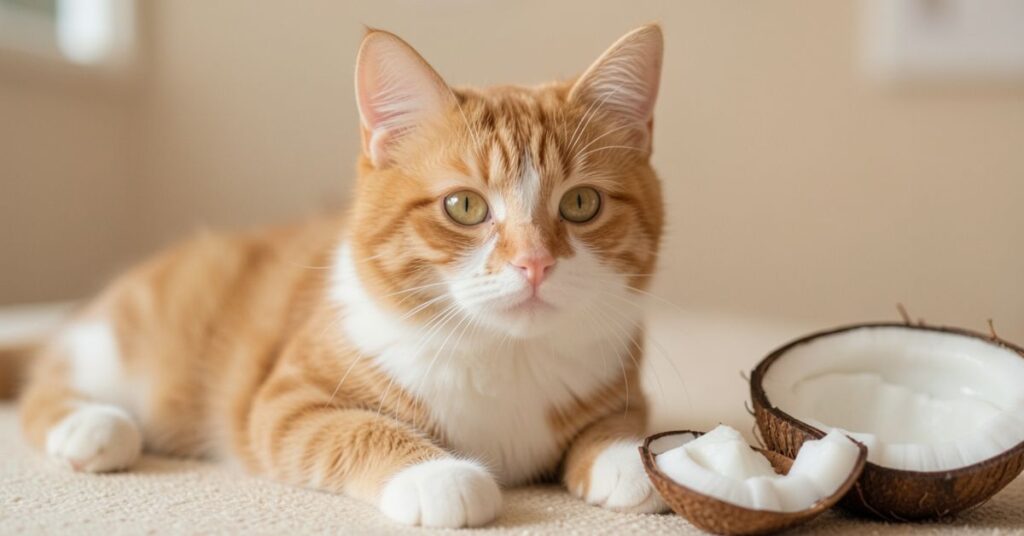
Knowing the correct amount of coconut oil to give your cat is crucial. While many pet owners ask can cats have coconut oil, giving too much can lead to digestive upset, weight gain, or other health issues. Proper dosage depends on your cat’s size, health, and tolerance.
Veterinarians usually recommend starting with very small amounts and monitoring your cat’s reaction before increasing the dose. Remember, coconut oil is a supplement, not a necessary part of a cat’s diet.
Recommended Dosage Based on Cat Size
Here’s a general guideline for how much coconut oil is safe for cats, based on their weight:
| Cat Weight | Recommended Starting Amount | Notes |
| Under 5 lbs (2.3 kg) | ¼ teaspoon per day | Introduce gradually; observe digestive response |
| 5–10 lbs (2.3–4.5 kg) | ½ teaspoon per day | Can mix into food or apply lightly on fur |
| 10–15 lbs (4.5–6.8 kg) | ½–1 teaspoon per day | Divide into smaller servings if feeding with meals |
| Over 15 lbs (6.8+ kg) | 1 teaspoon per day | Monitor weight and stool consistency |
How Often Cats Can Eat Coconut Oil
Many pet owners wonder, can cats have coconut oil everyday. Daily use is not usually necessary unless recommended by a veterinarian. For most cats:
- 2–3 times per week is often sufficient for coat and skin support.
- Daily use may be considered for short-term digestive or hairball support, but only in small amounts.
- Always monitor for loose stools, vomiting, or weight gain when using it more frequently.
Tip: Some owners alternate between topical application and adding coconut oil to food. This can provide benefits without overloading the digestive system.
How to Safely Give Coconut Oil to Cats
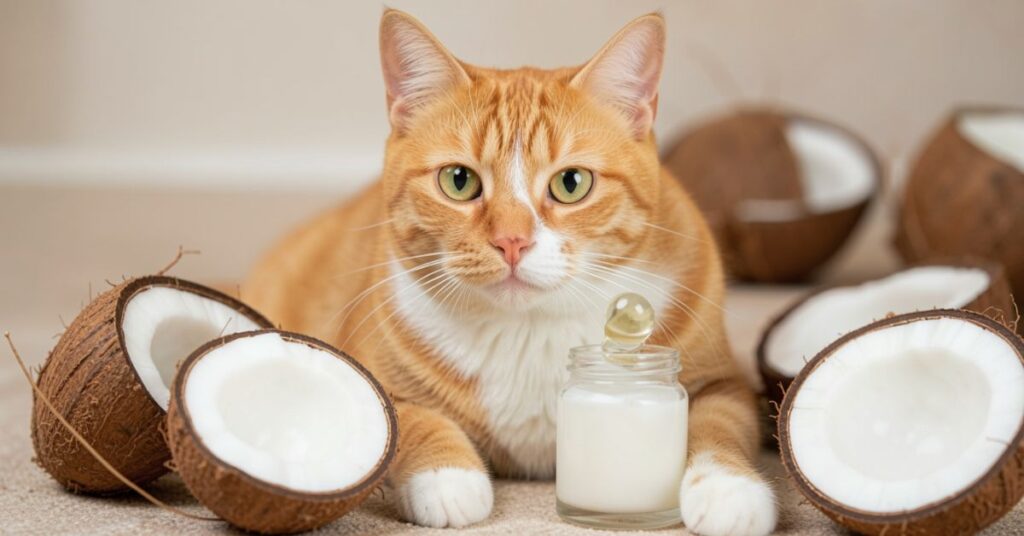
Once you know how much coconut oil is safe for cats, the next step is learning how to introduce it properly. Using coconut oil safely ensures your cat receives potential benefits without digestive upset, weight gain, or skin irritation.
There are two main ways to give coconut oil to cats: orally by mixing it with food, or topically on the skin or fur. Both methods require care and moderation to avoid side effects.
Mixing Coconut Oil With Cat Food
Adding coconut oil to your cat’s food is the most common method. Here’s how to do it safely:
- Start Small – Use a very small amount, such as ¼ teaspoon for a small cat. Slowly raise the amount if your cat handles it without problems.
- Mix Thoroughly – Ensure the oil is evenly mixed with wet or dry food so your cat cannot pick out or avoid it.
- Observe Your Cat – Watch for signs of digestive upset such as diarrhea or vomiting. If any occur, reduce the amount or stop use.
- Frequency – Using coconut oil 2–3 times per week is usually sufficient for most cats. Daily use should only be attempted under veterinary guidance.
This method is ideal for cats who enjoy coconut oil in their food and may help support digestion, hairball management, and nutrient absorption.
Applying Coconut Oil to Skin or Paws
Some cat owners prefer topical application to improve skin and coat health. This is also useful for cats with dry patches or minor irritation.
Steps for safe application:
- Clean the Area – Make sure the fur or skin is clean and dry.
- Use Small Amounts – Apply a pea-sized dab to the affected area or rub lightly over the coat.
- Avoid Overuse – Cats groom themselves, so applying too much can lead to ingestion of excessive fat.
- Monitor Your Cat – Watch for licking, redness, or irritation. Stop using it immediately if any adverse reactions appear.
Topical use may also help soothe itchy skin or provide mild support for fleas, but it is not a substitute for veterinary flea treatments.
Tips for Introducing Coconut Oil Slowly
Introducing coconut oil gradually is the key to safety. Follow these tips:
- Use Tiny Amounts First – Start with ¼ of the recommended dosage.
- Increase Slowly – Gradually raise the amount over 1–2 weeks while observing tolerance.
- Alternate Methods – Consider alternating between adding to food and topical use for variety.
- Watch for Changes – Loose stools, vomiting, or excessive licking are signs to pause or reduce the dose.
- Consult Your Veterinarian – Especially for cats with pre-existing conditions or digestive sensitivities.
By introducing coconut oil slowly and carefully, you minimize the risk of side effects while still providing the potential benefits for skin, coat, digestion, and overall wellness.
When to Avoid Coconut Oil and Call a Veterinarian
While coconut oil can offer some benefits, it is not suitable for every cat. Knowing when to avoid coconut oil and when to seek veterinary advice is essential for your cat’s health and safety.
Cats have sensitive digestive systems, and individual tolerance to fats can vary. Overuse or improper application of coconut oil can lead to digestive upset, weight gain, or skin irritation. Recognizing early warning signs helps prevent complications and ensures your cat stays healthy.
Signs Your Cat Is Not Tolerating Coconut Oil
Even small amounts of coconut oil may cause adverse reactions in some cats. Watch for these common signs of intolerance:
- Diarrhea or loose stools – A typical reaction if your cat cannot digest coconut oil properly.
- Vomiting – Overconsumption may trigger nausea.
- Excessive grooming or licking – Could indicate skin irritation from topical application.
- Redness or rash on the skin – Possible allergic reaction to the oil.
- Lethargy or unusual behavior – May indicate discomfort or digestive upset.
If any of these signs appear, stop using coconut oil immediately and observe your cat. Most mild reactions will resolve within 24–48 hours after discontinuing the oil. Persistent or severe symptoms require a veterinarian’s attention.
Health Conditions That Require Vet Advice
Certain medical conditions make coconut oil unsafe or require careful monitoring:
| Condition | Reason to Avoid Coconut Oil |
| Obesity | Extra calories can worsen weight problems and related health issues |
| Pancreatitis | High-fat foods can trigger flare-ups and serious complications |
| Liver or kidney disease | Fat metabolism may be compromised, increasing risk of digestive upset |
| Chronic diarrhea or constipation | Adding fat may worsen the condition |
| Allergies or sensitive skin | Topical application could trigger irritation or allergic response |
Before using coconut oil for cats with any of these conditions, consult a veterinarian. They can provide personalized guidance on safe dosage or alternative treatments.
Alternatives to Coconut Oil for Cats
While many cat owners ask can cats have coconut oil, some cats may not tolerate it well, or owners may prefer other options. Several safe alternatives provide similar benefits for skin, coat, digestion, and overall health. Exploring these options ensures your cat receives support without the risks associated with excessive coconut oil use.
Fish Oil for Omega-3 Support
Fish oil is a popular alternative for cats that need healthy fats. It contains high levels of omega-3 fatty acids, which may:
- Improve skin and coat health
- Reduce inflammation in joints
- Support heart and kidney health
- Enhance immune function
Unlike coconut oil, fish oil contains long-chain fatty acids that are essential for cats but must be used in controlled amounts. Many veterinarians recommend high-quality, cat-specific fish oil supplements to avoid overdosing or digestive upset.
Olive Oil for Digestive Health
Olive oil is another natural alternative. A small amount added to a cat’s food may:
- Help soften stools
- Support healthy digestion
- Provide mild skin and coat benefits
Olive oil is generally easier for some cats to tolerate compared to coconut oil. However, it should still be used sparingly, as excessive fat can lead to diarrhea or weight gain.
Vet-Approved Supplements for Skin and Coat
There are numerous veterinarian-recommended supplements designed specifically for cats. These can offer targeted support for:
- Skin hydration
- Coat shine and softness
- Hairball reduction
- Immune and joint health
Examples include omega-3 capsules, chews with fatty acids, and multivitamin formulas for skin and coat. Using vet-approved products ensures the supplement is safe, appropriately dosed, and designed for feline metabolism.
Is Coconut Oil the Right Choice for Your Cat?
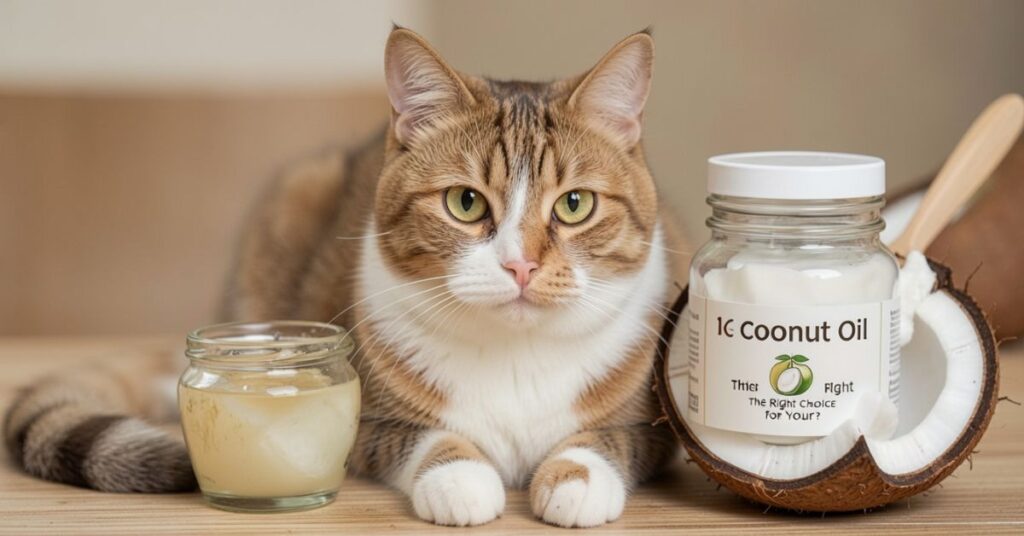
Deciding whether to use coconut oil involves weighing potential benefits against risks. While many ask can cats have coconut oil, not every cat will benefit from it, and some may experience side effects.
Here’s a structured approach to help determine if coconut oil is right for your cat:
Consider Your Cat’s Health
- Healthy cats: Small, occasional amounts of coconut oil may support skin, coat, and hairball management.
- Cats with digestive sensitivities or chronic illness: Coconut oil may cause diarrhea or worsen health issues.
- Senior cats: Medium-chain triglycerides may offer mild brain support, but consult your vet first.
Assess the Purpose
Ask yourself why you want to use coconut oil:
- For skin and coat: Topical application may help, but grooming habits and diet are also crucial.
- For digestion or hairballs: Small dietary amounts may help, but only if your cat tolerates fats well.
- For fleas or minor irritation: Coconut oil can soothe mild irritation but is not a substitute for vet-approved flea treatments.
Start Small and Observe
Even if your cat is healthy, always:
- Introduce tiny amounts first
- Monitor stool consistency, appetite, and behavior
- Adjust or stop based on your cat’s response
This approach ensures safety while allowing you to evaluate if coconut oil truly benefits your cat.
When to Choose Alternatives
If your cat experiences digestive upset, weight gain, or skin irritation, consider alternatives such as:
- Fish oil for omega-3 support
- Olive oil for gentle digestive aid
- Vet-approved supplements for coat and skin health
Using alternatives can often provide the same benefits with lower risk.
Conclusion
Coconut oil can be a helpful supplement for some cats, but it is not essential. Many cat owners ask can cats have coconut oil, and the answer depends on your cat’s health, tolerance, and the intended benefit.
Small, controlled amounts may support skin and coat health, hairball management, digestion, and even mild immune support. Topical application can moisturize dry skin, while dietary use may help with occasional digestive issues.
However, excessive use can lead to digestive upset, diarrhea, weight gain, or skin irritation. Cats with pre-existing conditions, such as pancreatitis, obesity, or sensitive stomachs, should avoid coconut oil unless guided by a veterinarian.
If you decide to try coconut oil, introduce it gradually, monitor your cat’s response, and consult a veterinarian when in doubt. For cats that cannot tolerate coconut oil, alternatives like fish oil, olive oil, or vet-approved supplements can provide similar benefits safely.
In the end, the key is moderation, careful observation, and prioritizing your cat’s overall health. By making informed choices, you can provide natural support for your feline companion while keeping them safe and happy.
FAQs
Is coconut oil safe for cats to eat every day?
Coconut oil is not usually recommended for daily use. While small amounts can sometimes support digestion or coat health, daily consumption may cause digestive upset or weight gain. Most veterinarians suggest using it 2–3 times per week unless specifically advised otherwise.
Can coconut oil help with hairballs?
Yes, in some cases. Adding a tiny amount of coconut oil to your cat’s food may act as a natural lubricant, helping hair pass more easily through the digestive tract. However, regular grooming and brushing remain the most effective way to reduce hairballs.
What’s the best way to apply coconut oil to my cat’s skin?
- Clean and dry the area first
- Use a pea-sized amount for small areas or rub lightly over the coat
- Monitor your cat for excessive licking or irritation
- Avoid applying large amounts to prevent ingestion and digestive upset
Topical application may help moisturize dry skin and soothe minor irritation.
Can coconut oil cause diarrhea in cats?
Yes, too much coconut oil can lead to diarrhea or loose stools. Cats have sensitive digestive systems, and high-fat foods may upset the stomach. Always start with a very small amount and gradually increase if needed. Stop use immediately if diarrhea occurs.
What is the safest oil for cats?
The safest options for cats depend on the intended use:
- Coconut oil: Small amounts for skin, coat, or mild digestive support
- Fish oil: Rich in omega-3 for skin, coat, and joint health
- Olive oil: Gentle digestive support
- Vet-approved supplements: Specifically formulated for feline health
Consult a veterinarian before introducing any oil to ensure it is appropriate for your cat’s individual needs.